
Special Cargo
The heaviest thing in a furniture container is the packing list. The cargo itself will never reach the payload limit.
Contents
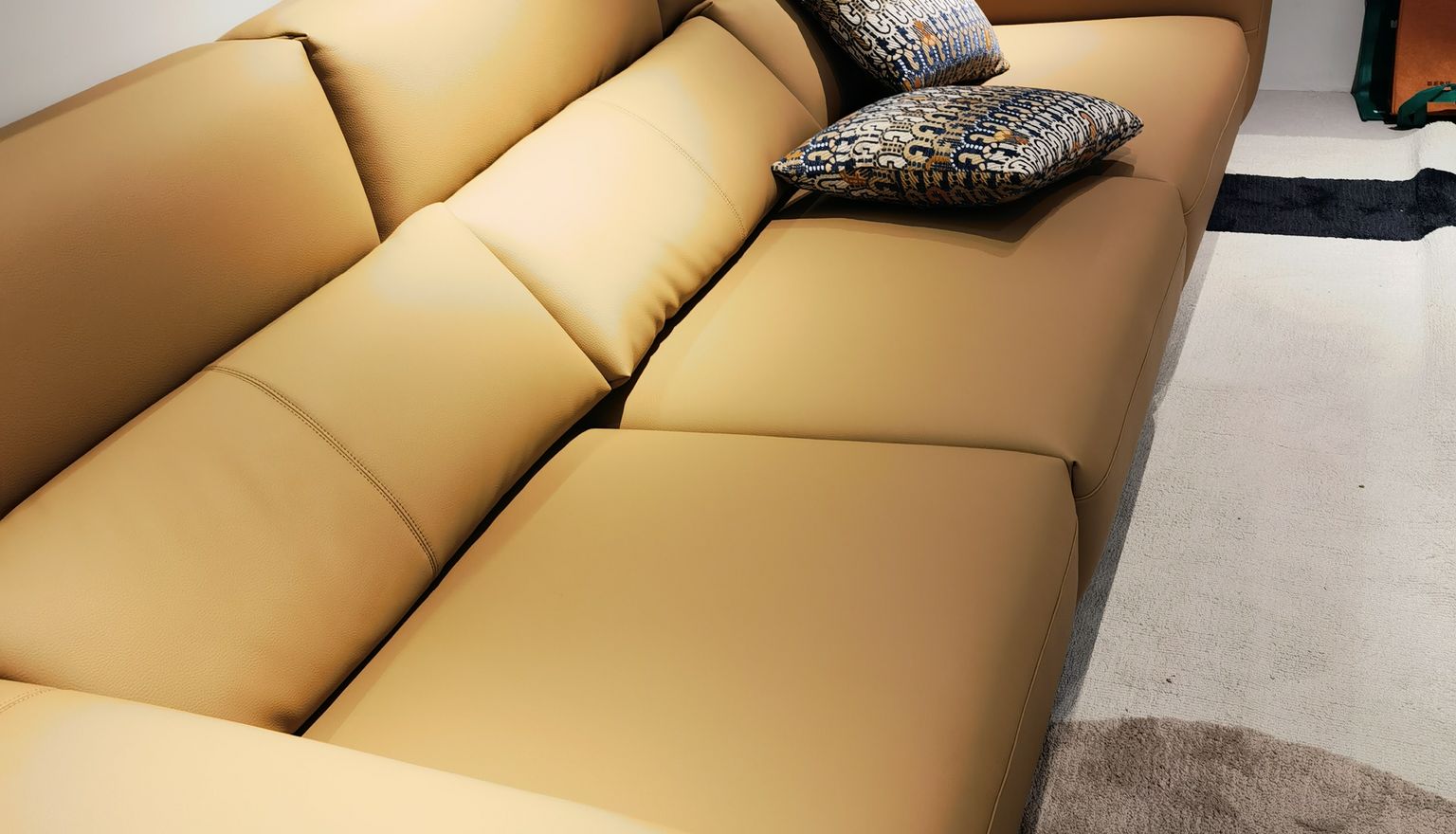
A 40ft high cube holds about 76 cubic metres by nominal measurement and around 68 cubic metres once the cartons, the pallets and the fact that nothing stacks perfectly are taken into account. Its payload is roughly 26 tonnes. Furniture reaches the first limit long before the second.
A three-seat sofa in a flat carton measures around 2.1 by 0.95 by 0.85 metres, which is about 1.7 cubic metres. A bedroom set of bed frame, mattress, two nightstands and a wardrobe can pass five cubic metres without trying. Thirty sets is a container, and the whole load may weigh under eight tonnes.
That ratio sets the commercial logic of the category. Freight on this cargo is priced per cubic metre or per container, never per kilo, so the only lever with real money in it is the volume of the carton. A factory that shaves five centimetres off the depth of a sofa carton and keeps the same quantity per container has given the buyer more than a discount on the unit price usually does.
The number to collect at the fair is not the unit price. It is cartons per set, carton dimensions, and cubic metres per set. Without those three, a quotation cannot be compared to another quotation, and the freight cannot be quoted at all.
Most export furniture leaves China knocked down. Legs, arms and back come off; the frame travels flat; the hardware goes in a bag taped to the inside of the carton. Volume falls by something between 40 and 60 percent against the assembled item, which on a container of thirty sets is the difference between one box and two.
The trade-off is not free. Assembly instructions have to be written in the destination language, hardware bags have to be counted and packed, and the carton has to survive being dropped rather than merely being stacked. There is also a market question: some retail channels will not accept flat-pack, and some customers return it.
Middle positions exist. A sofa with the arms off and the back on saves less space and needs no tools. A wardrobe shipped with the carcass assembled and the doors loose is common. Each decision moves the cubic metres, the carton count and the risk of transit damage in a different direction.
Ask the supplier which of the three they are quoting, because the answer changes the freight number by a third and is rarely written on the price sheet. If the quotation says FOB and gives a unit price with no carton data, the freight element is still unknown and the comparison against another supplier is not yet meaningful.
Goods are loaded in Guangdong in July at 32 degrees and 85 percent humidity. The container is closed, trucked to a terminal, lifted onto a vessel and carried north. The steel roof cools overnight, the air inside cannot hold the water it held at loading, and it condenses on the underside of the roof. By the second week it is dripping onto the top layer of cartons.
This is not a rare event or a sign of a bad carrier. It is what happens when warm moist air is sealed into a steel box. The variables are how wet the cargo is, how much free water is in the packing, and how long the voyage runs.
The fix is specified on the order, not discovered at the port: moisture content stated in the purchase order, a desiccant quantity agreed per container, and a photograph of the container floor and walls before loading.
Building materials split into two categories with opposite problems.
Heavy and dense. Tiles, stone, sanitaryware and cement board will reach the 26 tonne payload with the container still half empty. Here the limit is weight, the packing has to spread load across the floor, and the cartons have to survive the pressure of everything above them. A pallet of tiles imposes a floor load that a wooden pallet is built for and a cardboard box is not.
Light and fragile. Glass, panels, profiles and insulation are volume cargo with a damage problem. Glass travels upright, in a rack or an A-frame, never flat. Aluminium profiles scratch, so they travel with interleaved film and corner protection. Sandwich panels are stiff in one direction and fold in the other.
Anything cased in solid wood for support is packaging, and wood packaging entering most countries must carry the ISPM 15 mark: heat treated or fumigated, and stamped with the country code, the producer and the treatment. A crate built on site from untreated timber is refused at destination, and the refusal happens after the goods have crossed an ocean.
Plywood and processed board are treated differently from solid wood in most rules, which is why export crates are often built from plywood. Confirm the material with the factory and get it stated on the packing list, because the officer at destination reads the document, not the crate.
A furniture carton is a structural element. It carries the weight of everything stacked above it in a container that will be handled by cranes, trucks and forklifts over six weeks.
The specification that matters is edge crush, quoted as a board grade in kilonewtons per metre or in the older pound-per-inch figure. Export cartons for furniture commonly sit in the 32 to 44 ECT range, with double-wall board where the stack is tall. Below that, the bottom cartons in a stack deform, the stack leans, and the load shifts in the Bay of Bengal.
Crushed cartons are the most common visible failure in the category and the least arguable. A buyer who photographs the stack at loading has a record; a buyer who discovers it at the warehouse has a conversation with a carrier who was not there.
A container is a structural box with a floor load limit, and furniture loads are usually designed on paper before the truck arrives.
The loading plan is worth an hour of planning for a load worth a hundred thousand dollars. It is also the cheapest place to add cubic metres: a load that reaches 64 cubic metres instead of 58 has absorbed the freight of two extra tonnes without paying for them.
A furniture order rarely fills a container exactly. The last five to eight cubic metres are the most expensive space in the shipment, because they are paid for whether or not they are used.
Three ways to fill them, in ascending order of complexity.
Top up from the same factory. Cushions, covers, hardware, spare parts, small accessories the retailer will sell anyway. No new supplier, no new documents, no new risk.
Top up from a second factory. Works when the second supplier is in the same city and can deliver to the same warehouse before the cut-off. Adds a packing list line and a second set of marks.
Book LCL instead. Sensible below about fifteen cubic metres, and often sensible up to twenty-five on a route with a reliable groupage service. Above that the per-cubic-metre rate climbs and the handling risk of shared containers starts to outweigh the saving.
The decision depends on one date, which is the cut-off, and one document, which is the packing list. A buyer who discovers on the Monday that the container sails on Wednesday has no options at all. A buyer who knows the cut-off when the order is placed can plan the top-up while the factory is still loading.
Four questions, all answerable in ten minutes at a booth, which together decide the freight before any quotation exists.
Take a photograph of the carton on the floor of the booth with the tape measure against it. It costs nothing, it settles the argument in March, and it is the only measurement most buyers never take.
Cubic capacities, moisture ranges and board grades above are typical figures for the category, not commitments. The load plan for a specific order depends on the actual carton schedule.
Q How many sofas fit in a 40ft container?
Depends entirely on the carton. Knocked down in flat cartons, a three-seat sofa at around 1.7 cubic metres allows roughly 35 to 38 sets in a 40ft high cube. Assembled, the same sofa can take three cubic metres and the count drops by half.
Q Does furniture need fumigation?
The furniture does not. The wood packaging does, if it is solid wood: pallets, crates, dunnage. Heat treatment or fumigation followed by the ISPM 15 stamp. Plywood and processed board are treated differently under most rules.
Q Why did my container arrive with wet cartons?
Condensation, not a leak. Warm humid air sealed in at loading releases water on the cold steel roof during the voyage. The fix is cargo moisture control and calculated desiccant, agreed before loading rather than claimed afterwards.
Q Is LCL sensible for a furniture order?
Below about fifteen cubic metres, usually. Between fifteen and twenty-five it depends on the route and the groupage operator. Above that the per-cubic-metre rate rises and a full container is both cheaper and safer for cartons this size.
Q Can building materials and furniture share a container?
Yes, and it often works well: dense goods at the bottom to use up payload, light furniture above to use up volume. It requires a loading plan and a floor load check, and it is not something to improvise at the warehouse door.
Q What is the single most useful photo to take at the booth?
A tape measure against the export carton. It establishes the real dimensions, the board grade print and the marks in one frame, and it is the reference for every freight quote that follows.
Related pages
Give us cartons per set, carton dimensions and the destination port and we will come back with a load plan, a cubic metre figure and the container size that actually fits the order.
Email sales8015@goodhopefreight.com | WhatsApp & phone +86 133 9216 2503