
Destination
A container that reaches Mombasa has finished the easy part. What follows is a certificate, a queue and a thousand kilometres of road.
Contents
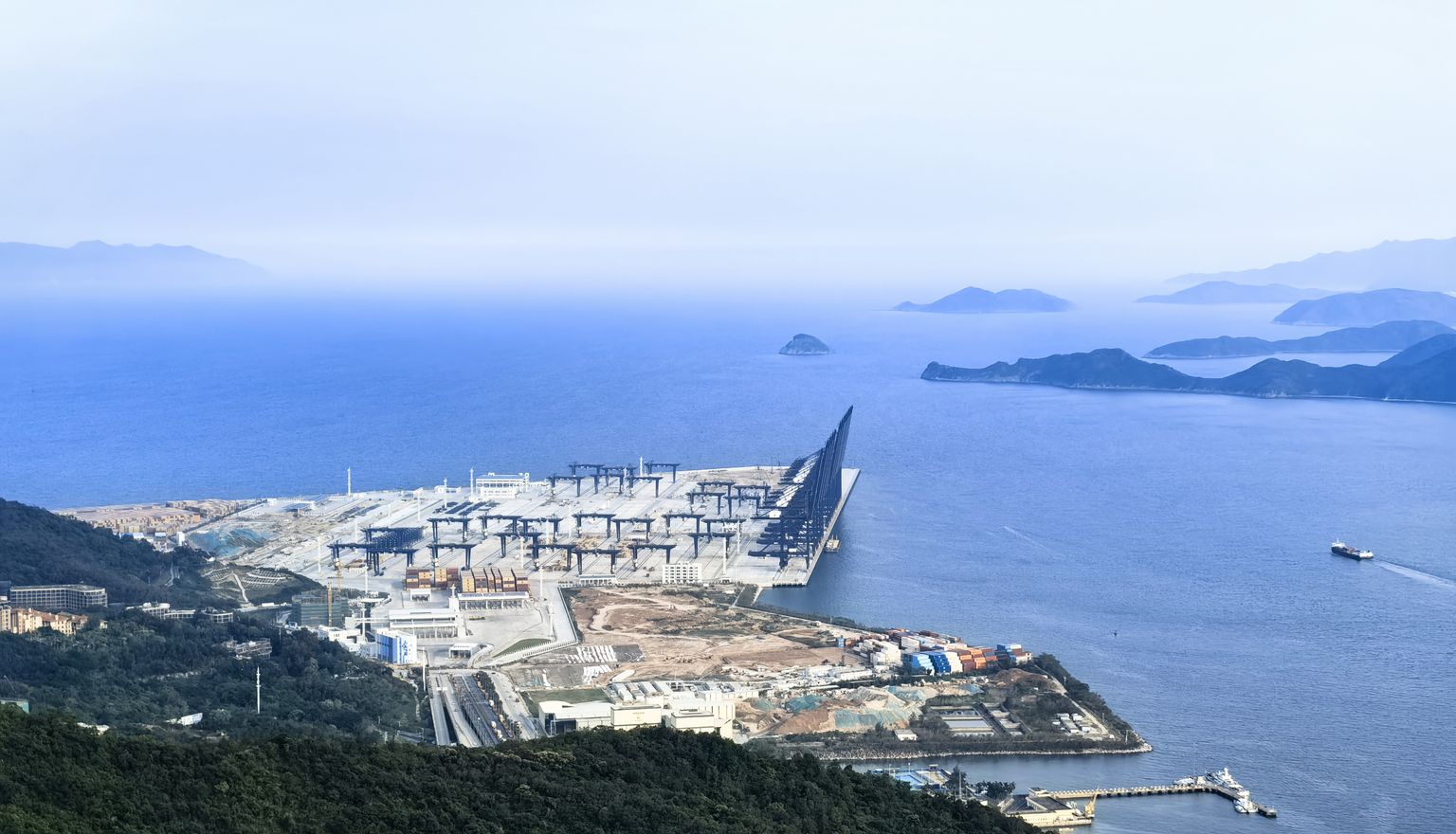
South China to Africa is mostly a transshipment trade. Direct services exist to Durban, Lagos, Mombasa and Dar es Salaam, but a container to Dakar, Douala, Luanda or Matadi usually moves through a hub and changes vessel once, sometimes twice. Each change is a chance to miss a connection and a chance to be re-stowed.
The common hubs are Tanger Med for West Africa, Port Klang, Colombo and Jebel Ali for East Africa and the Indian Ocean coast, and Durban for the southern corridor. A routing that looks slower on paper can be faster in practice, because it uses a weekly connection instead of a fortnightly one.
Transshipment also affects documentation. A cargo tracking note has to be issued in the country of loading, not at the hub, and the note has to match the bill of lading that finally arrives. Where the vessel changes, the note can be left referencing a vessel that no longer carries the box.
Ask for the routing with the connection named, rather than a bare transit time. A quoted 32 days that assumes a connection with a two-day window is a 46-day shipment three weeks out of four.
African port performance varies enormously, and an average hides the cases that matter. The ports that most often add days are well known to anyone trading the region.
| Port | What it serves | What adds time |
|---|---|---|
| Lagos (Apapa, Tin Can) | Nigeria, and transit to Niger | Berth waiting and road access; the port is inside a city |
| Tema, Abidjan, Dakar | Ghana, Côte d'Ivoire, Senegal and the Sahel | Document checks, and the inland leg north |
| Douala | Cameroon, Chad, Central African Republic | Draft limits and the rail or road corridor |
| Mombasa | Kenya, Uganda, Rwanda, Burundi, eastern DRC | Clearance speed, and the corridor beyond |
| Dar es Salaam | Tanzania, Zambia, Malawi, DRC | Yard congestion and corridor trucking |
| Durban | South Africa, Zimbabwe, Zambia, Botswana | Terminal throughput and rail capacity |
| Luanda, Matadi, Lobito | Angola, DRC, and the Atlantic corridor | Limited berths, and shallow approaches at some |
These are structural characteristics, not schedules. Port performance changes with investment, season and politics, and a port that was slow two years ago may be faster now. Ask your agent for the current dwell time before you promise a date.
The pattern worth internalising is that the port is a fixed cost in time, and the variable is the inland leg. A container to Nairobi clears Mombasa and then drives; a container to Kampala clears Mombasa and then drives further, across a border.
A large group of African states requires a cargo tracking document for every import consignment. The name changes with the country — BESC, ECTN, CTN, BIC, FERI, CNCA — and so does the issuing body, but the mechanism is the same: a certificate is bought in the exporting country, validated against the bill of lading, and without it the container is either not loaded or not cleared.
The critical property of these documents is that they are issued before departure. Unlike a certificate of origin, which can sometimes be produced after arrival, a tracking note has to reference a bill of lading that has not yet been issued in final form and has to be validated in the country of loading. Attempting it after the vessel has sailed means dealing with the destination authority, paying a penalty, and in some cases re-routing.
Some states also use the note as the basis for a destination inspection fee, so the note and the inspection are one process with one payment, and the payment is made in the exporting country in foreign currency.
The practical rule for a supplier in Guangdong: before the booking is confirmed, list the destination country's tracking requirement, the issuing body, the cost basis and the cut-off. If any of those four is unknown, the shipment is not ready to book.
Several African states moved conformity assessment to the country of export, which is good news for buyers who plan and expensive for those who do not. Nigeria, Kenya and Tanzania are the three most common examples.
Nigeria operates the Standards Organisation of Nigeria Conformity Assessment Programme. A regulated product needs a product certificate, obtained through an approved inspection body, and then a shipment certificate for each consignment. Goods arriving without it are refused at the port, and the cost of returning or destroying a container is borne by the importer. Nigerian imports also need the bank's Form M and a pre-arrival assessment from customs, which means the importer's bank is part of the critical path.
Kenya requires pre-export verification of conformity for regulated products, managed through the standards body, plus an import declaration form. Tanzania runs its own programme through its bureau of standards. In each case the inspection happens at the factory or the warehouse in China, before the container is sealed.
The consequence is a lead time that runs in parallel with production, not after it. A supplier who only calls the inspection body once the goods are ready will add a week to ten days, and the booking will move to the next vessel.
Egypt requires an advance cargo information declaration for imports. The importer registers the shipment on the national platform, obtains a reference number, and that number has to appear on the bill of lading, the manifest and the documents before the goods are loaded. The window is measured in hours, and it is counted before loading at the foreign port, not before arrival.
What that means in practice is that the importer has to have the commercial invoice, the packing list, the producer details and the HS code in the system while the container is still in a Chinese yard, and the supplier has to know the reference number so it can appear on the bill of lading.
A bill of lading issued without the number is not correctable by email at sea. The usual outcomes are a re-issued bill, an amendment fee, and a delay that can exceed the ocean transit.
Egypt is also a market where the importer's registration with the customs authority and the exporter's registration in the exporting country are both prerequisites, and the exporter registration is a step that Chinese suppliers frequently have not completed. Confirm it early, in writing.
A meaningful share of African import volume is landlocked. Uganda, Rwanda, Burundi, Zambia, Zimbabwe, Malawi, Chad, the Central African Republic, Mali, Burkina Faso and Niger all import through a neighbour's port, and the corridor is a business of its own.
Each corridor has a name, a length and a set of constraints: the Northern Corridor from Mombasa, the Central Corridor from Dar es Salaam, the Beira and North-South corridors in the south, and the Abidjan-Lagos and Dakar corridors in the west. Trucking is the usual mode, and rail where it functions.
Three things change the economics. Transit goods need a transit declaration and a bond, and the bond is released only when the goods exit the transit country. The container may have to be stripped and re-loaded onto a different vehicle at the border. And the border itself is a queue, sometimes a long one.
For a buyer in Kampala or Lusaka, the honest planning number is not the ocean transit. It is the ocean transit plus clearance plus corridor, and the corridor is the part that varies most. Ask for a door delivery quote with the border crossings named.
Destination charges in much of Africa are high, and they are paid in foreign currency before release. Terminal handling, documentation, customs brokerage, storage and the inland leg are all billed at the destination, and the credit terms are short or nonexistent.
Where a currency is short, the constraint is not the charge but the ability to pay it. Importers in several markets spend weeks obtaining foreign exchange, and the container accrues storage the whole time. That delay is invisible in a freight quote and dominates the landed cost.
The charges that most often surprise a first-time buyer are storage before clearance, which starts after a short free period and is charged per day per container, and the re-export or destruction cost when the goods cannot be cleared at all. Both are avoidable with documents that are complete at arrival.
The structural advice is the same as in the Gulf: ask for the destination charge sheet for the specific port before booking, and ask who bears storage if clearance is delayed by a document the buyer controls.
The base set is the invoice, the packing list, the bill of lading and a certificate of origin. On top of that, depending on the country: a cargo tracking note, a conformity certificate, an import declaration form, a bank form, a fumigation certificate for wood packaging, and a pre-shipment inspection certificate.
The invoice needs a description specific enough to classify, the HS code, the origin, the Incoterm and the terms of payment. Several destinations also require the freight and insurance to be shown, because the customs value is computed on a CIF basis and the invoice is the evidence.
Language matters more than buyers expect. Angola, Mozambique and the Lusophone states work in Portuguese; the Maghreb and much of West Africa work in French. An invoice in English is accepted in some of those markets and questioned in others, and a translated invoice is cheaper than a hold.
Wood packaging needs the ISPM 15 stamp on every piece, and a fumigation certificate where the destination asks for one. A single unmarked pallet in an otherwise compliant container is enough to trigger a treatment order, and treatment at an African port is slow and expensive.
Buyers get into trouble not by shipping slowly but by promising a date computed from the ocean transit alone. A realistic model has four parts, and three of them are not the ship.
Production and inspection come first, and for a fair order they are the longest. Then the booking and the cut-off, which can add a week if the vessel is full. Then the ocean leg, which for most African destinations from South China runs in the range of twenty-five to forty days and varies with routing. Then clearance and delivery, which for a port destination is days and for an inland destination is weeks.
What that produces for a port delivery is a typical six to nine weeks from deposit; for an inland capital, eight to twelve. Those are ranges, not commitments, and the honest way to present them is as ranges with the assumptions named.
The one date worth committing to is the sailing date, because it is the one you control through booking discipline. Everything downstream should be described as a range, and the range should be built from the current routing rather than from last year's experience.
Q What is a cargo tracking note and do I need one?
It is a certificate required by a number of African states for each import consignment, known as BESC, ECTN, CTN, BIC, FERI or CNCA depending on the country. It is issued in the exporting country before departure and validated against the bill of lading. Without it the container is not loaded or not cleared.
Q How long does shipping from China to Africa take?
Typically twenty-five to forty days port to port from South China, depending on the destination and the number of transshipments. Door delivery to an inland capital usually adds two to four weeks for clearance and the corridor.
Q Which countries require conformity inspection before shipment?
Nigeria, Kenya and Tanzania are the most common, each with its own programme and issuing body. The inspection happens at the factory in China before the container is sealed, so the lead time runs alongside production rather than after it.
Q Why does Egypt need a number on the bill of lading before loading?
Egypt requires an advance cargo information declaration, and the reference number has to appear on the bill of lading and the manifest. Missing it means re-issuing the bill at sea, which costs an amendment fee and usually a missed connection.
Q Can I ship to Uganda or Zambia through Mombasa or Dar es Salaam?
Yes, and it is the normal route. Transit goods need a transit declaration and a bond in the port country, and the container may be stripped and re-loaded at the border. Budget the corridor separately from the ocean leg.
Q Do African ports accept photocopied documents?
Most require originals or electronically validated documents, and several require legalisation or a specific form. Assume originals travel with the courier, not with the container, and send them early.
Related pages
Tell us the destination port or city and the product, and we will set out which certificates have to be issued in China before the vessel loads, and what the corridor adds after that.
Email sales8015@goodhopefreight.com | WhatsApp & phone +86 133 9216 2503