
Special Cargo
Customs asks what the goods are worth. Biosecurity asks what is living on them, and it has the power to send the container back.
Contents
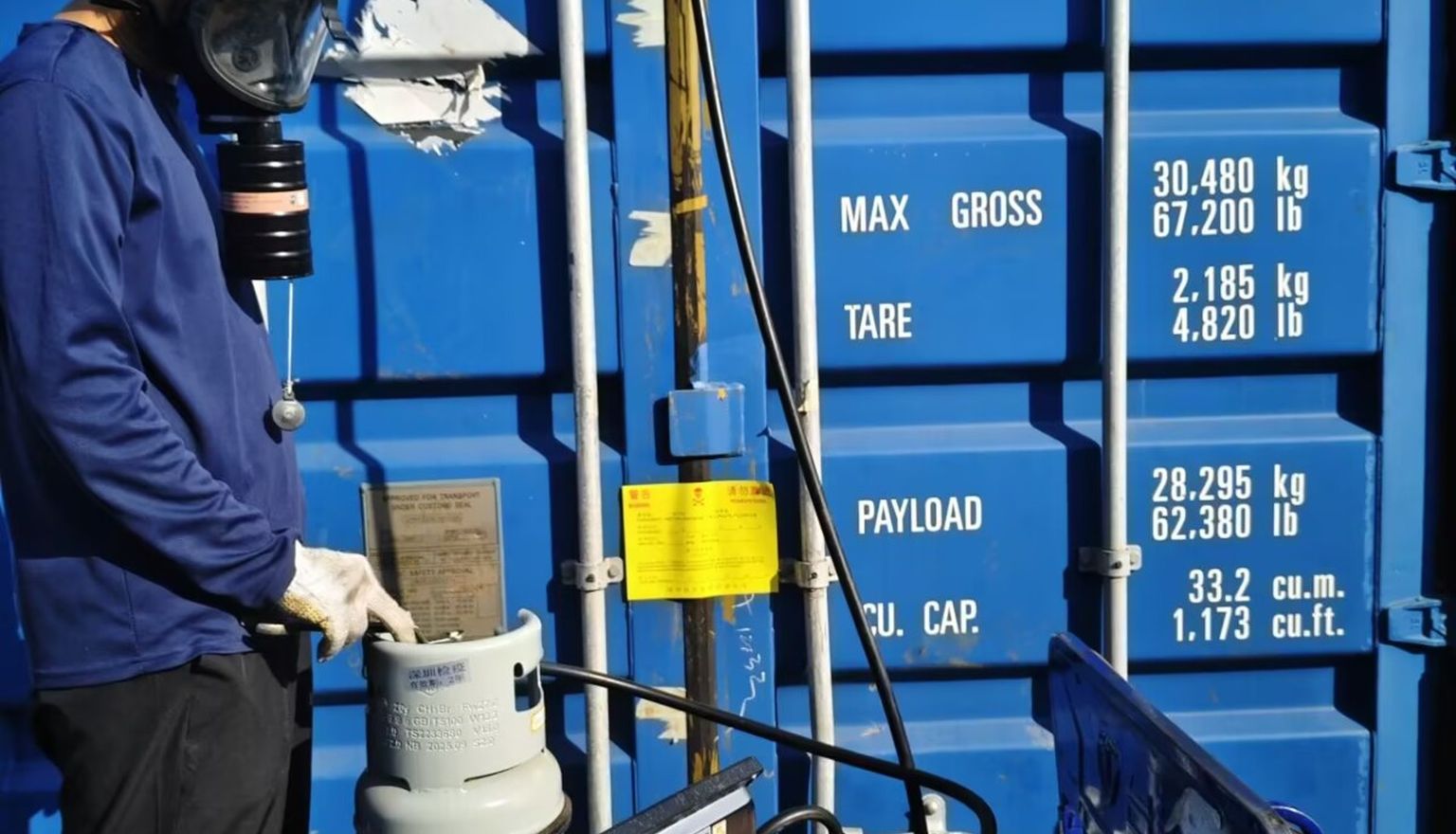
Australia and New Zealand are island economies with agricultural sectors that a single introduced pest can damage permanently. Both therefore run biosecurity as a separate border function from customs, with its own legislation, its own inspectors and its own power to refuse goods that customs has already released.
In Australia the function sits with the agriculture department, and the conditions for any commodity are published in its biosecurity import conditions database. In New Zealand it sits with the primary industries ministry, which publishes import health standards per commodity. Both are searchable, both are specific, and both are written for the importer rather than the freight forwarder.
The practical consequence is that a shipment can be customs-cleared and still held, and the hold is not appealable on commercial grounds. A container with live insects, soil on the pallets or bark on the dunnage is refused or treated, and the cost of either falls on the importer.
What this changes about planning is the sequence. For these two markets, the biosecurity question comes before the booking, not after it, because the answer decides which goods can travel together in one container.
All solid wood packaging — pallets, crates, dunnage, bearers, and the timber bracing inside a container — has to be treated and marked under the international standard for wood packaging. Treatment is either heat treatment, where the core of the wood is held at a specified temperature for a specified period, or fumigation with methyl bromide. Plywood and processed board are exempt because they are not solid wood.
The mark is the evidence. It carries the international symbol, the country code, the registration number of the producer or treatment provider, and the treatment code. A pallet with no mark is treated as untreated regardless of what the supplier says, and an unmarked pallet in an otherwise compliant container is enough to trigger a treatment order for the whole consignment.
Two failures recur. A factory buys pallets from an unregistered supplier and assumes the stamp is standard. Or the crates are stamped but the loose bracing timber inside the container is not, because packing staff used offcuts from the yard.
The instruction to give a supplier is specific: every piece of solid wood in the container, including internal bracing, must carry a legible mark, and the marks must be photographed before the doors close. A photograph taken at loading is the only evidence that survives the voyage.
Australia applies seasonal measures against the brown marmorated stink bug, a pest that arrives on goods manufactured in or shipped from listed countries during the northern autumn, when the insect seeks shelter to overwinter. China is on the list. The measures apply to a defined set of goods — vehicles, machinery, some electrical products, certain furniture and building materials — rather than to everything.
The season generally runs from the first of September to the end of April, and during that window a consignment of risk goods from a target country needs either offshore treatment with a valid certificate or onshore treatment at an approved facility. Offshore is cheaper and faster, and it has to be arranged by the supplier before the container is sealed.
New Zealand operates comparable measures for vehicles, machinery and some other goods, with its own list and its own requirements. The two countries do not accept each other's treatment regimes automatically, so a container treated for Australia is not automatically cleared for New Zealand.
The measure is reviewed each season, and the target country list and the goods list change. Treat any list read here as a description of how the mechanism works, and confirm the current season's determination with the agent before booking. This is the one area where last year's experience is actively dangerous.
In a full container load the goods belong to one shipper, and the biosecurity risk is confined to that shipper's packing. In a less-than-container load the box is shared, co-loaded at a consolidation warehouse, and deconsolidated at destination. If one shipper's cargo carries an insect, the whole container is held, and every consignee in it waits.
That is not a hypothetical. Co-loading is where a compliant consignment inherits a non-compliant neighbour's problem, and the delay is not compensated by the neighbour, who may not even be identifiable by the time the hold is issued.
There is a second reason. LCL cargo is handled more, at more premises, and each handling is an opportunity to introduce contamination: a shared pallet, a warehouse floor, a forklift that has just moved timber. The container is also opened at a deconsolidation facility before biosecurity inspection in some routings, which spreads the risk across two sites.
For low-value goods the cost of FCL is hard to justify, and LCL is the right answer. For anything with wood, plant material, food or used machinery, the risk calculation usually favours a dedicated container, even a small one.
Biosecurity interest follows materials, not brands. Categories that reliably trigger inspection include anything made of solid wood, rattan, bamboo, cane, seagrass or dried plant material; leather and hides; feathers and down; food of any kind including confectionery and beverages; seeds and agricultural implements; soil-bearing used machinery; and anything packed in or with straw.
Used goods are treated more strictly than new ones, because they carry the history of where they have been. A used machine needs to be cleaned to a documented standard before shipment, and steam cleaning at destination is expensive and sometimes refused.
Furniture is the category where fair buyers most often get caught, because a design that uses a woven cane panel or a solid timber frame is a plant product in the eyes of the border, however finished it looks. A certificate from the factory stating the material and the treatment is useful; a photograph is not.
Garden and outdoor products, Christmas decorations using natural materials, and pet products containing animal protein all sit in the same territory. The question to ask a supplier is not "is it treated" but "what is it made of, exactly, and where did that material come from".
Both countries require the importer to declare what is in the consignment, and the declaration is a legal statement with penalties attached. In Australia the importer or its agent makes the declaration against the import conditions; in New Zealand the importer must satisfy the relevant import health standard, and a supplier declaration is often required as evidence.
The failure that costs most is under-declaration, not smuggling. A supplier describes a shipment as "furniture" when it contains a rattan panel, or as "machinery" when the machine has soil in the chassis. The declaration is then wrong, the inspection finds the difference, and the penalty regime is designed to make the example.
There is also a direct cost that arrives before any penalty: the container is held, storage accrues, the treatment is ordered, and the delivery date moves. For a retail buyer with a launch date, that sequence is more expensive than the fine.
The workable habit is a material list per product from the supplier, in writing, kept with the shipment file. It takes an hour to obtain and it is the document that answers the inspector's question at the border.
Onshore treatment is possible and it is the expensive path. The container is directed to an approved facility, treated, held for the required period, and re-inspected before release. Each of those steps has a queue, and the queues are longest in the weeks before Christmas and during the seasonal measures window.
Cost has three parts: the treatment itself, the transport to and from the approved facility, and the storage while the container waits its turn. For a full container the total is a meaningful fraction of the ocean freight, and it is charged before the goods move.
Where treatment cannot resolve the problem — live larvae in a food product, soil in a machine that cannot be cleaned — the options are re-export or destruction, and both are charged to the importer. Re-export requires a destination that will accept the goods, which is not always the country they came from.
Offshore treatment removes most of this. It costs less, it happens on the supplier's schedule rather than the port's, and it produces a certificate that travels with the documents. The only difficulty is that it has to be arranged before the container is packed, which means it has to be in the purchase order.
Duty into both markets is comparatively benign for Chinese-origin goods, because both countries have free trade agreements with China that have removed or reduced most tariff lines. Australia's agreement and New Zealand's agreement each have their own rules of origin and their own certificate requirements, and where the goods qualify the duty is often zero or close to it.
The tax is the larger number. Australia applies a goods and services tax of 10% on imports, and New Zealand applies 15%. Both are charged on a value that includes the customs value, duty, and the international transport and insurance, so the base is larger than the invoice.
Both countries also collect tax on low-value imported goods, with the obligation falling on the overseas supplier in defined circumstances. That matters for a buyer planning to send samples or to sell direct, and it does not apply to a normal commercial import.
Registered importers recover the tax through their business activity statement or return. Unregistered buyers do not, and for a first shipment into Australia that is often the difference between a viable landed cost and an unviable one.
A shipment into either market should carry more slack than one into Europe or North America, and the slack belongs in the plan rather than in an apology later.
Four things add time. The seasonal measures, which can require offshore treatment before loading. The biosecurity inspection itself, which is not scheduled to suit the consignee. Any onshore treatment, which adds a queue on top of the inspection. And the distance, which for a direct service from South China is typically two to three weeks to Australia's east coast and three to four to New Zealand, with transshipment adding a week.
The realistic door-to-door range for a compliant FCL shipment is five to eight weeks; a shipment that needs onshore treatment, or that arrives during the peak of the seasonal window, can be two weeks beyond that.
The one thing that reliably shortens the process is documentation that anticipates the questions: ISPM 15 photographs at loading, a material list per product, offshore treatment certificates where the season requires them, and a supplier who answers an email within a day while the container is still on the water.
Q Do I need to fumigate everything going to Australia?
No. Fumigation is required for specific risks, not as a blanket rule. What is required universally is ISPM 15 treatment and marking on all solid wood packaging. Whether the goods themselves need treatment depends on the commodity and the season.
Q What is the stink bug season and does it apply to my goods?
Australia applies seasonal measures against the brown marmorated stink bug, generally from September to April, to a defined list of goods from listed countries including China. Vehicles, machinery, some electrical goods and certain furniture are covered. The list is reviewed each season, so confirm the current determination.
Q Is a heat-treated pallet enough, or does the crate need treatment too?
Every piece of solid wood in the consignment needs treatment and a legible mark, including crates, dunnage and internal bracing. Processed board such as plywood is exempt. An unmarked offcut used as bracing is enough to trigger a treatment order.
Q Why is LCL riskier than FCL for these markets?
Because the container is shared. One shipper's infested cargo holds the whole box, and the delay falls on every consignee. FCL keeps the risk inside your own packing.
Q Can treatment be done after arrival?
Yes, at an approved facility, and it is significantly more expensive and slower than offshore treatment. Transport to the facility, the treatment and the storage while waiting are all charged to the importer.
Q Is duty payable on Chinese goods into Australia and New Zealand?
Often not, or at a reduced rate, because both countries have free trade agreements with China. The goods have to meet the rules of origin and be documented accordingly. The goods and services tax is the larger charge.
Related pages
If the destination is Sydney, Melbourne, Auckland or Lyttelton, tell us the product and the packing material, and we will confirm what has to be treated in China and what the current season requires.
Email sales8015@goodhopefreight.com | WhatsApp & phone +86 133 9216 2503