
Hainan, China · Haikou Port Xiuying container terminal · FCL exports
Haikou Port Container Drayage
GoodHope Freight handles container drayage at Haikou Port in Hainan, China, where export boxes are mainly handled at the Xiuying Port Area container terminal while breakbulk and much of the dangerous-goods work sits at Macun and the deep-sea hub at Yangpu. We pull an empty container from the terminal or a container yard, deliver it to your supplier for loading, and gate the loaded box back before the vessel's cut-off. Drayage is the short-haul truck move between a port and a factory or warehouse; in China it is usually called container trucking.
- 20ft / 40ft / 40ft HC / 45ft HC
- Heavy loads and dual 20s
- Open top and flat rack
- Reefer and dangerous goods
- Pre-pulls and transloading
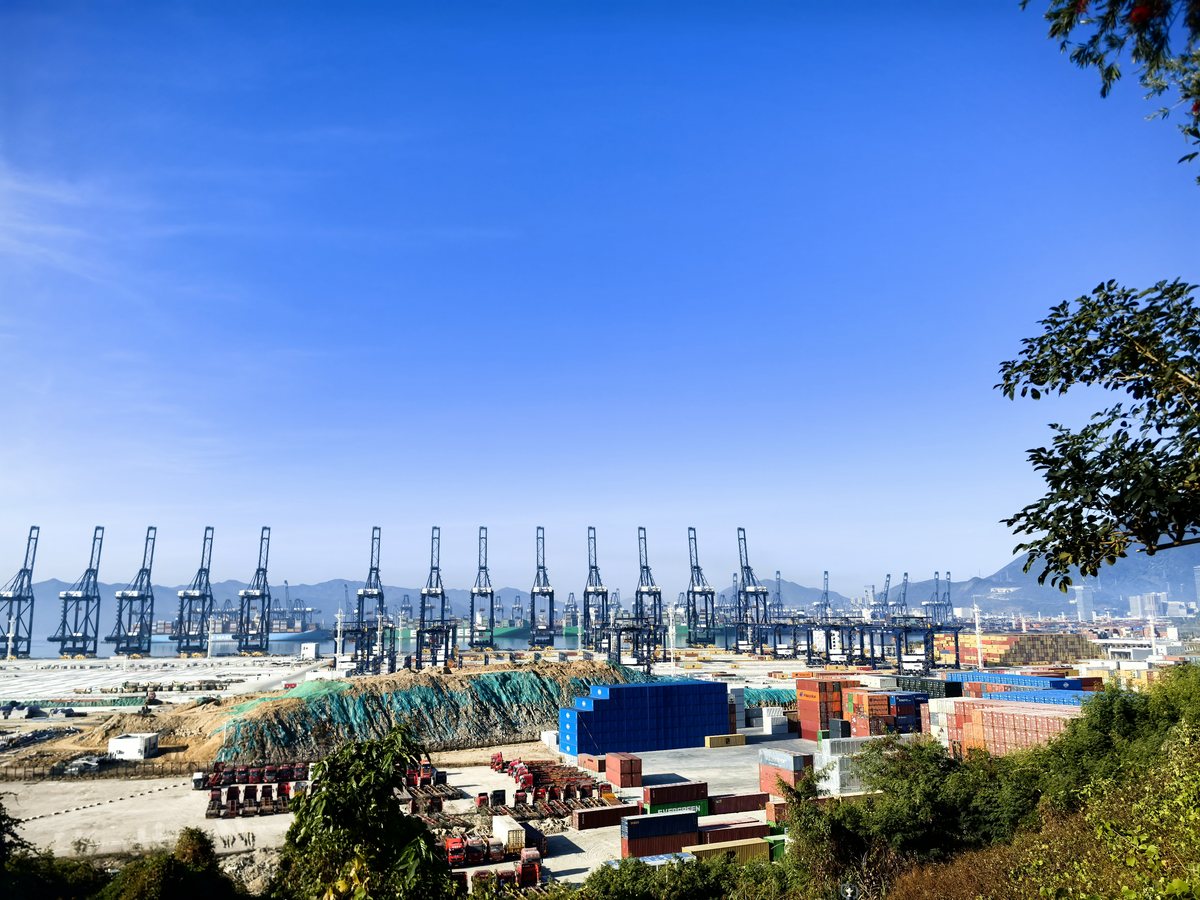
This leg matters most when you buy FOB or FCA from a Hainan factory and nominate your own ocean carrier. The carrier releases the empty, but someone still has to position the box, get it loaded, weigh it and gate it in on time. Our dispatch desk sits in Shenzhen on China time (GMT+8), in the same time zone as your factory and the terminal.
GoodHope Freight is a Shenzhen-based freight forwarder. Our scope covers ocean FCL and LCL on a port-to-port basis, air freight to airport, road transport and in-transit moves to Afghanistan. Drayage on this page is the China-side trucking leg of an ocean FCL shipment.
What a Haikou drayage move covers
Your supplier's location sets the trucking plan. The regions below are described by what they mean for scheduling.
| Factory region | Common locations | What it means for your booking |
|---|---|---|
| Haikou city and nearby | Xiuying, Longhua, Qiongshan, Meilan, Chengmai, Lingao | Short runs near the terminal. Same-day empty pickup, loading and gate-in are realistic when the release and the appointment line up. |
| Northern and western Hainan | Danzhou, Yangpu, Changjiang, Dongfang, Baisha | Longer island runs. Check plant access for a 40ft rig and confirm axle loads for dense cargo. |
| Guangzhou and Foshan | Panyu, Shunde, Nanhai, Foshan | Longer hauls. Build in a buffer for gate queues; a pre-pull is often worth arranging. |
| Zhongshan, Jiangmen, Zhuhai | Zhongshan, Pengjiang, Tangjiawan | Cross-river routes. Lock the loading window and the return window separately. |
| Eastern and southern Hainan | Wenchang, Qionghai, Wanning, Lingshui, Sanya | Long island runs. Match the chassis and tractor to the gross weight and keep the gate buffer intact. |
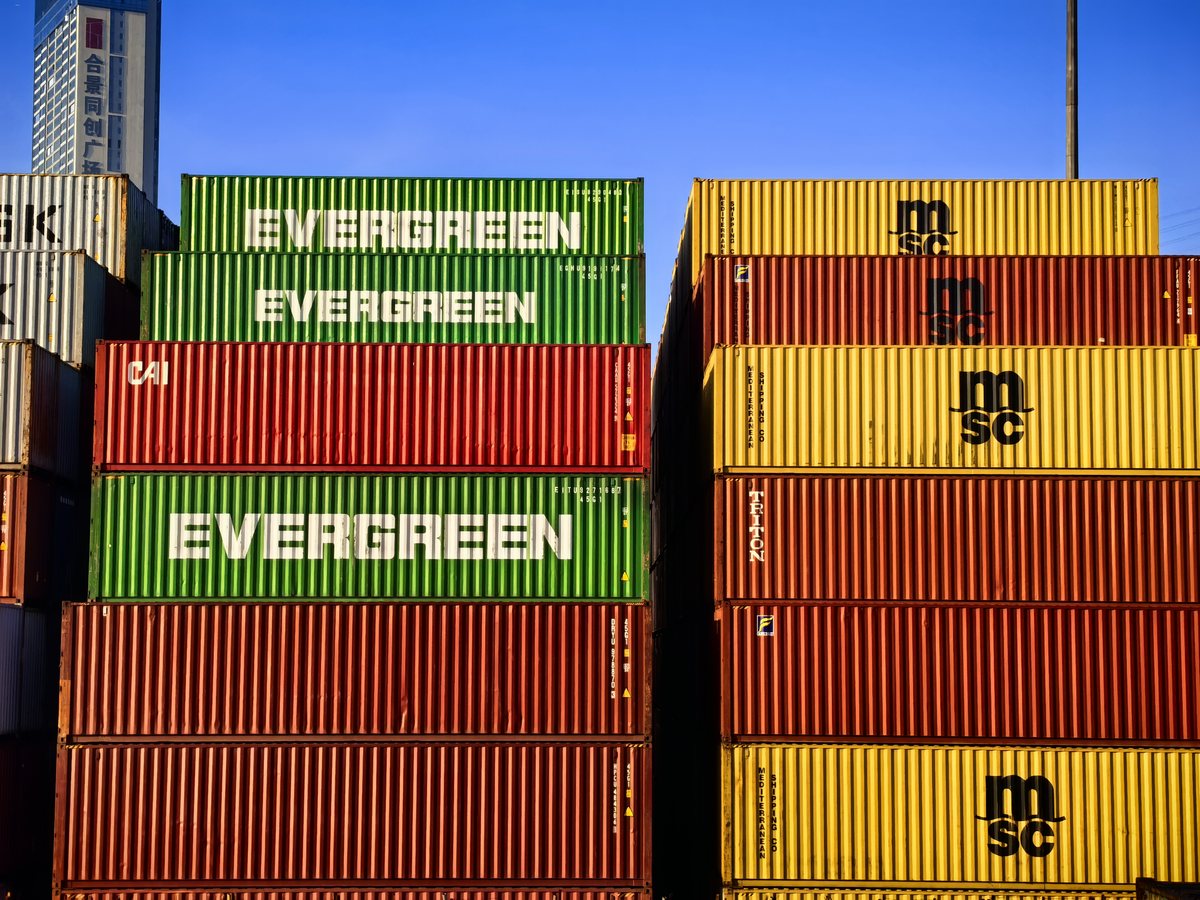
Routing the same cargo through Macun or Yangpu instead, or switching between an overseas export and a second-line island-exit move, changes the terminal rules, the supervision lane and the charge structure. Confirm the working port area and the destination before asking for a drayage quote.
Container types and trucking setup
Standard dry containers are dispatched by size. Plant access and cargo weight decide the chassis.
| Container | Common shorthand | Typical cargo | Trucking note |
|---|---|---|---|
| 20ft standard dry | 20GP, one TEU | Tile, stone, metal parts, chemical raw materials | Short chassis. Dense cargo means axle weight gets checked first; two 20ft boxes can sometimes share one chassis. |
| 40ft standard dry | 40GP, one FEU | Furniture, building materials, general cargo | Standard chassis. The plant needs room for a 40ft rig to enter and turn. |
| 40ft high cube | 40HQ or 40HC | Light bulky goods, appliances, textiles | Extra height. Check overhead clearance at the plant gate and along the approach road. |
| 45ft high cube | 45HQ | High-volume light cargo, consolidated orders | Needs a longer chassis and carrier confirmation. Not every depot stocks this size, so check empty availability first. |
A trucking order should state the loading date, the factory name and address, a contact on site, the commodity, the actual gross weight, the container type and count, the Incoterm, and the vessel cut-off. Wood packaging bound for Australia, New Zealand, the US or Canada may need fumigation or a phytosanitary certificate before loading starts.
Use the carrier's container specification for internal dimensions, not a rule of thumb. Confirm the plant can take the truck length before the driver arrives; reloading in a nearby yard adds a full extra handling.
Heavy containers and two 20s on one chassis
Overweight loads
Tile, stone, metal goods, steel coil and chemical powders are the usual heavy cargoes. The weight question gets settled at booking, not at the gate. We confirm the carrier's weight cap for the sailing and declare the actual gross weight before the empty is released.
After loading, the shipment gets a Verified Gross Mass (VGM), the SOLAS-required certified container weight that has to match the booking and the export declaration. If the scale reading exceeds the cap, the load has to be reduced, split or rolled to the next sailing. Sending an overweight box to the gate in the hope it passes wastes the appointment and risks missing cut-off.
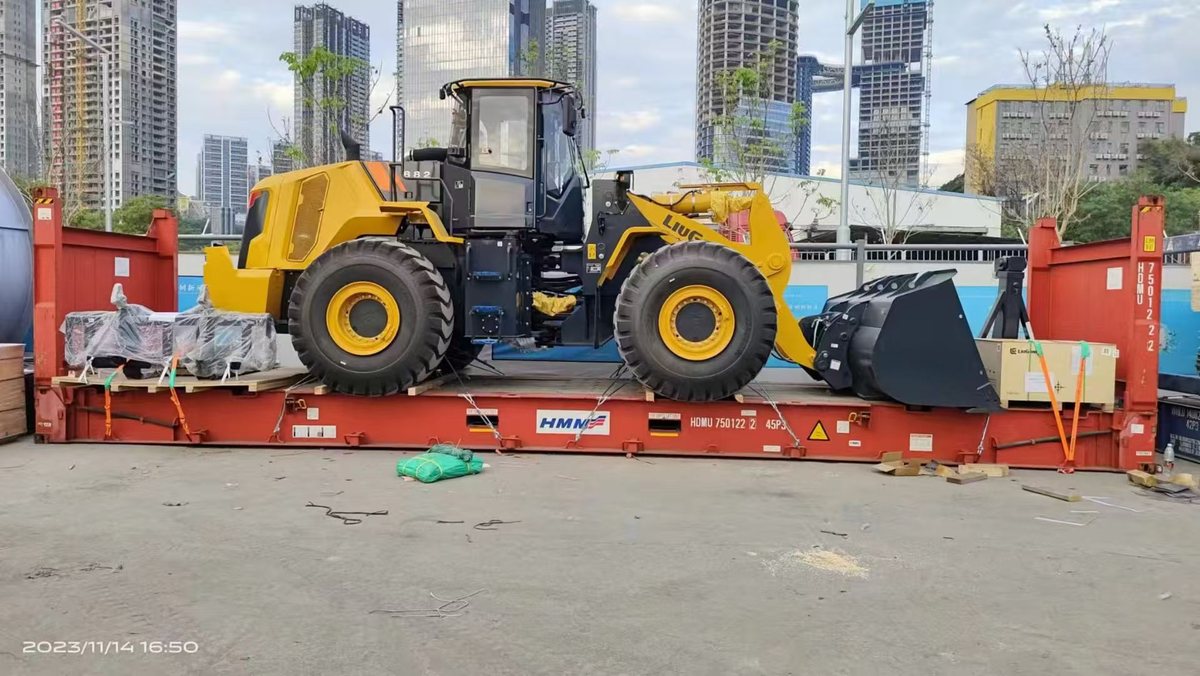
Dual 20s on one chassis
Dual 20s means one tractor pulls two 20ft containers at once. It is common when each box is dense and the combined weight still fits road axle limits. Whether it works depends on both gross weights, whether the plants share an address or sit on the same route, chassis length, and the terminal's gate rules for doubles. Send both weights and the loading sequence and dispatch will confirm the setup.
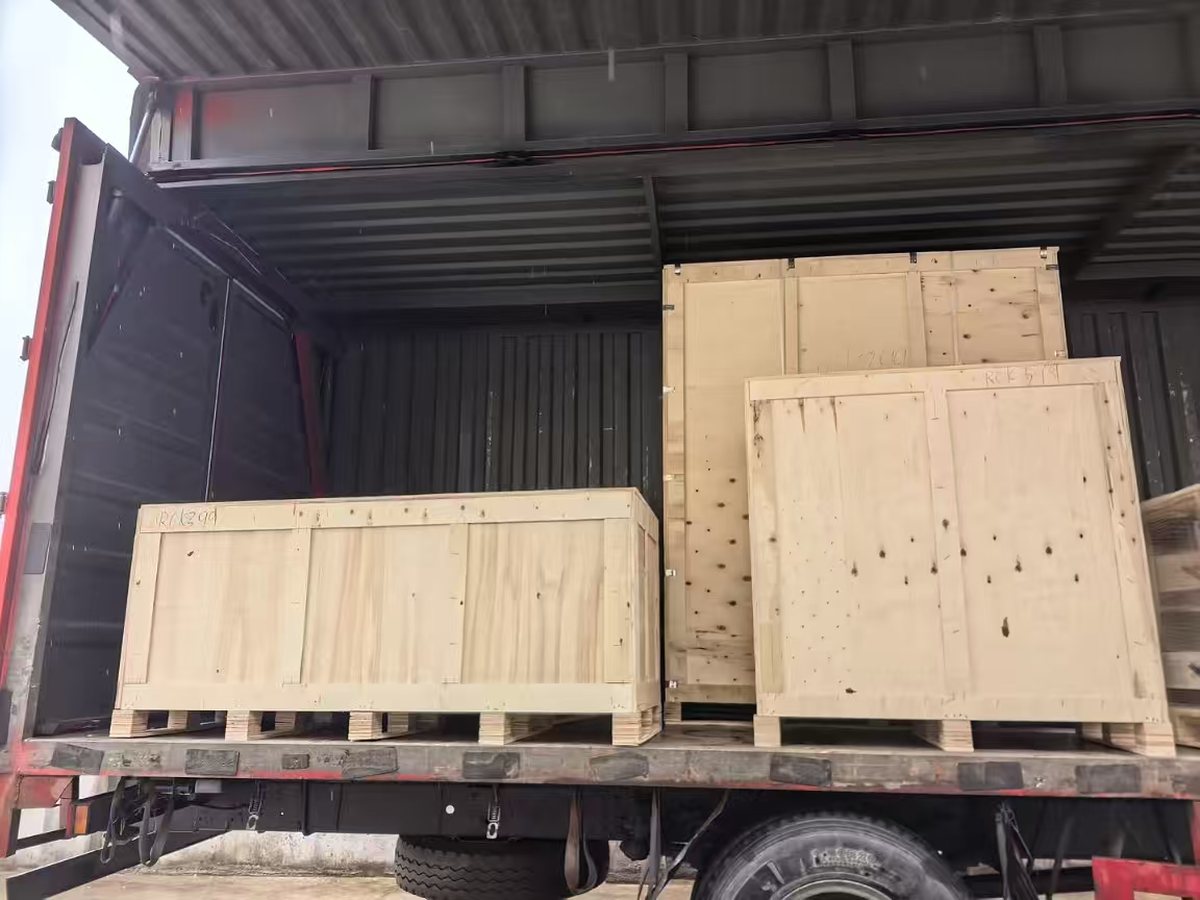
Open-top and flat-rack containers
Both types carry cargo that will not fit through the doors of a standard dry box.
Open-top containers
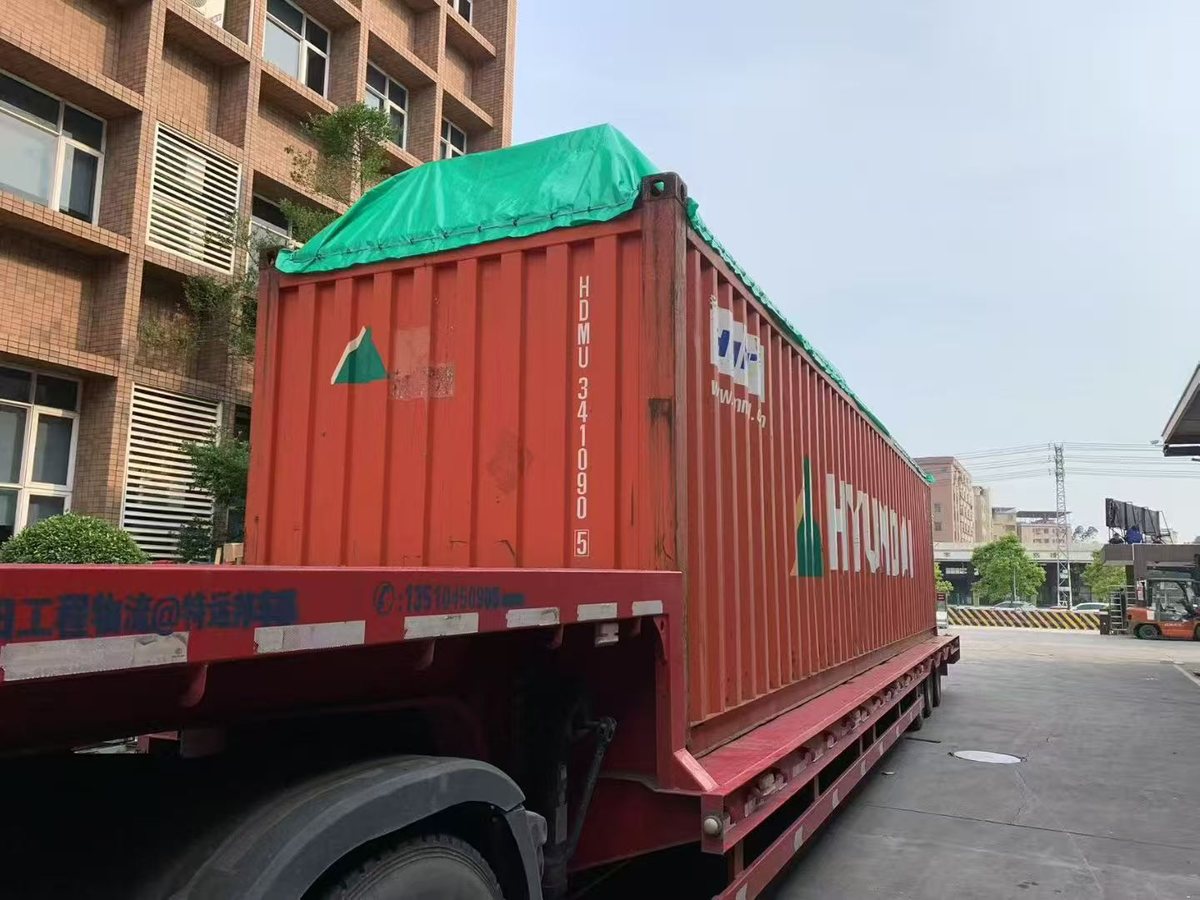
An open-top container (OT) has a removable roof so cargo can be lowered in by crane. It suits tall machinery, glass and equipment that fits the footprint but not the height. A tarpaulin and lashing straps close the top. Total height affects road clearance, so bridge heights, overhead lines and the plant's door frame get checked before the truck rolls.
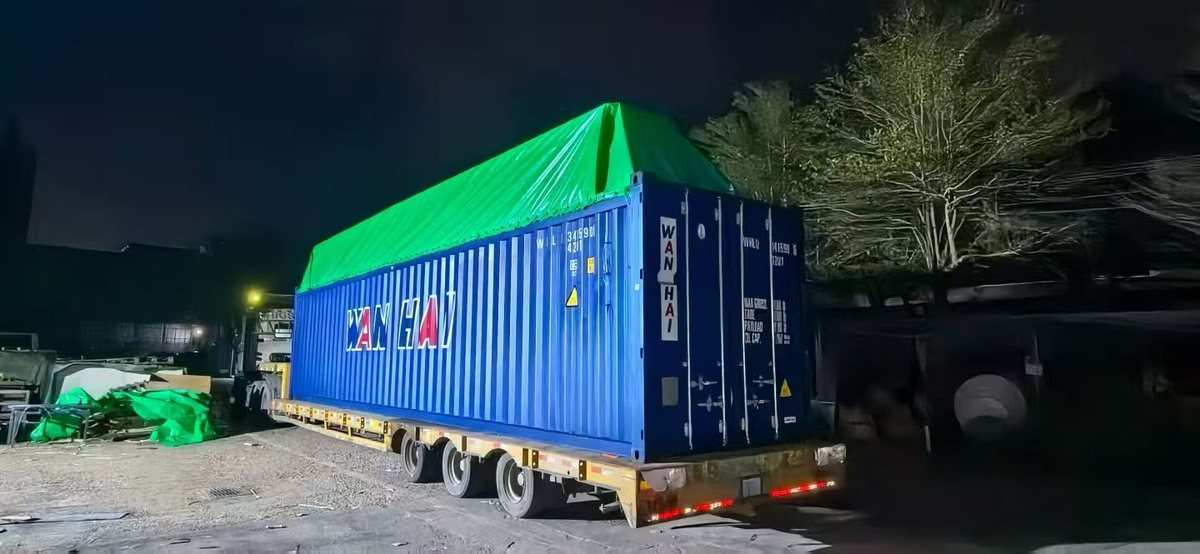
Flat-rack containers
A flat-rack container (FR) has no roof or side walls, only a floor and end frames. It carries wide, long or side-loaded cargo. The shipper arranges weather protection and the lashing plan, and marks the center of gravity and support points on the packing drawing. Both OT and FR are out-of-gauge (OOG) solutions, which the carrier and the terminal approve shipment by shipment.
Dangerous goods and ISO tanks
Hazardous cargo moves under a licensed dangerous-goods truck with a qualified driver and, where required, an escort. Paperwork is checked before dispatch, not at the gate.
| Document or condition | What gets checked |
|---|---|
| Dangerous goods packaging certificate | China's packaging use appraisal must match the UN class, packaging type and quantity, and stay within its validity |
| Safety Data Sheet (SDS or MSDS) | Product name, UN number, hazard class, emergency response and transport conditions |
| Carrier's DG booking acceptance | The line accepts the class, container type and load port |
| Licensed vehicle and crew | Carrier licence, driver and escort qualifications, plus a current tank certificate for ISO tanks |
| Terminal receiving rules | Gate window, storage location and declaration timing for DG boxes |
An ISO tank is a tank container that carries liquid or gas chemicals inside a frame. It needs a current tank certificate and a filling record. With incomplete paperwork the terminal turns the box away. Batteries, liquids, powders and chemicals each have different road requirements, so the desk confirms the exact class, port and sailing before dispatch. DG boxes usually use a separate appointment channel.
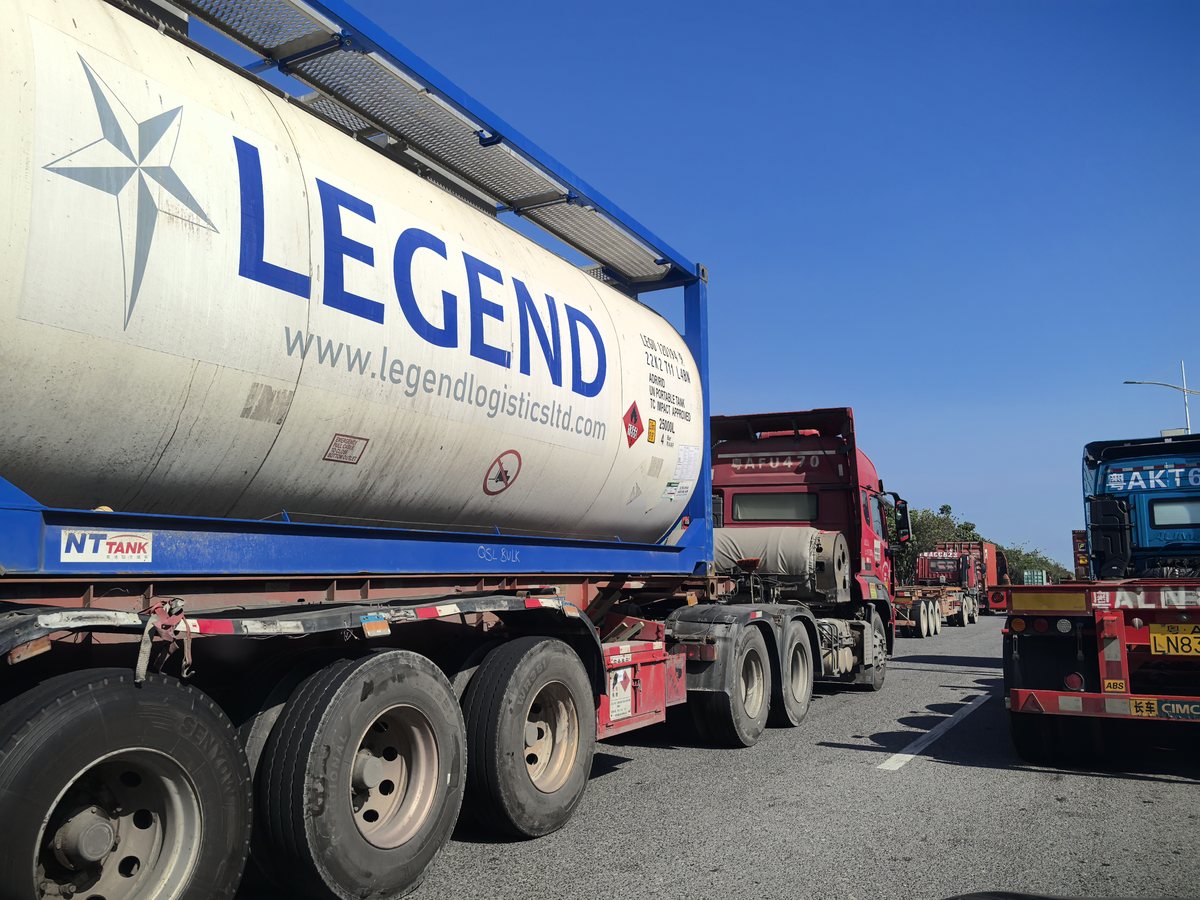
DG dispatch starts with complete paperwork. Confirm the carrier and terminal receiving conditions first, then lock the appointment, so the truck is not left outside a gate that cannot accept its box.
Refrigerated container moves
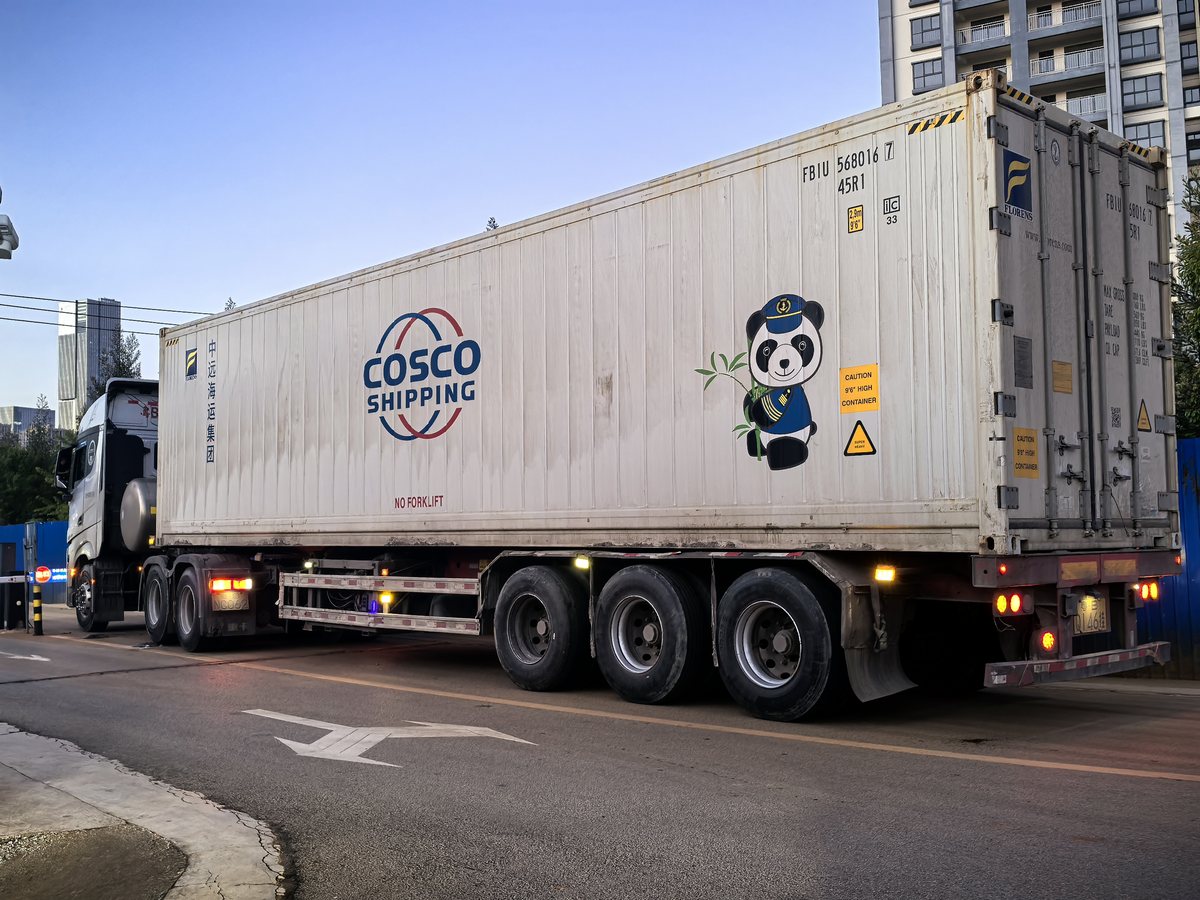
A reefer is a temperature-controlled container with its own refrigeration unit. Before dispatch we confirm the set temperature, ventilation setting, pre-cool requirement and how the unit will be powered on the road. Where shore power is not available, a clip-on genset or a generator chassis is booked. The box is pre-cooled and inspected before loading, and temperature readings are kept for the file.
Food, pharmaceuticals and some chemicals tolerate very little temperature drift, so the window between the plant and the terminal stays tight. Haikou has a limited number of reefer plugs and fixed windows for pickup and return; the trucking plan follows the yard's operating hours. A pre-pulled reefer also needs off-terminal power and a clear free-time limit.
The commodity description and declared details must match the export paperwork. Set point, vent opening and recording method go into the shipping instructions once, rather than being changed mid-move.
Oversized and project cargo
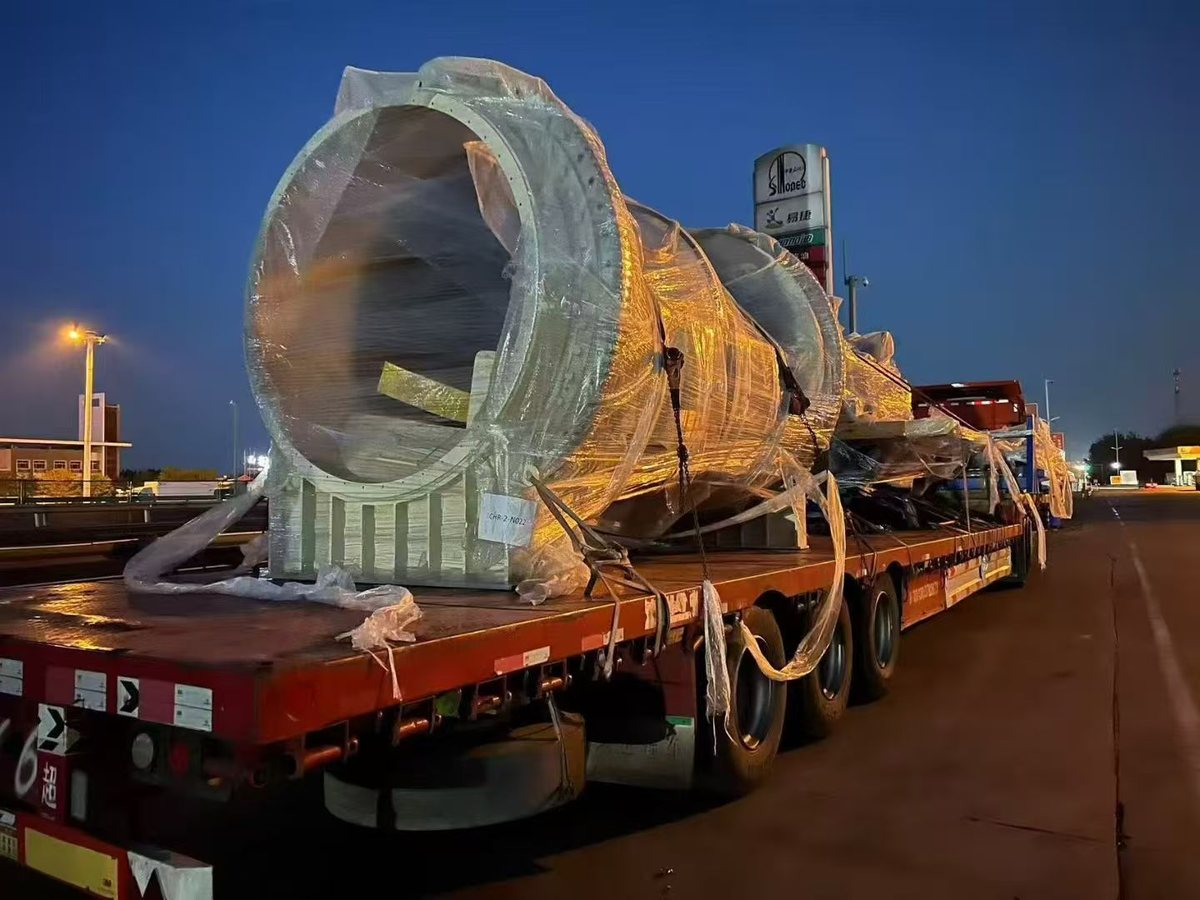
Large machinery, plant equipment, tanks, molds and production lines that will not fit a standard box move on lowboys, extendable chassis or flat racks. The trucking plan starts with real dimensions, gross weight and the center-of-gravity position, then sets lifting points, lashing points and dunnage positions.
A route survey covers the plant's access road, highway ramps, bridge height and weight limits, and the terminal gate lane. Oversize permits are applied for where the route requires them. Once loaded, every lashing point is rechecked and the packing drawing, weight list and photos travel with the driver. The terminal and the carrier confirm receiving and stowage separately for OOG cargo.
Other drayage work we coordinate
Export moves often connect a terminal, a warehouse, a rail ramp or a land port. These are the side jobs we arrange.
Pre-pulls
Pull the empty before the factory is ready and hold it off-terminal. Common before a long holiday or when gate slots are tight. Free time and yard conditions are confirmed in writing.
Empty returns
If a booking is cancelled after the empty is out, the box goes back to the depot. We quote this as its own line so it never appears as a surprise charge.
Split pickup and return
When the empty comes from one depot and the loaded box returns to another terminal, both ends are priced and scheduled up front.
Warehouse loading
Goods from several suppliers can be collected at a warehouse and loaded into one box, or transloaded from a domestic truck into an export container.
Rail ramp moves
Containers can be trucked to inland rail ramps for China-Europe services, with the handover paperwork handled at the ramp.
Land port transfers
Bonded truck moves to land ports are arranged with customs-sealed vehicles and a documented handover.
We coordinate trucking at China's main container terminals, inland rail ramps and land border ports. Cross-port routes and their paperwork are confirmed for each destination.
From empty pickup to gate-in
The schedule is built backward from the cut-off. Each step has an owner and a document.
- Booking release and empty releaseThe carrier issues the shipping order (S/O), the release instruction naming the depot, container type and count, vessel and voyage, and the pickup expiry. Carriers use different release formats and offices, so we clear the paperwork before we release a tractor.
- Empty pickup and condition checkThe driver presents the Equipment Interchange Receipt (EIR), the document that records a box's condition at pickup and return, then checks the container number, seal and body. Damage, distortion or contamination is photographed and logged on the spot, and a swap is requested before the box leaves the yard.
- Delivery to the plant and loadingThe empty arrives at the agreed time. The plant needs a dock or forklift and room for the rig. Dense cargo sits on dunnage to spread the load, machinery is lashed diagonally, and voids in carton loads are filled with dunnage bags.
- Weighing, sealing and recordsAfter loading, the box is weighed for VGM, sealed and photographed. The seal number has to match the export documents and the bill of lading instructions.
- Return to the yard or direct to terminalSome shipments go back to a container yard first, others run straight from the plant to the port. Yard first when inspection or consolidation is needed; direct when the clock is tight.
- Gate appointment and gate-inThe truck arrives inside its booked window and the gate checks the box and seal numbers against the paperwork. For a second-line island-exit move the truck also clears the customs supervision lane, where the smart gate reads the plate, gross weight and box number and either releases it or flags it for inspection.
- Customs release linkChina's export declaration has to be accepted, with the release message delivered to the terminal, before the paperwork deadline. The box has its own physical receiving cut-off; the two clocks are not the same.
| Exception | Response |
|---|---|
| No empties at the depot, or an expired release | Request another depot or a fresh release from the carrier |
| Factory not ready, or loading runs long | Check production status early; split the load or roll onto a later vessel |
| Gross weight above the carrier cap | Declare weight at booking and adjust the load before gating in |
| Seal number does not match the documents | Re-seal and notify the carrier and the customs desk |
| Gate queue or terminal system outage | Keep the appointment buffer and follow terminal notices |
| Customs release not yet transmitted | Push the box and the paperwork on the same timeline |
Every step can involve a queue. Haikou handles agricultural and seafood exports with strong seasonal peaks, and waits stretch during typhoon season, at ferry crossings and when several sailings bunch up. Schedule backward from the tightest cut-off.
Gate appointments and the vessel window
If you import through Los Angeles or Long Beach, gate appointments will be familiar. Haikou works the same way: an export laden container needs a booked time slot before the truck can enter, and a truck outside its window may be turned away. Under the Hainan free trade port, a second-line island-exit move adds a booking on the Hainan International Trade Single Window and the Hainan Port and Shipping service platform. Vessel schedules, lane status and terminal rules are published through the official port and customs channels.
Hainan Free Trade Port started island-wide separate customs operations on 18 December 2025. In January 2026 the first post-closure container shipment left Haikou through the second-line channel at the Xiuying Port Area: the shipper booked on both the Hainan International Trade Single Window and the Hainan Port and Shipping service platform, and the truck entered the customs supervision lane only after both records were verified. A Chengmai County notice (Chengfu 2025 No. 365) sets out the Macun Port Area traffic routing through the shared inspection yard and supervision lanes 1 and 2. ETB stands for Estimated Time of Berthing, the benchmark the terminal uses to open receiving windows, and it changes with the vessel schedule, so recheck an appointment after any schedule update.
A longer window means a slot can be reserved earlier. It does not mean a loaded box can be gated in ahead of the vessel; the actual return date follows the booked slot. Island-exit slots are also constrained by ferry sailings and inspection-yard capacity, and popular slots still go first come, first served. Terminal and port rules are reviewed and adjusted, so check the current official notices before shipping.
| Item | Before | From 16 October 2026, 00:00 |
|---|---|---|
| Filing and booking | Book the gate slot against the vessel ETB and cut-off | Also book on the Hainan Single Window and the port service platform; both records must be verified |
| Gate and lane | Gate in inside the booked terminal slot | Clear the customs supervision lane; the smart gate releases or flags the truck |
| Working port area | Export boxes mainly at Xiuying | Breakbulk and much DG work at Macun; confirm against the current terminal notice |
A missed appointment that was not cancelled can be logged as a violation by the terminal, and repeat violations affect future booking eligibility. At Macun, trucks carrying supervised cargo enter the shared inspection yard from South First Ring Road and follow posted lanes 1 and 2; after release the vehicle is sealed with a smart lock before it proceeds to the berth. Ferry-bound trucks book a sailing and arrive inside the allowed window. The dispatch sheet names the port area, the lane and the slot so the driver does not have to improvise at the gate.
What a drayage quote includes
A drayage rate is a base line-haul plus the accessorials a shipment actually triggers.
| Line item | When it applies |
|---|---|
| Line-haul | Set by plant location, container size, load port and sailing. 20ft and 40ft boxes are rated separately. |
| Overweight surcharge | Applies above the carrier or terminal weight threshold. Thresholds differ by terminal, so the load port changes this line. |
| Driver detention and waiting time | Starts after the free waiting period stated in the quote, then billed by the hour. |
| Overnight hold | Applies when loading runs past midnight and the truck and driver stay with the box. |
| Pre-pull | Early empty pickup with off-terminal storage, including a set number of free days. |
| Empty return | A cancelled or unloaded box returned to the depot. |
| Split pickup and return | Different depots or terminals on the same move. |
| Yard and chassis fees | Depot handling and equipment charges passed through at cost. |
| Other pass-through items | Weighing, labeling, fumigation, documentation and tolls, billed when you authorize them. |
These are the accessorials that appear on Chinese domestic trucking rate cards. We quote them as line items so you can see what is included, how much free time you get, and what would trigger an extra charge. No amounts are published here; ask for a written quote for your lane and sailing. This section explains charge structure, not pricing.
Drayage and China export customs
A loaded box needs the China export customs release to reach the terminal before the documentation cut-off. A truck sitting outside the gate with no release message misses the vessel and starts generating storage, rebooking and container detention costs.
Your US customs broker handles the import side, including ISF filing and the entry. The export declaration in China is a separate filing, and the data has to match: container number, seal number, VGM, packing list and commodity description. When one team coordinates both the trucking and the China export filing, those numbers are checked on the same list. See China export customs clearance and the export documents checklist.
Paperwork checked early
Release, EIR, packing list and declaration data are matched before dispatch, not after gate-in.
Appointment locked first
The gate slot follows the vessel ETB and the cut-off; the loading time is then set around it.
Weight and condition on file
Gross weight is declared at booking, container condition is photographed at pickup, and the seal and VGM are recorded after loading.
Milestones you can forward
Truck and driver details, box and seal numbers, and arrival, loading and gate-in times go to your inbox.
Field notes: nine problems that derail a Haikou move
These situations come up repeatedly on export drayage. They are written as field notes rather than customer stories, with names, vessel dates and outcomes left out. Each one shows the order in which we handle it.
A late factory finish before cut-off
What happens The plant finishes production in the afternoon and the vessel cut-off is the next morning, while the export declaration is still being amended. A normal sequence of pickup, loading, yard return and appointment runs out of hours.
What we do We check the cut-off, the ETB receiving window, the release status and the available gate slot before anything else, then work backward to a loading time. Boxes that need no yard inspection go straight to the terminal. If the timeline does not close, we say so early and price a pre-pull or the next sailing rather than let the truck wait outside the gate.
A load over the carrier's weight cap
What happens Tile, stone or metal parts are loaded, then the scale shows a VGM above the weight cap the carrier set for that sailing. The gate turns the box away at that weight.
What we do The cap is confirmed at booking and written into the plant's loading instructions. If the reading still comes in high, cargo comes out, gets split into another box, or moves onto a later vessel. An overweight box is never sent to the gate on the chance it passes.
Loading that only happens on the night shift
What happens The plant runs its forklift crew at night, or local rules keep heavy trucks out of the area during the day. A driver who arrives early waits outside the gate with no loading crew.
What we do The dispatch sheet carries the night arrival time, the on-site contact and the gate entry procedure. Lighting, dock access and the night crew are confirmed beforehand. Night work and any overnight charge are listed in the quote, so nobody negotiates price in a factory yard at midnight.
Loading that spills into a second day
What happens Several suppliers feed one container, or stock is short, and loading takes two days. The truck and driver are stuck at the plant and the next jobs on the board slip.
What we do Production status gets checked before dispatch. If a second day looks likely, we compare an overnight hold, dropping the box and sending a second tractor, or loading at a warehouse, then put the free waiting period and each charge in front of you before the tractor is booked.
No empty container at the nominated depot
What happens The release is open but the depot has no empties of that type. 45ft high cubes, open tops and flat racks run short most often, and the vessel date does not move.
What we do Release status and expiry get checked first. We then request another depot or an approved substitute size from the line and re-plan loading and the gate slot around the new pickup. You get the revised timeline and the schedule risk in the same message.
A terminal or yard that refuses the loaded box
What happens The ETB receiving window has not opened, the yard is full, or the truck arrives outside its slot. The loaded container is turned away and the driver waits on the clock.
What we do Receiving windows, slot times and yard status are checked before the return leg. If the window is closed, we price an off-terminal drop or a direct terminal delivery, including the extra lift and storage, then decide whether to wait or re-plan. A slot we cannot use gets cancelled rather than left as a no-show.
An empty that arrives in poor condition
What happens Rust, a distorted frame, a wet or oily floor, a door that does not seal, or a lingering odor. Carton goods can be damaged, and the depot may bill the damage to the shipper at return.
What we do The driver inspects against the EIR at pickup, photographs anything questionable and asks for a replacement before leaving the yard. If a problem shows up after loading, we request a swap or repair from the line and arrange a transload if needed, then send the condition record to you and to the customs desk.
A gate transaction that will not process
What happens The EIR cannot be issued, the container number does not match the manifest, the carrier has not released the empty, or the terminal system is down. A truck arrives at the gate with nothing to hand over.
What we do The data gets fixed first: release, booking confirmation, vessel and voyage, box and seal numbers. No truck is sent on paperwork that is not complete. A slot that cannot be used is changed in advance, because repeated no-shows affect future appointment eligibility.
The truck stuck in a gate queue
What happens Gate queues, traffic controls, a typhoon reopening, or a previous job running late keep the driver from reaching the plant. The loading crew stands idle and the cut-off gets closer.
What we do You get the tractor number, the driver's phone and an ETA after pickup, followed by arrival, loading complete, departure and gate-in updates. At the first sign of a delay we move the appointment and tell the plant, while there is still room to recover.
The same playbook covers a 40ft rig that cannot enter the plant, a seal number that does not match the declaration and a missing VGM. It also covers a changed loading address, rain protection on an open top, and a reefer or DG box whose paperwork and gate window do not line up. Most of these are visible before dispatch.
Very few of these failures start with the truck. Most come from four timelines drifting apart: paperwork, empty availability, the gate appointment and the customs release. Checking all four before dispatch costs less than fixing any one of them at the gate.
Why importers use us for Haikou drayage
Four questions come up on almost every inquiry: is the price clear, will the truck arrive, will the charge change later, and who fixes it when something breaks. These are the practices we set before dispatch.
Line-item quotes
Base line-haul, overweight, pre-pull, overnight hold, empty return, split moves and pass-through charges are listed one by one. What is included, what is not, the free waiting time and the invoice type are all on the quote.
No Chinese New Year surcharge
Chinese New Year shuts most factories for one to two weeks and pulls a rush of cargo forward. A confirmed quote keeps its rate through that period, as well as through October holidays and post-typhoon backlogs. If you change the address or date, or the carrier adds a real fee, we show the document and tell you before billing.
Rates built on the actual lane
The quote follows the plant location, box size, gross weight and load port. A long haul is not padded and a short haul is not squeezed. Two 20s that can share a chassis get the corresponding reduction.
Vetted carriers and safe loading
Carrier and driver credentials are checked, and DG, reefer and OOG moves get the right equipment and crew. Dense cargo sits on dunnage, machinery is lashed diagonally, and pickup condition and loading are photographed.
Milestones you can forward
After pickup you get the tractor number, driver contact, container number and seal number, followed by arrival, loading complete, departure and gate-in times. If something breaks, you get an option before you get an invoice.
One team for trucking and export filing
Container and seal numbers, VGM, packing list and declaration data are checked on one list. You are not relaying corrections between a trucking company and a separate customs broker while the cut-off approaches.
Coverage beyond Haikou
We coordinate trucking at the Xiuying, Macun and Yangpu port areas, at the Xinhai and Nangang second-line ferry channels, at inland rail ramps and at land border ports. If the load port changes, you keep the same contact and the same paperwork trail.
A fixed playbook for exceptions
Late cut-offs, overweight loads, overnight holds, empty shortages and failed gate transactions each have a check we run before dispatch. Finding the problem in the office is cheaper than finding it at the gate.
A quote becomes firm only when issued in writing for your lane and sailing. Items set by ocean carriers, terminals and depots follow their own published rules, and we pass those through with the supporting document.
Frequently asked questions
Answers to the questions importers ask before booking a Haikou drayage move.
How much does container drayage at Haikou cost?
There is no flat per-container price. A quote combines the plant location, container size, load port, weight, and whether the move needs a pre-pull or an overnight hold. Send the loading address, container count and size, gross weight, vessel and cut-off, and we will return a written line-item quote. Chinese domestic trucking rate cards also list detention, overweight, empty return and yard fees separately, and an island-exit move can add waiting time at the shared inspection yard. Ask what each quote includes.
How much time should I allow between empty pickup and gate-in?
Work backward from the published cut-off rather than forward from the factory finish date. Empty release, yard queues, condition checks, loading, weighing, sealing and the gate appointment each take time and each can queue. Peak weeks, typhoon reopenings and bunched sailings stretch those waits. Give the loading and return legs their own buffer.
Can two 20ft containers move on one chassis?
Often yes. Dual 20s puts two 20ft boxes behind one tractor, usually when both are dense but the combined weight still fits road axle limits. It depends on both gross weights, whether the plants share an address or sit on the same route, chassis length and the terminal's gate rules for doubles. Send both weights and the loading order and dispatch will confirm.
What happens if my container is overweight?
The carrier sets a weight cap for the sailing and the terminal has its own limits. We declare gross weight at booking and confirm the cap before the empty is released. After loading, VGM is measured and matched to the booking and the China export filing. If the number is over, cargo has to come out, be split, or be rebooked on the following vessel; the gate will not accept the box.
What documents are needed for dangerous goods drayage?
Expect a dangerous goods packaging certificate, a Safety Data Sheet, the carrier's DG booking acceptance, licensed vehicle and crew details, and the terminal's receiving rules for that class and voyage. ISO tanks add a tank certificate and a filling record. DG boxes usually book through a separate appointment channel, and missing paperwork gets the container refused at the gate.
What should I arrange for a reefer move?
Confirm the set temperature, ventilation setting, pre-cool requirement and road power before dispatch. Where shore power is unavailable, a clip-on genset or generator chassis is booked. The box is pre-cooled and inspected before loading and temperature readings are kept. The Xiuying container terminal has limited reefer plugs and fixed pickup and return windows, so the trucking plan follows the yard's hours.
What is the difference between open-top and flat-rack containers?
An open top has a removable roof for cargo craned in from above, then a tarp and lashing straps close it. A flat rack has no roof or side walls, just a floor and end frames, for wide or long cargo loaded from the side. Both count as out-of-gauge and need carrier and terminal approval, a packing drawing showing weight distribution, and a route survey for height restrictions.
Does Haikou require a gate appointment?
Yes. An export laden container needs a booked slot before the truck enters, and a truck outside its window may be turned away. For cargo leaving Hainan for mainland China under the second-line arrangement, the shipper also books through both the Hainan International Trade Single Window and the Hainan Port and Shipping service platform; the truck enters the customs supervision lane only after both records are verified. Check the current port and terminal notices before dispatch.
What changes for a second-line island-exit move under the Hainan free trade port?
ETB is Estimated Time of Berthing, the benchmark terminals use to set receiving windows. Hainan Free Trade Port began island-wide separate customs operations on 18 December 2025, so Haikou moves split two ways: cargo going abroad follows the normal ocean export lane, while cargo going to mainland China is a second-line island-exit move. For the second line, the shipper files and books on both the Hainan International Trade Single Window and the Hainan Port and Shipping service platform; after both records are verified the truck enters the customs supervision lane, where the smart gate reads the plate, gross weight and box number and either releases the truck or flags it for inspection. A longer receiving window does not let you gate the box in early; the return date still follows the booked slot. Recheck the current notices before shipping.
Can I use my own trucker and keep you for customs?
Yes, as long as the trucking and the China export filing stay on the same timeline. Container and seal numbers, VGM and declaration data all have to land at the terminal ahead of the cut-off for paperwork. Agree a handover time for documents and name one person on each side who can be reached when the gate or the customs system throws an error.
Do you add a surcharge during Chinese New Year?
A confirmed quote keeps its rate through Chinese New Year, the October holidays and post-typhoon backlogs. We do not raise an agreed drayage rate because trucks get tight. Changes you request after dispatch, and fees actually introduced by the carrier, terminal or depot, are billed separately with the supporting document. Overnight holds and detention are operational charges with a stated rate, not a seasonal markup.
What does an overnight hold cost?
Driver detention starts after the free waiting period in the quote and is billed by the hour; a load that runs past midnight adds an overnight hold. Both rates are printed on the quote before dispatch. If stock is likely to be short, compare an overnight hold against dropping the box and sending a second tractor, or loading at a warehouse, before committing the truck. Night work also needs a plant crew, lighting and gate access.
Can I swap an empty container that arrives damaged?
Yes, and the swap is easiest at pickup. The driver checks the box against the EIR, photographs rust, distortion, a wet or oily floor, a bad door seal or an odor, and asks the depot for a replacement before leaving. If the problem appears after loading, we request a swap or repair from the carrier and arrange a transload if needed, then share the condition record with you and the customs desk.
What if the depot has no empties or the gate transaction fails?
We check release status, the S/O expiry, the booking confirmation and the vessel details before dispatch, and we do not send a truck on incomplete paperwork. With no empty at the depot, we request another depot or an approved substitute from the line. If the EIR will not issue, we fix the underlying data first. A slot we cannot use is cancelled or moved, so it is not logged as a no-show.
Get a drayage quote for Haikou
Send the loading address, container size and count, gross weight, commodity, vessel and voyage, cut-off time and whether you need export customs clearance in China. DG, reefer, overweight and OOG cargo should include the relevant certificate or packing drawing. Quotes come from our Shenzhen team on China business hours (GMT+8).
Email sales007@goodhopefreight.com or submit a quote request.
