Since 2012 NVOCC GD20230925153335 24h Response
+86 13392162503 sales8015@goodhopefreight.com Login
Goodhope Freight
Export clearance · island exit · transit filing

Haikou Port Export Customs Clearance

Since 18 December 2025 the whole of Hainan Island has been a separate customs territory. That single change decides how a Haikou shipment is filed: cargo leaving the island for a foreign country moves on one set of rules, cargo leaving the island for the Chinese mainland moves on another. Get the direction wrong and the documents, the gate, the lane and the duty treatment are all wrong with it.

Xiuying terminal Macun berths Xinhai & Nangang Meilan air cargo First line Second line Batch exit, monthly filing
4 working areasContainers · breakbulk · ro-ro · air
1.197M TEUHaikou port area container volume, 2025
+55.4%Hainan export value since the closure began
Ask about a Haikou shipment See the filing sequence
10.54M tHaikou port area cargo throughput 2025
40 production berths, 25 of 10,000 dwt or above
1.197M TEUContainer throughput 2025
a dip tied to the handover period before closure
77Container liner services across Hainan
foreign trade routes to 25 countries, 62 cities
CNY 26.84bnHainan exports 18 Dec 2025 – end Feb 2026
up 55.4% year on year
Why Haikou is different

The Hard Part Is Not the Entry.
It Is Knowing Which Line You Are On.

Haikou is the provincial port of Hainan, on the south side of the Qiongzhou Strait. It is not a deep-sea load centre: 1.197 million TEU in 2025, most of it intra-Asia and domestic feeder work. What makes it unusual is that the island it serves became a customs territory of its own on 18 December 2025, run on free flow at the first line, controlled flow at the second line.

For an importer, that means the first question is not the sailing, the carrier or the cut-off. It is whether the goods are leaving Hainan for your country, or leaving Hainan for the mainland. The paperwork diverges there — an export entry in one case, a release note against a supervised lane in the other.

  • 1
    Two directions, two sets of formalitiesOverseas-bound cargo is declared, released, loaded and closed out under the ordinary export regime. Mainland-bound cargo only requires the supervised lane if it is duty-free goods or goods made from them, bonded goods that claimed the processing value-added exemption, or goods admitted under relaxed trade measures. Everything else exits through the ordinary lane.
  • 2
    Intra-Asia first, deep sea by relayHainan runs 77 container liner services, and the density sits at the Yangpu container hub on the west coast. From Haikou, Europe and North America are reached by relay through Yangpu, Nansha or Hong Kong. Quote the relay leg separately instead of quoting a direct sailing that does not exist.
  • 3
    The container base is movingMacun is under a phase-three build designed to take over the freight function of Xiuying, which is being repositioned toward passenger and cruise traffic. Confirm the working area on the day, not from last year's routing sheet.
  • 4
    For food and plants, the gate is before the declarationFresh fruit needs the orchard and packhouse registered, food producers need their export filing and foreign registration recommended, and the inspection result has to generate an electronic ledger number before a declaration can even be lodged. Miss it and the entry never reaches the system.
Who carries the risk? On FOB, CFR or CIF terms the export declaration in China is the seller's obligation — but a missed cut-off still lands on your delivery date. On EXW it is yours. Either way, the sequence below decides whether the box makes the booked vessel or rolls to the next one.
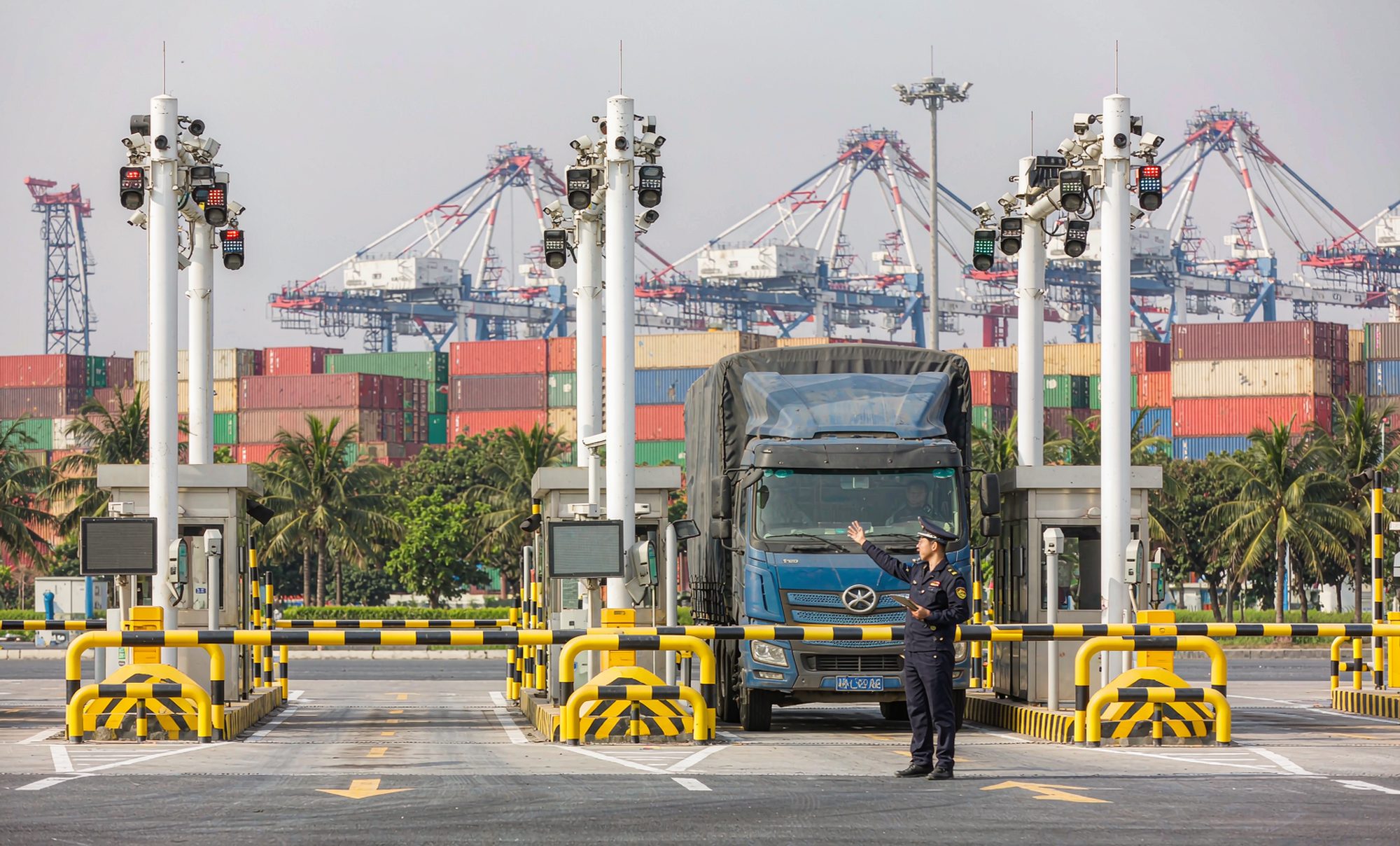
Container truck waiting at the smart gate of the Haikou container terminal, with yard cranes behind
On the ground Pickup — filing — booking — gate — loading Direction check · working area · cut-off back-planning

In short

Export customs clearance at Haikou Port is the China-side filing that turns a booked shipment into a legally released export: classification, entry preparation, single-window submission, arrival booking, gate release, inspection attendance and closure. Haikou adds one step at the front — deciding whether the shipment is crossing the first line to a foreign country or the second line to the mainland — and one constraint at the back — a thin deep-sea schedule that makes relay planning part of clearance. Goodhope Freight files both, and coordinates drayage, the inspection yard and the refund documents that follow.

Note: throughput, berth counts, route numbers and policy detail come from the Haikou transport and port authority, the Haikou 2025 statistical bulletin, Haikou Customs, GACC Announcement No. 159 of 2025 and the Hainan provincial transport department (2025 full-year and to June 2026). They describe capacity and rules, not a quotation. The working berth, sailing and cut-off for your shipment are set by the terminal and the carrier for that week.

Working areas

Four Working Areas, Four Different Handling Rules

Haikou Port is not one quay. It is a container terminal in the city, a bulk and general cargo base across the bay at Macun, a ro-ro corridor with the island's main exit inspection yard, and an airport. Booking “Haikou” is not enough — the working area has to be named.

Haikou Customs 6401

Xiuying

Container terminal · Binhai Avenue, Haikou

Role
National class-one open port and the main container working area
Cargo
FCL and LCL containers, ro-ro passengers; breakbulk shifting out
Control
Smart gate and customs supervised lane; low-risk cargo clears without stopping
Status
Freight function is planned to move to Macun; long-term shift to passenger and cruise
Best for: intra-Asia FCL and LCL, cross-border e-commerce, Hainan-origin cargo

The first containerised second-line shipment after the closure cleared here in January 2026, gate to release in about 10 to 15 minutes.

Macun control point 6410

Macun

Bulk and general cargo · Chengmai County

Role
Core working area of Haikou Port and the incoming container base
Cargo
Steel, machinery, project pieces, bulk and dangerous goods
Building
Phase three: one 70,000 dwt, one 30,000 dwt and three 20,000 dwt container berths
Control
Dangerous goods need both carrier acceptance and a terminal with DG approval
Best for: heavy lift, steel and project cargo, DG, bulk-to-container, ro-ro

Phase three adds 1.67 million TEU and 930,000 tonnes of general cargo capacity, and takes 100,000 GT car carriers.

Under Haikou Customs

Xinhai & Nangang

Ro-ro corridor and second-line inspection yard

Role
Main ro-ro crossing plus the consolidated cargo inspection yard for the island exit
Lanes
16 lanes built, 9 in use: 7 ordinary, 2 customs supervised
Cargo
Truck-borne island-exit cargo and mail; over 75% of the island's inspection volume
Control
Single-window filing plus port platform booking; the gate matches data automatically
Best for: cargo moving from Hainan to the mainland, processing value-added domestic sales, the three supervised categories

About 80% of truck-borne island-exit cargo passes here. H986 scanning takes roughly a minute; the fastest full check has been clocked at 1 min 50 s.

Meilan 6407

Meilan Airport

Air cargo · Haikou

Role
Hainan's main air gateway and Haikou's air freight option
Network
47 international and regional routes, 8 of them all-cargo
Cargo
Perishables, temperature-controlled pharma, high-value electronics, e-commerce parcels
Control
Air manifest plus export entry; perishables run a priority lane
Best for: deadline-critical high-value goods, live and fresh produce, cold-chain pharma

Meilan handled 215,800 tonnes of cargo and mail in 2025, up 3.1% year on year.

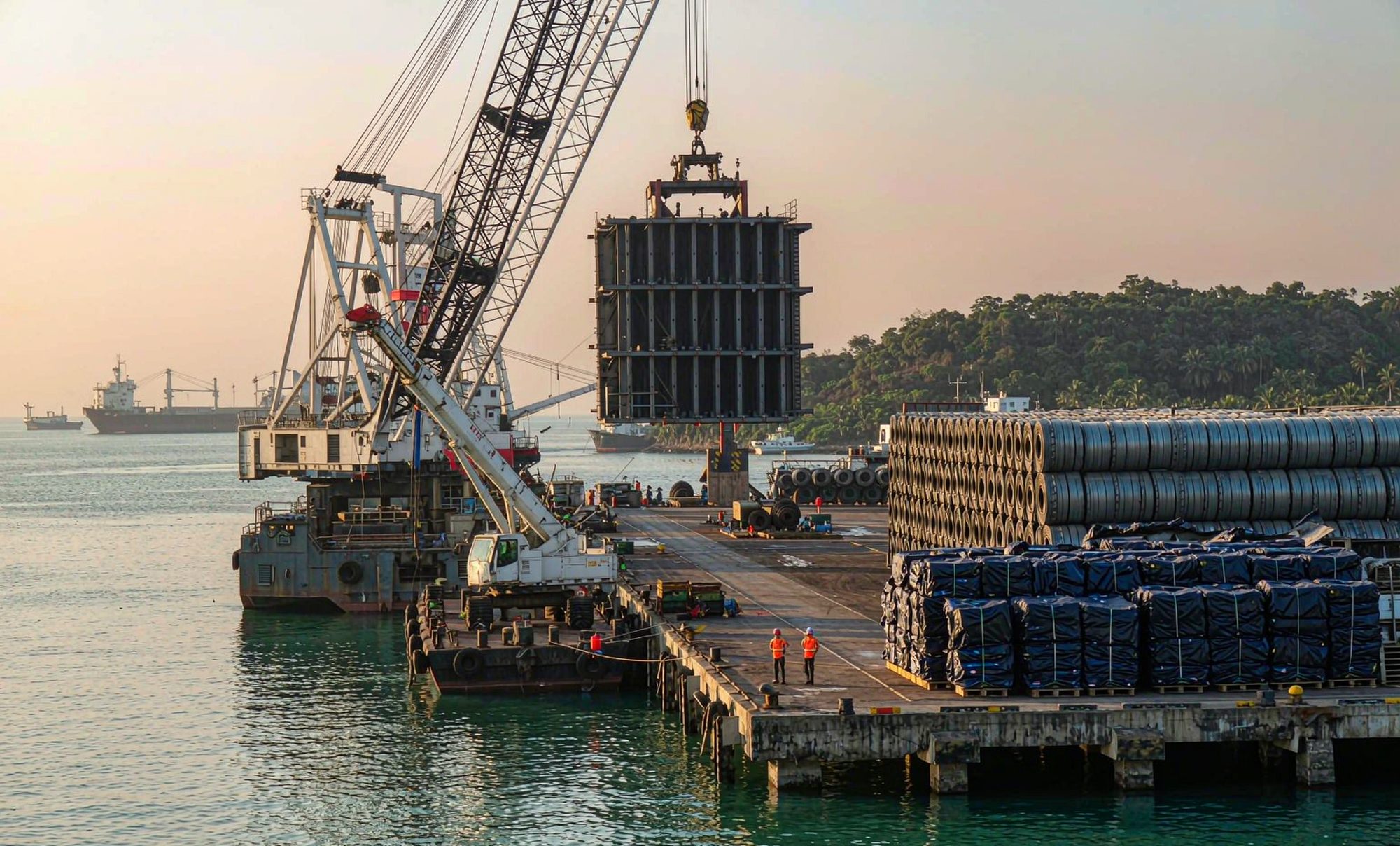
Ship's crane lifting a large steel structure at a general cargo berth in a tropical bay
Project cargo goes to Macun, not into the container queue at Xiuying Steel, machinery and structural pieces need lifting gear, yard space and water depth that a container berth is not built to give. Macun's bulk berths already move 6.1 million tonnes a year, and phase three adds container and ro-ro capacity on top. Ask which working area and which berth before you ask for a rate.
Services by cargo type

Eight Service Lines, Each on Its Own Paperwork

Haikou's cargo mix is narrow and specific: tropical produce, seafood, rubber and plantation goods are the base, machinery and new energy are the growth, and cross-border e-commerce runs on an entirely separate filing channel. Force them into one process and something gets redone.

01

FCL export

Filing back-planned from the carrier cut-off, with direct intra-Asia and relay routings priced separately. Container condition and type confirmed before pick-up.

20GP / 40HQIntra-AsiaRelay
02

LCL and consolidation

For less-than-container loads the split matters: who stuffs, who files, and when the CFS receiving window closes. Miss it and the cargo waits a full sailing cycle.

LCLCFS cut-offGroup entry
03

Fresh produce and food

Export orchards and packhouses must be registered, food producers filed and foreign registration recommended. Only after inspection issues an electronic ledger number does filing begin.

Orchard registrationLedger numberBatch inspection
04

Seafood and frozen goods

Tilapia and similar species carry real volume out of Hainan. What decides the shipment is farm and plant registration, an unbroken temperature record, and a confirmed reefer plug point.

Reefer plug-inTemperature logPlant filing
05

Rubber and plantation goods

Natural rubber, latex concentrate, coconut products and coffee can leave for overseas or move to the mainland. Decide the line first, then the documents.

First lineSecond lineValue-added
06

Machinery, new energy and chemicals

Batteries, modules, appliances and chemicals start with a hazard determination: non-hazardous needs a composition sheet and MSDS, hazardous needs the DG certificate and UN number plus carrier acceptance.

Hazard testDG certificateAcceptance
07

Cross-border e-commerce

Direct mail, B2B direct export and bonded export each run their own manifest channel with three-way matching of order, payment and logistics data. Not the general trade entry.

9610 / 97101210 bondedManifest
08

Refund documents and export of record

After closure: entry data, terminal receipt and invoices. Without import-export rights, a licensed entity can act as exporter of record — but that entity owns the VAT refund, so settle it before cargo moves.

Closure dataRefund filingExport of record
Process

Eight Steps Through a Haikou Export

Haikou adds one step at the front and one constraint at the back. Everything in the middle is standard Chinese export practice.

01

Fix the direction and the area

Overseas or mainland, first line or second line. Containers to Xiuying, project cargo to Macun, air to Meilan. Both decided together.

02

Document pre-check

Contract, invoice and packing list reconciled on description, spec, quantity and value; HS code and declaration elements aligned before filing rather than after.

03

Inspection prerequisites

Fruit, food, seafood and plant products need registration and an inspection application first. Hazardous cargo needs a determination and a DG certificate.

04

File

First line files an export entry. Second line files a release note and ledger list, and only the three supervised categories use the customs lane.

05

Release and booking

With the release message in hand, book the gate or loading slot on the port platform. Island-exit trucks also book in the single window; both checks must pass to reach the supervised lane.

06

Gate match and inspection

The gate reads plate, weight and container number automatically. Low risk passes; anything flagged is routed to H986 scanning or a physical check.

07

Loading and closure

Containers load to plan and the departure message feeds back to the customs supervision platform. Closure data then opens the refund stage.

08

Refund documents and archive

Entry data, terminal receipt, VAT invoice and foreign-exchange receipt collected together. The operator and the invoice issuer must be the same entity.

Work the timeline backwards: carrier documentation cut-off first, then release, then inspection and documents. Fresh produce and dangerous goods need their own margin on top — do not share one back-plan with general cargo. For anything on the second line, add the booking step and the lane queue into the same day.
Documents

Twelve Documents, in Two Stacks

The two directions share most of the paper, but not the filing vehicle: one is an export entry, the other a release note with a ledger list.

Base set — both directions

  • 1
    Export entry, or release note and ledger listthe vehicle depends on the direction
  • 2
    Sales contract or purchase orderterms and value must match the invoice
  • 3
    Commercial invoicedescription, spec, quantity, unit price, total
  • 4
    Packing listpackages, gross and net weight, volume, marks
  • 5
    Customs power of attorneyor the electronic mandate, on record
  • 6
    Terminal receipt or gate-in dataneeded for closure and the refund
  • 7
    VGM declarationmust agree with the manifest gross weight

Added by cargo and by direction

  • 8
    Licences and permitsobtained before exit or departure for restricted goods
  • 9
    Certificate of originfor preferential rates, apply in advance
  • 10
    MSDS and DG packing certificatewith UN number and packing group
  • 11
    Inspection ledger numberrequired for fruit, food, seafood and plant products
  • 12
    Batch-exit and consolidated ledger listsfor approved monthly-filing exporters
The two that go missing most often: the inspection ledger number — fruit and seafood shippers assume a contract is enough, and stop at this step — and the consolidated ledger list reference. Exporters approved for batch exit and monthly filing must write the ledger list number in the remarks column and mark the entry as batch-exit, or the declaration comes back.
Clearance modes

Four Modes, and the Wrong Choice Is Expensive

Picking the wrong mode does not usually produce a rejection. It produces a queue, a re-filing and a rolled booking.

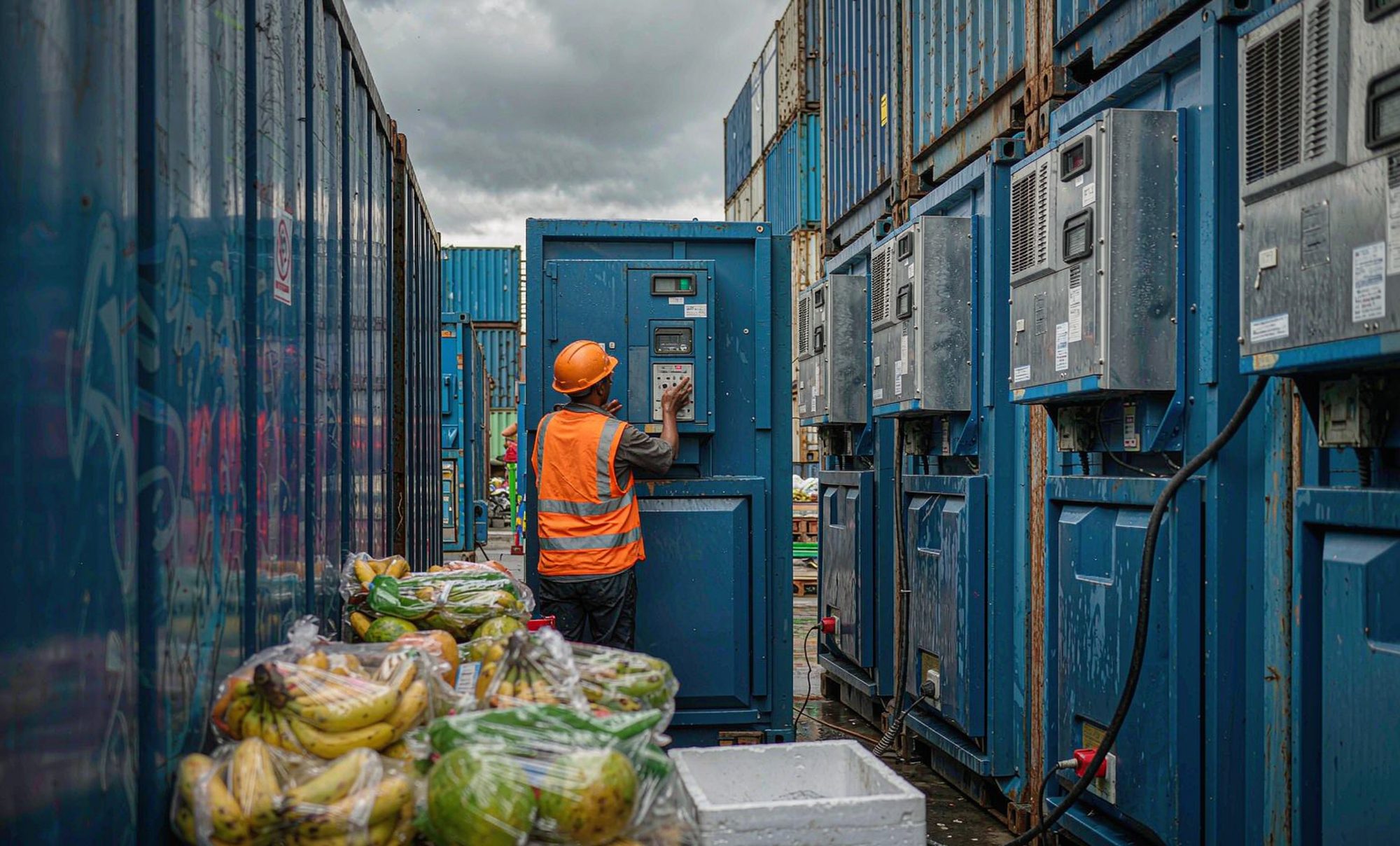
Reefer containers plugged into power points at the Haikou terminal, a worker checking the temperature display
Reefer plug points at Haikou. For frozen and chilled cargo, the plug-in confirmation belongs in the cut-off plan, not in the exception log.

First line — Hainan to overseas

Ordinary export filing, release, loading and closure. The fast-track “release on arrival” treatment applies to bonded and duty-free goods coming into Hainan from overseas, not to the export direction, which still runs on the standard rules.

Second line — Hainan to the mainland

Only three categories must use the customs supervised lane: duty-free goods and goods made from them, bonded goods that claimed the processing value-added exemption, and goods admitted under relaxed trade measures. Everything else uses the ordinary lane. Get this wrong and the truck re-queues.

Batch exit, monthly filing

For advanced-certified and whitelisted companies: move each batch against a release note, then file and pay by the 25th of the following month, never across a calendar year. Any second-line port can be used for the batches; the entry follows the port of the last batch.

Transit and island relay

Yangpu and Haikou container terminals are linked: raw material enters at the first line through Yangpu, is processed, and the finished goods exit at Haikou on the second line. Storage inside the island has no time limit, and stock is tracked per company on an electronic ledger.

By commodity

Eight Commodity Groups, Eight Overlooked Details

Hainan's export mix is not Guangdong's or Zhejiang's. Food and agriculture carry real weight, dangerous goods concentrate at Macun, and e-commerce runs a separate channel entirely.

Fresh fruit and vegetables

Export orchards and packhouses registered, treatment matched to the destination's requirements, inspection and slot booked in parallel because shelf life is counted in days.

Seafood and frozen goods

Farm and processing plant filings in place, a temperature record that traces back to stuffing, and the reefer plug point confirmed before cut-off.

Rubber and plantation goods

Natural rubber, latex and coconut products need the line decided first; for domestic sales under the value-added exemption, the value-added ratio and the ledger are what get examined.

Pharmaceuticals and devices

Registration certificates and approvals come first, cold-chain shipments need a full temperature record, and air and sea do not use identical declaration elements.

Machinery and new energy

Batteries and modules need a hazard determination, and power or capacity figures belong in the declaration elements instead of a generic product name.

Petrochemicals

Liquid bulk concentrates at Yangpu; Haikou handles packaged chemicals, where the DG notification and the terminal's approved categories have to be confirmed early.

Cross-border e-commerce

Three manifest regimes that cannot be mixed, daily three-way matching, and a separate returns process. A general trade entry is not a substitute.

Project and ro-ro cargo

Macun handles it. Out-of-gauge pieces need route approval and a lifting plan filed ahead, and ro-ro booking follows the carrier's stowage requirements.

Compliance watchpoints

After the island-wide closure, cargo movement between Hainan and the mainland runs on two rule sets. The most common error for a company that both exports and sells domestically is treating duty-free input material as ordinary goods on the way to the mainland, or sending supervised-lane cargo down the ordinary lane.

Frictionless does not mean unfiled. Low-risk cargo passes without stopping, but the declaration behind it is still compared with the goods, and audits, ledger deadlines and licence checks all remain enforceable after the fact.

Field notes

Six Situations, and Where They Actually Stalled

Almost nothing goes wrong because someone cannot file a declaration. It goes wrong on the direction call, the working area, or a prerequisite that sits in front of the declaration.

Xiuying · second line01

Ten containers of rubber, and the question nobody asked first

Cargo and flow
Ten 40HQ of technically specified rubber. Raw material entered at Yangpu on the first line, was processed, and the finished goods left Haikou for Huangdao in Shandong.
Where it stalled
The shipper booked trucks as if this were ordinary domestic freight and skipped the two-platform booking, so the vehicles could not enter the supervised lane at the gate. Worse, goods made from duty-free input material belong in the supervised category — sending them down the ordinary lane would have been a false declaration.
What we did
Established the category from the input material and the processing record, confirmed the supervised lane, completed the release note and ledger list, then booked both platforms and brought the trucks in against the booked windows.
Outcome
The gate captured plate, weight and container number automatically, released the low-risk boxes straight to the loading area, and the whole pass took 10 to 15 minutes. Haikou is fast once the direction is right, and immovable once it is wrong.
Xiuying · intra-Asia FCL02

A Bangkok deadline where the schedule, not the paperwork, was the problem

Cargo and routing
Two 40HQ of household goods, Haikou to Bangkok, required at destination by month end.
Where it stalled
Intra-Asia sailings out of Haikou are not dense. Once the direct slots filled, the fallback was a relay, which added days. The shipper kept waiting for a direct slot until the documentation cut-off passed with nothing filed.
What we did
Ran both options at once: direct first, relay as a costed back-up. Documents were prepared against the earliest loadable sailing, with release and gate booking sequenced ahead instead of waiting for the slot decision.
Outcome
The relay arrived on time. At Haikou the slot is decided first and the filing follows it — run it the other way round and you lose both.
Macun · project cargo03

Booked like containers, stowed like nothing of the kind

Cargo and routing
Construction equipment and structural steel, over-length pieces, bound for Southeast Asia.
Where it stalled
Booking was made against “Haikou” generically and the berth assignment came back at Xiuying, whose lifting gear and yard are not built for this cargo. The out-of-gauge road route had not been approved either, and the trucks were stopped inside the city.
What we did
Re-booked to Macun with the berth and sailing re-confirmed, filed the out-of-gauge route and lifting plan in advance, and the terminal assigned harbour cranes and yard space on a general cargo basis.
Outcome
Loaded on schedule. Project cargo belongs at Macun; pushing it into the container queue at Xiuying only adds cost.
Meilan · perishables04

Lychees for export, blocked by an orchard file, not a form

Cargo and routing
Fresh lychees, airfreighted out of Meilan, on a tight commercial window.
Where it stalled
The orchard and packhouse had never been registered for export, so inspection could not issue an electronic ledger number, so no declaration could be lodged. With lychees, every day of delay is a price cut.
What we did
Registered the orchard and packhouse, applied for inspection at the packhouse's local customs office to obtain the ledger number, and booked a remote inspection by video link to compress the site visit.
Outcome
Filed and flown once the ledger was issued. For food and plants the lead time is counted in weeks, so this work starts before the contract, not after it.
Xiuying · cold chain05

Frozen tilapia, and a temperature record with holes in it

Cargo and routing
Four 40RH of frozen tilapia, Haikou to the Middle East.
Where it stalled
Pre-cooling was cut short before stuffing, so the cargo loaded warm, and the transit temperature log had gaps. The buyer used the incomplete chain as grounds for a price reduction.
What we did
Pre-cooled cargo and box properly with the record retained, documented the stuffing window, and confirmed plug-in and plug point before cut-off so nothing was discovered unpowered at the far end.
Outcome
Later batches shipped with a clean chain and were accepted. Almost every cold-chain dispute is settled by records — provided the records exist.
Port choice06

Routing to Europe through Haikou cost two weeks of refund timing

Cargo and flow
Machinery made in Hainan, destination Europe, shipped out of Haikou out of habit.
Where it stalled
There is no direct Europe sailing from Haikou, so the box relayed. Hainan's departure-port refund scheme names Yangpu as the departure port; a Haikou routing does not qualify, and the VAT refund arrived roughly two weeks later than it needed to.
What we did
Ran the port comparison on cargo type and destination: deep-sea trunk routes via Yangpu, intra-Asia and domestic feeder via Haikou. Then checked whether the exporter's refund classification and customs credit rating met the scheme's conditions at all.
Outcome
Switched to Yangpu and pulled the refund forward. Port choice is a cash-flow decision, not only a freight-rate one.

Drawn from public reporting and routine working experience at this port, with company names and commercial detail removed. They describe how a problem is approached, not a guarantee of outcome; current customs notices, terminal rules and carrier conditions govern each shipment.

FAQ

Haikou Port Export Customs Clearance: 10 Questions

The questions importers and suppliers actually ask about shipping out of Haikou since Hainan's island-wide closure, ordered by how often they come up.

Do I still need an export declaration at Haikou after the closure?
Yes. The closure changed how Hainan is managed against the mainland, not how Hainan exports to other countries. Cargo leaving Haikou for overseas is still declared to customs, inspected where required, released, loaded and closed out, and the entry, manifest and VGM figures are still reconciled against each other.
What are the first line and the second line, and which one applies to my cargo?
The first line is between Hainan and the rest of the world and runs on liberalised rules. The second line is between Hainan and the Chinese mainland and is controlled. Cargo going overseas is a first-line movement. Cargo going to the mainland needs a check: if it is duty-free goods or goods made from them, bonded goods that claimed the processing value-added exemption, or goods admitted under relaxed trade measures, it must use the customs supervised lane. Everything else takes the ordinary lane.
Should I ship out of Haikou or Yangpu?
It depends on the destination and the cargo. Yangpu is the regional international container hub, with deep-sea services and 3.31 million TEU in 2025, up 65.39%; Europe and North America normally leave from there. Haikou sits closer to the cargo source and the city, with intra-Asia and domestic feeder options. One more factor: Hainan's departure-port tax refund scheme names Yangpu as the departure port, so a shipment where an early refund matters should be routed with that in mind.
Are there direct sailings from Haikou to Europe or the US?
Haikou's network is primarily intra-Asia and domestic. Europe and North America are usually reached by relay through Yangpu, Nansha or Hong Kong. Quote the relay leg, including connection time and cost, as a separate line — do not present a direct transit time to your customer. Schedules and port rotations follow the carrier's current notices.
Is the container terminal really moving from Xiuying to Macun?
That is the plan. Macun phase three is being built to take over the freight function of the Qiongbei region, and Xiuying is being repositioned toward passenger and cruise traffic. The move is staged, and container work is still concentrated at the Xiuying terminal today. For a specific shipment, confirm the working area against the terminal's current notice and then dispatch trucks — do not plan from the long-term layout.
My goods are trucked from the mainland into Hainan and then exported. How is that treated?
Mainland goods entering Hainan are domestic movement and are not treated as second-line cargo. When they leave Hainan for overseas, they are exported under the ordinary regime. What needs care is storage and processing inside the island, and if duty-free imported input material was used, the rules for finished goods leaving for overseas and for the mainland are not the same. Sort the document path before the cargo moves.
What has to be in place before exporting fresh fruit?
Three things: the export orchard and packhouse registered with customs, treatment and testing matched to the destination country's requirements, and an inspection application filed with the customs office where the packhouse is located so that an electronic ledger number is issued. The declaration and clearance run on that ledger number. Registration is not a same-week process, so it starts as soon as an export plan exists.
Can I export through Haikou without import-export rights?
Yes, through a licensed entity acting as exporter of record. The catch is ownership: that entity holds the VAT refund and the foreign-exchange collection. If the goods carry a refund, confirm the compliant structure before cargo moves rather than discovering it at the refund stage.
What documents does the VAT refund need, and does the departure-port refund apply at Haikou?
A normal refund needs the export entry data, release and closure messages, the terminal receipt or gate-in data, the VAT invoice and the foreign-exchange receipt, with the operator and the invoice issuer being the same entity. On the departure-port scheme, Hainan designates Yangpu as the departure port and lists 15 mainland origin ports including Yingkou, Dalian, Tianjin, Qingdao, Taicang, Lianyungang, Nansha, Zhanjiang and Qinzhou. Haikou is not one of them, so cargo leaving from Haikou follows the ordinary refund process.
Can dangerous goods be shipped out of Haikou?
Yes, subject to three confirmations: the carrier's acceptance conditions and slot, the terminal operator's dangerous goods approval and permitted categories, and your own DG packing certificate, UN number, packing group and container packing certificate. Terminal handling must be reported to the port authority ahead of the operation, and the vessel files with the maritime authority before arrival or departure. Work the timeline from those nodes, not from a general cargo plan.

Why work with us

At Haikou, the Value Is in the Direction Call

Rate sheets from this port look much alike. What differs is who decides whether the shipment crosses the first line or the second, which working area it belongs to, and whether the prerequisites were finished in time.

01

Shenzhen coordination, Haikou presence

Booking, documents and communication run from Shenzhen; Xiuying, Macun and Meilan are covered on the ground, with same-day response on gate holds, amendments and inspections.

02

Direction first, entry second

Every shipment is classified as overseas or mainland before a single field is filled. A wrong call means redoing the vehicle, the lane and the tax treatment, so the step is not skipped to save an hour.

03

Four working areas, four playbooks

Xiuying runs containers and the smart gate, Macun runs general and dangerous cargo, Xinhai and Nangang run second-line booking and the supervised lane, Meilan runs air. The timelines are not interchangeable.

04

Prerequisites chased before filing

Registration, plant filing, ledger numbers and remote inspections take longer than the declaration. We list them at quotation stage so cargo never waits on paper.

05

Port choice comes with numbers

Haikou, Yangpu and Nansha are compared on transit, relay cost and refund timing together, so freight rate and cash flow sit on the same page.

06

Itemised quotations, costs at cost

Brokerage, drayage, inspection, terminal and yard charges are listed separately and settled against receipts. No opaque all-in figure.

GET IN TOUCH

Haikou export clearance —
starting with the direction call

Tell us the commodity, package count and weight, the destination or delivery point (overseas or mainland), the target sailing and where the factory is. We will come back with the working area, the document vehicle and the prerequisites that have to be finished first.

Request a quote
CompanyShenzhen Weihangyunda International Freight Forwarding Co., Ltd.
BrandGoodhope Freight · Goodhope Logistics (China) Limited
Phone / WhatsApp+86 133 9216 2503
Emailsales8015@goodhopefreight.com
CoverageShenzhen (HQ) · Haikou · Yangpu · Meilan
HoursMon–Sat, 9:00–18:00 (GMT+8)
call us: +86 13392162503