Since 2012 NVOCC GD20230925153335 24h Response
+86 13392162503 sales8015@goodhopefreight.com Login
Goodhope Freight
Export clearance · Import clearance · First line and second line

Haikou Meilan Airport Export & Import Customs Clearance

Since 18 December 2025 Hainan is a customs territory of its own, and Meilan is one of the few airports that sits on both sides of the line. Cargo moving to or from overseas crosses the first line and clears under relaxed rules. Cargo moving to or from mainland China crosses the second line and is declared and released like an import or an export. Get that split wrong and nothing else you do matters — the flight leaves without your freight, and the entry was never the problem.

First line, relaxed Second line, supervised Designated fruit site Designated live seafood site Designated chilled seafood site Airport comprehensive bonded zone
215,800 tCargo throughput, 2025 — a record
30,000 tInternational cargo to 17 Oct 2026, up 54%
2.5 hoursFirst imported fruit: landing to completed formalities
6,600 linesTariff lines eligible for zero duty after the closure
Plan my Meilan clearance See the 8-step flow
215,800 tCargo and mail throughput 2025
an all-time high
28,100 tInternational cargo 2025
up 6% year on year
9 routesInternational freighter services
to 10 destinations in 2026
RMB 67.3bnBonded aircraft repair value
Jan–Sep 2026, up 51.2%
Why Meilan

One Airport, Two Customs Territories —
and the Destination Decides Which One Applies

Hainan closed its customs operation on 18 December 2025. The island is now a single special customs area with the outside world on one side and mainland China on the other. Meilan handles both: it is a first-line port open to overseas traffic and one of ten second-line ports facing the mainland. In 2025 the airport moved 215,800 metric tons of cargo, of which 28,100 tons was international, up 6%. By 17 October 2026 international cargo had already passed 30,000 tons, up 54% year on year.

Read that split before you read anything else on this page. A shipment from a Hainan factory to Rotterdam is a first-line export. The same shipment consigned to a distributor in Guangzhou is a second-line movement out of the island, declared at a second-line customs channel. The commodity code does not change. The declaration, the channel and the duty treatment do.

  • 1
    The destination, not the commodity, decides the routeOverseas buyers of Hainan-made goods get the simpler half: first-line export, no island exit filing. Buyers whose cargo transits the mainland first meet the second line twice — once coming in, once going out.
  • 2
    Export capacity is the constraint, not terminal spaceThe T2 international terminal runs 15,000 m² with 10,000 m² of general cargo warehouse and a 5,000 m² express and e-commerce center, three inspection lanes built of six planned. Space has never been the bottleneck. Nine freighter routes to ten destinations is.
  • 3
    Import approval has shifted from sites to eligibilityFruit, live aquatic animals and chilled seafood all have designated supervision sites now. The binding constraint is registration: zero-duty eligibility is granted to the importer, not to the shipment, and value-added tax relief needs a filing long before the aircraft lands.
  • 4
    Next door, the bonded zone repairs aircraftThe airport comprehensive bonded zone covers 0.44 km² and passed national acceptance in December 2021. In the first nine months of 2026 customs supervised 101 aircraft, 19 engines and 58 shipments of aviation parts into bonded repair, worth RMB 67.34bn. It ranks second in China by repair volume.
Who carries the risk? On FOB, CFR and CIF the China-side export declaration sits with the seller, but a missed cut-off still lands on your delivery date. On EXW it sits with you, and so does every hour of terminal storage while a broker waits for a document. On Hainan cargo there is one more question to settle before the price: does the goods path cross the second line, and who files it.
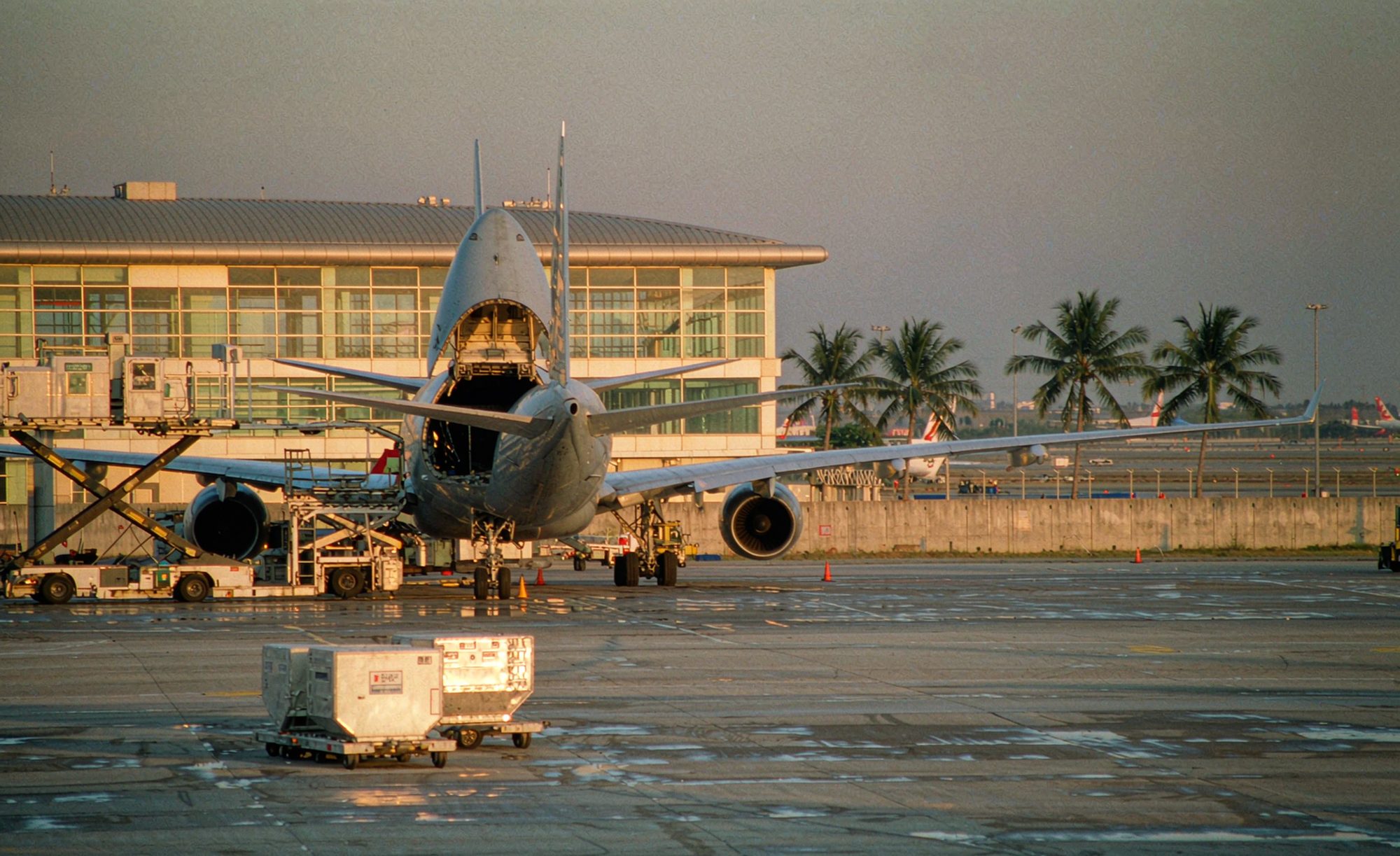
Freighter with its nose cargo door open at a tropical airport stand, pallet loader raised and unit load devices on the apron
On the ground Acceptance — screening — release — uplift First line and second line · perishables · bonded MRO

In short

Customs clearance at Haikou Meilan International Airport is the filing that turns booked air freight into legally released cargo at a port that faces both the world and the mainland. That means classification and declaration elements, single-window filing, inspection handling, release and closure — plus, on Hainan, a decision about which customs line the cargo crosses and whether any duty relief applies. Goodhope Freight acts as the licensed broker for that filing, from the first document check to the release notice and the refund paperwork that follows.

Work areas

Four Areas, and One Line That Decides Which Channel You Use

Meilan is not one shed. The T2 international terminal, the domestic terminal with its second-line channel, the designated perishable sites and the bonded zone next door each handle different cargo under different rules. The cargo type picks the area. The area picks the channel.

Haikou Meilan Airport Customs

International Cargo Terminal

T2, east side · Phase 2

Footprint
15,000 m²: 10,000 m² general cargo warehouse, 5,000 m² cross-border e-commerce and express center
Inspection lanes
Six planned, three built — two import, one export
Function
Import and export acceptance, screening, pallet build, storage, 9610 e-commerce handling
Commissioned
Customs acceptance 23 November 2021, operation from 2 December 2021
Best for: general cargo, whole-charter pallets, bulk e-commerce, out-of-gauge equipment

Smart gates and separate import and export warehouses keep freight out of the passenger zone. For a charter, request the slot the moment the schedule is confirmed.

Customs · second-line supervision

Domestic Terminal
& Second-Line Channel

Island exit · mainland bound

Role
The second line between Hainan and the mainland; island-exit cargo is declared and released here
Method
Three embeddings: customs identity into acceptance, arrival data into screening, release data into sortation
Speed
Five paper documents merged into one e-document, about 30% faster clearance, acceptance under one hour
Cost
Domestic departure handling fees waived in full for qualifying second-line cargo
Best for: value-added goods sold into the mainland, island products leaving Hainan, cargo consolidated at Haikou for domestic distribution

Weight-control and security stamps are electronic now, so nobody queues at a counter. A wrong field in the system still stops the flight.

Customs · designated sites

Three Perishable
Supervision Sites

Fruit · live seafood · chilled seafood

Fruit
Approved 28 November 2025; inside the T2 international terminal, 2,172.2 m² with inspection platform, temperature-controlled cold room and fumigation chamber
Live seafood
Designated site for imported live aquatic animals, approved and operating
Chilled seafood
Approved 26 October 2026, the first in Hainan; sited in the air cargo special commodities park, not at the terminal
Watch for
Chilled cargo moves under sealed, GPS-tracked, registered reefer vehicles between the apron and the site
Best for: durian and other fresh fruit, chilled salmon, live lobster, live aquatic animals

The first fruit shipment went from landing to completed customs formalities in 2.5 hours, on arrival inspection and conditional release.

Bonded zone supervision

Airport Comprehensive
Bonded Zone

0.44 km² · adjacent to the airport

Scale
Jiangdong New Area aviation cluster, 0.44 km², national acceptance December 2021
Anchors
One-stop aircraft maintenance base and aero-engine repair base
Capability
Five lead companies holding 24 repair licenses from 19 countries and regions plus OEMs
Business
Aircraft and engine bonded repair, aviation leasing, bonded aviation parts, value-added processing
Best for: aviation parts and repair items, bonded leasing, imports that need duty deferral before distribution

Stacked relief cuts 10–15% off repair cost for overseas carriers. Direct-to-zone engine transfer saves about RMB 30,000 and 90% of the transit time per move.

First line: what changes for an overseas buyer

Cargo between Hainan and another country crosses the first line. Qualifying zero-duty goods and bonded goods can be released on a simplified basis rather than held for a full document review, and the zero-duty list now covers about 6,600 tariff lines, roughly 74% of all lines, up from 1,900 before the closure. What it does not do is make an unregistered importer eligible. Eligibility attaches to the registered entity, so a first-time buyer still needs the registration done before the first shipment, not after it.

Second line: what changes for mainland delivery

Cargo between Hainan and the mainland crosses the second line and is declared, with the declaration items cut by more than 60% since the closure. Goods made in Hainan with at least 30% value added enter the mainland free of import duty, and post-closure rules let the value of Hainan-origin inputs count toward that threshold. More than 80% of such cargo now leaves under batch-exit consolidated filing rather than one entry per truck.

What we file

Four Export Lines, Four Import Lines,
One Question Asked First

Meilan cargo has a clear signature. Outbound is e-commerce, Hainan produce and live seafood, and light manufacturing. Inbound is duty-free retail stock, fresh fruit and chilled seafood, aviation parts and medical equipment. Eight lines, eight document sets, and the same first question on every one of them.

SERVICE 01

General cargo export declaration

Space confirmed, manifest reconciled, entry filed, cargo accepted and screened, release tracked through to closure. Freighter and belly hold handled as two different timetables.

FreighterBelly holdClosure
SERVICE 02

Cross-border e-commerce and express

9610 listings with the order, payment and logistics data matched before tender, plus 9710 and 9810 for B2B. E-commerce is more than 40% of international cargo here.

96109710 / 9810Three-way match
SERVICE 03

Dangerous goods and lithium batteries

Classification under the IATA rules, then the UN38.3 summary, safety data sheet, transport condition appraisal, packaging certificate and shipper declaration assembled to carrier acceptance standards.

UN38.3DGDPacking certificate
SERVICE 04

VAT refund documents and export agency

After closure, the refund copy, release notice and manifest data are collected and filed as one set. Sellers without a trading license can export through a qualified entity with the chain kept intact.

Refund copyDocument fileAgency export
SERVICE 05

Import clearance and zero-duty filing

Bill exchange, declaration, duty and guarantee, inspection attendance, release and collection. Zero-duty goods are checked against the registered entity and the eligible list before the aircraft lands.

Zero dutyEntity registrationSimplified release
SERVICE 06

Perishables and the three designated sites

Quarantine permit before departure, arrival inspection, conditional release. Chilled seafood adds registered reefer transport, seal control and a temperature log that has to stay unbroken.

Designated siteConditional releaseCold chain log
SERVICE 07

Bonded zone and aviation repair filing

Bonded account set-up and write-off, duty deferral on entry, entry-exit reconciliation, and the customs side of aircraft and engine repair, including direct-to-zone engine transfer.

Bonded repairBonded accountDirect to zone
SERVICE 08

Second-line exit and value-added filing

For goods sold into the mainland: second-line declaration, the 30% value-added calculation, and batch-exit consolidated filing where the pattern of shipments supports it.

Second line30% value addedBatch exit

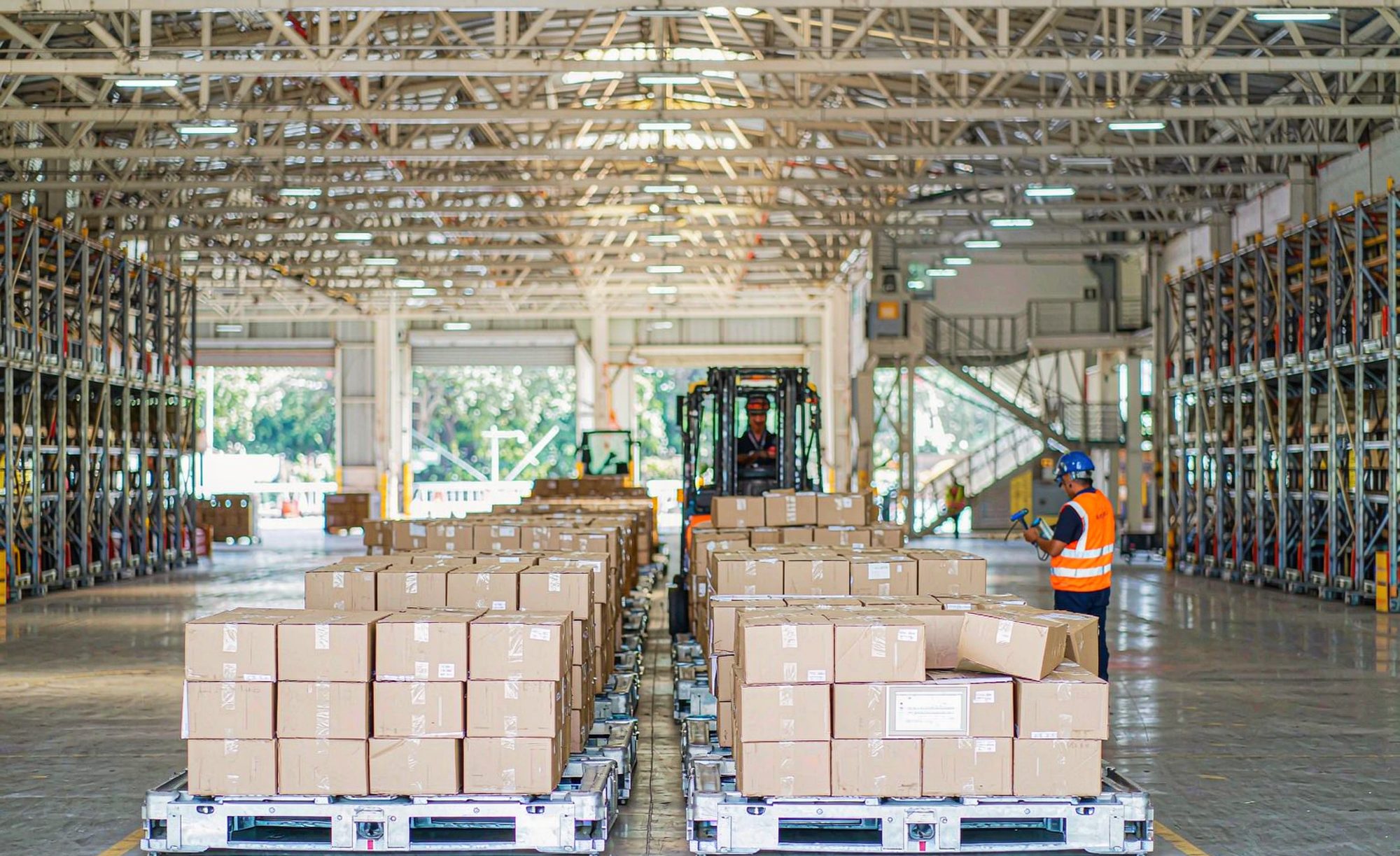
Air cargo pallets of shrink-wrapped cartons and a forklift inside an airport freight terminal, handler scanning a barcode
Enough floor, not enough flights. The terminal is fifteen thousand square meters with three lanes running; the week has nine freighter services on it. Plan against the schedule, never against the shed.
The sequence

Eight Steps Out, Eight Steps In,
and the Line Comes Before Both

The legal floor is filing 24 hours before uplift on export, and 14 days from entry of the means of transport on import. Neither number is the one that decides the outcome here. On export it is space and the terminal cut-off; on import it is eligibility and the quarantine permit.

Export: from space to refund documents / AIR EXPORT

1

Fix the destination class

Overseas or mainland. Everything downstream depends on this one answer: a second-line shipment without a second-line declaration cannot be loaded, and a first-line shipment with a second-line filing sits waiting for a release that was never needed.

Owner: shipper and broker · How long: before anything is booked
2

Book, and confirm the space is real

Nine freighter routes to ten destinations, fixed frequencies, thin capacity in peak season, and a belly hold that gets squeezed when passenger loads rise. A confirmed entry with no space is a document, not a shipment.

Owner: forwarder · How long: 5–10 days out in peak
3

Classify and settle the elements

Commodity code, declaration elements, terms of trade. Live seafood, nursery stock and fresh produce need the quarantine conditions settled at the same time, not discovered at the inspection platform.

Owner: broker · How long: 1–2 days
4

File in advance where the file allows it

With manifest data in hand the entry can go in before the cargo reaches the supervised area, so release and acceptance run in parallel. It leaves no room to correct a mistake quietly.

Owner: broker · How long: up to 3 days ahead
5

Acceptance and screening

Goods received, X-rayed, weighed and built to the pallet profile. Second-line cargo has its customs identity written into the system at this point, scanned on a handheld device.

Owner: terminal · How long: 2–5 hours
6

Arrival and release

First-line cargo releases on a clean system match. Second-line cargo is declared and released at the customs channel in the domestic terminal, where five paper documents are now one electronic record.

Owner: customs · How long: hours, not days
7

Loading and manifest

The manifest has to agree with the entry before closure. Split and consolidated bills are reconciled here, because a mismatch found after uplift is an amendment, not a correction.

Owner: carrier and broker · How long: at cut-off
8

Closure and refund file

Refund copy, release notice and terminal records are assembled into one file for the VAT refund or the bonded write-off. Missing one item costs a month, not a day.

Owner: broker · How long: 1–3 days after uplift
Counting backwards on export: take scheduled departure as zero. Minus 24 hours is the legal filing floor. Minus 4 to 6 hours is terminal cut-off and screening. Minus one working day is the window for document review and amendments. Before all of that sits space, and at Meilan space is the least elastic item on the list — confirm the flight first, then build the timetable around it.

Import: from landing to collection / AIR IMPORT

1

Decide which line the cargo crosses

From overseas into Hainan is the first line, with simplified release for qualifying goods. From the mainland into Hainan is the second line. The two use different declarations and different channels.

Owner: importer and broker · How long: before departure
2

Manifest and pre-alert

The manifest transmits after departure. You need master and house numbers plus pieces, weight and dimensions before bill exchange or filing can start.

Owner: carrier · How long: in flight
3

Bill exchange

Arrival notice and bill exchanged for a delivery order. Freight collect, documents in transit and consignee mismatches all stop here.

Owner: broker · How long: 2–6 hours
4

Eligibility and permit check

Zero-duty registration, value-added filing, quarantine permit, import license. All of it is done before departure. Registration attaches to the entity, the shipment attaches to a batch, and when the two do not line up the cargo waits in a warehouse.

Owner: importer · How long: weeks, not days
5

Declaration

Filed within 14 days of entry. Perishables do not wait 14 days; they are filed on landing. Commodity code, value, origin and any preferential certificate are settled first.

Owner: broker · How long: same day
6

Duty and guarantee

Pay against the assessment, or use consolidated taxation or a duty guarantee to release before payment. Eligible goods are exempt; the rest is assessed in the normal way.

Owner: importer · How long: same day
7

Inspection and quarantine

Fruit checks the phytosanitary certificate and the fruit itself, chilled seafood checks temperature and sensory condition, aviation parts check part numbers and airworthiness records. Each has its own site, and the wrong site is a wasted day.

Owner: customs · How long: 1–4 hours at the site
8

Release and collection

Release notice, gate pass, delivery. For cold chain the reefer vehicle, insulated boxes and data logger have to be standing by — a release with no truck is still a delay.

Owner: broker and trucker · How long: hours
Counting backwards on import: take landing as zero. Minus one day is bill exchange preparation and permit reconciliation. Plus two hours is filing. Perishables are measured in hours — the first fruit shipment completed every customs formality 2.5 hours after landing — and general cargo in days. Any document that has to be issued by an authority belongs in the weeks before departure.
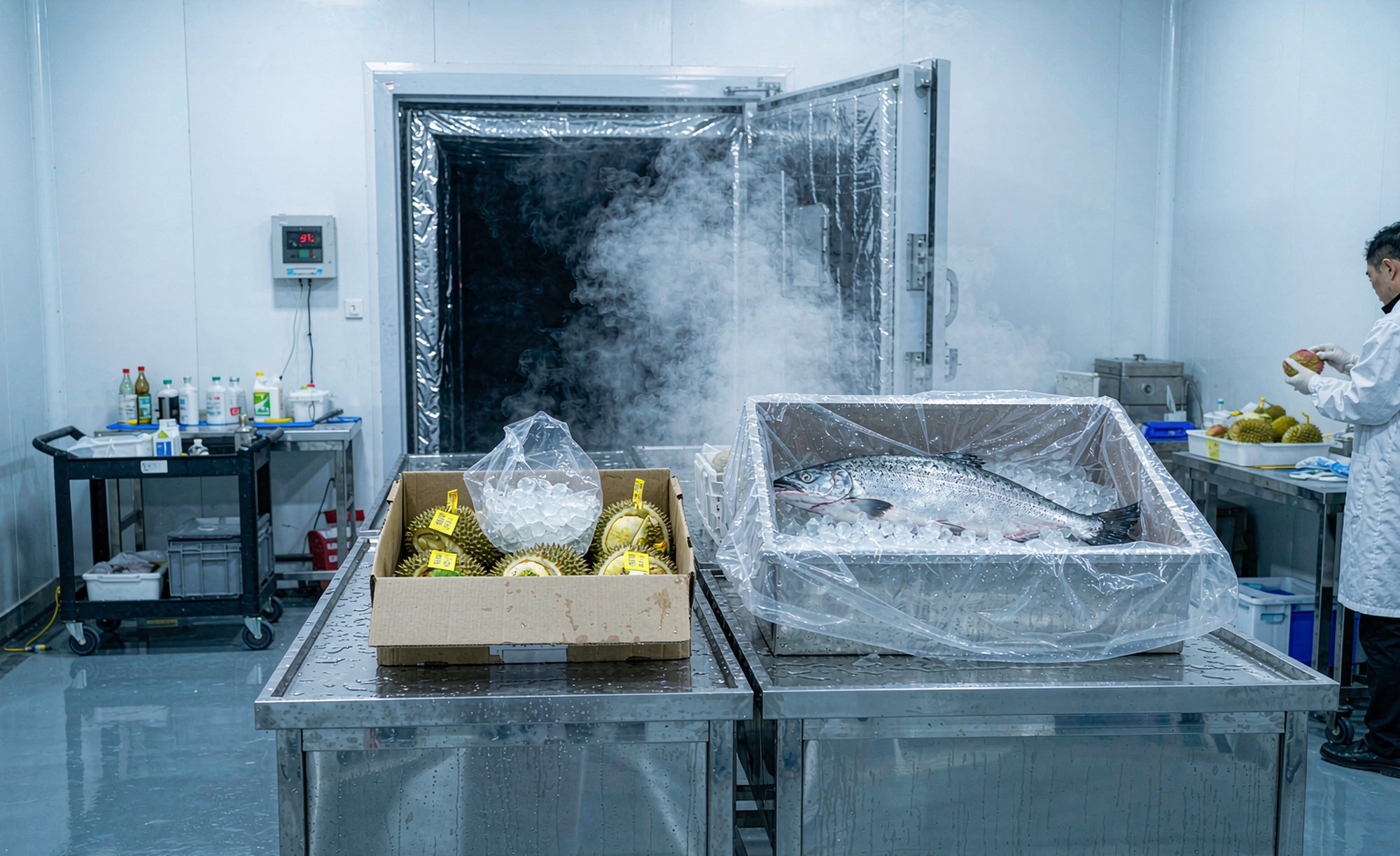
Chilled salmon and fresh durian on a stainless steel inspection bench inside an airport cold-chain inspection room
Two sites, two temperatures, one rule: the cargo is inspected where the site is, not where the aircraft parked. Chilled goods move under seal, on a registered reefer, with a log that has to arrive unbroken.
Documents

Export Files Fail on Completeness,
Import Files Fail on Timing

An export file that is short one document cannot be tendered. An import file that is short one approval cannot be fixed at the airport at all, because the approval was supposed to exist weeks earlier.

Export · base set

  • ✓
    Export declaration dataDescription, code, quantity, weight, terms of trade and currency.
  • ✓
    Contract or orderHas to agree with the invoice value and the Incoterm.
  • ✓
    Commercial invoice and packing listPieces, gross and net weight, volume, packaging.
  • ✓
    Power of attorneyElectronic authorization through the single window is accepted.
  • ✓
    Booking confirmation and manifest dataMaster and house numbers, flight and departure time.
  • ✓
    Licence or regulatory certificateWhatever the commodity code's control conditions require.

Export · special cargo

  • ✓
    UN38.3 test summaryMust match the cell type actually shipped, not the previous one.
  • ✓
    Safety data sheet and transport appraisalUN number and transport restrictions stated explicitly.
  • ✓
    Packaging certificate and DGDPackaging use appraisal plus the shipper's declaration.
  • ✓
    Certificate of originNeeded where the buyer claims a preferential rate.
  • ✓
    IPPC mark or fumigation certificateSolid wood pallets and crates are always checked.
  • ✓
    Animal or plant quarantine certificateRequired by the destination country for live seafood, nursery stock and fresh produce.
  • ✓
    Brand authorizationCommon on branded goods and e-commerce parcels.

Import · base set

  • ✓
    Delivery order or arrival noticeIssued at bill exchange and used at collection.
  • ✓
    Original or telex-released billMaster and house consignees must be the same party.
  • ✓
    Contract, invoice, packing listThe value build-up and the Incoterm have to reconcile.
  • ✓
    Import declaration dataIncluding freight and insurance in the dutiable value.
  • ✓
    Automatic import license or quotaPer the control conditions on the commodity code.
  • ✓
    Declaration and inspection authorizationImport usually needs both mandates at once.

Import · Hainan policy and perishables

  • ✓
    Zero-duty eligibility registrationGranted to the entity once, not applied for per shipment.
  • ✓
    Value-added filing packageInput composition, process steps and the 30% calculation.
  • ✓
    Quarantine permit for animals and plantsIssued before departure for fruit, chilled seafood and live aquatic animals.
  • ✓
    Official phytosanitary or health certificateMust match the permit on name, origin and quantity.
  • ✓
    Whole-journey temperature logPulled during inspection; a break in the chain holds the cargo.
  • ✓
    Chinese label and overseas producer registrationPrepackaged food must come from a producer on the GACC register.
  • ✓
    Part numbers and airworthiness recordsChecked on every repair item and bonded aviation part.
The two that get missed: zero duty is read as "declare it and it is free". It is exemption from customs duty only, and it needs three things at once — a registered eligible entity, a commodity on the list, and a qualifying use. Miss one and duty is assessed. The second is the preferential certificate of origin: format, issue window and direct consignment all have to hold, and any one of them failing costs the preferential rate.
Clearance modes

Four Modes, and What Each One Cannot Fix

On Hainan there is an extra layer: first line and second line are not fast and slow versions of the same thing, they are different rule sets. Choosing a mode is choosing where the risk sits.

Aircraft under maintenance in a hangar at an airport bonded zone, engine removed and mounted on a transport stand
Bonded repair is the second business at this airport. An engine that enters the zone the wrong way costs three days and the price of a truck.

Simplified first-line release

For imports arriving from overseas, qualifying zero-duty and bonded goods can be released without a full per-shipment review stopping them at the apron. Cannot fix: an entity that has never registered. The line is relaxed for eligible goods, not for unregistered importers.

Batch exit, consolidated filing

For value-added goods sold into the mainland, declarations can be consolidated across a batch of exits instead of filed one truck at a time. More than 80% of such cargo moves this way, against a declaration item count cut by over 60%. Cannot fix: a shipment that needs to be closed on the spot.

Advance filing, export

With manifest data available the entry can be filed before arrival at the supervised area, so release and acceptance overlap. It is the most useful window when you are chasing one specific flight. Cannot fix: a file that is still changing.

Transit and air-to-air consolidation

Declare for transit at the gateway and clear at the destination customs office, or consolidate through a fifth-freedom service that calls at three points on one movement. Cannot fix: perishables. Every extra supervised leg is another few hours off the shelf life.

By commodity

Eight Cargo Types, Eight Different Files

Duty-free retail stock and a box of live grouper do not share a template. The first is a question of batch and list. The second is a question of certificate and survival rate after landing.

Duty-free retail stock

Meilan had China's first airport offshore duty-free shop in 2011; 47 categories now. Replenishment is declared under duty-free supervision, with batch, list and store inventory reconciled.

E-commerce and express

Over 40% of international cargo. Three-way matching on every 9610 parcel; the express center has one export lane and two import lanes built, and which lane you land on decides whether it flies today.

Imported fresh fruit

Durian is the headline item. The site has 2,172 m² with a temperature-controlled cold room and a fumigation chamber, and the permit plus the exporting country certificate are what make a fast inspection possible.

Chilled seafood and live aquatic animals

Chilled means 0–4°C, never deep frozen. Two separate sites, registered reefer vehicles, seals and GPS tracking; a break in the temperature record stops the cargo.

Aviation parts and repair items

The bonded zone's core business. Part numbers, airworthiness records and repair work orders have to line up one to one, and an engine on direct-to-zone transfer needs the customs plan and the truck plan built together.

Medical equipment and pharmaceuticals

Zero duty has pushed up equipment imports. Model, use and end user are checked, and anything brought in under a finance lease needs the ownership and supervision period mapped out.

Hainan produce and live seafood exports

Live fry, live grouper, milkfish fry and seawater pearl jewellery. Live cargo is filed around the animal's clock: the quarantine certificate follows the destination rule, and the flight has to land at the right hour.

Special cargo and charters

Racing cars, concert instruments and live animals have all moved through here on ad hoc charters. Filing is not the hard part; apron loading and load planning are, and cargo that will not fit was never really cleared.

Compliance notes

First, do not treat a mainland sale as a domestic transfer. Since the closure the mainland is across the second line, and cargo without a second-line declaration does not board the aircraft.

Second, do not read "approved" as "anything goes". The chilled seafood site was approved on 26 October 2026 and sits away from the terminal apron point, so cargo moves under registered reefer vehicles and seals. Opening a container in a general area is not an option.

Third, do not read "zero duty" as "everything is free". The 6,600 tariff lines define the goods; eligibility, end use and list management apply on top of that. Where they do not stack, duty is assessed.

On the ground

Six Shipments, and Every Hold Sat on the Same Line

Air cargo rarely fails because nobody knows the process. It fails on one destination call, one certificate's expiry, or one registration that was never filed.

Export · live cargo01

Live grouper to Kuala Lumpur, where the flight time mattered more than the entry

Cargo and lane
Hainan live fry and live grouper on the first Haikou–Kuala Lumpur freighter service, a consignment with a survival window measured in hours.
Where it jammed
The documents were complete but the flight sat at midday. By the time the cargo reached the destination the loss rate had climbed past what the shipment could carry.
What we did
Rebuilt the sequence: lock the small-hours departure first, issue the quarantine certificate and pack to the destination rule second, file third. The airport put a night duty post on the shipment, inspecting on arrival and releasing immediately.
Result
Survival rate on target and Hainan live seafood reached Southeast Asia directly. For live cargo the order is flight, then quarantine, then entry.
Export · second line02

Cargo sold to Guangzhou, declared as an export overseas

Cargo and lane
A batch from an island processor consigned to a distributor in Guangzhou, filed by habit as ordinary trade export.
Where it jammed
The cargo reached the domestic terminal and there was no second-line record against it. The channel had nothing to release, so the flight loaded without it.
What we did
Withdrew the original entry and refiled as a second-line exit, then tested the shipment against the value-added exemption. Where it qualified it went through free of import duty; where it did not, duty was assessed in the normal way.
Result
One day late. Since the closure the first question on any Hainan shipment is overseas or mainland.
Export · e-commerce03

A price change that left one of the three data sets behind

Cargo and lane
A 9610 parcel batch for Southeast Asia, priced during a platform promotion.
Where it jammed
The listing kept the old price and the payment record carried a timestamp earlier than the order itself. The three-way match failed at the sortation line and the parcels stopped in the inspection area.
What we did
Reissued the listing at the order value, had the payment provider retransmit the payment record, and put the batch back through review at the express center.
Result
One day late. The three data sets share one price. Change the price and all three are reissued.
Import · perishables04

Thai durian, 2.5 hours from landing to every formality closed

Cargo and lane
The first consignment through the newly approved fruit site, flown from Bangkok six days after the site was approved.
Where it jammed
A brand-new site, a first shipment and a perishable product. Fresh fruit does not sit, and every waiting hour turns into a claim.
What we did
Quarantine permit and exporting country certificate closed out before departure. Flight pre-alert, receiving, short storage and inspection linked as one chain, with customs running the green channel and a 24-hour appointment desk, inspecting on arrival and releasing on the spot, with conditional release where it applied.
Result
Every customs formality closed 2.5 hours after landing, and the fruit was on a truck the same afternoon. Speed here is preparation, not privilege.
Import · zero duty05

Zero-duty aviation parts arrived before the operator was registered

Cargo and lane
A carrier ordered aircraft components under the zero-duty policy; the goods landed before the eligible-entity registration was completed.
Where it jammed
Without registration the consignment could not be released as zero duty, and ordinary assessment on aircraft parts is a different number entirely. Holding it at the airport only added storage.
What we did
Filed and released under ordinary trade to get the cargo out, then completed the eligibility registration in parallel so the next shipment could use it.
Result
Duty paid once, and every later batch exempt. Registration belongs to the entity. Miss it once and each shipment after it pays.
Import · cold chain06

Chilled salmon landed, and the reefer was not on the register

Cargo and lane
Chilled salmon for a Hainan distributor, arriving against the newly approved chilled seafood site.
Where it jammed
The site is not at the terminal immigration point. Cargo has to move under a registered reefer vehicle, sealed and GPS tracked, and the truck that turned up was not registered. The consignment sat on the apron waiting for a vehicle.
What we did
Swapped to a registered vehicle, sealed and logged the movement on site, kept the temperature record with the cargo, and pre-registered the vehicle and driver for every following batch.
Result
A few hours late, chain intact. For chilled cargo the logistics plan and the customs plan are one document, not two.

These scenarios are drawn from publicly reported operations at this port and from recurring questions in live files. Details have been merged and de-identified; they do not describe a specific company. Actual handling follows the current instructions of the competent customs office and the terminal.

Questions

Ten Things Importers Ask About Meilan

The four that come up most: what the closure actually changed, whether perishables can enter here, how zero duty is claimed, and how space is secured.

What changed at Meilan when Hainan closed its customs operation?
A customs line appeared in the middle of the map. Before 18 December 2025, cargo between Hainan and the mainland moved much like a domestic transfer. Since then the mainland sits across the second line: goods leaving the island are declared and released, and goods entering from the mainland are supervised as second-line movements. The first line, between Hainan and other countries, is where the relaxation applies, and qualifying zero-duty and bonded goods can be released on a simplified basis. The practical consequence is that the destination decides the declaration, not the commodity.
Can fresh fruit, chilled seafood and live aquatic animals enter at Meilan?
Yes, on all three. The designated fruit site was approved on 28 November 2025 and handled its first consignment on 4 December 2025. The designated site for imported live aquatic animals is approved and operating. The designated chilled seafood site was approved by the GACC on 26 October 2026, the first in Hainan. Approval is not the remaining obstacle: the quarantine permit and the exporting country's certificate have to be in place before departure, and chilled cargo must move on registered reefer vehicles under seal.
How is zero duty actually claimed, and who qualifies?
Three conditions have to stack: a registered eligible entity, a commodity on the zero-duty list, and a qualifying end use. After the closure the list grew from about 1,900 tariff lines to roughly 6,600, about 74% of all lines, and it is managed as a negative list, which is not the same as universal exemption. Registration attaches to the entity, so an importer who has never registered cannot claim it on the shipment, however clean the paperwork. Start the registration months before the first order, not after the aircraft lands.
What is the 30% value-added duty exemption, and can we use it?
An encouraged-industry enterprise that processes imported inputs in Hainan and reaches at least 30% value added can move the finished goods into the mainland free of import duty. Post-closure rules allow the value of Hainan-origin inputs to count toward the threshold, which makes qualification easier. Using it means filing the input composition, the process steps and the calculation in advance, declaring on the second line at exit, and optionally consolidating declarations across a batch of exits. More than 80% of such cargo currently leaves that way.
When is the latest I can file an export?
The legal requirement is to file after the cargo reaches the supervised area and at least 24 hours before uplift. Advance filing allows a declaration up to three days before arrival, but the cargo must then arrive within the prescribed period or the entry is canceled. In practice the binding deadline is earlier: terminal cut-off falls a few hours before departure, and cargo that misses it does not fly even with a release. At Meilan the first constraint is space, so confirm the flight before you build the timetable.
There is no freighter to my destination. What are the options?
Three. First, check whether the nine international freighter routes and ten destinations already cover you; Southeast Asia is now more than ten services a week. Second, use a fifth-freedom routing that calls at several points on one movement, for example Tbilisi–Haikou–Milan, where one consignment can touch three markets. Third, consolidate by air-to-air transfer or truck flight through Guangzhou, Shenzhen or Hong Kong, which have deeper capacity. The choice turns on value, deadline and destination.
How does the bonded zone next to the airport relate to my cargo?
The airport comprehensive bonded zone covers 0.44 km², passed national acceptance in December 2021, and its main business is bonded repair of aircraft and engines plus aviation leasing and bonded aviation parts. Imports entering the zone defer duty; exports entering it can claim refund. If your shipment is an aviation part or a repair item, part numbers and airworthiness records must reconcile with the repair work order. Deferral is not exemption, and the bonded account has to match physical stock.
How does 9610 e-commerce filing work here?
The platform or seller connects to customs and transmits the electronic order, payment record and waybill, after which the enterprise or its agent submits the listing and the parcels leave as express consignments. The order, payment and logistics data must share one price; change the price and all three are reissued. The international express center is 5,000 m² with six inspection lanes planned and three built, one export and two import, and which lane your batch lands on determines same-day departure.
Will an inspection cost me the flight?
The instruction usually arrives before the cargo does, and the inspection compares the documents against the goods. Piece count mismatches, description mismatches and undeclared items are the common findings. A small discrepancy can be explained and amended on the spot; a substantive one goes to disposal and the flight is gone. The defence is not at the inspection platform, it is in the document check before filing and the physical count before tender.
Should I clear at Meilan or declare for transit?
Transit means declaring at the gateway and completing inspection and release at the destination customs office, which suits a factory in the interior that wants inspection nearby. Clearing at Meilan means every formality finishes at the airport before collection, which puts more pressure on documents and on the truck. Perishables and cold chain rarely transit because the time is not there; out-of-gauge equipment often does, because the destination site is easier to arrange.
Why us

At This Airport, the First Job Is Deciding Which Line You Are On

One extra decision compared with any mainland airport. Get it wrong and every step after it is wasted work.

01

Line first, declaration second

The first question on a new file is not the commodity, it is whether the goods end up overseas or on the mainland. That answer sets the channel, the document set and whether any relief applies.

02

Timetables built from flight times

Documents, screening, cut-off and collection are all counted backwards from departure or landing, so "in time" becomes a table with hours on it instead of an opinion.

03

Eligibility discussed before departure

Zero-duty registration, value-added filing, quarantine permits and site capability are settled at quotation, with a straight answer on what can be done and how long the paperwork takes.

04

Three perishable sites, three routes

Which site, which movement, which vehicle, how the temperature is evidenced — planned as one chain. The logistics plan and the customs plan are written together.

05

Dangerous goods are declined, not attempted

Classification first, documents second, acceptance third. Cargo that cannot fly is refused outright rather than gambled on a flight that will be lost anyway.

06

Someone at the counter

Inspection attendance, amendment submission and collection coordination happen at Meilan in person, so an exception is handled rather than relayed down a phone chain.

GET IN TOUCH

Meilan clearance,
starting from which line you cross

Send the commodity, piece count and weights, the final destination, the planned flight and where the goods are collected. You get back which customs line applies, which work area handles it, the document list and a timetable counted backwards from the cut-offs.

Request a Meilan clearance quote
CompanyGoodhope Logistics (China) Limited
NVOCCGD20230925153335
Phone / WhatsApp+86 13392162503
Emailsales8015@goodhopefreight.com
Office hoursMon–Sat 09:00–18:00 GMT+8
ResponseWithin 24 hours, usually same day
call us: +86 13392162503