Since 2012 NVOCC GD20230925153335 24h Response
+86 13392162503 sales8015@goodhopefreight.com Login
Goodhope Freight
Air export clearance · E-commerce list filing · Airside transit

Hangzhou Xiaoshan Airport Export Customs Clearance

Zhejiang ships by air, and six parcels in ten are e-commerce. Hangzhou moved 790,000 metric tons of cargo in 2025, 257,000 tonnes of it on international and regional routes — up 10.4% in a flat year. We file the China-side export declaration at HGH for general cargo, 9610 and 9710 lists, batteries and bonded-zone freight, then keep it moving from terminal acceptance to uplift.

East international cargo terminal Express & cross-border centre Bonded zone air sub-zone Advance filing Airside direct transfer 24/7 clearance
790,000 t2025 cargo throughput, up 7.9%
257,000 tInternational and regional cargo, up 10.4%
28 routesFreighter services, about 120 movements a week
Plan my Hangzhou clearance See the 8-step flow
790,000 tCargo throughput in 2025
up 7.9% year on year
257,000 tInternational and regional cargo
up 10.4% year on year
600,000 tAnnual capacity of the east
international cargo terminal
68,600 tE-commerce exports in H1 2025
over 60% of export volume
Why Hangzhou

One Terminal for Every Kilo
The Queue Is Not at the Counter

Hangzhou Xiaoshan (IATA: HGH) is China's second-busiest air cargo gateway after Shanghai Pudong. Since July 2023 every kilo of international cargo — general freight, express, e-commerce parcels, mail, cool chain and special cargo — moves through one building: the east international cargo terminal, 156,700 m² with 600,000 tonnes of annual capacity, split across three floors.

That single-building layout changes what an exporter has to get right. There is no terminal to choose; there is a floor, a filing logic and a cut-off. General trade runs on a declaration, e-commerce runs on a list and three data sets that have to agree, and transit cargo runs on a transfer that must close at the other end. Get the floor wrong and the shipment is refiled. Get the data wrong and it stops on the sorting line.

  • 1
    Export volume here is parcel-shapedIn the first half of 2025 the airport's export cargo reached 97,500 tonnes, and 68,600 tonnes of that was cross-border e-commerce — more than 60%, up 25.6% on the year. The failure you meet most often is a list that does not match the carton, not a blank declaration element.
  • 2
    One building, three floors, three rulebooksThe ground floor handles public cargo, the second floor runs express and cross-border parcels, agents sit above. Each has its own filing mode, inspection method and working pace. Cargo filed to the wrong premise comes back.
  • 3
    A bonded zone that touches the apronThe airport sub-zone of Hangzhou Comprehensive Bonded Zone closed in March 2026: 0.40 km² joined to the east cargo terminal by a dedicated gate. Cargo can be declared into the zone, stored, and moved into the terminal without a road leg — which is what makes an early VAT refund practical.
  • 4
    Transit cargo that never leaves the apronDomestic flights feeding international ones use a dedicated airside corridor: domestic terminal to international terminal in about 30 minutes, no road transfer, no second security pass, one handover.
Who actually files? Sell FOB, CFR or CIF and the China export declaration is your obligation — but the cut-off that decides whether the cargo flies still lands on your delivery date. Sell EXW and the buyer files. Either way the sequence below decides whether the shipment makes the booked flight or the one after it.
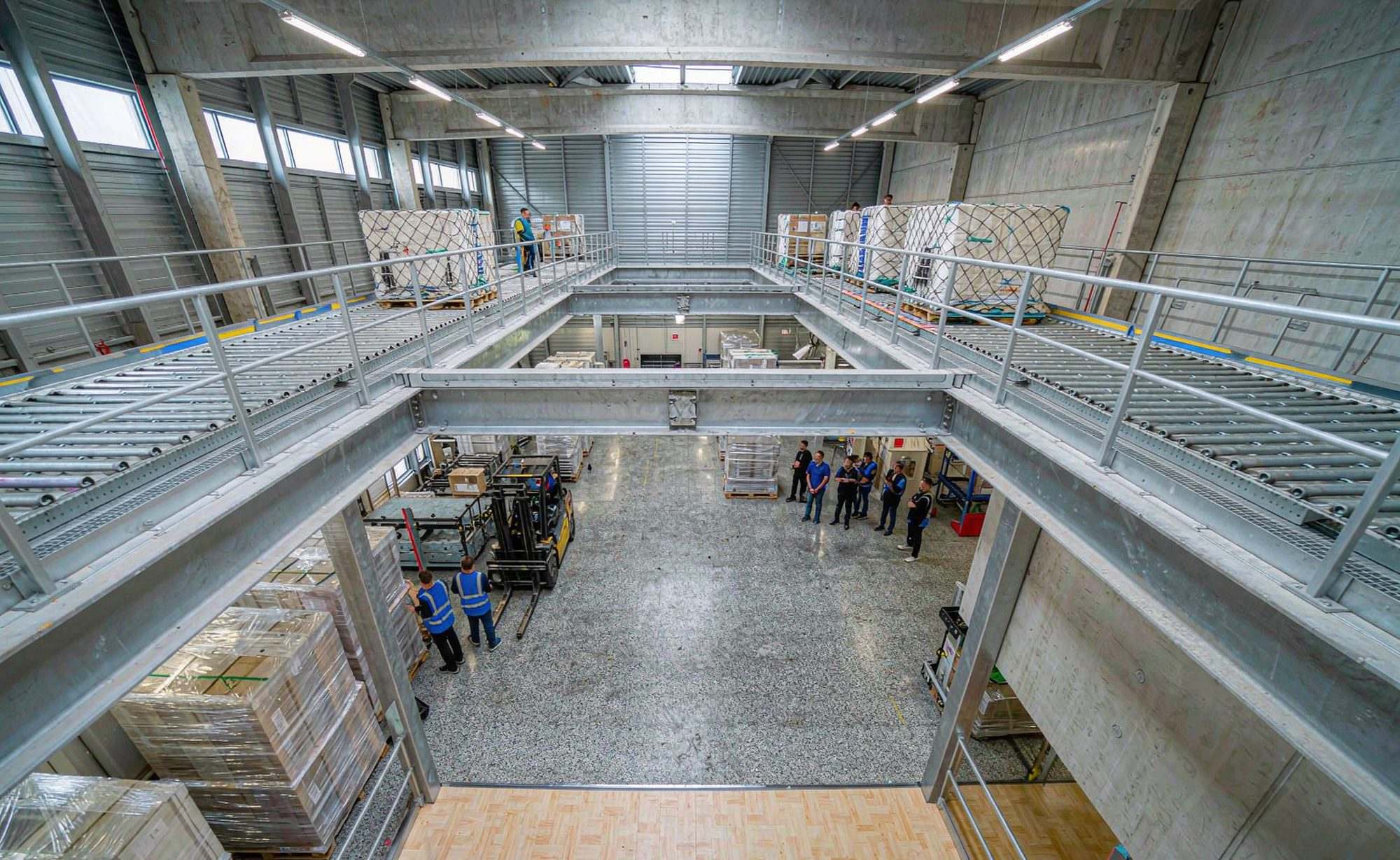
Export freight on pallets wrapped in stretch film inside a multi-storey air cargo terminal, roller deck and forklift behind
On the ground Pickup — release — terminal acceptance Manifest first · cut-off back-planning · exception follow-up

In short

Export customs clearance at Hangzhou Xiaoshan is the China-side filing that turns a booked air waybill into a legally released export: classification, entry or list preparation, single-window filing, inspection attendance, closure. Hangzhou runs it across separate supervised premises inside and beside one terminal — public cargo for general trade, a cross-border centre for 9610 and 9710 lists, and a bonded sub-zone joined to the apron. Goodhope Freight acts as the licensed broker for that filing and coordinates pickup, terminal acceptance and the refund documents that follow.

Note: throughput, route and e-commerce figures come from Hangzhou Xiaoshan International Airport and Hangzhou municipal government releases for 2025, and from China Customs and Zhejiang Daily reporting in July 2025. Terminal scale and bonded-zone details follow the official opening notices for the east cargo terminal and the airport sub-zone. Flight schedules, cut-offs and terminal arrangements are set by the carrier and the terminal operator for the week in question.

Supervised premises

Four Filing Realms in One Airport — Pick the Wrong One and You Refill It

An airport does not split into port areas the way a seaport does, but its customs supervised premises are separate. In Hangzhou they are separated by floor and by gate, and each one has a different filing mode.

Hangzhou Airport Customs 2910

East Cargo Terminal · Public

Ground floor · airside

Handles
General trade export cargo on freighters and belly hold
Scale
156,700 m² in phase one, 600,000 t annual capacity
Workflow
Acceptance, screening, build-up and loading, with an on-site customs inspection hall
Regime
Advance filing, acceptance after release, inspection on arrival
Best for: general merchandise, machinery, apparel and footwear, small appliances, electronics, full shipments under one entry

Phase two broke ground in August 2024: RMB 700 million, 64,000 m², due for completion at the end of 2026. Together the two phases are designed for 800,000 tonnes of international cargo a year.

9610 / 9710 / 9810

Express & Cross-border Centre

Second floor of the terminal

Handles
Cross-border parcels, express consignments, mail
Mode
9610 list release with consolidated declaration; 9710 and 9810 on their own codes
Control
Order, payment and logistics records matched against each list line
Equipment
Loop conveyor, customs sorting line, same-screen image comparison, AI image review
Best for: platform consolidation, small-parcel exports, overseas-warehouse replenishment, mixed-category parcels

Cross-border e-commerce exports through the airport port reached 32,500 tonnes in Q1 2025, up 30.25% on the year.

Bonded sub-zone

Comprehensive Bonded Zone

Airport sub-zone · gated to the terminal

Opened
19 March 2026, Zhejiang's first multi-format airport bonded zone
Area
0.40 km² beside the cargo area
Link
Dedicated gate straight into the east cargo terminal, supervised as one site
Focus
Bonded R&D, testing and repair, e-commerce, aircraft-part supply
Best for: export cargo claiming a refund on entry, bonded storage, repair and aircraft-part supply

Companies in the former Hangzhou bonded logistics centre (type B) were moved across with new customs codes and carried-over ledgers.

Airside corridor

Airside Direct Transfer

Air-to-air transit, apron-side

Handles
Cargo arriving on a domestic flight and leaving on an international one
Workflow
Domestic terminal to international terminal through a dedicated corridor, one handover
Saving
30 minutes against roughly four hours, total clearance time down by more than 60%
Condition
Subject to carrier connections and terminal operating conditions
Best for: e-commerce and time-critical cargo routed through Hangzhou from Chengdu, Kunming, Xi'an

First shipment: 30 pieces, 536 kg of e-commerce cargo on Singapore Airlines SQ839 to Singapore. Air-to-air transit through the port reached 2,677 tonnes in the first five months of 2026.

What differsPublic cargo terminal (general trade)Cross-border centre (9610)
Filing unitOne declaration per shipment, per airway billA list per parcel consignment, released then summarised
Data that must matchDeclaration against manifest and packing listOrder, payment and logistics records against every list line
Room to amendAmendable before release; a defined process afterLimited once the three data sets are locked; refiling is common
Typical delayScreening and build-up queue behind the cut-offSorting backlog in peak season
Common failureBrand authorization, licensed goods, missing declaration elementsUnderstated value, vague description, returns mixed into new stock

The differences above follow current working practice at Hangzhou and published trade facilitation measures. The operative version is always the terminal's arrangement and the carrier's cut-off for that week.

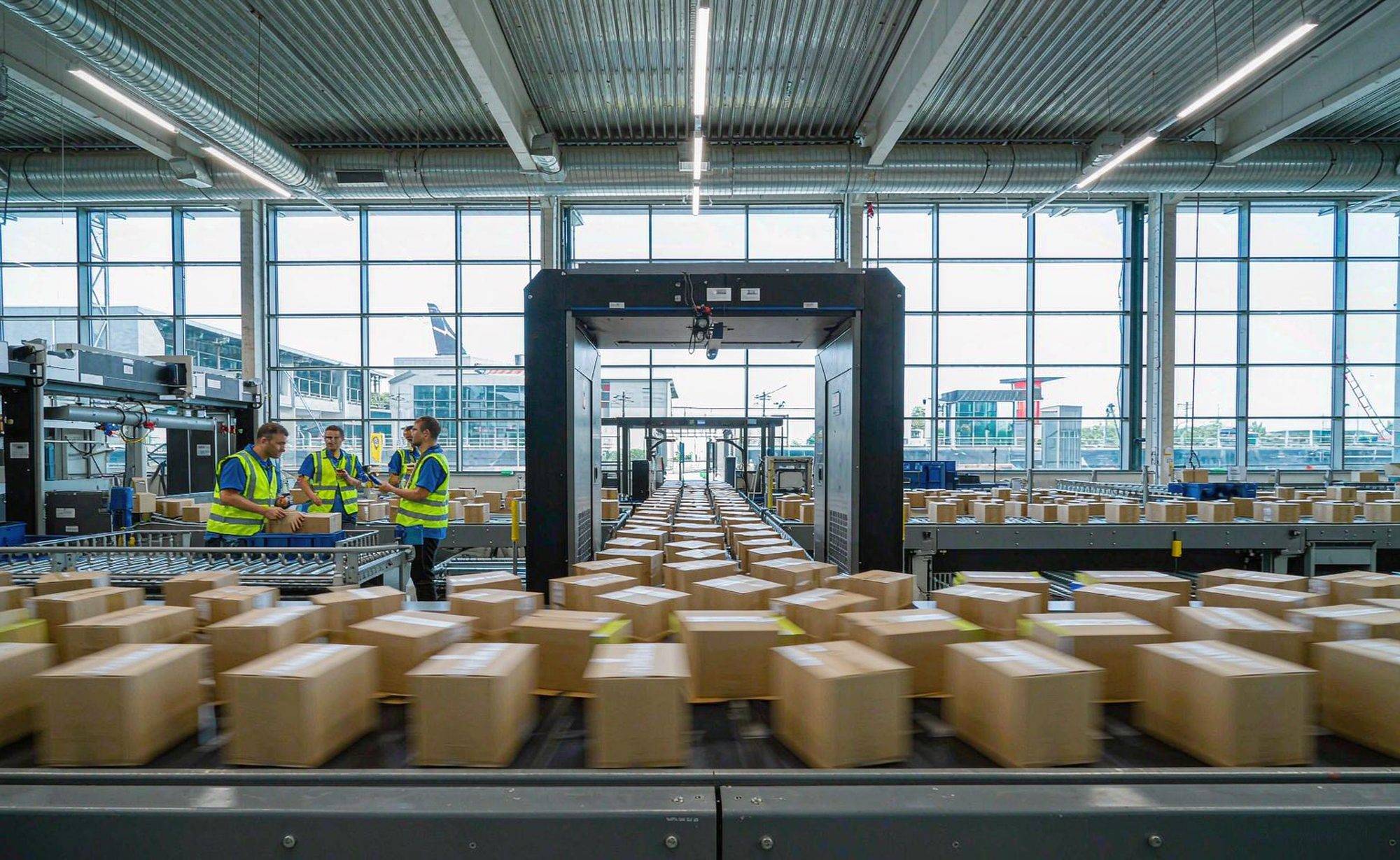
Cross-border e-commerce parcels moving along a conveyor under a scanning gantry inside a customs supervision centre
9610 is not won on the declaration — it is won on three data sets agreeing before the parcels arrive E-commerce exports clear on list release with a consolidated declaration, and the control point is consistency between the order, the payment record and the logistics record. Hangzhou clears on arrival, and the sorting line compares the filed description against the X-ray image on one screen. Vague descriptions, prices well below comparable goods and batteries mixed into a general parcel all stop there — the clearance is fast only for data that was clean before it entered.
What we file

Eight Filing Routes, Because Zhejiang Does Not Ship One Kind of Cargo

The province's air export mix is narrow at the top and wide at the bottom: parcels first, then apparel and small goods, then electronics, solar and storage, chemicals and biotech. The category decides the route, and the route decides the paperwork.

SERVICE 01

General trade export declaration

Price build-up checked against the agreed term (FOB, CIF, EXW, DDP), documents assembled, filed through single window, followed through to release and closure.

General cargoElement checkClosure
SERVICE 02

E-commerce list filing

9610 list release and consolidated declaration; 9710 and 9810 on their own codes. Three data sets checked, categories sharpened, returns separated before the parcels reach the line.

96109710 / 9810Data match
SERVICE 03

Airside transfer and transit

Transit formalities closed at origin, cargo moved through the airside corridor on arrival, transfer closed and uplift confirmed the same day.

TransitAirsideClosure
SERVICE 04

Lithium batteries and powered goods

UN3480 and UN3481, power banks, storage units and devices with cells installed: UN number, pack certificate, UN38.3 report, SDS and DGD checked against what is actually in the carton.

UN38.3Pack certificateDGD
SERVICE 05

Chemicals, liquids and powders

Classification by composition and CAS number. Non-dangerous goods supported by a transport condition report; dangerous goods routed under DGR with carrier acceptance secured before filing.

ClassificationTest reportDGR
SERVICE 06

Solar, storage and oversize plant

Modules, inverters and cabinet-scale storage units: declaration elements checked item by item, battery content declared on the right code, oversize pieces matched to aircraft and ground handling before booking.

Solar modulesStorageOversize
SERVICE 07

Bonded zone entry and refund

Entry into the airport sub-zone, export VAT refund on entry, bonded storage, then release out of the zone into the terminal through the connecting gate.

VAT refundBonded storageZone gate
SERVICE 08

Import, cancellation and amendment

Import clearance and transit at HGH with delivery arrangement; on the export side, cancellation, amendment, re-filing, and rebooking after a canceled or offloaded flight.

ImportCancellationAmendment
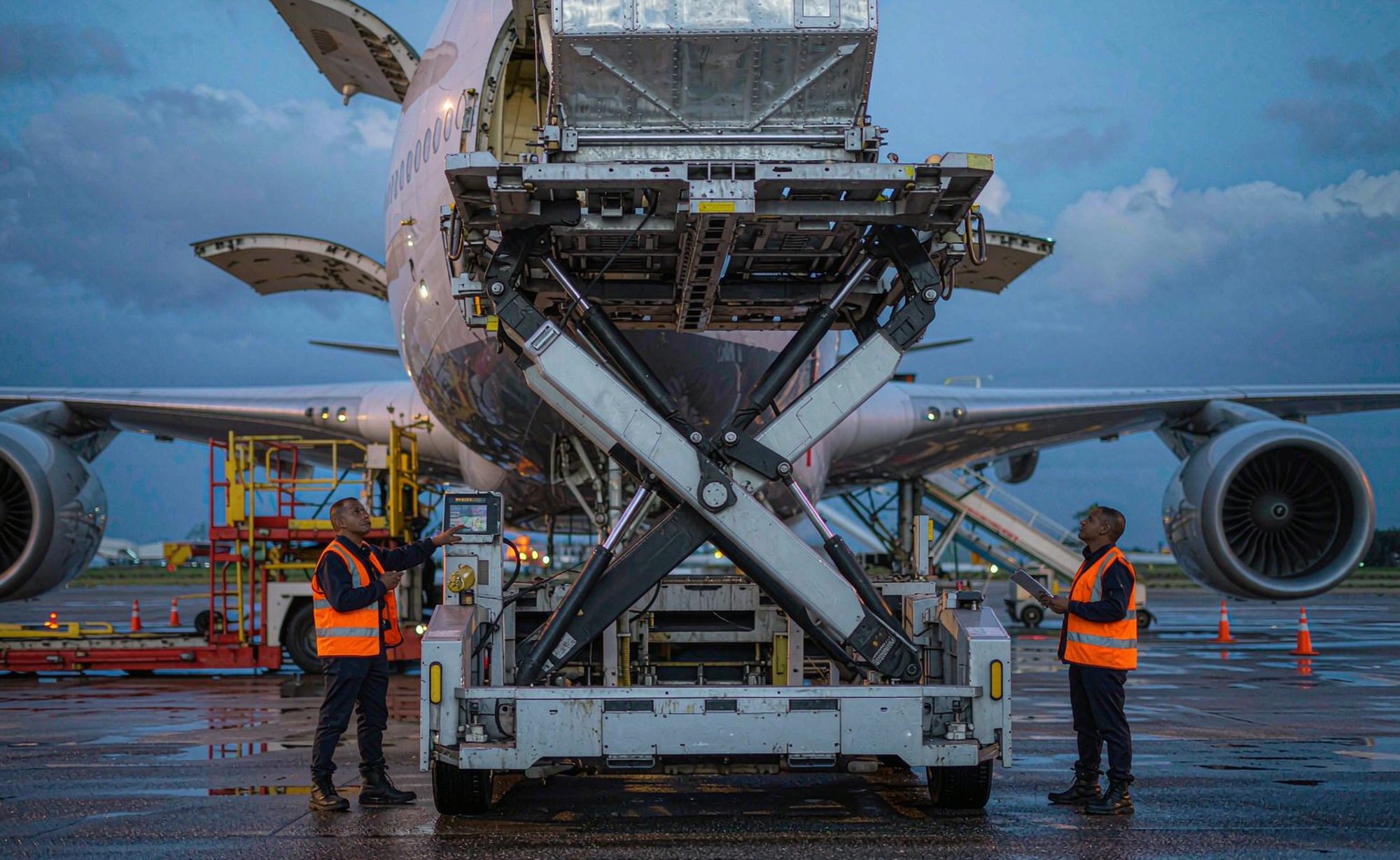
Main-deck loader raising an air cargo container to a freighter with ground crew guiding it on a wet apron
Release is the middle of the job, not the end: acceptance and screening come after it An export schedule built only around customs release is a schedule that misses flights. After release the cargo still queues for acceptance, goes through screening, gets built up and waits for load planning. At a terminal that handles every kilo of international cargo for the airport, that queue moves with the flight bank — so we anchor on the cut-off and work backwards through filing, release and acceptance.
Process

Eight Steps from Booking to Refund Documents

Steps two and three decide whether you amend later. Step six decides whether the cargo makes this flight. Time is the only input on this line you cannot buy back.

1

Handover and documents

Trade term, consignee, destination airport and flight plan confirmed; power of attorney (electronic accepted), contract, invoice, packing list, master and house air waybill collected along with brand, model and end use.

2

Classification and element review

Code set by material, function and working principle, then every declaration element checked. For machinery, electronics and chemicals the manual, drawing or test report is requested up front, not after release.

3

Booking, manifest, cross-check

Master and house details verified after booking, then the manifest description, pieces, gross weight and volume lined up against the declaration. Changing a confirmed manifest needs carrier consent and costs both time and money.

4

Single-window filing

Filed as soon as manifest data exists, which is what advance filing means in practice. Without it, the legal deadline is 24 hours before loading, after the cargo reaches the supervised premises.

5

Review and inspection

Released on document review, or selected for inspection. Air inspections run inside the terminal's customs inspection hall: opened, counted, photographed. Shipments whose packing list matches the cartons pass in one pass.

6

Terminal acceptance and screening

Release is handed to the terminal for acceptance, screening and build-up. This is release time plus queue time, which is why filing is scheduled to finish ahead of the cut-off rather than at it.

7

Uplift and manifest closure

Loaded to schedule with master, house, pieces, weight and volume checked against the actual load. Once the aircraft departs, the manifest closes and the declaration moves to closed status.

8

Documents and VAT refund

The refund copy of the declaration and the filing record are returned, archived with release and manifest data, and handed to your finance team for the export refund claim.

Three clocks, one of which is not law. The Customs Law (Article 24) requires export cargo to be declared after it reaches the supervised premises and at least 24 hours before loading; advance filing is allowed once manifest data exists, but the cargo must then arrive in full within the prescribed window or the declaration is voided (five days for transit cargo). The third clock is the carrier and terminal cut-off. It is not a statutory deadline, it is not published in the law, and it is the one that decides whether your cargo flies.
Documents

What the File Has to Look Like Before It Is Filed

An error costs more by air than by sea: a sea amendment has a day of slack, an air amendment usually costs a flight. The first column below is on every file; the second is added by cargo type.

On every file

  • ✓
    Export declarationEntered in single-window format, matching the goods that will actually be screened.
  • ✓
    Contract or purchase orderTrade term, currency and delivery obligation stated without ambiguity.
  • ✓
    Commercial invoice and packing listDescription, quantity, pieces, gross and net weight, volume — all four sets telling the same story.
  • ✓
    Power of attorneyElectronic is accepted; it must be valid and name the broker who actually files.
  • ✓
    Master and house air waybillNumber, flight, destination and weight/volume consistent with the manifest.
  • ✓
    Declaration elementsBrand type, export preference, composition, specification and model, item by item against the code.

Added by cargo type

  • ✓
    Export licenseDual-use items and licensed goods; the license code must match the declaration code.
  • ✓
    Certificate of originCO, Form E or the applicable preference scheme — issued before departure, never after.
  • ✓
    Dangerous goods fileDGD, pack certificate, UN38.3 report, SDS, all matching the model actually shipping.
  • ✓
    Non-dangerous transport reportThe basis for shipping a chemical, liquid or powder as general cargo.
  • ✓
    Inspection and quarantine certificatesHealth, phytosanitary, fumigation or heat treatment; wood packaging needs the IPPC mark.
  • ✓
    Brand authorization and ATA carnetAuthorization chain for OEM and branded goods; carnets for exhibition samples.
What Hangzhou has actually automated: the port's smart-airport system clears vehicles through automated gates, lets carriers book slots themselves, and releases transit documents on filing — officially measured at about three hours saved per transit movement. Cross-border inspection uses same-screen image comparison and AI image review, with clearance time improved by roughly 20%, and the port runs 24/7 clearance support. What has been simplified is how documents are submitted, not what they have to say. A manifest, a declaration and a packing list that disagree will still stop the shipment, which is why the cross-check happens before filing rather than after.
Clearance modes

Four Ways Through, Matched to Cargo and Flight Time

General cargo, parcels, transit freight and a red-eye departure do not enter through the same door at Hangzhou. Pick the wrong one and the time is spent in a queue rather than in the air.

Unit load devices and export pallets on a roller deck inside an international air cargo terminal
Inside the east cargo terminal, where every kilo of Hangzhou's international cargo is accepted and built up.

Advance filing

Filed as soon as manifest data exists, so the cargo goes straight to inspection or release on arrival. Worth the most when a flight moves earlier — but the goods must then arrive in full within the window, or the declaration is voided and refiled.

Airside direct transfer

Domestic flight in, international flight out, using the dedicated apron corridor: no road leg, no second screening, one handover, about 30 minutes end to end instead of roughly four hours.

9610 list release

Parcels filed as lists, released and summarised, cleared on arrival and sorted in-house. Built for high-frequency, low-value, many-category consignments — and entirely dependent on the three data sets being right before the parcels show up.

24/7 and booked clearance

The port keeps a round-the-clock clearance service, so a night freighter or an early departure does not wait for office hours. Where an inspection needs staff on site, the slot is booked ahead and built into the loading plan.

By cargo type

The Category Changes What Customs Looks At

Hangzhou's air export mix is concentrated: parcels, apparel and small goods lead, followed by electronics and appliances, then solar, storage, lithium batteries, chemicals and biotech. Each carries its own failure mode.

Cross-border parcels

List release turns on three data sets and honest categories. Understated value, a vague description and returns mixed into new stock are the three stops — and peak season adds a sorting queue.

Apparel, textiles and footwear

Zhejiang's strongest export line. Composition, content percentages and brand are examined closely; OEM goods need the authorization chain, and the declared brand has to match the label.

Small goods and hardware

Yiwu cargo consolidated by road into the airport: many descriptions, many pieces, and the highest chance of a line-by-line check on consolidated entries. The packing list has to break down by item.

Electronics and appliances

Brand, model, function and end use have to line up. Modules often change code depending on whether they are treated as parts or as a finished unit, so the datasheet travels with the file.

Solar, storage and lithium

Modules declared by type and output; storage cabinets need the UN number and packing level settled first. UN38.3, SDS, pack certificate and DGD, all matching the cells actually inside.

Chemicals, liquids, powders

Property decided by composition and CAS number. Non-dangerous shipments need a transport condition report; dangerous ones move under DGR with carrier acceptance secured before the declaration is filed.

Biotech and cool chain

Temperature and time both constrained, and dry ice itself is declared as dangerous goods. Health and quarantine certificates must be issued before departure — a certificate dated after the flight is no certificate.

Exhibition samples and temporary trade

An ATA carnet's goods list has to match the exhibits item by item, or the re-import will not reconcile. Sample entries state that the goods are samples with no commercial value.

Three things that go wrong here more than anywhere else

First, three data sets that do not agree. Manifest, declaration (or list) and packing list. Any mismatch surfaces at acceptance or on the sorting line, and by air there is no next day to fix it. With parcels making up more than half of export volume, Hangzhou meets this failure more often than seaports do.

Second, batteries and dangerous goods. Settle the UN number first, then the packaging. The UN38.3 report has to match the cell actually shipped, and the pack certificate has to match the carton. Storage units are the fastest-growing category here and the most common version of the problem is an old report against new packaging.

Third, licenses and inspection. The commodity code, validity period and quantity on a license must fit this shipment, and wood packaging needs the IPPC mark or a fumigation certificate. Cosmetics, food and medical devices inside e-commerce parcels are not exempt because they are small.

Working cases

Six Shipments, Six Places They Nearly Stopped

Nothing here failed because someone could not file a declaration. They failed on data that arrived late, paperwork that did not match the carton, or a queue nobody had costed into the schedule.

Public terminal · general cargo01

Yiwu cargo at the door, manifest still generating

Cargo and route
Two shipments of household goods, 620 kg in total, consolidated in Yiwu and trucked to the airport for that night's freighter to Europe.
What broke
The carrier moved the flight forward and the house manifest was still being generated, so advance filing was missing its last input. On the normal sequence, release would land after the cut-off.
What we did
Classification and declaration elements were reviewed in advance so only the manifest was outstanding; the entry went in the moment the data landed. At the same time the terminal confirmed the acceptance gate and screening window, and the truck was re-timed to arrive after release instead of into a holding shed.
Outcome
Accepted and screened within 90 minutes of release, on the original flight. It was recoverable because the paperwork was finished and only one input was missing.
Dangerous goods · storage units02

UN3481 filed, pack certificate for a different carton

Cargo and route
Thirty-two portable power stations with lithium cells installed, on a freighter to Europe.
What broke
Filed as equipment containing lithium batteries, but the pack certificate named a packaging model that was not the carton in front of us, and the UN38.3 report covered the previous cell generation. Acceptance stopped it at the gate.
What we did
Held the cargo, obtained a current UN38.3 for the cell actually fitted, and had the factory repack to the certified model with a written statement. On the filing side we prepared a cancellation and re-entry rather than let a wrong declaration travel.
Outcome
One flight later, and not treated as a false declaration. The problem with powered cargo is almost never the entry — it is whether the papers predate the cargo they describe.
Cross-border · 961003

Lists released, then the whole lot stopped on the line

Cargo and route
About 23,000 platform-consolidated parcels through the cross-border centre to Southeast Asia.
What broke
The lists said household goods. The cartons contained battery-powered fans and perfume samples, and the payment records were well below the declared list price. Three data sets, three failures.
What we did
Pulled the powered and alcohol-bearing items out and filed them on the correct routes; sharpened list descriptions to actual product names; restated prices to the real transaction value; quarantined returns into a separate batch.
Outcome
The clean parcels cleared and left the same day, the exceptions went the next day as their own shipment. 9610 is not fast because the filing is coarse — it is fast when the data is clean on arrival.
Transit · airside transfer04

Chengdu to Hangzhou without leaving the apron

Cargo and route
Forty pieces of e-commerce cargo, about 800 kg, on a domestic flight from Chengdu connecting to an international departure.
What broke
The traditional path unloads into the domestic terminal, requires collection, a road transfer to the international terminal and a second security pass — four hours at best, which does not connect.
What we did
Used the airside corridor: transit formalities closed at origin, cargo moved from the domestic to the international terminal inside the apron with a single handover, and customs released it in the terminal's inspection hall before build-up.
Outcome
Transfer inside 30 minutes, total clearance time down by more than 60%, and about 30% off the ground transfer cost. Transit is not about moving the paperwork, it is about not moving the cargo twice.
Bonded zone · VAT refund05

Refund first, flight later

Cargo and route
Testing equipment and spares needing a refund on entry before export, on a freighter to North America.
What broke
Finance wanted the refund documentation inside the month, but the shipment could not depart until the final destination port was confirmed. On a normal export entry, both the declaration and the refund copy wait for actual departure — a month of cash flow.
What we did
Filed entry into the bonded sub-zone, took the refund on entry, stored inside the zone, then released out of the zone through the connecting gate into the terminal once the destination was fixed.
Outcome
Refund documents a month earlier and no extra dwell at the airport. What the zone gate saves is not filing time, it is working capital.
Reverse · cross-customs returns06

Returns from Europe, re-entering at Hangzhou

Cargo and route
Apparel and household goods returned from the European market, originally exported through Shanghai and Shenzhen.
What broke
Under the old rule, returned 9610 exports had to re-enter at the port they left from. For goods sitting in Europe, routing back through Shanghai or Shenzhen is neither cheap nor quick.
What we did
Used the cross-customs return scheme for retail exports: re-imported at Hangzhou airport after confirming the document set and the re-export process with customs, then ran unloading, tally, inspection and warehousing as one sequence.
Outcome
Shorter return cycle and faster cash recovery. Once the reverse lane works, selling further away stops being a gamble.

These are de-identified working cases: customer names, flight numbers and some weights have been replaced or rounded, while the sequence and the failure points follow the actual handling. Cut-offs and document requirements are set by the terminal and the carrier for the week in question.

Questions

Ten Questions Exporters Ask About Hangzhou

Answered from working practice. Where a deadline or a cut-off is involved, the customs notice and the carrier for that week govern.

How far in advance should I prepare an export declaration at Hangzhou?
Three to five working days before departure for general cargo, which leaves room for classification and advance filing. Powered goods, chemicals and cool-chain cargo need five to seven, because UN38.3 reports, transport condition reports and pack certificates wait on factories and labs. E-commerce is a different clock: clean the list data before the parcels enter the premises, because changing it afterwards usually means the whole batch is returned and refiled.
Does release mean the cargo makes that flight?
No. Release ends the customs step. Acceptance, screening, build-up and load planning still follow, and at a terminal that handles every kilo of the airport's international cargo, that queue moves with the flight bank. We schedule filing to finish before the cut-off with margin, and plan against release time plus queue time rather than release alone.
What is airside direct transfer, and can my cargo use it?
It moves cargo that arrives on a domestic flight and leaves on an international one through a corridor inside the apron, from the domestic terminal to the international terminal, without a road leg or a second security pass. Hangzhou's own comparison: four handovers, two screenings and about four hours on the traditional path, against under 30 minutes on the corridor, with total clearance time down more than 60% and roughly 30% less ground transfer cost. Whether your shipment qualifies depends on carrier connections and terminal conditions, so it is confirmed case by case.
Should Zhejiang cargo fly from Hangzhou or from Shanghai Pudong?
Three inputs: whether the destination has a direct freighter from Hangzhou, the rate, and how tight the cut-off is. Hangzhou runs 28 international cargo routes with about 120 freighter movements a week, covering Europe, North America, Central and Eastern Europe and Southeast Asia, and moved 257,000 tonnes internationally in 2025. Where there is no direct service, cargo moves to Pudong or Ningbo by air-to-air or air-road transit, with the declaration closed at origin and the transit written off at Hangzhou before uplift.
Where do 9610 parcels usually get stuck?
On inconsistency between the order, the payment record and the logistics record. Vague categories, declared prices well below comparable goods, batteries or alcohol mixed into general parcels, and returns packed with new stock all stop on the sorting line for a piece-level check. Hangzhou clears on arrival, but only for data that was right before arrival. For large, mixed batches, splitting by category clears faster than filing one big list.
What does the bonded zone air sub-zone do for an exporter?
It closed in March 2026 and is joined to the east cargo terminal by a dedicated gate, supervised as one site. Practically: cargo that needs a refund on entry can be declared into the zone, stored there, and then released out into the terminal for uplift, without a road leg between a bonded park and the airport. Bonded R&D, testing and repair, e-commerce and aircraft-part supply all run through the same gate system.
Can I export from Hangzhou without an import-export license?
Not in your own name. Companies without a license usually file through a qualified foreign trade service provider or an agent, and the party receiving payment, the party claiming the refund and the declarant on the entry then have to be the same. Buying an export slot under someone else's name gets cargo out of the country, but it forfeits the VAT refund and carries compliance risk.
Do products with batteries always ship as dangerous goods?
It depends on cell chemistry, capacity and packaging. Lithium-ion cells ship under UN3480 and UN3481 with a UN38.3 report and SDS, usually with a pack certificate and a DGD. Small cells installed in equipment can qualify for exemption and move as general cargo, but that has to be supported by documentation rather than judgement. The carrier's acceptance rules settle the question.
I have filed and the description or value is wrong. Now what?
Before release, you can apply to amend or withdraw the declaration with a reason and supporting documents. After release, and certainly after departure, the amendment route gets longer and can affect the VAT refund. By air there is no second flight to absorb the delay, which is why the contract, invoice, packing list and manifest are cross-checked before filing: an amendment costs more than a review.
Do you only file declarations, or can you arrange pickup and air freight?
Filing is the core service. We also arrange pickup and warehousing in Hangzhou, Shaoxing, Ningbo and Yiwu, and book space out of HGH, so collection, declaration, terminal acceptance and uplift sit on one schedule. If you already have a forwarder or a carrier contract, we can take only the declaration and documentation.

Why Goodhope

At an Airport, the Difference Is Clean Data and Connected Hands

Air freight tolerance is measured in hours. It does not show up in a rate sheet; it shows up when the manifest lands late, when the sorting line backs up, or in the half hour a transit connection allows.

01

Shenzhen desk, Hangzhou hands

Booking, documentation and customer communication run from Shenzhen; operations at HGH handle acceptance, inspection and amendment the same day.

02

A cross-check before filing, not after

Manifest, declaration and packing list compared item by item — description, pieces, gross weight, destination — so the errors that can be caught early are caught early.

03

Back-planned from the cut-off

Filing, release and acceptance scheduled backwards from the carrier cut-off, with a document deadline your factory can plan against instead of an instruction to hurry.

04

Separate routes, not one template

General trade in the public terminal, parcels in the cross-border centre, batteries on the dangerous goods route, transit through the airside corridor.

05

The bonded gate used properly

Refund on entry, bonded storage, repair and aircraft-part supply handled through the sub-zone that connects to the terminal, without extra road legs.

06

Itemised charges

Declaration, inspection, terminal handling, trucking and storage listed separately and settled against actual documents — no blended all-in figure.

GET IN TOUCH

Hangzhou air clearance —
hand us the flight and the paperwork

Tell us the commodity and end use, pieces and weight, destination airport, planned departure and whether you need a VAT refund or a bonded entry. We will come back with the right premises, the document list and a back-planned timeline.

Request a quote
CompanyGoodhope Logistics (China) Limited
BrandGoodhope Freight
Phone / WhatsApp+86 189 3869 1638
Emailsales007@goodhopefreight.com
CoverageShenzhen (HQ) · Hangzhou airport · Yiwu
HoursMon–Sat, 9:00–18:00 (GMT+8) · 24/7 for live shipments
call us: +86 13392162503