
For chilled salmon, cherries or pharmaceuticals, this is one of the few Chinese airports where the inspection site, the cold room and the customs office sit inside the same cargo terminal. For general export freight the limit is not paperwork — it is freighter space and the cutoff clock. Seven freighter routes, five perishable inspection sites and a bonded centre, all on one airfield.
Yes for perishables, pharmaceuticals and biologics, and yes for exports that can fill a freighter position. Chengdu runs two airports: Shuangliu (CTU) now carries the freighter network, the domestic business shuttles and the perishable inspection sites, while Tianfu (TFU) handles most long-haul international passenger flying. Both belong to Chengdu Customs but sit in different customs areas. Check the airport before you check anything else.
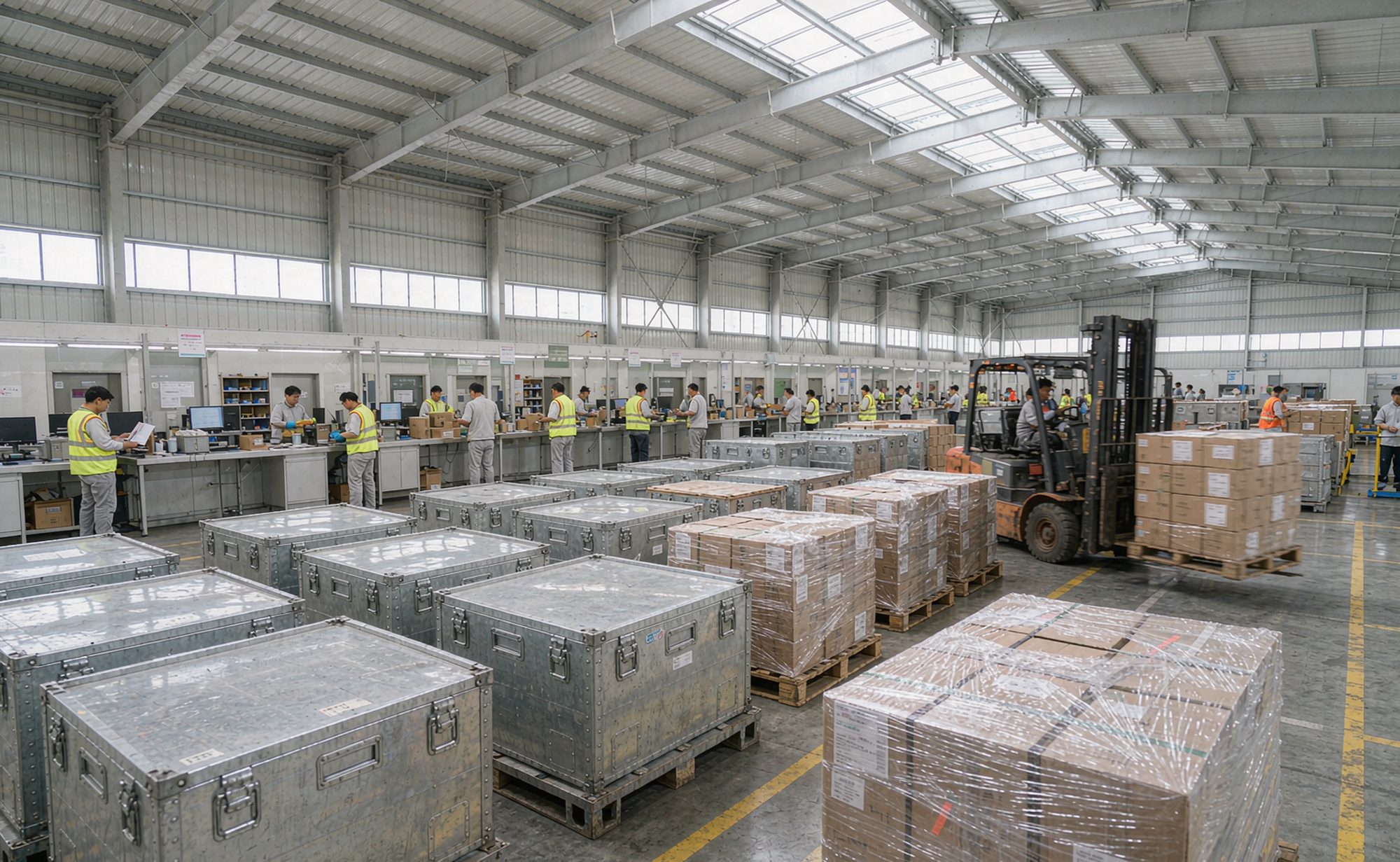
Cargo tonnage, express volumes and perishable import figures come from 2025 production statistics and 2026 public reporting by the Shuangliu district government, the Chengdu commerce bureau and Chengdu Customs. Route counts and capacity follow current carrier schedules. Inspection-site scope is set by the General Administration of Customs list; actual space, cutoff times and handling windows follow the carrier and terminal notice for your flight.
A shipment does not go to “the airport”. It goes to a specific terminal, and the terminal decides the screening line, the build-up sequence and the cutoff hour.
Hangshu Avenue 489 · site code CNCDU790046
Best for: general freight, chilled and frozen cargo, pharmaceuticals, full pallets
Cold rooms, insulated boxes and data loggers have to be arranged before release, not after. A released pallet with no reefer at the door stays in the shed.
Two carrier terminals on the same airfield
Best for: freighter pallets, charters, cargo moving on the carrier’s own routes
A declaration that names one terminal while the cargo sits at another creates two arrival records and one very long day.
Freighter-to-sortation, no road leg in between
Best for: e-commerce parcels, B2C direct mail, express, returns and exchanges
Parcels clear on a manifest and three matching data streams, not on a trade declaration. Filing them as general cargo breaks the match at the screening line.
Customs areas 7920 and 7922
Best for: import stocking, bonded distribution, duty deferral on slow-moving inventory
Deferral is not exemption. Book stock and physical stock have to agree at the month end, and they are checked.
| Item | Export filing | Import release |
|---|---|---|
| Filing deadline | After cargo reaches the supervised site and 24 hours before departure; advance filing up to 3 days earlier | Within 14 days of entry declaration; chilled and pharmaceutical cargo is filed on landing |
| Precondition | Space confirmed, manifest pre-built, screening rules checked for batteries, liquids, magnets | Manifest transmitted, delivery order exchanged, permits and approvals secured before shipment |
| Site work | Receiving, X-ray, weighing and measuring, pallet build, manifest close | Break bulk, document-to-goods check, inspection at the designated site, gate-out |
| Typical failure | No space, cutoff earlier than assumed, gross weight off, batteries refused at receiving | Permit and batch do not match, shipper not on the whitelist, cold chain broken during inspection |
| After release | Load and depart, close the manifest, archive the refund documents | Pickup and delivery, destination inspection, follow-up supervision closed out |
| Who slips up | First-time air shippers who book the wrong Chengdu airport | First-time perishable importers who plan to obtain the permit after arrival |
Statutory time limits follow the Customs Law and current filing rules. Cargo filed in advance must still arrive within the stated window, or the entry is voided. Local practice can be stricter than the statute; the customs office and terminal notice for your flight govern.
Exports here are electronics, precision instruments and e-commerce parcels. Imports are chilled seafood, fruit, pharmaceuticals and biologics. Same customs office, same terminals, opposite clocks.
Freighter and belly-hold channels: space confirmation, manifest build, entry preparation, terminal receiving, release and manifest closure tracked to the flight.
Manifest and entry data from one source, order, payment and waybill matched. Low-risk parcels move through the express centre screening line without a second trip to a warehouse.
Classification under the IATA rules first: UN38.3 summary, MSDS, air transport condition report, packaging certificate and shipper’s declaration, checked against the carrier’s acceptance standard.
After manifest closure we collect the refund copy, the release notice and the manifest data, and keep the chain intact for refund claims.
Delivery order, entry, duty or guarantee, inspection attendance and pickup, with the release slip, import approval, batch number and temperature log cross-checked for drugs and biologics.
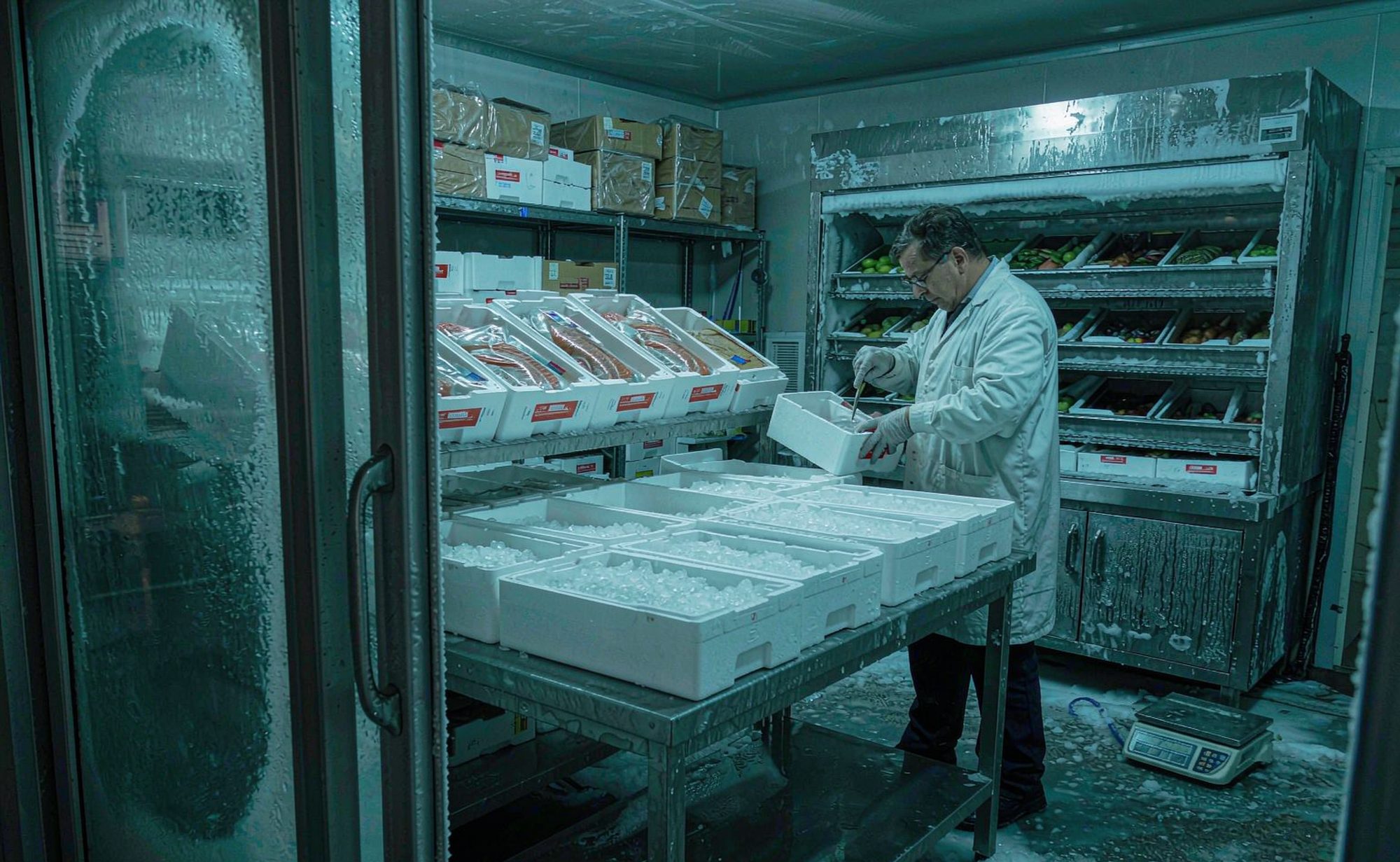
Five inspection sites in one terminal: chilled seafood, live aquatic products, fruit, meat and plant seedlings. Chilled seafood can move on two-stage admission, filed to picked up in about 1.5 hours.
Book setup and reconciliation for the Type B centre and the Shuangliu bonded zone: refund on entry, duty deferral, internal transfer, delivery out of the zone and 1210 stocking.
International-to-international cargo moves airside without leaving supervision, re-exported in under six hours. International-to-domestic cargo runs the airside lane into the domestic terminal in about two hours from touchdown.
Two statutory clocks govern everything: file 24 hours before departure, declare within 14 days of arrival. Neither is the one that decides whether your cargo moves.
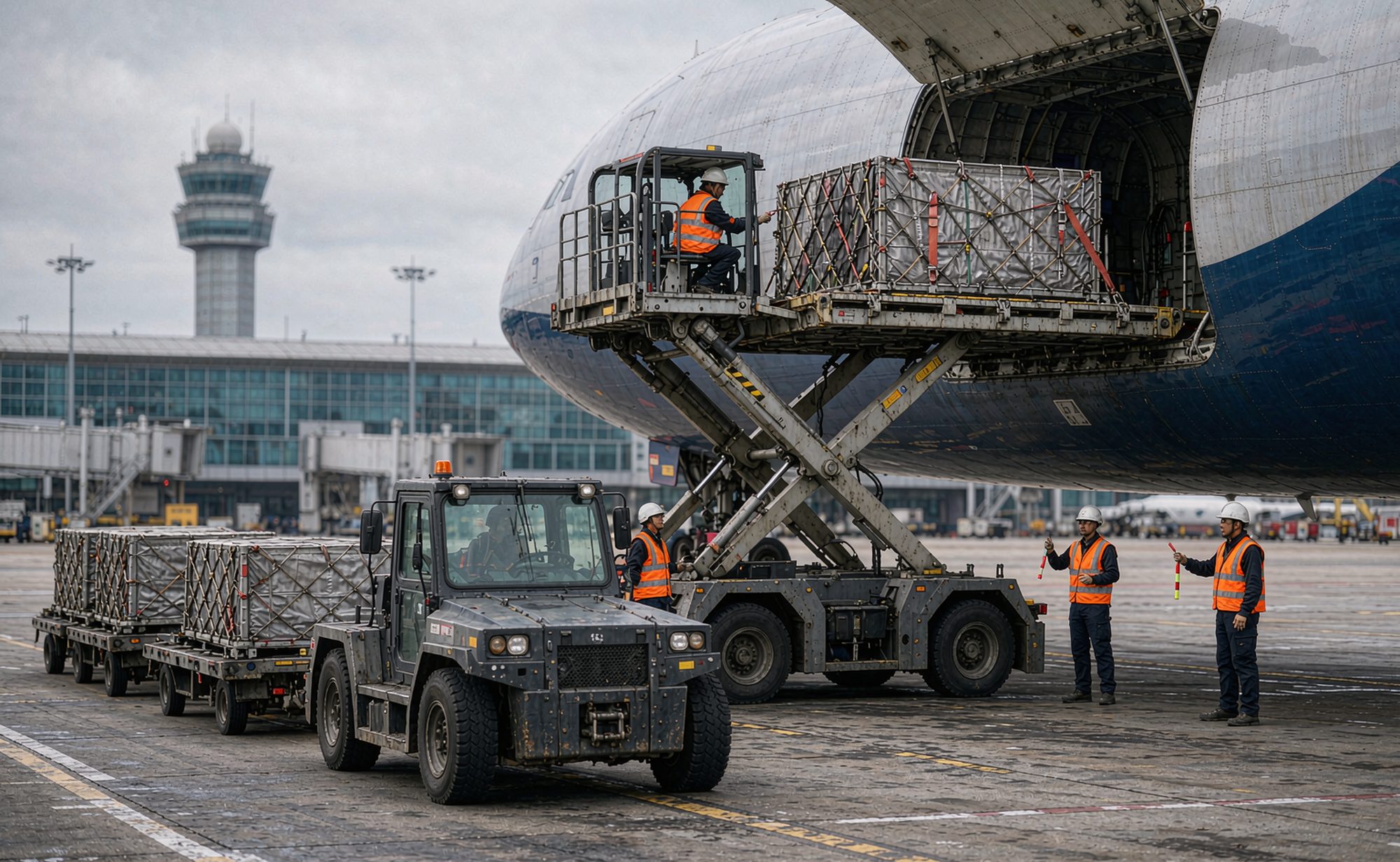
Freighter or belly. Seven freighter routes run on fixed days with tight positions; belly capacity follows domestic shuttles and the regional flights returning to Shuangliu. No space means no shipment, however early the entry was filed.
Product name, HS code, declaration elements and terms of sale. Classification arguments on chips, modules and instruments have to end before filing, not at the inspection bay.
Up to three days before arrival at the site, once space is confirmed and cargo is ready. Advance filing removes the buffer: one wrong field costs a flight.
Airport terminal, Sichuan Airlines or Air China Cargo, depending on the carrier. X-ray, weigh, measure, build to the pallet contour. Batteries, liquids and magnets are stopped here most often.
Receiving creates the arrival record; the system compares it with the entry and releases cargo with no inspection order. Speed here is a document question, not a queue question.
Three failure modes: piece count or weight off, product name or code wrong, undeclared items inside. Small fixes are amended on the spot; anything larger means the flight leaves without you.
Loaded to the load plan. The manifest and the entry must agree before the flight can be closed out. Split and consolidated shipments get checked here.
Collect the refund copy, the release notice and terminal records, and archive them for the VAT refund and any later verification.
Manifest data transmits after departure. You need the master and house numbers, pieces, weight and dimensions before the delivery order or the entry can start.
Arrival notice and bill of lading in exchange for the delivery order. Freight collect, documents not on board and mismatched consignee details all stop here.
Within 14 days of arrival; chilled, live and pharmaceutical cargo is filed on landing. Where conditions allow, seafood goes in on a summary filing and leaves on two-stage admission.
Pay against the assessment, or release first against a guarantee such as monthly aggregation or duty insurance. High-value cargo usually buys turnover this way.
At the designated site in the airport terminal: chilled cargo for packing, temperature and certificates; fruit for labeling and phytosanitary documents; drugs for the release slip, approval and batch number. Orders usually arrive before touchdown.
Sampling, fumigation or extra certificates are handled in the designated area. Under conditional release the cargo can leave first and the result follow, provided the commitment is closed out on time.
Release notice, pickup formalities, gate-out. Reefers, insulated boxes and loggers must already be at the door; a released pallet with no truck is still in the shed.
Move to the registered warehouse or plant, complete destination inspection where required. An open follow-up item puts the next shipment under a closer look.
Export paperwork fails at the receiving counter when one sheet is missing. Import paperwork fails weeks earlier, when the permit was never obtained.
The air freight window is an order of magnitude narrower than ocean. Choosing a mode is choosing whether risk sits before filing or after release.
File up to three days before the cargo reaches the terminal, then release and receiving run in parallel. Works for shippers with stable products and weekly volume. Skip it when the invoice or packing is still moving: an amendment can cost the build-up slot.
A summary entry gets the cargo out, the full entry follows; compliant chilled and live cargo can leave on condition with testing afterward. This is how a holiday-season seafood lot keeps its shelf life. It only works when permits and whitelist registration are already in place.
International-to-international cargo changes aircraft airside in under six hours without leaving supervision, at roughly RMB 800 less per shipment. International-to-domestic cargo runs the airside lane straight into the domestic terminal. For very small, very low-value parcels the handling fee can outweigh the saving.
Declare transit at Shuangliu and clear at the customs office near your plant, or move stock into the Type B centre or the Shuangliu bonded zone for refund on entry, duty deferral and 1210 stocking. Transit adds supervised transport time; bonded storage demands books that reconcile every month.
A pallet of salmon and a pallet of laptop modules clear through the same airport under completely different rules. One is judged on permits and temperature, the other on code, licensing and cutoff.
Chengdu’s main export. Many models, frequent batches, high value: declaration elements by function and use, licensing checked before filing, never one code for the whole pallet.
9610 runs through the express centre with manifest and entry from one source. Any price change means the whole set is reissued. 9710 and 9810 follow the B2B rules instead.
Class 9. Standalone cells generally need a freighter; installed cells can travel as general cargo with conditions when the parameters allow. Documents that do not match the cell type are refused at receiving.
Shock, tilt and temperature limits belong in the packaging spec, with IPPC-marked crates. Oversize pieces need the aircraft type and loading plan settled before the entry is filed.
The most mature import line here. Two-stage admission, whitepaper-listed importers and an inspection site inside the terminal are what produce the 1.5-hour figure. Miss one and the clock resets to days.
Market access by country, plus orchard and packing-house registration. Inspection hit rates are high, sampling takes time; allow two to three extra days for a holiday deadline.
Designated port, NMPA approval and full temperature records, all three at once. Approval is per product, cargo is per batch; a mismatch means waiting for supplementary documents.
A 4F airfield that takes widebody freighters. Charters need the schedule and load plan early; oversize pieces need handling equipment confirmed before anyone talks about the entry.
Never declare dangerous goods as general cargo. Screening at the terminal and acceptance by the carrier are two separate gates; a false declaration ends with cargo sent back and a record that follows every later shipment.
Never file against one Chengdu airport and deliver to the other. Shuangliu and Tianfu sit in different customs areas with different terminals; the entry names an airport, a carrier and a flight, and they have to point at the same one.
Never plan air freight on an ocean timeline. Ocean gives you days of slack; air often gives you hours, and after the cutoff the only remaining option is the next flight.
Air cargo rarely fails because nobody knew the process. It fails on one airport, one weight, one certificate.
These scenarios are assembled from publicly reported operating conditions at this airport and from recurring questions in the trade. Details are generalized and do not identify any company. Actual handling follows the customs office and terminal requirements in force.
Half import, half export. What can be imported here, how fast, and what stops a shipment at the counter.
Whichever airport your flight actually operates from. Shuangliu carries the freighter network, domestic business shuttles, the perishable inspection sites and most cargo handling; Tianfu handles most long-haul international passenger flying, and its belly capacity goes with it. The entry, the carrier and the terminal must all name the same airport.
Five designated inspection sites are operating: chilled seafood, live aquatic products, fruit, meat and plant seedlings. Pharmaceuticals and biologics have designated port status. Chilled salmon, cherries, plums, lobster, white shrimp and eel move through as routine cargo. Country and commodity scope follows the GACC market access and site lists.
The legal floor is after the cargo reaches the supervised site and at least 24 hours before departure. Advance filing is allowed up to three days earlier, provided the cargo arrives inside the window. In practice the terminal cutoff governs: freighter cutoffs come earlier than belly cutoffs because build-up and load planning need the time.
Three options: split the lot and send the urgent portion on a domestic shuttle to a coastal gateway with freighter capacity; route it air-to-air through the network this airport already feeds; or wait for the next direct departure and ask about a charter or blocked pallet. What you cannot do is make space by filing faster.
Three conditions at once: the inspection site is inside the cargo terminal, so nothing is trucked twice; two-stage admission allows conditional release before the test result; and the importer is registered on the whitelist. Missing any one of them puts the shipment back on a daily clock. The model has been approved for replication nationwide.
Designated port status, an NMPA import approval with a matching release slip and batch number, and a complete temperature record. This airport holds both the pharmaceutical and biologics designations. Biologics carry additional requirements, so confirm approval, labeling and the temperature plan before the shipment leaves, not after it lands.
International-to-international cargo changes aircraft without leaving supervision: handling time drops from at least one working day to under six hours, and cost falls by roughly RMB 800 per shipment. It suits hub-and-spoke distribution into western China. For very small, low-value parcels, the handling fee can exceed the saving.
Through 9610 at the airport express centre: order, payment and waybill data transmit to customs, and a manifest is filed for the parcels. The three streams must agree in value and time. The centre handled 154 million parcels and 180,000 metric tons in 2025 after the site expansion, and the fast-lane model has been extended to the postal express centre.
Usually not. Inspection orders arrive before the cargo reaches the site and are executed against the documents. Piece count errors, wrong product names and undeclared items are the common findings. Small corrections are amended on the spot; anything requiring a ruling means the flight leaves without the shipment.
Transit when your plant is inland and you want inspection near home: declare at Shuangliu, clear at the local customs office, at the cost of supervised transport time. Direct clearance when you want the cargo in hand at the airport. Perishables and pharmaceuticals rarely transit because the clock does not allow it; oversize equipment often does.
There is no “wait a bit” option. Either the cargo makes this flight or it waits for the next one.
Before booking, we confirm whether the flight operates from Shuangliu or Tianfu and which terminal receives the cargo. This one check prevents the most expensive mistake in Chengdu.
Every task sits on a clock measured back from departure or touchdown: documents, screening, cutoff, pickup. A schedule you can check, not an assurance.
Quarantine permits, whitelist registration and overseas plant registration are confirmed before shipment. Cold rooms and reefers are booked before release. The 1.5-hour route is only offered when it will actually hold.
Classification is done before the cargo leaves your factory. If a shipment cannot fly as booked, we say so rather than spending your cutoff on a trial.
Type B centre, the Shuangliu bonded zone, the 9610 express centre and the mail exchange office run on different rule sets. One team handles all four, so nothing is handed off mid-file.
Inspection attendance, amendment delivery and pickup coordination happen on site in Shuangliu, not through three phone calls to someone who is not there.
For export, tell us the flight number, terminal and cutoff. For import, tell us the arrival time, the commodity and the permit status. If a site does not cover your product or the space is gone, you will hear that first — before price.
Request a quote