Since 2012 NVOCC GD20230925153335 24h Response
+86 13392162503 sales8015@goodhopefreight.com Login
Goodhope Freight
Export customs clearance · River and rail · Inland port of departure

Chongqing Port Export Customs Clearance

Chongqing is an inland port of departure. The export entry is filed here — at Guoyuan, Changshou or the Tuanjiecun rail terminal — but the cargo does not leave China until it reaches Shanghai, Ningbo, Qinzhou or Alataw Pass. Pick the routing first: the Yangtze, the China–Europe block train, or the land-sea corridor. The filing, the closure message and the VAT refund all follow that choice.

Guoyuan Port Changshou chemical terminal Luohuang Port Tuanjiecun rail port Port-of-departure VAT refund Shanghai–Chongqing express line 7-day advance filing
3 outbound routingsYangtze barge · block train · rail-sea
RMB 800.7bnChongqing's foreign trade in 2025
1.0M TEUGuoyuan Port container volume, 2025
Plan my Chongqing clearance See the 8-step flow
1.0M TEUGuoyuan Port in 2025
68.1% of the city's containers
1.47M TEUTotal container volume
across Chongqing's river ports
8,371 entriesRefund-eligible declarations
Jan–Feb 2025, Chongqing Port Customs
8–9 daysAverage Three Gorges lockage queue
the river routing's real variable
Why Chongqing

Three Routings Meet Here,
and the Routing Decides the Schedule

Chongqing traded RMB 800.68 billion in 2025, with exports of RMB 558.73 billion. The city's river ports moved 1.47 million TEU, 1.0 million of it through Guoyuan alone. Volume is not what makes this port unusual. What makes it unusual is that three separate ways out of China start in the same city — and they do not share a filing logic.

Ship the same container down the Yangtze, onto a block train, or down to Qinzhou for a feeder, and the transit time moves by more than a week while the paperwork changes shape. Most of the failures we get called about are routing decisions that were never made explicitly.

  • 1
    The entry is filed inland; the exit happens elsewhereTransport mode, port of departure, port of destination and the transit link between vessels or trains all have to line up on one entry. Get that link wrong and the box arrives at the coast with a record that does not match the manifest.
  • 2
    Port-of-departure refund moves the refund forwardOnce cargo leaves Guoyuan, customs generates the departure-port export entry data automatically, and the refund can be filed without waiting for the goods to clear a foreign port. Companies here report the refund cycle shortening by close to a month.
  • 3
    The Three Gorges lock is the river's hard constraintThe ship locks were designed for 100 million tons a year. In 2025 they passed more than 169 million, and the average vessel waited eight to nine days. River transit is not a schedule you calculate; it is a queue you join.
  • 4
    Routings can be switched, if the entry keeps roomBooked on the river, switched to rail three days later: normal, provided classification and declaration elements were clean to begin with. What changes is the transport mode — not the whole document set.
Who carries the filing obligation? On FOB, CFR or CIF terms the China-side export declaration is the seller's job, but a missed sailing still lands on your delivery date. On EXW it is yours. Either way, an inland port of departure adds a step most buyers never see: the cargo has to reach a coastal or border port before it counts as exported, and the refund clock runs on the departure-port rule, not on your supplier's invoice date.
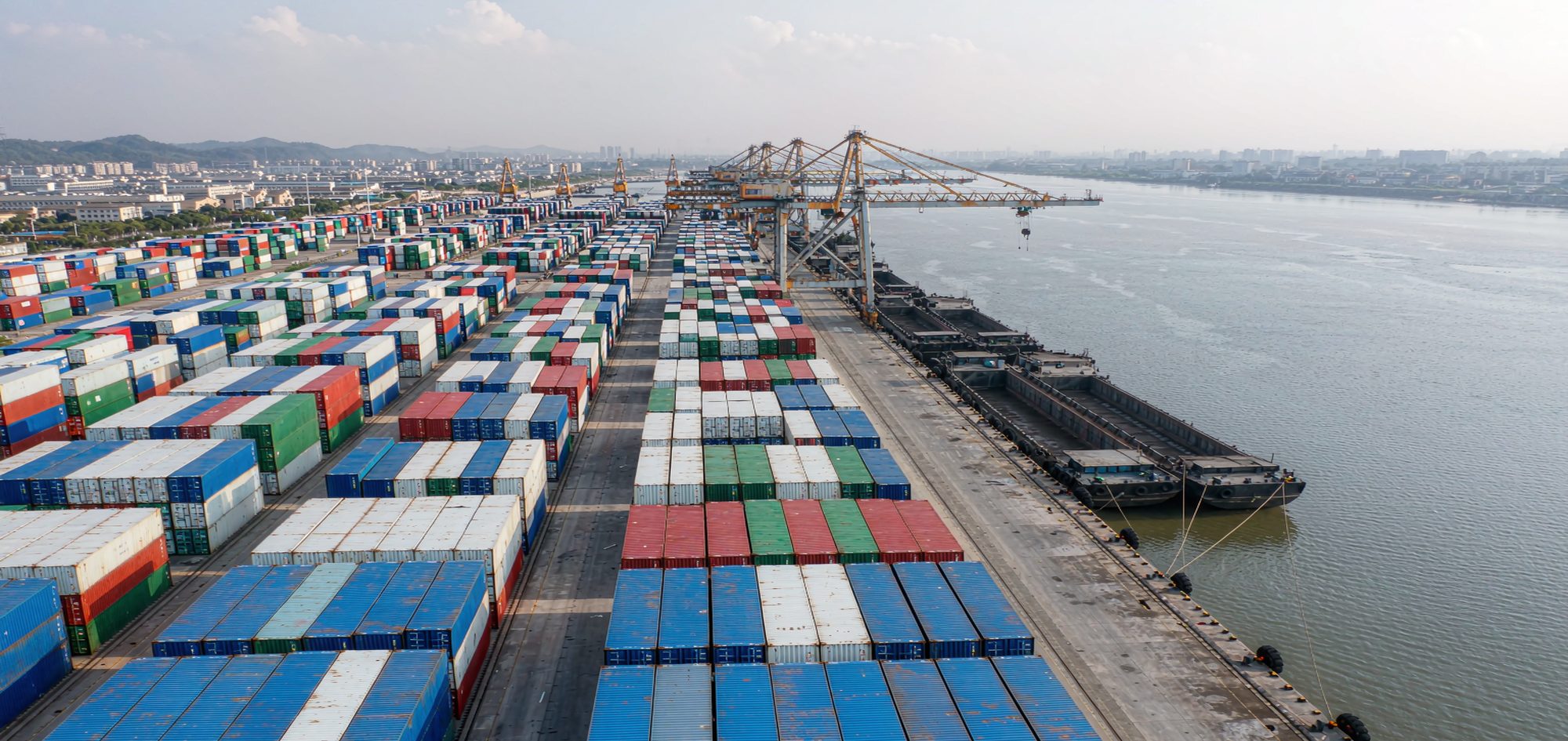
Stacked export containers and gantry cranes at an inland Yangtze river container terminal near Chongqing
On the ground File in Chongqing — exit at the coast Departure-port refund · transit link · rail slots

In short

Export customs clearance at Chongqing Port is the China-side filing that turns a booked container into a legally released export at an inland port of departure: HS classification, entry preparation, single-window filing, arrival reporting, inspection and closure, plus the transit link that carries the cargo to the port or border crossing where it actually leaves China. Chongqing runs it across three routings — the Yangtze to Shanghai or Ningbo, the China–Europe block train through Alataw or Khorgos, and the land-sea corridor to Qinzhou — and each one back-plans differently. Goodhope Freight files that entry, coordinates the barge, rail slot or feeder, and prepares the departure-port refund documents that follow.

Note: trade figures come from Chongqing Customs (2025 full year); port, corridor and lockage data come from the Chongqing Port and Logistics Office, Chongqing Customs and terminal operators. They describe capability. The working sailing, train slot and cut-off are set by the carrier and the terminal for that week.

Terminal and corridor matrix

Four Working Points, Four Different Ways Out of China

Chongqing is not one terminal. It is a river container hub at Guoyuan, a chemical terminal at Changshou, a bonded-zone port at Luohuang and a rail terminal at Tuanjiecun. Routing picks the site first; tonnage picks the berth second.

Chongqing Port Customs

Guoyuan Port

Liangjiang New Area, upper Yangtze

Volume
1.0M TEU and 26.7 million metric tons in 2025 — the largest on the upper Yangtze
Facilities
16 berths of 5,000 dwt, 14 dedicated rail tracks, 180,000 m² of warehouse
Customs regime
4.3 km² port area, two supervised premises, H986 non-intrusive scanning
Routings
River barge, rail-water transfer, Shanghai–Chongqing express line
Best for: FCL by river, rail-water transfer, vehicle ro-ro, departure-port refund

The physical junction of the Yangtze, the China–Europe block train and the land-sea corridor, and one of the first national port-type logistics hubs.

Fuling Customs

Changshou chemical terminal

Changshou District, downstream of the city

Status
The only public terminal in Chongqing licensed for dangerous-goods containers
Capacity
Three berths: about 1 million tons of liquid chemicals, 50,000 TEU
Rail link
Yuba dedicated railway, the only station in Chongqing cleared for DG containers
Customs regime
Changshou district is handled by Fuling Customs
Best for: chemicals, hazardous containers, liquid bulk, rail-road-water transfer

Packing site, terminal approval and rail acceptance all have to line up before a DG box can move at all.

Jiangjin bonded zone

Luohuang Port

Jiangjin District, southwest of the city

Status
Core of the Chongqing hub port industrial park, one of four port clusters
Setup
Luohuang port, Xiaonanya rail logistics centre and the Jiangjin bonded zone under one plan
Cargo
Containers, breakbulk and bulk, vehicle KD kits, project materials
Routings
Water-road-rail transfer, connecting to land-sea corridor trains
Best for: KD kit consolidation, bulk-to-container, rail-sea to Southeast Asia

Port, rail yard and bonded zone sit next to each other, which is what makes staged entry and consolidated export workable.

Yuzhou Customs

Tuanjiecun rail port

Shapingba District, west Chongqing

Status
Origin of the China–Europe block train, starting point of the land-sea corridor
Volume
1,911 China–Europe trains in 2025 on 53 routes
Customs regime
Supervision integrated into the yard: inspection completed before departure
Facilitation
Rail fast-track, departure-port refund, inspect-before-loading
Best for: FCL to Europe, machinery and auto parts, cross-border e-commerce

An export box can go from supervised premises to loaded wagon in about seven hours, with roughly 24 hours less clearance time than a decade ago.

What differsRiver routing (barge to Shanghai or Ningbo)China–Europe block train
Where cargo exits ChinaCoastal port, on a mother vesselAlataw or Khorgos, on the rail corridor
Transit to EuropeAdds the Three Gorges queue, eight to nine days on averageAbout 15 days door to door, roughly half of sea transit
Cost profileLowest per ton, best for heavy and high-volume cargoAbove river, well below air freight
Filing differenceBarge manifest and mother-vessel booking must be linked on the entryRail fast-track lets inspection happen at origin instead of the border
Refund starting pointDeparture-port refund available out of GuoyuanDeparture-port refund in place at Tuanjiecun

Transit ranges above are the normal bands published by operators. Your actual timing depends on that week's volumes, lockage plan and train slots.

What we handle

Eight Export Customs Clearance Workflows, Split by Routing and Cargo

A barge booking, a train slot and a rail-sea move do not share a timetable, and hazardous cargo does not share an approval path with general merchandise. Eight document sets, one filing desk.

SERVICE 01

FCL by river

Full container load filed per box: barge slot confirmed, container and seal verified, entry prepared, single-window filing, arrival report tracked, closure followed through to the coastal port.

FCLBarge manifestClosure
SERVICE 02

LCL by river

Less than container load filed per shipment: CFS receiving, cargo data verified, multiple entries matched against the loading list, all filed before the CFS cut-off.

LCLCFS receivingMulti-entry
SERVICE 03

River-sea transfer

Chongqing to Shanghai or Ningbo on a through move: barge and mother-vessel manifests linked, departure confirmation applied, domestic and foreign-trade boxes carried on the same sailing where allowed.

Water-to-waterDeparture confirmationExpress line
SERVICE 04

Block train filing

Rail export filed per container under the fast-track model, with inspection and release completed at Tuanjiecun instead of the border, so the box is not lifted twice on the way to Alataw.

Rail fast-trackPer boxTrain slot
SERVICE 05

Land-sea corridor

Rail to Qinzhou or Fangchenggang with the export entry and the transit link closed in one pass — the corridor operators put the saving at 15 days or more against a conventional river-sea routing.

Rail-seaQinzhouASEAN
SERVICE 06

Dangerous goods & chemicals

Hazard determination, MSDS and DG packing certificate review, UN number and packing group matching, container packing certificate, routed through the Changshou chemical terminal and the Yuba rail link.

MSDSDG packing certChemical terminal
SERVICE 07

Departure-port VAT refund

Registration and filing aligned to the departure-port rule: the entry data is generated once the cargo leaves Guoyuan, and the refund copy, release message and terminal data are assembled for your finance team.

Departure-port refundRefund copyArchive
SERVICE 08

Import clearance & transit

Import clearance at Chongqing, transit movements routed through coastal ports with manifest write-off, and the three-tier coordination the corridor uses between gateway, transfer yard and destination.

Import clearanceTransitManifest write-off
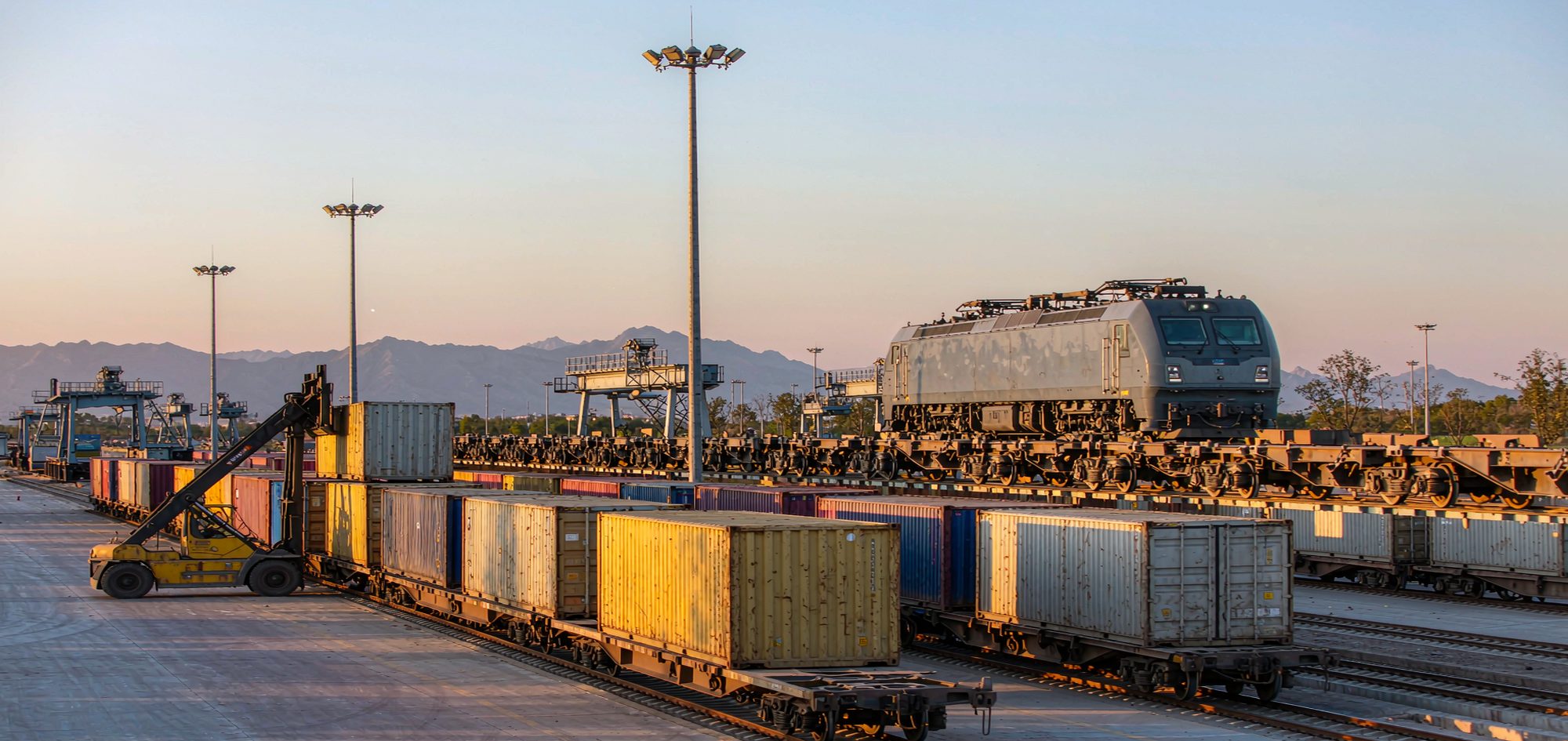
Block train of flat wagons loaded with export containers at an inland rail container terminal
On a block train the hard part is not the entry count, it is whether inspection really happens at origin The risk on rail is finding a problem at the border: lifting, transloading and amending, with the clock restarted. Tuanjiecun integrates customs supervision into the yard, so the full inspection runs before departure and the border crossing only verifies. That only works when the declaration matches the load — fast-track makes a bad entry fail faster, not slower.
Process

How Export Customs Clearance Runs at Chongqing, Step by Step

The flow is standard. The starting point is not: a river booking counts backward from the lockage plan, a train from the slot and the block build, a rail-sea move from the feeder at Qinzhou.

1

Choose routing and book

Match destination, deadline and cargo value to river, rail or rail-sea. Lock the barge slot, train slot or feeder booking, and pull the cut-offs that come with it.

2

Classification & elements

Settle the HS code and every declaration element behind it. License exposure gets checked here, not after the container is packed.

3

Entry prep & in-house review

Transport mode, port of departure, port of destination and the transit link are written to match the routing. Quantity, value, terms and currency are reviewed before filing.

4

Advance filing or filing on arrival

Where documents are ready, file in advance — up to seven days ahead under current rules. Otherwise file after the cargo reaches supervised premises and at least 24 hours before loading.

5

Arrival report & release

The terminal or yard sends the arrival report on gate-in; customs releases or flags off that data. Advance filings must have all cargo in within the allowed window or the entry is canceled.

6

Inspection

A flagged box is devanned, counted and photographed. Rail cargo is inspected inside supervised premises; river cargo follows the terminal's schedule, so the sailing is disturbed as little as possible.

7

Loading or wagon build

Load against the release message; verify container number, seal, pieces, weight and volume against the bill of lading or rail waybill. For LCL, confirm the consolidation manifest.

8

Closure & refund data

Closure follows departure. Where the departure-port rule applies, the export entry data is generated at departure and the refund pack goes to finance without waiting for a foreign port.

Get the clock right. Under Article 24 of the Customs Law, export cargo must be declared after it reaches supervised premises and at least 24 hours before loading. The filing rules that took effect on 1 May 2025 extended the advance-filing window for exports from three days to seven, but everything on the entry still has to arrive inside the allowed window or the declaration is canceled. On the river, add the lockage queue on top — eight to nine days on average in 2025, longer during lock maintenance. That part cannot be expedited.
Documents

What the Paperwork Looks Like When the Port of Departure Is 1,500 km Inland

At an inland port the risk is not a missing document; it is two records that never meet — the entry filed in Chongqing and the manifest loaded at the coast. Here is the split between the base set and what routing or commodity adds.

Base set — every shipment

  • ✓
    Export declaration entryFiled in single-window format; transport mode and port of departure must match the routing actually booked.
  • ✓
    Contract or purchase orderClear on terms of trade, currency and payment conditions.
  • ✓
    Commercial invoice & packing listDescription, quantity, packages, weights, volume and marks corroborating each other.
  • ✓
    Customs power of attorneyElectronic authorization accepted, inside its validity period.
  • ✓
    Booking or waybill dataBarge, vessel or train booking, with container and seal numbers.
  • ✓
    Refund & FX collection noteWhere a refund is claimed, the entry operator and invoice issuer must be the same entity.

Added by routing or commodity

  • ✓
    Departure-port refund fileRegistration details, departure port and carrier information, as the tax authority requires.
  • ✓
    Licenses & permitsExport licenses, dual-use item and technology licenses, and similar approvals.
  • ✓
    Certificate of originCO, Form E, Form A and others, chosen against the destination's tariff preference.
  • ✓
    CIQ & phytosanitary papersInspection release, phytosanitary certificate, fumigation or heat-treatment certificate.
  • ✓
    Dangerous goods fileMSDS, DG packing certificate, UN number, packing group, container packing certificate.
  • ✓
    Rail and project cargo fileRail waybill, loading plan, split-packing list, unit dimensions, weights and lifting points.
Facilitation note. Paperless filing and electronic powers of attorney are standard at Chongqing, and supporting documents are usually submitted electronically only if the reviewing officer asks. Requirements still differ by routing and trade mode — general trade, processing trade, market procurement, cross-border e-commerce — and the officer's review governs. That is why we run a document pre-check before anything is filed.
Clearance modes

Four Modes That Matter at an Inland Port — Pick by Routing and Deadline

Advance filing, transit, departure-port refund and rail fast-track. Same entry, very different amounts of waiting and very different refund timing.

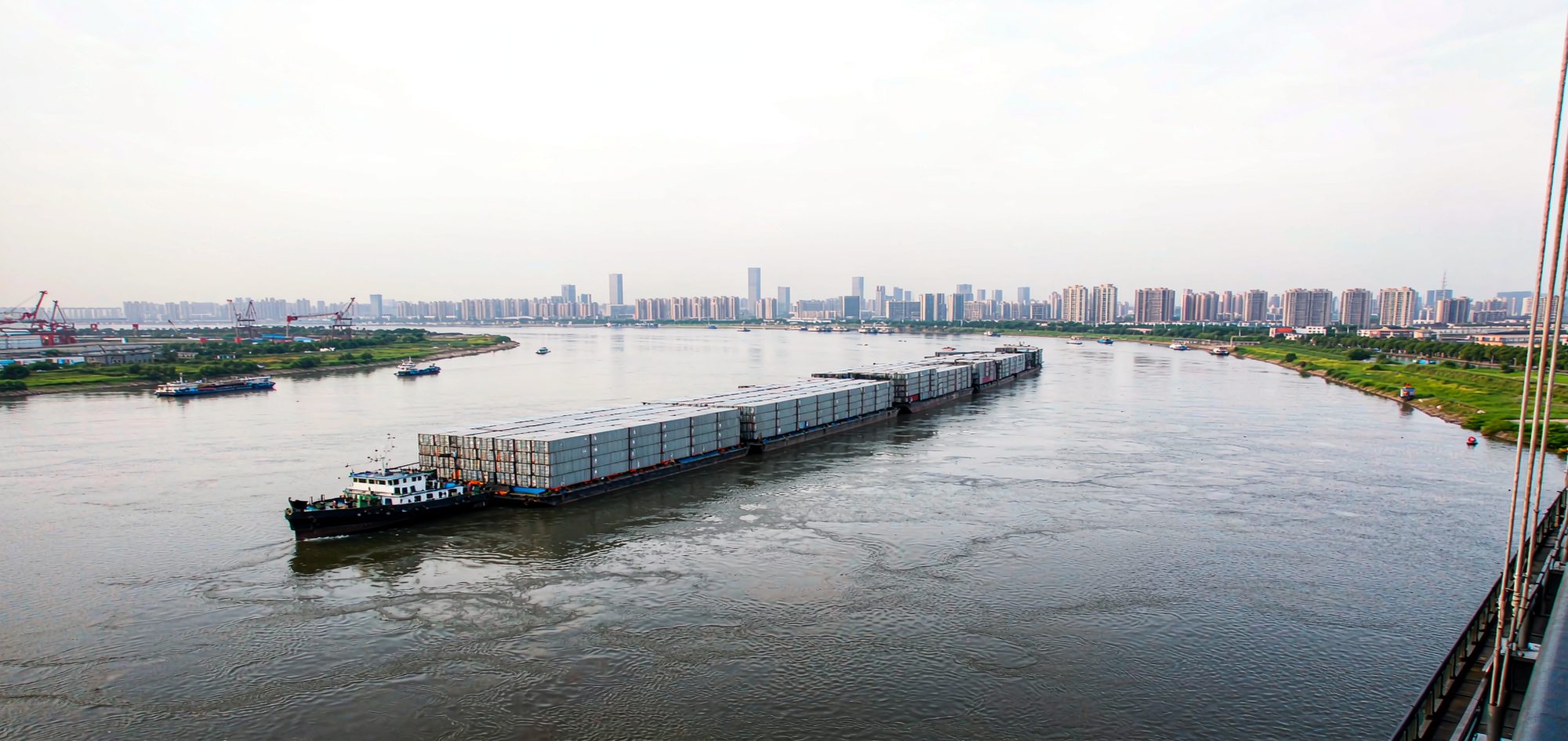
Laden container barges moving downstream on a wide river, bound for a coastal transshipment port
River transit is a queue, not a schedule: the lockage plan sets the arrival window at the coast.

Advance filing

With booking data in hand and cargo ready, file before the goods reach supervised premises — up to seven days under the rules in force since May 2025. Right for FCL with a fixed stuffing plan.

Transit movement

Filed in Chongqing, cleared out at a coastal or border port — or the reverse, with one transit declaration covering the whole move. The land-sea corridor now runs gateway, transfer yard and destination under one coordination framework.

Departure-port refund

Once the cargo leaves Guoyuan, customs generates the departure-port export entry data and the refund can proceed without waiting for the goods to clear abroad. In practice that pulls the refund cycle in by close to a month.

Rail fast-track

Inspection finishes at the origin supervised premises and the border only verifies, so containers are not lifted twice. Operators report one to two days off the border transit and over RMB 200 per box in cost.

By cargo type

Chongqing Exports Machinery, so the Cargo Logic Is Industrial

Machinery and electronics made up 88.8% of the city's exports in 2025 — laptops, phones, vehicles, motorcycles. That mix changes what the entry has to prove, compared with a container of household goods.

Vehicles & KD kits

Complete vehicles need model, VIN or chassis number and end use, plus battery documentation for electric units. KD kits ship broken down, so the split-packing list and consolidation plan come first.

Laptops & electronics

Model, configuration and brand authorization carry the risk. High-value cargo belongs on an insured move; air and block train are both viable routings.

Chemicals

Decide first whether the product is hazardous. Non-hazardous chemicals need a composition sheet and MSDS; hazardous ones move into the DG flow and cannot be filed as general cargo.

Dangerous goods

UN number, packing group, DG packing certificate and terminal approval have to line up. The Changshou chemical terminal is the only public terminal in Chongqing that handles DG containers.

Machinery & equipment

Model, function and new-versus-used status must be declared consistently. Accessories and spares are listed separately so they are not absorbed into the main unit.

Food & agricultural products

CIQ, phytosanitary, fumigation and labeling requirements. Wooden packaging needs an IPPC mark or a fumigation certificate, and some categories need advance registration.

Textiles & consumer goods

The work sits in matching description and specs to every declaration element, then checking brand and refund rate. LCL share is high here, so receiving data has to be exact.

Project & out-of-gauge cargo

Declared piece by piece, with unit weight, center of gravity and lifting points aligned to the loading or wagon plan. Oversize pieces need a transport permit as well.

Compliance reminders — four things not to leave loose

1. Declare what is actually in the box. Description, specs, quantity, value and origin must match the cargo and the documents. Misdeclaration is the shipper's exposure; a broker cannot assume the declaration obligation for you.

2. Close the refund loop. Entry, invoice, foreign-exchange receipt and the exporting entity must line up. Exporting under someone else's name changes who owns the refund, so settle the compliant structure before the cargo moves.

3. Check licenses before production, not at the gate. Goods under export licensing, dual-use controls, endangered-species rules or brand authorization should be verified at the purchasing stage, so the box is not stuck at the port over a missing permit.

4. Dangerous goods go through the dangerous goods route. If the hazard is unclear, get it tested rather than filing as general cargo. Handling, storage and packing must happen at a qualified terminal and site, with the packing certificate signed by the packing inspector.

Working scenarios

Six Real Jobs, Six Places Where the Routing Nearly Broke

At an inland port, clearance rarely fails on process. It fails on a routing choice, a lockage queue nobody counted, or a refund step that had to be set up before the cargo moved.

Guoyuan · switch to rail01

The lockage queue hit fifteen days and the deadline was twenty days out

Cargo & route
Two 40-foot high cubes of machinery parts for Hamburg, originally booked by barge to Shanghai and on to a mother vessel.
Where it jammed
Lock maintenance pushed the barge queue to an estimated 12 to 15 days. Add the coastal relay and the Europe leg, and the delivery date was gone. Air freight was priced out of the deal.
What we did
Checked train slots the same day and moved the shipment to the China–Europe block train. Only the transport mode and exit point changed on the entry; classification, elements and invoice data carried over. The boxes went straight to the rail yard instead of the river terminal, filed under fast-track, inspected on site.
How it ended
Delivered on time, roughly 12 days ahead of the river option. Routings can be switched — provided the declaration elements were clean to begin with. What changed was the mode, not the document set.
Departure-port refund02

The cargo left on time; the refund arrived a month late

Cargo & route
Auto parts shipping out of Guoyuan by river all year: low value per shipment, high shipment count.
Where it jammed
The company knew the departure-port scheme existed but had never registered or aligned its filing basis. Finance kept running the old sequence — wait until the goods clear abroad, then claim — and the refund cycle stretched by close to a month, with the cash tied up.
What we did
Confirmed eligibility, checked that operator and invoice issuer were the same entity, completed registration, then filed on the departure-port basis so the entry data would be generated at departure and handed straight to finance.
How it ended
The refund cycle came in by nearly a month across the year. The scheme is not automatic — the basis has to be set up in advance.
Changshou · chemicals03

Adipic acid for export: the first question was approval, not rate

Cargo & route
Twenty containers of chemical raw material produced at Changshou, moving by river to Southeast Asia.
Where it jammed
The product is managed as dangerous goods, so an ordinary terminal would not take it. Packing site approval, terminal handling approval and rail acceptance all had to be in place at once, or the boxes had nowhere legal to go.
What we did
Confirmed working conditions at the Changshou chemical terminal and the carrier's acceptance first, packed at a qualified site with the packing inspector signing the certificate, booked DG filing and inspection together, and lined up the Yuba rail option in case the river window closed.
How it ended
Loaded on schedule, no rejection for approval reasons. On DG the first gate is not the entry — it is who is licensed to touch the box.
Transit · coastal exit04

Released in Chongqing, then asked to file again in Shanghai

Cargo & route
Three containers of household textiles, filed in Chongqing, transshipped to a mother vessel in Shanghai for Europe.
Where it jammed
The transit declaration described the mode and the relay loosely, and the barge manifest was never tied to the ocean booking. At Shanghai the full chain was not visible in the system, and a supplementary filing was demanded with the cut-off hours away.
What we did
Rebuilt the transit data with the barge voyage and ocean booking explicitly linked, then changed the working method: the relay port and second-leg vessel are fixed at booking stage for every shipment on this lane, and checked again when the entry is filed.
How it ended
Made the original vessel. At an inland port the thing most often missed is not the document count, it is the link between two legs.
Vehicles · ro-ro05

300 cars cleared in Chongqing, no second declaration in Shanghai

Cargo & route
A batch of electric cars collected at the plant, loaded onto a ro-ro service at Guoyuan, then transferred to an ocean vessel at Shanghai's Haitong terminal.
Where it jammed
The traditional pattern re-declares at Shanghai, with unpredictable yard waiting and a storage and handling cost per unit. Carrying domestic and export units on the same vessel also needed a supervision answer that held up.
What we did
Used the integrated supervision model for vehicle exports: declared in Chongqing, with an electronic fenced zone on board that both Chongqing and Shanghai customs can monitor, and the vehicles sequenced to the ocean vessel's schedule instead of the terminal's.
How it ended
Full discharge at Shanghai in about four hours, close to ten days off the end-to-end transit, and roughly RMB 1,500 per unit saved in storage and handling.
LCL · multiple shippers06

Nine shipments in one box, and one of them held the whole container

Cargo & route
Shippers in Chengdu, Chongqing and Guiyang consolidating into one 40-foot high cube, downriver via Shanghai to Southeast Asia — nine separate shipments.
Where it jammed
One shipment's description did not match what was actually packed, and it was flagged for inspection. The other eight sat behind the same container's manifest consolidation, and the CFS cut-off had already passed.
What we did
At receiving, description, pieces, weight, volume and marks were verified shipment by shipment, and the mismatched one was held back instead of loaded. The other eight were filed and released on the original plan; the held shipment was rebooked to the next sailing and its classification settled with the shipper.
How it ended
Eight sailed on time, the ninth rolled one sailing without a rejection. LCL rework almost always traces back to the receiving door.

These are sanitized working scenarios: client names, vessel names and some piece weights have been replaced or rounded. The sequence of work and the point where each shipment jammed reflect how they were actually handled. Cut-off times and document requirements for your routing and carrier for the week in question always govern.

FAQ

Chongqing Port Export Customs Clearance: 10 Questions Shippers Ask

The questions that come up most from importers and suppliers shipping out of Guoyuan, Changshou, Luohuang and Tuanjiecun.

How far ahead should I prepare export customs clearance at Chongqing Port?
For FCL with clean documents, hand the papers over three to five working days before the cut-off. On the river, add the Three Gorges lockage queue, eight to nine days on average, so booking and production have to start earlier. Under current rules an export entry may be filed up to seven days in advance, but the cargo still has to reach supervised premises inside the allowed window.
Where is my export actually declared, and where does it leave China?
It is declared in Chongqing. Chongqing is an inland port of departure: the export entry is filed with Chongqing Customs, and the cargo only leaves China at Shanghai, Ningbo, Qinzhou or Alataw Pass. The transport mode, port of departure, port of destination and the transit link on the entry must match the routing actually booked — that is where inland filings most often go wrong.
How does the departure-port VAT refund work, and who qualifies?
Once cargo leaves Guoyuan, customs generates the departure-port export entry data and the refund can be filed with the tax authority without waiting for the goods to clear abroad. Eligibility depends on the enterprise and the commodity meeting the policy conditions, and the entry has to be filed on the matching basis. The operative requirements are the tax authority's and customs' current rules, confirmed case by case.
How long does the river take to Shanghai, and how much does the lock queue cost me?
With the Shanghai–Chongqing express line, departure confirmation and mixed domestic-foreign carrying on the same vessel, round-trip transit is more than 40% shorter than before the service started. The real variable is the Three Gorges lock: more than 169 million tons passed in 2025 against a design capacity of 100 million, with average waits of eight to nine days and longer during maintenance. Plan the river as sailing time plus queue time, not as one number.
Block train or river-sea: how do I choose?
By destination, deadline and value. Inland European points with a tight deadline and high value go by train — about 15 days from Chongqing. Heavy, high-volume cargo with slack in the schedule goes by river, which has the lowest cost per ton. For Southeast Asia, the land-sea corridor by rail to Qinzhou is worth comparing: operators put it 15 days or more faster than a conventional river-sea routing at roughly 15% lower logistics cost.
Can I complete export clearance locally and still ship to Europe?
Yes. The China–Europe block train starts at Tuanjiecun, and filing, inspection and release all happen in Chongqing. Under rail fast-track the border crossing only verifies, so containers are not lifted twice. Tuanjiecun ran 1,911 China–Europe trains in 2025 on 53 routes, reaching more than 30 countries.
Can dangerous goods move through Chongqing at all?
Yes, but only through designated facilities. The Changshou chemical terminal is the only public terminal in Chongqing licensed for dangerous-goods containers, and the Yuba dedicated railway is the only station in the city cleared for DG container handling. The file needs the DG packing certificate, UN number, packing group and container packing certificate, and carrier acceptance is confirmed before packing starts.
How does LCL work out of Chongqing?
LCL clears per shipment, with several entries behind a single container. Cargo is received and loaded at a local CFS, then moves by river or rail; the CFS cut-off lands before the customs cut-off. Verifying description, pieces, weight and marks shipment by shipment at receiving is what prevents one bad shipment from holding the whole box.
What do I need to watch on transit cargo filed in Chongqing and cleared at the coast?
The link between the two legs: barge voyage against ocean booking, container number against manifest, exit port against transport mode. If the transit data is vague, the cargo gets asked for a supplementary filing or an amendment at the coast. Fix the relay port and the second-leg vessel at booking stage, and check them again when the entry is filed.
Can I export from Chongqing without import-export rights?
Yes, through a licensed entity acting as the exporter of record. The catch is ownership: the exporter of record owns the VAT refund and the foreign-exchange collection. If the goods carry a refund, settle the compliant structure before the cargo moves rather than after.

Why us

Why Shippers Hand Their Chongqing Export Customs Clearance to Goodhope

Chongqing is not won on the quote sheet. It is won on routing arithmetic, lockage reality and knowing when the refund clock can start.

01

One desk, people on the ground in Chongqing

Booking, documents and client communication run from Shenzhen; our Chongqing team covers Guoyuan, Changshou and the rail yard, so inspections, amendments and exceptions get answered the same day.

02

Routing first, price second

River, block train and rail-sea are compared on arrival date for your destination, deadline and value before a rate is quoted — one routing is not forced onto every shipment.

03

A document review before anything is filed

Classification, declaration elements, value and quantity are checked internally first, moving amendment and inspection risk upstream instead of paying for it in yard storage.

04

The refund set up properly, not just mentioned

Registration, filing basis, refund copy and terminal data are aligned before the first shipment, so the refund starts when the cargo leaves rather than a month after someone notices the paperwork gap.

05

Separate paths for DG, special equipment and project cargo

Chemicals go through hazard determination and a licensed terminal, special equipment through lashing and carrier acceptance, project cargo through piece-level filing and a loading plan.

06

Itemized pricing, actual-cost settlement

Brokerage, trucking, barge, train slot, inspection and terminal charges are listed separately; what actually happens is settled against the receipts.

GET IN TOUCH

Chongqing export customs clearance —
hand us the routing and the paperwork

Tell us the commodity, pieces and weight, destination, latest arrival date and cargo value. We will come back with the routing that fits — river, block train or rail-sea — the document list you need and a back-planned timeline.

Request a quote
CompanyShenzhen Weihangyunda International Freight Forwarding Co., Ltd.
BrandGoodhope Freight · Goodhope Logistics (China) Limited
Phone / WhatsApp+86 133 9216 2503
Emailsales8015@goodhopefreight.com
CoverageShenzhen (HQ) · Chongqing river and rail terminals · Shanghai
HoursMon–Sat, 9:00–18:00 (GMT+8)
call us: +86 13392162503