Which port is "Beibu Gulf Port" — and which customs house handles my cargo?
Beibu Gulf Port is one port group with three port areas: Qinzhou, Fangchenggang and Beihai Tieshangang. Each reports to a different customs house — Qinzhou Port Customs, Fangcheng Customs and Beihai Customs — all under Nanning Customs. Fix the port area before you book: they are 100 km or more apart and their cut-offs, gates and trucking radii are different.
Since the Pinglu Canal opened, where do I file an export entry?
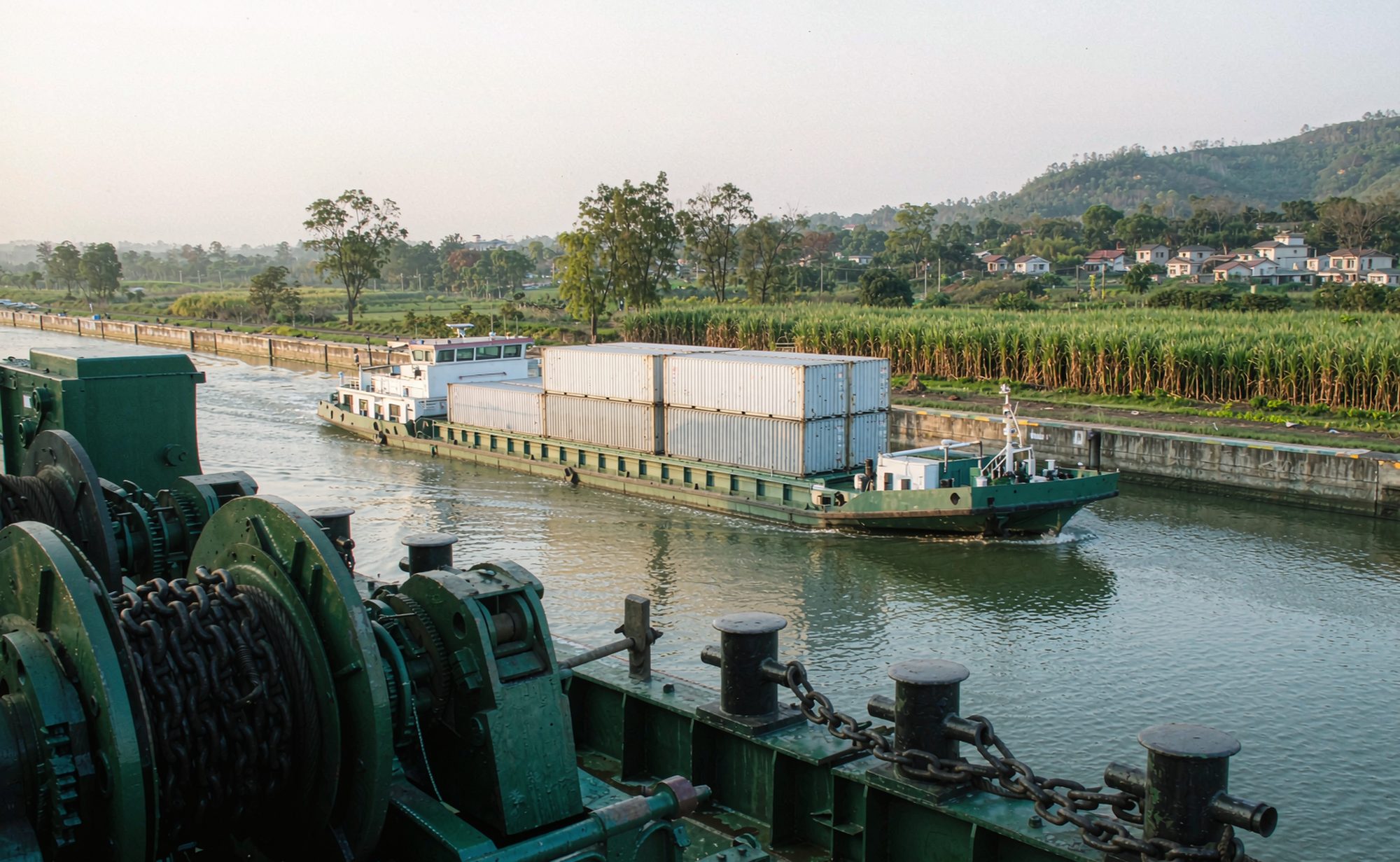
It depends on the route. Under direct river-sea transit the cargo is declared at Nanning Port, inspected by Nanning Port customs, released, and loaded onto a canal vessel cleared for foreign trade; it is not inspected again when it passes Qinzhou. Under multi-modal or transit declaration the cargo is declared, inspected and released at Nanning Port, moved on a domestic transit document, and the box and seal are checked again at Qinzhou. Only the transit route carries the second check.
Can I ship dangerous goods through the canal?
Not currently. Nanning Port is restricted by its port opening status and by canal transport safety rules, so it handles general cargo only and has no special cargo qualification yet. Dangerous goods and oversize units still move by road or rail to Qinzhou, Fangchenggang or Tieshangang and are cleared at a sea port.
What is different about the Qinzhou automated terminal?
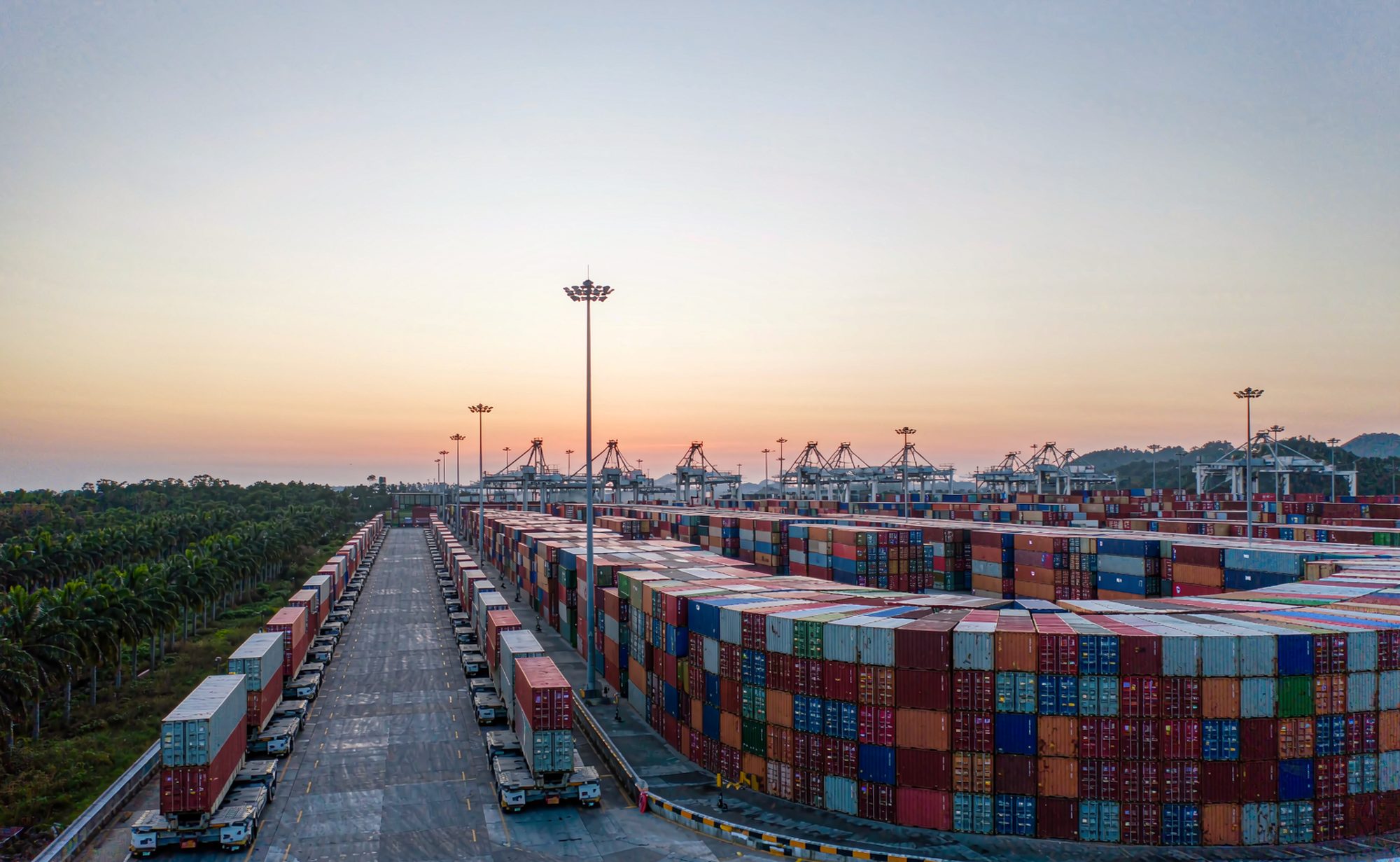
It has 1,302 m of quay, takes 200,000 dwt container ships and is designed for 2.6 M TEU using a U-shaped yard layout. Since June 2023 the terminal and the rail container yard sit inside one customs supervised area, so a rail-water box moves from wagon to quay without a road leg. The terminal publishes a 12-minute average external truck turn and 32 moves per hour per quay crane.
What should I watch on rail-water shipments?
Box and seal numbers must match across the rail waybill, the manifest and the entry. Train arrival and vessel cut-off leave a narrow window even though the yard is inside the same supervised area, so the timeline is built backwards from the sailing. Barge-transferred boxes need a route decision up front: transit cargo is seal-checked again at the port. The corridor moved 1.425 million TEU in 2025, so rail slots in peak season are competitive.
How does batch inspection for export DG at Tieshangang work?
It is an expanded customs pilot for export dangerous goods that landed in Beihai in 2026. Same producer, same process and matching composition and hazard characteristics form one inspection batch: after the first lot passes physical inspection, later lots are handled on document review plus sampling verification. Declaration, release and certification can complete inside one working day, with inspection time cut by about two working days. It is a pilot, so eligibility is confirmed per company and per product.
Where do bulk shipments at Fangchenggang usually get stuck?
On weight. Bulk cargo is declared on weighbridge results, so a gap against the draft survey needs time for a re-weigh. The 200,000 dwt berths unload fast and the yard turns over fast, which means cargo waiting on documents is more common than documents waiting on cargo. Import figures should never be reused on an export entry.
Ro-ro or flat rack for vehicle exports?
For the Middle East there is a monthly ro-ro service, and a single sailing in October 2026 loaded 2,727 units; Qinzhou to Duqm runs about 15 days. Ro-ro is cheaper than flat rack at volume and needs less lashing. Flat rack is for small lots or destinations with no ro-ro call. Either way, entries are built per unit by model and VIN, and electric vehicles need battery documentation.
Can I export without a Chinese trading licence?
Yes, through a qualified entity acting as exporter. The exporter of record determines who claims the VAT refund and where the foreign currency is settled, so if a refund matters, confirm the compliant structure before shipping rather than after.
What does the VAT refund need from the clearance file?
After closure: the export entry with its refund copy or the equivalent electronic data, the release message, the terminal receipt or gate-in data, plus the VAT invoice and the foreign-exchange receipt. The operator and consignor on the entry must match the invoice issuer, and description and commodity code have to agree, or the refund stage asks for an explanation.