Since 2012 NVOCC GD20230925153335 24h Response
+86 13392162503 sales8015@goodhopefreight.com Login
Goodhope Freight
Export customs clearance · Import clearance · Cross-border transit

Zhanjiang Port Export Customs Clearance

One container terminal, three bulk quays, and a filing order that catches people out. Zhanjiang berths ore carriers of 400,000 dwt and handles 1.58 million TEU a year, but every box leaves through Baoman — gate in first, release second, load third. Run it the way you run Shanghai or Shenzhen and the container sits in the yard while the vessel sails.

Baoman Container Terminal Xiashan Port Area Tiaoshundao · Donghai Island Coastal loop service Departure-port VAT refund Rail-sea corridor
400,000 dwtFirst port in South and Southwest China able to take them
265 million tCargo throughput in 2025
1.58 million TEUContainers in 2025, port-wide
Plan my Zhanjiang clearance See the 8-step flow
265 million tTotal cargo throughput 2025
including 9.94 million t of foreign trade
1.58 million TEUPort-wide container volume 2025
1.22 million TEU on the operator's own books
400,000 dwtLargest vessel class the port can take
no lightering, no waiting for tide
64.1 kmMain channel built to 300,000 dwt
340 m wide, tidal transit
Why Zhanjiang

A Deep-Water Bulk Port
With Exactly One Container Gate

Zhanjiang moved 265 million metric tons of cargo and 1.58 million TEU in 2025. It is the first port in South and Southwest China able to berth 400,000-dwt vessels, and it behaves like what it is: an ore, crude and steel port with a container business bolted on the side. Iron ore, crude oil and naphtha come in; steel, chemicals and paper go out.

That shape decides how your export clears. It is not four terminals with four sequences, as in Shanghai. It is one container terminal at Baoman with a single sequence, and three bulk quays where cargo is landed, stored and loaded against a release. Choose the wrong one and the container is trucked back across the city.

  • 1
    Every container goes through BaomanBaoman holds the specialized container berths: two 50,000-dwt berths, 678 m of quay, designed for 15,000-dwt-equivalent box ships and able to work 12,500 TEU vessels. Xiashan, Tiaoshundao and Donghai Island are bulk and breakbulk. Send a container there and you pay for the return trip.
  • 2
    Deep water is the product, not a marketing lineA laden 400,000-dwt ore carrier comes alongside without lightering. The main channel runs 64.1 km at 340 m width, dredged to a 300,000-dwt standard, and very large bulkers still transit on the tide.
  • 3
    The coastal loop fixes the "no direct sailing" problemZhanjiang, Yangpu, Shekou and Nansha are run as one ring: the same vessel carries domestic and international boxes, full and empty, import and export. Vessel utilization went from 30% to about 80%, and Zhanjiang to Southeast Asia is 2 to 10 days faster than routing through Hong Kong.
  • 4
    Your declaration does not have to be filed hereCargo from Chongqing, Guizhou, Yunnan and Sichuan arrives by block train on the Western Land-Sea Corridor, clears at origin or in transit, and loads straight onto the vessel at Zhanjiang without a warehouse stop.
Who actually files? On FOB, CFR and CIF terms the China-side export declaration is the seller's job — but a missed cut-off becomes your delivery date, not theirs. On EXW it is yours. Either way, the sequence on this page is what decides whether the box makes the booked vessel or rolls a week.
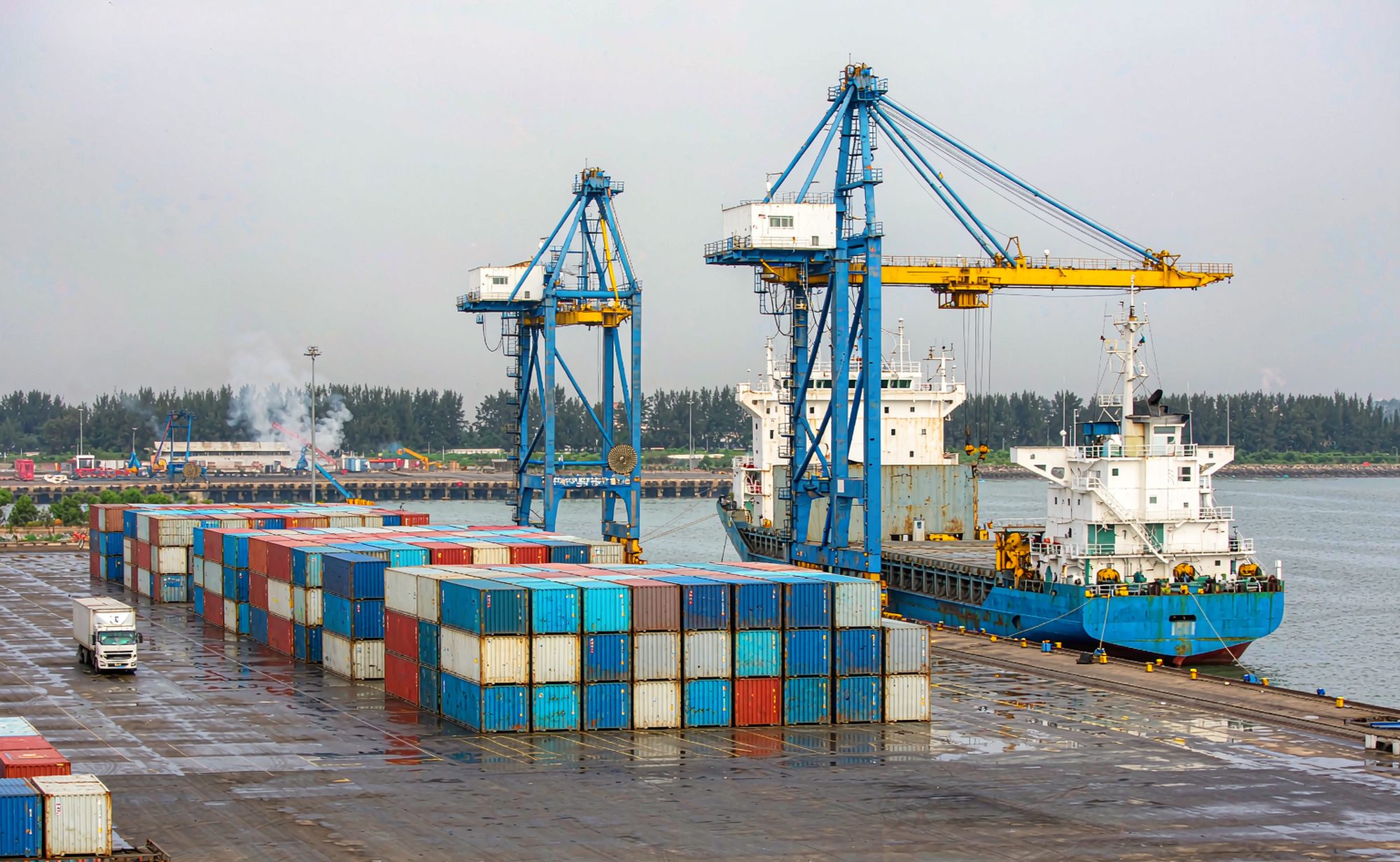
Ship-to-shore gantry cranes working a feeder container vessel at Baoman container terminal, Zhanjiang Port
On the ground Factory pickup — gate-in — release — load Cut-off back-planning · loop slotting · document pre-check

In short

Export customs clearance at Zhanjiang Port is the China-side filing that turns a booked container into a released export: classification, entry preparation, single-window filing against gate-in data, inspection attendance and closure. Zhanjiang concentrates all container traffic at Baoman, where the box gates in before it is released, and runs bulk and breakbulk cargo through Xiashan, Tiaoshundao and Donghai Island against a release order. Goodhope Freight files that declaration as the licensed broker, books the loop or rail leg when there is no direct sailing, and assembles the refund file afterwards.

Note: throughput, terminal and facilitation figures come from Zhanjiang Port Group, the Zhanjiang Commerce Bureau, the General Administration of Customs and the Ministry of Transport (2025 data). Container volume is quoted port-wide at 1.58 million TEU; the port group reports 1.22 million TEU on its own operating scope, and the two figures should not be mixed. Working berth, sailing schedule and cut-off are set by the terminal and carrier for the week in question.

Terminal matrix

Four Working Areas, Split by Cargo — Not by Sailing

The port plan lists twelve port areas. Four of them matter for an export declaration. Xuwen, at the Qiongzhou Strait, is a passenger and ro-ro operation and does not clear export cargo at all.

Xiashan Customs

Baoman Port Area

The only specialized container terminal in the port

Cargo
FCL, LCL and loop-service boxes
Berths
Two 50,000-dwt berths, 678 m of quay, 12,500 TEU ship capability
Customs regime
Gate-in and arrival report first, then release, then loading
Cut-off
Intra-Asia SI cut-off typically 2–3 days before sailing; CY cut-off ahead of customs cut-off
Best for: FCL, LCL and loop transshipment. Avoid for: out-of-gauge cargo, which belongs on a breakbulk quay.

A second pair of 50,000-dwt berths (7,000-dwt ships on review) adds 1.42 million TEU of design capacity; dredging passed completion acceptance in October 2026, with commissioning subject to terminal notice.

Xiashan Customs · 6711

Xiashan Port Area

The open-port core: bulk, breakbulk and grain

Cargo
Bulk, crude, grain, general and project cargo
Status
Core of the open port; Xiashan Customs is stationed here, port code 6711
Customs regime
Cargo lands and is stored, then loads against release
Cut-off
Set per vessel against the shed and storage plan; a wider window than containers
Best for: breakbulk, grain and general cargo. Avoid for: containers — those go to Baoman.

The Type B bonded logistics center next door runs "out of zone first, declare after" with direct loading on arrival; bulk secondary-zone exit clears a truck in 15 seconds.

Zhanjiang Customs

Tiaoshundao Port Area

Iron ore, coal and dry bulk

Cargo
Iron ore, coal, dry bulk
Back-up
Large stockyards and enclosed conveyor galleries
Customs regime
Discharge and loading tied to the yard plan, worked against release
Cut-off
Fixed per vessel against the berth plan
Best for: ore and coal in vessel lots. Avoid for: cargo that needs finely segregated storage — use Xiashan.

Bulk filings live or die on assay data: moisture, sizing and grade on the entry must match the test certificate.

Donghai Island Group · 6710

Donghai Island Port Area

Built around the steel and petrochemical plants

Cargo
Iron ore, crude, naphtha, steel, chemicals
Industry
Baosteel Zhanjiang, Sinopec Zhongke Refining, BASF Zhanjiang
Customs regime
Runs to the plant's production rhythm, plant-to-quay
Cut-off
Agreed between production plan and vessel schedule
Best for: steel, refining and chemical volumes. Avoid for: ad-hoc cargo from unrelated shippers.

About 45 million metric tons a year serves the industrial zone — more than a fifth of the whole port.

What differsBaoman (containers)Xiashan / Tiaoshundao / Donghai (bulk)
Filing vs. gate-in orderGate in and arrival report first; the entry is filed against that data; release followsCargo lands, is stored, then loads against release
Can unreleased cargo enter?Yes — the box can sit in the yard, but it cannot load without releaseYes — storage and loading are separate steps
Fixing a bad entryPossible until the box is loaded; amending after gate-in costs a re-filing and a new arrival cycleAmend before loading starts; once cargo is in the hold it is a discharge problem
Typical cargoConsumer goods, appliances, footwear, frozen seafood, loop cargoSteel coils and plate, project modules, ore, chemicals, grain
HaulageCity-side gate, container yard, chassis turnaround inside the terminalQuay-side sheds and stockyards; heavy haulage permits apply

Both sides release cargo only after the declaration clears. The difference is what happens before: a container needs the arrival report to exist before the entry can be filed against it, while bulk cargo is already on the ground.

What we handle

Eight Export Customs Clearance Workflows, Split by Cargo and Equipment

A steel coil, a reefer of frozen shrimp and a carton of fans do not share a process at this port. They do not share a quay either.

SERVICE 01

FCL export declaration

Full-container filing at Baoman: pre-manifest check, container and seal verification, entry preparation, gate-in arrival report, release and loading. One booking, one entry, one box number.

FCLContainer & sealLoading follow-up
SERVICE 02

LCL export declaration

One container, several shippers, one entry each. We reconcile warehouse receiving data, the packing list and the multi-entry filing before the CFS cut-off, which arrives earlier than the customs cut-off.

LCLCFS receivingMulti-entry filing
SERVICE 03

Steel and breakbulk

Coils, plate and billet shipped through Xiashan and Tiaoshundao. Filings carry per-piece weight and dimensions, and the lifting plan is agreed with the quay before the first lift, not during it.

CoilsPlateLoading plan
SERVICE 04

Project cargo and heavy lift

A production line leaves as forty pieces with forty descriptions. We classify each piece against its function, sequence the dispatch to match the loading plan, and supervise the lift with the terminal and the ship.

Piece listOut-of-gaugeLift plan
SERVICE 05

Dangerous goods and chemicals

Hazard classification first, then MSDS and packing certificate, UN number and packing group, container packing certificate. Whether the carrier accepts DG and whether the berth is approved for it are confirmed per booking.

MSDSDG packing certDG filing
SERVICE 06

Frozen and chilled seafood

Reefer temperature setpoint and power supply declared up front; the box is placed in the reefer stack and plugged in on arrival. Health and inspection certificates are matched to the destination market before the vessel sails.

ReeferCIQCold chain
SERVICE 07

VAT refund and departure-port refund

After closure we assemble the refund copy of the entry, the release notice and the terminal data. Cargo moving on the coastal loop can claim the departure-port refund at origin, which cuts payment from over 20 days to 3.

Refund copyDeparture-port refundArchive
SERVICE 08

Import clearance and transit

Import clearance at Zhanjiang, transit under the rail-sea corridor, manifest write-off, plus bonded storage and simple processing inside the comprehensive bonded zone and the Type B logistics center.

Import clearanceTransitBonded storage
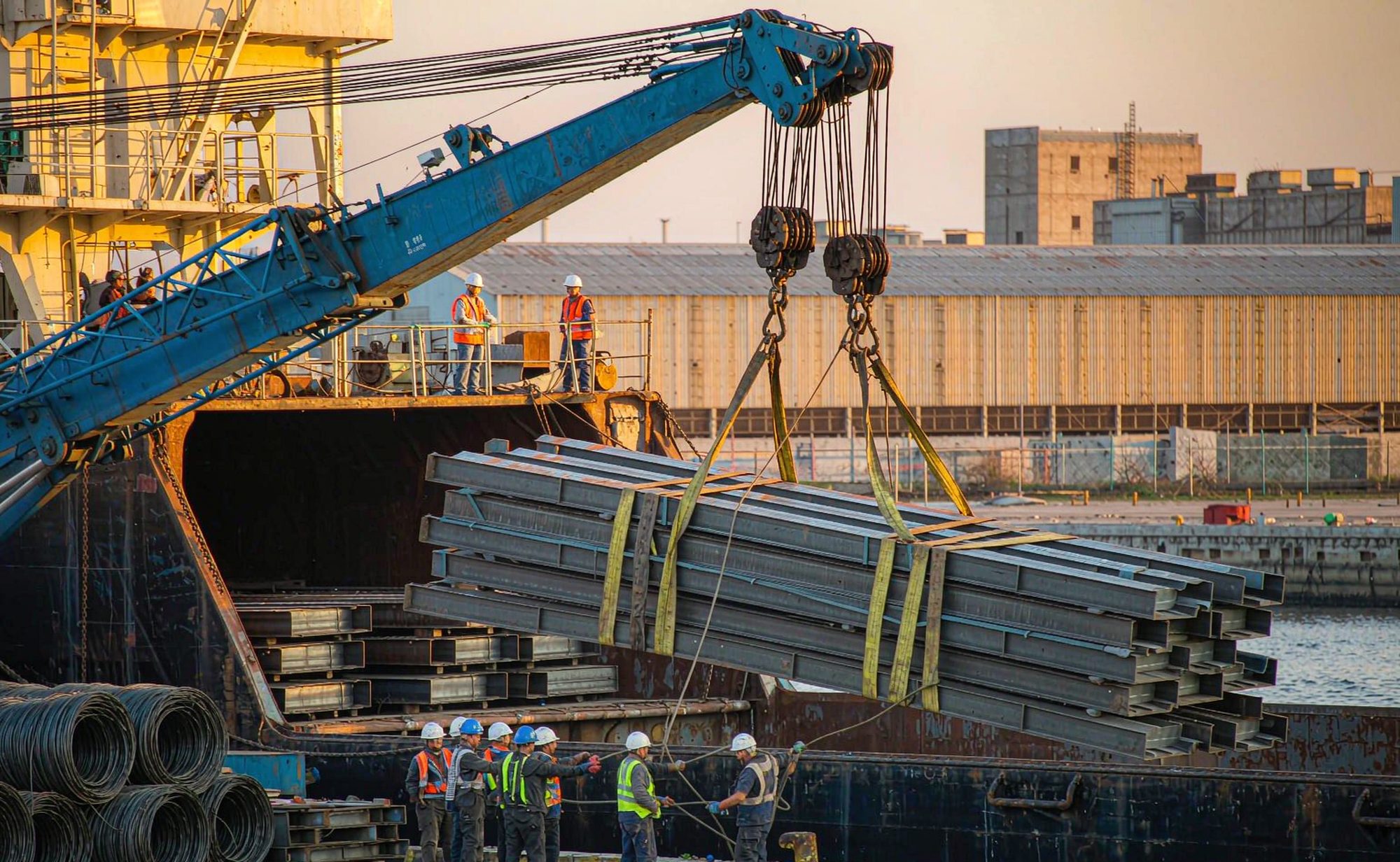
Ship's crane lifting a strapped bundle of steel beams from the quay into the hold at a Zhanjiang general cargo berth
Steel is not a document problem. It is a piece-to-hook problem. Coils, plate and billet in one shipment carry very different piece weights, and a single entry often mixes several specifications. Every piece needs its grade, weight and stowage position on paper before loading starts, because one wrong bundle forces the whole hold to be re-planned.
Process

How Export Customs Clearance Runs at Zhanjiang, Step by Step

The steps are the same as anywhere in China. The order is not: at Baoman the box gates in before the entry clears, and bulk cargo loads against a release once it is already on the ground.

1

Booking & slot check

Confirm whether the carrier calls Zhanjiang direct or feeds it. Direct intra-Asia services, the coastal loop and rail connections have different cut-offs. Who: forwarder and carrier. If it slips: the box misses the loop and waits a week.

2

Classification & entry elements

HS code and declaration elements against the actual goods: grade, composition, function, brand. Licenses checked here, not at the gate. Who: broker. If it slips: re-classification after filing.

3

Entry preparation & review

Draft the entry and check quantity, price, terms and currency internally before submission. Who: broker. If it slips: an amendment inside the cut-off window.

4

Gate-in & arrival report

The loaded box passes the Baoman gate and the terminal generates the arrival record. Without it there is nothing to file against. Who: trucker and terminal. If it slips: the entry cannot be lodged.

5

Filing & release

The entry is lodged on the arrival data; customs releases or flags it. A box in the yard without release is not a box that sails. Who: broker and customs. If it slips: rolled to the next vessel.

6

Inspection, if flagged

Devanned, counted and photographed with a written explanation. X-ray hits that turn into manual inspection need half a day. Who: broker, terminal, customs. If it slips: cut-off passes.

7

Loading & manifest check

Loaded against release; container, seal and B/L data checked. Cargo moving on the loop needs its loading list filed separately. Who: terminal and carrier. If it slips: shut-out at the hatch.

8

Closure & refund file

Entry closed after departure, release notice and terminal data collected for the refund. Who: broker. If it slips: refund delayed, not lost.

Get the timing rule right. Under Article 24 of the Customs Law, export cargo must be declared after it arrives at the supervised place and at least 24 hours before loading. Advance filing allows submission up to 3 days before arrival, but the goods must all arrive within 3 days or the entry is voided — 5 days for transit cargo. At Baoman the box gates in first and clears second, so gate-in is not the finish line. Add the loop connection on top of that for deep-sea cargo.
Documents

What Your Paperwork Needs to Look Like for Export Customs Clearance

Complete documents with matching numbers clear in one pass. Complete documents with three different weights clear in three days.

Base set — every shipment

  • ✓
    Export declaration entryLodged through the single window and consistent with the goods in the box.
  • ✓
    Contract or purchase orderClear on terms of trade, currency and payment conditions.
  • ✓
    Commercial invoice & packing listDescription, quantity, packages, gross and net weight, volume and marks must agree with each other.
  • ✓
    Customs power of attorneyElectronic authorization accepted; check it has not expired.
  • ✓
    Pre-manifest & booking confirmationVessel and voyage, equipment, load port area, cut-off times.
  • ✓
    Refund & FX collection noteThe operating entity on the entry must match the VAT invoice issuer.

Added by commodity

  • ✓
    Licenses & permitsExport licenses, dual-use item licenses, quota documents.
  • ✓
    Certificate of originCO, FORM E and equivalents, chosen by destination tariff treatment.
  • ✓
    Inspection & quarantineCIQ release, phytosanitary certificate, fumigation or heat treatment record.
  • ✓
    Dangerous goods fileMSDS, packing certificate, UN number, packing group, container packing certificate.
  • ✓
    Breakbulk & project filePiece list, per-piece dimensions and weight, center of gravity, lifting points, loading plan.
  • ✓
    Bonded & transit documentsBonded account book, transit declaration, manifest, release slip.
Facilitation note. Zhanjiang runs paperless filing and electronic authorization, and supporting documents go in electronically when the officer asks. Cargo leaving a bonded logistics center or the comprehensive bonded zone under "out of zone first, declare after" follows a different document order from an ordinary export, so the mode is chosen before the paperwork is prepared. The officer's review is what settles it.
Clearance modes

Four Ways to Clear, and When Each One Is the Wrong Choice

The mode decides how long your cargo sits at the terminal before it moves. At Zhanjiang the loop and the rail corridor are not add-ons; they are how a mid-size port reaches deep-sea markets.

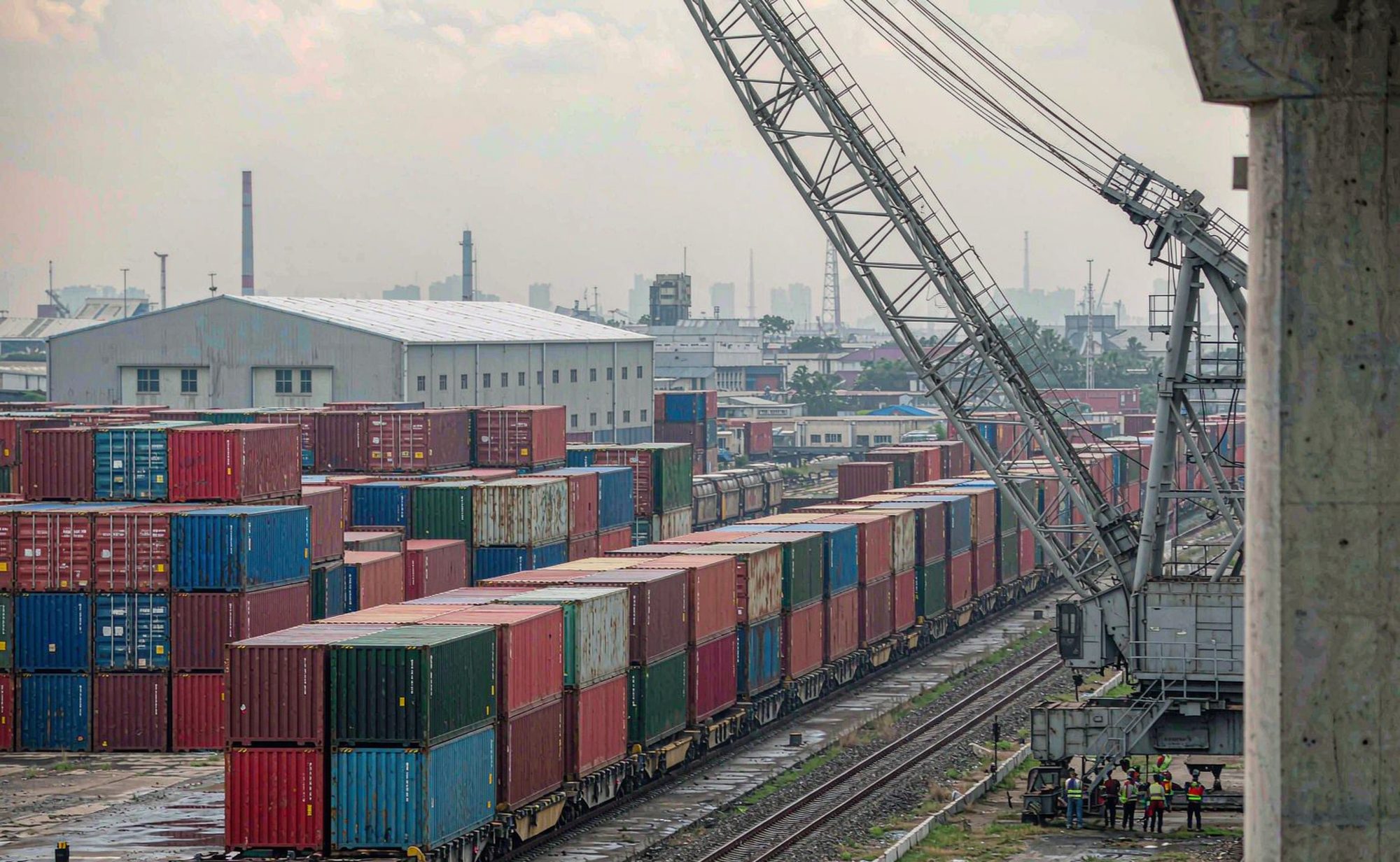
Block train of container flatcars and a rail-mounted gantry crane at the rail-sea intermodal yard beside Zhanjiang Port
Containers arriving by block train on the Western Land-Sea Corridor are loaded straight onto the vessel at Zhanjiang, without a warehouse stop.

Advance filing

Lodge up to 3 days before arrival, release on gate-in. Works when the documents are stable and the cargo is already built. Skip it when the goods are still being packed and the weights will move — the entry must be voided if the cargo does not all arrive within 3 days.

Two-step declaration

A summary entry on manifest data lets the box move, with the full entry completed inside the allowed window. Use it when the manifest is in and one certificate is still in the post. Do not use it for goods whose classification you have not settled — the second step is where the arguments start.

Transit and local filing

Cargo from Chongqing, Guizhou, Yunnan or Sichuan can clear at origin and be released at Zhanjiang, or move under transit. One container, one rail leg, one vessel. Not worth it below about a block-train volume, where the rail cost per box outweighs the saving.

Coastal loop service

Zhanjiang, Yangpu, Shekou and Nansha run as one ring with domestic and international boxes on the same vessel. It carries the cargo that cannot fill a direct sailing, at about 80% utilization instead of 30%. Skip it when a direct call exists and your delivery window is tight — a connection is still a connection.

By cargo type

Every Cargo Type Carries Its Own Export Customs Clearance Logic

Zhanjiang's export mix is heavy at both ends: steel and petrochemicals on one side, appliances, footwear and frozen seafood on the other. The filing changes with the cargo.

Steel & structures

Coils, plate and sections declared on per-piece weight. Surface condition and packing photographed at loading; stowage follows the lifting plan.

Chemicals & petrochemicals

Hazard classification before anything else. Non-DG needs composition and flash point on file; DG needs MSDS, packing certificate and a carrier that accepts it.

Small appliances

Lianjiang is an appliance cluster. Model, rating and nameplate must match the invoice line by line — a swapped model number is the most common amendment here.

Footwear & plastic shoes

Wuchuan ships high volume at low value with many style codes. Entry-to-packing-list style mapping is where the errors are, not in the HS code.

Frozen seafood

Reefer setpoint and power declared; health certificates matched to the destination market. A broken cold chain costs more than any filing error.

Machinery & equipment

Split shipments declared piece by piece, with center of gravity and lifting points agreed alongside the terminal's loading plan.

Paper & packaging

Reels and board by weight and specification. Wooden packing needs IPPC marking or fumigation, or the container is refused at destination.

Grain & agri products

Import and export both touch designated supervised sites and quarantine approval. Quota, license and downstream use confirmed before booking.

Compliance reminders — three things not to leave loose

1. Send the container to the right gate. Only Baoman handles boxes. A container delivered to Xiashan or Tiaoshundao is re-hauled at the shipper's cost, and the re-haul is measured in hours you do not have.

2. Bulk assay data has to match the entry. Moisture, sizing and grade are declared on measured values. An estimate gets the entry amended, and an amendment on bulk cargo usually means an inspection.

3. Confirm the carrier and the berth before booking DG. Not every carrier accepts dangerous goods at Zhanjiang, and not every berth is approved to handle them. Asking before booking costs one email; discovering it at filing costs the vessel.

Working scenarios

Six Jobs, Six Places Where Export Customs Clearance Nearly Broke

Anonymized, with client names and some weights rounded. The sequence and the failure points are as they happened.

Baoman · FCL01

A model change at the gate, four hours before CY cut-off

Cargo & lane
Two 40HQ of small appliances from a Lianjiang factory, loading at Baoman for Ho Chi Minh City.
Where it jammed
The factory switched models after the packing list was issued. The boxes were already through the gate when the mismatch surfaced, and only four hours of CY cut-off remained.
What we did
Confirmed the boxes were not yet stowed, voided the entry, re-filed on the actual models with a factory statement and a new packing list, and pushed the release through before the customs cut-off.
How it ended
On the booked vessel for the price of one amendment. At Baoman the gate comes before the release, so gate-in is not closure — the window to fix an entry is narrower than it looks.
Loop · Consolidation02

Three boxes, no direct slot, five days earlier on the loop

Cargo & lane
Three 40HQ of plastic footwear from Wuchuan to Bangkok. The week's direct allocation was gone.
Where it jammed
The direct service sails weekly, so waiting meant seven days. Routing through Hong Kong added three to five more, against a ten-day delivery window.
What we did
Moved the boxes onto the Zhanjiang–Yangpu coastal loop, consolidated at Yangpu onto an intra-Asia mainline, and filed the loading list for mixed domestic and international cargo as the loop requires.
How it ended
Five days earlier than the next direct sailing, at about USD 100 less per box. The loop's value is not the freight rate — it is not waiting a week for one vessel.
Xiashan · Steel03

Eighteen steel pieces, one total weight, and no lifting data

Cargo & lane
A mixed lot of coils and plate, 18 pieces, heaviest around 20 metric tons, loading at the Xiashan general cargo berth.
Where it jammed
The invoice showed only the total weight. The terminal rigs each lift by piece weight, so with no per-piece breakdown the first lift could not be planned.
What we did
Built a piece list with grade, weight and dimensions per bundle, checked it against the crane's rated capacity, and re-sequenced loading to the stowage plan.
How it ended
The lot loaded in one pass, nothing shut out. Breakbulk problems are rarely about document count; they are about which piece goes where.
Donghai · Project04

A packing line in forty pieces, and forty different codes

Cargo & lane
A packaging production line broken into more than 40 pieces, heaviest over 30 metric tons, loading at Donghai Island for Southeast Asia.
Where it jammed
The complete machine carries one code. Dismantled, several components classify differently and carry different declaration elements. The factory's dispatch order also ran opposite to the loading sequence.
What we did
Classified each piece against its function in the line, reversed the dispatch order so the first-loaded pieces left last, and agreed the loading plan between terminal, ship and factory.
How it ended
Loaded to plan with no missing component at destination. On project cargo, classification and dispatch order have to be planned together.
Cold chain05

Six hours unplugged, and a certificate that no longer matched

Cargo & lane
Four 40RH of frozen seafood from a Zhanjiang processor to Singapore.
Where it jammed
The boxes were grounded outside the reefer stack and plugged in late. The health certificates had already been issued against the original sailing, so a temperature gap would leave them describing cargo that no longer existed.
What we did
Pulled the terminal's temperature log the same day, quantified the excursion, informed the buyer and the inspection authority, and reissued the certificates against the actual record.
How it ended
No excursion beyond tolerance; the boxes sailed on schedule. On reefer cargo the expensive failure is not the filing fee, it is reissued certificates and rejected product.
VAT refund06

The entry named one company, the invoice another

Cargo & lane
A trading company using a contract manufacturer, two to three containers a month, steady value.
Where it jammed
The operating entity on the entry was the trader; the VAT invoice was issued by the factory. The refund was held for a month pending explanation.
What we did
Aligned contract, invoice and foreign exchange receipt to one entity, filled the operating and consigning units to reflect the real split, and fixed the document template on the first shipment.
How it ended
Clean refunds from then on. What was saved was not one filing fee; it was the explanation demanded on every refund afterwards.

These are anonymized working scenarios: client names, vessel names and some weights have been changed or rounded. Cut-off times and document requirements are set per terminal and per carrier and change week to week.

FAQ

Zhanjiang Port Export Customs Clearance: 10 Questions Shippers Ask

Answered the way we answer them on the phone, not the way a brochure would.

How far in advance should I prepare an export from Zhanjiang?
Allow three to four working days before gate opening for general cargo in a full container, so classification and any amendment have room. The legal floor is 24 hours before loading, after the cargo reaches the supervised place. Advance filing allows lodgement up to three days before arrival, but everything must arrive within three days. Dangerous goods, reefer and licensed cargo need longer.
Do all containers have to go through Baoman?
Yes. The specialized container berths are all at Baoman, and both FCL and LCL work from there. Xiashan, Tiaoshundao and Donghai Island handle bulk, breakbulk and plant cargo, not containers. A box sent to the wrong area is re-hauled at the shipper's expense, so confirm the gate at booking.
At Baoman, does the container gate in before or after release?
Before. The loaded box passes the gate, the terminal generates the arrival report, the entry is filed against that data, and loading follows release. This is the reverse of Yangshan in Shanghai, where release is a precondition for gate-in. Plan the trucking and filing timeline for this port, not for the last one you used.
What if there is no direct sailing to my market?
You feed. Most deep-sea cargo from Zhanjiang connects through the coastal loop to Yangpu, Shekou or Nansha and joins a mainline there; the export declaration is still filed at Zhanjiang and the B/L follows the actual connection. Routing via Hong Kong is also available and typically two to ten days slower.
What does the coastal loop actually do for my shipment?
It solves small-volume waiting. One vessel carries domestic and international boxes, full and empty, import and export, which lifted utilization from 30% to roughly 80%. For an exporter the measurable result is two to ten days faster to Southeast Asia than routing through Hong Kong, and USD 80 to 180 less per 40-foot box.
How does the departure-port VAT refund work?
Cargo that starts at Zhanjiang and leaves through a designated connecting port can claim the refund at origin instead of waiting for actual export. Zhanjiang has connected the loop with the departure-port refund scheme end to end, cutting payment from over 20 days to 3. The entry, manifest and transport document have to agree, so the structure is fixed at booking stage.
Where is the declaration filed for rail-sea cargo?
At origin, at Zhanjiang, or under transit into Zhanjiang. Containers arrive by block train on the Western Land-Sea Corridor and load straight onto the vessel without devanning. Rail waybill, manifest and entry must match; a mismatch in any of the three stops the release.
Can I ship dangerous goods from Zhanjiang?
It depends on the class, the carrier and the berth. Start with a hazard determination; DG cargo needs a packing certificate, UN number, packing group and container packing certificate. Then confirm the carrier accepts DG on that service and the terminal is approved for it. Booking before those two answers is how shipments end up re-routed.
What paperwork does frozen seafood need?
Beyond the base set, health and inspection certificates and a certificate of origin as the destination requires. The reefer setpoint and power requirement are declared up front, and the box is placed in the reefer stack and plugged in on arrival. Temperature records are the evidence behind the certificates, which is why a gap is treated as a cargo problem, not a paperwork problem.
Can I still make the vessel if my container is inspected?
Usually, if there is half a day of slack. An X-ray pass releases the same day; a manual devan needs half a day to a full day. At Baoman the customs cut-off falls a few hours before sailing, so shipments with a half-day buffer normally make it. If it cannot, we compare storage cost against re-booking before deciding.

Why us

Why Shippers Hand Their Zhanjiang Export Customs Clearance to Goodhope

The difficulty here is not the tariff schedule. It is that one port runs two completely different rhythms, and that the routes out are loops and trains rather than direct calls.

01

One desk, people on the ground at Zhanjiang

Booking, documents and communication run from Shenzhen; the port areas are covered on site. Inspection, amendment and container-return issues are answered the same day.

02

A document review before anything is filed

Classification, declaration elements, price and quantity checked internally first, so amendments and holds are dealt with before the box reaches the gate.

03

Container and bulk rhythms, not one template

Baoman gates in before release; the bulk quays load against release once cargo is on the ground. Each gets its own back-planned trucking and filing timeline.

04

Loop and rail routing that already works

Zhanjiang–Yangpu/Shekou/Nansha connections and the Western Land-Sea Corridor block trains, costed against volume and transit time before we recommend one.

05

Separate paths for DG, reefer and project cargo

Hazard determination and DG filing, reefer power and certificates, piece-by-piece project cargo with a lift plan. None of it is pushed through the general cargo process.

06

Itemized pricing, actual-cost settlement

Brokerage, trucking, barge, inspection and terminal charges listed separately and settled against receipts. No blended all-in number that hides the exception.

GET IN TOUCH

Zhanjiang export customs clearance —
hand us the schedule and the paperwork

Send us the commodity, piece weight and dimensions, destination port, target sailing and the port area you were quoted (Baoman or a bulk berth). We will come back with the terminal that fits, the document list and a back-planned timeline.

Request a quote
CompanyGoodhope Logistics (China) Limited
BrandGoodhope Freight
Phone / WhatsApp+86 133 9216 2503
Emailsales8015@goodhopefreight.com
CoverageShenzhen (HQ) · Zhanjiang terminals · Yangpu & Nansha connections
HoursMon–Sat, 9:00–18:00 (GMT+8)
call us: +86 13392162503