
From Huangpu Old Port and Huangpu New Port (GCT) through to Xinsha, Goodhope Freight runs the whole chain for shippers — factory pickup, document review, advance declaration, container loading and customs closure — under one broker of record on the ground in Guangzhou.
Huangpu sits inside the Pearl River estuary on Guangzhou's east side, built around two working areas — Huangpu Old Port and Huangpu New Port — with Xinsha linked in as a deep-water complement. For exporters in the Pearl River Delta, this is not a fallback port. It is a near-shore option that cuts drayage distance, shortens waiting time and still offers dense sailing choices.
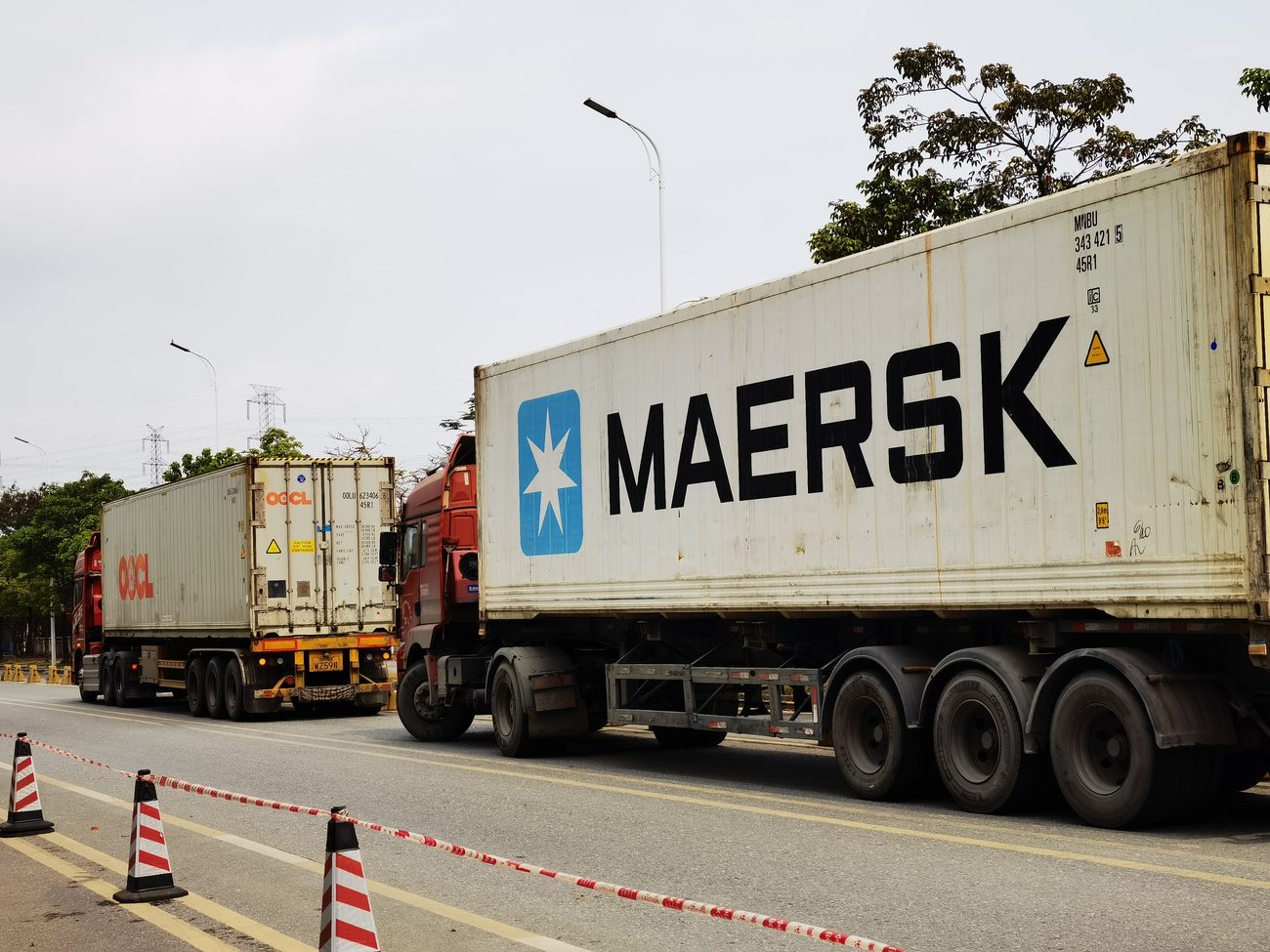
Export customs clearance at Huangpu Port is the broker-side work that turns a booked container into a legally released export: HS classification, declaration filing through the single window, arrival reporting, inspection attendance and closure. It is handled at three terminals under the Huangpu Customs district — Huangpu Old Port, Huangpu New Port (GCT) and Xinsha — and the usual route for ocean freight is advance declaration, filed within three days before the cargo reaches the terminal. Goodhope Freight acts as the licensed broker for that filing and coordinates drayage, feeder connection and the refund documents that follow.
Note: berth counts, quay lengths and drafts on this page are drawn from public information published by Guangzhou Port Group and Huangpu Customs and are used here for service description only. Actual working berth, sailing schedule and cut-off are set by the terminal and carrier for the week in question.
Pick the terminal before you pick the broker. Old Port leans toward full containers, breakbulk and rail-water moves; New Port (GCT) leans toward intra-Asia services and Hong Kong/Macau feeder relay; Xinsha leans toward direct calls by larger vessels and bulk cargo.
Guangzhou Port Co., Ltd. · Huangpu Port Branch
About 88 nautical miles from Hong Kong, with domestic and foreign trade operations running side by side on the Pearl River channel.
Guangzhou Container Terminal Co., Ltd.
Intra-Asia services and Hong Kong/Macau feeders concentrate here, and feeder handover to mother ports is a well-worn routine.
Supervised by Xinsha Customs, Huangpu Customs district
Old Port, New Port and Xinsha are all cleared under one Huangpu Customs district arrangement; the choice follows cargo type and sailing.
Clearance is not a single form. It is one continuous sequence — booking, drayage, gate-in, filing, inspection, release, closure — and we break that chain into six blocks, each with an owner and a deadline.
HS classification and declaration-element review, entry preparation, single-window filing, officer review and amendment handling, inspection attendance, release and closure tracking.
For factories or traders without import-export rights, or those who prefer not to file in-house: agency filing plus the paper trail — entry, terminal receipt, release slip and refund copy on file.
Factory pickup across the Pearl River Delta, container loading at our Guangzhou Huangpu and Dongjiang warehouses, gate-in booking, and a back-planned arrival time ahead of cut-off with exception handling.
Huangpu–Nansha, Huangpu–Shenzhen and Huangpu–Hong Kong feeder connections. Water-to-water moves run on one declaration and one through bill of lading, linking straight to mother vessels and deep-sea services.
Fumigation and heat treatment, plant quarantine, CIQ certificate exchange, MSDS and DG packaging certificate review, plus dangerous goods declaration matched to the terminal's handling approval.
Import clearance at the Huangpu terminals, transit and transshipment movements with manifest write-off, on-site inspection cooperation, and warehousing plus delivery after release.
Every step has a time stamp and a deliverable. The more complete the preparation before filing, the fewer amendments, inspections and storage days you pay for afterwards.
Lock the sailing, container type and cut-off, book with the carrier and pull the pre-filed manifest data you need for an advance filing.
Check contract, invoice, packing list, power of attorney and licences; settle the HS code and the declaration elements behind it.
Draft the entry from the classification result, then review description, specs, quantity, value and terms of trade in-house before it goes out.
Once cargo is ready and the manifest exists, file within three days before the goods reach the customs supervised premises.
The terminal sends the arrival report on gate-in. All cargo on the entry must be in within three days, or the declaration is cancelled.
The officer releases directly or flags the box. If it is flagged, we arrange devanning, counting and the inspection record on site.
Load against the release message, or hand over to a feeder for the mother port; container number, seal and bill of lading details are checked in parallel.
After the vessel departs the entry is closed out; the entry, release slip and terminal receipt are filed for the VAT refund and later write-off.
Complete documents with consistent data are the precondition for advance filing to actually be early. Here is the split between the base set and what gets added by commodity.
Same port, same shipment, very different outcomes: advance declaration, direct loading on arrival, water-to-water transshipment, or anchorage direct loading.
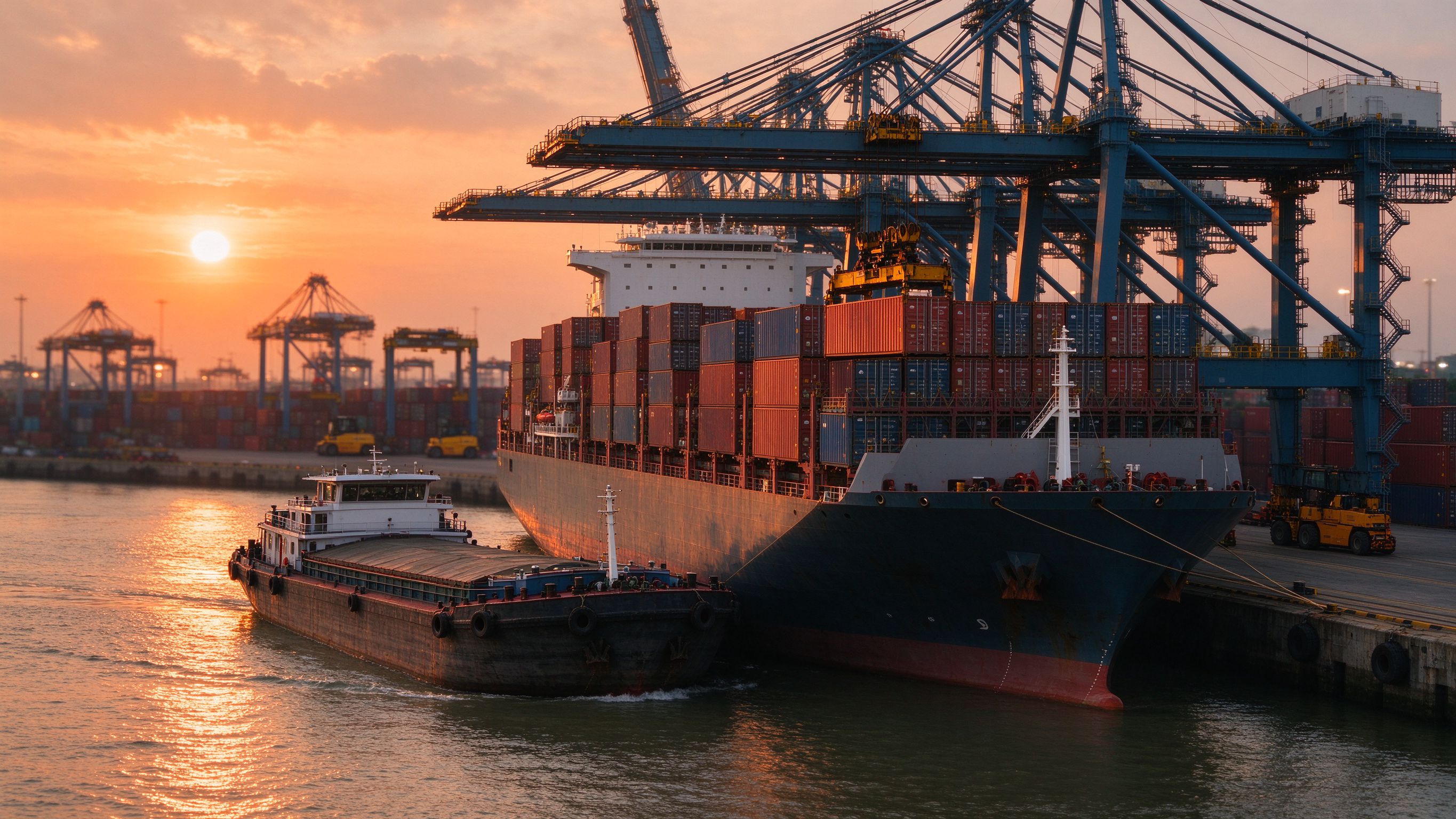
With the pre-manifest in hand and cargo ready, file within three days before arrival. The box can release as soon as it hits the terminal, cutting storage and port dwell — now the standard route at Huangpu's ocean terminals.
Cargo goes from gate to vessel without landing in the yard. Right for tight sailings and large FCL batches — and it demands sharper truck arrival timing and cleaner documents than a normal move.
Huangpu Customs has already landed its first water-to-water multimodal shipment at the Sinotrans Huangpu warehouse terminal: one declaration, one through bill of lading. Public reports put the domestic-leg cost reduction at roughly 10–15%.
For offshore equipment and out-of-gauge heavy lifts that cannot be craned at a berth, customs supervises direct loading at the Dayushan and Shajiao anchorages. Since 2023, more than a hundred batches of vessels and equipment have been supervised and released this way.
Huangpu handles a wide spread — from a container of household goods to hazardous chemicals, from furniture and lighting to oversize machinery. The declaration logic has to be rebuilt for each one.
Classification clusters around textiles, plastics and homeware; the work sits in matching product description and specs to every declaration element.
Determine first whether the product is hazardous. Non-hazardous chemicals need MSDS and composition data; hazardous ones move into the DG filing flow.
UN number, packing group, DG packaging certificate and terminal approval must all line up, and cut-off plus filing times get their own back-schedule.
Focus on CIQ, phytosanitary, fumigation and labelling; wooden packaging needs an IPPC mark or a fumigation certificate.
Model, function and new-versus-used status must be declared consistently; out-of-gauge pieces need lifting and anchorage loading plans confirmed early.
Eastern Guangzhou's traditional export base. Brand, material and refund rate need checking so no declaration element is left blank.
Solid-waste status determination and licensing come first; complete the compliance check before the cargo reaches the terminal.
The listing declaration and general-trade declaration are not the same filing; data has to be prepared by platform and by supervision mode.
1. Declare what is actually in the box. Description, specs, quantity, value and origin must match the cargo and the documents. Under-declaration and misdeclaration are the shipper's exposure; a broker cannot assume the declaration obligation for you.
2. Refund documents must line up. Entry, invoice, foreign exchange collection and the exporting entity have to close the loop. Exporting under someone else's name affects who owns the refund, so confirm the compliant path before you ship, not after.
3. Check licences before production, not at the gate. Goods subject to export licensing, dual-use controls, endangered-species rules or brand authorization should be verified at the purchasing stage, so the container is not stuck at the terminal over a missing permit.
4. Dangerous goods go through the dangerous goods route. If the hazard is unclear, get it tested rather than filing as general cargo. Terminal handling approval, storage conditions and carrier acceptance all have to be in place at the same time.
The questions that come up most from clients shipping out of Huangpu Old Port and New Port, answered the way we actually work.
Clearance is not won on the line item price. It is won on classification accuracy, document completeness, and whether somebody is standing at the terminal when it matters.
Shenzhen HQ runs booking and client communication; our Guangzhou team covers Huangpu on site, so inspections, amendments and container-return exceptions get answered the same day.
Classification, elements, value and quantity are checked internally first, moving amendment and inspection risk upstream instead of paying for it in terminal storage.
Pearl River Delta pickup, CFS loading, gate-in and feeder relay are scheduled by one coordinator rather than passed between vendors.
After closure we assemble the entry, release slip and terminal receipt with a refund document checklist, so factory finance is not chasing paper ticket by ticket.
Chemicals, dangerous goods and out-of-gauge pieces go through their own hazard determination, DG filing and lifting plan — not forced through the general cargo process.
Brokerage, drayage, feeder, inspection and terminal charges are listed separately; what actually happens is settled against the receipts, with no opaque all-in package.
Tell us the commodity, package count and weight, destination port and target sailing. We will come back with the Huangpu terminal that fits, the document list you need and a back-planned timeline.
Request a quote