Since 2012 NVOCC GD20230925153335 24h Response
+86 13392162503 sales8015@goodhopefreight.com Login
Goodhope Freight
Export customs clearance · Import clearance · Cross-border transit

Suzhou Port Ocean Freight Export Customs Clearance

Suzhou is not one port. It is Taicang, Zhangjiagang and Changshu — three port areas, three customs houses, three sets of rules. Taicang files once and clears as if the cargo were already in Shanghai. The other two still route through Shanghai or Ningbo. Pick the area first; the paperwork follows from it.

Taicang Customs 2327 Zhangjiagang Customs 2305 Changshu Customs 2324 One filing, one release Linked loading Feeder relay to Yangshan
3Port areas, each under a different customs house
10.72M TEUContainers handled across Suzhou Port in 2025
12–16 hTaicang to Yangshan by shuttle barge
Get a Suzhou clearance plan See the 8-step flow
10.72M TEUSuzhou Port containers, 2025
up 6.9% year on year
8.74M TEUTaicang port area alone
over 80% of the port total
1.3M TEUTai-Shen express shuttle in 2025
about 12 sailings a day
941,500Containers released under
linked loading to date
Why Suzhou

Three Port Areas, Three Customs Houses,
One Port Called Suzhou

Suzhou Port moved 10.72 million TEU and 617 million tons of cargo in 2025. Almost all of those boxes went through Taicang, which alone handled 8.74 million TEU. The rest split between Zhangjiagang and Changshu. Each sits under its own customs house — 2327, 2305 and 2324 — all reporting to Nanjing Customs. Where you file is decided by which river bank your container stands on, not by the name on the bill of lading.

  • 1
    Taicang is treated as ShanghaiSince the Shanghai-Taicang customs integration went fully live in 2020, cargo entering Taicang is treated as entering Shanghai: one filing, one inspection, one release. No second entry at Yangshan.
  • 2
    Two areas are still river ports in practiceZhangjiagang runs Japan and Korea services plus coastal domestic lines; Changshu runs a South America service and a South Pacific liner. Deep-sea mainline cargo still transships through Shanghai or Ningbo.
  • 3
    Draft decides the vessel, not the rateZhangjiagang Yongjia has 10.5 m alongside and takes 50,000 DWT box ships; Changshu Xinghua has 13.3 m and takes 70,000 DWT multipurpose vessels. Anything bigger goes to Taicang or straight to Shanghai.
  • 4
    New energy cargo is the growth engineForeign trade shipments of the "new three" — storage cabinets, solar and electric vehicles — reached 920,000 TEU in 2025, up 80% year on year. Each needs its own approval chain before a container moves.
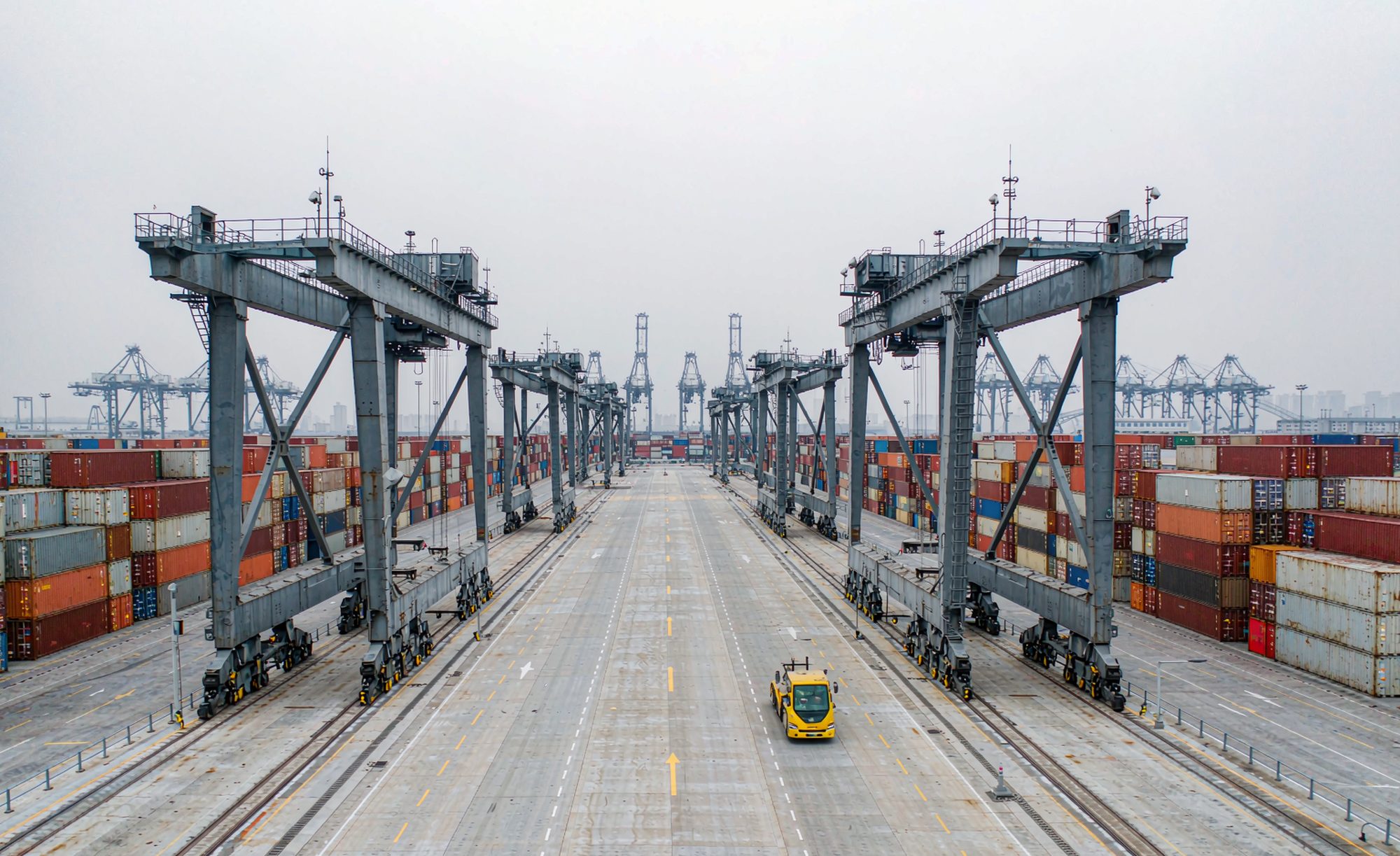
Automated container yard with rail-mounted gantries at Taicang port area
On the ground File at Taicang — release — feeder to the mother vessel Single filing · linked loading · five-fixed sailing

In short

Export customs clearance at Suzhou Port is the broker-side work that turns a booked container into a legally released export: HS classification, entry filing through the single window, arrival reporting, inspection attendance and closure. It is handled at three port areas — Taicang, Zhangjiagang and Changshu — each under a separate customs house. Taicang is the one that matters for most ocean freight: because the area is treated as part of Shanghai, one filing covers the whole move, and a shuttle barge carries the box to Yangshan or Waigaoqiao for the mother vessel.

Note: throughput, berth and draft figures on this page come from public information published by the Suzhou Port administration, the Taicang port authority, Nanjing Customs and terminal operators, and are used for service description only. Actual sailing, cut-off and terminal windows are set by the carrier and the terminal for the week in question.

Port areas

Taicang, Zhangjiagang, Changshu — Pick the Area Before the Broker

The first decision is the exit route, the second is the berth. Three areas, three customs houses, three different answers to "can my cargo even go through here".

Taicang Customs 2327

Taicang Port Area

Yangtze River's largest foreign trade port

Volume
8.74M TEU and 299M tons in 2025; 7,957 international vessel calls
Terminals
Zhenghe phase 1–4 (phase 4 is the Yangtze basin's first automated yard), Taicang International Container, Haithong vehicle terminal, Wugang iron ore, Xinhai timber
Relay
About 12 shuttle sailings a day to Yangshan, 12–16 hours; three sailings a day consolidating upper-Yangtze cargo
Customs
Shanghai-Taicang integration: cargo is treated as entering Shanghai, filed once
Best for: FCL deep-sea export, ro-ro vehicles, storage cabinets and wind equipment, cargo connecting to Yangshan mainlines

The only Suzhou port area that behaves like a seaport for customs purposes, and the one carrying more than 80% of the port's containers.

Zhangjiagang Customs 2305

Zhangjiagang Port Area

Short-sea services and breakbulk

Container terminal
Yongjia: three 10,000 DWT berths taking 50,000 DWT ships, 722 m quay, 10.5 m alongside, 100,000 TEU design capacity
Facilities
25,700 sq m dangerous goods container yard, 31,000 sq m on-site inspection centre, reefer yard, CFS warehouse
Services
Japan and Korea services, Yangtze feeder network covering over 90% of southern Jiangsu, coastal domestic lines
Bulk
Gangsheng bulk terminal with a 40,000 DWT deep-water berth and 16 river barge slots
Best for: Japan/Korea short-sea, dangerous goods containers, steel and timber, short-haul feeder from southern Jiangsu

The DG yard and the on-site inspection centre are the two most useful assets here — send hazardous or inspection-prone cargo this way.

Changshu Customs 2324

Changshu Port Area

Breakbulk, reefer and new energy

Container terminal
Xinghua: 16 berths, 2,657 m of quay, 13.3 m maximum draft, 70,000 DWT vessels, 14.8M tons annual capacity
Yard
52,000 sq m container yard holding 6,000 TEU, plus a dedicated reefer zone
DG approval
Class 9 dangerous goods handling approval granted April 2025 — electric vehicles and lithium battery storage cabinets
Services
Changshu–South America service, direct South Pacific liner, breakbulk and container on the same vessel
Best for: Mixed breakbulk and container, reefer cargo, lithium storage cabinets, 100 m plus wind blades

The 102 m wind blade that set the Suzhou oversized-cargo export record left from this quay, bound for Saudi Arabia.

What we handle

Export Customs Clearance Services We Run at Suzhou

Clearance is not one form. It is a sequence — booking, drayage, gate-in, filing, inspection, release, closure — and the sequence differs by port area. We break it into eight lines, each with an owner and a deadline.

SERVICE 01

Taicang FCL export filing

Booking confirmation, container and seal check, entry preparation, single-window filing, arrival and release tracking — filed once under the Shanghai-Taicang integration, not twice.

FCLSingle filingRelease tracking
SERVICE 02

Shuttle barge connection

Taicang to Yangshan and Waigaoqiao: barge sailing matched to the mother vessel cut-off, manifest and container numbers checked line by line. Linked loading shipments skip the transit declaration and second arrival report.

FeederLinked loadingManifest match
SERVICE 03

Zhangjiagang short-sea filing

Japan and Korea services plus coastal domestic lines, filed per shipment. The feeder network reaches most of southern Jiangsu, which suits small lots on a frequent cycle.

Japan / KoreaRiver feederSmall lots
SERVICE 04

Changshu mixed breakbulk filing

When general cargo and containers share a vessel, the breakbulk is declared by piece and the boxes by container. Two lists that have to reconcile, plus reefer pre-cooling scheduled alongside the filing.

BreakbulkMixed loadReefer
SERVICE 05

Dangerous goods and storage cabinets

Hazard determination first: Class 9 lithium batteries need UN numbers, UN38.3 reports, DG packaging certificates and an MSDS, with the packing certificate signed on site. Terminal approval is confirmed before we accept the booking.

Class 9UN38.3Packing certificate
SERVICE 06

Ro-ro vehicle export

Cars load at Haithong Taicang. Model, VIN and intended use must line up, and electric vehicles need battery data. Ro-ro, flat rack and container loading each carry a different declaration basis — settle it before the ship arrives.

Ro-roVIN listEV battery data
SERVICE 07

VAT refund file and closure

After closure: entry, release message, terminal receipt and packing list, checked so that the shipper of record, consignor and invoice entity all agree. Taicang shipments also keep the feeder manifest as proof of movement.

Refund copyClosureFeeder manifest
SERVICE 08

Oversized and project cargo

Pieces declared individually, with dimensions, weight, centre of gravity and lifting points matched to the loading plan. On cargo like wind blades the constraint is the access road and the lift window, not the entry itself.

Per-piece entryLift planPermits
Process

Eight Steps, Back-Scheduled From a Barge Sailing

The flow itself is routine. What catches people out is the starting point: at Taicang you work backwards from a shuttle sailing, at Zhangjiagang and Changshu from a river feeder or a short-sea call.

1

Choose the area, then book

Fix Taicang, Zhangjiagang or Changshu against destination, vessel size and deadline. Lock the ocean slot or the shuttle sailing and take the cut-off.

2

Classification and elements

Settle the HS code and every declaration element: description, spec, composition, use, brand. Licence-controlled goods get checked here, not at the gate.

3

Entry preparation and review

Draft the entry against the correct customs house, then review quantity, value, terms and currency in-house. For Taicang, the barge and mother-vessel manifests are locked at the same time.

4

File and take the instruction

File through the single window. The system returns release or a inspection flag; flagged boxes move to the on-site inspection centre or a designated yard.

5

Release and gate-in

Gate in against the release. Taicang cargo consolidates onto a shuttle barge for Yangshan or Waigaoqiao; linked loading shipments do not file a separate transit entry.

6

Load or relay

Direct sailings load at the berth; relay cargo changes vessel at Yangshan or Waigaoqiao. Container number, seal, weight and bill of lading details are checked in parallel.

7

Closure

Closure runs on actual export, which for relay cargo means the mother vessel departing — not the barge leaving Taicang. This is where refund timing is decided.

8

Documents and refund

Assemble the refund copy, release message, terminal receipt and feeder manifest, and hand finance a single checklist instead of a box of paper.

Get the timing rules right. Export declaration must be completed after the goods reach the customs supervised premises and at least 24 hours before loading. Advance filing lets you file earlier, but the cargo still has to arrive inside the window, or the entry is cancelled. Taicang adds one more variable: shuttle sailings are frequent but the consolidation window is short, so the barge schedule and the mother-vessel cut-off have to be planned together, not one after the other.
Documents

What Your Paperwork Needs to Look Like for Export Customs Clearance

At Taicang the document bar is higher than at a normal relay port, because the filing is a single one-shot entry. There is no second chance to correct it at the mother port.

Base set — every shipment

  • ✓
    Export declaration entryFiled against the customs house that matches the port area. Wrong house means the entry is re-filed from scratch.
  • ✓
    Contract or purchase orderTerms of trade, currency and payment conditions consistent with the invoice.
  • ✓
    Commercial invoice and packing listDescription, quantity, packages, gross and net weight, volume and marks in agreement.
  • ✓
    Customs power of attorneyElectronic authorization accepted, provided it is still inside its validity period.
  • ✓
    Booking and manifest dataOcean slot or shuttle sailing, with container and seal numbers that match the physical box.
  • ✓
    Refund and FX collection noteWhere a VAT refund is claimed, the entry and the invoice must sit under the same entity.

Added by commodity and port area

  • ✓
    Licences and permitsExport licences and dual-use item approvals; a missing permit stops the entry outright.
  • ✓
    Certificate of originCO, Form E, Form A and similar, chosen against the destination tariff preference.
  • ✓
    Dangerous goods fileMSDS, DG packaging certificate, UN number and packing group, plus the terminal's handling approval.
  • ✓
    Lithium battery packUN38.3 test report and transport condition assessment; without both, the terminal will not handle the box.
  • ✓
    Vehicle documentsModel and VIN list, EV battery information and certificate of conformity.
  • ✓
    Oversized cargo filePer-piece list, dimensions, weight, lifting-point drawing and the loading plan agreed with the terminal.
Facilitation note. Jiangsu ports generally run paperless filing and electronic authorization, with supporting documents submitted electronically if the officer asks during review. Requirements still differ by port area and by trade mode — general trade, processing trade, market procurement, cross-border e-commerce — and the officer's review governs in the end. That is exactly why we run a document pre-check before anything is filed.
Clearance modes

Four Clearance Routes — Only One Skips the Paperwork

Same province, same cargo, very different paperwork: Shanghai-Taicang integration, linked loading, advance declaration, or a transit entry for the river ports.

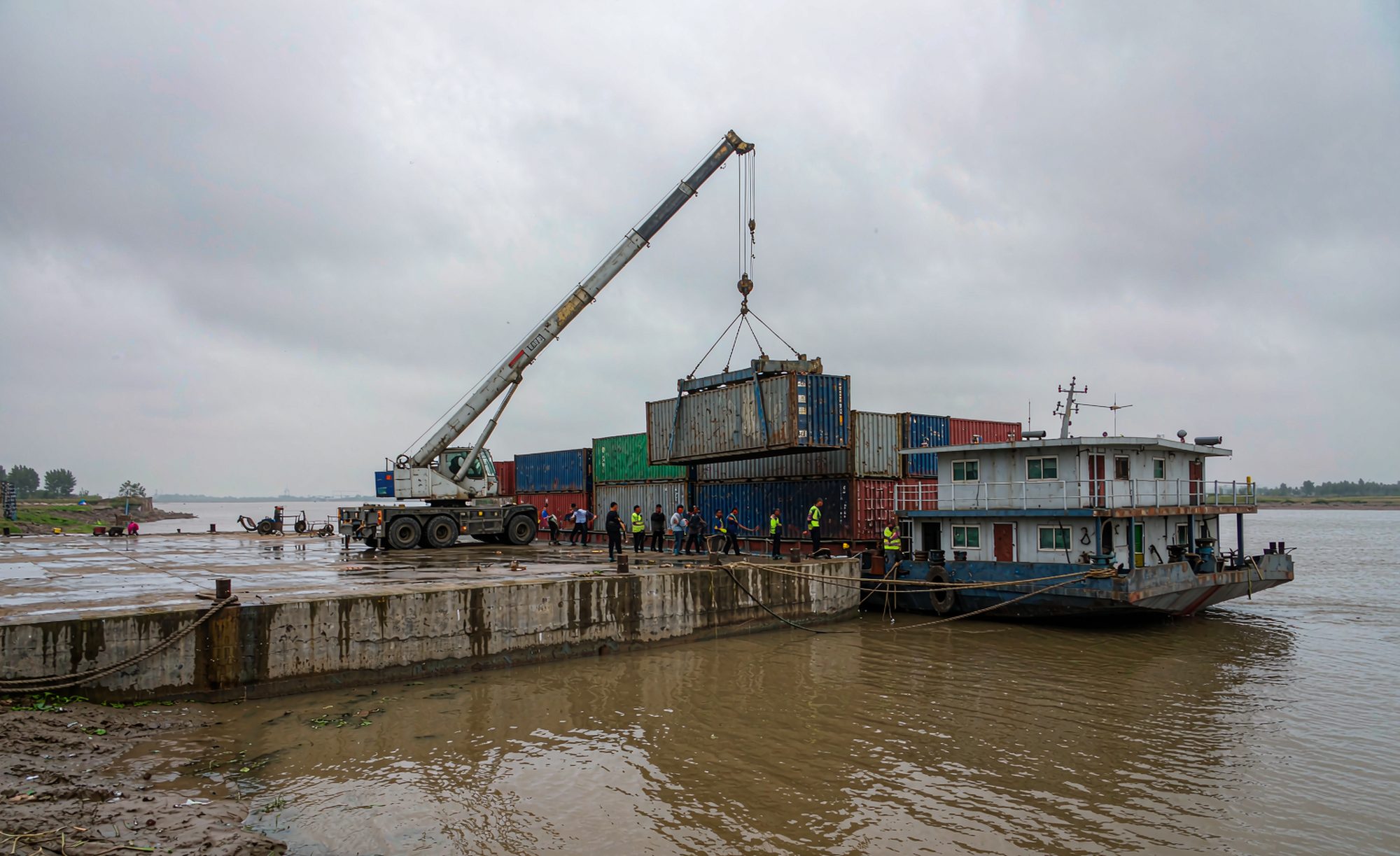
Container shuttle barge loading at a Yangtze River terminal near Taicang
Shuttle relay in practice: release at Taicang, barge to Yangshan, connection to the deep-sea vessel.

Shanghai-Taicang integration

In force across the board since 2020 and the first regional customs integration in the country. Cargo entering Taicang is treated as entering Shanghai: one filing, one inspection, one release. Skip when: the buyer's contract requires a Shanghai-issued entry and inspection at a Shanghai terminal.

Linked loading

The Taicang-to-Yangshan model that removes both the transit declaration and the second arrival report. Taicang Customs puts cumulative releases past 941,500 containers. Skip when: the cargo has to be re-consolidated, repacked or re-routed at Yangshan.

Advance declaration

File once the manifest exists and the cargo is ready, before the box reaches the yard. Skip when: the packing plan is still moving — an amendment after filing costs more time than it saves.

Transit entry

For Zhangjiagang and Changshu cargo leaving through Shanghai or Ningbo: declaration at the port area, transit to the exit port, with both manifests matched. Skip when: the box is at Taicang and can go under integration — a transit entry there is one avoidable error point.

By cargo type

Every Cargo Type Has Its Own Export Customs Clearance Logic

Suzhou exports are manufacturing-heavy. New energy cargo alone reached 920,000 TEU in 2025, up 80%. None of it is declared the way a container of houseware is.

New energy: storage, solar, EV

Storage cabinets are Class 9 dangerous goods. UN38.3 report and DG packaging certificate are both mandatory, and the terminal needs the matching approval.

Cars and CKD kits

Model, VIN and use must agree; EV batteries need their own data. CKD ships knocked down, so the per-piece list and consolidation plan come first.

Chemicals and dangerous goods

Determine hazard status first. Non-hazardous needs composition data and an MSDS; hazardous moves into DG filing plus a yard that is approved for it.

Breakbulk, steel and timber

Changshu and Zhangjiagang handle this best. Declared by piece, with tally figures that have to match the bill of lading count.

Machinery and wind equipment

Model, function and new-versus-used status must be consistent. Oversized pieces need transport permits and a lift window booked with the terminal.

Textiles and consumer goods

Description and spec must map to every declaration element. Check brand and refund rate; LCL dominates and tally data has to reconcile.

Food and cold chain

CIQ, phytosanitary, labeling and temperature all apply. Changshu has a dedicated reefer zone, so pre-cooling is scheduled before stuffing.

Cross-border e-commerce and LCL

The listing declaration is not the general-trade entry. LCL cargo is tallied before the CFS cut-off, because one bad shipment holds the whole box.

Compliance reminders — four things not to leave loose

1. Declare what is actually in the box. Description, spec, quantity, value and origin must match the cargo and the documents. Misdeclaration is the shipper's exposure; a broker cannot take that obligation off you.

2. Close the refund loop. Entry, invoice, foreign exchange collection and exporting entity have to line up. Exporting under someone else's name changes who owns the refund, so confirm the structure before you ship.

3. Check the port area's approval, not just the price. Whether dangerous goods, Class 9 batteries or oversized pieces can move depends on the handling approval and yard in that specific area.

4. Verify licences before production. Goods under export licensing, dual-use controls or brand authorization should be cleared at the purchasing stage, not when the container is already at the gate.

Worked examples

Six Shipments, and Where Each One Actually Jammed

Nothing here went wrong because someone forgot the process. It went wrong on a port area, a barge sailing, an approval, or a lift window.

Taicang · amendment01

Two pieces short, four hours to cut-off, box already in the yard

Cargo and lane
Three 40HQ of appliance parts, Taicang to Europe, cut-off the same afternoon.
Where it jammed
The factory counted after stuffing: two pieces fewer than the invoice. Routine amendment, except the cut-off was four hours away and the box was already gated in.
What we did
Confirmed the box had not been loaded onto a barge, filed the amendment before release, and sent the corrected packing list and tally photos straight to the reviewing officer. A colleague stayed at the terminal so the box was not staged early.
Outcome
Released and loaded on the original shuttle sailing. The lesson is not speed: it is that an amendment only works while the box is still on the quay.
Taicang · integration02

A transit entry nobody needed, filed out of habit

Cargo and lane
Two containers of textiles, Taicang by barge to Yangshan, then US West Coast.
Where it jammed
The file was set up the old way, as a transit move: entry at Taicang, second arrival report at Yangshan, second declaration. Two extra steps and a manifest link that is easy to get wrong.
What we did
Re-cut it as a single entry under the Shanghai-Taicang integration with linked loading: one filing, one inspection, one release, treated as cargo entering Shanghai. The transit declaration and second arrival report disappeared.
Outcome
Two fewer handoffs and a shorter clearance cycle. The most expensive habit at Taicang is treating an integrated port like a feeder port.
Changshu · Class 903

Storage cabinets packed before anyone checked the handling approval

Cargo and lane
Twenty container-sized lithium battery storage cabinets, made in Changshu, bound for the United States.
Where it jammed
Class 9 cargo needs the terminal approval, the packing site and the carrier's acceptance to exist at the same time. The client packed first and asked afterwards, which put the packing certificate sign-off in doubt.
What we did
Verified the Class 9 handling approval Changshu Xinghua obtained in April 2025, re-checked the stuffing at an approved site and had the packing certificate signed there. UN38.3 reports, DG packaging certificates and MSDS were confirmed before we approached the carrier.
Outcome
Loaded on schedule. For dangerous goods the first gate is not customs — it is which port area is allowed to touch the box at all.
Changshu · oversized04

A 102 m blade, and the problem was the access road

Cargo and lane
Oversized wind blades on a breakbulk vessel from Changshu to the Middle East.
Where it jammed
Each blade is 102 m long; the turning radius on the terminal approach exceeds what a standard layout allows. The entry was the easy part — the real constraints were access, lift window and storage space.
What we did
Fixed the access route, lift window and yard position with the terminal before writing anything; then declared piece by piece, with dimensions, weight and use matching the loading sequence exactly.
Outcome
Loaded on schedule, setting the regional record for oversized export cargo. With project cargo the order is always terminal first, customs second.
Zhangjiagang · DG yard05

The box that no ordinary terminal would accept

Cargo and lane
Eight containers of chemicals made in Suzhou, bound for Southeast Asia.
Where it jammed
The cargo is managed as dangerous goods. The originally planned area had no approved container yard, so the boxes would have been refused at the gate with the sailing already counting down.
What we did
Moved the shipment to Zhangjiagang, where Yongjia runs a 25,700 sq m dedicated dangerous goods container yard with the inspection area in the same customs district. Packing group and carrier acceptance were checked in the same pass, and the packing certificate was signed on site.
Outcome
Caught the original vessel. When choosing a port area, check the yard approval first and the sailing second — reverse that order and you redo the whole file.
Taicang · inspection06

Inspected on Monday, mother vessel leaving Thursday, two barges in between

Cargo and lane
Two containers of machinery parts from Taicang, relayed by shuttle to Yangshan for a Thursday sailing.
Where it jammed
The entry was flagged for inspection. The examination itself was quick; what was not quick was re-entry and the queue for the next shuttle. Miss that barge and the vessel leaves without you.
What we did
Attended the devanning with photos and explanations the same day, then booked the next shuttle slot the moment the examination closed, with carrier acceptance confirmed in parallel.
Outcome
Loaded the following day and caught the vessel. At Taicang the recovery step is not the inspection — it is grabbing the next barge the second it clears.

These are desensitized working examples: client names, vessel names and some weights and dimensions have been replaced or rounded, while the operational sequence and the failure point follow what actually happened. Cut-off times and document requirements differ by port area, carrier and week — take the current notice as binding.

FAQ

Suzhou Export Customs Clearance: 10 Questions Shippers Ask

The questions that come up most from exporters using Taicang, Zhangjiagang and Changshu, answered the way we actually work.

Do I have to pick a port area before booking at Suzhou?
Yes, and it is the first decision, not the last. Taicang, Zhangjiagang and Changshu sit under three separate customs houses — Taicang 2327, Zhangjiagang 2305, Changshu 2324 — all under Nanjing Customs. The port area decides where the entry is filed, how the cargo leaves and which cut-off you work to. Book the area wrong and the declaration has to be redone.
At Taicang, is the export declaration filed in Suzhou or in Shanghai?
In Taicang. Since the Shanghai-Taicang customs integration went fully live in 2020, cargo entering Taicang is treated as entering Shanghai: one filing, one inspection, one release. You do not file a second entry at Yangshan or Waigaoqiao. A feeder then carries the box to the mother vessel.
How long does the barge take from Taicang to Yangshan?
About 12 to 16 hours to Yangshan, and roughly 4 to 6 hours to Waigaoqiao, which is only around 60 km away. The Tai-Shen express shuttle, which links Taicang to Shanghai, ran more than 1.3 million TEU in 2025 at about 12 sailings a day, so there is rarely more than a day to wait for the next one.
What is linked loading and does it change my refund paperwork?
Linked loading is the Taicang-to-Yangshan arrangement that removes both the transit declaration and the second arrival report. Taicang Customs puts cumulative volume under the model past 941,500 containers. Your refund file still needs the feeder manifest as proof the cargo actually left, so keep it with the entry rather than filing it away.
Can I ship dangerous goods or battery storage cabinets from Suzhou?
Yes, but only through a port area that holds the right handling approval. Changshu Xinghua obtained Class 9 dangerous goods handling approval in April 2025 and moves lithium battery storage cabinets; Zhangjiagang Yongjia operates a 25,700 sq m dangerous goods container yard. Without the approval in that area, the container cannot even enter the gate.
Where do export cars load?
Haithong Taicang vehicle terminal in the Taicang port area: 708 m of quay, two 70,000 DWT ro-ro berths alongside, 860,000 sq m of yard and 32,000 car slots, designed for 1.3 million vehicles a year. Taicang exported 496,400 new energy vehicles in 2025, up 2.18 times year on year.
Can I still make the vessel if my container gets inspected?
Usually, if someone acts the moment the inspection ends. At Taicang the delay is not the examination itself but the re-entry queue for the next shuttle barge. We book the following sailing while the box is still being devanned, and confirm acceptance with the carrier in parallel, so a two-day inspection does not turn into a missed vessel.
What documents do I need for export clearance at Suzhou?
Declaration data, contract or purchase order, commercial invoice, packing list, customs power of attorney and the booking data behind your manifest. Add licences, certificate of origin, CIQ or phytosanitary papers by commodity; MSDS, UN38.3 report, DG packaging certificate and packing certificate for batteries; model and VIN lists for vehicles.
How early can I file the export declaration?
Once you hold the manifest data and the cargo is ready, you can file before the goods reach the supervised premises. Advance filing buys terminal time but not arrival time: everything on the entry must still reach the yard inside the window, and the legal deadline remains 24 hours before loading.
Can I export from Suzhou without import-export rights?
Yes, through a licensed exporter acting as shipper of record. Be clear on the trade-off: the shipper of record owns the VAT refund and the foreign exchange collection. If a refund is part of your margin, confirm the compliant structure before the cargo moves, not after.

Why us

Why Shippers Hand Their Suzhou Export Customs Clearance to Goodhope

Suzhou is not won on a rate sheet. It is won on knowing which of three port areas your cargo can legally use, and on having someone at the gate when the answer changes.

01

People on the ground in all three areas

Shenzhen HQ runs booking and client communication; our Jiangsu team covers Taicang, Zhangjiagang and Changshu on site, so inspections, amendments and gate exceptions get answered the same day.

02

The port area is decided before the quote

We compare the three areas against cargo type, vessel size and destination first, then price the option that actually works — not one area applied to everything.

03

Taicang cargo filed as integrated, not as feeder

Shipments that qualify go under the integration and linked loading, without a transit declaration or second arrival report added on top.

04

A document review before anything is filed

Classification, elements, value and quantity are checked internally first, moving amendment and inspection risk upstream instead of paying for it in terminal storage.

05

Separate paths for DG, batteries and project cargo

Chemicals go through hazard determination, Class 9 batteries through UN38.3 and DG packaging checks, oversized pieces through per-piece entries and lift plans — never through the general cargo flow.

06

Itemized pricing, actual-cost settlement

Brokerage, trucking, barge, inspection and terminal charges are listed separately; what actually happens is settled against receipts, with no opaque package rate.

GET IN TOUCH

Suzhou export clearance —
hand us the cargo details and the deadline

Tell us the commodity, package count and weight, destination port and latest delivery date. We will come back with which of the three port areas fits, the document list you need and a back-planned timeline against the cut-off.

Request a quote
CompanyShenzhen Weihangyunda International Freight Forwarding Co., Ltd.
BrandGoodhope Freight · Goodhope Logistics (China) Limited
Phone / WhatsApp+86 133 9216 2503
Emailsales8015@goodhopefreight.com
OfficeShenzhen · Shanghai · Suzhou desk
HoursMon–Sat, 9:00–18:00 (GMT+8)
call us: +86 13392162503