Since 2012 NVOCC GD20230925153335 24h Response
+86 13392162503 sales8015@goodhopefreight.com Login
Goodhope Freight
RAIL PORT · ROAD PORT · BONDED ZONE

Alashankou Rail and Road Export Customs Clearance

Alashankou is the busiest rail gateway on the China–Europe corridor and a separate road border forty minutes away from it. Your cargo is cleared twice at the same border under two different sequences: rail cargo must be released before it is loaded onto a wagon, road cargo is declared before it arrives and cleared at the gate. Get the sequence wrong and you wait a day, not an hour.

Rail port 650302 Road port 650301 Bonded zone 650303 Railway Express Broad-gauge direct loading Road port advance filing
30.25 M metric tons2025 cargo through the port, +4.6% year on year
8,165 trainsChina–Europe and Central Asia services in 2025
148.9 daysDays a year with force-8 winds or stronger
Get a clearance plan See the eight-step process
17.87 M t2025 rail port cargo
+7.94% year on year
1.31 M t2025 road port cargo
+10.45% year on year
128Train routes through the port
reaching 21 countries
700 k TEUAnnual container transshipment
capacity across the port
Why Alashankou

The Bottleneck Is Not Paperwork.
It Is the Railcar and the Gauge

Alashankou sits in Bortala Prefecture, Xinjiang, facing Dostyk in Kazakhstan. It handled 30.25 million metric tons of cargo in 2025: 17.87 million by rail, 1.31 million by road and 11.07 million by crude oil pipeline. Trains through the port reached 8,165 China–Europe and Central Asia services on 128 routes touching 21 countries, and the cumulative count since 2011 has passed 52,000.

None of that decides whether your shipment moves. Three things do. Whether there is a railcar — and during peak season there is not always one. Where your box sits in the transshipment queue, because China runs 1,435 mm standard gauge and Kazakhstan runs 1,520 mm broad gauge, so every container is lifted from one wagon to another at this border. And whether your documents match the rail waybill, which is a different document set from ocean freight and is checked to the last digit.

  • 1
    Two border crossings, two opposite sequencesRail: the container must be released before it is loaded. Road: declare first, the truck is verified at the gate on arrival. Reversing either one costs days.
  • 2
    Transshipment is the one step you cannot compressA gantry lift runs in minutes per box. Oversized or breakbulk cargo that needs bogie exchange runs in days. Marshalling plan and railcar supply set the rest.
  • 3
    The document set is not the ocean oneInternational rail moves on an SMGS waybill with a six-digit station code. Loading and securing plans are mandatory and photographed. Weight is re-checked on arrival.
  • 4
    Railway Express removes the transit declarationUnder the fast-clearance model the departure-station customs office releases the cargo and the border post only writes off the manifest data. No separate transit entry.
Border marker at the Alashankou crossing in Xinjiang, with a watchtower above the inscribed stone
At the border Railcar → release → transshipment → departure SMGS waybill · securing plan · re-weigh

Cargo volumes, train counts and capacity figures come from the Alashankou municipal government, Urumqi Customs and the China Meteorological Administration for 2025, with 2026 partial-year figures where noted. Alashankou Customs sits under Urumqi Customs as district 9404. Railcar supply, train plans and transshipment slots are set by the railway operator and the yard for each booking.

Yards and crossings

Six Working Areas, Six Different Sequences

Alashankou is not one facility. It is a standard-gauge yard, a broad-gauge yard, a transshipment shed, an inspection yard, a road multimodal center and a bonded zone, each with its own gate and its own order of operations.

Alashankou Customs 9404 · rail

Standard-gauge yard

Alashankou Station · 1,435 mm

Function
Arrival, departure and marshalling on the Chinese network
Scale
69 standard and broad gauge tracks across the port, 5 marshalling yards
Sequence
Container enters the yard, is released, then loaded
Interface
Railway Express applications are lodged here through the 95306 system
Best for: block trains, FCL boxes, anything that needs marshalling before Central Asia or Europe. Avoid for: cargo that has not been released.

A box that arrives without a release cannot be marshalled into a train. That single rule drives your whole countdown.

Alashankou Customs 9404 · rail

Broad-gauge yard

1,520 mm · Kazakh network standard

Function
Arrival and departure on broad-gauge wagons into Kazakhstan
Model
Direct loading: one transshipment inside China, then broad gauge to destination
Capacity
Two additional broad-gauge loading tracks plus gantry and reach stacker equipment
Sequence
Advance declaration, manifest pre-entry, release, direct load
Best for: new energy vehicles, precision equipment, large FCL batches. Avoid for: cargo whose release is still pending.

Direct loading removes the unload–store–load cycle, cutting double handling and damage. It is the reason big EV batches move without touching a warehouse.

Yard operations

Indoor transshipment sheds

Container lift between gauges

Function
Gantry lift of containers from standard-gauge to broad-gauge flat wagons
Scale
7 sheds and 4 open transshipment yards port-wide
Capacity
700,000 TEU a year port-wide; the largest single shed is designed for 200,000 TEU
Why indoors
Wind. Outdoor lifting stops as gusts approach force 8
Best for: every container that has to cross the gauge. Critical for: winter and the windy season.

Lift time is minutes per box. Queue time is set by the train plan, so a shipment chasing a specific departure has to fight for its slot separately.

Alashankou Customs · inspection

Rail inspection yard

Opened 29 September 2024

Design
Inspection separated from rail operations so the two no longer block each other
Speed
Per-train check cut from about 25 to 15 minutes; whole-train throughput up 40%
Capacity
Up to 29 trains a day, 24 hours
Rule
Freight trains declare one hour ahead; crew verification sits at the locomotive end
Best for: any train that draws an inspection order. Note: low-risk boxes are scanned, not opened.

Non-intrusive scanning and image review replaced car-by-car manual checks, which is what made 24-hour release at this border realistic.

Alashankou Customs · road

Road port multimodal center

Dual carriageway, 40 inspection bays

Layout
Declaration, inspection and release in one park, with rail–road transfer on site
Capacity
100,000 TEU a year of transfer capacity; close to 400 trucks a day
Model
Advance filing plus direct delivery to the border, verified at an automated gate
Timing
7 a.m. to 7 p.m. operations; a clean truck clears in about 20 minutes
Best for: full truckloads, car carriers, drive-away vehicles, urgent small lots. Avoid for: cargo needing a rail slot in peak season.

Since the reform the road port has cut overall clearance to about five hours and vehicle processing time by 85.5%. One truck that used to take three days now runs gate to gate in under four hours.

Bonded zone customs 9423

Alashankou comprehensive bonded zone

Approved May 2011

Status
16th bonded zone in China, the first in Xinjiang, 10.9 km² planned
Rail
28 dedicated sidings inside the fence
Distinction
The only bonded zone in China that performs both standard and broad gauge transshipment
Capacity
2 Mt of grain and oilseed, 2 Mt of general cargo, 450,000 t of vegetable oil a year
Best for: bonded storage, light processing, used-vehicle exports, staged shipments. Note: the only bonded zone in Xinjiang licensed for dangerous goods storage.

Cargo can be stored, processed and then loaded without leaving the fence, which is what makes split shipments and consolidated departures workable here.

Point of differenceRail port 650302Road port 650301
Declaration and releaseMust be released before loading; Railway Express releases at the departure stationFile in advance; documents are reviewed before the truck arrives
What happens at the borderManifest write-off, transshipment, marshalling, departureAutomated gate checks the electronic file, truck proceeds if clean
Unavoidable waitingTransshipment slot and train plan; minutes per box, days for bogie exchangeOn-site work if an inspection order is issued, queue by truck
Typical cargoBlock-train FCL, machinery, EVs, solar modulesTruckloads, car carriers, drive-away vehicles, small lots
Weather exposureHigh wind moves lifting indoors and can reshuffle marshallingSnow closure limits road access; build in a buffer

The sequences above follow current practice at Alashankou and published trade facilitation measures. Railcar allocation, train plans and inspection slots are set by Alashankou Customs and the yard for each booking.

What we handle

Eight Service Lines, Split by Crossing and Cargo

A block-train container, a full truckload, a cross-border e-commerce parcel and a drive-away vehicle are four different declarations at the same border. Each runs on its own clock.

SERVICE 01

Rail FCL export entry

One shipper, one box, one entry, matched line by line to the SMGS waybill. Under Railway Express the departure station releases and the border writes off the manifest; otherwise we file at the border or run a transit entry.

FCLSMGS waybillManifest write-off
SERVICE 02

Rail LCL consolidation

LCL is filed per house bill, and the consolidated packing list has to agree with every shipper's package count and gross weight. Deconsolidation at the border reorders filing, so the box has to be locked before the cut-off.

LCLPer-bill filingContainer lock
SERVICE 03

Road full truckload

Filed as advance declaration under the direct-to-border model. The entry starts while the truck is still being loaded, the automated gate verifies the electronic file on arrival, and an inspection order is handled inside the same park.

FTLAdvance filingAutomated gate
SERVICE 04

TIR and cross-border road

Under TIR the load is sealed at origin and transit countries normally do not inspect it. The Alashankou road port accepts TIR movements, which suits project cargo and truckloads heading for Central Asia where a single sealed document saves days.

TIR carnetSealed loadCentral Asia
SERVICE 05

Railcar and train-plan coordination

Train plan, railcar supply and transshipment slot are one negotiation, not three. In peak season we secure the wagon before filing, because a perfect entry against no railcar is wasted work. Block trains and direct loading run on separate application cycles.

Train planRailcarsSlot booking
SERVICE 06

Cross-border e-commerce filing

All four modes operate here: 9610 for retail parcels, 9710 for B2B direct, 9810 for overseas warehouse shipments and 1210 for bonded retail. Mode 9810 allows refund on departure with settlement later; 9610 retail in the pilot zone can be VAT-exempt without purchase invoices.

9610 / 97109810 refundVAT exemption
SERVICE 07

Used and finished vehicle exports

Alashankou is a designated used-vehicle export point with both road and rail channels and both car-carrier and drive-away modes in regular use. Declarations need model, VIN and use stated clearly, with battery data for electric vehicles.

Used-vehicle pilotCar carrierDrive-away
SERVICE 08

Bonded storage and transit

Bonded warehousing, light processing and zone-to-port dispatch, plus the paperwork that links them to an export refund claim. The 28 sidings inside the fence connect to standard and broad gauge, so a box can be loaded without leaving the zone.

Bonded storageZone-to-portRefund link
Container loaded on a railway flat wagon at Alashankou with broad gauge track and snow-covered ballast alongside
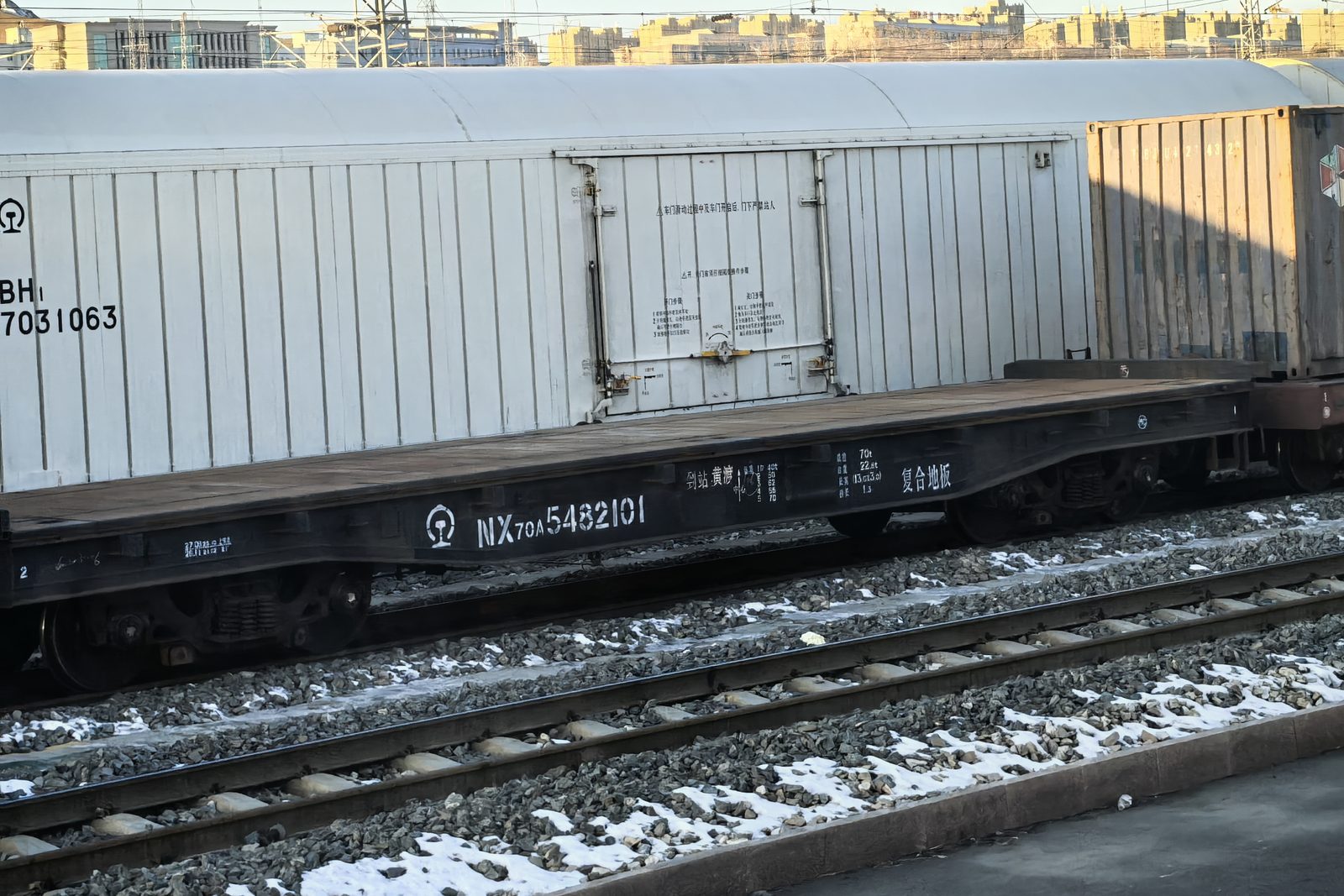
Transshipment is not a lift. It is a securing plan, a load distribution and a re-weigh. Rail rules on center of gravity, off-center load and lashing are stricter than ocean freight. The loading and securing plan is issued and photographed after packing, wagon allocation is calculated for bias, and weight is re-checked on arrival. A plan that fails does not delay the lift — it prevents the wagon from entering service at all, and that work has to be finished before the container reaches the yard.
The process

Eight Steps, and Two Crossings That Run Backwards

The steps are ordinary. What is not ordinary is that rail and road invert the order of the same two actions: declare, then move — or move, then declare. Pick the wrong one and the wait is measured in days.

1

Booking and crossing check

Fix the crossing, the destination station or country, the box or vehicle type, and the weight and dimensions.

Who: us with you · 1 day · If it slips: the wrong crossing is booked and the railcar is wasted
2

Classification and declaration elements

Agree the HS code and every element: description, specification, composition, use, brand. Screen licenses and inspection requirements now, not at the gate.

Who: us with your spec sheet · 1–2 days · If it slips: a license missing at the border means the box sits
3

Secure the railcar or the truck

In peak season the wagon comes first. Confirm block train, direct broad-gauge loading or road truckload, and back-schedule the transshipment slot from the departure date.

Who: us with the operator · 1–3 days · If it slips: the entry is filed against transport that does not exist
4

File the entry

Railway Express: file at the departure station and obtain release. Border filing: declare at Alashankou. Transit: open the transit entry. Road: file in advance, before the truck arrives.

Who: licensed broker · hours to 1 day · If it slips: no release, no loading, no train
5

Release and arrival report

With release in hand, the box enters the yard or the truck reaches the gate. The yard confirms arrival and customs writes off the manifest data; the road gate verifies the electronic file.

Who: yard and customs · hours · If it slips: the box is on the ground but cannot be planned onto a train
6

Transshipment and loading

Gantry lift from standard to broad gauge, or bogie exchange for breakbulk and oversize. High wind moves the work indoors; oversize cargo can take days.

Who: yard · minutes to days · If it slips: the departure slot goes to another train
7

Marshalling and departure

The station accepts the international waybill and marshals the train, then scanning, crew check and handover, then departure to Dostyk. Inspection orders are served in the inspection yard.

Who: railway and customs · 1–3 hours · If it slips: the connection at Dostyk is missed
8

Closure and document return

After departure the entry is closed. We assemble the declaration, release data, SMGS waybill and closure record for your refund and foreign exchange file.

Who: us · 2–5 days · If it slips: the refund claim waits on documents, not on customs

The one rule to remember: at the rail port the container must be declared and released after it enters the yard and before it is loaded. A box in the yard without a release cannot be marshalled into any train. At the road port the order flips: the declaration can precede arrival by hours, and the gate only verifies. Under Railway Express, exporters do not file a separate transit entry at all — the departure station clears the cargo and the border writes off the rail manifest electronically, one declaration end to end.

Documents

The Waybill and the Securing Plan Carry the Risk Here

A land border adds two document families that ocean freight never sees: the international rail waybill and the loading and securing plan. Both are checked against weight and dimension, not just against each other.

Every shipment

  • ✓
    Export declarationFiled through the single window; must describe the goods, not the order.
  • ✓
    SMGS international waybillRail only. The six-digit station code is mandatory, and domestic telegraph and TMIS codes are a separate system that cannot be mixed into it.
  • ✓
    Sales contract or purchase orderMissing this leaves the Incoterm and currency undefended on review.
  • ✓
    Commercial invoice and packing listMissing this means description, package count, gross and net weight and marks cannot be reconciled.
  • ✓
    Customs broker power of attorneyElectronic authorisation is accepted and must be valid on the filing date.
  • ✓
    Railcar or train-plan confirmationPlan number, departure date, box type and transshipment arrangement.

By cargo and by crossing

  • ✓
    Loading and securing planCenter of gravity, load distribution, lashing method, photographed on completion. Weight is re-checked on arrival.
  • ✓
    Export license or permitDual-use items and controlled goods need approval before packing, not before loading.
  • ✓
    Certificate of originCO or FORM E depending on the destination and the tariff preference claimed.
  • ✓
    Dangerous goods fileMSDS, UN number, packing certificate and a rail dangerous goods transport qualification.
  • ✓
    Lithium battery fileUN38.3 test summary, MSDS, watt-hour marking and packaging statement.
  • ✓
    TIR carnetRoad TIR only; must be valid and sealed at origin.
  • ✓
    Phytosanitary and fumigationIPPC-marked wood packaging or a fumigation certificate; plant products need a phytosanitary certificate.
  • ✓
    Trade-mode documentsProcessing trade manual, e-commerce order and listing, or used-vehicle export license.
Practical note: paperless filing and electronic authorisation are standard here, and the digital port system shares rail and customs data in real time so the manifest and release status are visible to both sides. Rail and road still ask for different attachments, and the four e-commerce modes use different fields. We run a document pre-check before filing for that reason, not as a formality.
Clearance models

Four Models, Chosen by Crossing and Volume

Same border, four different amounts of paperwork and waiting. The choice is driven by where the goods originate and how much control you have over the departure schedule.

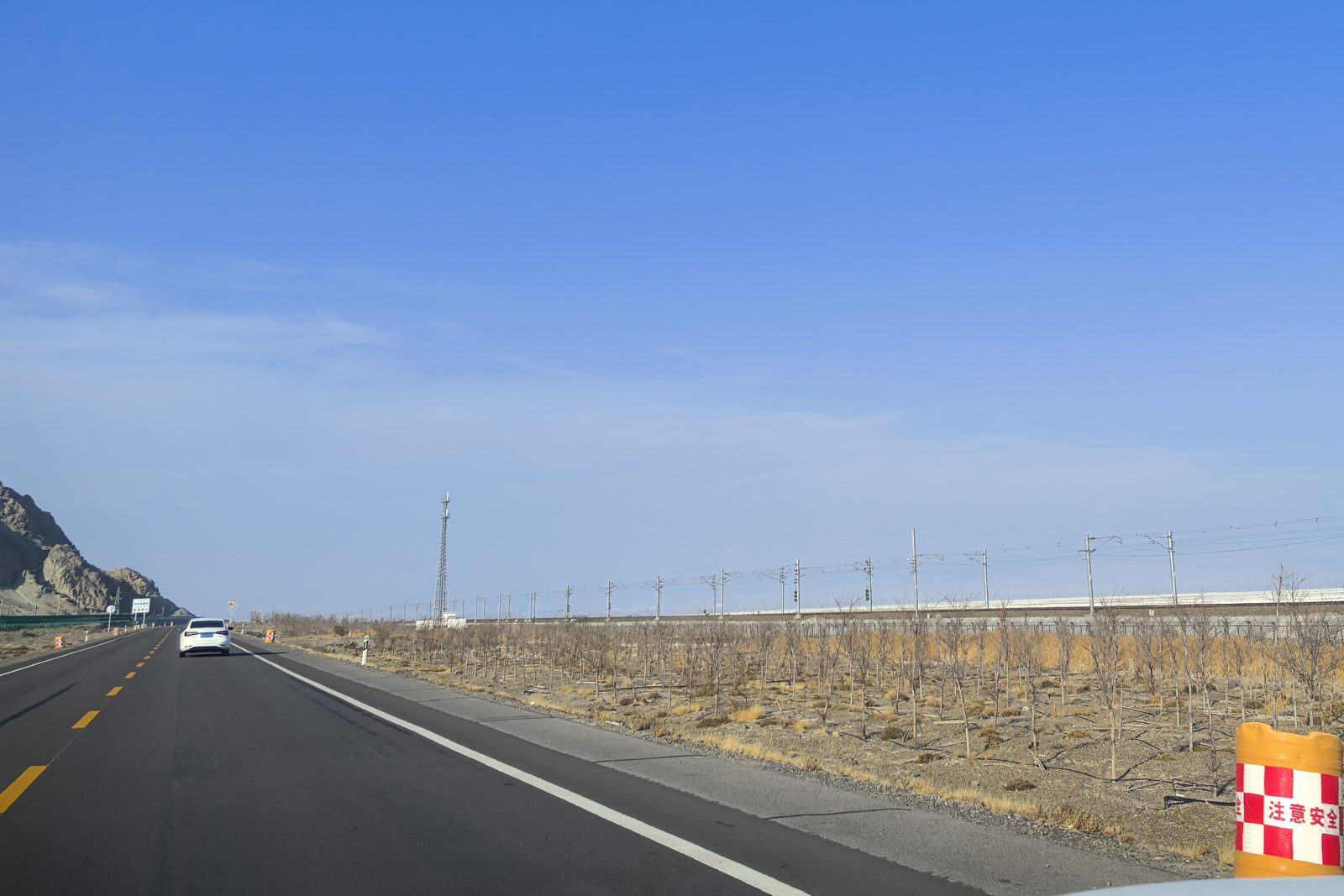
Road corridor near Alashankou running alongside the railway embankment that carries trains to the border
Road and rail run side by side to the same border. They share a destination, not a process: one clears at the gate, the other clears before loading.

Railway Express

The departure-station customs office inspects and releases; the shipper sends a fast-clearance request through the 95306 system against the international waybill already lodged; the border post reviews, releases and writes off the rail manifest electronically. No separate transit declaration. Use it when cargo originates at one station and documents are clean. Skip it when the origin does not match the departure station.

Road direct-to-border

Advance filing plus automated gate verification, with declaration, inspection and release inside one park. Overall clearance at the road port is now about five hours and vehicle processing time has fallen 85.5%. Use it for truckloads, car carriers and urgent lots. Skip it if your cargo needs a rail slot in peak season, when road capacity is not the constraint — the train is.

Border filing or transit

When Express conditions are not met, file at Alashankou or open a transit entry and write it off at the border. Transit cargo must arrive within the permitted window or the declaration is canceled. Use it when the origin and the departure station differ. Skip it when a clean Express filing would do the same job in one step.

Bonded zone, zone to port

Cargo enters bonded storage or light processing first, then loads through the 28 sidings that connect to standard and broad gauge inside the fence. Use it for split shipments, consolidated departures or processing before export. Skip it when the cargo is ready to load and storage would only add a handling step.

By cargo type

The Filing Rules Change With the Cargo

Exports here lean towards new energy vehicles, machinery, auto parts, consumer goods and e-commerce parcels. Inbound is dominated by crude oil and metal ores, which is why the outbound rules are stricter on batteries than on almost anything else.

Electric vehicles

Vehicle and battery are two questions. The vehicle needs model, VIN and use; the battery needs UN38.3 and watt-hour marking. Rail carriage is a restricted category requiring qualification.

Machinery and auto parts

Model, specification, use and condition must be declared consistently. Complete sets and loose parts are listed separately to avoid a classification argument later.

Consumer goods and textiles

Many lines, many bills. The work is completing every declaration element, then checking brand authorisation and refund rates line by line.

Solar modules

Power rating, dimensions and packing method matter, and the securing plan has to state anti-tip and load-bearing positions because the panels cannot take point loads.

Dangerous goods

Establish whether the cargo is regulated first. If it is, you need a rail dangerous goods qualification, packaging certificate and UN number; many chemical classes are restricted on this corridor.

E-commerce parcels

Modes 9610 and 9810 use different fields, and listings must reconcile to orders bill by bill. Mode 9810 allows refund before settlement but must be completed within the permitted period.

Oversize project cargo

Oversize dimensions must be declared to the railway in advance. The limits come from wagon specifications and tunnel clearance along the route, not from the box.

Vehicles and engineering units

Car carrier or drive-away. Carriers follow the rail securing plan; drive-away units use the road fast-track for finished vehicles and need model and VIN declared clearly.

Four points we do not soften

1. Declare what is in the box. Description, specification, quantity, price and origin must match the goods and the documents. Under-declaration is the shipper's liability; a broker cannot assume it.

2. Do not mix the two coding systems. The SMGS station code, the domestic telegraph code and the TMIS code belong to different systems. A mixed waybill produces a manifest that does not match the entry, and you find out at the border.

3. Securing and re-weigh are not optional. Without a compliant securing plan the wagon cannot enter service even if it is standing at the gate. Weight is re-checked on arrival, and a material difference means an amended entry.

4. Batteries and dangerous goods follow the rail rules, not the sea ones. Classify first, never file as general cargo. Rail carriage of regulated goods requires the qualification and packaging documents, and missing paperwork is refused, not corrected on the spot.

How it goes wrong

Six Shipments, Six Points Where the Sequence Broke

Nothing here failed because someone did not know the procedure. Each one failed on an order of operations, a securing plan, or a document that described something other than the load.

Road · truckload01

Three days at the border, because the truck arrived before the declaration started

Cargo & crossing
General merchandise, full truckload, bound for Almaty through the road port multimodal center.
Where it jammed
The old habit was to wait for the truck, collect paper at the gate and start filing there. Declaration, inspection and transfer sat in three separate places, so a truck arriving after hours simply stayed overnight, with driver allowance, vehicle detention and storage stacking up.
What we changed
Filing moved ahead of loading. Truck and box numbers went in with the waybill data in one pass, so the gate had an electronic file to verify on arrival and the driver carried only the mandatory on-board documents.
Result
Gate to exit in 3 hours 40 minutes, cleared the same day. What disappeared was detention, not the brokerage fee.
Rail · block train02

Express instead of transit, one day saved at the border

Cargo & crossing
Machinery in FCL boxes, loaded at an inland station, departing through Alashankou for Poland.
Where it jammed
The original plan was a transit entry written off at the border. The cargo was consolidated, documents were clean, and the train plan could not absorb an extra clearance cycle at the port.
What we changed
Moved to Railway Express: release at the departure station, a fast-clearance request sent through the 95306 system against the lodged international waybill, and manifest write-off at the border with no separate transit declaration.
Result
The border step fell from a day to hours and the original train was caught. Express does not suit every shipment, but for a clean block-train load it is the shortest path.
Weather · transshipment03

A red wind warning moved every lift indoors

Cargo & crossing
EV components and precision equipment, boxed and waiting for transshipment at the start of the windy season.
Where it jammed
Alashankou records 148.9 days a year with force-8 winds or stronger. Outdoor lifting stops as gusts approach that threshold, and a swinging container is not a risk anyone accepts. Left on the original plan, both load safety and the marshalling schedule were exposed.
What we changed
Weather warnings were tracked in advance and the whole transshipment queue moved into the indoor shed. Departure and arrival plans were adjusted at the same time, pulling direct-loading cargo forward so the yard did not back up.
Result
The train departed on plan with no damage. At this border, weather is a scheduling input, not background noise.
Oversize04

The constraint was wagon width and tunnel clearance, not the entry

Cargo & crossing
Engineering machinery components, over-width single pieces, by rail to Central Asia.
Where it jammed
The shipper assumed release was the only gate. Oversize dimensions have to be declared to the railway in advance, and the limits come from broad-gauge wagon specifications and tunnel clearance on the route. The securing plan also has to be written for an oversize piece with calculated center of gravity and lashing points.
What we changed
Oversize declaration and securing plan first, confirming which wagons and route could carry the pieces. The entry was then filed against the final dimensions and weight, avoiding a second amendment.
Result
Loaded on schedule. For oversize cargo the order is: establish whether it can move, then establish how to declare it.
Refund · departure port05

The refund was claimed before the goods left China

Cargo & crossing
Consumer goods in FCL boxes, originating in Zhejiang, leaving through the Alashankou rail port for Central Asia.
Where it jammed
The standard route waits for actual departure and closure before a refund can be filed, which ties up cash for weeks. The exporter could not carry that.
What we changed
Checked eligibility under the land departure-port refund scheme: the departure port must be a designated one such as Yiwu West or Jinhua South, the destination port Alashankou or Horgos rail, the carrier the national railway group or its subsidiaries, and the exporter in refund class A or B. Dangerous goods are excluded. Once confirmed, the refund was filed on the departure-port declaration data after release.
Result
The claim moved forward by more than a month. The catch: file within two months of departure, or the scheme no longer applies.
Vehicles · two channels06

Thirty used cars, half by rail and half driven across

Cargo & crossing
Thirty used vehicles for Central Asia, through a designated used-vehicle export point.
Where it jammed
Car-carrier capacity could not take all thirty in one lift, and putting every unit on the road exceeded available drivers and plates. Mixing modes threatened the one thing that matters most here: matching each VIN to its declaration and its waybill.
What we changed
Split the lot: eighteen by rail car carrier under a rail securing plan, twelve drive-away under the road fast-track for finished vehicles. Every VIN was logged, each declaration matched one waybill, and the two channels produced separate document sets.
Result
Both batches departed in the same window and no unit was held over a VIN mismatch. Running two channels is a records problem before it is a capacity problem.

These are anonymised working scenarios. Customer names, batch sizes and some weights have been changed or rounded; the sequence and the failure points follow what actually happened. Railcar allocation, train plans and document requirements change with the season and the operator, so confirm them per booking.

Questions

Ten Things Shippers Ask About Alashankou

Answered the way we would answer on a call, not the way a brochure would.

Should my cargo go by rail or by road through Alashankou?
By volume and shape. Steady volumes, standard dimensions and a cost per metric ton focus go by rail. Small lots, tight deadlines and door-to-door flexibility go by road. Rail is cheaper per unit and less exposed to congestion, but needs trucking at both ends; road is more flexible but each truck carries little.
How far in advance should I file for rail export?
The hard rule is release after the box enters the yard and before it is loaded. In practice start the document pre-check three to five working days before departure, and earlier for licenses, inspection or dangerous goods. In peak season secure the railcar before filing; a clean entry against no wagon is wasted work.
What is Railway Express and how is it different from transit?
Under Railway Express the departure-station customs office inspects and releases, and the border post reviews, releases and writes off the rail manifest electronically. No separate transit declaration is filed. Transit means a second write-off step at the border. Express applies to containerized rail cargo with clean documents; mismatched origin or irregular paperwork still goes through border filing or transit.
Why does my container have to be transshipped at the border?
China runs 1,435 mm standard gauge; Kazakhstan and most CIS states run 1,520 mm broad gauge, so a train cannot run straight through. Containers are lifted by gantry from standard-gauge to broad-gauge flat wagons in minutes per box. Breakbulk and oversize cargo may need bogie exchange, which takes days. That single fact explains why rail is slower at the border than road.
How much does wind actually affect departures?
More than most shippers expect. Alashankou has 148.9 days a year with force-8 winds or stronger. As gusts approach that level outdoor lifting stops, work moves into the indoor sheds and train plans can be reshuffled. Build half a day to a day of buffer into the schedule rather than planning to the last hour.
What happens if the rail waybill is wrong?
The SMGS waybill requires a six-digit station code, and the domestic telegraph and TMIS codes are separate systems that cannot be substituted for it. A wrong entry produces a manifest that does not match the declaration, and you find out when the box reaches the border, which means amendment and inspection. Cross-check waybill and entry before filing.
Is a loading and securing plan mandatory?
Yes. Rail rules on center of gravity, off-center load and lashing are stricter than ocean freight. The plan is issued and photographed after packing, and weight is re-checked on arrival. Without a compliant plan the wagon cannot enter service even if it is standing at the gate, and a weight difference against the declaration means an amended entry.
Can lithium batteries and electric vehicles go by rail?
They are restricted categories. You need a rail dangerous goods transport qualification, UN38.3 test summary, MSDS and compliant packaging; incomplete files are refused rather than fixed on the spot. Vehicles are declared by model, VIN and use, and loose batteries must state watt-hour rating. Confirm qualification before booking.
When can I claim the export refund?
Normally after actual departure and closure, using the export declaration, release data and the waybill closure record. If you qualify under the land departure-port refund scheme — designated departure port such as Yiwu West or Jinhua South, rail transit to Alashankou or Horgos, national railway carrier, refund class A or B — you can file on the departure-port declaration data after release, within two months of departure.
What can the bonded zone do for me?
Bonded storage, light processing and staged departures, with 28 sidings inside the fence connecting to standard and broad gauge so a box can be loaded without leaving the zone. E-commerce mode 9810 can claim refund on departure with later settlement, and 9610 retail in the pilot zone can be VAT-exempt without purchase invoices. It suits split or consolidated shipments better than direct loading does.

Why us

Here, the Broker Is Judged on Wagons and Weather

A quotation tells you nothing about whether the railcar exists, whether the securing plan passes, or what happens when the wind picks up.

01

Shenzhen front office, Alashankou on the ground

Booking, documents and communication run from Shenzhen; yard and road-port operations are covered locally, with same-day response on inspection orders, amendments and transshipment exceptions.

02

Railcar before paperwork

In peak season the wagon is scarcer than the slot. We confirm the train plan and railcar first, then back-schedule the filing, so a finished entry never sits waiting for transport.

03

Both sequences, run separately

Rail releases before loading; road files before arrival. Two countdowns, two document sets, no shared template that fits neither.

04

Waybill, securing plan and weight checked together

The SMGS station code, the securing plan and the declared weight are cross-checked before loading, so the problems that surface at re-weigh are caught earlier.

05

Weather built into the schedule

Wind and snow are planned for by season: lifting moved indoors ahead of the warning, direct-loading cargo pulled forward, buffers written into the departure date instead of discovered on the day.

06

Itemised pricing, billed on actuals

Brokerage, railcar, transshipment, trucking, inspection and yard charges are listed separately and billed against receipts, not bundled into one opaque number.

GET IN TOUCH

Send Us the Cargo Details and We Will Send Back a Schedule

Tell us the commodity, weight and dimensions, destination station or country, target departure date and whether you want rail or road. You get back the crossings that can take it, the document list and a countdown from your departure date. We answer within one working day, GMT+8.

Request a quote
CompanyGoodhope Logistics (China) Limited
BrandGoodhope Freight
Phone / WhatsApp+86 133 9216 2503
WeChatgoodhope009
Emailsales8015@goodhopefreight.com
OfficeRoom 1012, Zhonghao Building, Bagua 4th Road, Futian, Shenzhen
call us: +86 13392162503