Questions
Ten questions shippers ask about Torugart and Irkeshtam
Answered the way we would answer them on a call, not the way a brochure would.
How do I choose between Torugart and Irkeshtam?
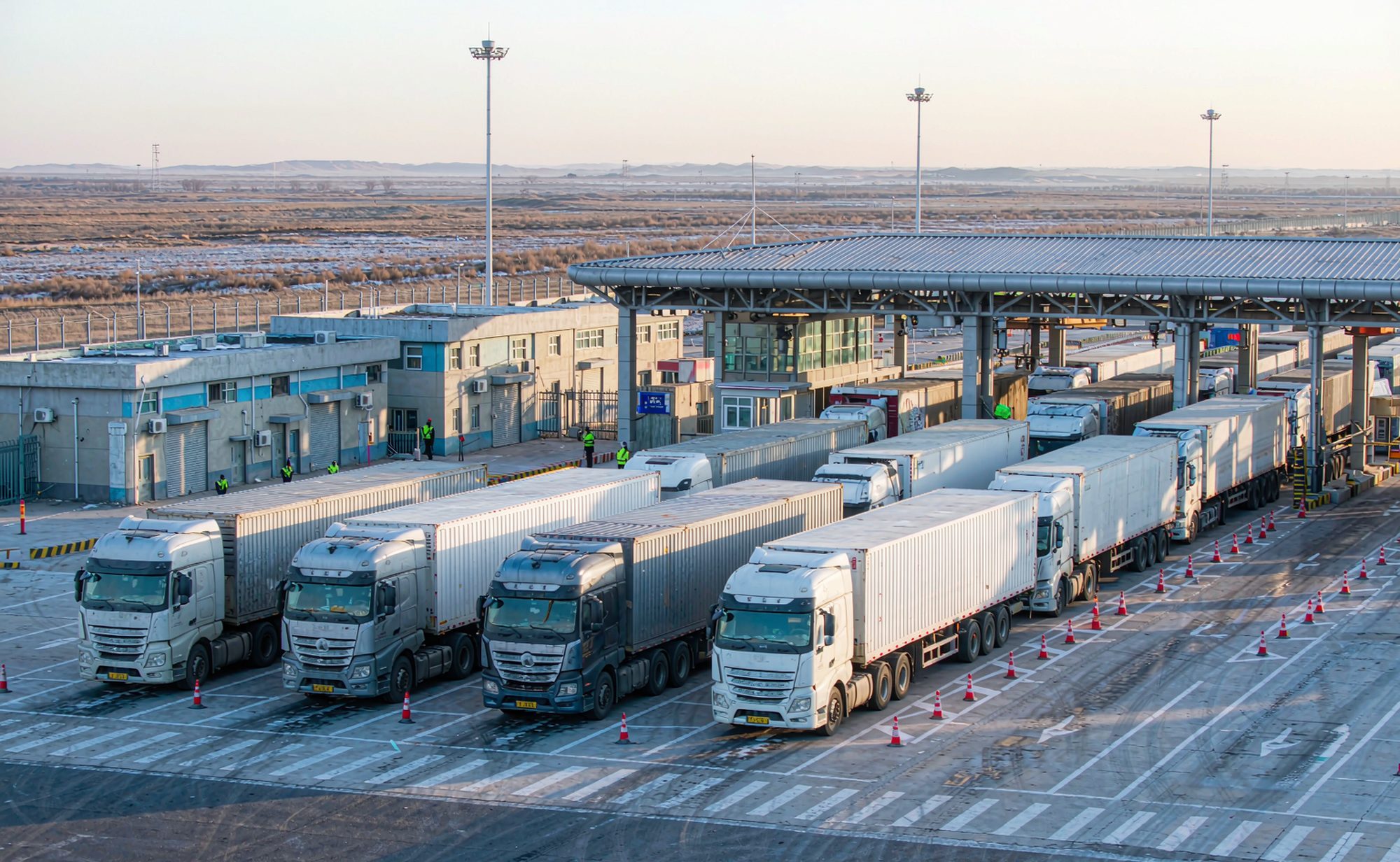
Start with the destination city. Northern Kyrgyzstan, Kazakhstan and Russia point to Torugart; Osh, the Fergana Valley and Tajikistan point to Irkeshtam. Then check the clock: Irkeshtam runs 7×24, so produce, urgent freight and trucks that arrive at night go south. Torugart runs 7 days by 14 hours, with night extensions in peak season, so it suits cargo that can reach the gate inside the daytime window. The two are 42 km apart but lead to different countries on the far side, so the choice is directional, not commercial.
Which exit port code goes on the declaration?
650901 for Irkeshtam, 650902 for Torugart. It goes in the exit port field and must match the road waybill, the license and any project registration exactly. Getting it wrong is not a typo correction: the entry has to be canceled and refiled at origin, which normally costs the day. Our dispatch notes carry the number, not only the name, for exactly this reason.
Why is customs 100 km or more from the actual border?
Both crossings were relocated downhill. Torugart moved from a 3,795 m pass to Tuopa in 1995 and now sits about 109 km from the frontier; Irkeshtam moved from the Simuhana pass to the edge of Wuqia town in 2011 and is 146 km from it. Clearance, warehousing and consolidation happen at the lower, workable site, and the loaded truck then drives the mountain section to the frontier. That leg is domestic transport, but it decides whether you cross today, and it is the first thing to be closed by winter weather.
Does the 7×24 versus 7×14 difference really affect my delivery?
It affects when the truck can be processed, not the road. Irkeshtam has accepted freight around the clock since 1 June 2025 and averages over 1,100 vehicles a day, so a late arrival is not automatically tomorrow's problem. Torugart works a 14-hour day and extends into the early hours during peak season and for railway construction cargo. If your cargo can only reach the port at night and the destination is in the north, confirm the extension in advance rather than assuming it.
What does the produce green lane require?
Three things: the exporter, the orchard and the packing house are registered with customs; the load is declared item by item, including mixed loads; and the packaging and cold chain meet the requirement, with an intact temperature record and customs seal. Meet all three and the shipment gets priority inspection and same-visit certification. Miss one and it drops into the general queue, which costs a full day. There is a second cost that is easy to miss: the trailer on the Kyrgyz side and the queue at that post.
What is needed for electric cars and used vehicles?
New vehicles are declared per unit against a model-specific export license, with the VIN consistent on the license, the entry and the waybill. Used vehicles need resale-for-export registration first, then a used-vehicle export license, one per batch; right-hand-drive units are not permitted to Central Asia or Russia, and modified or unlisted models cannot be declared. Since 1 January 2026 battery-electric passenger cars have been under export licensing, and they also travel with a battery test report and MSDS, isolated and with minimal fuel.
Can fuel oil and other dangerous goods use these crossings?
Fuel oil has a record: ten batches and 1,960 t cleared across both ports in the first eight months of 2026, with Torugart opening the northern route and Irkeshtam supplying the high-altitude construction sites in the south. Tanker specification, escort arrangements, packaging and carrier licensing still have to be settled case by case. Other hazard classes are declared under the international rules with a packing certificate, UN number, packing group and MSDS, and acceptance depends on the carrier and the current arrangements at the port. Confirm acceptance before booking the tanker.
What happens in winter when the pass closes?
Both frontier sections cross high mountain ground, and snow, ice or wind can trigger temporary restrictions or one-way working. There is no published calendar of closures, so the answer is a process rather than a date: keep at least a day of weather buffer on winter dispatches, prepare the file so it can move to the other crossing if needed, and for high-value deadline cargo prefer the all-hours crossing and hold a yard option near the port.
Can cargo from Guangdong or Zhejiang be cleared at origin and exit here?
Yes. Three routes: file at origin and release at the border against the release message; file at origin and move under a transit declaration closed out at the port; or use a TIR carnet, since Irkeshtam has been a national TIR pilot since May 2018. All three require the exit port on the entry to match reality, and the port name on the transport document to match it. For cargo outside Xinjiang, origin filing with border release is usually the cleanest, because the declaration and the domestic haul run in parallel instead of sequentially.
How long does it take from these crossings to Central Asia?
The domestic leg from Wuqia town to the frontier is 109 or 146 km of mountain road, normally under half a day. Beyond the border it is about 210 km to Osh, which drivers report covering in a little over a day round trip when the road is clear; about 620 km to Bishkek, typically two to three days; and a further two to four days to Tashkent or the Fergana Valley depending on clearance. The binding constraints are the inspection queue, the mountain road and the receiving queue on the Kyrgyz side. We quote ranges against current conditions, not fixed transit days.