
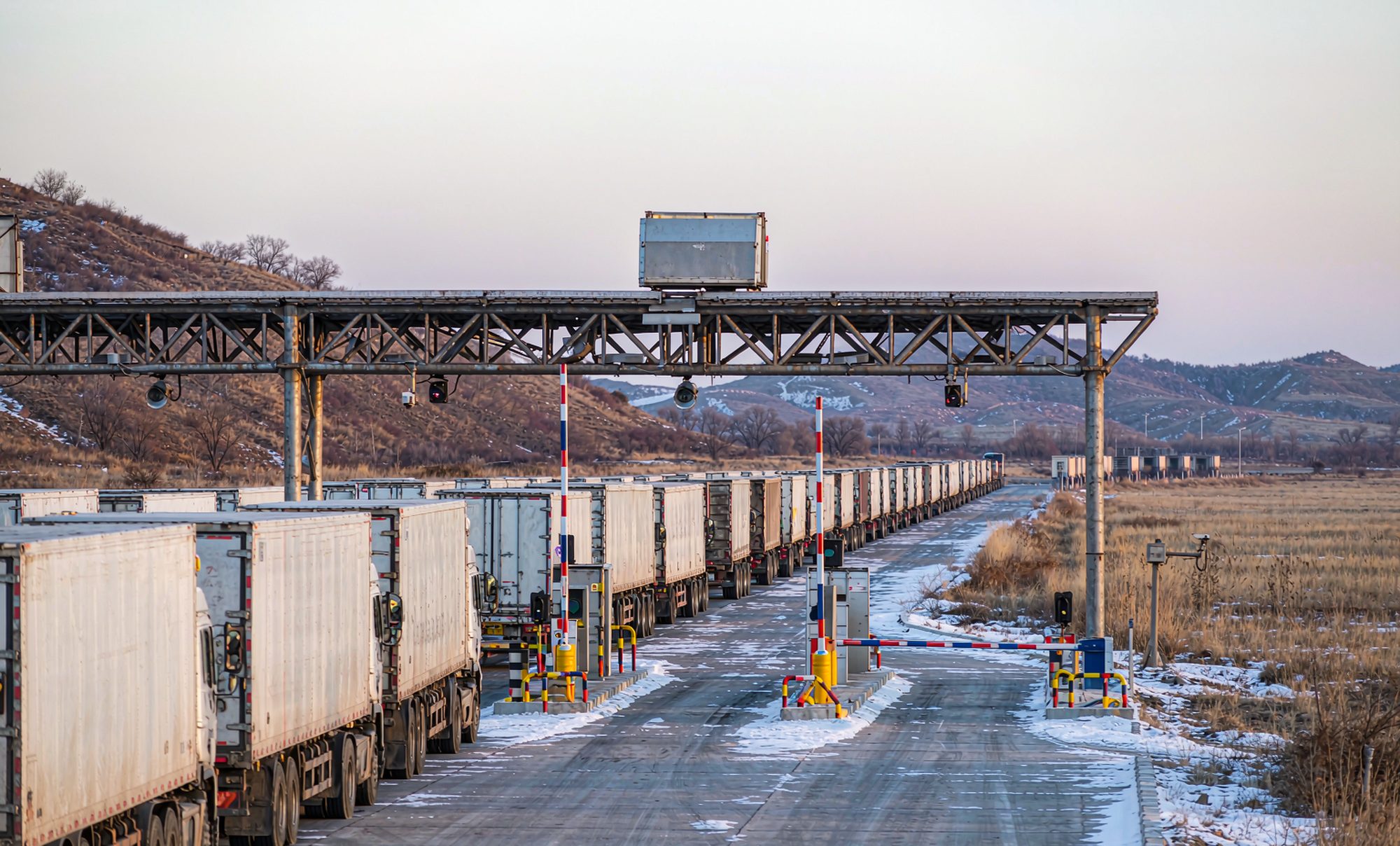
Two crossings on one border. A truck can clear the road port and be gone the same day; a container waits for its train slot and changes gauge at the rail yard before it leaves. Goodhope Freight moves cargo through both — licensing, declaration, gate release and loading — from your factory to the Kazakh side and beyond.
Khorgos sits on the Kazakh border in Ili, Xinjiang. A road port handles trucks at the sixth-generation gate; a rail port a few kilometres away handles trains over a 1,435 mm to 1,520 mm gauge break, 13.2 km from Altynkol station on the Kazakh side. The paperwork is nearly the same. The sequencing is not: a truck leaves when it is released and queued, a container leaves when the train is formed.
Under about 20 vehicles, mixed LCL, fresh produce or anything time-critical goes by road. Full containers, bulk cargo and anything bound for Moscow, Minsk, Małaszewicze or Duisburg goes by rail. We quote both crossings against your deadline before you commit, because the cheaper option is not always the one that arrives on time.
Figures: Horgos Customs, China Railway Urumqi Group Khorgos Station, and People's Daily, Xinhua and China Youth Daily reporting for 2025 and January to October 2026. Train slots, transfer windows and gate rhythm change with the season; we confirm against the current carrier and border notice before booking.
At Khorgos the border crossing, the gauge transfer, the bonded status, the parcel sorting and the showroom sit in five different places under different supervision. Know which leg your cargo is on before you file anything.
Sixth-generation gate · faces Zharkent, KZ
Export steps were cut from 12 to 4. A QR code generated from the single window is scanned at the last checkpoint, so the driver never leaves the cab.
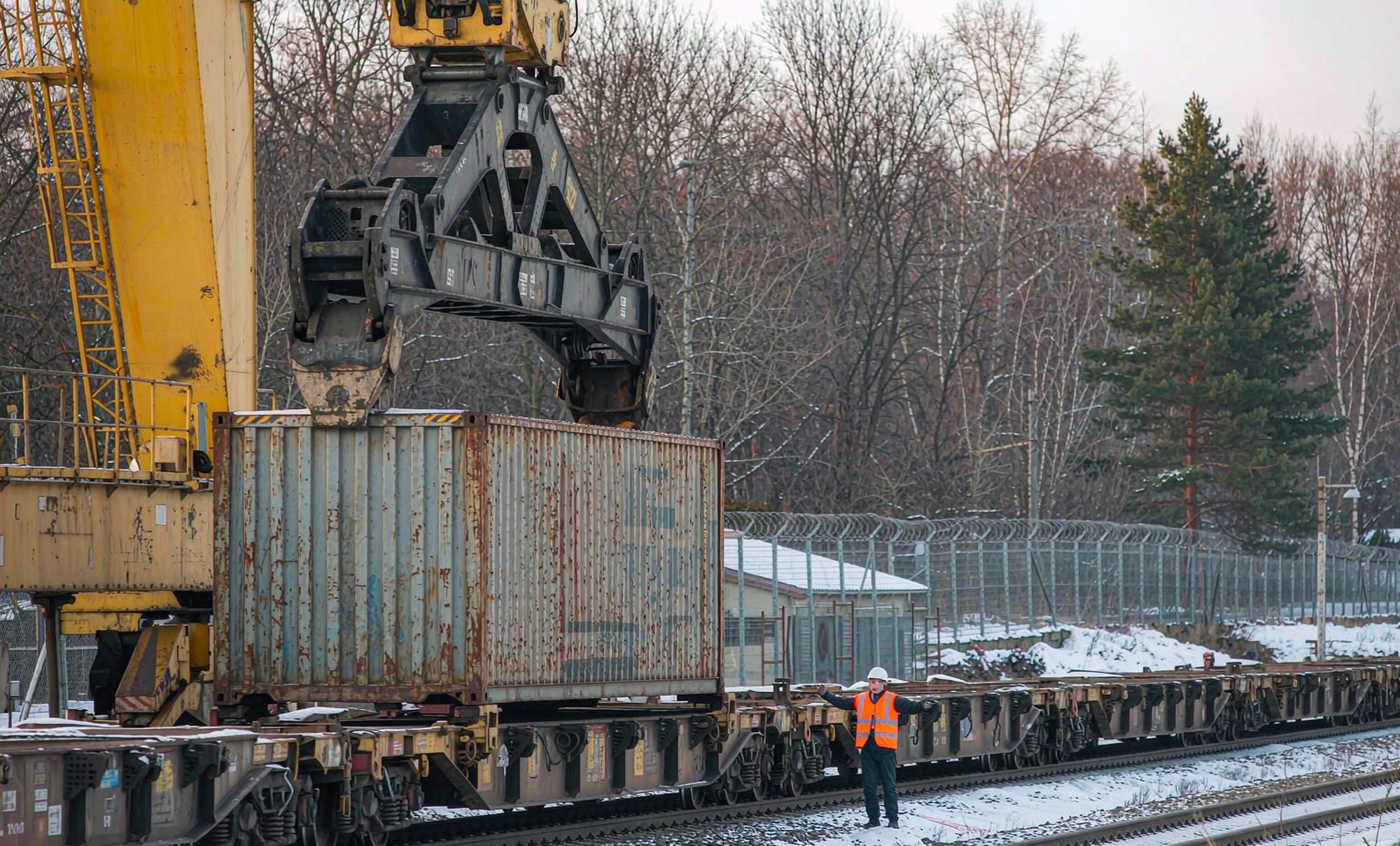
Gauge transfer yard · 13.2 km to Altynkol
Local export cargo clears the yard in about one hour, down from six. A returning train is transferred in roughly two hours on average.
Bonded zone + supporting area + development zone + FTZ
Loading on the spur instead of outside the fence takes 5 to 7 days off the route. 9,185 electric cars left in bonded status in 2025.
9610 · 9710 · 9810 · 1210
More than 67 million parcels and over RMB 2 billion have gone out since the channel opened, cleared on arrival, inspection and release in one pass.
The China-Kazakhstan Horgos International Border Cooperation Center is a cross-border zone with more than 2,000 merchants, run on a first-line-open, second-line-controlled basis: people and goods move inside the zone, and anything leaving it into China is managed as a second line. For exporters it works as a showroom and a trading floor — vehicles and consumer goods can be displayed and sold there before they cross, which separates the selling from the declaration instead of forcing both into the same week.
At Khorgos the difficulty is rarely the port itself, it is the commodity: cars live or die on licensing, produce on the green channel, containers on the train slot, parcels on three-way data matching. One template does not fit all eight.
One entry per vehicle, with the declared exit port matching the actual crossing. Export licence per model, VIN and manifest data checked unit by unit before the truck reaches the gate.
Register the vehicle for export first so the file is locked, then apply for the used-vehicle licence, one per batch. Right-hand-drive units cannot go to Central Asia or Russia, and units under 180 days old need a manufacturer letter.
Slot and container type are locked against the ten-day train plan before anything moves. Rail quick transit lets you declare, inspect and release at origin, then load straight after the gauge transfer at the border.
Several shippers on one truck means several entries that must each match at the gate. One wrong mark and the whole truck waits, so tally and label checks happen before loading, not at the checkpoint.
Fruit and vegetables run the agri green channel with a dedicated window and priority inspection. Mixed loads must be declared line by line, and the reefer temperature log and customs seal have to be intact.
9610, 9710, 9810 and 1210 are all accepted; pick the mode by business model. Release depends on order, payment and logistics data agreeing with the manifest. Returns run through the export returns channel.
Declaration filed and released inland, then cleared at the border on the release message, 24/7, with no transit entry to close. Classic transit still works: seal applied at origin, transit entry closed out by Horgos Customs.
Once closed out we hand over the declaration data, the rail or road waybill and the exit record your finance team needs. No import-export rights? We can act through a licensed shipper, but that decides who owns the VAT refund.
The two crossings split at step three: pick the corridor, fix the licence, lock the slot. The supervision logic behind the remaining five steps is the same, but the yard and the clock are not.
Road or rail, decided on volume, deadline, destination distance and value, then worked backwards to where you declare.
Export licence, enterprise registration and test reports by commodity. Vehicles and used cars are checked separately.
Road: vehicle and queue number. Rail: train slot and container type. Oversize cargo confirms the loading plan first.
HS code, declaration elements, value, weight and marks checked line by line. Fix it before filing, not after release.
Inland or at the border. Rail quick transit releases in one pass; classic transit is sealed and closed out at the border.
Road: scan at the consolidated yard. Rail: X-ray and manual check at the yard, timed around the transfer window.
Rail: lifted across the gauge break, then formed into a train. Road: released at the gate and driven across.
Collect the declaration data, waybill and exit record, then pass the VAT invoice and settlement file to finance.
Inspection at Khorgos is mostly a matching exercise. Port of exit that does not match, VIN that does not match, weight that does not match, and the truck goes back. A pre-file review costs an hour; an argument at the gate costs a day.
The declaration does not have to be filed where the cargo crosses. The difference between these four is who declares, who inspects and who closes the file.
Released where the cargo was declared, then cleared at the border on the release message with no per-shipment transit entry. Export steps went from 12 to 4 under this reform; it is the default for cargo sourced outside Xinjiang.
Declare, inspect and release in one place at origin, skip the transit entry, and load straight after the transfer at the border. Customs quotes a 20 percent gain in door-to-door speed against the classic route.
Released inland, sealed, then moved to Khorgos where Horgos Customs closes the transit entry. Still the right choice for inland dry ports and cargo that arrives in batches. Watch the closure deadline.
For cargo already at Khorgos: late additions, bonded goods switching to general trade, and units sold in the cooperation center that now need to leave. Slower to arrange, but it needs no upstream file.
Vehicles are watched for licences and VINs, produce for registration and cold chain, containers for slots and box type. Get the focus wrong and the effort is wasted.
One entry per unit, VIN checked unit by unit. Battery-electric passenger cars also need an export licence, plus UN38.3 and MSDS, and must be powered down with fuel drained.
Export registration first, then the licence, one per batch. Right-hand-drive units are barred from Central Asia and Russia; modified or unlisted models cannot be declared at all.
Enterprise, orchard and packing house registered first. Mixed loads declared line by line. The green channel only applies when the reefer log and customs seal are intact.
Declare actual dimensions, weight and pieces, never the nominal rating. Rail needs a securing and loading plan cleared against the loading gauge; road needs the right trailer and an oversize permit.
Many SKUs, low value, high line count. The risk is classification drift: the same product declared under two codes across shipments creates refund and audit problems later.
Modules are a packing-strength question; storage batteries are a hazard classification question. Rail carries lithium more cautiously than road, so confirm acceptance before choosing the corridor.
Manifest filing and three-way data matching are hard gates. Returns go back through the export returns channel, so keep the original manifest traceable to the return.
Bonded verification lists must reconcile with the declaration. Loading inside the zone avoids a second lift, but the in-and-out timing has to line up with the spur schedule.
1. Battery-electric passenger cars. Since 1 January 2026, battery-electric passenger cars (HS 8703801090) require an export licence. Cargo without one cannot be declared.
2. Used vehicles. One licence per batch. Right-hand-drive units cannot be exported to Central Asia or Russia, and vehicles registered less than 180 days ago need a manufacturer after-sales letter.
3. Dangerous goods. Declare under the international dangerous goods rules. Rail acceptance for lithium cells is stricter than road and some train services refuse it outright; confirm with the carrier before you book, not after.
Each case is written the same way: where it stuck, what we did, how it ended. Volumes and dates are consolidated; no customer is identifiable.
Scenes are drawn from common situations at the border; volumes, shipment counts and dates are consolidated and do not describe any single customer file.
Answered the way we would answer on the phone, with the numbers we can defend.
Under about 20 vehicles, mixed LCL, produce or anything with a delivery date goes by road: one entry per truck, release, queue, gate, and Almaty is same day or next day. Full containers, bulk, and cargo bound for Moscow, Minsk, Małaszewicze or Duisburg go by rail: the slot is locked against a ten-day plan and the gauge transfer adds roughly two hours per train. Choose on total transit time, not on rate alone.
Yes, three ways. Direct release: declare and release inland, cross on the release message, 24/7. Rail quick transit: declare, inspect and release at origin in one pass, no transit entry, load after the transfer. Classic transit: release, seal, move to Khorgos, and Horgos Customs closes the entry. All three require the declared port of exit to match the crossing actually used.
Ten-day plans drive it. Lock the slot and container type 7 to 10 days before departure and have the documents three days before loading; vehicles, dangerous goods and oversize cargo need three to five days more. Once the slot is fixed, moving to another border means re-forming the train, which costs more than booking early.
Yes, if the release comes first. Cargo clearance at the road port runs 24/7, export steps were cut from 12 to 4, and vehicles are scanned at the consolidated yard without the driver leaving the cab. Produce goes through the agri green channel with a dedicated window: picked in the morning, cleared in the afternoon, on shelves the next day. If the entry is not released, the truck waits regardless.
One export licence per model under general trade, with one entry per unit and the declared exit port matching the crossing. Used vehicles need export registration first, then a used-vehicle licence, one per batch; right-hand-drive units cannot go to Central Asia or Russia and units under 180 days need a manufacturer letter. Since 1 January 2026 battery-electric passenger cars (8703801090) also need a licence, and EVs travel with UN38.3 and MSDS.
Three things: the exporter, orchard and packing house registered with customs; a line-by-line declaration, so a mixed load of apples and pears is declared by actual description, package count and weight; and compliant packaging and cold chain, with the reefer temperature log and the customs seal intact. Meet all three and you get priority inspection and immediate release; miss one and you drop to the standard lane, a day behind.
Hazardous cargo declares under the international rules with a packaging certificate, UN number, packing group and MSDS; lithium also needs UN38.3. Rail acceptance for lithium is stricter than road and some services refuse it, so confirm with the carrier before booking. Road moves under dangerous goods transport rules with qualified vehicles. The reliable order is: confirm acceptance, then choose the corridor.
Inspection is routine. At the road port it happens in the consolidated yard, mainly by scanner with manual devanning as backup, and vehicles are checked unit by unit against VINs. At the rail port it happens in the yard inspection area and has to fit around the transfer window so the train is not held. Once cleared, the load is released; labour, devanning and shifting are billed at cost by the yard. Keep VIN lists, specifications and mark photos with the file and it usually clears in one pass.
The closed-out declaration data, the release and exit record, the rail or road waybill, the VAT invoice and the settlement evidence. Cargo leaving by land moves on a rail waybill or an international road consignment note, not a bill of lading. Shipper, consignor and invoice issuer have to be the same entity, and the description and HS code have to agree, or the refund file comes back for explanation.
Rail joins the Kazakh network at Altynkol: west to Moscow, Minsk, Małaszewicze and Duisburg, south to Almaty and Tashkent, then onward through Uzbekistan towards Afghanistan. From Xi'an, Chengdu or Chongqing, Almaty runs about 10 to 15 days and Tashkent about 12 to 18. By road, Almaty is same day or next day after the gate and Tashkent is typically 5 to 7 days. We quote ranges against the current train plan, not fixed promises.
Anyone can send a rate. The difference is deciding the corridor, the place of declaration, who checks the licence, and who walks the yard when a truck is held.
We put road and rail side by side against your deadline and cost the time, instead of quoting the cheapest number and letting the shipment slip.
Classification, declaration elements, licence coverage and the VIN match are checked before filing, so amendments and held trucks are prevented rather than explained.
Your cargo can stay where it was made. We combine inland declaration with border clearance so nothing is trucked to Xinjiang just to be declared there.
Licences, export registration, VIN matching, power-down and loading plans run as a separate track from general cargo, because they fail in different ways.
Picking, loading, declaration and queue numbers are sequenced so priority inspection lands on the loads that actually have a shelf date.
Declaration, trucking, border charges, inspection and transfer are listed separately and settled against the actual invoices, never bundled into one opaque figure.
Send the commodity, dimensions and weight, destination country, target ship date and where the goods are made. You get back the corridor we recommend, where to declare, which licences and documents apply, and a schedule counted backwards from the train or the queue.
Request a Khorgos quote