Questions
Ten questions importers ask about Karasu
Answered the way we would answer them on a call, including the parts that limit what we can promise.
What makes Karasu different from other Chinese land borders?
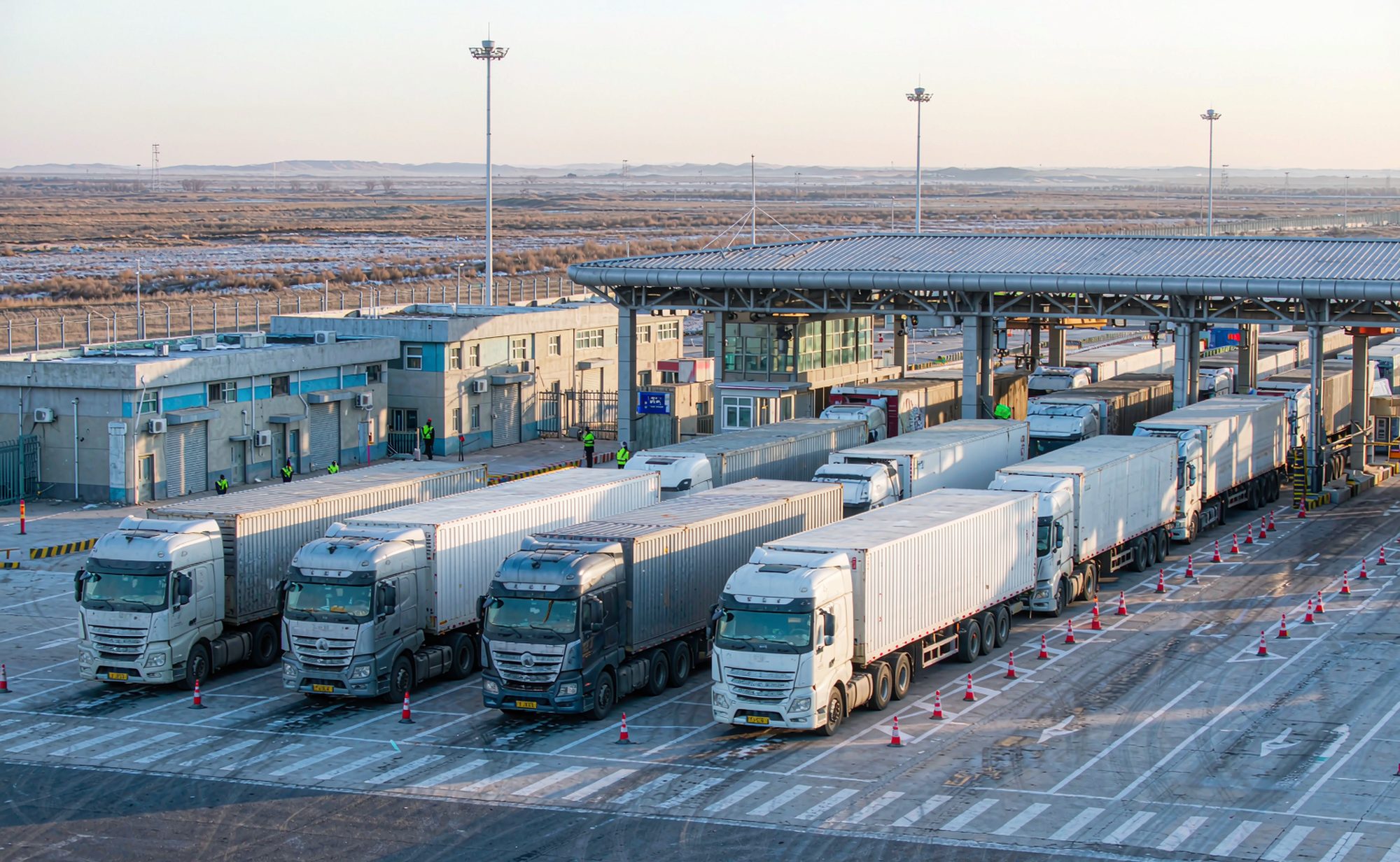
The declaration moved away from the border. Under the road-port-plus-local-direct-release model introduced in Kashgar in 2023, cargo is declared, inspected, sealed, X-ray scanned and bound to a smart lock in Kashgar, then exits without a second stop. Clearance fell from three to five days to six to eight hours. The work is in Kashgar, not at the gate.
Is the declaration filed in Kashgar or at the port?
Normally in Kashgar, under origin clearance. That way inspection, sealing and scanning happen once and the truck exits directly. Port filing or a transit entry closed at the border is possible, but it adds a step at the gate, and a gale closure or a traffic peak then costs a night on the plateau. It is used for files that genuinely need on-site handling.
Can cargo move in winter?
Yes, on a schedule. From 1 December to 20 April the port operates booked openings, twice a month for three to four days each; normal opening runs from 20 April to 30 November. Confirm the window for your month before fixing a production date, and count back from the window rather than from a transit estimate.
Does the altitude affect the cargo?
Mainly through temperature swing and road vibration. Summer days vary by more than 20 degrees, winter drops below minus 30, and the surface is rough. Goods sensitive to cold, heat or shock need packaging that accounts for it, and liquids need expansion allowance. People matter too: the inspection hall sits at 3,883 m with about half the oxygen of sea level, so drivers and escorts are scheduled for it.
How are vehicles exported — driven across or carried?
Both. Self-drive handover puts a registered driver in the car to a delivery point across the border, then the driver returns; it suits mid-size orders with a fixed delivery point. Car carriers move several units at once and suit larger or longer-distance orders. The port runs a dedicated vehicle lane with booked clearance and batch release, and the split between the two methods depends on lane capacity and the driver pool in that period.
How long does one vehicle take from filing to exit?
Processing per vehicle is down from nine minutes to about four, and the dedicated lane has handled 200 units in a day. That is the inspection step only. Add consolidation in Kashgar, filing, sealing and 225 km of mountain road. Under origin clearance, budget six to eight hours from Kashgar to exit, plus a margin for wind or traffic peaks.
How long does it take to reach Dushanbe?
Two to four days to reach Kulma from China is typical, after which the route runs about 850 km to Dushanbe with a high share of mountain road. Phase two of the China–Tajikistan highway is expected to cut driving time from Kulma toward Dushanbe from five hours to about 1.5, which will change the estimate. For contracting, leave room for Tajik clearance and mountain weather.
Who handles Tajik import clearance?
The consignee, through a local broker. A Chinese export release only means the cargo left China lawfully. The consignee needs an import licence and must supply its own declaration data. We commit to China-side transit time; the Tajik clearance timeline has to come from the buyer.
Can dangerous goods move through Karasu?
That depends on the class, and we answer after a determination, not before. Dangerous goods face limits from carrier licensing, vehicle specification, high-altitude road sections and what the border post is equipped to handle. Where a shipment can move, we run it under dangerous goods procedures; where it cannot, we say so and offer an alternative route.
If customs inspects the cargo, can it still exit the same day?
It depends on where and when. Under origin clearance the inspection happens in Kashgar, so it does not consume border time at all. If an examination is ordered at the gate instead, add 225 km back down the mountain and the same day is gone. Treat inspection probability as a planning variable rather than an accident.