Since 2012 NVOCC GD20230925153335 24h Response
+86 13392162503 sales8015@goodhopefreight.com Login
Goodhope Freight
Export customs clearance · Rail and road · Mongolia and onward

Erenhot Port Export Customs Clearance

Erenhot is where China's rail network changes gauge and its trucks change plates. Every export here passes a physical handover — containers lifted from standard gauge to broad gauge at Zamiin-Uud, cargo lifted from Chinese trucks onto Mongolian trucks at the border. We file the China-side declaration, hold the handover slot and keep the shipment moving across three gateways with three different clocks.

Erenhot Railway Port Erenhot Road Port Zamiin-Uud transloading Middle corridor Perishable green lane Used vehicles
22.2 MtCargo through the port in 2025
3,986China–Europe trains in 2025
24 hoursRail fast-track, arrival to exit
Ask about an Erenhot routing See the eight-step process
22.24 MtTotal port cargo in 2025, a record year
1.84 MtRail port imports and exports, up 4.7% year on year
3,986Middle-corridor trains, 454,100 TEU
85%+Share of rail exports on fast-track clearance
Port overview

China's largest land gateway to Mongolia — and the only rail crossing on the middle corridor

In 2025 Erenhot handled 22.24 million metric tons of cargo, a record, of which 1.84 million tons moved through the rail port. It is the biggest land crossing between China and Mongolia and the single rail entry and exit point on the middle corridor of the China–Europe network. What makes it different from a seaport is not the paperwork. It is the handover: standard gauge is 1,435 mm, Mongolian and Russian gauge is 1,520 mm, so every container is lifted once on the way out, and every road shipment is lifted onto a Mongolian truck before it can leave.

  • 1
    Rail and road run on two clocksRail follows the train's fixed departure and the wagon plan; road follows port opening hours and the availability of Mongolian trucks. One shipment, two timelines — mixing them is where schedules break.
  • 2
    The handover is the real variableContainers are transloaded at Zamiin-Uud on the way out. Road cargo is lifted from Chinese to Mongolian plates at the border. Neither step appears on a customs document, and both decide the day of departure.
  • 3
    Opening hours move with the seasonThe road port runs 08:00–18:00, extended to 21:00 from May to September. The rail port works 365 days a year and customs accepts transport declarations around the clock.
  • 4
    Perishables and used vehicles have their own lanesFresh produce is inspected before loading and sealed at the yard, so it can leave the same day. Used vehicles are released unit by unit against the VIN, not as one batch.
Who clears what. Our scope is the China export declaration, the handover and the exit record. Mongolian import clearance, duty and VAT are handled by the consignee or its local broker. An export release at Erenhot does not mean the cargo has been cleared in Mongolia — we quote China-side transit time, not the buyer's clearance time.
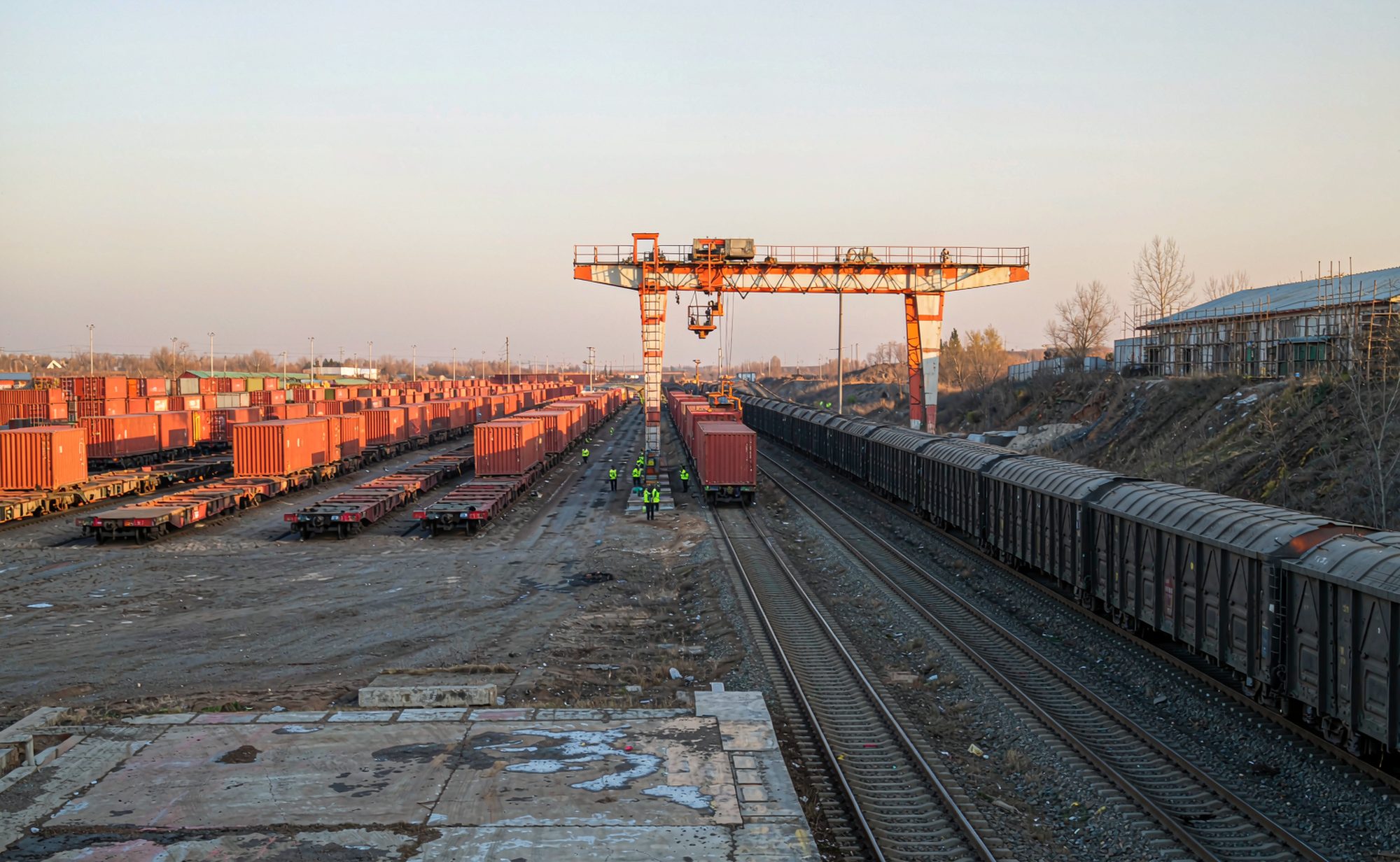
Gantry crane moving a container between broad-gauge and standard-gauge rail tracks at a border yard
At the border Declare · inspect · transload · exit 1,435 mm to 1,520 mm · Chinese truck to Mongolian truck

Figures come from the Erenhot municipal government, Erenhot Customs (under Hohhot Customs District) and Xinhua reporting for 2025 and part of 2026. Wagon plans, opening hours and handover slots change with operational notices from the railway station, the border inspection authorities and the carrier.

Gateways

Three national-class gateways, and what each one is good for

Erenhot is not one crossing. A rail port, a road port and a small international airport sit inside the same border town, and the right choice depends on volume and commodity long before it depends on price.

Erenhot Customs · Rail

Railway Port

Erenhot Railway Port · open since 1956

Position
North of the city, across the frontier from Zamiin-Uud station
Volume
1.84 million metric tons in 2025, up 4.7%
Capacity
30 standard and broad-gauge reception tracks; 17 Mt annual cargo, 22 Mt transloading
Hours
365 days; customs accepts transport declarations 24 hours a day
Best for: block trains, full containers, bulk, heavy and out-of-gauge pieces, Mongolia and Russia

More than 85% of rail exports clear on fast-track, with arrival-to-exit inside 24 hours.

Erenhot Customs · Road

Road Port

Erenhot Road Port · open since 1992

Layout
Passenger and freight separated; joint inspection and cargo halls on one site
Lanes
Expanded five-in, three-out channels; a second road corridor is complete
Hours
08:00–18:00; freight lanes extended to 21:00 from May to September
Handover
Plate recognition is not mutual, so cargo is transloaded to Mongolian trucks at the border
Best for: fresh produce, building materials, consumer goods, used vehicles, groupage

More than 100,000 vehicles crossed in the first five months of 2026, 15 days ahead of the previous year.

Erenhot Customs · Air

Sayinsu Airport

Sayinsu International Airport · 4C

Status
International air gateway accepted in 2024, opened July 2025
Routes
Ulaanbaatar service operating; belly capacity only
Cargo
Samples, urgent spares and accompanied baggage
Booking
Nominated in advance against the flight, not on standby
Best for: urgent Ulaanbaatar shipments and sample restocks

Volumes are a fraction of rail and road. Treat it as a backup, not a main lane.

Mongolian Customs · Zamiin-Uud

Zamiin-Uud

Zamiin-Uud · the Mongolian side

Position
About 9 km from Erenhot city, on the Mongolian frontier
Function
Outbound containers are transloaded here from standard to broad gauge
Coordination
The two stations run as one operating unit, with daily and monthly traffic exchanges
Boundary
Import clearance on this side belongs to the consignee and its local broker
Best for: Ulaanbaatar, the rest of Mongolia, and transit onward to Russia

Transloading capacity and wagon acceptance on this side set the second half of your transit time.

ItemRail exportRoad export
How it is organisedFixed train departure and wagon plan; container and slot must be secured firstPort opening hours plus a confirmed Mongolian truck; one plan per vehicle
Where the declaration sitsFiled at origin under fast-track, or cleared at the border under a transit declarationFiled at the port or in advance; release must be in hand before transloading
Where the handover happensZamiin-Uud on the way out; Erenhot on the way backAt the Erenhot border yard, from Chinese trailer to Mongolian trailer
What actually costs timeTrain formation, border exchange and acceptance on the Mongolian sideTransloading queue, opening hours and when the Mongolian truck arrives
Typical cargoFull containers, bulk, machinery, out-of-gauge piecesFresh produce, building materials, consumer goods, vehicles, groupage
Minimum shipmentA full container or a block train; small lots do not amortise the costOne truck, flexible but higher cost per kilo

Based on current operating practice at Erenhot and published facilitation measures. Confirm wagon plans, opening hours and handover slots against the notices in force at the time of booking.

What we handle

Eight service lines, split by gateway and commodity

A block train, a reefer truck of leafy greens and a convoy of used dump trucks have almost nothing in common beyond the border they cross. Each line below runs its own paperwork and its own clock.

SERVICE 01

Rail full-container export

Filed against the booked slot and container type, with box and seal numbers matched to the train's formation. Fast-track removes the transit declaration, so inspection happens at origin and the train passes the border without stopping.

Block trainFast-trackNo-stop release
SERVICE 02

Rail breakbulk and wagon load

Steel, machinery and chemical feedstock on open, box or flat wagons, declared against the wagon plan. Oversize pieces need dimensions, weight and lifting points approved before the station will load them.

Wagon planFlat and openOut-of-gauge
SERVICE 03

Road full-truck export

Cargo is transloaded onto a Mongolian trailer at the border, which means the declaration and release must be complete before the lift. One shipment, one truck, with packing list, plate and seal number matching.

Border transloadMongolian truckOne truck, one entry
SERVICE 04

Road groupage and part loads

Several shippers, one truck, declared entry by entry. Loading order decides inspection cost: cargo likely to be examined goes nearest the doors, so one hold does not mean unloading the whole vehicle.

GroupageSeparate entriesLoad order
SERVICE 05

Perishable green lane

Booked in advance, inspected on priority, certificates issued on the spot. Produce is examined before loading and sealed at the yard, then runs straight through the lane — same-day clearance, with spoilage in the low single digits.

Green laneSame-day exitYard sealing
SERVICE 06

Used vehicles and equipment

Released unit by unit against the VIN: advance filing, booked inspection, review and release on arrival. Export licences, inspection reports and reconditioning records travel with each unit, so nothing is chased at the border.

VIN-level releaseExport licenceInspection record
SERVICE 07

Dangerous goods and chemicals

Hazard determination first, then the mode: road needs a carrier licensed for the class and a border post equipped to handle it; rail follows dangerous-goods wagon conditions. Packaging, marking and labelling are checked before the truck is booked.

Hazard determinationPackaging marksCarrier licence
SERVICE 08

Export refund documents and agency export

After exit we collect the declaration copy for VAT refund and the exit record. The consignee on the rail waybill, the trading entity on the declaration and the VAT invoice must line up, or the refund file comes back for explanation.

Refund copyWaybill checkAgency export
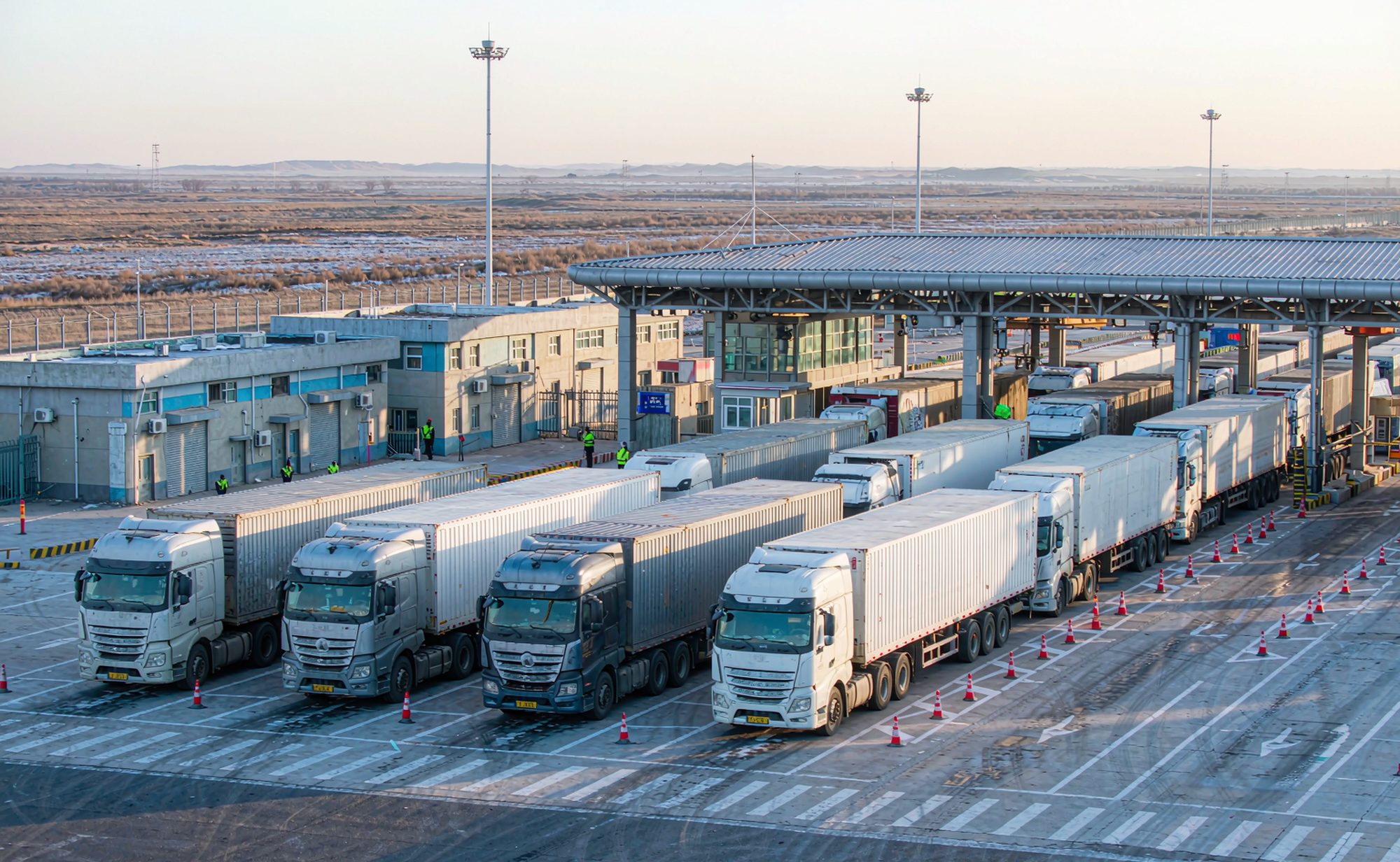
Line of Chinese trucks and refrigerated trailers queued in marked lanes at a border inspection yard
On the road side, the bottleneck is the transloading bay, not the customs window Chinese plates are not recognised in Mongolia, so a Chinese truck cannot simply drive the cargo to the consignee. Everything is lifted onto a Mongolian trailer at the border. That queue appears on no customs document, yet it decides whether the truck leaves today. Plan the release time and the bay slot together, not one after the other.
Process

Eight steps, from mode choice to exit record

The steps are ordinary. What differs is the anchor: rail counts back from the train's departure, road counts back from opening hours and the transloading queue.

1

Choose the gateway

Rail or road first. Rail depends on the train timetable and wagon plan; road on opening hours and a confirmed Mongolian truck. Everything else follows.

2

Classify and confirm data

HS code and declared elements. Vehicles need VIN, model and use; machinery needs condition, power and function. Licence checks come before loading, not after.

3

Secure the slot

Book the train slot and container, or the Chinese truck plus the Mongolian receiving truck. A receiving time written as "expected" is not a plan.

4

Draft and pre-check

Quantity, value, terms and currency reviewed in-house before filing. Anything that can be corrected is corrected before the border, where a correction costs a day.

5

File the declaration

Fast-track or origin filing for rail, advance or port filing for road. By law the export entry is due at least 24 hours before loading, once cargo reaches the supervised area.

6

Inspection and release

X-ray scanning first. If an officer is assigned, the container or truck is opened, counted and photographed. Produce is examined before loading to avoid a second handling.

7

Transload and exit

Containers change gauge at Zamiin-Uud; road cargo changes truck at Erenhot. The shipment has not left until the receiving side has taken it.

8

Close out and archive

Exit record, declaration copy for refund and the waybill, checked against the invoice entity and filed for the finance team.

Timing rules that matter. China's Customs Law requires the export declaration once goods reach the supervised area and at least 24 hours before loading. On rail, fast-track links customs and railway data directly, removing the transit declaration; the train can go from arrival to exit inside 24 hours, and border inspection takes roughly 20 minutes per train. On road, the legal deadline is the easy part — the binding constraint is the transloading queue and the gate. Freight lanes run to 21:00 from May to September and revert to 18:00 afterwards, so truck bookings are counted back from the hours in force that week.
Documents

What the file needs before the truck or train is booked

There is no carrier cut-off to hide behind at a land border. On rail, the waybill and train formation are the manifest; on road, release has to be in hand before the lift.

Base documents, every shipment

  • ✓
    Export declarationFiled through the single window, matching the goods and the transport document
  • ✓
    Contract or purchase orderClear terms, currency and delivery condition
  • ✓
    Commercial invoice and packing listDescription, quantity, packages, gross and net weight, volume and marks consistent across all three
  • ✓
    Broker authorisationElectronic mandate accepted, valid for the filing period
  • ✓
    Transport documentRail waybill and train formation, or road manifest with plate and seal numbers
  • ✓
    Refund and payment noteWhere VAT refund is claimed, the trading entity and invoice issuer must match

Additional documents by commodity

  • ✓
    LicencesUsed-vehicle export licence, export licence, dual-use item licence where applicable
  • ✓
    Certificate of originForm CO, Form E and others, chosen against the destination tariff
  • ✓
    Phytosanitary and health certificatesRegistered orchard and packing house details for fresh produce
  • ✓
    Dangerous goods fileMSDS, packaging certificate, UN number, packing group and carrier licence
  • ✓
    Vehicle fileVIN list, inspection report, reconditioning record and tool list per unit
  • ✓
    Out-of-gauge fileDimensions, weight, centre of gravity and lifting points, plus the loading plan
Where land-border files usually fail. On rail, a container or wagon number that does not match the declaration stops the exchange at the border, and the train does not wait. On road, release that arrives after the cargo has been lifted onto the Mongolian trailer means waiting for the next day. We pre-check the file and book the handover slot at the same time, rather than treating one as a consequence of the other.
Clearance modes

Four modes, matched to the gateway rather than the price list

Fast-track, advance filing, a transit declaration or a TIR carnet each change who inspects where — and each has a case where it is the wrong choice.

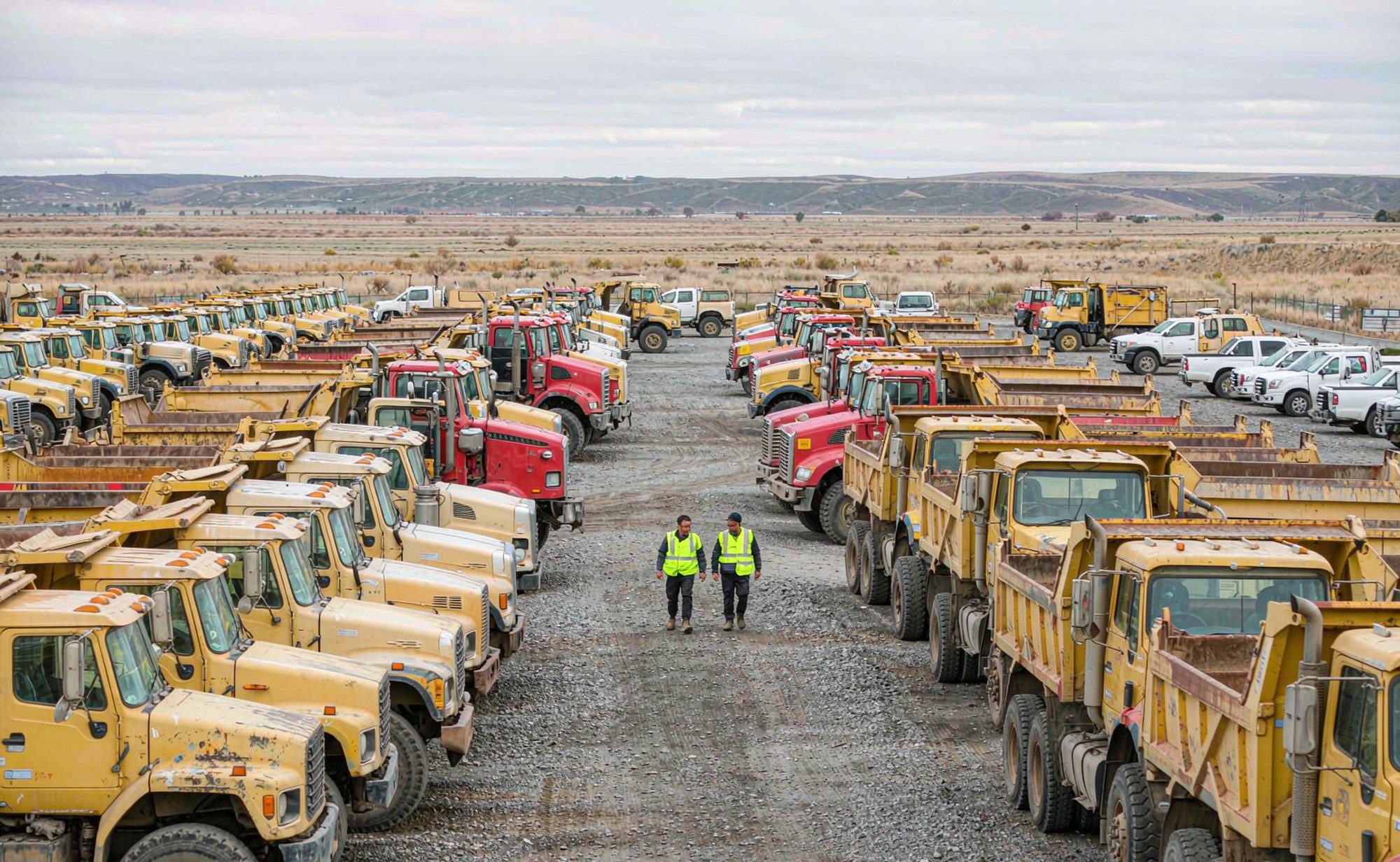
Rows of used dump trucks, tractor units and pickups staged in a border export yard
Used vehicles staged for export: release is granted per VIN, so a convoy arriving in batches is declared in batches.

Rail fast-track

Customs and railway data are linked, so the transit declaration disappears and the border post only reconciles the manifest. More than 85% of Erenhot rail exports run this way. Not for: cargo that has to be split, re-stowed or re-manifested at the border, or a consignee change after loading.

Advance filing

Filed up to three days before the goods reach the supervised area, released on arrival. Standard for produce, used vehicles and containers chasing a fixed train. Not for: shipments without a confirmed wagon or truck — if the goods do not arrive within three days, the entry is cancelled.

Transit declaration

Cleared at origin, closed out at the border, typically used where inspection has to happen inland or the cargo leaves a bonded area. Not for: a train with a fixed departure — the extra closure step at the border costs a day if anything is queried.

TIR road transport

One carnet covers the journey and transit countries generally do not open the truck, which suits door-to-door moves into Mongolia and Russia. The first TIR consignment from Erenhot to Ulaanbaatar ran in January 2026. Not for: low-value loads or a consignee who cannot clear the goods — TIR eases transit, it does not replace import clearance.

By commodity

The cargo mix is narrow, so the inspection focus is narrow too

Building materials and consumer goods from China hold more than 70% of the Mongolian market for their categories; fresh produce holds around 80%. Where volume concentrates, scrutiny follows.

Building materials

Tiles, panels, doors and steel structures. Dimensions and package weights decide the rate; timber and wood packaging must meet plant quarantine rules; long pieces are declared at actual size.

Consumer goods

Plastics, household items and detergents. Describe the product and its use specifically; anything with a chemical content needs a composition sheet, and hazard screening before it is booked as general cargo.

Fresh produce

Orchards and packing houses must be on the registered list, with a phytosanitary certificate travelling with the load. Inspected before loading, sealed at the yard, out the same day.

Used vehicles

Dump trucks, tractor units and pickups dominate. Declared per VIN with the export licence and inspection report; modifications must be described as they are, not as the original specification.

Machinery

Model, power, function and condition need a consistent description. Spare parts and accessories are listed separately rather than bundled into the main unit.

Dangerous goods

Determine the class first, then the mode. Road needs a licensed carrier and an equipped border post; rail follows dangerous-goods wagon conditions. Packaging and marks are not negotiable.

Textiles and footwear

Fibre content, weight per square metre and brand are the usual arguments. Brand authorisation is confirmed early, not produced at the inspection bay.

Out-of-gauge pieces

Wind components, construction equipment and complete lines. Dimensions, weight and lifting points come first; packing is designed for a load that will be lifted at least once.

Four points we do not soften

1. A land border is not a lighter border. Licensed and inspected goods are checked entry by entry at Erenhot. Used vehicles need an export licence and inspection records; produce needs registered orchards and packing houses. The shipper owns the accuracy of the declaration; a broker cannot absorb that duty.

2. Transloading sets the packaging standard. Road cargo is lifted at the border and containers are lifted at Zamiin-Uud. Crating, pallets and lashing have to survive at least one physical lift, not just a container interior.

3. Mongolian clearance is outside our scope. A Chinese export release is not a Mongolian import release. The consignee needs an import licence and a local broker. We quote China-side time and say so in writing.

4. Entities must line up. Where the rail waybill consignee, the declaration's trading entity and the VAT invoice differ, the refund file is queried. Fix the template on the first shipment, not on the tenth.

Working cases

Six shipments, and where each one nearly stopped

Nothing here went wrong in the filing. Everything went wrong around it: a slot, a bay, a VIN, a lifting plan.

Rail · Block train01

Containers at the terminal, two slots short on the train

Cargo and lane
Three 40ft high cubes of appliances and hardware from Chengdu, exiting at Erenhot for Ulaanbaatar.
Where it stopped
The factory delivered early, so the boxes sat in the origin yard, but only two slots were confirmed and the third was waitlisted. Without a waybill and wagon number there is nothing to declare against, and the yard charges by the day.
What we did
Filed the two confirmed units on fast-track and let them leave with the train. Moved the third to the following departure and re-checked the packing list and marks so the box number still matched the file after the switch.
Outcome
Two units departed on time, one slipped four days, storage kept inside a week. On rail the first constraint is not the declaration — it is the slot.
Road · Produce02

Leafy greens that had to leave the same day

Cargo and lane
18 metric tons of leafy greens and peppers in a reefer, road port to Ulaanbaatar.
Where it stopped
Shelf life of a few days. The default order is load first, inspect afterwards, and once a load is broken down and restacked the day is gone along with a measurable share of the product.
What we did
Used the perishable green lane: booked ahead, inspected on priority, and applied the inspect-before-loading rule with sealing at the yard. Sealed cargo then ran straight down the lane with no second opening.
Outcome
Cleared and out the same day. The port's own figures put release efficiency up by more than 30% and spoilage down from as much as 15% to under 5%.
Road · Used vehicles03

Twenty-eight dump trucks against a mine deadline

Cargo and lane
28 used dump trucks sourced around Beijing, Tianjin and Hohhot, road port to a Mongolian mine.
Where it stopped
The convoy arrived in batches, but the file had been built as one entry for all 28. Eleven units reached the border first and could not be released, because the VIN list did not match what was physically there.
What we did
Rebuilt the file per VIN and released in batches: advance filing, booked inspection, review and release on arrival. Units still on the road went onto separate entries instead of being tied to the first submission.
Outcome
The first eleven left the same day, the rest followed batch by batch. With vehicles the unit of measure is not the shipment — it is each VIN.
Rail · Out of gauge04

A 62-tonne nacelle: the lifting plan came before the paperwork

Cargo and lane
Wind project components, heaviest piece 62 metric tons, on saddled flat wagons, transiting Mongolia.
Where it stopped
The piece had to be lifted onto a broad-gauge wagon at Zamiin-Uud, so the crane capacity and saddle specification on that side had to be confirmed first. Had the declared dimensions, weight or centre of gravity differed from the loading plan, the station would have refused to load.
What we did
Produced a piece-level list with lifting points, agreed the loading and transloading plan with the station, and declared against that plan. Lashing and securing were carried out by a qualified crew with records kept.
Outcome
The batch crossed on schedule with no re-handling. With out-of-gauge cargo, the loading plan produces the data — not the other way round.
Road · Chemicals05

Coating additive: the hazard call decided the truck

Cargo and lane
16 metric tons of coating additive by road, consignee a building-materials trader in Mongolia.
Where it stopped
The description contained the word solvent, which raised flashpoint and classification questions. The booked carrier was a general fleet — acceptable for general cargo, not for a regulated class.
What we did
Commissioned a hazard classification with composition and flashpoint testing before booking anything. The result was non-hazardous, so the shipment stayed on general cargo terms. Had it come back hazardous, the carrier and the timeline would both have changed.
Outcome
Cleared as general cargo, no rejection at the border. For chemicals the dividing line is not whether it can be declared, but whether the determination exists first.
Refund · Documents06

The waybill consignee was not the entity on the declaration

Cargo and lane
Building materials by rail to Mongolia, a steady monthly volume.
Where it stopped
The rail waybill named a Mongolian company nominated by the buyer, the declaration named the trading company, and the VAT invoice came from an affiliate. The refund claim came back for explanation.
What we did
Documented the relationship between the three entities in writing, re-signed the agency and sales contracts so the invoice issuer matched the trading entity, and added a consignee check to every booking since.
Outcome
The claim was accepted and later shipments stopped being queried. The saving is not one brokerage fee — it is every future refund file that no longer needs an explanation.

Anonymised working cases: names, plate numbers and some package weights have been changed or rounded, while the sequence of events and the constraint in each case are as they happened. Wagon plans, opening hours and inspection arrangements change; always confirm against the notices in force for your booking week.

Questions

Ten questions importers ask about Erenhot

Answered the way we would answer them on a call, not the way a brochure would.

How is Erenhot different from a Chinese seaport?
A seaport runs gate-in, cut-off, loading. A land border runs declaration, inspection, transloading, exit. There is no cut-off to chase, but there is a handover: containers change gauge at Zamiin-Uud and road cargo changes truck at the border. Plan around wagons, trucks and gate hours, not around a vessel.
Should I ship to Mongolia by rail or by road?
Volume and commodity decide. Full containers, bulk, heavy or out-of-gauge pieces and anything continuing to Russia go by rail. Fresh produce, building materials, used vehicles and groupage go by road. Rail has a higher entry point but a lower cost per kilo; road is flexible and priced per truck. Rail-plus-road is also normal: rail to Erenhot, then truck into Mongolia.
How far in advance should I book a rail slot?
Two weeks or more in peak season. Trains leave on a fixed timetable and both the slot and the container have to be secured first. Only then do you have a waybill and wagon number to declare against. Filing before the slot exists simply parks your container in a yard at daily cost.
What are the road port opening hours?
08:00 to 18:00 as standard. Freight lanes were extended to 21:00 from 1 May to 30 September 2026 and revert afterwards. Fresh produce uses the green lane, which runs on booked appointments and arrival-on-inspection rather than the standard window.
Why does road cargo have to be transloaded, and how long does it take?
Chinese and Mongolian plate recognition is not mutual, so a Chinese truck cannot deliver inside Mongolia. Cargo is lifted onto a Mongolian trailer at the border yard. For general full-truck loads the lift itself takes a few hours; out-of-gauge pieces take longer because of crane capacity and lashing, and in peak season you also queue for a bay.
How does the fresh produce green lane work?
Book with customs in advance and the shipment gets priority inspection and same-visit certificate issuance. Produce is inspected before loading and sealed at the yard, then runs straight through. It requires registered orchards and packing houses plus a phytosanitary certificate. The result is same-day exit and materially lower spoilage.
What documents do used vehicle exports need?
An export licence, an inspection report and reconditioning records, with VIN, model and use listed per unit. Erenhot runs a dedicated lane with advance filing, booked inspection, and review and release on arrival. Build the file per vehicle rather than per batch — that is what prevents a convoy from stalling at the border.
Does my Mongolian buyer need any qualification?
Yes. The consignee needs an import licence in Mongolia and a local broker to clear the goods and pay duty and VAT. A Chinese export release only means the cargo left China lawfully. We commit to China-side transit time; the Mongolian clearance timeline has to come from the consignee.
How long does a China–Europe train take through Erenhot?
Budget 18 to 28 days, split into collection at origin, rail running time, time at the border and destination clearance plus delivery. Trains exiting here cross Mongolia and change gauge again at the Mongolian–Russian border, so congestion at either frontier stretches the middle segment. Ask for current corridor conditions before booking.
If customs inspects my cargo, can it still leave that day?
It depends on the inspection type and the hour. Scanning takes minutes to a few hours; a physical examination means opening, counting and photographing, and mixed or groupage loads take longest. Rail is bound to the train's formation, so a miss means the next departure. Road can still make it inside the gate window, but not after closing time.

Why us

At a land border, what you buy is local judgement

A quotation tells you the rate. It does not tell you which train will actually take your box, or which bay the crane can reach on a Tuesday.

01

Land-border logic, not a seaport template

Schedules are built on wagons, trucks, transloading bays and gate hours, not on gate-in and cut-off. The milestones match what happens on site.

02

Rail and road followed separately

Train slots and wagon plans are chased apart from the road fleet and the Mongolian receiving trucks, so a problem on one lane does not freeze the other.

03

File checked before it is filed

Classification, declared elements, value and quantity are reviewed in-house first. Corrections are cheaper before the border than at it.

04

Transloading and yard coordination

Bay slots, lifting plans and inspection areas are booked together. Out-of-gauge pieces are confirmed against crane capacity before the truck rolls.

05

Dedicated paths for produce and vehicles

Produce runs the green lane with inspection before loading; vehicles are released per VIN. Neither is pushed through a general cargo queue.

06

Itemised pricing, settled at cost

Brokerage, transloading, trucking, border charges and inspection are listed separately, and what happens is settled against receipts.

GET IN TOUCH

Erenhot export clearance —
tell us the cargo and the deadline

Send the commodity, package count and weight, the destination city in Mongolia or beyond, your target departure and your preferred gateway. We will come back with the routing that works, the document list you need and a timeline counted back from the handover.

Request a quote
CompanyShenzhen Weihangyunda International Freight Forwarding Co., Ltd.
BrandGoodhope Freight · Goodhope Logistics (China) Limited
Phone / WhatsApp+86 133 9216 2503
Emailsales8015@goodhopefreight.com
CoverageShenzhen (HQ) · Erenhot border · Tianjin and Ningbo by sea
HoursMon–Sat, 9:00–18:00 (GMT+8)
call us: +86 13392162503