
North Port, East Port, South Port, Dagukou, Gaoshaling and Dagang — six port areas covered. Export declaration, pre-declaration, direct loading on arrival, Jing-Jin-Ji trucking, Bohai feeder transshipment, rail-sea and China-Europe block train transit, fumigation, DG filing, and VAT refund documents, run by one operations desk.
Tianjin Port sits at the western end of the Bohai Bay, at the mouth of the Haihe. It is China's highest-grade artificial deep-water harbour: a -22 m main channel, berths rated to 300,000 dwt, and 213 berths of all types, 128 of them 10,000 dwt or larger. The port is organised into six areas — North Port, East Port, South Port, Dagukou, Gaoshaling and Dagang. In 2024 it handled 23.29 million TEU and 579 million tonnes of cargo across 147 container services.
For an exporter, three things matter here. The channel and berths take the largest container ships in service. North Port and East Port carry the densest container schedules, with the widest carrier choice. Factories across Beijing, Tianjin and Hebei are within a short truck leg of the gates, and inland depots plus rail-sea links move the declaration point back to the factory. Clearance is not about filing a form; it is about putting these milestones on one timeline so cargo never waits for documents and documents never wait for a vessel.
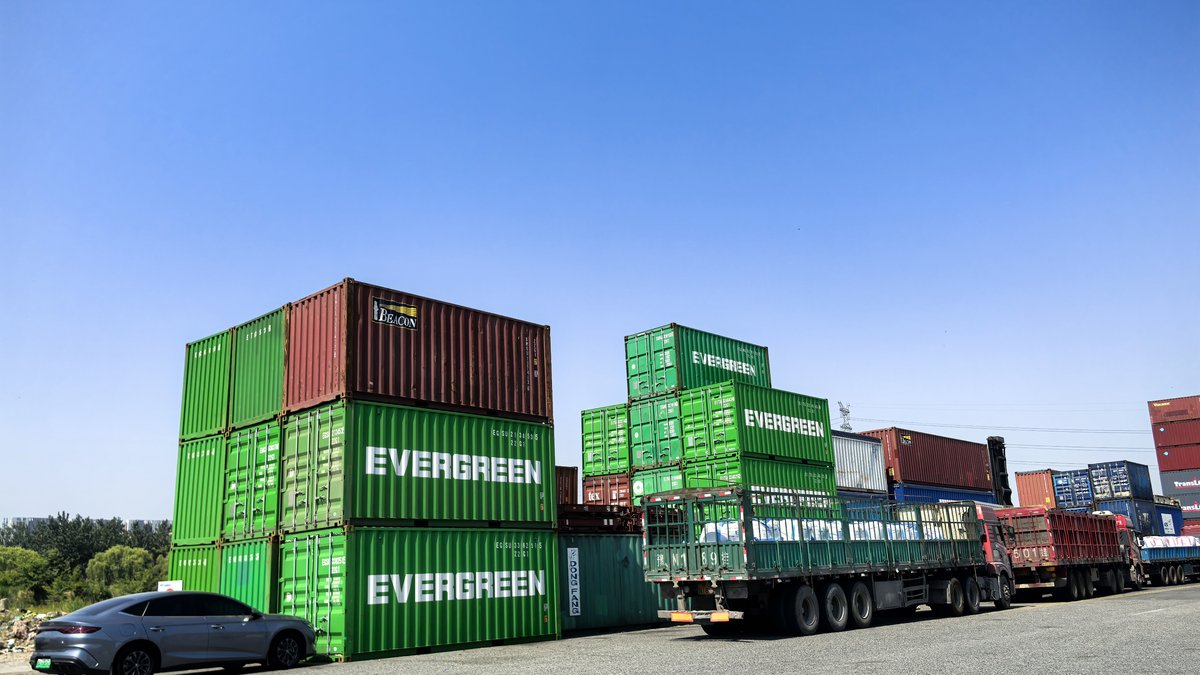
Sources: container and cargo volumes from the Tianjin Municipal Transport Commission (2024 transport indicators) and the Tianjin Port Group 2024 development report; berth counts, quay length, depth and yard capacity from Tianjin Port Group and Tianjin Port Co. Ltd disclosures. Berth capability and operating windows remain subject to current terminal and carrier notices.
Cut-off for documents, gate closure and vessel closing are set per terminal and per carrier. Pick the port area first, then talk about timing.
| Port area | Main terminals / operators | Capacity and working profile | Clearance and gate notes |
|---|---|---|---|
| North Port | Tianjin Container Terminal (TCT), Eurasia International, Alliance International, Second Container Terminal (Section C) | TCT: 3,163 m quay, 12 dedicated berths, -12 to -17 m depth, design capacity 5.65M TEU, 31 quay cranes and 88 yard cranes, 52 services (42 international). Section C: 1,100 m quay, three 200,000 dwt berths, -18 m, 2.5M TEU design, 12 quay cranes, 42 rail cranes, 92 ART units | The main international container area, with strict closing times. Manifest, VGM and packing list must be locked before document cut-off; work back three days from the sailing. During the N9 upgrade, follow terminal gate notices |
| East Port | Tianjin Port Pacific International Container Terminal | 2,300 m quay, six dedicated berths, 200,000 dwt capability, design depth -16.5 m (reserved -18 m), 4M TEU design capacity, 1.8 million sq m yard | Home of the East Port comprehensive bonded zone, suited to bonded-plus-export structures; big ships mean late allocation changes, so rebooking and cancellation need early carrier confirmation |
| South Port | Bulk, liquid chemical, ro-ro and DG operators | Ore, coal, liquid chemicals, LNG and ro-ro vehicles, with dedicated DG yards and tank farms | Heavy DG, liquid chemical and vehicle traffic: check UN number, MSDS, DG packing certificate and terminal acceptance, and file the maritime declaration in parallel |
| Dagukou | General berths and industrial terminal berths | Breakbulk, bulk and project cargo for the Lingang industrial zone; berth class and handling method depend on the cargo | Oversize and project cargo usually ships here; confirm lifting capacity, axle lines and yard storage before booking |
| Gaoshaling | General and bulk berths | Grain, bulk and general breakbulk, with grain and processing industries behind the quay | Grain and feed are inspection-sensitive; for exports, fumigation and phytosanitary certificates are the items to watch |
| Dagang | Petrochemical and bulk working area | Crude, refined products, liquid chemicals and bulk, with complete tank farm and pipeline systems | Liquid chemical and oil products follow dedicated supervision, not the container export flow; confirm measurement method and tank allocation before declaration |
Sources: Tianjin Port Group and Tianjin Port Co. Ltd disclosures, plus Tianjin Port and Shipping Administration approvals. Depth, quay length and design capacity are subject to the latest terminal notice; confirm the exact terminal against the carrier's allocation advice before booking.
TCT, Eurasia, Alliance and Section C form one cluster: 12 dedicated berths plus three 200,000 dwt automated berths. The risk here is not slow clearance but late data. A manifest, VGM or packing list that misses the cut-off moves the box to the next sailing.
2,300 m of quay and six 200,000 dwt berths; Pacific International can work the largest container ships afloat. The bonded zone supports bonded storage, export consolidation and forward stock, a good fit for inspect-then-load cargo.
Bulk, liquid chemicals, LNG and ro-ro vehicles concentrate here with dedicated DG yards and tanks. DG filing, MSDS, packing certificates and terminal acceptance must line up in advance; miss one and the gate stays shut.
From booking instruction to manifest write-off, each step has a deliverable and an owner. The flow exists to plan backwards, not to look good on paper.
Booking instruction, invoice, packing list and contract come in. Check description, HS code and declaration elements — composition, use, model, brand — and flag licence, inspection or DG exposure.
Confirm vessel and voyage, bill number, container mix, gate open and gate close. Send manifest data to the carrier agent and lock the terminal, North or East Port, plus the document cut-off.
Declaration, manifest and packing list are checked against each other: packages, gross weight, volume, container number, seal number, terms of sale. One mismatch and the filing comes back.
File within three days before cargo arrives at the supervised premises, absorbing review and inspection targeting early. Cargo must arrive within three days of filing or the entry is cancelled.
Pick up at the Beijing–Tianjin–Hebei factory, load, seal and gate in on the open-to-close rhythm. Overweight boxes need VGM and terminal weight limits checked together.
Image review, devanning or sampling as directed. Trucking, restacking and storage costs from inspection are disclosed to the shipper in advance, not discovered afterwards.
After release, load against the allocation, verify that loaded container numbers match the manifest, and confirm the bill draft, freight and terms.
Keep the refund copy of the declaration, power of attorney, invoice, packing list and bill of lading; submit within the refund window and apply for certificates of origin in parallel.
Time windows: pre-declaration inside three days before arrival at the supervised premises; arrival within three days of filing or the entry is cancelled; transit cargo closed out at destination within five days; manifest filed no later than 24 hours before loading. These are statutory and customary windows — current customs and carrier notices prevail.
Core documents apply to every shipment; additional documents depend on commodity, supervision mode and destination rules.
Where filings fail: packages, gross weight, container and seal numbers must match across declaration and manifest; the terms of sale (FOB, CIF, EXW) decide whether freight and insurance enter the customs value; and the refund copy must reconcile with the input VAT invoice on description and HS code, or the refund stalls.
Filing the entry is the easy part. The work is clearing the nodes that would otherwise stop it.
General trade, processing trade, market procurement (1039) and cross-border B2B direct export, with declaration elements matched to the supervision mode and a desk on the ground at Tianjin.
Filed to a backwards schedule before arrival; factory pick-up, inland loading and sealing, then direct delivery to North or East Port with the gate-in timed to gate close.
Export under a buyer's licence for companies without trading rights, document consolidation, refund-copy filing and deadline reminders, with agency export certificates and settlement records checked together.
Feeder services around the Bohai rim and barge transfers between Tianjin and Dagukou, Qinhuangdao, Jingtang and other ports, cutting road mileage and highway congestion risk.
Fumigation and IPPC marking for wooden packaging, inspection and quarantine for food and plant products, maritime DG filing for chemicals with terminal acceptance confirmed.
Import clearance at Tianjin, secondary transit and rail-sea transit, bonded storage in the East Port zone, and zone-port linkage for bonded-to-dutiable conversion.
The choice depends on when the cargo is ready, the sailing, the gate close and where the factory sits — not on habit.
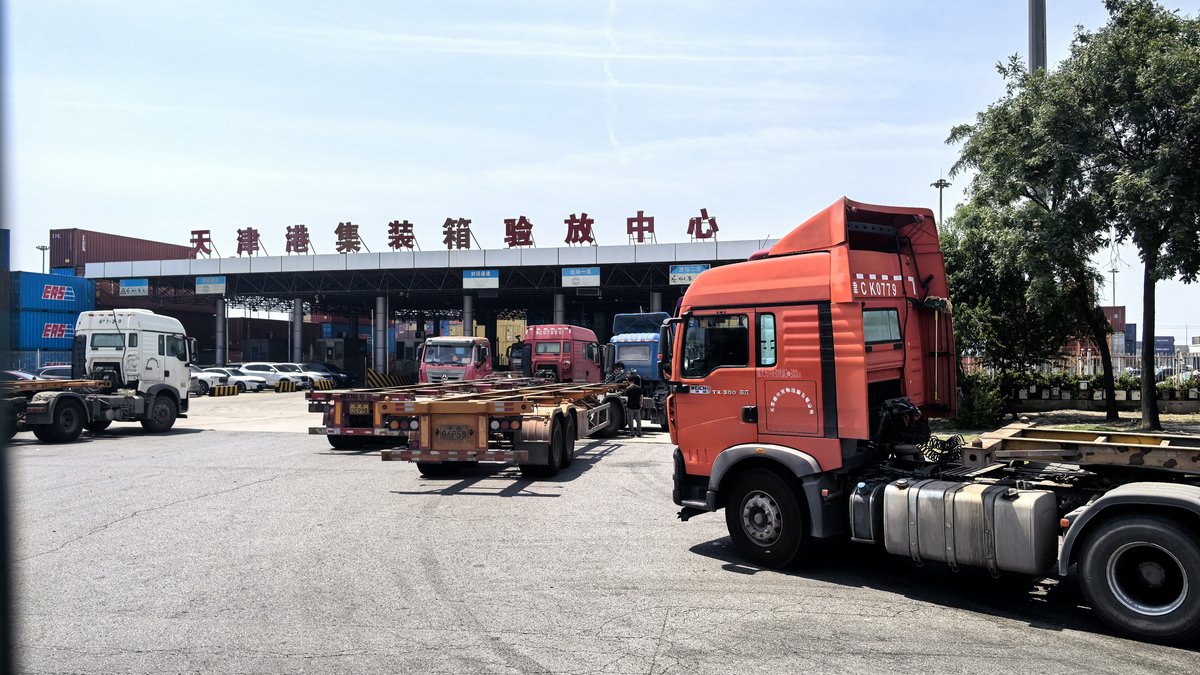
File before the vessel berths and gate the released box straight in for loading. Right for tight sailings and cargo already on the road; it demands a clean document set.
The loaded box enters the yard before release. Right when the factory is ready early and yard space needs holding; watch the document cut-off closely.
Feeders bring the box from a neighbouring port to Tianjin for the ocean leg, or the reverse. Suited to origins outside Jing-Jin-Ji where road cost is high.
Inland factories declare and are inspected locally, then rail to Tianjin for the vessel; or run overland via Erenhot, Manzhouli or Alashankou, with export transit closed out in one filing.
General cargo, chemicals, food and project pieces do not share the same port area, terminal or document set.
North or East Port; the work is HS classification, brand authorisation and complete elements. For machinery, check voltage, energy efficiency and whether it is used equipment.
Non-hazardous chemicals move in containers; verify composition and MSDS. Hazardous grades follow the DG flow and are accepted at South Port.
UN number, packing certificate, MSDS, maritime filing and terminal acceptance must all be in place. Lithium batteries need UN38.3 confirmation.
Health certificates, production batches and label compliance for exports; reefer boxes need terminal plug-in and storage confirmed.
Breakbulk and heavy-lift berths at Dagukou and South Port fit better; confirm spreader, axle lines and frame space before booking.
Bulky and light, so measurement and wooden-package fumigation matter; branded goods need authorisation on file.
Scrap steel, waste paper and similar recyclables are controlled by catalogue and licence; run the control check before filing.
Ro-ro berths at South Port; check VIN, invoice and export licence, and confirm battery declaration separately for electric vehicles.
One: gate close is not document cut-off. The gap between the last gate-in and the release deadline is usually a few hours; in peak season, filing, inspection and release all have to land before gate close.
Two: manifest and declaration must agree. Packages, gross weight, volume, container number or seal number — any mismatch means rejection on review or a missed sailing.
Three: never declare DG as general cargo. Without MSDS, packing certificate, UN number and maritime filing, the carrier refuses the booking and the terminal refuses the gate; the loss dwarfs the fee saved.
Four: check IP authorisation first. Trademarks, cartoon characters and patented designs need authorisation or proof of lawful source; unlicensed cargo targeted for inspection can be held.
Answers reflect current practice at Tianjin; customs, terminal and carrier notices of the day prevail.
Clearance is not form filling. It is aligning customs, terminal and carrier timelines.
Desks covering North, East and South Port: filing, inspection attendance and release tracking stay with one operator from start to finish.
Factory pick-up in Beijing, Langfang, Tianjin city and Hebei, with loading and gate-in scheduled backwards from gate close.
HS code, declaration elements, terms of sale and customs value are reviewed in-house, so rejection risk is handled before it reaches the counter.
Dangerous goods, chemicals and reefer cargo run a separate track: documents checked, terminal acceptance confirmed, maritime filing handled together.
Declaration and inspection at an inland depot, rail to the port, export transit and block-train connections under one mandate.
Refund copies, powers of attorney and origin certificates filed and tracked to deadline, so cargo shipped does not become tax unclaimed.
Tell us the commodity, HS code, container mix, factory location and target sailing. We will reply with the right port area and terminal, the document cut-off and gate close, the extra certificates required, and which steps must start now.
Request a Tianjin clearance quote