Since 2012 NVOCC GD20230925153335 24h Response
+86 13392162503 sales8015@goodhopefreight.com Login
Goodhope Freight
China–Russia rail and road · China-Europe block trains · Perishables and finished vehicles

Manzhouli Port Export Customs Clearance

Every container that leaves China through Manzhouli is lifted once by a gantry crane. Russian rail is 1,520 mm, Chinese rail is 1,435 mm, and the two never meet, so a box cannot roll across the border: it comes off one flatcar and goes onto another. In 2025, 4,867 China-Europe block trains crossed here with 506,000 TEU, and 2,977 of them ran back toward China, more than at any other border. The volume is real. What decides your shipment is whether the train plan, the lifting window and the loading gauge were settled before the container was packed.

Railway port Highway port Bonded zone China–Russia · Mongolia Rail Express filing 24-hour truck gate TIR
4,867China-Europe block trains in 2025
1,520 / 1,435 mmWide gauge and standard gauge: one lift between them
24 hoursHighway cargo clearance, all year
Plan my Manzhouli clearance See the 8-step flow
CNY 243.4 bnTrade through Manzhouli 2025
up 15.5% year on year
2,977Return block trains in 2025
the highest of any Chinese border
22.23 million tRail freight handled in 2025
at the railway port
249,000Trucks in and out of the highway port
up 39.9% year on year
Why Manzhouli

One Border, Two Gauges,
and No Sailing Schedule

Manzhouli is not a seaport. It is the largest land border crossing China has, sitting where Inner Mongolia meets Russia and Mongolia, and it moves cargo in two completely different ways: block trains through a transfer yard, and trucks through a 24-hour gate. Both are fast once the cargo is there. The hard part is everything before that point.

The pattern we see is consistent. A supplier books a train, packs the container, files the declaration, and only then discovers that the box is 8 cm over the loading gauge, or that the declaration was filed at the wrong station for the amendment to be possible there. Nothing about that is a customs problem. It is a sequencing problem, and it is specific to this border.

  • 1
    The cut-off is a train plan, not a sailing dateBlock trains are not daily departures. Lose the slot and you wait days for the next plan, not hours for the next ship.
  • 2
    Filing has moved to the origin stationUnder Rail Express, customs releases against the electronic rail manifest and the border only writes it off after the lift. Amendments, however, go back to the station that filed.
  • 3
    The gauge decides whether the box fliesThe lift is a physical inspection: box condition, weight distribution, lashing and height all get tested at once. Fail it and the container comes back out of the yard.
  • 4
    The highway gate runs on a different clockAdvance filing, release on arrival, one manifest for several trucks. It suits fresh produce, samples and urgent restock; the variable sits on the Russian side.
Incoterms note: the export declaration is always filed in China whichever term you buy on. What changes is who pays for it and who owns the risk of a missed train plan. Under FCA and FOB the seller clears export; under DAP and DDP the forwarder usually runs both ends, and the rail slot becomes the buyer's schedule risk, not yours.
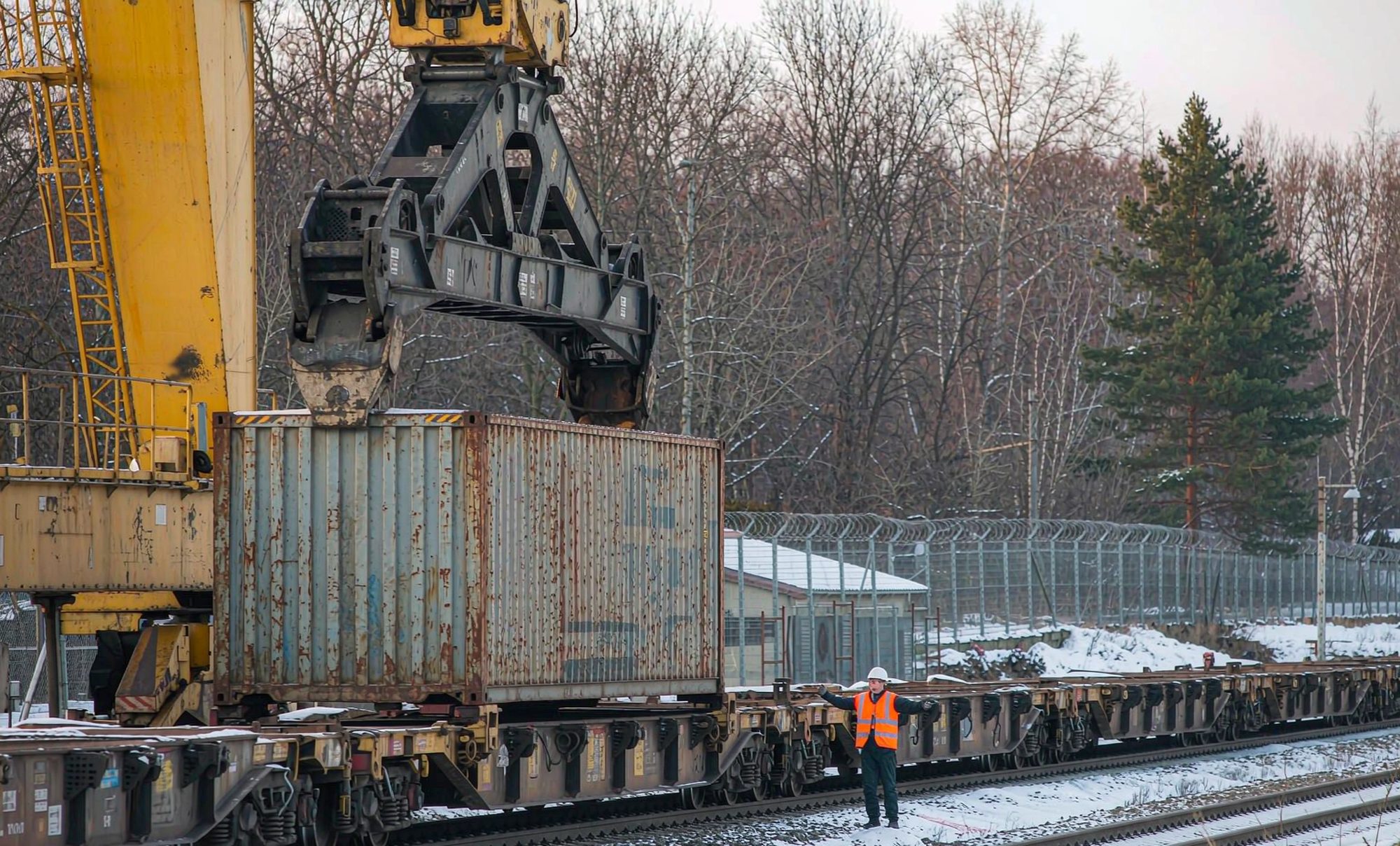
Gantry crane lifting a container between wide-gauge and standard-gauge rail wagons at Manzhouli
At the transfer yard Loaded wagon in, standard-gauge wagon out Full transfer inside 2 hours · one box lifted in under 2 minutes

Short answer

Heavy, non-urgent cargo heading for Russia or Europe: rail through Manzhouli is usually the cheapest per kilo, and the train plan is the only deadline that matters. Perishable, small-lot or needed inside two weeks: the highway gate is the realistic route, and 24-hour clearance means the queue, not the clock, is your constraint. Anything out of gauge: measure it before you pack it, because this border will not negotiate.

Work areas

Four Work Areas, Two Rhythms

One border, four supervised sites, four different sets of rules. Choose rail or road first; the paperwork follows from that, not the other way round.

Manzhouli Station Customs · 0609

Railway Port

Manzhouli Railway Port · Chinese side of the border

Freight
22.23 million metric tons in 2025
Capacity
310 wide and standard gauge tracks, 18 transfer yards, about 40 million tons a year
Control
Train plan allocates the slot; under Rail Express the border only lifts the box and writes off the manifest
Rhythm
16 to 17 block trains a day; return trains worked around the clock
Best for: full-container block train cargo, machinery, building materials, chemicals, finished cars. Not for: small LCL lots, or cargo that has to arrive within three days.

Container yard: 4 wide-gauge and 3 standard-gauge tracks, 500,000 m² of yard, 9,900 TEU of storage. A single box is lifted in under two minutes; loaded wagon in to standard-gauge wagon out runs inside two hours.

Manzhouli Shibali Customs · 0603

Highway Port

Manzhouli Highway Port · opposite Zabaikalsk

Hours
24-hour cargo clearance since May 2023, staffed 00:00 to 24:00
Traffic
249,000 trucks and 2.88 million tons in 2025
Control
Advance filing, release on arrival, one manifest covering several trucks
Gate
20 to 30 seconds from plate read to barrier lift
Best for: fresh produce, fast-moving consumer goods, samples, cars, TIR loads. Not for: out-of-gauge pieces, which hit road limits on both sides.

Two green lanes run permanently: bulk cargo gets front-loaded inspection, live and fresh products get priority release. Manifest filing time has dropped by more than 60% since mobile filing went live.

Bonded Zone · 0615

Comprehensive Bonded Zone

Manzhouli Comprehensive Bonded Zone

Role
Inner Mongolia's first comprehensive bonded zone; bonded storage and international distribution
Cargo
Potash fertilizer and other bulk imports stored, split and redistributed
Link
Dedicated rail spur in final commissioning inside the zone
Control
Bonded on entry, duty on exit; export cargo can be built up and shipped in batches
Best for: cargo that needs duty deferral, batch shipment or export consolidation. Not for: a single truck that has to leave today.

When train slots tighten, the zone works as a buffer: you queue for a slot instead of stacking cargo in the factory yard.

Mutual Trade Zone · 0608

Border Residents Mutual Trade Zone

China–Russia border residents mutual trade area

Control
Supervised by Shibali Customs as a customs control site
Business
Border-resident barter trade and on-site processing
Volume
CNY 120 million expected in 2025, three times the 2020 level
Form
Small lots, many batches, declared by list
Best for: small-lot border trade and processing inputs. Not for: general trade container cargo.

Mutual trade and general trade are two separate rulebooks. Splitting a general trade shipment into mutual trade lists to save a day is a compliance risk, not a shortcut.

Rail or road, in one paragraph

Rail moves hundreds of TEU per train on a fixed plan; one bad declaration can affect the whole loading list, but the cost per kilo is the lowest available. Road moves one truck per manifest on a rolling 24-hour gate; a mistake costs you that truck and a re-filing, not the whole train. If your cargo is heavy and your buyer can wait, take the train. If it is perishable, small, or late, take the gate.

What we do

Eight Service Lines, Sorted by How It Moves

Same border, eight different timetables. The service line decides which station files, which gate releases and how much slack you have.

01

Block train, full container

Slot booking against the train plan, box and seal verification, declaration prepared line by line. Under Rail Express the filing happens at the origin station and the border only writes off the manifest after the lift.

Block trainSlot planRail Express
02

Block train, LCL and consolidation

Several shippers built into one container, declared per shipment and consolidated per box. The failure mode is always the same: piece count, weight and volume disagree across the packing list, the warehouse receipt and the declaration.

LCLConsolidationPer-shipment filing
03

Full truck and part truck

One truck, one declaration; part loads run under a single manifest covering several vehicles. The gate releases in 20 to 30 seconds once the filing is right, which makes this the option for buyers restocking weekly.

FTLPart loadOne manifest, many trucks
04

TIR road transport

TIR carnets move under one document with sealed loads and no inspection at the border unless there is a risk flag. Manzhouli runs 27 TIR routes, more than 60% of China's total, and leads the country on TIR vehicle movements.

TIR carnetSealed loadDirect road
05

Finished cars and used vehicles

VIN, model, drive type and use case have to line up unit by unit. Used vehicles need an export license and an inspection report; the Russian side additionally wants EAC certification and Russian-language documents, which are a destination requirement, not a Chinese one.

Export licenseVIN matchEAC
06

Fresh produce and cold chain

Fruit and vegetables run the highway gate's priority lane. Phytosanitary certificates, carton marking and batch numbers are checked before the truck reaches the border; 257,000 tons of produce left through this gate in the first nine months of 2025.

PhytosanitaryPriority releaseCold chain
07

Out-of-gauge and heavy plant

Rail checks width and height against the loading gauge; road checks axle load against the oversize permit. We issue a piece list and a lashing plan before loading, because discovering 8 cm of excess height after packing means unpacking the container.

Loading gaugeLashing planOversize permit
08

VAT refund and export documents

After clearance we assemble the declaration, rail waybill, release data and VAT invoices so the exporter, the invoice and the foreign exchange receipt line up. Buying an export slot from a third party breaks that chain and puts the refund at risk.

VAT refundDocument chainFX receipt
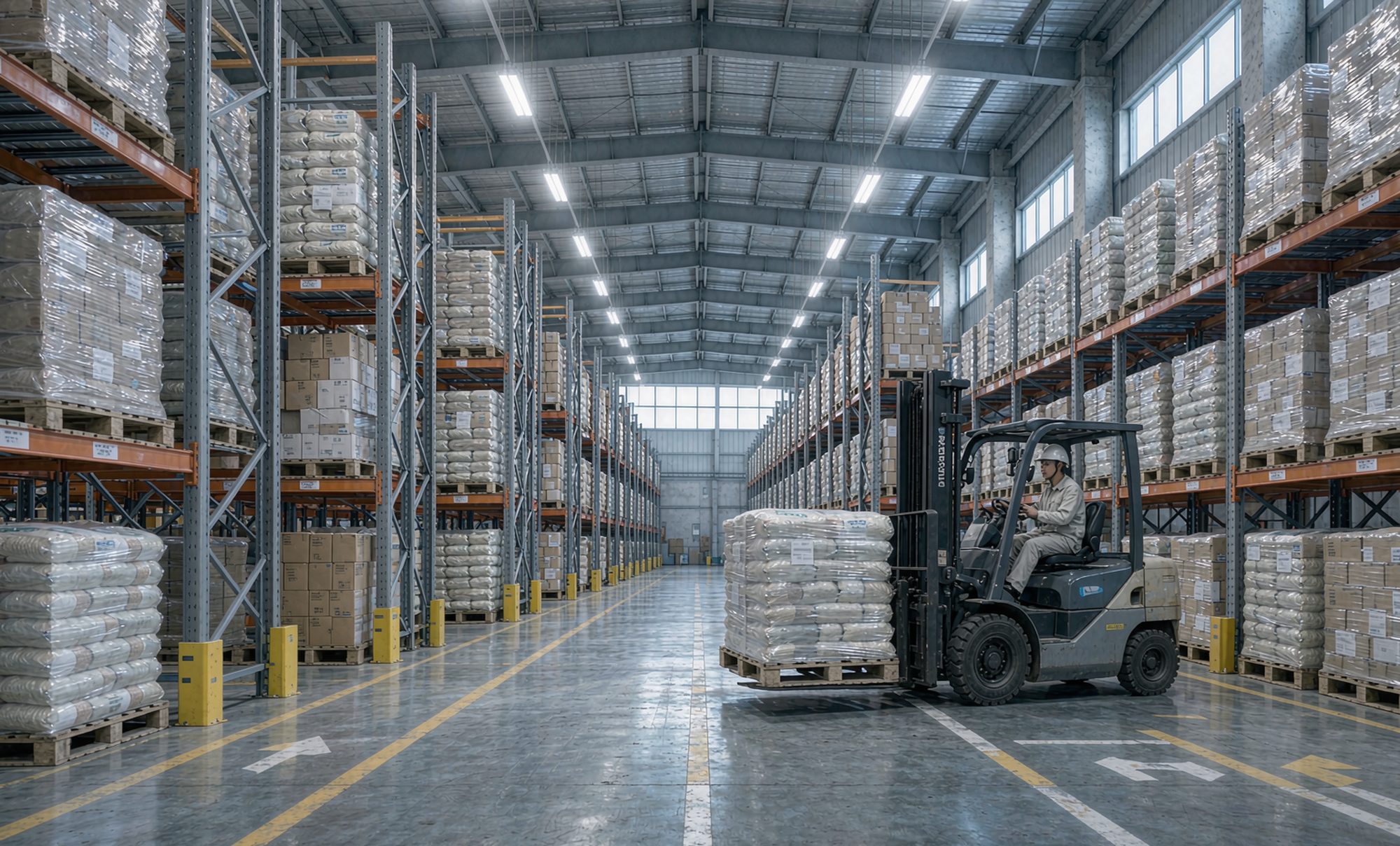
Palletised cargo in a bonded warehouse at the Manzhouli comprehensive bonded zone
When train slots tighten, the bonded zone is a buffer, not a warehouse Return trains arrive in waves, and empty boxes are pulled back toward the interior on the same rhythm, so export slots often slip a week. Putting cargo into bonded storage first means you are waiting for a slot rather than for floor space, and you can ship it out in batches as slots open.
The flow

Eight Steps, and the First One Is Not at the Border

Start counting from the train plan, not from the gate. Anyone who builds a timetable backwards from the border arrives late.

01

Lock the train plan and slot

Confirm origin station, route, departure and box type.

Two to three weeks ahead in peak season.
02

Book boxes and pack

Check box condition, load within the gauge and the per-box weight limit.

Photograph the lashing before the doors close.
03

Classify and confirm data

HS code, declaration elements, licenses, dangerous goods status.

Check Russian entry requirements here, not at the destination.
04

File at the origin station

One filing under Rail Express, released against the electronic rail manifest.

No separate transit declaration at the border.
05

Rail carriage and manifest transfer

The train departs; waybill and manifest data reach customs and the border in real time.

Status becomes visible from the moment it rolls.
06

Transfer and manifest write-off

Loaded wagons enter, gantry cranes lift each box onto standard gauge.

Under two hours from entry to departure.
07

Departure and closure

The train clears the border; actual box numbers are reconciled against the filing.

Exceptions are handled as single cases.
08

Documents and refund

Declaration, waybill, release record and invoices assembled for VAT refund.

Keep the chain intact from the first shipment.

Two steps that cannot be compressed

Gauge and weight verification, which must happen before packing, because unpacking a container at the border costs days rather than hours. And the accuracy of the origin-station filing, because under Rail Express the border has no authority to amend it: the correction has to travel back to the station that filed. Everything else can run in parallel, and steps 2 and 3 should.

Paperwork

At a Land Border the Core Document Is the Waybill

There is no bill of lading here. Rail releases against the international rail waybill and manifest data; road releases against the manifest and the gate record. Four sets cover almost every shipment.

Core set, every shipment

  • ✓
    Export declarationFiled through the single window, matching the goods and the waybill
  • ✓
    Contract or purchase orderTerms of trade, currency and price basis stated plainly
  • ✓
    Commercial invoice and packing listDescription, quantity, packages, gross and net weight, marks all agree
  • ✓
    Customs power of attorneyElectronic authorisation accepted, valid for the period of the filing
  • ✓
    Rail waybill or road manifestTrain number and box numbers, or plate number; border and dispatch date
  • ✓
    Train plan or truck bookingNo plan means no slot, and no amount of paperwork creates one

Licences and certificates

  • ✓
    Export licensePassenger cars, used vehicles, dual-use items, checked against the catalogue
  • ✓
    Certificate of originCO or FORM E for preferential duty in the destination market
  • ✓
    Phytosanitary certificateFruit and vegetables, matched to the batch, not just the product
  • ✓
    Fumigation or IPPC markSolid wood packing, heat treated or fumigated and stamped
  • ✓
    Vehicle documentsVIN list, inspection report for used units, invoice per unit

Dangerous goods and batteries

  • ✓
    Safety data sheetFull 16-section SDS in the language the carrier accepts
  • ✓
    UN number and packing groupDangerous goods classification report before anything is filed
  • ✓
    Packaging certificateCertified packaging matched to the UN number, not borrowed from another product
  • ✓
    UN38.3 test summaryLithium cells and batteries, plus the state of charge the carrier accepts
  • ✓
    Rail acceptance confirmationNot every class or state of charge is accepted on a block train

Rail and gauge specific

  • ✓
    Piece list for oversized cargoDescription, dimensions and weight for every separate piece
  • ✓
    Gauge check sheetHeight and width after lashing, signed off before the doors close
  • ✓
    Lashing and securing planMethod, materials and photos, kept with the shipment file
  • ✓
    Box condition recordDoor, roof and seal photos; a weak box is rejected at the lift
  • ✓
    Destination compliance fileEAC certification and Russian labeling, needed at the other end
The one document people forget: the train plan confirmation. With sea freight a booking confirmation means a slot; with rail it does not. Plenty of shippers spend a week preparing documents for a train that has no space for them, then blame customs for the delay. Plan first, paperwork second.
Clearance modes

Four Modes, One Question: Where Does the Filing Happen?

Rail Express moves the filing to the origin station. Border filing keeps it at Manzhouli. Transit adds a supervised leg. Advance filing on the road side pushes the work ahead of the gate. Pick wrong and the paperwork is perfect and useless.

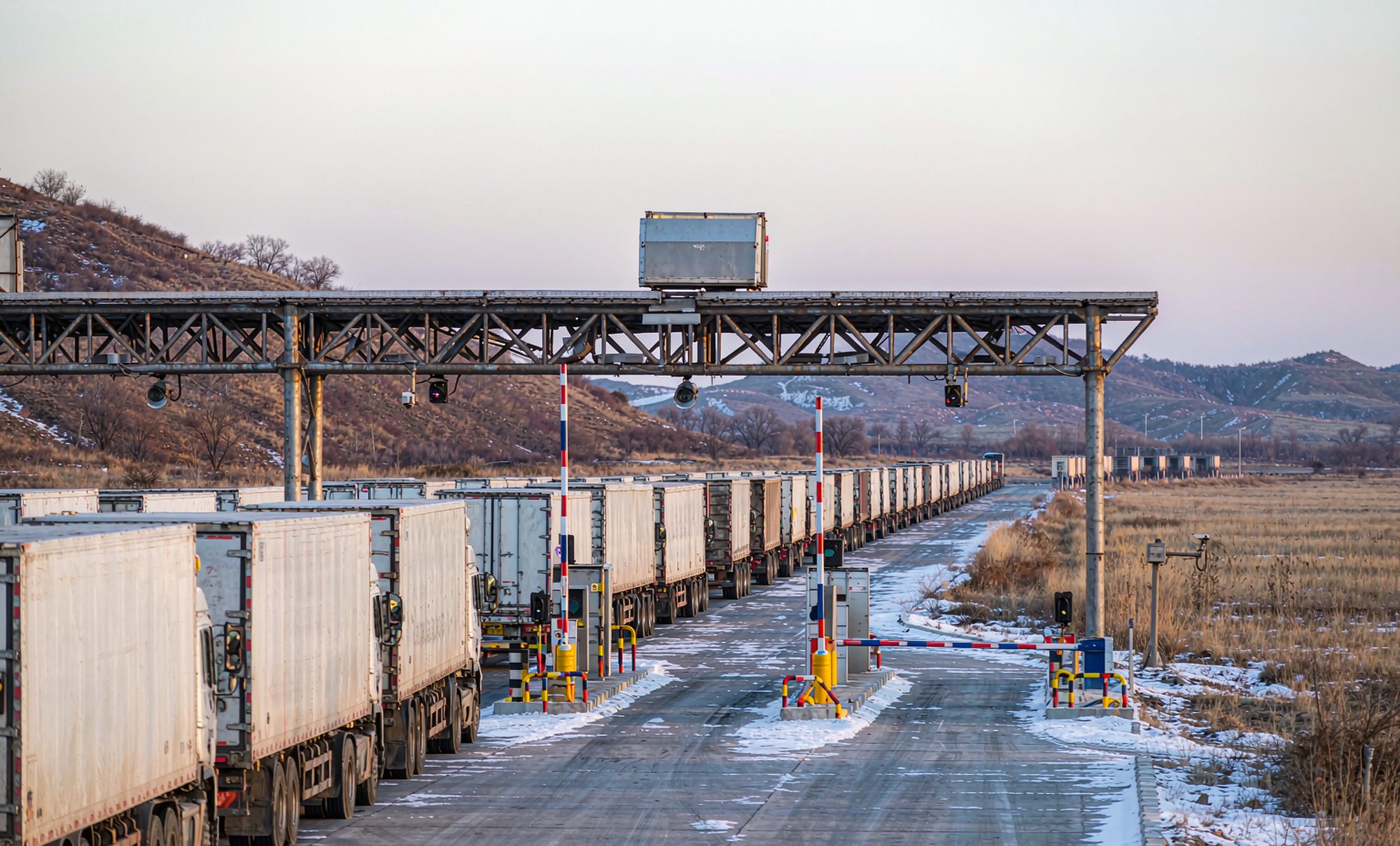
Container trucks queued at the smart gate of the Manzhouli highway port
Manzhouli highway port: advance filing, release on arrival, 20 to 30 seconds from plate read to barrier lift.

Rail Express filing

Customs releases and writes off against the electronic rail manifest, so no separate transit declaration is needed at the border. Overall clearance drops by one to two days and a container can save about CNY 200; time at the border falls from ten hours or more to as little as two. Do not use it when you expect to amend the declaration on site: the border cannot do it.

Filing at the border

Manzhouli itself is the declaring port. Sensible when the cargo is already nearby or the origin station cannot file. The risk: amendment windows here are tied to the train plan, so one stuck declaration can hold up the whole loading list.

Transit declaration

Filed where the goods are produced, released at the border, moved under customs supervision. One extra supervised leg buys you a filing that sits with the factory. The catch: the transit document and the manifest must reconcile exactly, or the cargo stops at the border.

Advance filing and release on arrival

The standard road pattern: file before the truck reaches the gate, release as it arrives, barrier up in 20 to 30 seconds. The variable is the Russian side, where reception capacity and holidays set the queue, not the Chinese gate.

By cargo type

Different Cargo, Different Failure Point

Electronics fail on classification, produce fails on timing, batteries fail on carriage conditions, heavy plant fails on the gauge. Sort by cargo and the checklist writes itself.

Consumer goods

Mixed cartons, low unit value. The work is in the element list and in a classification logic that holds up when thirty SKUs go on one declaration.

Machinery and appliances

Model, power rating and use case must be specific. Air conditioners, refrigerators and fans alone reached CNY 520 million through this border in the first half of 2025.

Cars and used vehicles

VIN to model to unit, one line at a time. Used vehicles need a license and an inspection report; Russia wants EAC certification on arrival.

Fruit and vegetables

Priority release at the highway gate, phytosanitary certificate matched to the batch. Timing is measured in hours, and a slow Russian queue burns cold-chain budget.

Chemicals

Classify before you file. Non-dangerous goods need a composition statement and SDS; anything hazardous goes through dangerous goods filing and cannot travel disguised as general cargo.

Lithium batteries

UN38.3, packaging certificate and rail acceptance all three. Some classes and states of charge are restricted on rail, so confirm carriage before you book the slot.

Building materials and metals

Heavy cargo: per-box weight limit and wagon payload come first. Profile length decides how the box is loaded and whether the gauge check passes.

Heavy plant and project cargo

Split shipments change classification piece by piece. The piece list, center of gravity and lifting points are settled before loading, not at the yard.

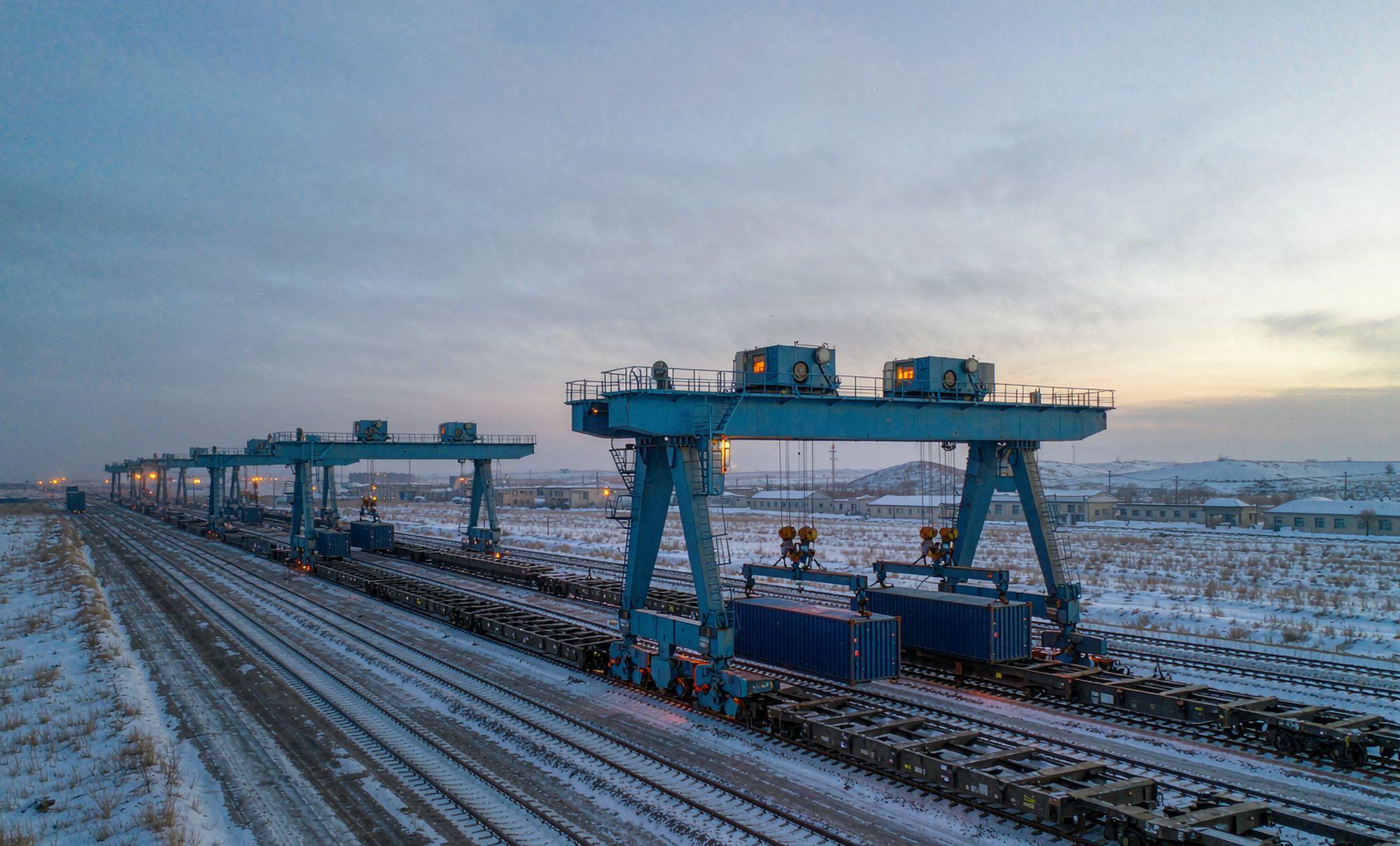
Rows of rail-mounted gantry cranes over a container transfer yard at Manzhouli at dawn
Sixteen to seventeen block trains cross here every day. Each one is lifted box by box between the two gauges, and the whole transfer is worked inside two hours.

Four things this border will not bend on

1. Declare what is in the box. Description, specification, quantity, price and origin must match the goods and the waybill. Misdeclaration is the shipper's liability; a broker cannot assume it for you.

2. Measure before you pack. Rail checks width and height against the loading gauge, road checks axle load against the oversize permit. Unpacking a container costs far more than a tape measure.

3. Confirm licenses up front. Passenger cars, used vehicles and dual-use items need their licenses settled at purchase, not at the gate.

4. Treat batteries and chemicals as what they are. A classification report comes first. Filing dangerous goods as general cargo does not end with a rejected declaration; it ends with a regulatory case.

Field notes

Six Shipments, Six Scheduling Problems

Almost nothing that goes wrong at Manzhouli is a typing error. It is a plan, a gauge or a deadline that was never reconciled.

Block train · plan cut01

Thirty containers, and the train plan is halved four days out

Cargo and route
Thirty 40HQ of consumer goods and hardware, consolidated at an East China station, out through Manzhouli toward Moscow.
Where it stuck
The operator cut the plan and confirmed wagons for half the boxes. The buyer had already scheduled distribution in Russia, so a week's delay meant paying for their storage.
What we did
Split the shipment by priority: sixteen containers moved to the highway gate as full truckload plus TIR, the remaining fourteen took the next train plan with an extra service requested. The road portion was filed in advance and entered the gate on booked slots.
Result
The urgent cargo arrived on schedule, the rail portion six days later. The fix was not chasing the plan, it was holding two routings at once.
Rail · loading gauge02

Eight centimeters too tall, discovered after packing

Cargo and route
Construction machinery parts in a flat rack, out by block train.
Where it stuck
The factory loaded against the internal height of the container without calculating height after lashing. The gauge check at the station found the timber spacers on top of the load about 8 cm over the limit.
What we did
Unpacked on site, re-stacked lower, reduced the spacer thickness, re-lashed and photographed. The gauge check sheet went into the loading work order so the next similar shipment gets measured before packing.
Result
Three days lost, next train caught. Eight centimeters is cheap; unpacking a container is not.
Road · produce03

Forty truckloads of fruit that sell on a few hours

Cargo and route
Apples and citrus in reefer trucks, highway gate, toward Zabaikalsk.
Where it stuck
The shelf-life window was mostly consumed in transit, and one batch carried a phytosanitary certificate that did not match the actual lot, which means refiling and a new certificate.
What we did
Matched lot numbers to certificates at the packing house, one certificate per truck; filed in advance so release happened on arrival, used the priority lane for fresh products, and booked gate slots in a single block.
Result
Every truck cleared the same day, none overnighted. In produce, the hours matter more than the freight rate.
Vehicles · license04

Twelve used cars, and one digit off on two VINs

Cargo and route
Twelve used passenger cars, highway gate, collected by the Russian buyer.
Where it stuck
The export license is issued per batch with VINs listed. Two VINs were entered with one wrong digit, which makes the declaration inaccurate rather than correctable.
What we did
Released the ten clean units first, withdrew and refiled the two, and asked the licensing authority for a correction with inspection reports and vehicle photos attached.
Result
Ten crossed on time, two slipped two days. The cost was not the filing fee, it was the slots the buyer had already paid deposits on.
Rail Express · amendment05

The filing was in Shenzhen, so the border could not amend it

Cargo and route
Two containers of machinery parts, filed at the Shenzhen origin station, out through Manzhouli.
Where it stuck
After packing, one container's specification did not match the declaration. The shipper wanted it corrected at the border, but under Rail Express the border only writes off the manifest and has no amendment authority.
What we did
Withdrew and refiled at the origin station, confirmed the latest loading deadline with the train operator, and moved the clean container forward in the lifting sequence so the two would not wait together.
Result
The amendment landed before cut-off and both boxes left on the same train. The time Rail Express saves should not be spent discovering where the amendment has to be made.
Box supply · return trains06

Return trains soak up the empties, and two boxes arrive damaged

Cargo and route
Twenty 40HQ of building materials and profiles, out by block train.
Where it stuck
A wave of return trains disrupted empty-box repositioning and pushed available slots out a week. Two of the boxes allocated had deformed doors and could not be lashed as loaded.
What we did
Reserved boxes early and selected by box number with photo records; rejected the two damaged units before loading; used bonded zone storage to land the building materials instead of stacking them at the factory.
Result
The batch shipped on schedule with no rejection at the yard. The busier the return direction, the earlier the export boxes have to be booked.

These are anonymised field cases: shipper names, train numbers and some piece weights have been changed or rounded, while the operating logic and the failure points follow what actually happened. Train plans, wagon slots and gate hours are set by the operators and the border office at the time.

Questions

Ten Questions Buyers Ask About Manzhouli

Answered the way we answer them on the phone, not the way a brochure would.

Can I ship by sea through Manzhouli?
No. Manzhouli is a land border with two channels only, rail and road, and no seaport. Ocean freight leaves through Shanghai, Ningbo, Qingdao, Tianjin or Shenzhen; Manzhouli is the overland route toward Russia, Belarus and Europe, and toward Mongolia on the other side.
How far ahead do I need to book a block train?
Two to three weeks is normal for a plan and a slot, and longer in peak season or when return trains are arriving in waves. Trains are not ships: there is no daily departure, so a lost plan means waiting for the next one, which is days rather than hours.
What is the difference between Rail Express and filing at the border?
Rail Express files at the origin station and lets customs release against the electronic rail manifest, so the border only writes it off after the lift; it saves one to two days overall. Filing at the border keeps the declaration at Manzhouli, which suits cargo already nearby. The difference is not the fee, it is where an amendment has to go.
Does the declaration have to be filed in Manzhouli?
No. Under Rail Express the filing can sit at the origin station while the border writes off the manifest, and a transit declaration is filed where the goods are produced with release at the border. Filing at the border only makes sense when you expect to handle an amendment or an inspection on site.
Is the highway port really open 24 hours?
Yes. Cargo clearance at the highway port has run around the clock since May 2023, with customs staffed from 00:00 to 24:00 and the smart gate lifting the barrier 20 to 30 seconds after the plate is read. Departure still depends on Russian reception capacity, so the queue may not be on the Chinese side.
What documents do fresh fruit and vegetables need?
A phytosanitary certificate matched to the actual lot, commercial invoice and packing list, and compliant carton marking. Solid wood packing needs an IPPC mark or fumigation certificate. Produce uses the priority lane, but a certificate that does not match the batch means refiling and a new certificate.
Do cars and used vehicles need an export license?
Used vehicle exports are license-controlled, applied for per batch with VINs listed unit by unit; new vehicles are checked against model and catalogue. Russia additionally requires EAC certification and Russian-language documents, which are not part of Chinese export clearance but will stop the car at the other end.
My cargo is slightly overheight. Will it still go?
Not on the strength of "slightly". Rail measures width and height against the loading gauge, and over is over: the container comes back out of the yard. Road measures dimensions and axle load against an oversize permit, which has to be applied for separately. Gauge checks belong before packing, and skipping them is the most common cause of rework at this border.
Can lithium batteries travel on a block train?
Only after a dangerous goods classification, with UN38.3, SDS and certified packaging in place. Some classes and states of charge are restricted on rail, so carriage has to be confirmed with the operator before the slot is booked. Filing them as general cargo is not an option.
The declaration is released but the train has no space. What now?
Check the release validity and the manifest status, then decide between the next plan and the highway gate. A release is not a slot; they are two separate queues. We run the plan and the filing side by side so that when the plan moves, a road alternative on full truckload or TIR can be priced the same day.

Why us

At This Border the Skill Is Scheduling, Not Typing

Anyone can fill a declaration. What decides whether your cargo leaves on time is whether the plan, the lifting window and the gauge check were sequenced properly before the container was packed.

01

Two timetables, not one

When a train plan is cut we price the highway gate or TIR the same day, instead of parking the cargo and waiting.

02

People at both ends of the filing

Under Rail Express the declaration sits at the origin station and the write-off happens at the border. We cover both, so an amendment is not a guessing game.

03

Gauge and lashing checked before packing

A signed check sheet goes to the factory with the loading instruction, and the finished load is photographed before the doors close.

04

Box condition checked at the yard

Doors, roof and seals are inspected before the lift. A weak box gets swapped at the depot, not discovered by the crane.

05

Cold chain and priority lanes run as routine

Batch-to-certificate matching, priority lane booking and gate slot grouping are standard steps, not favors called in on the day.

06

Costs itemised by stage

Declaration, border charges, transfer, trucking and storage are quoted separately, and what did not happen is not invoiced.

GET IN TOUCH

Manzhouli clearance, planned
around the train plan

Send the commodity, piece count and weights, the destination city, the date you want it to leave and where the goods are collected. You get back the workable channel (block train or highway gate), the document list and a timetable counted backwards from the plan rather than from the border.

Request a Manzhouli clearance quote
CompanyGoodhope Logistics (China) Limited
NVOCCGD20230925153335
Phone / WhatsApp+86 13392162503
Emailsales8015@goodhopefreight.com
Office hoursMon–Sat 09:00–18:00 GMT+8
ResponseWithin 24 hours, usually same day
call us: +86 13392162503