Since 2012 NVOCC GD20230925153335 24h Response
+86 13392162503 sales8015@goodhopefreight.com Login
Goodhope Freight
Air export filing · Air import release · Perishable cold chain

Nanchang Changbei Airport Import & Export Customs Clearance

Jiangxi has one airport gateway, and this is it. Every international shipment in the province moves through a single cargo terminal — which means export fails on flight frequency and cutoff times, and import fails on three designated inspection sites and pickup speed. Freighters run on fixed weekly rotations and belly space follows the passenger timetable, so the clock here is counted in flights, not days.

Import fruit Chilled seafood Live aquatic products Cross-border e-commerce 9610 / 9710 / 9810 Mail, express and e-commerce under one roof Truck flights
3 sitesDesignated inspection sites at the airport
8 routesFreighter services operating in 2025
4 aircraftWide-body freighters handled at once
24 hoursLegal filing deadline before departure
Plan my Nanchang clearance See both 8-step flows
36,600 m²International cargo terminal
opened September 2020
200,000 tDesigned annual capacity
of the international terminal
35 tHeaviest single piece
the terminal can handle
76.1%Of international tonnage moving
to Belgium, Germany, Norway, Japan
Why Changbei

One Airport, One Cargo Terminal,
Two Different Clocks

Nanchang Changbei is Jiangxi’s only airport port of entry. The international cargo terminal that opened in September 2020 covers 36,600 square meters, cost RMB 340 million and is built for 200,000 metric tons a year — general cargo, mail and express, and perishables all split inside one building. In 2025 the airport ran 14 international routes, eight of them freighter services, with Liège, Oslo and Dhaka carrying the heaviest volumes.

Capacity is not the constraint. Frequency is. A freighter leaves on its own weekly rotation, belly space travels with the passenger schedule, and a missed cutoff usually costs a week rather than a day. That single fact reorganises everything downstream: when you book, when you file, and how much slack the paperwork gets.

  • 1
    Every international shipment uses the same terminalGeneral cargo, express, mail, cross-border e-commerce and perishables are all received, filed, inspected and released on one site. The walk between steps is short — and when one lane backs up, the others lose floor space with it.
  • 2
    Export runs on flight frequency, not on documentsEight freighter routes in 2025, plus belly space that disappears in peak season. Confirm the flight before you confirm the price, then back-plan the filing from the cutoff rather than from the factory door.
  • 3
    Import strength is perishables, and it is site-basedFresh fruit, chilled seafood and live aquatic products each have a designated inspection site inside the terminal, with cold rooms, a cold-treatment room and a quarantine handling area. More than 3,000 metric tons of imported perishables cleared here in 2024, among the highest of any airport in central China.
  • 4
    Truck flights are normal practice, not a fallbackCargo moves by bonded truck between Changbei and the Shanghai, Beijing and Guangzhou airports. Yangtze Delta and Pearl River Delta e-commerce cargo is consolidated onto Changbei freighters, and Changbei arrivals are trucked out for clearance elsewhere — typically one to two days faster than waiting for the next rotation.
Who files, and who carries the delay? On FOB, CFR or CIF terms the China-side export declaration is the seller’s job. On EXW it is yours. Either way, the filing sequence below decides whether your cargo leaves on the booked flight or waits for the next rotation — and on a route with two or three departures a week, that gap is measured in days, not hours.
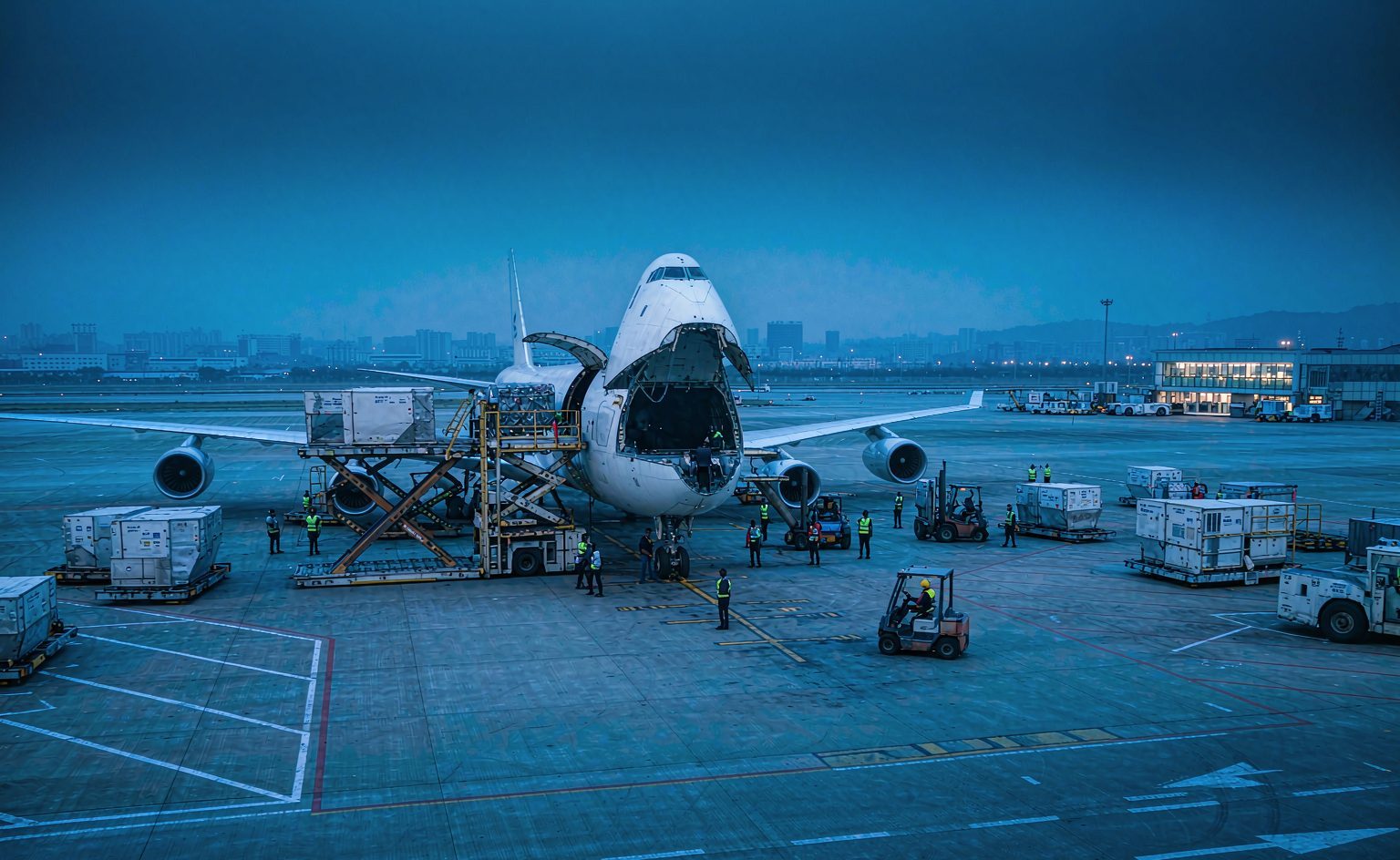
Wide-body freighter with its nose cargo door open, ULD containers being loaded on the apron at night
On the ground Tender — file — release — load Cutoff back-planning · site eligibility · truck flight relay

In short

Customs clearance at Nanchang Changbei covers both directions out of one international cargo terminal: export filing against a confirmed flight and cutoff, and import release against a designated inspection site, a quarantine permit and a cold chain that is already waiting. Goodhope Freight handles the declaration, the inspection attendance, the perishable permits and the truck-flight connection to a larger gateway when the destination has no direct service. The cargo terminal sits inside the airport, the customs clearance center inside the terminal, and the clearance center works inspection and release around the clock.

Note: terminal scale, apron capacity and inspection-site designations come from the General Administration of Customs, Nanchang Customs, Jiangxi Airport Group and Nanchang municipal publications issued between 2020 and 2026. Designated sites follow the latest GACC published list; flight schedules, space and cutoffs are set by the carrier and terminal for the week in question.

Facilities

Four Facilities Decide Which Lane Your Cargo Uses

Changbei is not one big shed. It is an international cargo terminal, three designated inspection sites, a mail-express-e-commerce cluster and a wide-body apron built for freighters. Cargo type picks the facility, the facility picks the process, and the process sets your deadline.

Changbei Airport Customs

International Cargo Terminal

In service since September 2020 · 36,600 m²

Scale
36,600 m² of building on an 82,700 m² site; RMB 340 million invested
Capacity
Designed for 200,000 metric tons a year
Functions
International general cargo, mail and express, perishables — inbound and outbound
Customs
Clearance center on site, working inspection and release around the clock
Best for: general air cargo, freighter consignments, perishables, heavy single pieces

General cargo and perishables work on opposite sides of the same building. A wrong handover note means walking the length of the terminal twice.

Airport Customs · inspection

Three Designated Inspection Sites

Fruit · chilled seafood · live aquatic products

Scope
Import fruit, chilled seafood, live aquatic products — nowhere else at this airport
Location
Inside the terminal’s supervised area, same address as the cargo terminal
Equipment
Fruit inspection room, cold storage, cold-treatment room, screening laboratory, quarantine handling area
Site code
CNKHN400058 (chilled seafood site)
Best for: salmon, eel, crab, tropical fruit — Avoid for: meat, which has no designated site here

All three sites need approved country of origin, a registered overseas producer and a quarantine permit issued before shipment. Documents fixed after landing leave the cold chain sitting on the floor.

Airport Customs · e-commerce

Mail, Express & E-commerce Cluster

International mail exchange, express supervision, cross-border e-commerce

Modes
9610 retail export, 9710 and 9810 B2B export, 1210 bonded import
Express
Class B express and personal postal items, declared on the express channel
Supervision
Mail, express and e-commerce consolidated at one site — the first arrangement of its kind in China
Systems
One truck binds multiple waybills; advance filing allows direct arrival and loading; mixed-load release by algorithm
Best for: e-commerce parcels, B2C direct mail, express shipments, returns and exchanges

The manifest and the entry must come from the same order at the same price. If the platform reprices, the whole set is reissued — otherwise the sorter stops on every parcel.

Airport · apron handling

Cargo Apron Stand 3

Wide-body freighter handling · B747 / A330

Stands
Rebuilt to seven stands (4E1D2C) for freighter handling
Simultaneous
Four wide-body freighters at once
Equipment
Close to 1,000 units of ground support equipment, including 7-tonne pallet dollies and main-deck loaders
Limit
Heaviest single piece: 35 metric tons
Best for: full freighter loads, out-of-gauge pieces, shipments needing a dedicated load plan

Anything above 35 tonnes, or outside standard pallet dimensions, needs terminal and carrier sign-off on the load plan before the cargo is accepted.

What differsExport filingImport release
Filing deadlineAfter cargo reaches the supervised area, at least 24 hours before departureWithin 14 days of the carrier reporting entry; perishables are filed on landing
What has to be true firstSpace confirmed, manifest pre-filed, security screening passed, classification settledManifest transmitted, delivery order exchanged, quarantine permit and site eligibility in place
On the floorReceive, screen, weigh, build the ULD, close the manifestBreak bulk, check piece by piece, inspect or quarantine, gate out
Where it goes wrongThin freighter frequency; actual weight off the declared figure; batteries refused at the dockPermit not issued before shipment; label or certificate mismatch; inspection eating the cold chain
Who gets caught outFirst-time air shippers who plan like ocean freightFirst-time perishable importers who treat the permit as an arrival task

Deadlines follow the Customs Law and current declaration rules. Cargo filed in advance must reach the supervised area inside the allowed window or the declaration is canceled. The operative version is always the local customs office’s current requirement.

What we handle

Eight Clearance Workflows, Split by Direction and Cargo

Jiangxi’s export mix is narrow and specific: electronics and batteries, aircraft parts, ceramics, textiles and e-commerce parcels. Imports are perishables, express and bonded stock. Eight document sets, eight timetables, one team.

SERVICE 01

General export declaration

Freighter or belly space, with space confirmed, manifest pre-filed, entry prepared, cargo screened and released, and closure tracked to the refund documents.

FreighterBelly spaceClosure tracking
SERVICE 02

Cross-border e-commerce filing

9610 retail export, 9710 and 9810 B2B export: manifest and entry matched to the same order, three data sets reconciled, parcels sorted and exceptions pulled.

96109710 / 9810Manifest matching
SERVICE 03

Lithium batteries & dangerous goods

Classification under the IATA Dangerous Goods Regulations first: UN38.3 test summary, MSDS, air transport identification report, packing certificate and a shipper’s declaration, then packaging and labels checked against the carrier’s acceptance standard.

UN38.3DGDPacking certificate
SERVICE 04

VAT refund documents & agency export

After closure, the refund copy of the entry, the release message and the manifest data are assembled and archived. Suppliers without import-export rights ship through a licensed exporter of record with the trail kept intact.

Refund copyArchiveAgency export
SERVICE 05

Truck flights & air-road relay

Bonded trucking between Changbei and the Shanghai, Beijing and Guangzhou airports: one truck binding multiple waybills, advance filing for direct arrival and loading, and transit declarations that keep the entry continuous.

Truck flightAdvance filingTransit
SERVICE 06

General import clearance

Delivery order exchange, declaration, duty and guarantee handling, inspection attendance and release to pickup, plus transit to a local customs district when the consignee sits further inland.

Delivery orderDuty guaranteeTransit
SERVICE 07

Perishable cold chain clearance

Quarantine permits, official certificates, site inspection and cold-chain release for fruit, chilled seafood and live aquatic products — using two-stage admission and conditional release to move sampling time behind the gate.

Quarantine permitTwo-stage admissionConditional release
SERVICE 08

Bonded e-commerce import

1210 bonded stocking, direct-purchase import manifests, class B express and personal postal items, with the returns and exchange path planned before the first shipment lands.

1210Direct purchaseExpress
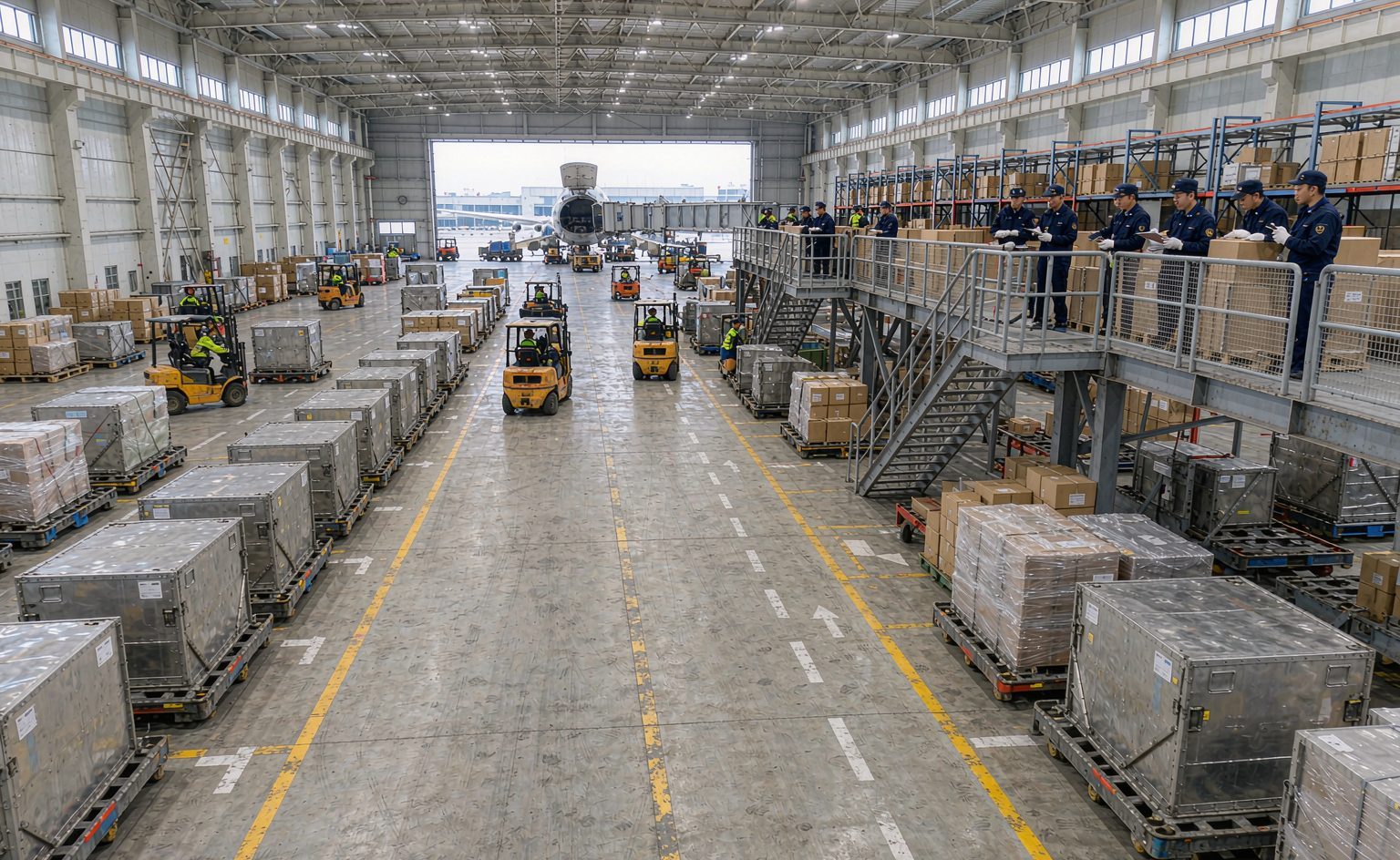
International air cargo terminal interior with ULD containers, forklifts and a freighter visible through the apron door
Inbound and outbound share a roof, not a lane Receiving, screening and ULD build-up run along one side; break bulk, inspection and release along the other. When one side jams, the other loses floor space too — which is why a back-planned schedule beats a phone call to the terminal.
Process

Eight Steps Out, Eight Steps In — Two Deadlines That Matter

Export must be declared at least 24 hours before departure; import must be declared within 14 days of the carrier reporting entry. Everything else is back-planned from those two numbers.

Export: from booking to refund documents

1

Book the flight

Freighter or belly space, decided first. Freighter rotations are fixed and space is tight; belly capacity follows the passenger schedule and shrinks in peak season. The two have different cutoffs.

2

Classify and settle elements

HS code, description, specification, function and brand resolved before anything is filed. Aircraft parts and electronics are where classification disputes concentrate.

3

Advance filing

With the pre-manifest in hand, file up to three days before the cargo reaches the terminal. Advance filing buys time and removes the margin for error at the same moment.

4

Tender and screen

Terminal accepts the cargo, runs it through screening, reweighs and builds the ULD. Batteries and liquids are stopped here more often than anywhere else — and a stop means a new flight.

5

Arrival report and release

The terminal reports arrival and customs matches it against the entry. No inspection order, and the cargo releases. An order moves it to inspection, which runs from half a day to two.

6

Inspection and correction

Three failures dominate: piece count or weight off, description off, undeclared items inside. The amendment window is short, and the earlier it is caught the cheaper it is.

7

Load and close the manifest

Loaded against the release message, with the manifest reconciled to the entry. Split and consolidated shipments get checked here, not at destination.

8

Closure and refund file

After departure the entry closes. The refund copy, release message, terminal receipt and manifest data are archived as the basis for the VAT refund and write-off.

Back-plan from the wheel, not from the door. Take the departure time as zero: 24 hours back is the legal filing floor; another 4 to 6 hours covers terminal cutoff and screening; another working day covers document review and any amendment. Changbei runs fewer departures than the coastal hubs, so losing those three windows rarely costs one day — it usually costs the next rotation.

Import: from wheels-down to pickup

1

Manifest and pre-alert

Manifest data transmits after departure. The consignee needs the master and house numbers, pieces, weight and dimensions to start the delivery order and the filing.

2

Exchange the delivery order

Arrival notice and bill of lading swapped for a delivery order. Freight collect, missing documents and mismatched consignee details all stop here.

3

Declare

Within 14 days of entry reporting — not 14 days if the cargo is perishable. Landing equals filing, with the code, value, origin and any preference certificate already settled.

4

Duty and guarantee

Paid against the assessment, or released against a guarantee under consolidated taxation or duty insurance. On perishables, a guarantee buys hours, and hours are the product.

5

Inspection and quarantine

Fruit gets label and phytosanitary checks; seafood gets packaging and temperature records; live product gets survival and water-condition checks. Orders are usually issued before landing.

6

Laboratory or treatment

Sampling, cold treatment and pest handling happen at the designated site. This is the least predictable block, and on a cold chain it is the one to design around.

7

Release and gate-out

Release message, pickup formalities, gate-out. Cargo under two-stage admission can leave conditionally, with the sampling result following the truck instead of holding it.

8

Delivery and follow-up

To a registered warehouse or final destination, with destination inspection completed inside the required window. An open loop on one shipment flags the next one.

Import runs on hours for perishables, days for everything else. One day before landing, the delivery order and permit checks are done. Two hours after landing, the declaration is in. Mixing the two rhythms is how a cold chain gets thrown away: a consignment treated as “normal cargo” spends its shelf life in a queue.
Documents

Export Is About Completeness, Import Is About Sequence

An export file fails when a paper is missing. An import file fails when a paper arrives in the wrong order — quarantine permits and producer registrations cannot be fixed after the aircraft lands.

Export — base set

  • ✓
    Declaration dataDescription, code, quantity, weight, terms of trade and currency, matching the cargo that actually flies.
  • ✓
    Contract or purchase orderConsistent with the invoice value and the Incoterm on the entry.
  • ✓
    Commercial invoice and packing listPieces, gross and net weight, volume, packaging, shipping marks.
  • ✓
    Customs power of attorneyElectronic authorization completed in the single window, inside its validity period.
  • ✓
    Booking confirmation and pre-manifestMaster and house numbers, flight, departure time and cutoff.
  • ✓
    Licenses and controlled-goods permitsDriven by the supervision condition attached to the HS code.

Export — added by cargo

  • ✓
    UN38.3 test summaryIssued by an accredited laboratory; it is the entry ticket for lithium cells by air.
  • ✓
    MSDS and air transport identification reportStates the UN number and the transport restrictions; the report is renewed on its own cycle.
  • ✓
    Packing certificate and shipper’s declarationUN packaging performance and use certificates, plus the DGD signed by the shipper.
  • ✓
    Certificate of originFormats and issue dates differ by agreement; the wrong one forfeits the tariff preference.
  • ✓
    IPPC mark or fumigation certificateRequired for solid wood packing, pallets and crates.
  • ✓
    CIQ and phytosanitary papersFor commodities inside the statutory inspection catalogue.
  • ✓
    Brand authorizationCommon on branded goods and e-commerce parcels; a missing letter reads as a counterfeit risk.

Import — base set

  • ✓
    Delivery order or arrival noticeObtained after the exchange, and the document you pick up against.
  • ✓
    Original bill of lading or telex releaseConsignee on the master and house bills must be the same party.
  • ✓
    Contract, invoice and packing listPrice structure and terms of trade have to line up with the declared value.
  • ✓
    Import declaration dataIncluding freight and insurance, which feed the dutiable value.
  • ✓
    Automatic import license or quotaWhere the HS code carries that supervision condition.
  • ✓
    Brokerage and inspection authorizationImport usually needs both mandates issued together.

Import — perishables and special cargo

  • ✓
    Import animal and plant quarantine permitIssued before shipment. Applied for after landing, it parks the cargo at the site.
  • ✓
    Official certificate from the exporting countryMust match the species, origin and producer named in the permit.
  • ✓
    Overseas producer registration numberSeafood and other categories must sit on the GACC registration list.
  • ✓
    Chinese label and ingredient listPrepackaged food requires it; bulk perishables are checked batch by batch.
  • ✓
    Certificate of originNeeded for a tariff preference, with format and issue date both inside the rules.
  • ✓
    Cold chain temperature recordMay be pulled during inspection, from loading through to landing.
  • ✓
    Bonded account book and order dataRequired for 1210 stocking, reconciled against physical inventory.
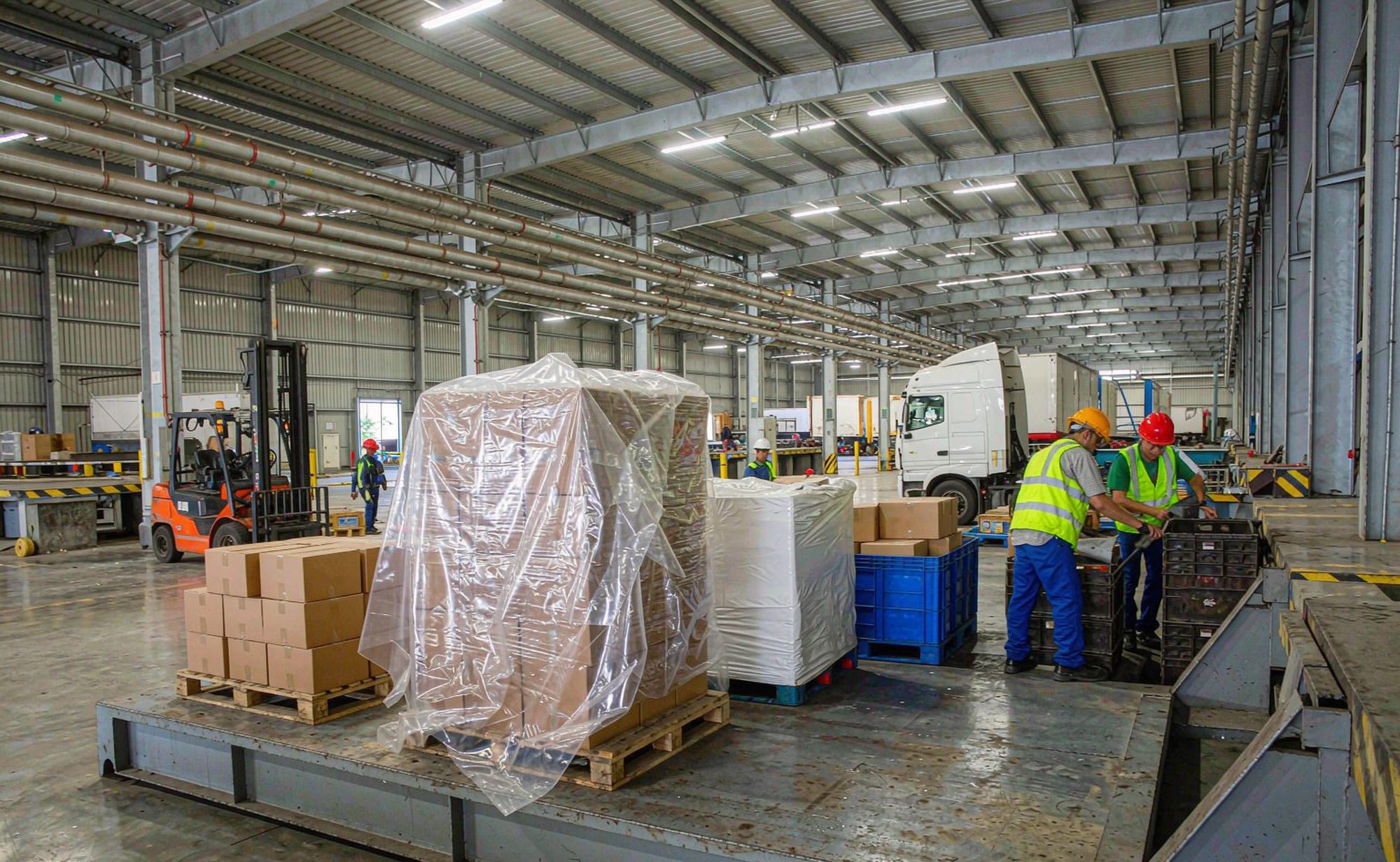
Cargo terminal dock with palletised freight, forklifts and a truck backed onto the loading platform
Tender is where the file meets the floor. A complete document set gets cargo through the dock in one pass; a missing permit or an off weight turns the same cargo into a queue at the counter, with the flight clock still running.
Two things that get missed most. First, the import quarantine permit — it has to be in hand before the goods leave the origin, and applying on landing leaves perishables sitting in a cold room that is billed by the day. Second, the certificate of origin under a free trade agreement — format, issue date and direct-transport rule all have to be satisfied, and missing any one of them forfeits the preference you quoted to your buyer.
Clearance modes

Four Ways to Clear Cargo, Chosen by Direction and Cargo

Air freight leaves less room for error than ocean freight. Choosing a mode is really choosing where to put the risk: before the filing, or after the release.

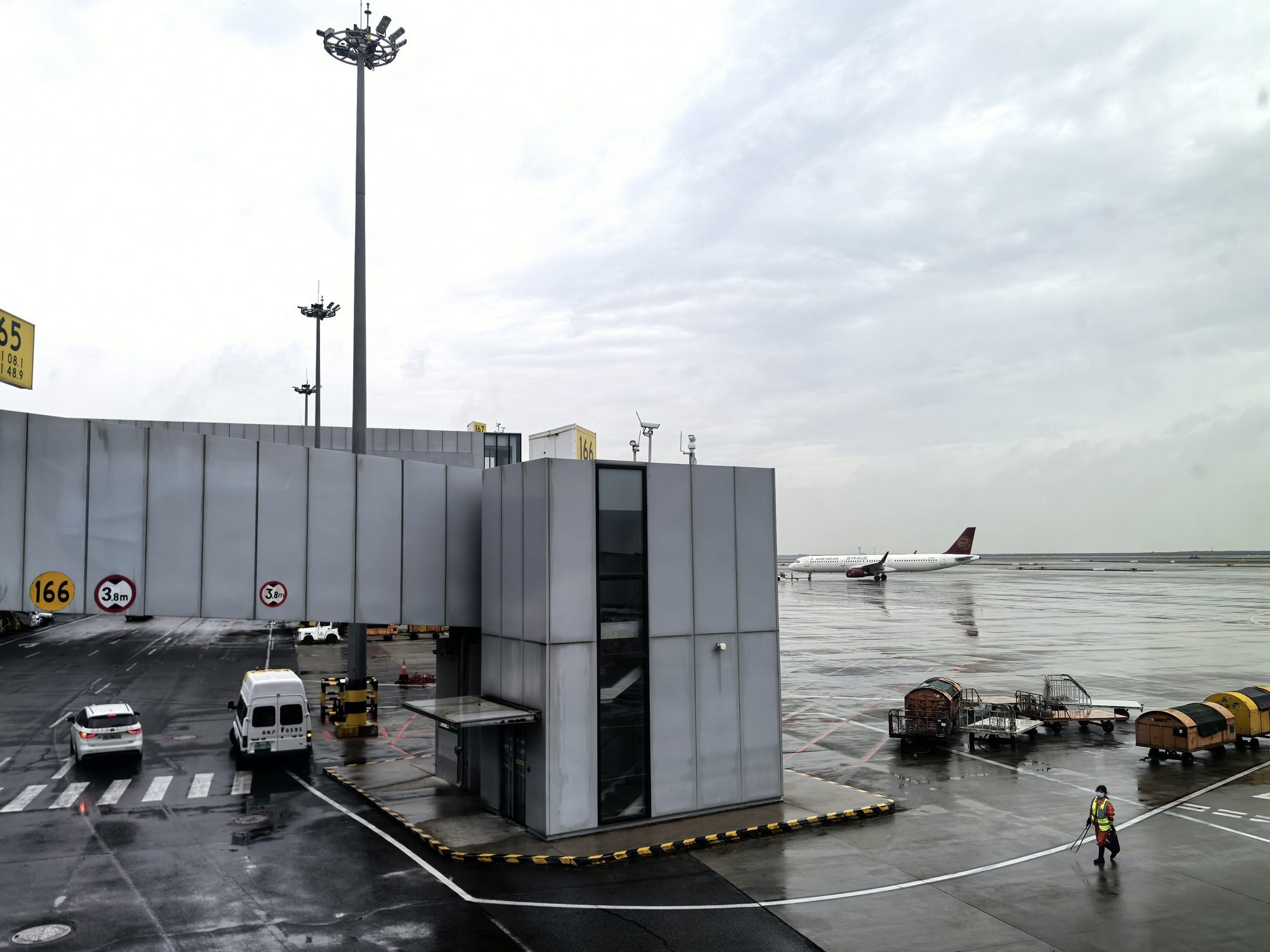
Airport apron with a passenger aircraft at a stand and cargo dollies staged alongside the terminal
Belly capacity travels with the passenger timetable. On a thin route, that is the variable that decides the whole schedule.

Advance filing

File within three days before the cargo reaches the terminal, with space and the pre-manifest already confirmed. Release lands close to the moment the cargo does, which is what makes a same-day freighter connection possible. Not for files still in flux — an amendment here collides with the cutoff.

Two-step declaration

Summary filing off the manifest lets import cargo move or be collected, with the full entry completed inside the allowed window. Built for consignments that have to be picked up before the paperwork is finished — and only safe if the completion date is diarised, not remembered.

Transit to a local customs district

Declared in transit at the gateway and released at the customs district nearest the factory. Common for Jiangxi manufacturers who want inspection close to home. The trade is one extra supervised movement, and it does not suit perishables.

Truck flight and air-road relay

Cargo is released at Changbei and moved by bonded truck to a hub airport with deeper capacity, or the other way round for imports. It is the standard answer when the destination has no direct service — at the cost of road time and one extra handling cycle.

By cargo type

Eight Cargo Types, Eight Different Clearance Logics

An aircraft component and a box of chilled salmon share an airport and nothing else. One is decided by declaration accuracy, the other by hours.

Electronics & consumer devices

Jiangxi’s largest export category. Model numbers multiply and change fast, so the description has to reach model and function level, and brand or licensing exposure is checked early.

Lithium batteries & powered goods

Class 9 dangerous goods. Standalone cells usually need a freighter; cells installed in equipment can move as general cargo under conditions. Incomplete files are refused at the dock, with no negotiation.

Aircraft parts & precision equipment

High value, irregular shapes, and the local aerospace supply chain is a real user of this airport. Packaging and shock protection matter, and the declaration is written part by part by function and material.

Solar & new-energy equipment

Modules, inverters and storage cabinets, mostly samples and urgent orders by air. Battery-containing units follow the powered-goods rules; oversize pieces need the aircraft type and pallet limits confirmed first.

Ceramics & handicrafts

Fragile and priced by the piece. Packaging strength and whether the crate is solid wood both change the inspection route, and cultural-goods controls can apply to artwork.

Textiles, apparel & footwear

Many small batches and many SKUs. E-commerce goes through the manifest route and general trade through the entry route; the two document structures are not interchangeable.

E-commerce parcels

Manifest and entry must share the same order, payment and logistics data. Returns and exchanges go back the original way, or the data no longer reconciles.

Imported perishables

Approved origin and species, official certificate, packing marks and temperature record. Salmon is a cold-chain problem, live product is a survival-rate problem, fruit is a cold-treatment problem.

Compliance reminders — four things not to leave loose

1. Do not file dangerous goods as general cargo. Screening and terminal acceptance are two independent gates, and a misdeclaration found at either one ends with the cargo pulled, the shipper flagged and every later shipment watched.

2. “Can be imported” is not “can be imported here”. Changbei lists fresh fruit, chilled seafood and live aquatic products as designated sites. Get the category wrong and the cargo has no site to land at, however good the paperwork is.

3. The permit has a date, and it is before shipment. Quarantine permits, producer registration and official certificates are all pre-departure documents. Handled on landing, they turn a cold chain into storage cost.

4. Do not import ocean-freight habits. Ocean gives you days of slack; air gives you hours, and Changbei gives you fewer departures than a coastal hub. Once the cutoff passes, the only remaining option is the next rotation.

Working scenarios

Six Jobs, Six Places Where Clearance Nearly Broke

Air cargo rarely fails because nobody knows the process. It fails on one digit, one certificate, or one sequence that was assumed instead of checked.

Export · aircraft parts01

An aircraft component, a new crate, and a weight nobody re-checked

Cargo & lane
Precision aircraft components in a reinforced wooden crate, booked on a freighter rotation out of Changbei, with the cutoff five hours away.
Where it jammed
The declaration used the factory’s net weight. Once the crate and bracing went on, gross weight was 12% higher. Freighter loading is built on actual weight, so the pallet pattern had to be recalculated.
What we did
Reweighed at the terminal, amended the entry, reissued the packing list and had the carrier adjust the load sheet in the same window. The truck was held at the dock rather than sent back.
How it ended
Loaded on the same rotation with no rebooking fee. Reweigh after crating — it is the cheapest step in the whole file and the one most often skipped.
Export · lithium02

Two spare batteries in a carton of devices, refused at the dock

Cargo & lane
A pallet of electronics with installed lithium cells plus two spare battery packs, tendered for a Europe-bound freighter.
Where it jammed
Everything travelled in one carton with one UN number on the shipper’s declaration and one label on the outer box. Installed cells and spare cells are separate packing instructions, and the terminal stopped it at acceptance.
What we did
Split the consignment: equipment under one instruction, spare batteries packed separately with terminals insulated and the correct Class 9 labels applied. The declaration was reissued with both UN numbers.
How it ended
Moved on the next rotation instead of being returned. Mixing installed and spare cells is the most common way air battery shipments die.
Export · e-commerce03

A platform promo repriced the order and left three data sets out of step

Cargo & lane
Roughly 400 parcels of small consumer goods on a 9610 retail export, consolidated for a night truck to the terminal.
Where it jammed
The platform ran a promotion after the manifest was built. The declared value still carried the old price, and the payment timestamp preceded the order creation time, so the three data sets no longer matched.
What we did
Rebuilt the manifest from the order records, had the payment provider retransmit the payment data, and re-bound the waybills to the truck before the vehicle cutoff — one truck, multiple waybills, no reshuffling in the yard.
How it ended
Made the same night departure, with roughly a fifth of the usual handling cost saved by not breaking the load. If the price changes, the whole set is reissued.
Import · salmon04

Norwegian salmon at 3 a.m., and the wait was for people, not paperwork

Cargo & lane
Chilled salmon on the direct Oslo freighter, landing in the small hours with refrigerated trucks already queued outside the terminal.
Where it jammed
Three things had to be verified face to face: the quarantine permit, the overseas producer registration and the official certificate. Any mismatch in species, plant number or consignee stops the consignment at the site.
What we did
Permit and certificate were pre-checked before departure. The inspection order, sampling plan and cold-room slot were lined up before landing, and the sampling was taken against two-stage admission so the cargo could leave conditionally.
How it ended
Site inspection and conditional release completed on the same shift, with the laboratory result following. On perishables, you schedule people first and documents second.
Import · live product05

Live eel from Dhaka, where survival rate was the real customs question

Cargo & lane
Live eel on the Dhaka freighter, packed in water, with a holding facility waiting and a buyer pricing on arrival condition.
Where it jammed
Water temperature in part of the consignment was already high on landing. A standard queue at the site would have extended the loss while the cargo waited its turn.
What we did
Booked inspection in advance and asked for combined handling, so the gateway check and the destination check were done once by qualified staff instead of opening the boxes twice.
How it ended
Released on the same shift and moved straight to holding. Any two checks that can be combined should never be run as two events.
Routing · relay06

No direct service to the destination, so the cargo used two doors

Cargo & lane
Electronic components bound for an inland US point, with no matching freighter capacity out of Changbei on the required day.
Where it jammed
Waiting for the next rotation pushed delivery past the buyer’s line date. Rerouting to a coastal hub threatened the cutoff, because the road leg had not been counted into the plan.
What we did
Released the export entry at Changbei, moved the cargo by bonded truck flight to Shanghai, and locked the connecting flight and the truck slot against each other so neither could slip independently.
How it ended
Departed two days earlier than the next direct rotation, with the road leg and the declaration completed in one pass. Route design usually beats rate negotiation on inland air cargo.
FAQ

Nanchang Changbei Customs Clearance: 10 Questions Shippers Ask

What importers and suppliers actually ask before shipping through Jiangxi’s only airport gateway.

What can be imported through Nanchang Changbei, and what cannot?
The airport has three designated inspection sites: import fruit, chilled seafood and live aquatic products, all inside the international cargo terminal. Salmon, eel, crab and tropical fruit are routine. The published list does not include a meat site, so meat imports need another gateway. Category and country of origin must both appear on the GACC published list before you book the flight.
How late can I file the export declaration?
Cargo must be declared after it reaches the supervised area and at least 24 hours before departure. With advance filing you can file up to three days before arrival, provided everything on the entry reaches the terminal inside the allowed window, otherwise the declaration is canceled. In practice the terminal cutoff, usually a few hours before departure, is the earlier constraint — released cargo that misses it still misses the flight.
There is no direct flight to my destination. What are my options?
Three. Belly space on the international passenger network, which follows the passenger timetable and thins out in peak season. A truck flight that releases at Changbei and loads at Shanghai, Beijing or Guangzhou, which usually recovers one to two days. Or an air-to-air connection through a hub. Value, deadline and destination decide which one, and the road leg has to be inside the plan from the start.
Can lithium batteries ship out of Changbei?
Yes, as dangerous goods. The base file is a UN38.3 test summary, MSDS, an air transport identification report and a packing certificate, plus the shipper’s declaration. Standalone cells normally require a freighter; cells installed in equipment can move as general cargo under conditions. Packaging must prevent short circuit and crushing, with Class 9 labels and the UN number on the outer box. Incomplete files are refused at acceptance.
How fast can perishables be collected after landing?
Same shift is realistic when everything is in place. The clearance center works inspection and release around the clock, and cargo that needs laboratory sampling can use two-stage admission with conditional release, so the truck leaves before the result arrives. Where the gateway and the destination both issue a check order, the two can be combined into one operation. Actual timing depends on the inspection order, the sampling plan and whether the cold truck is on site.
Should I clear at Changbei or transit to a local customs district?
Transit means declaring in transit at the gateway and releasing at the customs district nearest the factory, which suits inland manufacturers who want inspection close to home. It adds one supervised movement. Clearing at the airport means everything is finished before pickup, and it demands tighter document and truck planning. Perishables should not transit — the extra movement costs more time than the inspection saves.
Which e-commerce channel applies to my shipment?
Retail direct mail uses 9610, business-to-business export uses 9710, overseas warehouse stocking uses 9810 and bonded import stocking uses 1210. At Changbei, mail, express and e-commerce are supervised in one cluster, so using the wrong channel means the goods are rejected and re-filed. The order, payment and logistics data must reconcile in value and timestamp.
Does a truck flight still count as an export, and what happens to the refund?
It does. The export entry is filed and released at Changbei, then the cargo moves by bonded truck to the hub for loading, and the entry and manifest stay continuous in the system. Two points matter: the waybill-to-truck binding has to be confirmed before release, and where one truck carries several waybills, each shipment is matched individually. Keep the manifest data for the refund file rather than substituting a truck handover note.
What happens if customs inspects my shipment?
Inspection is routine enforcement, not a finding. The order is usually issued before the cargo arrives, and the check covers piece count, description and undeclared contents. Minor discrepancies are explained and amended on the spot; anything larger moves to handling, and the flight is normally gone. The real defence is a document review before filing and a physical check before tender, not a conversation at the inspection bay.
Changbei or a coastal airport — how do I choose?
Three questions decide it: is there a direct service to your destination, how many days of slack do you have, and can the cargo absorb one extra handling cycle. Europe via Liège or Oslo, and Southeast Asia, are usually better locally. Destinations without a direct service and a tight deadline often go faster by truck flight to a coastal hub. Comparing freight rates alone hides the road leg, which is where the difference actually sits.

Why us

Air Clearance at Changbei Is Won on Timing, Not on Price

There is no “wait a bit longer” option in air freight. You make this rotation or you take the next one.

01

One team on both directions

Export filing, import release, transit and bonded e-commerce run through the same desk, so a problem never gets handed between departments while the clock runs.

02

Back-planned from the flight, not the working day

Document review, screening, cutoff and pickup are scheduled against departure and landing times, so “it should be fine” becomes a timetable with hours on it.

03

We work the three inspection sites routinely

Permit pre-checks, site inspection attendance and conditional release for fruit, chilled seafood and live product — scheduled in hours, because that is the unit the cargo is priced in.

04

We say no to dangerous goods that cannot fly

Classification is done against the IATA rules before cargo is accepted. If the file or the packing does not meet the carrier’s standard, we say so instead of gambling someone’s flight.

05

Truck flights and transit on one plan

The relay to Shanghai, Beijing or Guangzhou is designed as a single route: release at Changbei, transit filing, truck slot and connecting flight locked together rather than quoted as separate legs.

06

Someone is at the terminal

Inspection attendance, amendment delivery and pickup coordination happen on site, so an exception is resolved by a person standing there rather than relayed by phone.

Nanchang Changbei Airport · import & export

Send the flight, the cargo and the deadline.
We will send back a schedule.

For export, tell us the flight and the cutoff. For import, tell us the landing time and the commodity. We confirm whether the shipment can make your window before we discuss price.

Request a quote
Export desksales009@goodhope86.com
Import desksales007@goodhopefreight.com
Phone / WeChat+86 189 3869 1638
Alt. line+86 189 3345 5525
Availability24/7 appointment clearance
On siteInternational Cargo Terminal, Changbei Airport, Xinjian District, Nanchang
call us: +86 13392162503