Since 2012 NVOCC GD20230925153335 24h Response
+86 13392162503 sales8015@goodhopefreight.com Login
Goodhope Freight
Export clearance · Import clearance · Remote station transit

Nanjing Lukou Airport Air Cargo Customs Clearance

Nanjing does not lose shipments for lack of aircraft. It loses them at the gate. Four supervised sites sit behind one perimeter fence — general cargo, e-commerce and express, two remote stations, and carrier terminals — and each one answers a different customs desk with a different timetable. A perfect declaration delivered to the wrong site is a rejected truck, and the next freighter to Amsterdam leaves in three days.

International Cargo & Mail Centre E-commerce & express one-stop centre Suzhou remote station Changzhou remote station Advance filing 24/7 clearance Designated perishable sites
477,000 tCargo and mail throughput, 2025, up 15%
102,000 tInternational and regional cargo, first time above 100,000 t
12 routesScheduled international freighter services
Plan my Lukou clearance See the 8-step flow
477,000 tCargo and mail in 2025
growth 6 points above the national average
102,000 tInternational and regional cargo
up 33.6% year on year
20.5 millionCross-border export parcels in 2025
No. 1 in Jiangsu for eight years
4 hoursChangzhou factory to Lukou uplift
about 5 hours saved
Why Lukou

Jiangsu's Only 4F Airport,
and Four Doors Behind One Fence

Nanjing Lukou International Airport (IATA: NKG) opened in July 1997 and added its second phase in July 2014. It runs a 4F airfield with two 3,600-metre parallel runways, two terminals of roughly 400,000 square metres and an apron close to 1.1 million square metres. In 2025 it handled 31.38 million passengers and 477,000 metric tons of cargo and mail, up 15% — six points faster than the national average — with international and regional cargo reaching 102,000 tons for the first time.

Those numbers put it behind Shanghai and Guangzhou, and that is exactly the point. Lukou is the gateway for the manufacturing belt south of the Yangtze and for the Anhui corridor, and it is the only airport in Jiangsu where a factory can hand freight to an intercontinental freighter without a road leg to another province. Capacity is not the constraint. Which of the four doors your freight goes through is.

  • 1
    Four entrances, four document setsGeneral cargo and perishables clear at the International Cargo & Mail Centre. Parcels and express move through a merged e-commerce and express centre with its own airside gate. Factories in Suzhou and Changzhou declare and inspect locally. China Eastern and China Post run their own bonded terminals that take only their own traffic. The cargo type picks the door.
  • 2
    The intercontinental network sits with one carrierTwelve scheduled international freighter routes are in service, fourteen have been opened in total, and Suparna Airlines flies Chicago, Los Angeles, Mexico City, Amsterdam, Katowice and Warsaw from here. Suparna alone carries more than 60% of the airport's international cargo. Cut-off times belong to the carrier, not to the airport, so confirm them with the operating airline.
  • 3
    The remote stations are the most useful part of the offerSuzhou and Changzhou stations run one declaration, one inspection and one release, then move the freight to Lukou on scheduled truck flights. Changzhou is about four hours door to uplift, roughly five hours faster than the conventional route, and the two stations moved 4,404.56 tons through Lukou in the first five months of 2026, up 92.45%.
  • 4
    Perishables are the fastest-growing inbound flowLukou Airport Customs inspected 1,484.8 tons of imported perishables in the first half of 2026: chilled seafood, salmon, lobster, oysters and tree-ripened durian. The designated sites for chilled aquatic products, fruit, live aquatic animals and nursery stock all sit inside the same perimeter, which is why same-day landing, inspection and release is normal here rather than exceptional.
Who carries the risk? On FOB, CFR and CIF the China-side export declaration belongs to the seller, but a missed cut-off still lands on your delivery date. On EXW it belongs to you, and so does every hour of terminal storage while a broker waits for one certificate. On an airport with two or three freighter departures a week to a given region, a missed cut-off is not a delay of one day.
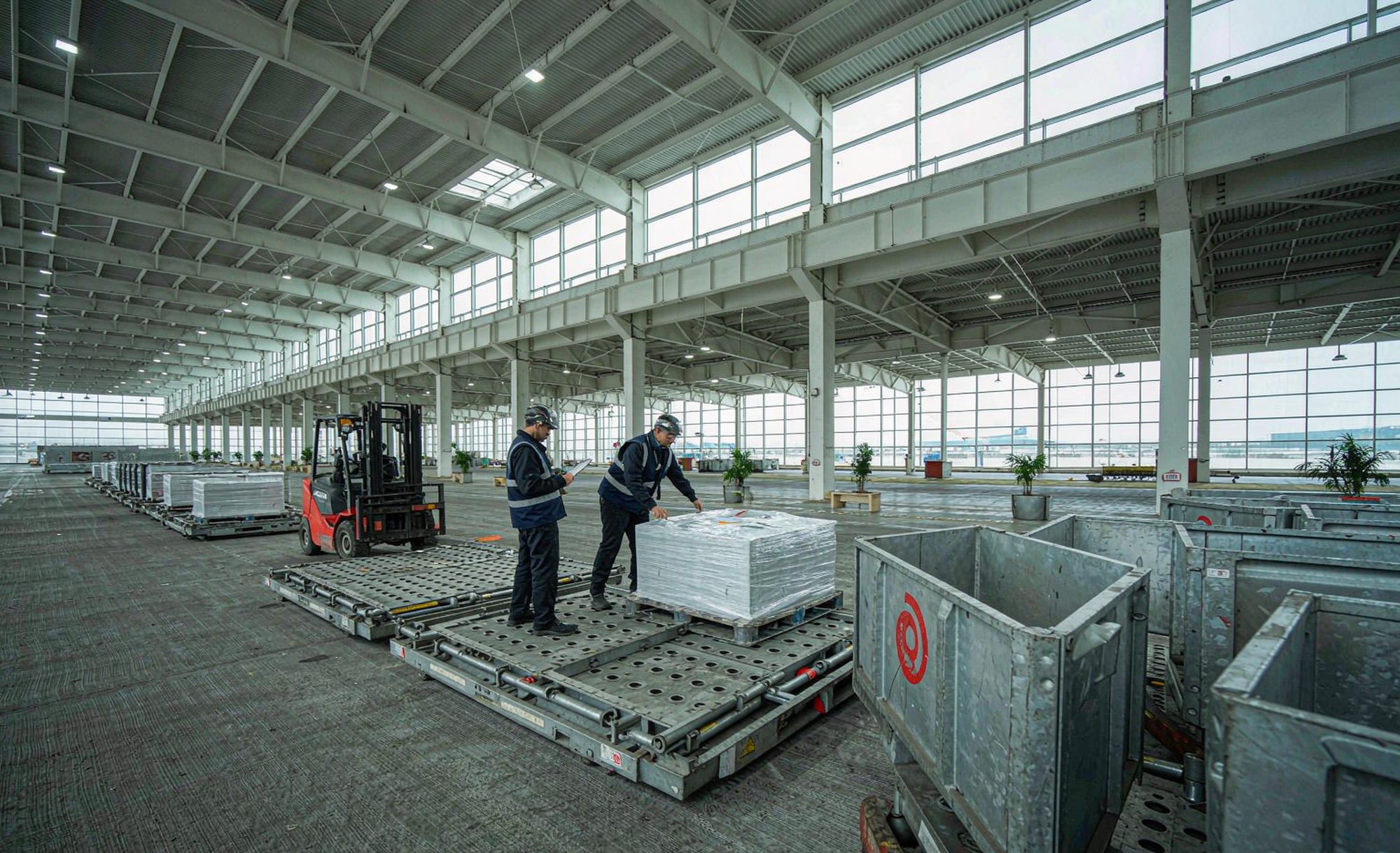
Export pallets wrapped and staged on a roller deck inside an air cargo terminal
On the ground Delivery — declaration — acceptance — uplift Cut-off back-planning · screening · same-day exceptions

In short

Customs clearance at Nanjing Lukou International Airport is the filing that turns booked air freight into a legally released export or import: classification, declaration elements, single-window filing, inspection handling, release and closure. Lukou runs it across four supervised entrances with four timetables, plus designated inspection sites for anything chilled, live or edible. Goodhope Freight acts as the licensed broker for that filing and connects it to factory pickup, remote-station handling, cold-chain delivery and the refund documents that follow.

Site matrix

Four Entrances, and the Wrong One Costs a Flight

Lukou is not one cargo terminal. It is a supervised cargo and mail centre with six inspection zones, a merged e-commerce and express centre with an airside gate, two remote stations in the manufacturing belt, and two carrier terminals that accept only their own freight. The site is chosen by cargo type. The flight only chooses the clock.

Premises code CNNKG230011

International Cargo & Mail Centre

31,116 m² supervised premises, apron side

Function
General cargo acceptance, screening, pallet build and handover for loading
Inspection zones
Front-of-port interception, general food, imported cold-chain food, imported fruit, live aquatic animals, nursery stock
Customs regime
Supervised premises: advance filing, arrival data, release, then acceptance
Watch for
The zones sit inside one fence, but the paperwork names the zone, not just the airport
Best for: general trade pallets, machinery, electronics, pharma, and imported salmon, lobster and durian

Six inspection zones under one roof is the reason Lukou can turn a perishable around on the day it lands.

9610 / 9710 / 9810

E-Commerce & Express One-Stop Centre

Merged supervision centre with airside gate

Function
E-commerce and express supervision merged with cargo terminal functions: consolidation, sortation, booking, pallet build, customs control, screening
Design
Airside gate cut into the boundary between the airport fence and the centre, so cargo never crosses a public road
Speed
Saves one to two hours and about CNY 1,000 of transfer cost per truck
Scale
20.5 million export parcels and USD 336 million of value from the park in 2025
Best for: 9610 parcels, 9710 and 9810 e-commerce exports, A and C class express, platform consolidation

Opened in the second half of 2025 by combining the e-commerce supervision centre with the international express centre.

Suzhou · Changzhou

Remote Cargo Stations

Declaration and inspection at the factory belt

Function
Export declaration, inspection and sealing at the origin station, then truck flight to Lukou
Customs regime
One declaration, one inspection, one release; transit written off on arrival
Timing
Changzhou to Lukou uplift in about four hours, roughly five hours saved
Scale
4,404.56 tons through Lukou in January to May 2026, up 92.45%
Best for: high-value general cargo, precision electronics, e-commerce consolidation, small lots chasing an intercontinental departure

The inspection moves to the factory gate. The declaration still has to be right before the trailer is sealed.

Carrier operated

China Eastern and China Post Terminals

Bonded warehouses of the two home carriers

China Eastern
China Eastern Logistics Nanjing cargo terminal, customs bonded warehouse
China Post
China Post Nanjing distribution and international processing centre, postal airline hub
Access
Only freight carried by that operator or moving inside its network
Watch for
Transport and bill details on the entry must match that carrier's manifest
Best for: shipments routed on a China Eastern or postal account, postal items, blocked-space and fixed-pallet bookings

A release is not an acceptance. Deliver to a carrier terminal with the wrong carrier on the entry and the freight stays on the truck.

One more door worth knowing

The airport bonded logistics centre (Type B). Located in the Lishui core area next to the airport and operated under Jinling Customs rather than Lukou Airport Customs, it runs bonded warehousing on the 1210 stocking model and handles cross-border imports and distribution. It reported CNY 16.8 billion of import and export value in 2024, second among Type B centres in Jiangsu. If your goods are meant for bonded inventory or a 1210 forward stocking position, the entry does not start at the cargo centre at all.

What we handle

Eight Clearance Workflows, Split by Cargo and Door

General cargo, batteries, chemicals and chilled seafood do not share a document set, an inspection site or a timetable. One airport, eight workflows, eight clocks.

SERVICE 01

General cargo export declaration

Prices reconciled against the Incoterm, master and house airway bill matched line by line with the entry, single-window filing, inspection attendance, then acceptance and uplift at the cargo centre.

General tradeMAWB / HAWBClosure
SERVICE 02

Air import clearance

Bill exchange, manifest write-off, declaration, inspection, release, collection and delivery. File a summary declaration first and complete it inside the statutory window when one certificate is still in the post.

Two-step filingManifest write-offDelivery
SERVICE 03

Cross-border e-commerce

Listings and entries under 9610, 9710 and 9810, with order, payment and logistics data reconciled before the parcel reaches the one-stop centre. Category dilution and mixed battery items are the two things that stop a line.

96109810Three-way match
SERVICE 04

Perishables and cold chain

Chilled aquatic products, fruit, live aquatic animals and nursery stock clear at their designated sites inside the cargo centre: official certificates pre-checked before landing, advance filing, inspect on arrival, release on pass.

Designated siteAdvance filingCold-chain pickup
SERVICE 05

Dangerous goods and lithium batteries

UN3480 cells, UN3481 packs and equipment, power banks and aerosols. The test summary must describe this build, and the carrier's station list must list this class before you book — not after the truck arrives.

UN38.3DGDStation list
SERVICE 06

Chemicals, powders and liquids

Composition and CAS number decide the hazard class. Non-hazardous still needs a transport condition appraisal; hazardous moves under the IATA rules with carrier acceptance confirmed before the entry is filed.

Condition appraisalMSDSDG channel
SERVICE 07

Remote station and transit filing

Declare and inspect at Suzhou or Changzhou, seal, move on a scheduled truck flight, write off the transit at Lukou and hand over for screening. Inbound air-to-air transit through Lukou is handled the same way in reverse.

Remote stationTransit write-offTruck flight
SERVICE 08

Refund papers, amendments, rollovers

Refund copy of the entry and the filing record returned after closure, plus cancellations, amendments, re-filing and re-booking after a freighter is canceled or the freight is offloaded.

VAT refund copyAmendmentRe-booking
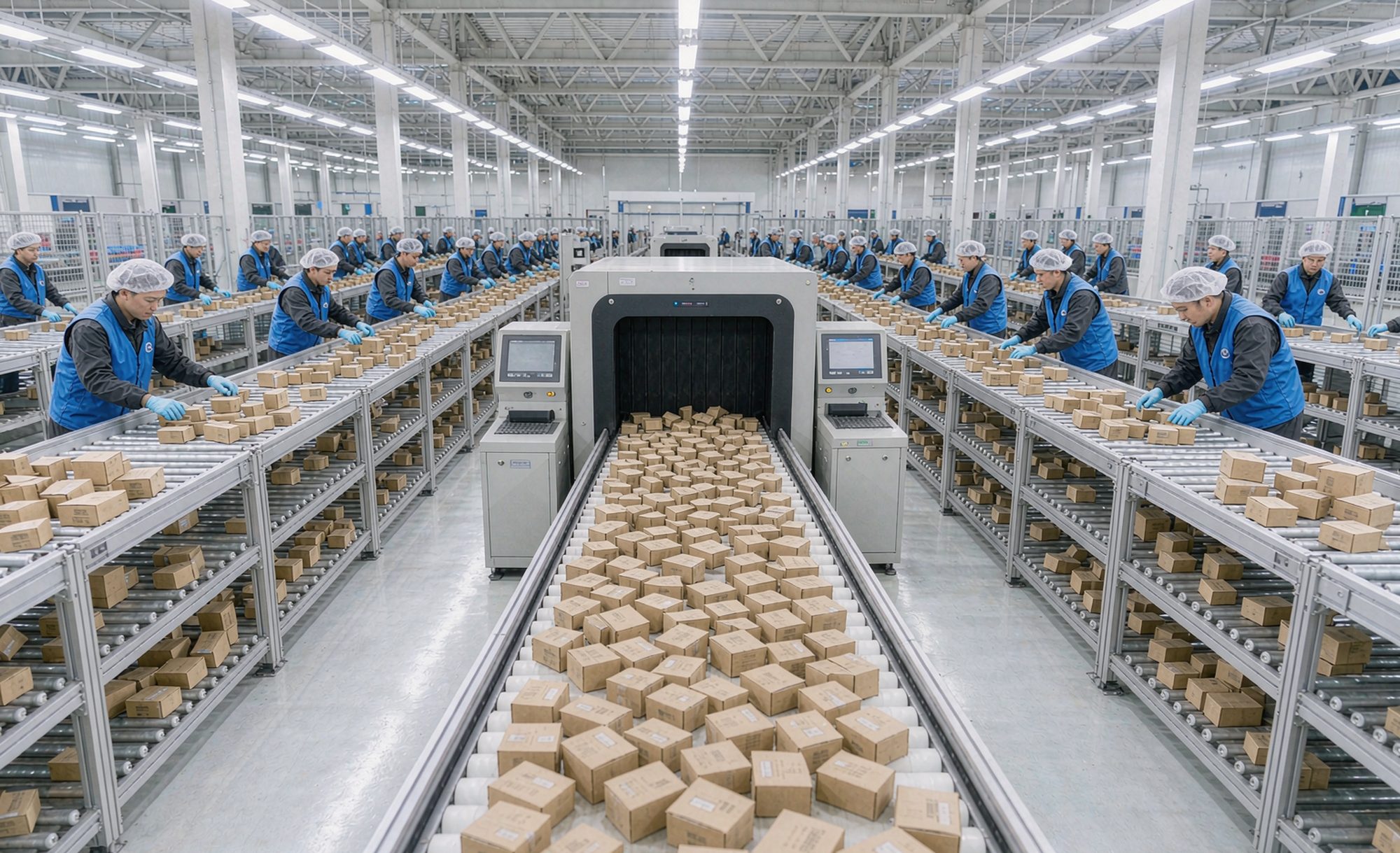
Export parcels moving on a conveyor through a screening arch in an e-commerce supervision centre
Release is a customs event. Uplift is a carrier event. On a route with two departures a week, the gap between them is a week, not a day.
The process

Eight Steps From Booking to a Closed Entry

Nothing in the flow is difficult. What catches exporters is that the cut-offs belong to three different parties, and only one of them will call you back.

1

Take the instruction and audit the file

Confirm the Incoterm, consignee, destination airport and flight, then collect the power of attorney, contract, invoice, packing list and house bill number. Gaps get listed upfront instead of discovered at the counter.

Owner: forwarder · How long: 2–5 days out
2

Classify and fix the declaration elements

Set the commodity code on material, function and principle, then complete brand type, export preference, composition and specification. Disputed classifications need the manual, drawing or test report on file before filing, not after.

Owner: broker · How long: 1–2 days
3

Book, then lock the manifest

Reconcile master and house bill data against the entry: description, pieces, gross weight, consignee. After manifest cut-off an amendment needs carrier consent, and on a route flown twice a week that consent costs a departure.

Owner: forwarder · How long: 1–2 days out
4

Deliver to the right site

Cargo centre, one-stop centre, remote station or carrier terminal. Weighing, measuring and piece count generate the arrival data customs acts on. The right site with the wrong address is still a rejected truck.

Owner: trucker and terminal · How long: terminal cut-off minus buffer
5

File through the single window

After arrival but at least 24 hours before loading, or in advance once manifest data is available. File early and the cargo must still arrive in time or the entry is canceled.

Owner: broker · How long: same day
6

Release, or inspection

Customs either releases on the documents or targets the shipment. At the one-stop centre inspection and screening share one address, so a targeted parcel line loses hours instead of a day.

Owner: customs · How long: hours, or up to a day
7

Screen, build the pallet, load

Released freight passes aviation security, is built onto a ULD, weighed again for load planning and loaded by the carrier. Screening queues in peak season run longer than the customs step.

Owner: terminal and carrier · How long: 2–6 hours
8

Close out and hand back the file

Once the aircraft departs and the manifest closes, the refund copy and the filing record come back, normally one to three working days after departure.

Owner: broker · How long: 1–3 working days
Three clocks, not one. The legal clock: export cargo is declared after it reaches the supervised premises and at least 24 hours before loading, and advance-filed cargo that fails to arrive has its entry canceled. The carrier clock: manifest and cargo cut-offs, set by the airline and different for every route. The site clock: acceptance and screening queues, plus the fixed departure times of the truck flights from Suzhou and Changzhou. Only the first is written in law. The other two decide whether your freight flies.
Documents

The Document Set Has to Satisfy Three Sets of Numbers

Air freight is checked three times against three different records: the booking data, the manifest and the entry. Most rejections are not missing documents. They are documents that disagree.

Base set, every shipment

  • ✓
    Export or import declarationFiled through the single window in the broker's name. Wrong, and the entry never leaves draft.
  • ✓
    Contract or purchase orderSets the Incoterm and the currency. Missing: the declared value has no basis and gets queried.
  • ✓
    Commercial invoice and packing listDescription, quantity, pieces, gross and net weight, marks. Inconsistent figures stop the file at review.
  • ✓
    Power of attorneyElectronic authorization is accepted, but it has to name the broker who actually files.
  • ✓
    Master and house airway billNumber, flight, pieces and weight must match the manifest. A stale bill number is a guaranteed amendment.
  • ✓
    Declaration elementsBrand type, export preference, composition, model, function, use. An incomplete element set is an automatic return.

Added by cargo type

  • ✓
    Licenses and permitsExport license, dual-use item license. Expiry dated before the flight is the same as not having one.
  • ✓
    Certificate of originCO, Form E or Form A, chosen for the tariff preference the destination actually grants.
  • ✓
    Dangerous goods fileUN38.3 test summary, MSDS, DG packing certificate, shipper's declaration. A summary for last year's cell is refused at acceptance.
  • ✓
    Transport condition appraisalFor powders and liquids judged non-hazardous, and a magnetic field report for speakers, motors and magnets.
  • ✓
    Quarantine and inspectionPhytosanitary certificate, health certificate, import approval for perishables, fumigation or heat treatment record, IPPC-marked wood packaging.
  • ✓
    Trade mode documentsProcessing trade manual or account book, ATA carnet, return or repair goods statement.

The expensive mistake

Changing a description or a gross weight after the manifest is confirmed needs carrier consent, and the carrier charges for it. Filing on a master bill number while the house bill is still unissued looks tidy until a flight change splits the two records. We reconcile contract, invoice, packing list, manifest and entry against each other before filing, because an amendment always costs more than a review.

Clearance modes

Four Modes, and What Each One Cannot Fix

Advance filing, two-step declaration, remote station transit and the 24/7 perishable channel all buy time. None of them rescues a document set that contradicts itself, and none of them widens a route that only flies twice a week.

Chilled seafood and insulated boxes staged inside a refrigerated inspection room
Perishables reward preparation, not speed: the certificates are checked before the aircraft lands, not after the pallet is opened.

Advance filing

With the manifest or bill data in hand you can file before the cargo reaches the supervised premises, and let it go straight into inspection or release on arrival. Cannot fix: freight that arrives after the entry has been canceled for non-arrival.

Two-step declaration, imports

File a summary declaration once the bill is available, collect or deliver the freight, then complete the declaration inside the statutory window. Useful when a production line is waiting and one certificate is still in the post. Cannot fix: a complete declaration that never arrives.

Remote station transit

Declare, inspect and seal at Suzhou or Changzhou, then run the trailer on a scheduled truck flight to Lukou and write off the transit before uplift. Changzhou is about four hours to uplift. Cannot fix: a declaration written badly at the origin, because the inspection has already happened there.

24/7 and the perishable channel

Lukou Airport Customs runs round-the-clock clearance, and imported perishables move through designated sites on inspect-on-arrival, release-on-pass terms with a green channel for unloading, sortation and trucking. Cannot fix: an official certificate that names a different production lot from the one in the box.

By cargo type

From Memory Modules to Live Crab, the Filing Logic Is Rebuilt Each Time

The airport that clears a pallet of electronics also clears power banks, chemical powders and seafood that was swimming eighteen hours ago. One template does not stretch that far.

Electronics and precision parts

Model, brand, function and use have to match the manual. Modules often change code depending on whether they are classified as parts or as a finished unit.

Auto parts and machinery

A knocked-down set and its components are different codes, so declare the actual state. Weight and volume drive load planning; a few kilos of drift can cost the pallet position.

Cross-border e-commerce parcels

Listings are released on data, not on trust. Under-declared value, vague categories and returns mixed with new stock are the three things that stop a sortation line.

Lithium batteries and equipment

Fix the UN number and packing section first, then check the carrier's station list for Nanjing. Plenty of carriers here accept Section II only, whatever the paperwork says.

Chemicals, powders and liquids

Composition and CAS number set the class. Non-hazardous still needs an appraisal, and an appraisal is also what decides whether the freight can board a passenger aircraft.

Perishables and food

The designated site is a hard gate: chilled aquatic products, fruit, live aquatic animals and nursery stock each have their own inspection zone and their own certificate requirements.

Pharma and biological products

Temperature and time are both binding, and dry ice is declared as dangerous goods. Imported pharmaceuticals and biologics need port qualification and approval documents that cannot be improvised.

Exhibition goods and samples

Carnet lists must match the physical goods piece for piece, otherwise the re-import does not reconcile. Sample shipments need to say sample and no commercial value, in writing.

Compliance: four points that are not negotiable

1. Check the carrier's dangerous goods station list before you book. Most carriers serving Nanjing accept only Class 9 aircraft parts for their own use and lithium batteries under Section II of packing instructions 965, 966, 967, 969 and 970. A shipment outside that scope is refused at acceptance, and the handling charges stand whether it flies or not.

2. Do not treat a remote station as a place to fix things later. Inspection happens at the origin and the trailer is sealed afterwards. A wrong description written in Changzhou cannot be repaired at Lukou, because there is no second inspection point waiting for you.

3. Declare what is actually in the box. Description, specification, quantity, value and origin must match the goods and the documents. Misdeclaration sits with the shipper; a broker cannot absorb that liability.

4. Keep the refund chain closed. The entity on the entry, the VAT invoice and the foreign exchange receipt must be the same entity. Buying an export declaration under someone else's name breaks that chain, and the loss shows up at the refund stage.

Working cases

Six Shipments That Nearly Missed Their Aircraft

Air export clearance rarely fails because nobody knows the process. It fails because a cut-off moved, a test report was for last year's cell, or the freight went to the wrong door.

Manifest · cut-off01

A departure pulled forward three hours, with no manifest data yet

Cargo and lane
Two consignments of precision components, 620 kilos, collected in Suzhou for an evening freighter to Europe.
Where it jammed
The carrier moved departure forward by three hours while the house bill data was still being generated. Advance filing needs manifest data; without it, release would land after the cargo cut-off.
What we did
Closed the classification and element review while waiting, then filed the moment the manifest dropped. At the same time we confirmed the acceptance dock and screening slot with the terminal and re-timed the truck to arrive on release rather than into a temporary warehouse.
Outcome
Accepted and screened within 90 minutes of release, on the original aircraft. It was recoverable because only one thing was missing — the manifest.
Perishables · import02

Salmon landing at dawn, sold by lunchtime

Cargo and lane
A consignment of chilled salmon on a dawn arrival, required in Nanjing and Yangtze Delta retail and restaurants the same day.
Where it jammed
Chilled aquatic products must be inspected at the designated site, and the import approval, exporting country's official certificate and health certificate all have to be in place first. Replacing a certificate after landing consumes the entire freshness window.
What we did
Pre-checked the approval and certificates, filed in advance, and routed the freight straight to the chilled aquatic products site on landing. Inspection and sampling ran in parallel, with the refrigerated truck waiting outside the perimeter.
Outcome
Released before noon and delivered the same day. Perishables do not reward speed so much as certificates verified before the wheels touch down.
E-commerce · 961003

Listings released, then the whole line stopped at sorting

Cargo and lane
About 16,000 consolidated e-commerce parcels through the one-stop centre to Europe.
Where it jammed
The listings said household goods. The boxes contained battery fans and alcohol-based fragrance samples, and the payment data did not match the declared values. The three-way comparison failed.
What we did
Pulled every battery and alcohol item and declared them on their own terms, refined the category to actual product names, corrected the values to the real transaction price, and separated returns from the batch.
Outcome
The remaining parcels cleared the same day and the exceptions moved the next day. Throughput here is not won by declaring vaguely — it is won by arriving with clean data.
Remote station · Changzhou04

A Changzhou factory and an intercontinental departure the same night

Cargo and lane
1.8 tons of automotive components from a plant in Changzhou, booked on an intercontinental freighter out of Lukou that evening.
Where it jammed
The conventional route means a two-hour road leg, arrival queue, declaration filing and then waiting for a possible inspection instruction. One targeting instruction and the booking is gone, because the next departure is days away.
What we did
Moved the shipment to the Changzhou remote station: declaration and inspection completed locally, trailer sealed, truck flight to Lukou running in parallel with the filing rather than after it.
Outcome
Four hours door to uplift, roughly five hours saved, loaded as booked. The remote station does not lower the declaration fee. It deletes the half-day spent waiting at the airport.
Batteries · station list05

A complete battery file, and a carrier that does not take it here

Cargo and lane
32 portable power stations with lithium-ion cells, planned on a freighter from Nanjing to North America.
Where it jammed
The test summary and packing certificate were valid, but that carrier's Nanjing station list covers Section II lithium batteries and its own aircraft parts only. This shipment was declared under Section I and was refused at acceptance.
What we did
Stopped the tender, checked the dangerous goods station list of every carrier serving Nanjing, then evaluated whether repacking or a different packing section was viable. It was not, so the freight moved to Shanghai Pudong and the entry was cancelled.
Outcome
Departed two days later than planned. Battery cargo never fails on the declaration. It fails on the station list nobody checked before booking.
Cancellation · rebooking06

Released, inside the terminal, and the freighter is canceled

Cargo and lane
Machinery parts, released and accepted, when the carrier canceled the freighter for capacity reasons.
Where it jammed
Released freight cannot move on a different aircraft without amending the transport and bill details. Waiting until the manifest closes turns a two-line amendment into a cancellation and re-filing, which pushes the refund paperwork back by weeks.
What we did
On confirmation of the new service, amended the transport and bill numbers, updated the manifest and kept the cargo inside the supervised premises so it avoided a second entry and a second screening.
Outcome
Loaded the next day, refund papers delayed by two working days. A canceled freighter is survivable. Waiting for closure is not.
FAQ

Ten Questions Shippers Ask About Nanjing Clearance

Answered the way we answer them on a call, not the way a brochure would.

How far ahead should I start clearance at Lukou Airport?
For general cargo, get the documents to the broker three to five working days before departure, which leaves room for classification checks and advance filing. Battery, chemical and perishable cargo needs five to seven working days, because test summaries, transport appraisals and import approvals take longer than the flight does. If the departure is already tight, file in advance and let the freight go through inspection and release on arrival.
Does a customs release mean my freight makes the flight?
No. Release closes the customs step; acceptance, aviation screening, pallet build and carrier load planning come after it. In peak season the terminal queue can take longer than the declaration. Plan from the sum of release time and terminal time, and remember that on many Nanjing routes the next departure is two or three days away, not tomorrow.
How do the Suzhou and Changzhou remote stations work?
Export cargo is declared, inspected and sealed at the origin station, then moved to Lukou on a scheduled truck flight under one declaration, one inspection and one release. Changzhou is about four hours from factory to uplift, roughly five hours faster than the conventional route. The condition is that the declaration is correct at origin, because the inspection has already taken place there and cannot be repeated at the airport.
Should I ship out of Nanjing or Shanghai Pudong?
It depends on the lane and the cargo. Nanjing wins on proximity for factories in southern Jiangsu, on the remote stations, and on the depth of its perishable inspection sites; its intercontinental freighters run mainly to Amsterdam, Chicago, Los Angeles, Mexico City, Warsaw and Katowice. Pudong wins on frequency and on choice of carrier, which matters for unusual destinations and for rate shopping. For dangerous goods, compare station lists first: Nanjing accepts a narrower scope than Pudong.
Why can imported seafood clear the same day at Lukou?
Because the inspection sites and the handling are inside one perimeter. Chilled aquatic products, fruit, live aquatic animals and nursery stock each have a designated zone in the cargo and mail centre, and the customs office runs round-the-clock clearance with inspect-on-arrival and release-on-pass. The part that cannot be compressed is documentation: the import approval and the exporting country's official certificates have to be checked before the aircraft lands.
Can products with batteries ship out of Nanjing?
Only within what the carrier accepts here. Most carriers serving Nanjing take lithium batteries under Section II of packing instructions 965, 966, 967, 969 and 970, plus Class 9 aircraft parts for their own use. Anything outside that scope has to be routed through another gateway. That is why the first step for battery cargo is not the declaration but the carrier's dangerous goods station list.
I have no import-export license. Can I still ship?
Through an agent with the right qualification. Be clear about the consequence: the entity on the declaration owns the refund and the foreign exchange path. If the goods are meant to generate a VAT refund, exporting under someone else's name puts that refund at risk, so settle the structure before the goods move rather than after.
What usually stops a 9610 parcel line?
The three-way match. Vague categories, values well below comparable goods, battery or alcohol items hidden in a general listing, and returns mixed with new stock all get pulled at sorting for manual review. The one-stop centre at Lukou runs round the clock and has an airside gate, so throughput is not the bottleneck; dirty data is. Split mixed batches by category before they arrive.
What if the entry is already filed and the description is wrong?
Before release you can apply to amend or cancel, with reasons and supporting documents. After release, and especially after departure, the process is heavier and can affect the refund. That asymmetry is why we reconcile contract, invoice, packing list, manifest and entry before filing: an amendment always costs more than a review.
When do I get the VAT refund documents?
After the aircraft departs and the manifest closes, normally one to three working days. Amendments, inspections or a delayed manifest closure push that back. For cargo that cleared at a remote station, the refund clock follows the actual departure, not the day the trailer left the factory, and we tell your finance team the date rather than letting the filing deadline arrive unnoticed.

Why us

At Lukou, the Work Is Choosing the Door

Anyone can quote a clearance fee. What decides whether your freight flies is whether four supervised entrances, two remote stations and a carrier station list are all handled by someone who knows which one your cargo belongs to.

01

Shenzhen desk, Lukou boots on the ground

Booking, documents and your account run from Shenzhen. The cargo centre, the one-stop centre and the carrier terminals at Lukou are covered on site, with same-day response on holds and amendments.

02

Five-way reconciliation before filing

Contract, invoice, packing list, manifest and entry are checked against each other first, which is cheaper than any amendment and much cheaper than a refused tender at the dock.

03

Four doors, four routing decisions

General cargo to the cargo and mail centre, parcels to the one-stop centre, southern Jiangsu factories to a remote station, perishables to a designated site. One timetable does not fit all four.

04

The station list before the booking

For batteries and chemicals we confirm what the carrier accepts at Nanjing first, so the freight does not travel to an acceptance dock that will refuse it.

05

Cold chain on the same file

Import approval, official certificates, advance filing, inspection and refrigerated pickup run under one job number, with the truck waiting before release rather than after.

06

Itemized quotes, charges as incurred

Declaration, pickup, remote station handling, truck flight, inspection, storage and cold-chain delivery are listed separately and billed against actual receipts, not bundled into one number nobody can audit.

GET IN TOUCH

Lukou clearance,
with someone watching the clock

Send the commodity, piece count and weights, destination airport, planned flight and where the goods are collected — Suzhou, Changzhou, Nanjing or elsewhere. You get back the workable entrance, the document list and a timetable counted backwards from the cut-offs.

Request a Lukou clearance quote
CompanyGoodhope Logistics (China) Limited
NVOCCGD20230925153335
Phone / WhatsApp+86 13392162503
Emailsales8015@goodhopefreight.com
Office hoursMon–Sat 09:00–18:00 GMT+8
ResponseWithin 24 hours, usually same day
call us: +86 13392162503