It is how you claim the treaty rate
Nicaragua’s tariff schedule still shows a rate for every line. The FTA rate is a claim you elect at entry, and the entry has to name the agreement and carry a valid certificate. No certificate, no claim.

Nicaragua cut tariffs on most Chinese goods when the agreement took effect on January 1, 2024. The cut is not automatic at the border. Your entry only lands in the preferential column when it claims the treaty rate and carries valid origin evidence. Form NI is that evidence.
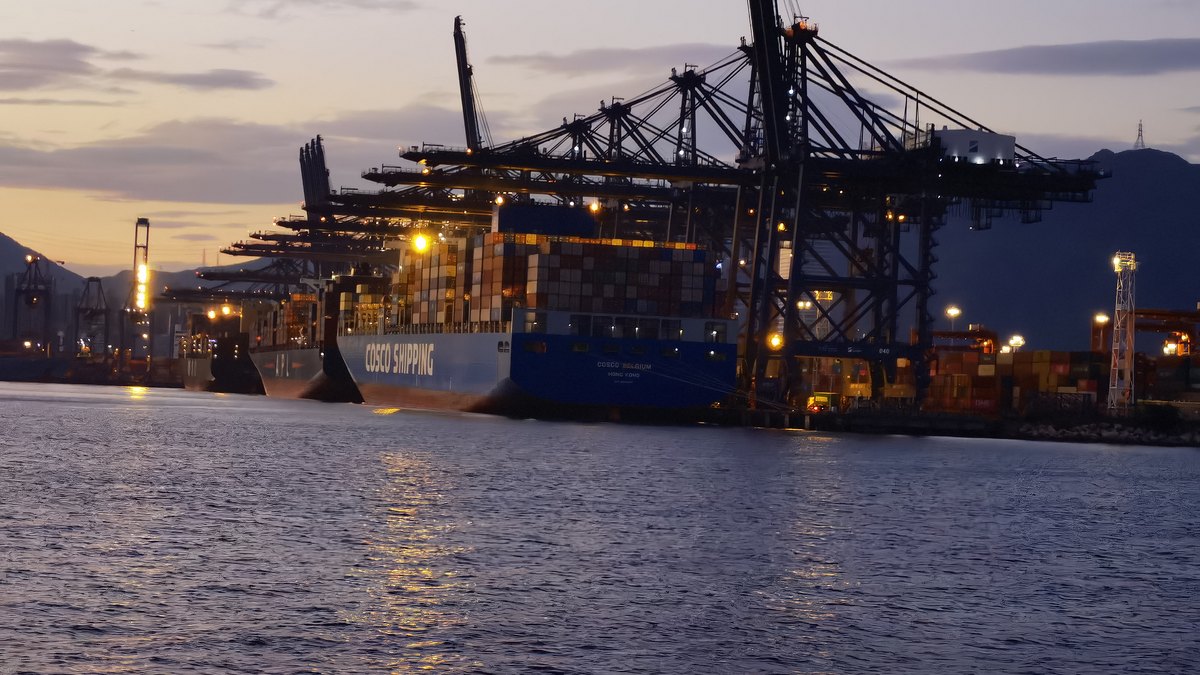
Form NI is the preferential certificate of origin issued under the China–Nicaragua Free Trade Agreement. Its formal name is the Certificate of Origin under the China–Nicaragua FTA. The certificate number starts with NI, which is why the trade calls it Form NI. The document is completed in English.
It is issued by China Customs at the port of export or by CCPIT and its local branches. Filing is online, and the certificate is normally self-printed on A4 in color with the electronic seal and signature, or collected at the counter. You file before or at the time of shipment. If that window is missed, a retroactive certificate can still be requested within one year of the shipment date, and the certificate stays valid for one year from the date of issue.
What it buys you: the right to declare the FTA rate instead of the MFN rate on the Nicaraguan entry. On lines where the two rates still differ, that gap is your landed cost. The certificate does not create origin — the goods have to qualify under the agreement’s rules, and the origin criterion printed on the certificate has to match the way they were actually made.
China and Nicaragua restored diplomatic relations in December 2021. An early harvest arrangement followed in July 2022 and started cutting tariffs on a limited list on May 1, 2023. The full free trade agreement was signed on August 31, 2023 and took effect on January 1, 2024.
The agreement is China’s 21st FTA and Nicaragua’s 28th partner. Nicaragua is also the fifth Latin American country to have one, after Chile, Peru, Costa Rica and Ecuador. China Customs has stated that the origin rules under the FTA and under the earlier harvest arrangement are the same, which matters if you are reconciling certificates from the interim period.
The Chinese side works to two instruments. The measures on origin administration under the China–Nicaragua FTA (GACC Announcement No. 190 of 2023, effective January 1, 2024) decide how origin is established and what the certificate has to say. The measures on the administration of certificate of origin visas (GACC Order No. 270, effective September 1, 2024) govern filing, review, issuance, amendment and retroactive issuance.
Origin is decided one of three ways. Wholly obtained: grown, raised, mined, caught or produced entirely in China or Nicaragua. Produced exclusively from originating materials: everything that went into the goods already qualifies. Product-specific rule: non-originating materials were used, but the finished goods meet the rule set for their tariff line in the agreement’s product-specific rules of origin — a change in tariff classification, a required process, or a regional value content threshold. Where value content is the test and no specific rule applies, the threshold is 40%, calculated as (FOB value − value of non-originating materials) ÷ FOB value × 100%.
Three supporting rules decide as many cases as the main rule. Bilateral cumulation: materials originating in either country count as originating in the other. De minimis: where the rule is a tariff change, non-originating materials up to 10% of the FOB value may be disregarded. Sets: a set stays originating if the non-originating components do not exceed 15% of its total value. Operations that do not confer origin — packing, labelling, dilution, simple assembly, shelling, simple cutting — do not become qualifying work just because they happen in China.
Direct transport is the other gate. Goods may pass through a third country only for geographic or transport reasons, may undergo nothing beyond unloading and handling needed to keep them in condition, may stay in temporary storage for no more than 180 days, may not enter trade or consumption there, and must remain under customs control throughout. This is 180 days, not the 12 months some other Chinese FTAs allow. Build the transit time into the booking, not into the explanation afterwards.

Your name is on the Nicaraguan entry, so the duty assessment, the verification and the penalty exposure all land on your side of the transaction. Form NI is the document that puts the shipment in the preferential column and keeps it there.
Nicaragua’s tariff schedule still shows a rate for every line. The FTA rate is a claim you elect at entry, and the entry has to name the agreement and carry a valid certificate. No certificate, no claim.
Duty is charged by HS line, and Nicaraguan rates on some industrial and consumer goods are not small. The difference between the FTA rate and the MFN rate settles per entry. Recovering it after release is a correction process, not a discount.
Nicaraguan purchase contracts and letters of credit often name the certificate, the number of originals and the language. A missing certificate, a wrong number or an issue date after the bill of lading is a discrepancy — and a discrepancy is leverage for the bank to refuse.
Nicaraguan customs can verify a preference claim after release, working through China Customs. The certificate, the invoice, the bill of materials and the production record are what you produce. A clean file closes the query; a thin one loses the preference.
Anti-dumping, countervailing and safeguard cases, quota administration and import statistics are all built on origin. The certificate is the record behind the number when a case file is opened years later.
Same supplier, same HS line, certificate with every shipment: your clearance and costing get a stable base. A missing certificate, a retroactive filing or an amendment eventually shows up in the purchase price and the delivery date.
The FTA rate applies to goods that qualify as Chinese origin and are backed by a valid certificate at the time of declaration. If the certificate is missing or does not meet the rules, the same shipment is assessed at the MFN rate. If the certificate is not available at entry, a supplementary declaration with a duty guarantee can release the goods, with the certificate produced later to cancel the guarantee — but that procedure ties up your cash and your clearance time.
The other side of the ledger is worth doing too. If Nicaragua’s MFN rate on your line is already low and the contract asks for no certificate, the marginal benefit is thin. Rate gap, filing cost and rework risk are three numbers; add them before assuming a certificate is always worth having.
Only two types of office in China can issue Form NI — China Customs and CCPIT with its local branches. Both produce a certificate Nicaraguan customs accepts, and both are filed online. Which one you use is usually decided by your contract, your letter of credit, or your supplier’s existing registration.
| Channel | What it is | Where it is filed | Use it when |
|---|---|---|---|
| China Customs | Government issuing authority — the customs house at the port of export | Internet + Customs at online.customs.gov.cn (origin certificate module), or the Single Window at singlewindow.cn | Your buyer or bank wants an official certificate, or you want the certificate tied to the export declaration data |
| CCPIT | Chamber issuer — the China Council for the Promotion of International Trade and its local branches | CCPIT origin certificate system at co.ccpit.org, or declare.ecoccpit.net | Your buyer asks for a chamber certificate, wants a chamber stamp added, or your supplier already files everything through CCPIT |
Filing is electronic end to end. Submit in one of the systems above, the authority reviews it online, and once it clears you print the certificate yourself — A4, color, double-sided, with the electronic seal and the authorized signature. That printout has the same legal effect as a pre-printed form. China–Nicaragua certificates are on the self-print list, so collecting a paper original at the counter is an option, not a requirement. Review is completed within two business days.
There is no residency requirement. Any customs house or local CCPIT branch will accept an online filing. Cargo out of Shenzhen and the Pearl River Delta is normally filed with Shenzhen Customs or CCPIT Shenzhen, which keeps review and rework in one place. Cargo out of Ningbo, Shanghai, Qingdao, Tianjin, Xiamen or Guangzhou is filed with the office that matches the port of export.
The reverse direction works the same way: Nicaraguan goods entering China claim the FTA rate on a certificate issued by an authorized Nicaraguan body. On the Chinese import declaration, the preference agreement code is 24. That code belongs to the Chinese import entry — it is not the export certificate number, and the two should not be mixed.

The rule is short. The exporter named on the certificate, or the manufacturer of the goods, may apply — directly or through an agent holding a signed power of attorney filed with the issuing office. In practice that produces three arrangements.
A first filing needs the company profile maintained in the system — unified social credit code, Chinese and English name and address, and the rest of the registration fields. A company already registered as an exporter or consignee with customs can sync that data. To use self-print, the company seal and the declarant’s signature have to be uploaded and authorized. When an agent files, the entrustment is also registered in the e-port system and the power of attorney uploaded.
China Customs publishes the list of agreements under which an approved exporter may issue its own origin declaration instead of a certificate. The list covers RCEP, China–Iceland, China–Switzerland, China–Mauritius, China–New Zealand, China–Serbia and others. China–Nicaragua is not on it. Under this agreement, the certificate is the only way to claim the preference today. A supplier shipping the same product every month still files a certificate every time.

The rule says the application is made before or at the time of shipment, and the origin measures under the agreement say the same. That is not bureaucratic fussiness. The certificate carries the transport details — mode and routing, departure date, vessel and voyage or flight number, port of discharge — and none of those exist until the booking is confirmed.
Departure date, vessel or flight and discharge port are fixed. Pull the invoice, packing list, HS code and the origin support for the goods.
Decide which rule your product meets and gather the bill of materials or cost breakdown that proves it. Do this before filing, not after a query.
Review is completed within two business days. Self-print and check the number, the seal, the signature and the ORIGINAL marking.
PDF goes out ahead so your Nicaraguan broker can prepare the entry; the original travels with the shipping documents or by courier.
All is not lost. A retroactive certificate can be requested within one year of the shipment date, filed with the bill of lading or air waybill as proof of that date. If it passes review it is issued and annotated ISSUED RETROACTIVELY, and it remains valid for one year from the shipment date. Two limits are worth knowing: no retroactive certificate where the goods have been returned or where origin cannot be verified, and some letters of credit refuse a certificate dated after the bill of lading.
A retroactive certificate is not a waiver. The issue date falling after the shipment date is exactly what Nicaraguan customs and the issuing bank look at when they test the document set. Some LCs rule it out, and some buyers ask for an explanation of the timing. File early when you can.
Filing it yourself and having us file it walk the same official path. What changes is who fills the form, who checks it against the rest of the file, and who does the rework when a field is wrong. Form NI adds one step a plain CO does not have: the origin call has to be made first.
Check the Nicaraguan tariff line and staging for your HS code, and confirm the routing meets the direct-transport rule, including the 180-day limit on temporary storage.
Find out whether your product falls under a product-specific rule. If it does, test the tariff change or process requirement; if it does not, calculate whether regional value content reaches 40%.
Bill of materials, supplier invoices for non-originating inputs, cost build-up where value content is the test. This is the file that answers a verification six months later.
Invoice, packing list and bill of lading. Invoice number and date, value, package count, gross and net weight, marks — all of it has to agree before anything is filed.
Exporter and consignee details, transport and routing, goods description taken line by line from the invoice, HS code, origin criterion. No catch-all words in the description box.
Customs or CCPIT reviews within two business days and normally lists every needed correction in one pass, which is why a clean file saves a round trip.
Self-print A4 color, double-sided, or collect at the counter. Check the certificate number, seal, signature and the ORIGINAL marking before the page leaves the office.
PDF to your Nicaraguan broker immediately, original with the documents or by courier. Keep the certificate copy and the application file for three years.
The list is short. One item runs longer than it does for a plain CO: Form NI asks for evidence of origin, and that is the part reviewers and foreign customs both read closely.
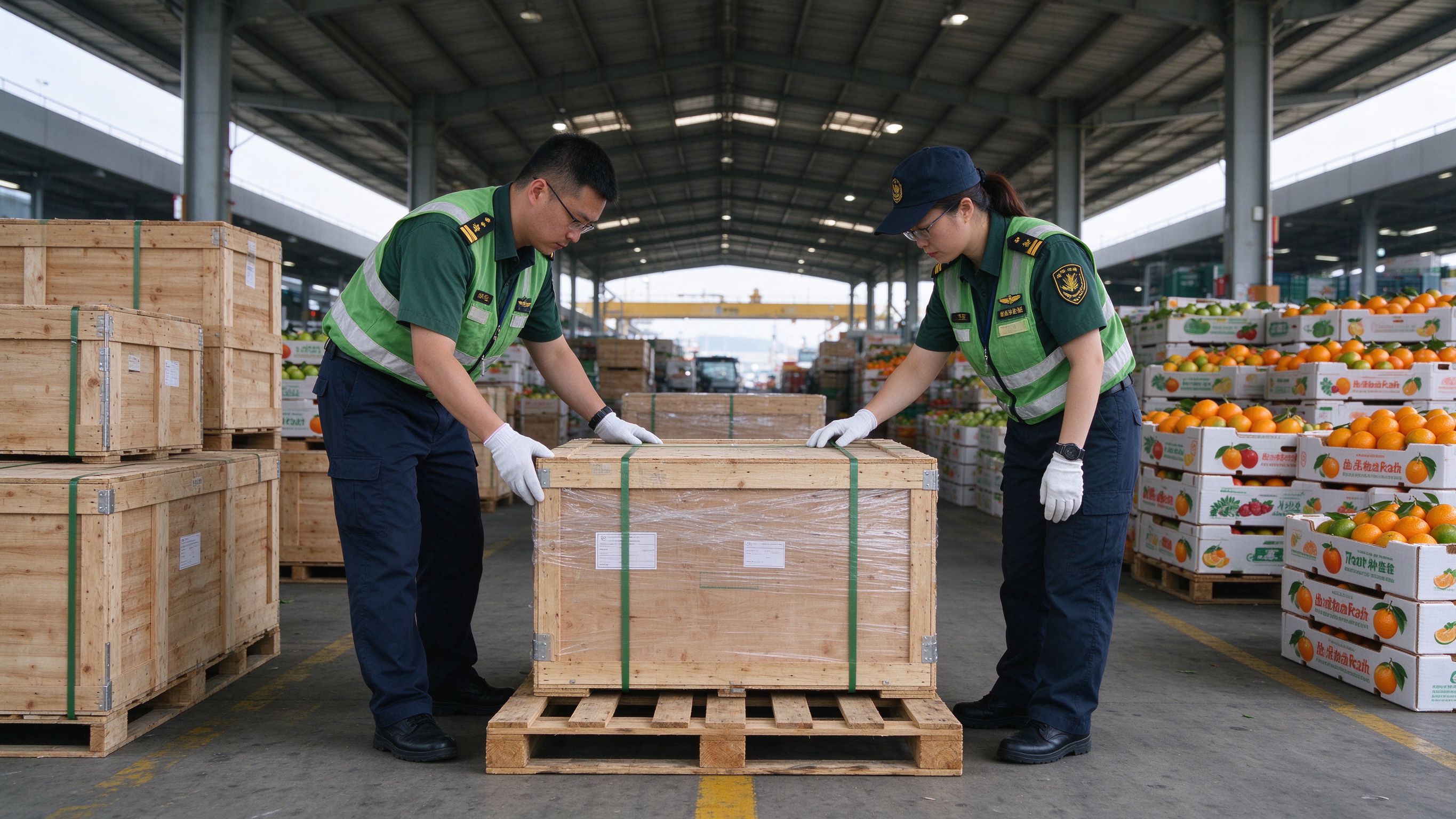
Two separate charges, two separate reasons. The issuing office charges no visa fee for an origin certificate, and neither China Customs nor CCPIT publishes one. What you pay is the agent’s service fee for doing the work.
China Customs issues origin certificates without a visa charge, and CCPIT’s public fee schedule shows the same. Review, certificate format, electronic seal and electronic signature are not billed to the applicant.
What we charge covers the filing work — settling the origin criterion, assembling the support file, reconciling the three documents, filing, tracking the review, printing and delivery, and rework if a field is wrong. Quoted per certificate, one price per certificate.
Shipping to Nicaragua looks simple, but there is only one preferential route. Put Form NI beside a plain CO, the Honduras arrangement and an RCEP certificate, and it gets harder to file the wrong one.
| Document | Code | Where it works | Can it support a Nicaraguan claim? |
|---|---|---|---|
| Form NI — China–Nicaragua FTA certificate of origin | NI | Nicaragua | Yes. The only document for the FTA rate. |
| CO — non-preferential certificate of origin | CO | Any destination; no country restriction | No. Proves Chinese origin only. Supports the MFN rate, not a treaty claim. |
| China–Honduras early harvest certificate | 27 | Honduras | No. Different country, different schedule. |
| RCEP certificate — Regional Comprehensive Economic Partnership | RC | ASEAN ten plus China, Japan, Korea, Australia and New Zealand | No. Nicaragua is not an RCEP member. |
| China–Chile / Peru / Costa Rica / Ecuador FTA certificates | various | Each agreement’s own parties | No. Only the country named in that agreement. |
Central American countries have different arrangements with China. Honduras has an early harvest arrangement, Costa Rica has a full FTA, Nicaragua has an FTA in force since 2024. A certificate of origin is a bilateral instrument: the named country, the agreement code and the tariff schedule are tied together. A China–Honduras certificate cannot clear goods in Nicaragua, and the reverse is equally true.
Nicaragua is also not an RCEP member, so an RCEP certificate does nothing at a Nicaraguan entry. The FTA is the only preferential route today. What the agreement does allow is bilateral cumulation: Chinese or Nicaraguan originating materials used in the other country count as originating. That has real value for goods made with Nicaraguan inputs and shipped back, or the reverse.
Issuance is the start, not the end. Nicaraguan customs verifies preference claims after release, and the question in a verification is rarely “is there a certificate” — it is “does this certificate hold up”.
Imported components declared as wholly obtained, or a value-content claim that never reached 40%. The heaviest category, and the one that survives an audit years later.
“Machine”, “parts”, “goods” — that is not a description. Each invoice line needs the item, the specification, the model and the quantity, with the HS code beside it.
The code on the Chinese export declaration and the Nicaraguan tariff line can differ in structure, and the origin rule applies to the Nicaraguan line. A code that maps to the wrong line can put the goods outside the rule.
Invoice date, value, package count, gross weight, marks — a difference against the packing list, bill of lading or entry is an invitation to look closer. Amendments cost more than clean filings.
The direct-transport rule allows temporary storage of no more than 180 days. Cargo consolidated or transshipped through a hub and held past that limit can lose its preference. Build the transit time into the booking.
A certificate out of its one-year validity, or one issued after shipment without the retroactive annotation, does not support the claim. Some LCs and buyers refuse retroactive certificates outright.
Nicaraguan customs can open an origin verification on a preferential shipment and work through China Customs to confirm the certificate and the origin status of the goods. While it runs, the cargo may be released against a guarantee or assessed at the MFN rate. If no response comes back within 180 days of the request, or the response does not establish authenticity and origin, the preference is not applied. If the goods still fail after verification, the duty already saved is recovered.
The only effective answer is upstream: settle origin before the documents are cut, and make the three documents agree. That is why our filing starts with an origin call rather than with a form.
Our documents desk sits in Shenzhen and handles export clearance, certificates of origin, fumigation, inspection and legalization. The aim is to keep one order’s paperwork in one place.
We check the product-specific rule for your tariff line and work out the tariff change or value content before anything is filed. A wrong criterion costs more to fix than to get right.
Give us the Nicaraguan HS code and we compare the FTA rate and staging with the MFN rate, so you can see what the certificate is worth before you decide to file.
Cargo out of Shenzhen, Guangzhou, Nansha, Huangpu, Ningbo, Shanghai, Qingdao, Tianjin or Xiamen is filed with the office that matches the port of export.
Once it clears we send the PDF immediately and remind you that Nicaragua has no electronic data exchange with China — the document has to reach the consignee or its broker. The original follows with the documents or by courier; copies are kept for three years.
The questions importers actually send us, answered without the treaty language.
Form NI is the preferential certificate of origin issued under the China–Nicaragua FTA. Its number starts with NI, which is where the trade name comes from, and it is the document a Nicaraguan importer files to claim the treaty rate. A regular CO is non-preferential: it proves the goods are Chinese, and it supports the MFN rate, trade statistics, anti-dumping and quota administration. Both come from the same two types of issuer, but only Form NI supports an FTA claim.
No. It depends on the FTA rate for your HS line, the staging period, and what your contract or letter of credit requires. If the line is already at zero MFN and nobody has asked for the certificate, filing it changes nothing on the bill. If duty is still charged, or the LC lists an FTA certificate, you need it. The agreement eventually zeroes more than 95% of lines, but about 40% of them are staged, so “in force” does not mean “zero yet”.
No. It supports a claim at the FTA rate, provided the goods actually qualify as Chinese origin and the certificate matches the shipment. Nicaraguan customs can verify the claim after release. If the origin criterion is wrong or the goods description does not match what arrived, the duty is assessed and recovered. Having a certificate and having a certificate that holds up are two different things.
The issuing office completes review within two business days of accepting the filing. With clean documents and a settled origin call, most certificates clear in one working day and can be self-printed the same day. If the file needs correction, or the case is pulled into an origin review, that review time does not count toward the two days.
The issuing authority charges no visa fee — China Customs and CCPIT both publish a zero charge. What you pay is the agent’s service fee, quoted per certificate and itemized by the work involved: origin analysis, filing, rush handling, amendment, chamber stamp or courier.
The exporter named on the certificate, or the manufacturer of the goods, directly or through an agent with a signed power of attorney. A first-time applicant also maintains its company profile in the system — credit code, Chinese and English name and address — and, for self-print, uploads the company seal and the declarant’s signature for authorization.
One of three routes: wholly obtained or produced in China or Nicaragua; produced only from Chinese or Nicaraguan originating materials; or produced with non-originating materials but meeting the product-specific rule for the tariff line — a tariff classification change, a required process, or, where no specific rule applies, regional value content of at least 40%. Packing, labelling, dilution and simple assembly do not confer origin. Where the rule is a tariff change, non-originating materials up to 10% of the FOB value may be disregarded.
Yes, within one year of the shipment date, filed with the bill of lading or air waybill as proof of that date. It is issued and annotated ISSUED RETROACTIVELY and stays valid for one year from the shipment date. Two caveats: no retroactive certificate where the goods were returned or origin cannot be verified, and some letters of credit refuse a certificate dated after the bill of lading.
One year from the date of issue. A retroactive certificate runs one year from the shipment date. Amendments and reissues carry the validity of the original; they do not restart the clock, so a correction late in the cycle does not buy another year.
Yes, if the direct-transport rule is met: the goods stay in temporary storage no more than 180 days, undergo nothing beyond unloading, storage and handling needed to preserve them, do not enter trade or consumption there, and remain under customs control. Keep the through bill of lading, the discharge and reload records, and any non-manipulation certificate. Note that this agreement sets 180 days, not the 12 months some other Chinese FTAs allow.
No. Nicaragua is not an RCEP member, so an RCEP certificate does not support a Nicaraguan claim. The China–Nicaragua FTA is the only preferential route today. If the goods fail the FTA origin rule, the fix is in the sourcing, the processing step or the value build-up — not in a different certificate.
It can. Nicaraguan customs may open an origin verification on preferential goods and work through China Customs to confirm the certificate and the origin status. If no response is received within 180 days of the request, or the response does not establish authenticity and origin, the preference is not applied. Goods may be released against a guarantee while the check runs, and duty is recovered if the claim fails.
Usually. The consignee on the certificate should match the commercial invoice and the bill of lading. If a third-country company invoices the sale, declare it as a third-party invoice at filing so the certificate carries the remark, and keep the exporter, invoice and bill of lading pointing at the same transaction. A mismatch between the three is the first thing a broker or a verification will query.
Tell us the Nicaraguan HS code, the Incoterms and what your broker has asked for. You get an origin call, a rate comparison against the staging schedule, the document checklist, and an itemized quote for the filing — handled in Shenzhen, for cargo out of any China port.
