
Home / Shipping to Kosovo / How to Ship from China to Kosovo
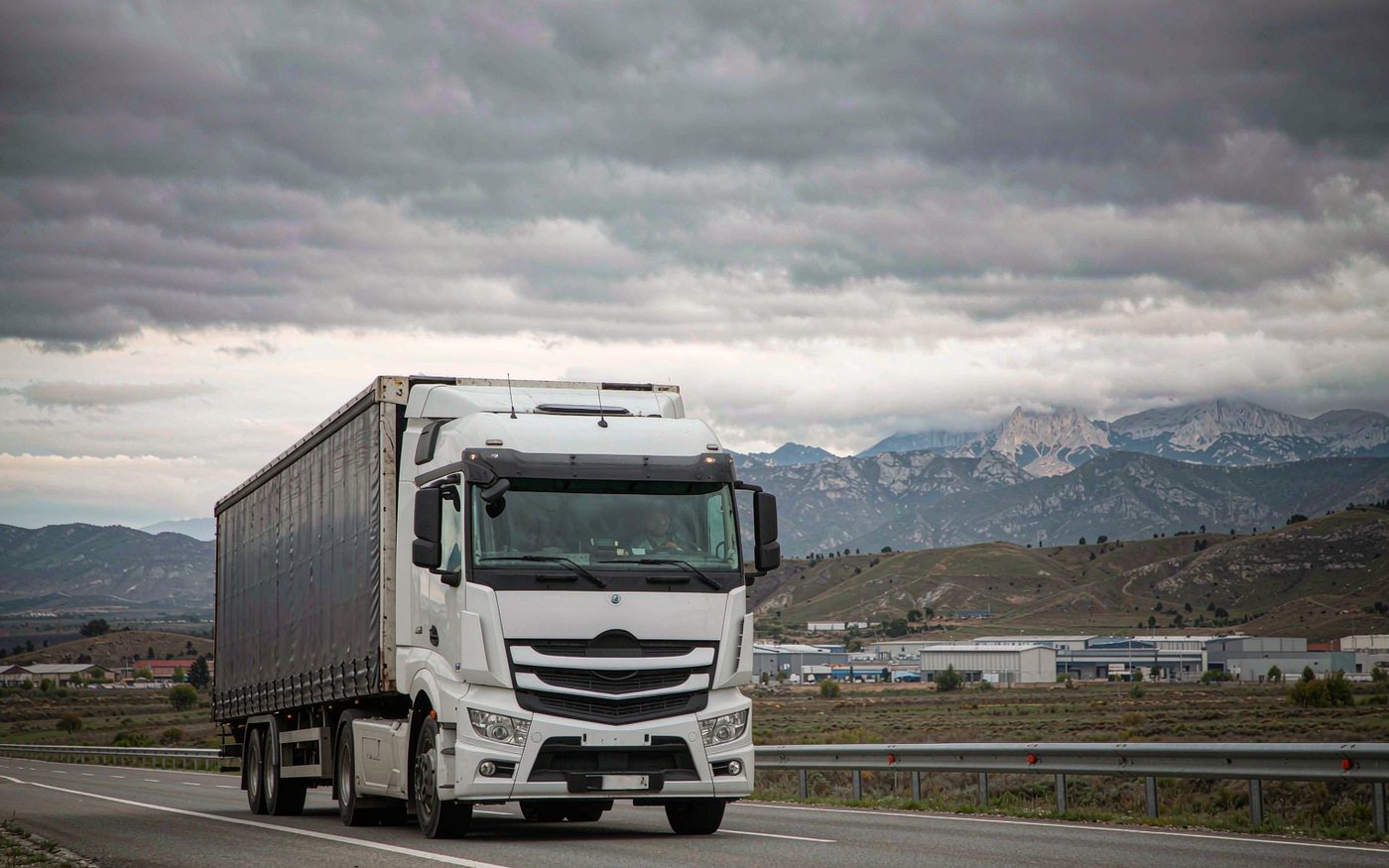
Shipping from China to Kosovo, step by step
Goodhope Freight is a licensed NVOCC based in Shenzhen, registered as GD20230925153335, and has been moving cargo out of China since 2012. To Kosovo we route full containers and shared containers by sea into Thessaloniki in Greece, Durres in Albania or Bar in Montenegro, and from there overland. We also handle air freight into Pristina International Airport and express parcels dispatched from our depot. Every service stops at the port, the airport or the depot. Your consignee arranges import clearance and collection.
Kosovo is a landlocked territory of roughly one point eight million people in south-eastern Europe. This page deals only with the operational mechanics of moving freight here: which corridor to use, what the charges are and in what order they are applied, and which documents the declaration needs. It makes no comment on political status.
Two things are worth knowing before you ask for a quote. The duty applied to goods from countries without a trade agreement is a flat rate rather than a banded tariff, which is unusual and makes the arithmetic simpler than most European routes. And the tax is charged on a base that already includes transport and insurance, which is where most first-time costings go wrong.
This guide is written for a buyer who has never imported from China before. It sets out how to choose between three corridors, how the flat duty and the two tax rates interact, what excise applies on top, and why electronic lodgement removes most of the delay people expect on a landlocked route.
At a glance
Landlocked, in south-eastern Europe, reached overland from three seaports · Population roughly one point eight million · Corridors: Thessaloniki in Greece, Durres in Albania, Bar in Montenegro · Main airport: Pristina International (PRN) · Currency: the euro, used unilaterally; outside the European single market and customs territory · Member of the Central European Free Trade Agreement and the World Customs Organization · Customs duty of ten per cent on goods from countries without a trade agreement · Value-added tax at eighteen per cent, reduced at eight on essentials, charged on cost, insurance and freight · Excise on fuel, tobacco, vehicles and alcohol · Declarations lodged through ASYCUDA World, clearance averaging under two days
How your cargo moves: China to Kosovo
Eight steps from your supplier's door to yours. The last four are the ones shaped by local rules.
- Pickup from your supplierWe collect the goods anywhere in China and bring them to our consolidation point.
- Export clearanceChina customs declaration filed and released before the goods move to the port.
- Main carriage to a seaportContainer shipped to Thessaloniki, Durres or Bar, according to the corridor chosen.
- Overland across the borderRoad movement through the transit country and across the border crossing.
- Entry lodged electronicallyYour agent files the declaration through the national customs system.
- Duty, tax and excise assessedThe flat duty, the tax on the full base, and any excise are applied and settled.
- Release and collectionOnce satisfied your buyer collects. There is no onward delivery service.
- Distribution inlandRoad movement to Pristina, Prizren, Peja or Gjakova on the national network.
Duty rates, VAT rates and clearance times move, and the figure that applies to your goods is the one set for your commodity code on the day of clearance. We check the current position against your code before your goods sail and confirm it to you in writing — ask for that check when you request a quote.
Landlocked, with three corridors in regular use
Kosovo has no coastline. Every container reaches a seaport in a neighbouring country and then travels overland, and there are three corridors in regular use: Thessaloniki in Greece, Durres in Albania and Bar in Montenegro. Thessaloniki is the busiest and usually the best served, running north through North Macedonia on motorway for most of the distance. Durres offers the shortest sea leg from the western Mediterranean but a more mountainous overland stretch. Bar is the quietest of the three and useful when the others are congested. Which one is right depends on where your consignee sits, what each is doing at the time of booking, and how the border crossings are moving. We look at all three rather than defaulting to habit, and we say which we would use and why.Choosing a corridor on evidence rather than habit
The instinct on many landlocked routes is to keep using whichever corridor worked last time. On this one the three options are genuinely comparable, and the differences show up in transit time rather than in the freight rate. Destination matters most. Pristina and the east are served well from Thessaloniki through the crossing at Blace. The west of the country is often better served from Durres. Sending cargo bound for one end through a corridor that exits at the other adds a domestic leg nobody budgeted for. Conditions also vary with season, road works and border throughput. We check what is moving reliably at the time of booking rather than quoting from a table written last year.A flat duty rather than a banded tariff
This is the part of the route that surprises people who have shipped elsewhere in Europe. For goods from countries with which there is no free trade agreement, customs duty is applied at a flat rate of ten per cent rather than sorted into the banded structure most neighbours use. There is no trade agreement in place covering goods of Chinese origin, so the flat rate is what applies to a China-to-Kosovo consignment. Imports from member states of the regional free trade agreement are largely duty free, and agreements with the European Union and with EFTA have removed or are phasing out duty on a wide range of goods — but none of those covers Chinese origin. The flat rate makes the arithmetic unusually simple. It does not make the classification irrelevant: the code still determines whether excise applies and how the tax is calculated further down the chain.Two tax rates, and the base they sit on
Value-added tax is charged at eighteen per cent on most imported goods, with a reduced rate of eight per cent on essentials including food and pharmaceuticals. The reduced band is narrow and defined by law rather than by discretion. The base is the part that catches people out. The tax is assessed on the cost, insurance and freight of the goods rather than on the invoice value alone. A costing built on the invoice will understate the bill by the whole of the transport and insurance component. Some goods are exempt rather than reduced. Agricultural inputs, chemical agents, wood products, health and medical devices, production-line expenses, raw materials, machinery used in production and information technology equipment are all outside the tax. It is worth checking whether your line sits there before you ship rather than claiming afterwards.Excise, and the goods it lands on
On top of duty and tax, excise applies to a short list: petroleum, tobacco, vehicles and alcohol. It is charged either as a flat percentage of the value or as a predetermined amount per unit, depending on the item. Excise is not a rounding error. On the goods it covers it can move the final cost materially, and it is charged in addition to everything else rather than instead of any of it. If any line in your consignment falls into those four categories, tell us at quotation stage. It is the difference between a quote that matches the assessment and one that does not.Lodging electronically, and why clearance is quicker than expected
Declarations are lodged through ASYCUDA World, the customs administration's electronic system. It handles the entry, the supporting documents, risk assessment and valuation control, and it is available continuously rather than only at a customs office. Electronic lodgement is not the same as forgiving lodgement. The system checks consistency across the invoice, the packing list, the transport document and the entry, and a declaration whose documents disagree with one another will be held until somebody reconciles them. Clearance on this route averages under two days, which is quicker than most people expect of a landlocked destination. Most of what remains is document preparation, and that is why we send the pack ahead of the container.Getting registered, and the documents that travel with the cargo
Your consignee needs to be registered and to hold an importer's registration number before an entry can be lodged. It identifies the importer to the customs administration and appears on the declaration. The document set is the standard one for the region: the transport document — bill of lading, airway bill or road consignment note depending on how the goods arrived — the commercial invoice with a full description, value and classification, the packing list, and any certificate of origin, health or phytosanitary certificate the goods require. Because the goods of Chinese origin do not benefit from a preferential arrangement here, a certificate of origin serves a documentary purpose rather than a duty-reducing one. It still needs to be present and consistent with everything else.Packing for a corridor and a mountain crossing
A container travelling to Kosovo is discharged at a seaport, carried overland through a transit country, and handled again at the border. It is handled more often than one delivered to a seaport, and some of the road is mountainous. Export-grade strapping, proper dunnage, filled voids and sealed inner packaging are baseline rather than upgrades. Winter conditions on the northern approaches are a real factor for a consignment timed badly. Timber packaging must be treated and marked to the international standard with the certificate in hand before departure. There is no cheap remedy for uncertified timber once a consignment has been refused, and at a landlocked destination a refused container has a long way to travel back.The handover point, and who does what after it
We handle collection anywhere in China, export clearance, consolidation, main carriage to the chosen seaport, and the transit documentation and document pack that carry the consignment inland. Your buyer handles arrival onward: appointing a licensed broker, holding an importer's registration number, lodging the declaration, paying the duty, the tax and any excise, and collecting from the port or the inland terminal. We quote the sea leg and the overland leg as separate lines. On a route where the corridor decides the transit time, that separation is the only honest way to show you where the time and the money go.Sending a first Kosovo consignment
Send us the commodity in enough detail to classify it, the volume and weight, the pickup address in China, and where in Kosovo your consignee operates. That last answer decides the corridor. Tell us the declared value and the freight and insurance figures, because all three sit inside the tax base, and whether your consignee already holds an importer's registration number. We will check your codes, confirm the corridor, and quote the sea leg and the overland leg separately. Start with one shared container. It tells you how your supplier packs for a corridor and a border, how quickly your broker responds on the electronic system, and what the crossing is doing in that season, for considerably less than a full container would cost you to learn the same three things.Real examples for new Kosovo buyers
Five shipments bought in China and delivered into Kosovo, told end to end — where the order came from, how it moved, where it nearly went wrong, and how it finished. Client names are withheld at their request; the situations and the handling are what we deal with on this lane.
Fittings for a hotel conversion
The purchase. A developer bought bathroom fittings, tiles, door hardware and lighting from three suppliers in Guangdong and Zhejiang for a hotel conversion in Prizren.
The move. We collected all three lots, consolidated into one 40HC and shipped via Thessaloniki with the overland leg through North Macedonia quoted separately.
Where it nearly went wrong. Two pallets of tiles arrived with no edge protection and shifted during the overland leg. Roughly eight per cent were chipped beyond use, and replacements had to come from China.
How it finished. We made edge protection and strapped pallets a condition of collection on the repeat. The second container arrived with breakage below one per cent.
A costing built on the invoice value
The purchase. A trader costed a general goods consignment by applying the tax rate to the invoice value alone.
The move. One 20GP routed through Durres with overland movement to Pristina, declared line by line.
Where it nearly went wrong. The tax is assessed on the cost, insurance and freight of the goods rather than on the invoice value. Leaving transport and insurance out of the base understated the bill by the whole of that component.
How it finished. We now set out the full base at quotation stage. The trader's landed cost has matched the assessment on every consignment since.
Excise nobody had priced
The purchase. A consignee added a line of alcohol to a general goods container without declaring it separately at quotation stage.
The move. One 20GP routed through Thessaloniki, cleared by a licensed broker.
Where it nearly went wrong. Excise is charged on fuel, tobacco, vehicles and alcohol, either as a flat percentage of value or as an amount per unit depending on the item. It is charged on top of duty and tax rather than instead of either.
How it finished. We now ask about those four categories explicitly at quotation stage. The consignee moved the line to a separate booking and priced it properly.
A corridor kept by habit
The purchase. A regular importer of building materials had always routed through the same corridor and did not want to reconsider.
The move. We quoted the alternatives on the same consignment and set out what each was doing at the time of booking.
Where it nearly went wrong. Habit had kept the routing on a corridor that exits at the wrong end of the country for that consignee. The difference did not show up in the freight rate but showed up clearly in transit time.
How it finished. The importer now reviews the corridor against the destination for each shipment. The change has held on every consignment since.
A first import with no registration number
The purchase. A consignee importing commercially for the first time arranged the shipment before registering with the customs administration.
The move. One 20GP routed through Bar with overland movement inland.
Where it nearly went wrong. Importers must hold a registration number that appears on the declaration. Without it, even perfectly prepared documents cannot produce an entry, and the container waited while registration was completed.
How it finished. We now flag registration at quotation stage for any first-time commercial importer on this route. Subsequent consignments have been lodged the day they arrived.
Why importers use Goodhope on this lane
Six things that are different about working with us on China to Kosovo shipments.
Get a Pristina shipment priced
Tell us the commodity in enough detail to classify it, the volume, the declared value, the freight and insurance figures, the pickup address in China and where in Kosovo your consignee operates. We will confirm the corridor, check your codes, and quote the sea leg and the overland leg separately.
Get a quote Talk to usRelated pages
Frequently asked questions
How does cargo reach Kosovo?
By sea to Thessaloniki in Greece, Durres in Albania or Bar in Montenegro, then overland. The country is landlocked, so the overland leg decides the transit time. Thessaloniki is busiest and best served, Durres offers the shortest sea leg from the western Mediterranean, and Bar is useful when the others are congested.
What customs duty applies?
For goods from countries without a free trade agreement, customs duty is applied at a flat rate of ten per cent rather than a banded structure. There is no agreement covering goods of Chinese origin, so the flat rate applies. Imports from member states of the regional free trade agreement are largely duty free.
What is the rate of tax on imports?
Eighteen per cent on most imported goods, with a reduced rate of eight per cent on essentials including food and pharmaceuticals. It is charged on the cost, insurance and freight of the goods, not on the invoice value alone. Some goods, including raw materials, production machinery and medical devices, are exempt.
What else is charged on top?
Excise, on petroleum, tobacco, vehicles and alcohol. It is charged either as a flat percentage of value or as a predetermined amount per unit depending on the item, and it is added on top of duty and tax rather than replacing either.
Which documents are needed?
The transport document — bill of lading, airway bill or road consignment note — the commercial invoice with full description, value and classification, the packing list, and any certificate of origin, health or phytosanitary certificate the goods require.
Does my consignee need to register first?
Yes, for an importer's registration number issued by the customs administration. It appears on the declaration, and without it even perfectly prepared documents cannot produce an entry.
How long does clearance take?
It averages under two days, which is quicker than most people expect of a landlocked destination. Most of what remains is document preparation, which is why we send the pack ahead of the container.
What customs system is used?
ASYCUDA World, the customs administration's electronic system. It handles the entry, supporting documents, risk assessment and valuation control, and is available continuously rather than only at a customs office.
What currency is used?
The euro. The territory is outside the European single market and customs territory, so goods still require full customs clearance even though invoicing in euros is straightforward.
Do you offer door-to-door delivery?
No. Sea freight runs port-to-port, with the overland corridor quoted and arranged separately. Air freight is airport-to-airport to Pristina International, and express courier dispatch ends at the depot.