
Home / Shipping to Malawi / How to Ship from China to Malawi
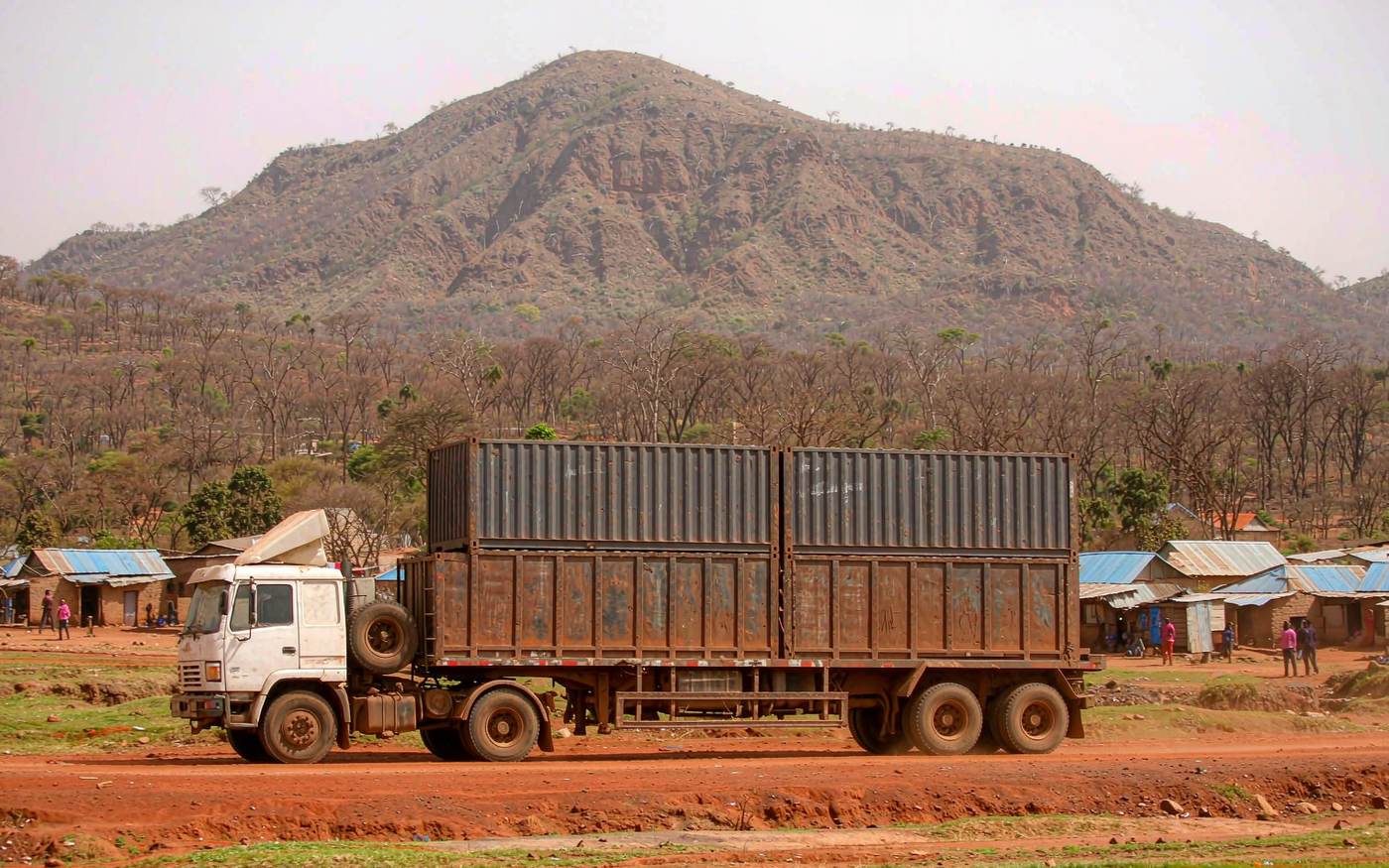
Shipping from China to Malawi, step by step
Goodhope Freight is a licensed NVOCC based in Shenzhen, registered as GD20230925153335, and has been moving cargo out of China since 2012. To Malawi we route full containers and shared containers by sea into Beira or Nacala in Mozambique, Dar es Salaam in Tanzania, or Durban in South Africa, and from there overland. We also handle air freight into Lilongwe International Airport and express parcels dispatched from our depot. Every service stops at the port, the airport or the depot. Your consignee arranges import clearance and collection.
Malawi is a landlocked country of around twenty million people in south-eastern Africa, with an economy built on agriculture, tobacco and tea, and a geography that makes freight expensive. More than ninety per cent of its international freight moves at least partly by road, which tells you where the cost and the risk sit.
Two things catch out most first shipments. The tax rate changed at the start of 2026, and a good deal of published reference material still quotes the old figure. And the entry form your consignment needs depends on its value, which is decided before it arrives rather than after.
This guide is written for a buyer who has never imported from China before. It sets out how to choose between four corridors, where the tariff bands sit, how one bill is actually added up, which form applies to your consignment, and why the tax number comes first.
At a glance
Landlocked, served overland from Beira and Nacala in Mozambique, Dar es Salaam in Tanzania and Durban in South Africa · More than ninety per cent of international freight moves at least partly by road · Main airport: Lilongwe International (LLW) · Currency: Malawian kwacha (MWK) · Customs authority: the Malawi Revenue Authority, through ASYCUDA World · Tariff bands at nil, 5, 10 and 25 per cent, with excise on some goods · Value-added tax raised from 16.5 to 17.5 per cent by an amendment passed in December 2025 · A bill of entry above the value threshold, a simplified form below it · A taxpayer identification number required before declaration · Documents in English
How your cargo moves: China to Malawi
Eight steps from your supplier's door to yours. The last four are the ones shaped by local rules.
- Pickup from your supplierWe collect the goods anywhere in China and bring them to our consolidation point.
- Export clearanceChina customs declaration filed and released before the goods move to the port.
- Loading and main carriageContainer loaded, sealed and shipped to the chosen seaport.
- Overland corridorRoad movement through the transit country and across the border into Malawi.
- Entry lodged on the right formYour agent files on the bill of entry or the simplified form, according to value.
- Tariff, excise and tax assessedThe band rate, any excise and the tax are applied in that order and settled.
- Release and collectionOnce satisfied your buyer collects. There is no onward delivery service.
- Distribution inlandRoad movement to Lilongwe, Blantyre or the north, on conditions that vary by season.
Duty rates, VAT rates and clearance times move, and the figure that applies to your goods is the one set for your commodity code on the day of clearance. We check the current position against your code before your goods sail and confirm it to you in writing — ask for that check when you request a quote.
Landlocked, with four corridors and no obvious winner
Malawi has no coastline. Every consignment reaches a seaport in a neighbouring country and then travels overland, and there are four corridors in regular use: Beira and Nacala in Mozambique, Dar es Salaam in Tanzania, and Durban in South Africa. That choice is genuinely open rather than theoretical, which is unusual for a landlocked country. It also means the decision is yours to make on evidence rather than something a carrier imposes by default. Since more than ninety per cent of the country's international freight moves at least partly by road, the overland leg is where both the cost and the variability live. Treat the sea freight figure as the smaller half of the story.Beira, Nacala or Durban: choosing a corridor
Beira is the traditional default, running through the Tete corridor and the Mwanza border to Blantyre and the south. Nacala, in the north of Mozambique, feeds Lilongwe and the northern regions. Dar es Salaam reaches the north through the Songwe crossing. Durban routes through the south via Beitbridge and Zimbabwe. The right answer depends mainly on where your consignee sits. Sending goods bound for Lilongwe through a corridor that exits into the south adds a domestic leg nobody budgeted for, and the reverse is just as awkward. Corridor conditions also vary with season, road works and border throughput. We look at what is moving reliably at the time of booking and say which one we would use and why, rather than defaulting to habit.Where the bands sit, and which goods carry excise
The revenue authority works from a published tariff order with bands at nil, five, ten and twenty-five per cent, applied according to classification. Some goods also attract excise, which sits alongside the tariff rather than instead of it. Classification decides the band, and the spread between nil and twenty-five is wide. Production inputs generally sit at the lower end, finished consumer goods at the upper, and the difference usually exceeds any freight saving available between carriers. So the useful question is which band your code falls into. We check your codes against the current tariff position before your goods sail and tell you plainly if a line is going to cost more than you assumed.The tax rate that changed at the start of 2026
Value-added tax on imports was raised from sixteen and a half to seventeen and a half per cent by an amendment to the tax act passed in December 2025 and published at the end of that month. The revenue authority instructed registered operators to apply the new rate. This is a recent change, and it is why you will find the old figure quoted in a great deal of reference material and on many websites. If a source you are using was written before 2026, it is describing a rate that no longer applies. The tax is assessed on a base that includes the tariff and any excise rather than on your invoice amount. Getting the base right matters as much as getting the rate right, and most first-time costings get the rate right and the base wrong.How one bill is added up, in the order customs uses
The revenue authority calculates in a fixed order: the tariff on the customs value first, then excise on the customs value plus the tariff, then the tax on the total of all three. That order matters more than it looks. Because excise is charged on a figure that already includes the tariff, and tax on a figure that includes both, the components compound rather than adding politely, and a bill worked out in the wrong sequence comes out short. The published worked examples follow exactly this sequence. Running your own consignment through it in the same order takes minutes and removes the largest single source of surprise on the route.The entry forms, and the value threshold that decides which
Consignments above the value threshold are cleared through a bill of entry lodged by a licensed customs clearing agent. Those below it are cleared on a simplified form, which an importer can handle directly. Which side of the threshold your consignment falls on should be established before it arrives, not discovered at the border. The two routes involve different parties and different paperwork. Alongside the entry there is a declaration of value form, setting out what the goods are worth and how that figure was reached. It needs to agree with the commercial invoice, and it is the document an assessment is built from.The taxpayer number an importer must hold
Businesses and individuals who import regularly must be registered with the revenue authority and hold a taxpayer identification number. It identifies the importer to the customs authority and appears on the entry. If your consignee is importing commercially for the first time, this belongs at the very start of the plan. Without it, even perfectly prepared documents cannot produce an entry. Tell us at quotation stage if this is a first import. We will flag it and build the timing around it rather than assuming the registration is already in hand.Entries, risk assessment and valuation control
Declarations are lodged electronically through ASYCUDA World, which handles electronic entries, document transmission, risk assessment and customs valuation control. The system is available continuously rather than only at a customs office. Electronic lodgement is not the same as forgiving lodgement. The system checks consistency, and a declaration whose documents disagree with one another will be held until someone reconciles them. Clearance typically completes within a few working days once documents are in order. We pre-alert the agent before the vessel sails and send the document pack ahead of the container, which removes most of the delay that would otherwise accumulate.The wet months, and what they do to the last leg
The rainy season runs roughly from November to April, and road conditions on parts of the network deteriorate during it. A schedule that works in the dry season does not automatically hold in the wet one. Distribution inside the country centres on Lilongwe in the centre and Blantyre in the south, with the north served separately. Where your consignee sits determines both the corridor and the final leg. Build the schedule around the season rather than around an average. If your delivery date is genuinely fixed, say so at the start, because the answer may be to route differently rather than to hope.Packing for three borders and a long road
A container travelling to Malawi is handled more often and over worse road than one delivered to a seaport. Export-grade strapping, proper dunnage, filled voids and sealed inner packaging are baseline rather than upgrades. Heat, humidity and dust each do their part, and the order of handling means the outer packaging takes the abuse while the inner packaging protects the goods. Timber packaging must be treated and marked to the international standard with the certificate in hand before departure. There is no cheap remedy for uncertified timber once a consignment has been refused.Where our work stops, and your consignee starts
We handle collection anywhere in China, export clearance, consolidation, main carriage to the chosen seaport, and the transit documentation and document pack that carry the consignment inland. Your buyer handles arrival onward: appointing a licensed clearing agent where the value threshold requires one, holding a taxpayer identification number, lodging the entry, paying the band rate, any excise and the tax, and collecting. We quote the sea leg and the overland leg as separate lines. On a route where the road carries more than ninety per cent of the freight, that separation is the only honest way to show you where the money goes.Sending a first Malawi consignment
Send us the commodity in enough detail to classify it, the volume and weight, the pickup address in China, and where in Malawi your consignee operates. That last answer decides the corridor. Tell us the declared value, because it determines which entry form applies, and whether your consignee holds a taxpayer identification number yet. We will check your codes, confirm the corridor, and quote the sea leg and the overland leg separately. Start with one shared container. It tells you how your supplier packs for three borders, how quickly your agent responds on the national system, and how the corridor is performing in that season, for considerably less than a full container would cost you to learn the same three things.Real stories for new Malawi buyers
Five shipments bought in China and delivered into Malawi, told end to end — where the order came from, how it moved, where it nearly went wrong, and how it finished. Client names are withheld at their request; the situations and the handling are what we deal with on this lane.
Irrigation equipment for a farm supply business
The purchase. An agricultural supplier bought pumps, piping, fittings, filters and control valves from two suppliers in Shandong and Zhejiang for resale to growers in the central region.
The move. We collected both lots, consolidated into one 40HC and shipped via Beira with the overland leg through the Tete corridor quoted separately.
Where it nearly went wrong. The filters and small fittings arrived in thin woven sacks that split during the overland leg, and the metal parts had no corrosion protection despite heat and dust.
How it finished. We made export-grade sacks and sealed, corrosion-protected packing a condition of collection on the repeat. The second container arrived intact.
A costing built on the old tax rate
The purchase. A trader costed a general goods consignment using a rate table published before the change took effect.
The move. One 20GP routed through Nacala with overland movement to Lilongwe, declared line by line.
Where it nearly went wrong. The tax rate was raised from sixteen and a half to seventeen and a half per cent by an amendment passed in December 2025. A table written before that describes a rate that no longer applies.
How it finished. We set out the current treatment at quotation stage once the codes were declared. The trader repriced while the goods were still in China rather than absorbing the difference at clearance.
The wrong entry form for the value of the goods
The purchase. A buyer's consignment sat above the value threshold but was prepared on the simplified form used for lower-value imports.
The move. One 20GP routed through Dar es Salaam with overland movement to the north, with the entry prepared on arrival.
Where it nearly went wrong. Consignments above the value threshold are cleared on a bill of entry lodged by a licensed clearing agent, while those below use a simplified form. Preparing the wrong one meant starting the entry again.
How it finished. We now establish the declared value at quotation stage and confirm which form applies before the goods sail. Subsequent consignments have been lodged correctly the first time.
A first import with no taxpayer identification number
The purchase. A consignee importing commercially for the first time arranged the shipment before registering with the revenue authority.
The move. One 20GP routed through Beira with overland movement to Blantyre.
Where it nearly went wrong. Importers must hold a taxpayer identification number, which appears on the entry. Without it, even perfectly prepared documents cannot produce one, and the container waited while registration was completed.
How it finished. We now flag registration at quotation stage for any first-time commercial importer on this route. Subsequent consignments have been lodged the day they arrived.
A corridor changed for the season
The purchase. A regular importer of building materials had always routed through one corridor and did not want to reconsider.
The move. We quoted the alternative corridors on the same consignment and set out what each was doing at the time, against the rainy season calendar.
Where it nearly went wrong. Habit had kept the routing on a corridor whose road conditions deteriorate sharply in the wet months. The difference did not show up in a freight rate but showed up clearly in transit time.
How it finished. The importer moved to the alternative for the wet season and reverted afterwards. Reviewing the corridor against the calendar has been standard practice on their account ever since.
Why importers use Goodhope on this lane
Six things that are different about working with us on China to Malawi shipments.
Get a Blantyre shipment priced
Tell us the commodity in enough detail to classify it, the volume, the declared value, the pickup address in China and where in Malawi your consignee operates. We will confirm the corridor, check your codes and the entry form, and quote the sea leg and the overland leg separately.
Get a quote Talk to usRelated pages
Frequently asked questions
How does cargo reach Malawi?
By sea to Beira or Nacala in Mozambique, Dar es Salaam in Tanzania, or Durban in South Africa, then overland. More than ninety per cent of the country's international freight moves at least partly by road, so the overland leg dominates both cost and variability.
Which corridor should I use?
It depends mainly on where your consignee sits. Beira serves Blantyre and the south through the Tete corridor, Nacala feeds Lilongwe and the north, Dar es Salaam reaches the north through the Songwe crossing, and Durban routes via Beitbridge. Conditions also vary with season.
What duty rates apply?
The revenue authority works from a published tariff order with bands at nil, 5, 10 and 25 per cent applied by classification, with excise on some goods alongside the tariff. Your commodity code decides the band.
What is the rate of tax on imports?
It was raised from 16.5 to 17.5 per cent by an amendment to the tax act passed in December 2025 and published at the end of that month. A great deal of reference material still quotes the old figure, so check the date of anything you are working from.
How is the bill worked out?
In a fixed order: the tariff on the customs value, then excise on the customs value plus the tariff, then the tax on the total of all three. Because each component is charged on a figure that includes the previous ones, the sequence matters.
Which entry form applies?
Consignments above the value threshold are cleared on a bill of entry lodged by a licensed clearing agent; those below it use a simplified form the importer can handle directly. Establish which applies before the goods arrive, not at the border.
Does my consignee need anything before shipping?
Yes, a taxpayer identification number issued by the revenue authority. It appears on the entry, and without it even perfectly prepared documents cannot produce one.
How long does clearance take?
Typically a few working days once documents are in order. We pre-alert the agent before the vessel sails and send the document pack ahead of the container, which removes most of the delay that would otherwise accumulate.
Does the rainy season matter?
Yes. It runs roughly from November to April and road conditions on parts of the network deteriorate during it. A schedule that works in the dry season does not automatically hold in the wet one, so plan against the season rather than an average.
Do you offer door-to-door delivery?
No. Sea freight runs port-to-port with the overland corridor quoted and arranged separately. Air freight is airport-to-airport to Lilongwe International, and express courier dispatch ends at the depot.