
Home / Shipping To USA / How to Ship a Modular House from China to the USA
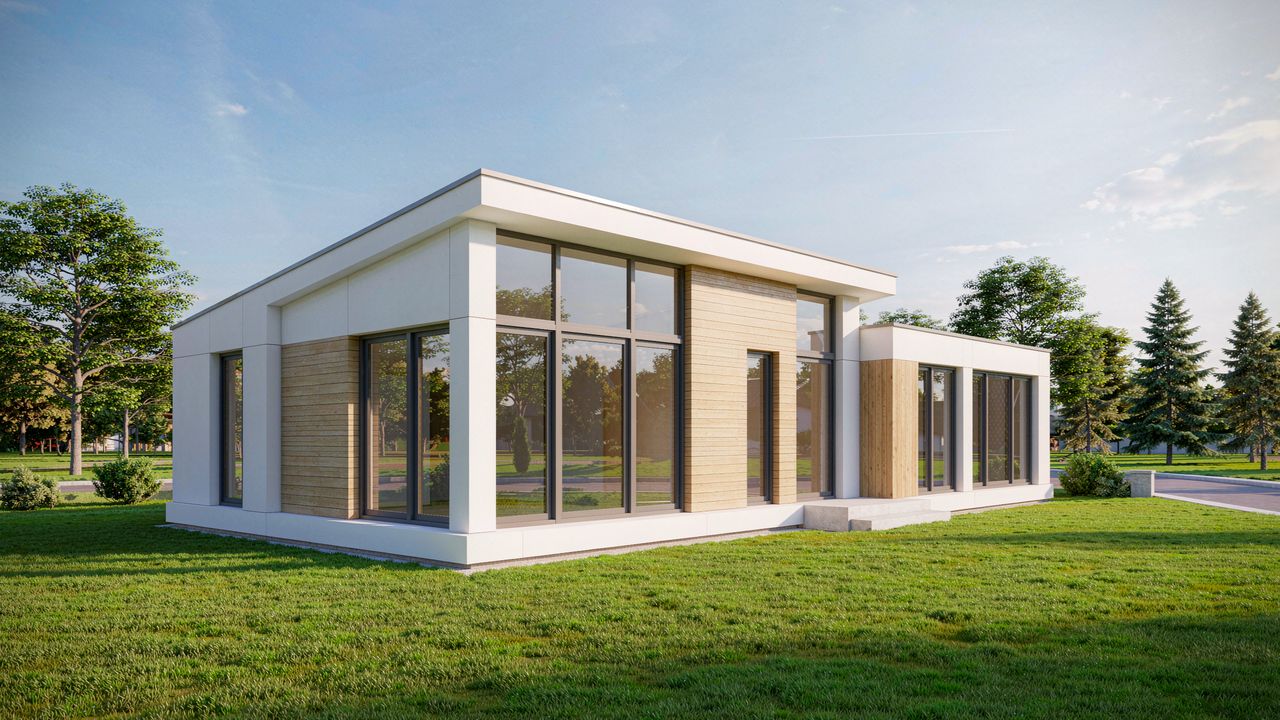
How to Ship a Modular House from China to the USA: A Complete Guide to FCL Sea Freight for Folding Container Houses and Modular Buildings
Modular houses — also called folding container houses, container homes, prefab homes or modular buildings — have seen demand grow quickly in the United States in recent years. Backyard ADUs (accessory dwelling units), short-term rental and vacation units, construction site camps and temporary offices, farm storage sheds, exhibition showrooms and even municipal emergency housing are increasingly supplied from Chinese prefabrication factories. The reason is straightforward: Chinese factories can complete the main structure, doors and windows, plumbing and electrical work, and even the full interior fit-out inside the plant, so that once the unit arrives in the USA only the foundation, the lifting or assembly, and the water and power connections remain. Total cost is typically 30%–50% lower than building locally in the USA, and the construction period is cut by more than half.
But a modular house is bulky, heavy per unit, and its glass and decorative surfaces are easily damaged. Booking space, choosing the container type and planning the container loading are all more complex than for ordinary cargo — and after arrival, import clearance and delivery require the consignee to coordinate with a US customs broker. Miss one of these and you run into refused bookings, the wrong container type, a broken handover at the port of discharge, or no truck available for delivery and lifting. This guide sets out the complete chain for shipping a modular house from China to the USA by sea: how to choose the shipping format, how to arrange a full container (FCL) shipment, how to estimate transit times and costs, what documents US customs requires, and how the unit is delivered and installed at the final address — with typical cases, reasons to choose us, and FAQs.
One point on the scope of this page first: as a China-based freight forwarder we provide a port-to-port service — from a Chinese port to a US port (space booking, container type selection, container loading and securing, export declaration and ocean freight, delivered at the US port of discharge). Import clearance, duty and port charges at the US end are handled by the consignee, or by the US customs broker or forwarder the consignee appoints, so that the consignee obtains the official US customs duty payment record it needs to sell the goods legally in the local market.
What is a modular house, and why do more US buyers order from China?
A modular house is a movable building unit that is manufactured as a whole, or as a set of modules, inside a factory. Four characteristics define the category: standardised, demountable, liftable as a complete unit, and reusable from project to project. By structure and shipping format, the mainstream types are:
- Folding container house (folding type): shipped folded flat and simply unfolded and fixed on site. One 40ft high cube container can carry several units, which makes it the most cost-effective format for the US market;
- Knock-down modular house (component type): steel frame, wall panels, roof panels, doors and windows packed as separate parts and assembled on site to the drawings — suited to larger units and to projects that need flexibility during installation;
- Fully finished volumetric module: completed in the factory including bathroom, air conditioning and furniture, and shipped as a whole unit that only needs lifting into place on site. Highest precision and highest unit price, and normally shipped in an open-top or flat rack container, or by RoRo vessel.
Three practical considerations drive US buyers to source modular houses in China. First, construction labour and materials in the USA are expensive and slow, and a prefabricated house compresses the on-site work to a few days. Second, small-footprint buildings such as ADUs and short-term rentals are highly compatible with standardised products, and Chinese factories already offer mature 20ft, 28ft and 40ft standard module systems. Third, China's supply chain integration across panels, doors and windows, hardware and electrical components allows cost and delivery speed to be optimised together.
At the Chinese factory: how a modular house is built, packed and container-loaded
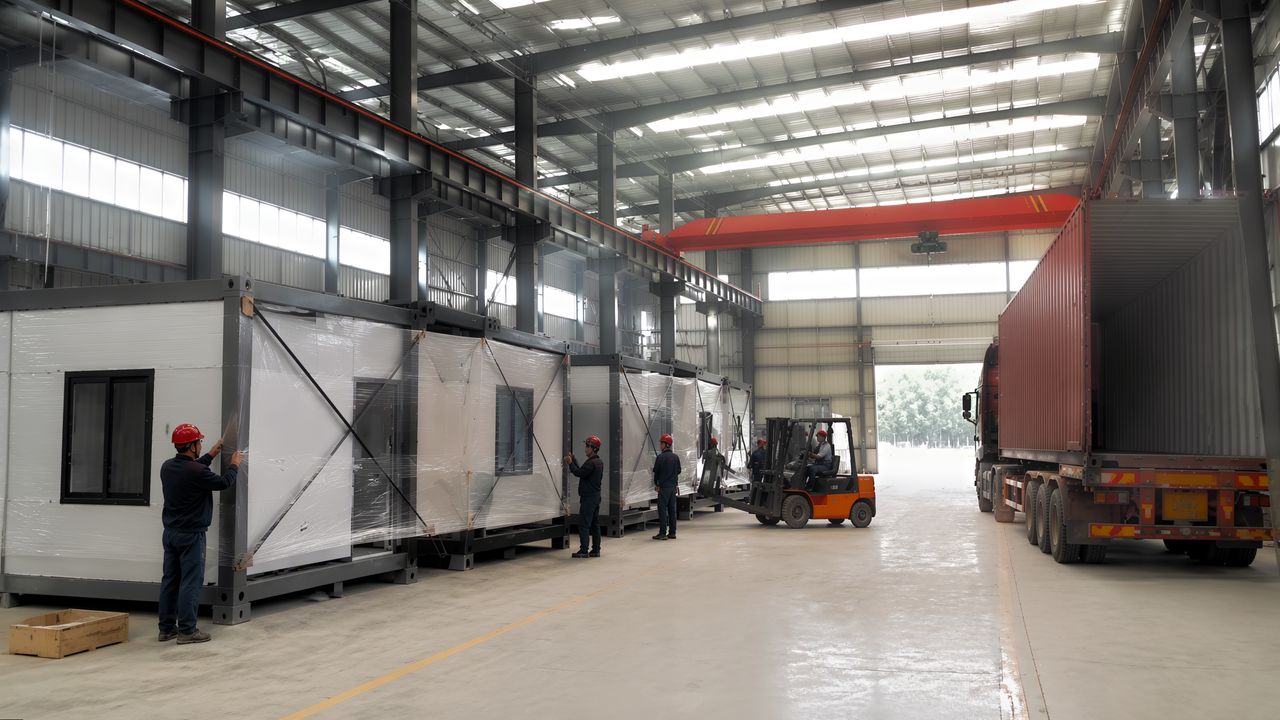
Whether a modular house ships smoothly comes down to the packing and container-loading plan settled before it leaves the factory. Taking the folding type as the example, the factory sequence is normally:
- Structural production: the galvanised steel frame is welded into shape, integrated wall panels (rock wool or polyurethane sandwich panels) are cut and assembled, and doors, windows, wiring and sockets are pre-installed in the plant;
- Pre-shipment inspection: every unit is checked for structural strength, door and window operation and electrical continuity, and photographed individually — those photographs later serve as both container-sealing evidence and insurance claim support;
- Folding and packing: folding units are collapsed flat, usually to a thickness of 20–30 cm; component-type units are packed by part and numbered;
- Securing and protection: stretch film wrapped around the whole unit, corner protectors at all four edges, steel strapping, and separate protective boards over glass and decorative surfaces to withstand sea motion and salt-laden air;
- Container loading and securing: units are arranged to the loading plan and restrained inside the container with timber dunnage, lashing straps and dunnage air bags so that nothing shifts during the voyage.
The complete shipping process from China to the USA (seven steps)
A modular house is oversized, non-standard cargo, so the process has two key stages that ordinary goods do not: choosing the container type and lifting at the destination. The standard chain is:
Requirement definition and design
Confirm the end use (ADU / short-term rental / site camp / retail unit), dimensions, quantity, electrical standard (US 110V) and destination ZIP code, and adjust the drawings to US window types and thermal requirements where needed.
Factory production
Typically 15–30 days for a custom order; longer in peak season or on large projects, so book production capacity early.
Packing, securing and space booking
Agree the container type (standard / open-top / flat rack), the number of units per container and the lashing plan, and book vessel space at the same time to lock the sailing.
Trucking, export declaration and loading on board
The factory trucks the units to a port such as Shenzhen, Guangzhou, Ningbo or Shanghai, China export customs clearance is completed, and the container is loaded on board.
Ocean transit
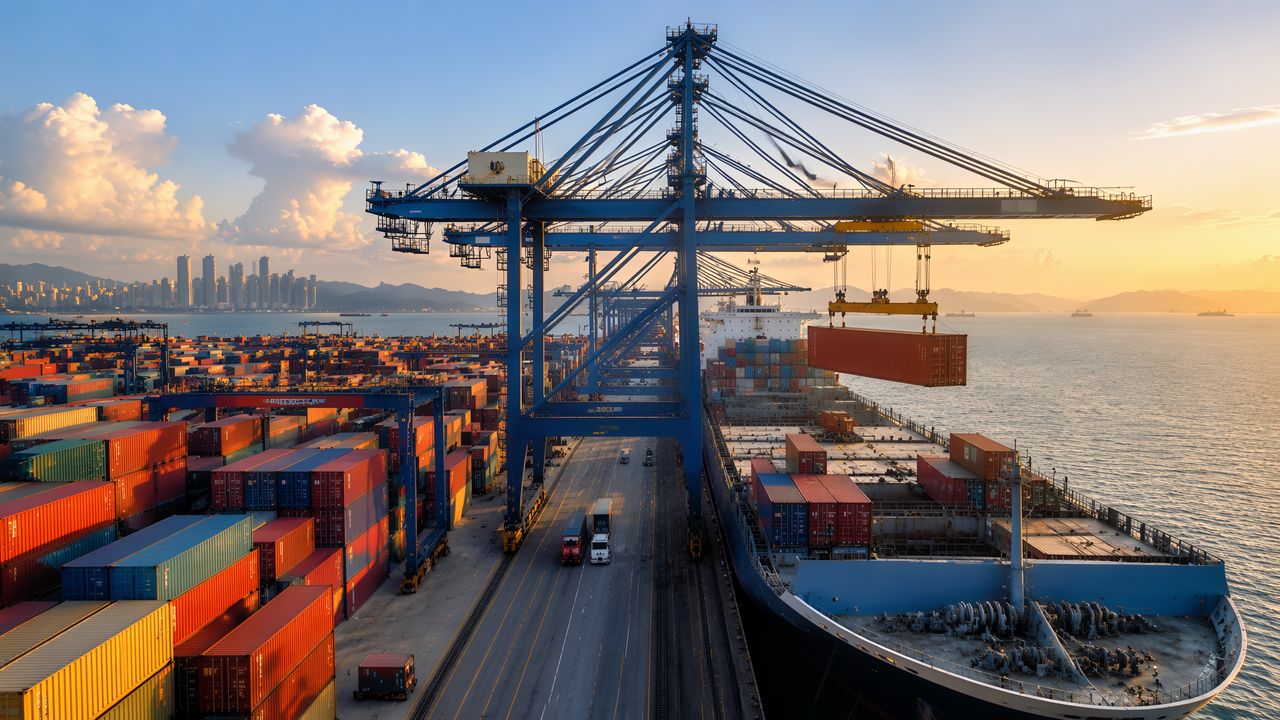
About 18–28 days to the US West Coast (Los Angeles / Long Beach / Oakland) and about 28–35 days to the US East Coast (New York / Savannah / Norfolk / Charleston).
Delivery at the US port and clearance by the consignee
Once the vessel arrives, the import declaration and duty payment are filed by the consignee, or by the US customs broker or forwarder the consignee appoints. We deliver the cargo safely to the port of discharge and provide complete loading and cargo information to support the declaration.
Final delivery and installation
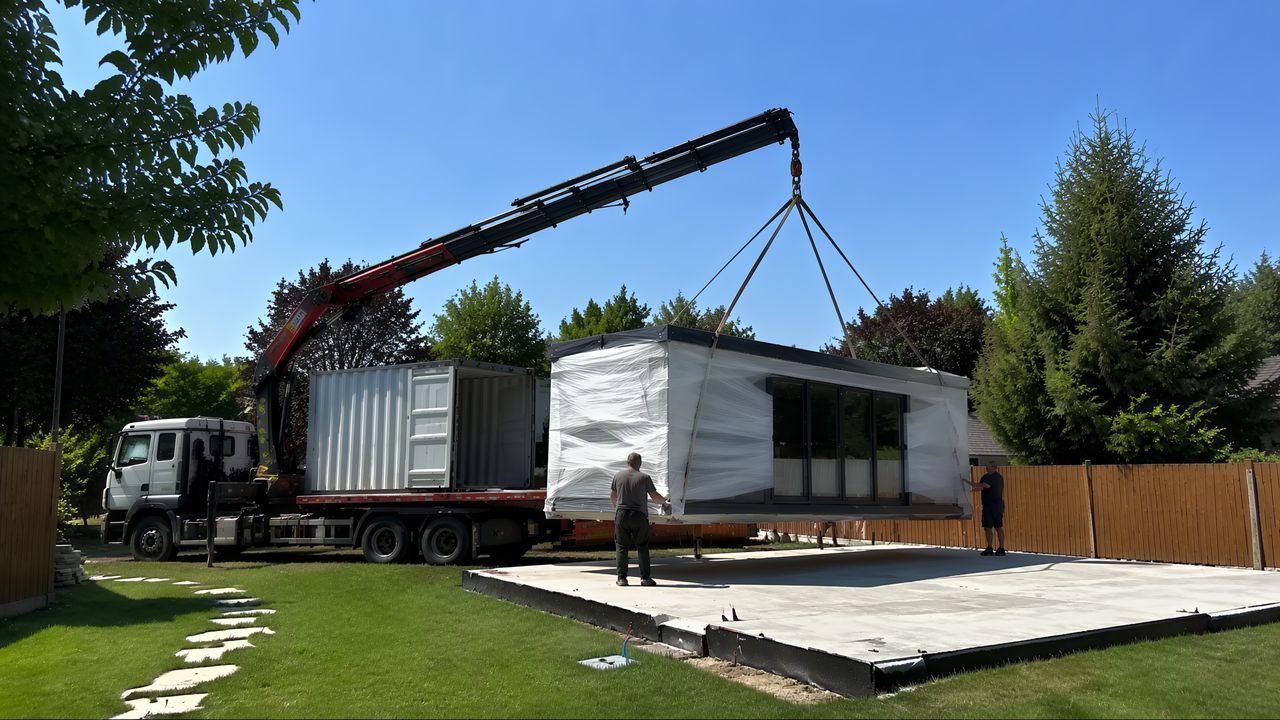
After the container is picked up, a 53ft flatbed or lowboy trailer moves the units to the project address; folding and knock-down units are assembled on site, volumetric modules are lifted into position by crane, and the water and power connections are made and inspected.
Choosing the shipping method: FCL, LCL or special equipment
Modular houses ship almost exclusively as full container loads (FCL); only small accessory or replacement-parts consignments are worth considering as LCL. The comparison:
| Method | Suitable cargo | Typical loading capacity | Transit time and cost profile |
|---|---|---|---|
| FCL — 20GP / 40HQ | Folding container houses, knock-down modular houses | About 6–8 folding units in a 40HQ; about 2–3 in a 20GP | Stable transit times and the lowest freight per unit; lashing and securing inside the container required |
| Special equipment — open-top / flat rack | Fully finished volumetric modules, over-height or over-width modules | Calculated on module outside dimensions, normally 1–3 units | Space and lifting requirements must be confirmed with the carrier in advance; higher surcharges, but the module can be shipped as one complete unit |
| LCL — less than container load | Accessories, hardware, spare parts and small consignments | Charged by volume, from 1 CBM | Lower cost but longer transit and more handling; the main modular units are still best shipped FCL |
2026 ocean transit times and cost breakdown (reference)
1. Transit time breakdown
- Factory production: normally 15–30 days (factory lead time, varying with style and quantity);
- Ocean transit: 18–28 days to the US West Coast, 28–35 days to the US East Coast (standard services; expedited services on request);
- US import clearance (handled by the consignee): normally 2–5 days; a random CBP examination adds 3–7 days and is outside our control;
- Final delivery and lifting (arranged by the consignee, or quoted separately): normally 1–7 days; remote inland destinations and cases that depend on crane scheduling extend this.
From factory release to the goods being in use in the USA, the overall cycle is normally 6–9 weeks (the US import clearance and final delivery windows depend on the arrangements made by the consignee and its local service providers). In peak season — the August to October build-up on the trans-Pacific trade — we recommend booking space and production capacity two to three weeks earlier.
2. Cost breakdown (itemised)
- Ocean freight: charged by container type and route; trans-Pacific FCL rates move week to week with the carrier and space availability;
- Origin charges: China export declaration, drayage, container loading and securing, and fumigation of wooden packaging where timber is used;
- Import charges (borne by the consignee): US customs brokerage fee, duty, port charges (MPF and HMF), and ISF filing;
- Destination charges (arranged by the consignee, or quoted separately): container pickup at the port of discharge, flatbed delivery, residential delivery surcharge, and crane and unloading service if required.
As a reference from our own quotation records for July–October 2026: China to the US West Coast, port-to-port, is about USD 4,400–6,800 per 40HQ; China to the US East Coast (New York / Savannah and others), port-to-port, is about USD 5,900–9,500 per 40HQ. The exact figure depends on the sailing and the space confirmed on the day of booking — see our dedicated 2026 China–USA freight rates page for detail. LCL is charged by revenue ton (RT, where 1 CBM = 1,000 kg, billed on the greater of volume weight and actual weight).
One point to settle in advance: ask clearly whether a quotation is port-to-port or includes destination services. Our quotations are issued on a port-to-port basis by default (including China export declaration, drayage, container loading and securing, and ocean freight); container pickup at the destination port, import clearance, duty and port charges, residential delivery surcharges and crane charges are normally arranged separately by the consignee. Low-cost packages often exclude those destination items and add them one by one after arrival — which is the most common hidden cost in modular house shipping.
Documents to prepare and US customs compliance essentials
1. Documents you need
- Consignee details: the full English address in the USA, ZIP code, consignee name and contact telephone number;
- Cargo list: description, quantity, dimensions and weight of each piece, cargo value, and a statement of use (personal or commercial);
- Photographs and specifications: overall appearance, packing condition, and a description of the structure and materials (used for pre-declaration and tariff classification);
- For a company import: the US company name, address and EIN (tax number), with the consignee acting as Importer of Record (IOR) and clearing in its own name, or through the US customs broker it appoints.
2. Compliance essentials
- Tariff classification (HTS): modular houses are classified by structure and material — a steel-framed house and a timber house fall under different duty treatment — so the description and materials must be declared accurately to avoid classification errors that trigger examination;
- ISF 10+2: the US Importer Security Filing must be completed before the vessel loads, by the consignee or its US customs broker (we can supply the cargo and loading information needed for the filing). Late filing attracts penalties;
- Duty payment record and lawful resale: modular houses are mostly used for commercial resale or rental operation, so a US import must be declared by a legitimate importer of record that declares truthfully, pays duty and obtains the official US customs duty payment record, in order to sell locally and issue invoices legally. This is also why we operate on a port-to-port basis and recommend that the consignee completes import clearance itself;
- Wooden packaging: where timber dunnage, pallets or crates are used for securing, fumigation to IPPC (ISPM-15) standards with a certificate is required, or the cargo may be returned;
- Product and electrical standards: the US market has local requirements for electrical systems (110V), insulation and structure. We recommend finalising the drawings to the destination state's standards at the design stage to reduce friction at local sign-off;
- Never under-declare: commercial quantities must not be declared as personal effects and cargo value must not be understated. The examination and penalty risk far outweighs any duty saved.
Typical delivery cases
Case 1: 30 folding container houses for a Californian construction camp
The client was a California contractor that needed 30 folding container houses with air conditioning and bathrooms for a remote site within two months. The plan used 40HQ high cube containers with six units packed flat per container across five containers. The factory completed production and quality inspection in 22 days, the ocean leg took 21 days to the Port of Long Beach, and after the consignee completed import clearance the units were trucked to the site in two batches and unfolded and fixed on site. From order to full delivery on site took about nine weeks, and because the boxes can be repeatedly dismantled and redeployed the client placed a follow-up order for a second batch.
Case 2: two fully fitted modular units for a Los Angeles backyard
The client ordered two fully fitted modular units of about 28 m² with floor-to-ceiling glazing, for use as a backyard ADU rental. The factory completed production and full packing in 25 days, the ocean leg to the port took 20 days, and import clearance was completed in about four days by the US customs broker appointed by the consignee. The units were then taken by flatbed to the residential backyard, where a truck-mounted crane lifted the main structure into place the same day; the water and power connections were made and the unit went into rental operation. From shipment to installation in the USA took about eight weeks, and the client reported that the packaging arrived intact with no scratches on the doors, windows or interior.
Case 3: six knock-down modular houses for an East Coast short-term rental cluster
The client bought land on the US East Coast for a short-term rental cluster. The main frames and wall panels were shipped first as a full container load, and a second batch of hardware and replacement glass followed as LCL. Deliveries were phased to match the progress of the on-site foundation work, and the combined landed cost per unit came in about one third below the local build quotation. We handled China export declaration, space booking and ocean freight throughout, and the port-of-discharge clearance and delivery were coordinated by the consignee's local forwarder.
Why choose us
Goodhope Freight (Shenzhen Weihang Yunda International Freight Forwarding Co., Ltd.) specialises in China–USA international logistics and has the full operational capability from the Chinese factory to the US port — container type selection, container loading and securing, export declaration and ocean space booking. We have a mature process for oversized, non-standard cargo such as modular houses:
End-to-end capability at the China origin
Drayage, export declaration, ocean space booking, the container type and lashing plan, and delivery at the port of discharge — all handled through a single point of contact rather than coordinated across several parties.
Deep China–USA lane experience
FCL and LCL services and rates from China's main ports to more than 20 US destination ports are published on our website, so quotations are transparent and verifiable.
Transparent port-to-port quotation
What is included and what is not is itemised on a port-to-port basis; import clearance at the destination is arranged by the consignee, so the cost structure is clear and there are no disputes after arrival.
Oversized and special equipment capability
We handle open-top containers, flat racks and over-height or over-width modules, and confirm space and lifting requirements with the carrier in advance to reduce the risk of being rolled.
Securing and compliance documents
In-container lashing plans, fumigation of wooden packaging, support with ISF filing and advice on tariff classification, reducing examination and port-storage risk.
Fast response and end-to-end tracking
Immediate quotations against live space and a reply within one hour, plus full tracking of the sailing and clearance status after shipment with timely updates whenever a milestone changes.
Frequently asked questions
Q1. How long does it take to ship a modular house from China to the USA?
Factory production normally takes 15–30 days; ocean transit is about 18–28 days to the US West Coast and about 28–35 days to the US East Coast; US import clearance takes 2–5 days and is handled by the consignee; final delivery and lifting take 1–7 days. From shipment to installation in the USA the usual cycle is 6–9 weeks, and in peak season you should allow extra time for booking space and factory scheduling.
Q2. How many modular houses fit in one 40ft high cube container?
A folding container house packs flat to about 20–30 cm thick, so a 40HQ normally holds 6–8 units and a 20GP about 2–3. Knock-down and volumetric modules are calculated on actual volume; a volumetric module often allows only 1–3 units per container and may need an open-top or flat rack container selected to its outside dimensions.
Q3. How far do you deliver, and who handles import clearance after arrival?
Modular houses are shipped almost exclusively as full container loads. As the China-based freight forwarder we handle the China origin — space booking, container type selection, container loading and securing, export declaration and ocean freight — and deliver to the US port of discharge. Import clearance, duty and port charges after arrival are handled by the consignee, or by the US customs broker or forwarder the consignee appoints. This is what allows the consignee to obtain the official US customs duty payment record needed for lawful resale and for ongoing compliance in the local market.
Q4. What does your quotation include, and what costs remain after arrival?
We quote on a port-to-port basis, which normally covers China export declaration, drayage, container loading and securing, and ocean freight. Container pickup at the destination port, import clearance, duty and port charges (MPF and HMF), and final delivery and lifting are arranged by the consignee or quoted separately. Included and excluded items are itemised on the quotation so that no unexpected charges appear after arrival.
Q5. Can the units be damaged during the sea voyage, and how are glass and interiors protected?
The steel frame is the load-bearing structure and is robust, but glazed doors and windows and decorative surfaces still need separate protection. The standard approach is full stretch-film wrapping, corner protectors, steel strapping and in-container reinforcement with timber dunnage and lashing straps, with protective boards over vulnerable areas. We recommend Marine Cargo All Risks cover and keeping the pre-shipment and container-sealing photographs as the basis for any claim.
Q6. Do I have to install the units myself once they reach the USA?
Folding and knock-down modular houses are supplied with assembly drawings and video, and can be assembled on site with basic tools; volumetric modules require a crane to lift them into position. We can help put you in touch with a local US contractor to complete lifting, water and power connections and sign-off.
Q7. What documents are needed to ship a modular house to the USA?
On the China export side you need a commercial invoice, packing list and declaration data; where wooden packaging is used, fumigation to IPPC standards with a certificate is required. On the US import side, the ISF 10+2 filing, import clearance and duty and taxes are handled by the consignee, or its customs broker or forwarder; we can supply the cargo and loading information needed to support the filing.
Q8. Can a modular house be customised to US standards?
Yes. Units can be produced to the US 110V/220V electrical standard and to US window types and thermal requirements, and we can provide structural, electrical and material documentation against the destination state's market requirements to make local permits and sign-off easier.
Ready to ship a modular house from China to the USA?
Send us the unit type, dimensions, quantity and destination ZIP code — we will reply within 24 hours with an itemised port-to-port plan covering the container type, the lashing plan, transit time and the cost breakdown.
Get a Free Quote Explore China–USA Services