
Home / Shipping To USA / How to Ship from China to the USA
How to Ship from China to the USA: A Complete Guide for First-Time Importers
If you have just started buying from Chinese suppliers — online or at a trade fair — the shipping side can feel like the hardest part of the business. Rates seem inconsistent, customs rules keep changing, and one wrong Incoterm or missing document can turn a profitable order into a loss. This guide walks you through the whole journey from a Chinese factory to your door in the United States: the transport options, the trade terms, the paperwork, the duties, and the people you actually need to hire. It is written for beginners, so we explain why each step matters, not just what it is called.
The short answer: for most first-time importers, the practical setup is simple — agree FOB with your Chinese supplier, hire one freight forwarder in China (that is us) to collect, consolidate, export-clear and ship, and let that forwarder arrange US customs clearance and delivery, either directly or through a DDP door-to-door service. Sea freight (LCL or FCL) is cheapest for anything above about 150 kg; air and express exist for samples and urgent top-ups. Duty now applies to every shipment from China regardless of value, so budget it in from day one.
How your cargo moves: China to the USA
Eight steps from your supplier's door to yours. The last four are the ones shaped by local rules.
- Pickup from your supplierWe collect the goods anywhere in China and bring them to our consolidation point.
- Export clearanceChina customs declaration filed and released before the goods move to the port.
- Loading and departureContainer loaded, sealed and handed to the carrier at the Chinese port.
- Main carriageOcean, air or rail movement booked on the route agreed for your cargo.
- Arrival at the gatewayDischarge at the port or airport of entry, recorded on the carrier's manifest.
- Import clearanceCustoms declaration filed locally, with duty and tax assessed on the declared value.
- Customs releaseGoods released into free circulation once duty and tax are settled.
- Final deliveryOnward movement to your delivery address, warehouse or nominated depot.
Duty rates, VAT rates and clearance times move, and the figure that applies to your goods is the one set for your commodity code on the day of clearance. We check the current position against your code before your goods sail and confirm it to you in writing — ask for that check when you request a quote.
Shipping options from China to the USA
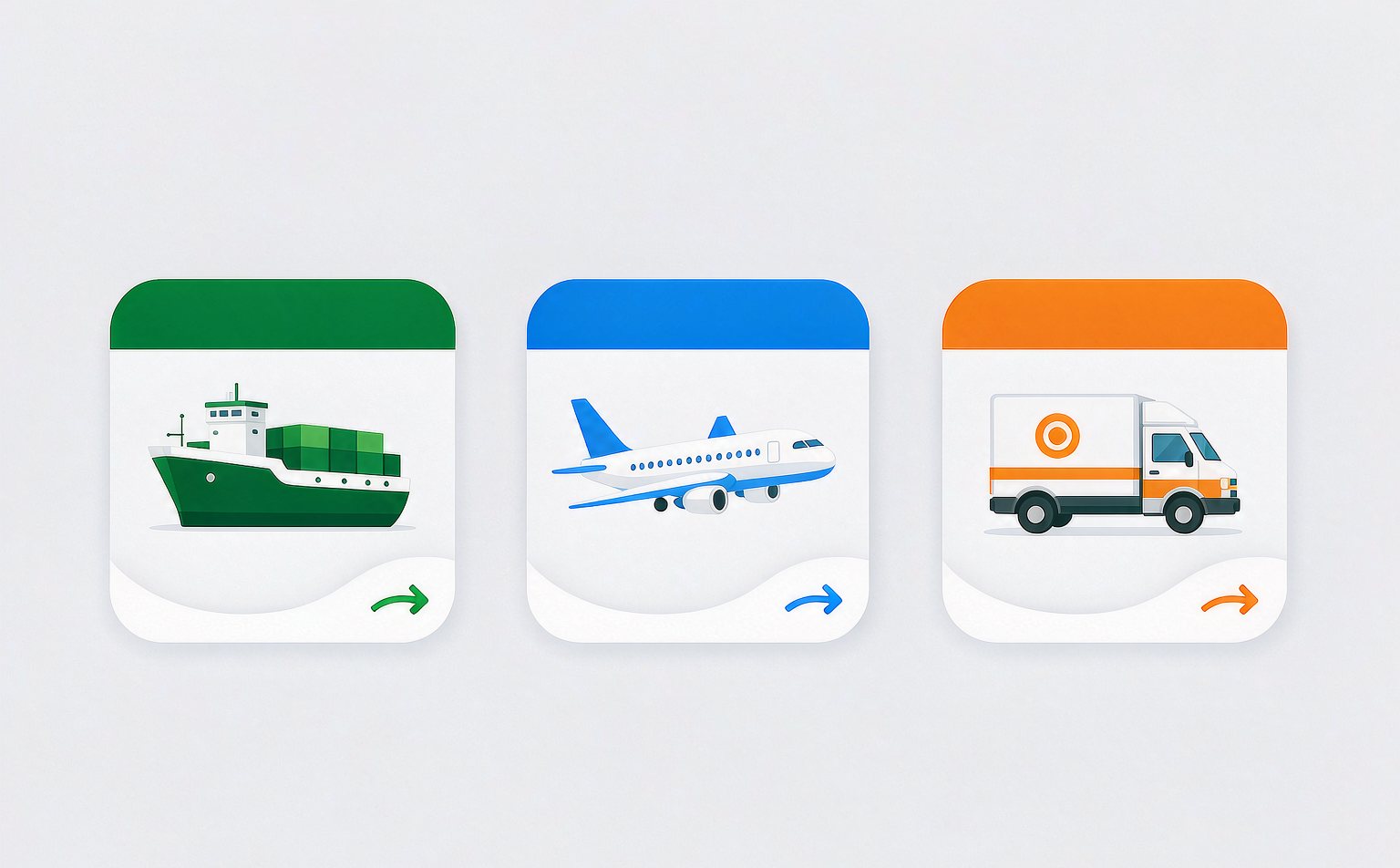
There are three main ways to move goods across the Pacific, plus inland trucking and rail that connect them on both ends. Note one thing upfront: China and the USA do not share a land border, so direct rail or truck service is not an option on this lane — rail and road appear as inland legs (factory → port in China; port → warehouse in the USA). Here is how the three international modes compare:
| Method | Typical transit (door to door) | Best for | Watch out for |
|---|---|---|---|
| Express courier (DHL / FedEx / UPS) | 2–5 business days | Samples and small, urgent parcels (rule of thumb: cheapest under ~150 kg, around $5/kg class rates) | Highest cost per kg; extra fees if you are not a registered account holder; duty still applies |
| Air freight | 5–10 days | Time-sensitive goods, roughly 150–500 kg, or high-value light cargo | Charged on actual vs volumetric weight (whichever is greater); many battery and liquid items restricted |
| Sea LCL (shared container) | ~30–45 days | Shipments from 1 CBM up to ~15 CBM | Adds consolidation/deconsolidation time; slightly higher damage and delay risk than FCL |
| Sea FCL (whole 20ft/40ft container) | ~25–40 days | ~15 CBM or more, or regular importers filling part of a container on a schedule | Flat rate whether full or not; watch demurrage/detention if pickup is delayed at destination |
Figures are indicative planning ranges for the China–USA lane in normal conditions, not quotes. See our current China–USA freight rates and transit time breakdown for more detail, or simply request a quote for your cargo.
Incoterms: who pays, who clears and who carries the risk
Before you even ask "how much is shipping?", you and your supplier must agree on an Incoterm — the trade term that decides where the supplier's responsibility ends and yours begins. Two buyers quoting the "same product" can face completely different total costs because one bought EXW and the other bought DDP. These are the terms you will actually meet when buying from China:
| Term | Supplier covers | You cover | Suitable for |
|---|---|---|---|
| EXW (Ex Works) | Making the goods available at the factory | Everything: China inland trucking, export clearance, freight, US clearance, delivery | Experienced buyers with a China-side agent; looks cheapest but hides the most work |
| FOB (Free on Board) | Trucking to the Chinese port and loading | Ocean/air freight, insurance, US clearance and delivery | The standard choice for US importers — you control the freight, mark-ups stay visible |
| CIF (Cost, Insurance & Freight) | Freight + insurance to the US port | US clearance, duties, port charges, inland delivery | Port-to-port buyers who accept the supplier's choice of carrier |
| DAP (Delivered at Place) | Everything to your address except import duty and formal clearance | Import duty and customs clearance | Buyers who have their own US broker |
| DDU / DPU (Delivered Duty Unpaid) | Everything to your address except duty/taxes | Duty, taxes, clearance at destination | Common with consolidated shipments where you clear on your side |
| DDP (Delivered Duty Paid) | Everything: freight, US clearance, duties, final delivery | Nothing — one price, one invoice | First-time importers and small businesses who want zero logistics involvement |
Two service shapes sit on top of these terms. Port to port (sea) or airport to airport (air) means you pay only the main international leg and handle both ends yourself — the headline number is lowest, but the hidden work is highest. Door to door means collection at the factory in China and delivery to your address in the USA, with every step in between on one provider. As a beginner, a door-to-door arrangement removes exactly the handoffs where new importers lose money.
Beginner advice: quote your supplier on FOB so freight costs are transparent and under your control — then ask your forwarder for a DDP door-to-door all-in price to your US address. That single combination gives you cost visibility at origin and cost certainty at destination. Avoid buying DDP from the supplier unless you have benchmarked the freight inside their price.
How a shipment moves from the Chinese factory to a US address
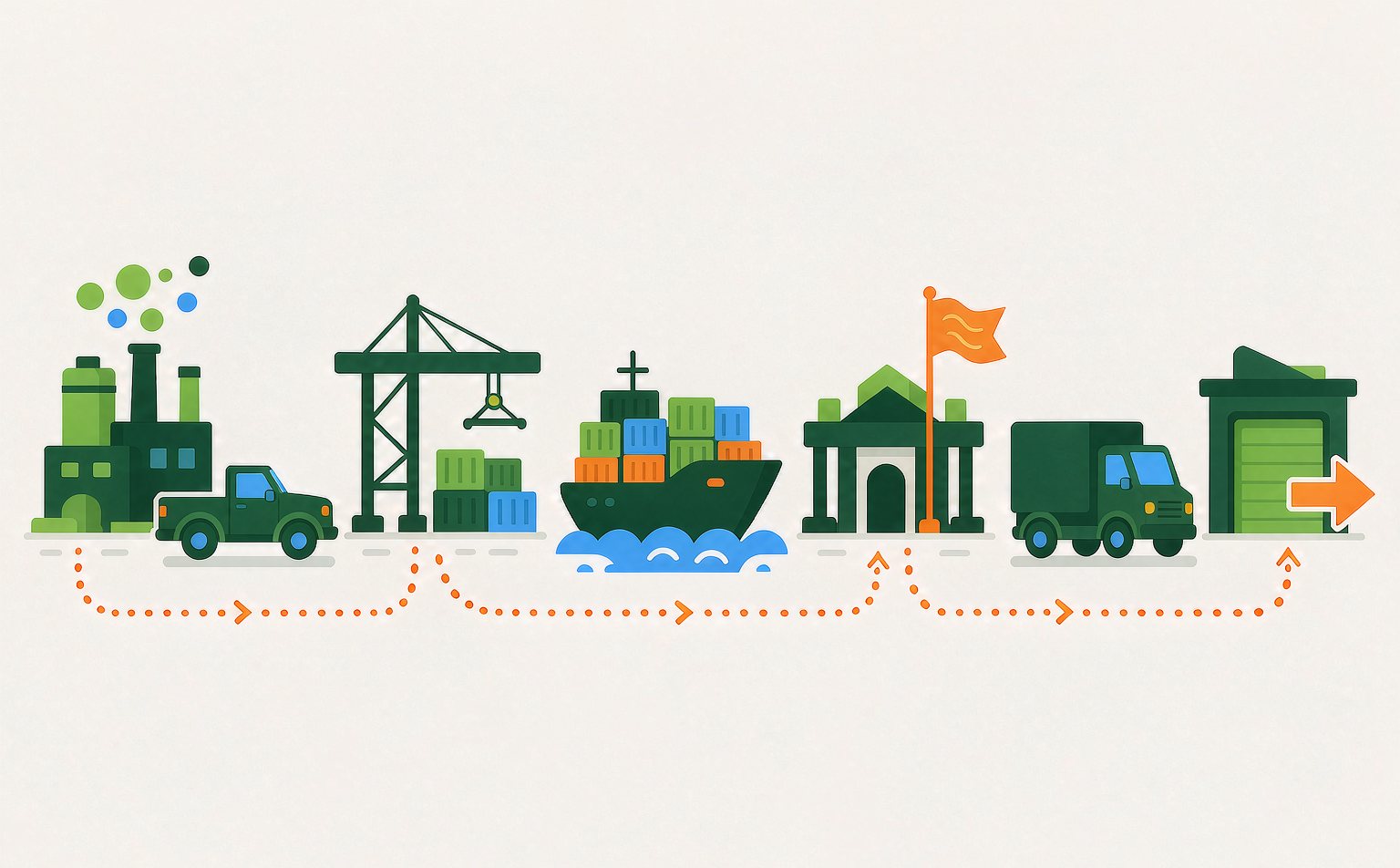
Here is what actually happens, in order, for a typical sea shipment. An air shipment follows the same logic minus the ocean-specific steps (ISF and the container cutoffs).
Get a quote and book
Send your forwarder the cargo spec: carton count, gross weight, total volume (CBM), product name and HS/HTS code, supplier city, and your US delivery address. Book ocean space 2–3 weeks ahead in normal season, earlier before Chinese New Year and the Q4 peak.
Collection and consolidation
Your forwarder picks up from the factory (or several factories — multi-supplier consolidation into one shipment is standard and saves real money) and brings the cargo to a warehouse for counting, measuring and palletizing.
Export customs declaration in China
The shipment is declared for export with a commercial invoice and packing list. Goods without proper export declaration cannot legally leave China — this is a step DIY buyers underestimate.
ISF filing (ocean only)
The US Importer Security Filing ("10+2") must reach US Customs at least 24 hours before the container is loaded in China. Late or wrong filings carry penalties of $5,000 per violation — your forwarder files this as part of the service.
Ocean or air transit
The container sails from Shenzhen, Ningbo or Shanghai to Los Angeles/Long Beach (12–18 days port to port) or the East Coast (28–35 days); air cargo flies via the carrier network in 1–3 days on the airport leg.
US customs entry and duty payment
A licensed US customs broker files the entry against a customs bond. Duty is assessed on the HTS code and customs value, plus any Section 301 tariffs and fees. Most routine entries clear within days if the paperwork is clean.
Delivery to your door (or Amazon FBA)
After release, the cargo is trucked to your warehouse, home business address, or an Amazon fulfillment center with a booked appointment. Keep all import documents on file for at least five years.
Need the FBA variant? We run a dedicated Amazon FBA shipping service including labeling, palletization and delivery appointments.
Product-specific rules carriers and customs enforce
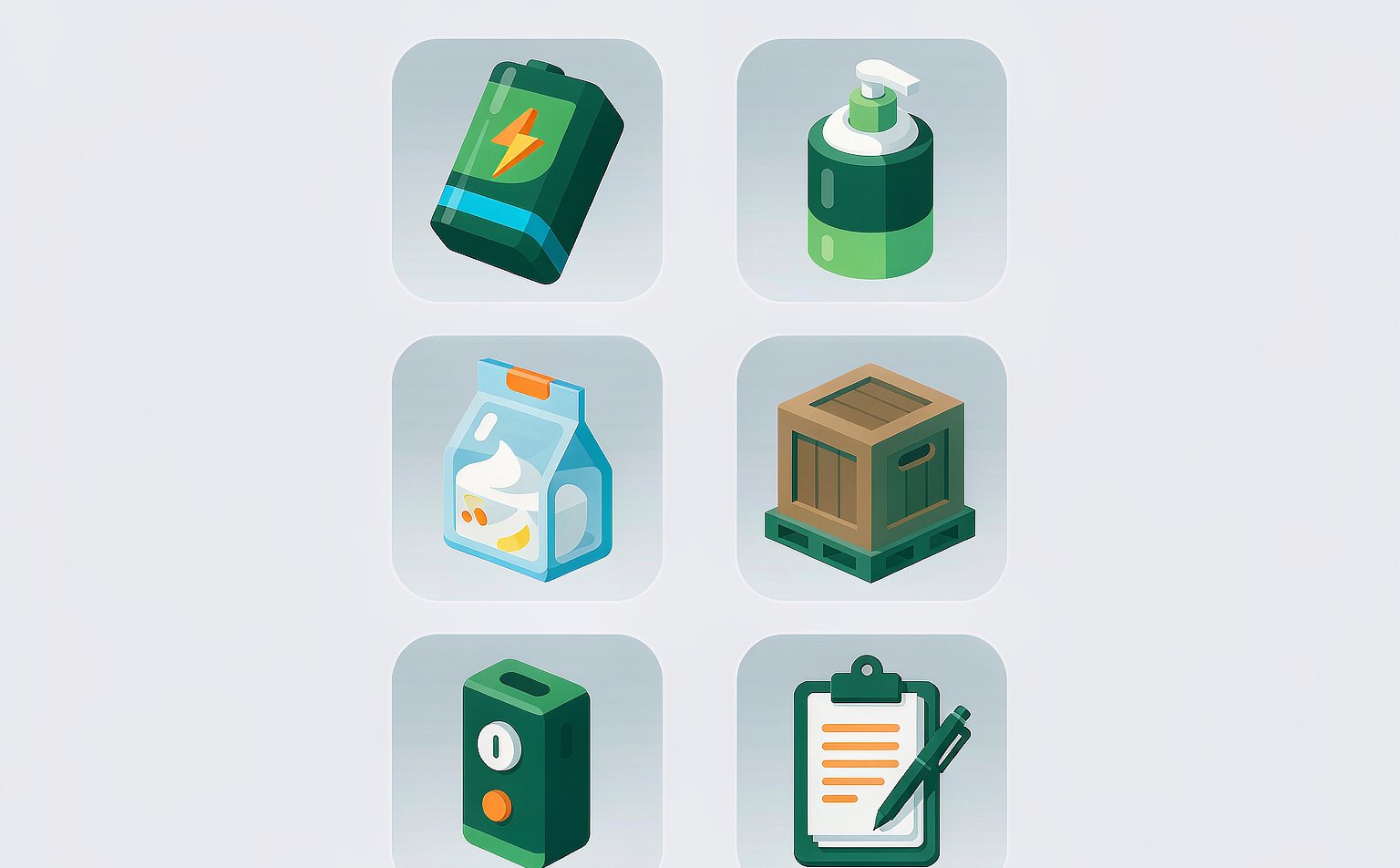
Most shipping problems are not about freight — they are about product compliance. Check your category before you place the order, because some fixes (like ISPM-15 wooden crates) must happen at the factory:
| Product type | What to watch | Extra documents |
|---|---|---|
| General consumer goods (textiles, homeware, toys) | Correct HTS classification; US safety labeling for children's products | Commercial invoice, packing list, B/L or AWB |
| Batteries & power banks | Class 9 dangerous goods by air and sea; UN38.3 tested cells; strict packing rules — a specialty, not a standard shipment | MSDS, UN38.3 test summary, DG declaration |
| Liquids, cosmetics, creams | Often restricted by air; leak-proof packing required; FDA facility/labeling rules may apply | MSDS, ingredient list, FDA registration where applicable |
| Food & supplements | FDA prior notice and registration; labeling compliance; longer clearance | FDA registration numbers, certificates of analysis |
| Electronics with radio/Bluetooth | FCC compliance; check for Section 301 tariff exposure (common on tech categories) | FCC conformity documentation |
| Goods in wooden crates/pallets | Wood packaging must be ISPM-15 heat-treated and stamped, or the whole shipment can be refused | ISPM-15 stamp on the wood itself |
| Branded or design goods | Counterfeit suspicion triggers seizure; keep proof of authorization for any trademark you use | Brand authorization letter |
Core documents for almost every shipment: commercial invoice, packing list, and bill of lading (sea) or air waybill (air). Many categories add a certificate of origin, MSDS or agency certificates. Make sure the invoice, packing list and booking details match each other — mismatches are the number-one avoidable cause of customs holds.
US duties, tariffs and fees
Customs cost is where first-time importers get burned, because it never appears in the supplier's product price. Since 2025, the old $800 de minimis allowance for China-origin goods has been removed — shipments of any value are assessed for duty. Your landed cost has four customs layers:
- Base HTS duty — set by your product's 10-digit Harmonized Tariff Schedule code, commonly single-digit percentages for consumer goods.
- Section 301 tariffs — additional duties on many China-origin goods, historically 7.5%–25% and higher on specific categories. The list changes with trade policy, so verify the current rate for your exact product before ordering.
- User fees — the Merchandise Processing Fee (a small percentage of cargo value with a min/max per entry) and, on ocean entries only, the Harbor Maintenance Fee (0.125%).
- Antidumping/countervailing duties — product-specific extra duties on categories like steel, aluminum products and some furniture that can be very large. Check your HTS code, don't assume.
Landed cost formula: product price + international freight + insurance + duties and fees + US inland delivery. Quote your selling price against that number, never the ocean rate alone. A note on "preferences": unlike some trade partners, the USA does not grant China a special preferential tariff agreement — the savings levers on this lane are correct classification, consolidation, and mode choice. If you also source from Vietnam, Thailand or other Asian countries, ask us — different origin rules may apply there.
Importing for personal use versus importing to resell
As an individual
You can import personal-use goods without a company. Small orders go by express courier or air/sea door-to-door; duty applies by value and category just like commercial cargo. You do not need a US business entity, but for sea/air shipments you may be asked for importer identity details for the customs entry. The simplest route is a DDP door-to-door service, where the forwarder clears customs on your behalf and hands you one final price. Practical tip: start with one small paid sample shipment before any bulk order.
As a company
A business importing regularly should have an EIN (tax ID), and for sea freight a customs bond — either single-entry per shipment or a continuous bond that pays for itself above a handful of entries a year. Formal entries (over $2,500) are filed by a licensed customs broker. Register early with the products' agency requirements in mind (FDA etc.), keep records for five years, and consider cargo insurance — carrier liability caps are low, and all-risk insurance typically costs a fraction of a percent of cargo value.
Sourcing online or at a trade fair: how each route ships
Bought from an online supplier (Alibaba, 1688, etc.)
1. Verify the supplier (business license, trade-assurance history, sample order first). 2. Agree the Incoterm — FOB is the clean default. 3. Give your forwarder the supplier's full address and contact: we collect directly from the factory. 4. Buying from several suppliers? We consolidate them into one shipment in our warehouse — usually the single biggest saving a small importer can make. 5. Pay through protected channels and keep invoices consistent with your customs declaration.
Met your supplier at a trade fair (Canton Fair & co.)
1. Record the supplier's factory address and contact at the booth — "we'll figure out shipping later" is how cargo gets stranded. 2. Get the quoted price and the quoted Incoterm in writing before you fly home. 3. Samples can come by express; production orders are best consolidated with any other fair finds into one LCL shipment. 4. Ask us to coordinate pickup timing with the factory so goods are not produced before space is booked. 5. Fair quotes often exclude inland trucking from an out-of-province factory — we price the full route, not just the port leg.
Why the structure needs a forwarder at each end
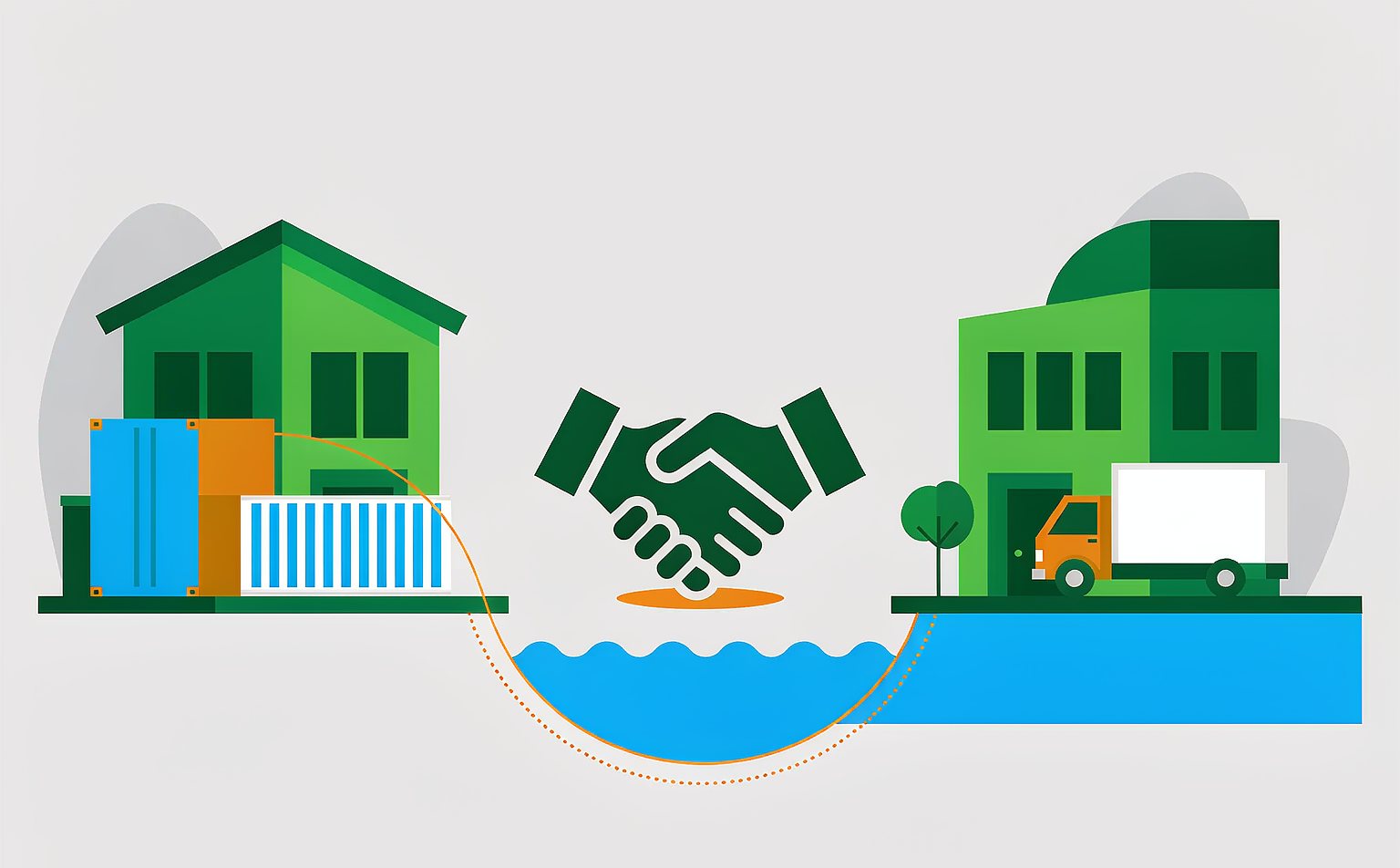
A common beginner mistake: trying to book directly with a shipping line or airline. Carriers sell container space — they do not collect from your factory, prepare export declarations, consolidate LCL cargo, file the ISF, clear US customs, or deliver to your address. That entire surrounding work is the job of a freight forwarder. You also should not hire a trucking company or warehouse directly for international cargo — those are components a forwarder coordinates.
The clean structure for China imports is two partners:
- A forwarder in China (us) — controls pickup, consolidation, export clearance, and the international booking. Being local to your suppliers matters: we speak the factory's language, can chase production delays, and can even do pre-shipment inspections.
- A destination-side partner in the USA — a licensed customs broker and inland trucker for import clearance and final delivery. If you don't have one, your China forwarder arranges this as part of a door-to-door (DDP) service, so you only ever deal with one point of contact.
How to choose a reliable, honest forwarder in China
- Licensing: ask for their NVOCC number (ours: GD20230925153335) and years in the trade — we have operated since 2012.
- Itemized quotes: a trustworthy forwarder shows origin charges, freight, destination charges and duties as separate lines. A bait quote with one number hides the fees you'll pay later.
- Specific lane experience: China–USA, not "international shipping" in general — ask how they handle ISF, bonds and FBA appointments.
- Communication: who answers you, in what timezone, how fast — a 24-hour quote response commitment is a fair minimum.
- References and reviews: real client stories and third-party review pages, not just website claims.
- Start small: test with one LCL shipment before committing your main supply chain to them.
Three shipments, three different answers
Illustrative examples based on typical China–USA shipments; your actual rates and timing depend on season, cargo and destination — request a live quote.
Case 1 — The first order
A boutique owner in Texas buys 80 cartons of home décor (~3 CBM, 320 kg) from two Alibaba suppliers. Setup: FOB Shenzhen, multi-supplier consolidation into one LCL shipment, DDP door to door. Outcome pattern: one shipment, one invoice including duty, delivery to her store in about 5–6 weeks — no customs paperwork on her side, and no second freight bill she didn't expect.
Case 2 — The growing e-commerce seller
An online seller restocking monthly moves 8–10 CBM per order. We consolidated three factories into weekly LCL, then advised moving to a dedicated 20ft container every six weeks once volume passed ~15 CBM — lower cost per unit, less handling, predictable replenishment ahead of Q4. Duty exposure was reviewed per product with correct HTS codes before the first container, avoiding clearance surprises.
Case 3 — The urgent launch
A startup needed 260 kg of finished goods in 10 days for a trade show. Air freight door to door was used for the launch batch while the bulk inventory moved by sea in parallel — the classic two-track setup. Total landed cost stayed manageable because only the time-critical part paid for speed.
What to look for in a China forwarder when you are new to this
You are handing your cargo, your money and your delivery dates to a company on the other side of the world, so it is worth knowing what competence looks like on this particular lane.
Things a competent forwarder does without being asked
- Asks what you are shipping before quoting. A quote that arrives without a single question about the commodity is a guess, and you pay for the guess later.
- Confirms your HTS classification and flags whether any additional measure applies. On US imports this is not optional: the classification drives your duty, and measures on certain Chinese goods are substantially larger than the tariff itself.
- Files the security data on time. The advance filing for vessel cargo has a hard deadline before loading, with penalties attached, and it needs accurate shipper and consignee data from you well before the cut-off.
- Quotes the whole route — origin charges, ocean freight, and the destination charges you will actually face at the US port — rather than a low headline number.
- Holds an NVOCC licence and will give you the number.
Warning signs
- A price dramatically below every other quote. It is almost always missing destination charges.
- Suggesting you declare a lower value "to save duty". That is fraud, and as the importer the liability is yours.
- Recommending you split commercial orders into personal parcels to slip under the radar.
- No questions about batteries, wood packaging or certification before booking.
Frequently asked questions
How much does it cost to ship from China to the USA?
It depends on mode and shipment size. Express suits small parcels, air freight works best around 150–500 kg, LCL sea freight is priced per cubic meter, and a 20ft container to the West Coast typically runs a few thousand US dollars in normal seasons. Rates move with fuel, demand and trade policy — request a current quote before budgeting.
How long does shipping from China to the USA take?
Express 2–5 business days; air 5–10 days door to door; sea LCL roughly 30–45 days and FCL about 25–40 days door to door depending on coast and inland distance. Chinese New Year and Golden Week add predictable delays on top.
Do I pay duty on every shipment from China now?
In practice, yes — the previous $800 de minimis allowance for China-origin goods was removed in 2025, and shipments of any value are assessed. Your rate depends on the HTS code, plus any Section 301 tariff. Confirm current figures with your broker before ordering.
FCL or LCL — which should I choose?
Below roughly 15 CBM, LCL is usually cheaper; above it, FCL wins on cost per unit, speed and handling safety. We quote both at your real volume so you can compare.
Do I need a customs broker in the USA?
Formal entries (commercial value over $2,500) must be filed by a licensed US customs broker against a customs bond. If you ship DDP with us, US-side clearance is arranged for you as part of the service.
Which Incoterm should a first-time importer use?
FOB with your supplier, combined with a DDP door-to-door offer from your forwarder, is the standard beginner setup — transparent at origin, all-inclusive at destination.
Can I import from China as an individual?
Yes. Individuals can import personal-use goods via courier or door-to-door air/sea service; duty rules are the same. A forwarder handles the entry paperwork on your behalf.
How do I avoid customs delays?
Clean, matching documents (invoice, packing list, booking), correct HTS classification, on-time ISF filing for ocean cargo, ISPM-15 treated wood packaging, and early checks on FDA or other agency requirements.
Why first-time importers start with Goodhope
- Established and licensed: operating since 2012, NVOCC licensed (GD20230925153335), headquartered in Shenzhen with a Shanghai branch — next to your suppliers, not a call center away from them.
- Full one-stop scope: sea FCL & LCL, air freight, international express, warehousing & consolidation, export customs declaration, container trailer trucking, quarantine & fumigation arrangements, and DDP door-to-door to the USA.
- Transparent pricing: itemized quotes — you see origin charges, freight and destination charges as separate lines, and there are no surprise fees at destination.
- Beginner-friendly process: we explain every step before it happens, in plain English, and handle the documents on your behalf.
- Fast response: quote turnaround within 24 hours, Monday to Saturday.
Why importers use Goodhope on this lane
Six things that are different about working with us on China to the USA shipments.
Ready to ship from China to the USA?
Send us your product, weight, volume and destination — we will reply with an itemized, all-in plan (mode options, transit time, duties included) within 24 hours.
Get a Free Quote Explore China–USA Services