
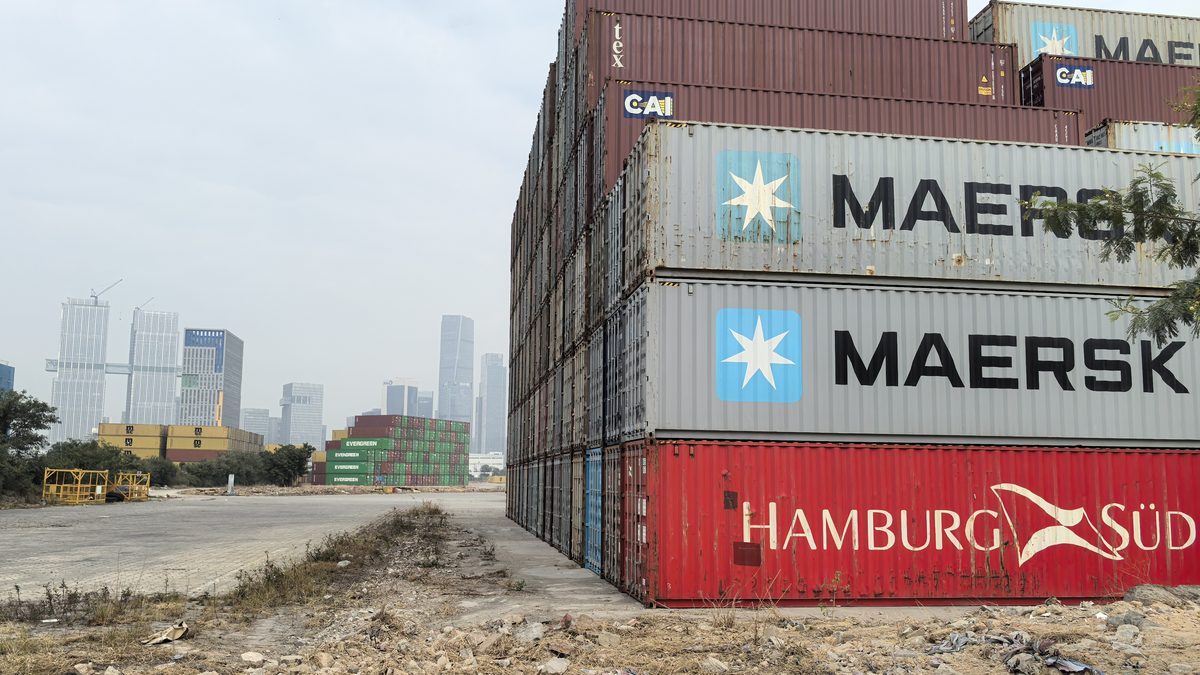
Price of LCL International Shipping to the UK
Ocean freight per cubic meter for less than container load (LCL) groupage from China to ports and inland cities across the United Kingdom. The table reproduces a 2020 tariff for the destinations we ship to most often; the notes underneath explain the volume bands, the chargeable weight rule and the local charges at each end that decide what a UK-bound groupage shipment really costs.
LCL rate card: China to the UK, per cubic meter
Ocean freight only, in US dollars per revenue ton (RT). Origin and destination local charges, customs clearance and duty are excluded.
| Destination | Volume band (m³) | Ocean freight (USD/RT) | Min. (RT) | Routing | Sailing schedule | Carrier | Transit time (days) |
|---|---|---|---|---|---|---|---|
| Felixstowe / London | 0–3 | 15 | 1 | Direct groupage | Cut-off Friday, ETD Sunday | Maersk | 23 |
| Felixstowe / London | 3–5 | 15 | 1 | Direct groupage | Cut-off Friday, ETD Sunday | Maersk | 23 |
| Felixstowe / London | 5–8 | 15 | 1 | Direct groupage | Cut-off Friday, ETD Sunday | Maersk | 23 |
| Felixstowe / London | 8–15 | 15 | 1 | Direct groupage | Cut-off Friday, ETD Sunday | Maersk | 23 |
| Southampton | 0–3 | 15 | 1 | Direct groupage | Cut-off Friday, ETD Sunday | ONE | 28 |
| Southampton | 3–5 | 15 | 1 | Direct groupage | Cut-off Friday, ETD Sunday | ONE | 28 |
| Southampton | 5–15 | 15 | 1 | Direct groupage | Cut-off Friday, ETD Sunday | ONE | 28 |
| Aberdeen | 0–15 | 30 | 1 | Via Felixstowe | Cut-off Friday, ETD Sunday | Maersk | 25 |
| Birmingham | 0–15 | 50 | 1 | Via Felixstowe | Cut-off Friday, ETD Sunday | Maersk | 25 |
| Bradford | 0–15 | 30 | 1 | Via Felixstowe | Cut-off Friday, ETD Sunday | Maersk | 25 |
| Bristol | 0–15 | 50 | 1 | Via Felixstowe | Cut-off Friday, ETD Sunday | Maersk | 25 |
| Derby | 0–15 | 30 | 1 | Via Felixstowe | Cut-off Friday, ETD Sunday | Maersk | 25 |
| Edinburgh | 0–15 | 30 | 1 | Via Felixstowe | Cut-off Friday, ETD Sunday | Maersk | 25 |
| Glasgow | 0–15 | 30 | 1 | Via Felixstowe | Cut-off Friday, ETD Sunday | Maersk | 25 |
| Leeds | 0–15 | 50 | 1 | Via Felixstowe | Cut-off Friday, ETD Sunday | Maersk | 25 |
| Liverpool | 0–15 | 50 | 1 | Via Felixstowe | Cut-off Friday, ETD Sunday | Maersk | 25 |
| Manchester | 0–15 | 50 | 1 | Via Felixstowe | Cut-off Friday, ETD Sunday | Maersk | 25 |
| Middlesbrough | 0–15 | 30 | 1 | Via Felixstowe | Cut-off Friday, ETD Sunday | Maersk | 25 |
| Newcastle | 0–15 | 30 | 1 | Via Felixstowe | Cut-off Friday, ETD Sunday | Maersk | 25 |
| Northampton | 0–15 | 30 | 1 | Via Felixstowe | Cut-off Friday, ETD Sunday | Maersk | 25 |
| Nottingham | 0–15 | 30 | 1 | Via Felixstowe | Cut-off Friday, ETD Sunday | Maersk | 25 |
| Stockport | 0–15 | 30 | 1 | Via Felixstowe | Cut-off Friday, ETD Sunday | Maersk | 25 |
| Thamesport | 0–15 | 50 | 1 | Via Felixstowe | Cut-off Friday, ETD Sunday | Maersk | 25 |
| Tilbury | 0–15 | 30 | 1 | Via Felixstowe | Cut-off Friday, ETD Sunday | Maersk | 25 |
Read the table in three parts. The ports of Felixstowe and Southampton are reached by direct groupage; every other UK city is served via Felixstowe and carries an extra inland leg. That is why Aberdeen, Edinburgh or Glasgow sit above the port rates even though the ocean distance is identical.
Volume bands and how LCL freight is charged
LCL is billed on the greater of volume and weight — the chargeable weight rule. For China–UK groupage the conversion ratio is 1 cubic meter = 1,000 kg, so one revenue ton (RT) means either 1 m³ of space or 1,000 kg of gross weight, whichever produces the higher figure. A shipment of 2 m³ weighing 400 kg is billed at 2 RT; the same 2 m³ weighing 3,200 kg is billed at 3.2 RT.
The volume columns (0–3, 3–5, 5–8, 8–15) are the bands in which the rate applies. In the 2020 tariff most destinations carried a single rate across all bands, and the minimum chargeable volume was 1 m³. Cargo above 15 m³ in a single shipment is quoted separately, because at that point a 20GP container is usually cheaper than LCL.
Local charges on top of the ocean freight
- ENS (Entry Summary Declaration) filing: USD 25 per shipment.
- Export documentation (bill of lading and export documents): RMB 300 per shipment.
- Export customs declaration in China: RMB 350 per shipment.
These are origin-side charges. At the UK end the consignee pays destination handling, deconsolidation, customs entry, possible duty and VAT, and inland delivery — all quoted in GBP and all outside the ocean rate above. Because these charges are normally levied per shipment rather than per cubic meter, they dominate the total on small consignments.
China–UK transport modes compared
There are six main ways to move goods from China to the UK: FCL (full container load), LCL (groupage), international air freight, international express (DHL, FedEx, UPS, TNT and EMS), container rail to Europe, and postal parcels. Every other commercial label in the market — DDP “double-clearance” door-to-door, first-leg delivery for Amazon FBA UK, Taobao consolidation, one-piece delivery, overseas warehousing and consignment stock — is built on top of one of those six modes.
Sea freight carries the overwhelming majority of China–UK trade volume, and groupage accounts for a significant share of it: every week a large volume of cargo moves from Chinese port warehouses and inland customs-supervised warehouses to UK ports. Air and express take the time-critical and high-value share, and rail is competitive for inland European destinations where a sea port calls for a long onward leg.
Advantages of LCL shipping to the UK
- Low entry volume. One cubic meter is enough to ship; there is no need to fill a container.
- Cheap freight. Per-cubic-meter rates are far below air freight for cargo that is not time-critical.
- Stable schedule. Groupage departures are weekly and fixed, so you can plan around a known cut-off and sailing day.
- Fixed procedures and charges. Documentation and terminal handling follow a standing format, which makes budgeting easier than for breakbulk or project cargo.
For small and medium quantities that do not fill a 20GP, LCL is usually the most practical way to move goods from China to the UK.
Transit time and rates at a glance
How long does LCL take from China to the UK? Counting from delivery into our China warehouse, the consignee normally collects the cargo 30 to 35 days later. The sailing itself is 23 to 28 days; the balance is consolidation, cut-off waiting, UK customs clearance and release.
How much is one cubic meter from China to the UK? On the tariff above, groupage from South China to Felixstowe, London and Southampton is USD 15 per cubic meter, while inland cities such as Birmingham, Bristol, Leeds, Liverpool, Manchester and Thamesport are USD 50 per cubic meter because of the extra road leg.
Other load ports in China
South China (Guangzhou, Shenzhen, Jiangmen, Zhuhai, Shantou, Huizhou, Xiamen, Fuzhou) is the main groupage origin, but cargo also consolidates at Shanghai, Ningbo, Qingdao, Nanjing, Hangzhou, Wuhu, Wuhan, Changsha, Jiujiang, Chongqing, Chengdu, Xi’an, Zhengzhou, Dalian, Beijing, Harbin, Yiwu and Wenzhou. From most of these origins the LCL cost to the UK sits below USD 50 per cubic meter; the difference between load ports is usually smaller than the difference caused by how many separate deliveries your suppliers make to the warehouse.
What decides the final invoice
Two fixed charges matter as much as the ocean rate: the charges levied by the Chinese forwarder at the origin warehouse, and the charges levied by the UK agent when the groupage container is deconsolidated. Both are normally billed per shipment rather than per cubic meter, and neither includes UK import duty. A shipment of half a cubic meter therefore pays almost the same fixed charges as a shipment of five cubic meters — which is exactly why groupage economics improve as volume grows, and why a 20GP often wins above roughly 15 m³.
When LCL to the UK is not the right choice
If you are not in the import trade — personal effects, students’ luggage, a one-off Taobao order, or an Amazon UK seller shipping for the first time — groupage to the UK is usually the wrong tool. The freight looks cheap, but the process is document-heavy: export declaration, bill of lading, ENS filing, UK customs entry, possible VAT and duty, and a consignee who must be able to clear the goods. Each step carries a fixed cost that a small shipment cannot absorb. For those cases international express or an air freight channel with a DDP service is normally simpler and cheaper overall.
Frequently asked questions
How much is one cubic meter of LCL freight from China to the UK?
On the 2020 tariff shown above, groupage from South China to Felixstowe, London and Southampton is USD 15 per cubic meter. Inland destinations such as Birmingham, Bristol, Leeds, Liverpool, Manchester and Thamesport are USD 50 per cubic meter, and cities such as Aberdeen, Bradford, Derby, Edinburgh, Glasgow, Middlesbrough, Newcastle, Northampton, Nottingham, Stockport and Tilbury fall between USD 30 and USD 50. Rates are re-quoted regularly.
How long does LCL shipping from China to the UK take?
About 30 to 35 days from delivery into our China warehouse to collection in the UK. The ocean sailing is 23 to 28 days depending on destination and carrier; the remainder is consolidation, cut-off waiting, UK customs entry and release.
What is the minimum LCL volume to the UK?
The minimum chargeable volume is 1 cubic meter, so a shipment of 0.3 cubic meter is billed as 1 RT. For a single shipment above 15 cubic meters we will normally price a 20GP container as well, because at that volume a full container is usually cheaper.
How is the chargeable weight of LCL cargo calculated?
LCL is billed on the greater of volume and weight. For China–UK groupage the ratio is 1 cubic meter = 1,000 kg, so a shipment is charged at 1 RT per cubic meter or per 1,000 kg of gross weight, whichever is higher. Always give us both the volume and the gross weight so the estimate is accurate.
What local charges apply besides the ocean freight?
At origin: ENS filing at USD 25 per shipment, export documentation at RMB 300 per shipment and the Chinese export declaration at RMB 350 per shipment. At destination the UK agent charges deconsolidation, terminal handling, customs entry, duty and VAT, and inland delivery — quoted in GBP and not included in the ocean rate.
Is LCL the cheapest way to send a small parcel to the UK?
Not always. For personal effects, students’ luggage or a single online order, the fixed origin and destination charges make LCL expensive in total. International express or a DDP door-to-door channel is usually cheaper and far simpler below roughly 100 kg, while LCL wins once the shipment is above about 1 cubic meter.
Ship with Goodhope Freight
Goodhope Logistics (China) Limited is a Shenzhen-based international freight forwarder and NVOCC (license GD20230925153335), moving express shipments, air cargo and sea freight out of China since 2012. Send your commodity, gross weight, volume and destination, and we will confirm the best channel, the all-in rate and the transit time: sales007@goodhopefreight.com or WhatsApp / WeChat +86 18938691638.