
Language
Most exhibitors at the fair speak enough English to quote a price. Very few can explain a tolerance, a test failure or a payment term in a second language at the speed a negotiation needs.
Contents
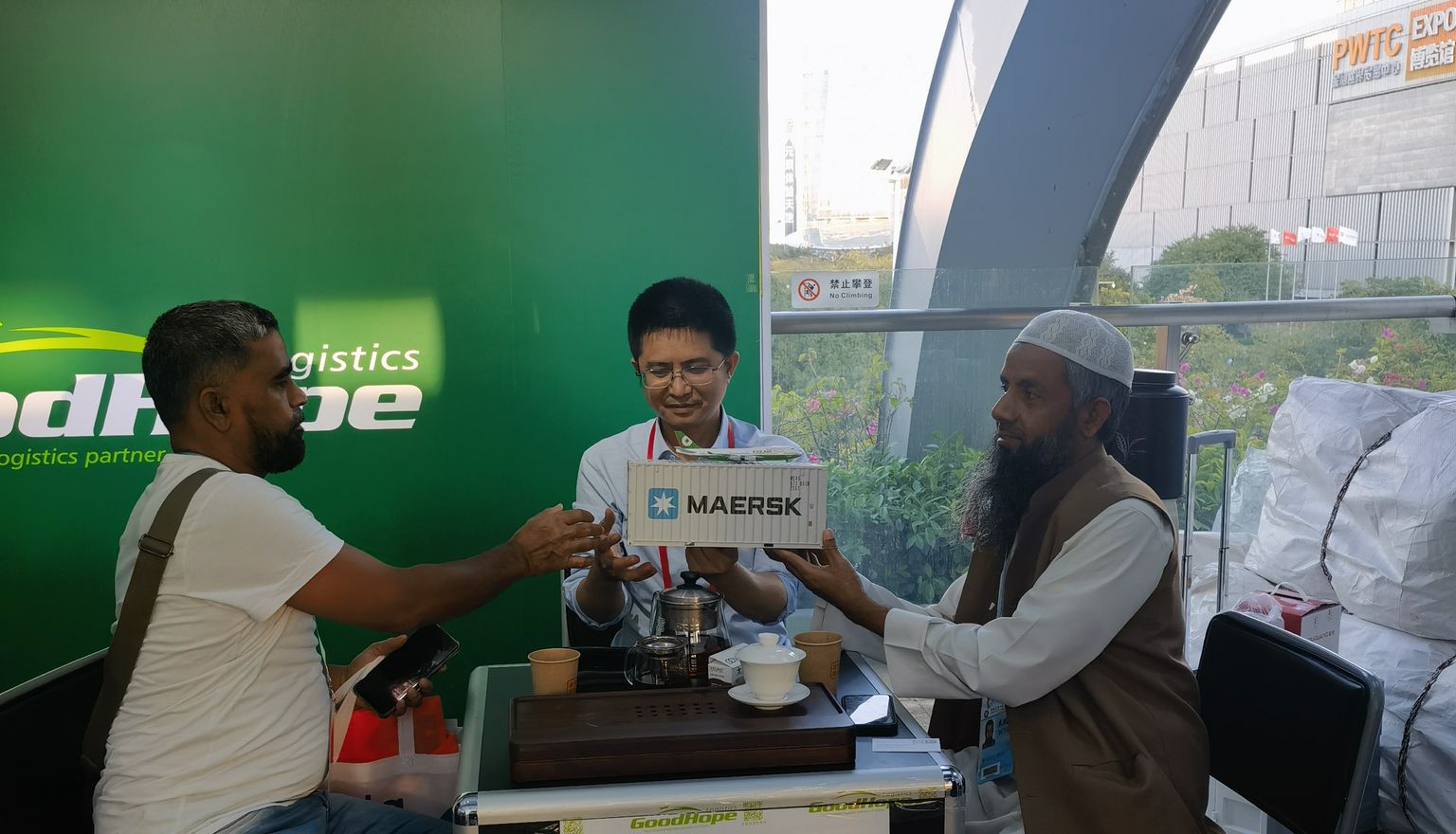
A first meeting about a simple product does not need interpretation. The exhibitor has an English speaker, the questions are about quantity and price, and a third person in the conversation slows it down.
Interpretation earns its cost at three points. The second meeting, when you are discussing modification, tolerances, packaging and penalties. The factory visit, where the people who run the machines usually do not speak English. And any conversation about money that involves conditions rather than numbers.
There is a fourth case that buyers underestimate: a language the exhibitor does not have at all. A factory selling to the Middle East may have Arabic-speaking staff; one selling to Europe may have none, and a Spanish or Portuguese buyer can end up negotiating through a competitor's translator.
There is a timing problem that catches buyers on a short trip. A professional interpreter books by the day, and a day in the halls with one buyer is a day they cannot sell twice, so the rate for a single afternoon looks disproportionate. Two half-days are usually billed as two days. If the work is genuinely four hours, book it and accept the structure rather than arguing about it.
The fair runs its own interpretation service, bookable on site, which solves the access problem for you because the arrangements are made inside the venue's system. Cost is by the day or half day, and availability on the opening morning of a phase is the tightest.
A local agency in Guangzhou will supply an interpreter for a day, a week or a factory trip, usually with an invoice and a replacement if someone falls ill. Rates reflect experience: a general business interpreter and a technical interpreter for machinery are not the same market.
Freelancers and students are cheaper and can be excellent for a straightforward product range. They are also the group most likely to cancel for an exam or a better-paid day, so confirm the backup arrangement.
The fourth option is the one already standing in front of you: the exhibitor's own bilingual salesperson. Free, available, and motivated to make the deal sound simple. Useful for a first meeting, unsuitable for terms.
Interpretation in Guangzhou is priced by the day, and the day is the billing unit whether you need four hours or nine. Rates move with the language pair, the technical content and the season, and fair week sits at the top of the range because every agency in the city is booked.
Expect to pay a premium for consecutive interpretation in a negotiation, and a smaller premium for escort work such as a factory visit or a market trip. Travel time to a factory outside Guangzhou is charged, and often at the full rate.
Ask what the day includes before agreeing: hours, travel, meals, and whether the interpreter carries their own entry badge. A cheap day rate with unbilled extras is not a cheap day rate.
Book before the phase opens. Agencies in Guangzhou fill up in the week before each phase, and the fair's own service desk is busiest on day one. A booking made on arrival is a booking at whatever rate is left.
Entry to the complex is against registration. That applies to everyone, including someone attending purely to help you, and a badge is not transferable. Confirm the current arrangement when you book, because the rules for accompanying staff and service providers are reviewed between sessions.
The practical workaround is to use the fair's own interpretation service for work inside the halls, where access is handled as part of the booking, and a local agency for everything outside: factory visits, markets, warehouses and the airport.
Allow time on the first morning. A badge that has to be collected in person can turn a 09:30 start into a 10:30 one, and the exhibitor you wanted to see first will already be busy.
An interpreter without a brief is a translator of sentences. An interpreter with a page of context becomes a participant who can catch the moment a supplier dodges a question.
Give them the product, the specification, the quantity you are considering, your target price and your ceiling, the payment terms you will accept, the delivery window, and the three things you will not compromise on. Then name the questions you must have answered before you leave the booth.
Ten minutes of briefing saves an hour of circular conversation, and it stops the interpreter from answering a question you wanted to hear the supplier struggle with.
An interpreter translates. They do not negotiate, agree a price, or accept a term on your behalf, and the supplier should hear that from you at the start of the meeting rather than discovering it halfway through.
The reason is not distrust. A supplier who believes the interpreter has authority will negotiate with the interpreter, and you will find out what was agreed after the handshake.
Keep the commercial decisions in your own voice, in short sentences, and let the interpreter carry them. If a number matters, write it down and show it. Numbers survive translation better on paper than in speech, and a written price with a quantity and a currency is unambiguous in any language.
Technical interpretation fails on nouns, not on grammar. A word like tolerance, draft angle, wall thickness, gasket, coating or load-bearing has one correct equivalent and several approximate ones, and the approximate version produces a specification you did not order.
Build a short glossary before the meeting: ten to twenty terms with the Chinese equivalent, checked by the interpreter in advance. Photographs help more than definitions. A picture of the part you mean removes the argument about which part you meant.
For regulated products, put the standard numbers on the page. A test standard cited by its code does not need translating, and it cannot be misheard.
Ask the interpreter to write the summary, in English, within a few hours: what was agreed, what was refused, what was promised and by when. Memory of a two-hour meeting with four people in two languages is unreliable by the evening, and their notes are better than yours.
Send that summary to the supplier the same day, addressed to the person you met, with a line asking them to correct anything wrong. Silence becomes agreement, and an early written record prevents the drift that turns a quotation into a different order.
Keep the interpreter's contact. A second order, a quality dispute or a factory audit will need the same person, and the second time is easier because the vocabulary is already built.
Q How much does an interpreter cost at the Canton Fair?
It is priced by the day, with fair week at the top of the local range because demand peaks. Rates vary with the language pair and the technical content, plus travel for factory visits. Ask what the day includes, and whether entry is handled, before agreeing.
Q Does my interpreter need their own badge?
Entry to the complex is against registration and badges are not transferable, so anyone attending with you needs their own. Using the fair's official interpretation service avoids the problem inside the halls; confirm the current rule when you book.
Q Can I use the exhibitor's English-speaking staff instead?
For a first meeting about price and quantity, usually yes. For specifications, tolerances, payment conditions and penalties, a bilingual salesperson is translating for the side that pays them.
Q What should I put in an interpreter briefing?
One page: product and model, quantity band, target and walk-away price, acceptable payment terms, delivery window, and the three questions that must be answered. Add a short glossary with photographs.
Q Should the interpreter negotiate for me?
No. Say at the start that the interpreter translates and you decide. A supplier who thinks the interpreter has authority will negotiate with them, and you will learn the outcome after the meeting.
Q Is a student interpreter good enough?
For a straightforward product range and a short trip, often yes, and the cost difference is significant. Confirm a backup arrangement, because cancellations are more common with freelance and student bookings.
Related pages
If the trip includes plants outside Guangzhou, tell us the addresses and we will tell you what the travel adds in days and what the visit needs to cover.
Email sales8015@goodhopefreight.com | WhatsApp & phone +86 133 9216 2503