
First Shipment
The most expensive days in a container's life are the ones where nothing happens to it.
Contents
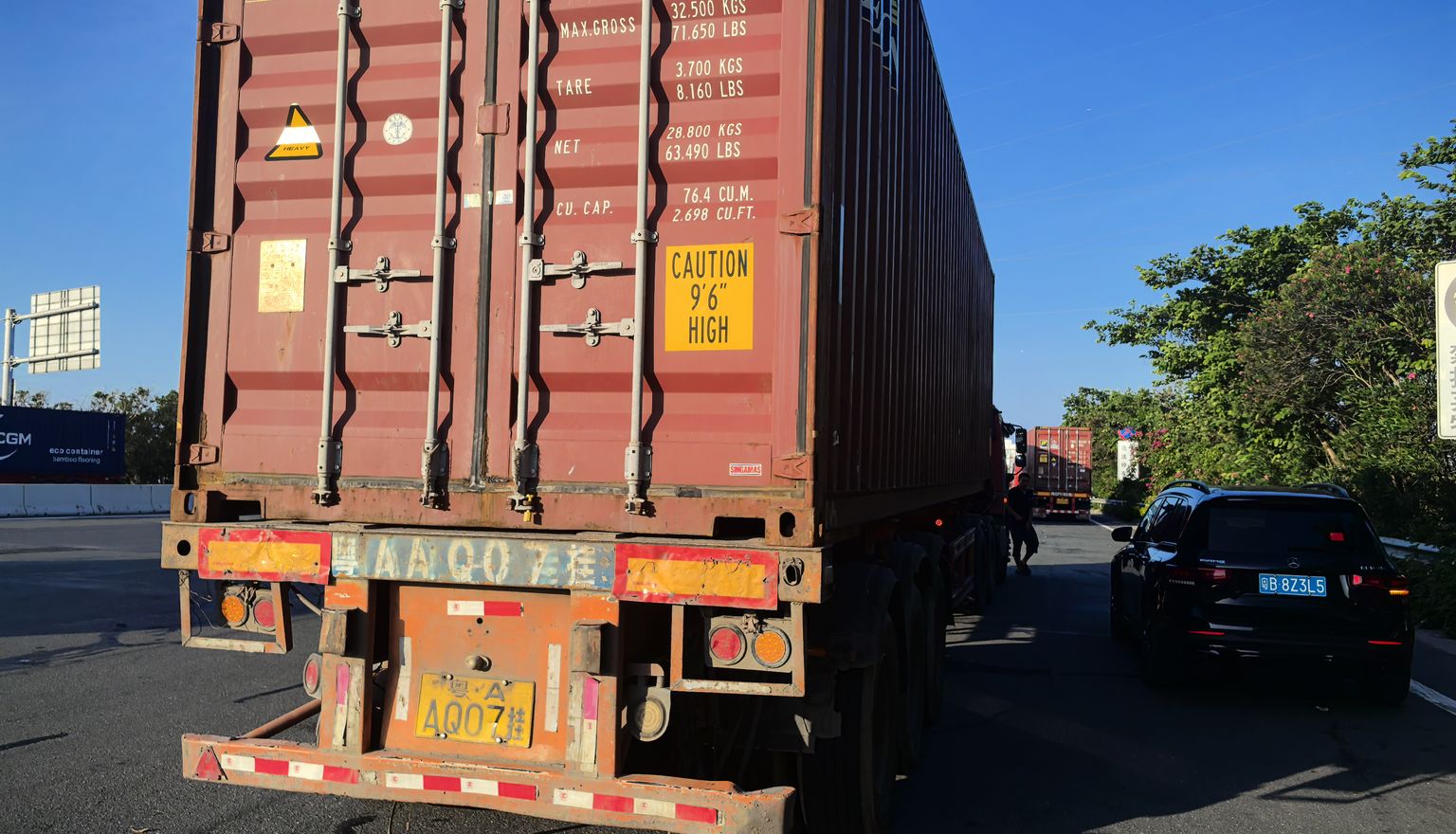
Two charges run against a container after it arrives, and they are constantly confused because they are usually on the same invoice.
Demurrage is charged by the carrier for the container sitting inside the terminal beyond its free time. The box has been discharged, it is on the terminal's ground, and it is not moving. Detention is charged for the container sitting outside the terminal beyond its free time: you have picked it up, the cargo is off, and the empty has not come back.
The distinction matters because the two clocks start on different events, are stopped by different actions, and are sometimes waived for different reasons. Demurrage is about customs and documents. Detention is about your own trucking and your own warehouse. One is usually somebody else's delay; the other is usually yours.
A third charge sits underneath both: storage, levied by the terminal or the port authority rather than the carrier. On some lanes it overlaps with demurrage and on others it starts on a different day. Ask which party is billing which line, because a dispute with the wrong party goes nowhere.
Free time is a commercial term, not a legal right. It appears in three places: the carrier's published tariff, a negotiated service contract, and the booking confirmation. Where those disagree, the contract wins and the tariff fills the gaps.
Typical figures at destination run five to seven days for demurrage and five to ten days for detention on a standard dry container, and both vary widely by carrier, by port and by trade lane. Treat those numbers as a starting point to check, not a rate to budget. Reefers, tanks and special equipment usually get less. Some ports give more because the terminal is slow, and some give less because the carrier is short of boxes.
Free time is negotiable, and the moment to negotiate it is before the booking is confirmed. A carrier with empty equipment in that trade will often extend detention for a shipper who asks at booking. Nobody extends it after the fact, because by then the charge is already accruing and the local office has no reason to give away revenue.
At origin the same clocks exist in reverse, and they are usually tighter. A container released for loading has a fixed window before detention starts, which is why a factory that is two days late picking up the empty creates a charge before any cargo has moved.
Demurrage conventionally starts at discharge from the vessel, not at the arrival notice, not at the moment your forwarder emails you, and not when customs releases the goods. A container discharged on a Tuesday begins its free time on Tuesday even if nobody tells you until Thursday.
That gap between discharge and notification is where small importers lose money. The vessel arrives, the terminal works the ship over two or three days, and the arrival notice follows. Two of your five free days can be gone before you have opened the email.
The practical response is to track the vessel rather than the notice. A vessel schedule and a terminal's container availability query are both public in most ports. If your forwarder sends a weekly status, ask for the discharge date specifically. It is a fact with a timestamp, and it is the only date the carrier will use.
Detention starts when the container leaves the terminal, which is a date your own trucker controls. That is the one clock you can plan precisely, and the one most often lost to a warehouse that cannot receive on the day the truck arrives.
The clock stops when the container is collected, and collection is gated by paperwork in a fixed order. Break the chain anywhere and the days keep running.
First, the bill of lading has to be surrendered. If it was issued as an original set, the originals must reach the carrier's destination office, which means a courier envelope and two or three days. This is the single most common cause of avoidable demurrage on a first shipment, because the shipper posts the documents after the vessel sails and the post is slower than the ship.
A telex release removes that step. The shipper surrenders the originals at origin, the carrier cables the destination office, and the consignee collects against identity. It costs a fee and it is worth it on any shipment where the original documents would arrive late.
Second, customs must release the goods. That needs a declaration, a duty payment and, on some products, a certificate the importer has not yet obtained. Third, the carrier issues a delivery order, and the terminal will not release the box without it. Each step has its own queue, and each queue is measured in working days.
A customs exam does not pause free time. The container is moved to a designated area, inspected, and returned, and the days spent waiting for the inspection slot are charged like any other day. On a first import of a regulated product, an exam is a real possibility and worth planning a week of slack for.
The same applies to other agencies. Food, cosmetics, medical devices, toys and electrical goods can be held pending a document check that has nothing to do with customs duty. The carrier bills the days regardless of who asked for the hold.
Terminal congestion is the third cause, and it is nobody's fault, which is exactly why it is hard to dispute. When a port is backed up, the terminal stops accepting empty returns and the truckers queue. Detention then accrues on containers you cannot return, and the carrier will usually extend free time for the period it has formally closed returns. Usually. Ask for the notice that announced the closure, because that notice is the evidence.
A chassis shortage or a trucker strike produces the same effect on land. None of it is in your control, all of it lands on your invoice, and the only defence is a written record of when the obstacle existed.
Most of the exposure is designed out at booking time, when you still have leverage.
Ask for the free time in writing on the booking confirmation, not in a rate table. Ask which party bills demurrage and which bills storage. Ask whether the rate is per container per day, whether it steps up after a set number of days, and whether the first tier is charged in full days or part days.
Choose telex release over original documents when the transit is short and the buyer is organised. Choose a carrier with a direct call over one that tranships, because a transhipment adds a discharge, a re-load and a second chance to miss a connection.
Brief the consignee before the vessel sails. A buyer who has the HS code, the value, the freight and the certificate requirements in hand can file the day the goods are available. A buyer who receives the documents with the arrival notice has already lost days.
And book the truck before the box is available, not after. The strongest protection against detention is a named delivery date at a warehouse that has confirmed it can receive.
If the container is sitting and the days are passing, the priorities are ordered and none of them is email.
Get the release first. Call the carrier's local office and ask which single document is missing. Then get the container out of the terminal even if the final destination is not ready: an off-dock depot or a bonded warehouse is usually cheaper per day than demurrage, and it converts a carrier charge into a storage charge you can control.
Return the empty early. Detention stops at the gate-in timestamp of the empty, not when the trucker says he dropped it. Keep that timestamp. If the terminal closes returns, keep the closure notice.
Where the delay was caused by a party with an obligation, put it in writing the same week. A carrier that failed to send an arrival notice, a terminal that refused returns, a forwarder that did not surrender documents: each of these can support a waiver request, and waiver requests are decided on documents rather than on argument.
A demurrage invoice should state the container number, the discharge date, the free time granted, the days charged and the tariff reference. If any of those is missing, ask for a corrected invoice before paying. Errors are common, particularly where free time was extended and the billing system was not updated.
Check the discharge date against the vessel's actual arrival, not the schedule. Check the free time against the booking confirmation rather than the published tariff. Check whether the days charged overlap a period when the terminal had closed returns.
Disputes are time-limited in most carrier procedures, often thirty days from invoice date, and they are decided by the local office with the file in front of them. A short letter with four attachments, the booking confirmation, the discharge record, the gate-out timestamp and the closure notice, will move further than a long complaint.
The habit worth building is smaller than any of this: ask for the discharge date on every shipment, and diarise free-time expiry the day the vessel sails. Two dates in a calendar prevent most of these invoices from being issued at all.
Q Who pays demurrage and detention, the seller or the buyer?
It follows the Incoterm and the contract of carriage, not the invoice. On FOB and CIF the buyer is the consignee at destination, so destination demurrage and detention land on the buyer. On DDP or DAP the seller has usually bought the door delivery and carries the risk to the named place. Read which party is named as consignee on the bill of lading, because that is who the carrier will bill.
Q Does free time include weekends and holidays?
Calendar days normally count, including weekends, unless the carrier's tariff says working days. Some ports and some carriers exclude public holidays, and a few exclude the day of discharge itself. Check the tariff wording rather than assuming, and note that the answer changes by country.
Q What starts the demurrage clock exactly?
Discharge from the vessel is the conventional trigger, recorded by the terminal. The arrival notice, the customs release and the delivery order all come later and none of them resets the clock. This is why the notification gap matters more than most importers expect.
Q How much does demurrage cost per day?
It varies by carrier, port, container size and tier, and it steps up after the first period expires. Rates for a standard dry container commonly sit in the tens of dollars per day for the first tier and climb steeply after that, but treat any figure you have not seen on the carrier's own tariff for your port as indicative only.
Q Can demurrage be waived?
It can, and it is decided case by case on evidence. A carrier will consider a waiver where it failed to notify, where the terminal closed returns, or where an exam was ordered by an agency. It will not waive a delay caused by the consignee not paying duty. Document the cause at the time it happens, because a waiver request written three weeks later is a story.
Q What happens if I never collect the container?
The charges keep accruing until the carrier declares the cargo abandoned, and then the disposal, storage and legal costs are recovered against the consignee and often against the shipper. Abandonment is far more expensive than collection, and it does not end the obligation.
Related pages
Tell us the destination port and the commodity and we will come back with the sailing pattern, the free time the carrier is currently granting on that lane, and which documents have to be in the consignee's hands before the vessel arrives.
Email sales8015@goodhopefreight.com | WhatsApp & phone +86 133 9216 2503