
Phase Guide
A promotional item has one property that ordinary goods do not: after the season it is not slow-moving stock, it is waste with a shipping label.
Contents
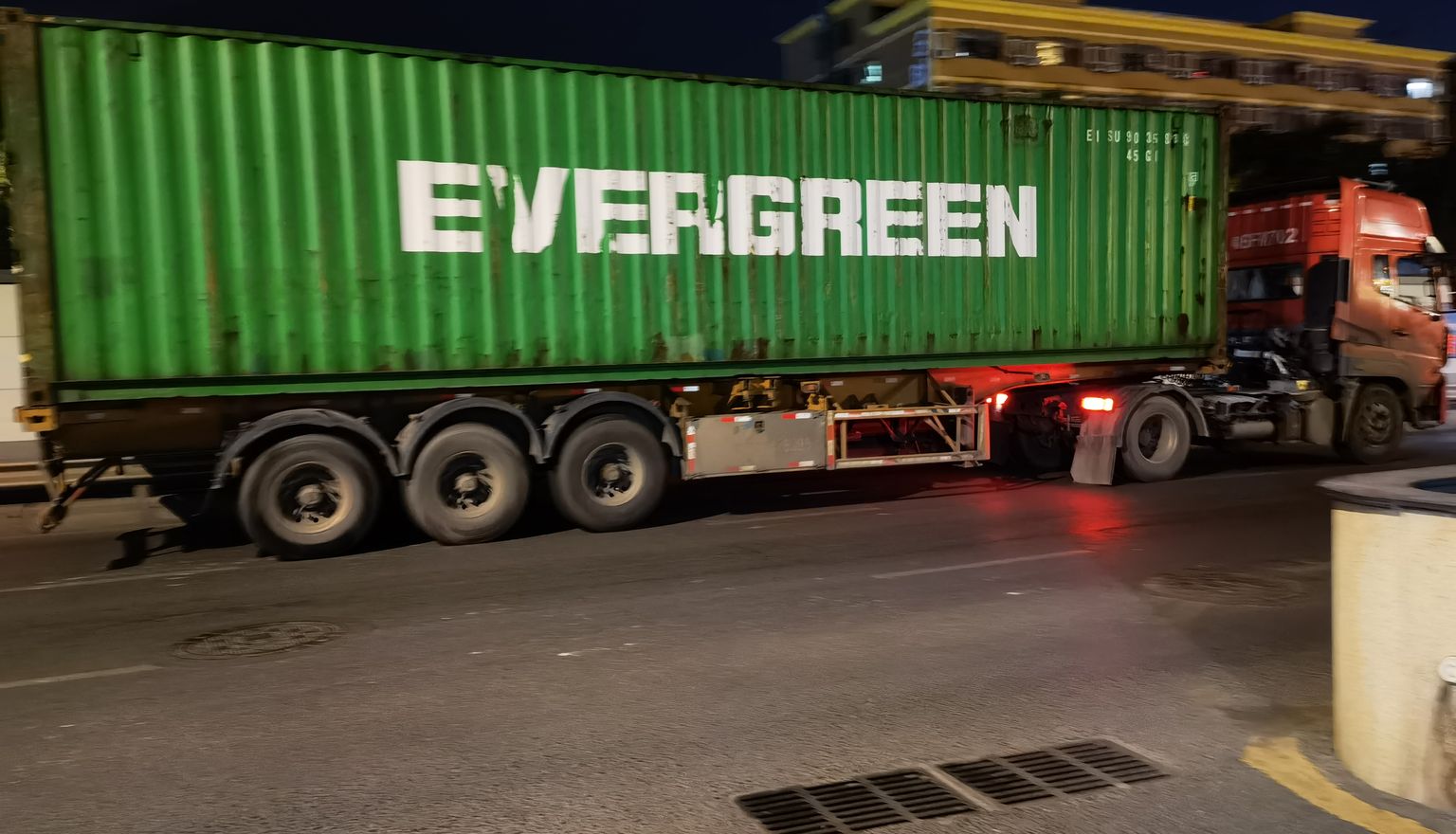
Seasonal buying inverts the usual order of a purchase. Ordinary goods are ordered when the buyer needs stock. Seasonal goods are ordered against a date on a retail calendar, and everything upstream has to fit inside the interval between the deposit and that date.
The chain, from the retail end: stock on shelf by a date; delivery to the retailer's distribution centre one to three weeks before that; clearance and inland delivery one to two weeks before that; arrival at the destination port two to three weeks before that; sailing five to seven weeks before that, from Asia to Europe or the US East Coast; cargo ready at the port one week before the sailing; production four to ten weeks before that; order placed and deposit paid before production starts.
Add it up and a Christmas programme needs to be on a vessel in August or September. A Halloween programme needs to sail in July. A back-to-school programme in June. The fair happens in October and November, which is why the fair is where buyers commit for the following year rather than for the coming season.
Buyers who arrive at the fair in October looking for this year's Christmas stock are eight months late, and the only route left is air freight at several times the cost.
The autumn session sits at the moment when next year's product decisions are made, and the timing is not accidental.
Phase 1 covers electronics, appliances, machinery and hardware. Phase 2 covers building materials, furniture, garden and consumer goods. Phase 3 covers textiles, footwear, bags, food and cases. A buyer attending all three phases in late October and early November has seen the whole range within a fortnight and can place a programme for the following autumn.
That produces a rhythm worth planning around: produce in the first half of the year when factory capacity is available and rates are lower, ship in the third quarter ahead of the peak, sell in the fourth. Buyers who compress that into the fourth quarter compete for capacity with everyone else and pay peak rates for the privilege.
The fair is also where the schedule gets discussed with the factory directly. A production slot agreed in November for a March completion is a slot the factory has planned for. The same order placed in May is a slot the factory has to find.
China's manufacturing calendar is set by two closures, and both have to be in the calculation rather than discovered in it.
Chinese New Year. In 2027 the holiday falls on 6 February. Factories typically stop one to two weeks before the date and restart one to three weeks after, as workers travel home and return on their own schedule. The effective standstill runs four to six weeks, and it is longer for factories that depend on migrant labour from distant provinces. Production booked to finish in late January is production that has to be finished, inspected and trucked before the holiday, not during it.
National Day, 1 to 7 October. Shorter, but it lands in the middle of the peak shipping window, and trucking and port operations slow down around it.
The consequence for a seasonal order is a single rule: the completion date has to be set against the holiday, not against the sailing date. An order due to complete in the week before Chinese New Year will complete in the week after it, and no clause changes that.
Holiday dates above are the published dates for 2027. Factory closures vary by region and by company, and the actual standstill should be confirmed with the supplier.
From roughly July to October, capacity out of Asia tightens and rates rise. The mechanism is straightforward: holiday stock for North America and Europe moves in the same window, carriers allocate capacity to the highest-yielding contracts, and spot rates climb. Port congestion amplifies it, because a vessel waiting at anchor is capacity that is not sailing.
For seasonal goods this produces two failures at once. The rate rises, and the schedule becomes less reliable, which is worse. A booking confirmed for a sailing that is later rolled to the next vessel turns a five-week transit into a seven-week one, and the retail date does not move.
The surcharges are quoted per container and change weekly. Treat any figure as indicative and confirm at the time of booking.
When a seasonal programme is going to miss its date, air freight is the instrument, and it should be understood as a loss-limiting measure rather than a solution.
Air typically costs three to five times sea per kilo on the same lane, before the peak surcharges that also apply to air in the fourth quarter. For a promotional item with a low unit value and a high volume, the arithmetic often says the goods cannot fly at all: the air cost exceeds the value of the stock, and the correct decision is to write down the inventory rather than move it.
Where air does work: high value per kilo, a hard contractual delivery date with penalties, a launch where the marketing spend already committed exceeds the freight, or a partial shipment that keeps a retail listing alive while the balance travels by sea.
The partial shipment is the option most buyers miss. Sending twenty percent by air to cover the first weeks of a season, with the balance on the water, often costs less than either all-air or all-late, and it keeps the shelf full while the container catches up.
A seasonal order needs four clauses that an ordinary order can live without.
The commercial detail behind all four is who carries the risk of a missed season. A supplier who accepts a late-delivery clause prices it in, which is the honest outcome: the risk has a cost and somebody pays it. A supplier who refuses the clause has told you where the risk sits.
Seasonal stock loses value on a curve rather than a step. Arriving two weeks late into a twelve-week season means selling at full price for ten weeks instead of twelve. Arriving after the season means storage until next year, at which point the design is a year old and the promotional calendar has moved on.
Three costs accumulate, and only one of them appears on a freight invoice.
Markdown. The discount needed to clear stock in the remaining window. On seasonal goods this is the largest number and the least visible.
Storage. Warehousing for eleven months, often at rates that exceed the margin on the goods.
Obsolescence. Next year's design is already being sourced at the fair while last year's sits in a rack. A promotional item rarely recovers.
Set against those, the difference between a June booking and an August booking is trivial. That comparison is the argument for planning the calendar at the fair rather than at the freight desk.
Four questions, all about dates rather than prices.
The last question is the one that produces useful information. A factory that supplies three large seasonal buyers already knows it will be at capacity in June, and will say so. A factory that says yes to everything in June has either spare capacity or an unrealistic view of its own floor.
Write the answers down and put them in the purchase order as dates. A lead time that stays in a notebook is a lead time that becomes an excuse in April.
Q When do I need to order Christmas stock from China?
On a vessel by August or early September for a November retail date, which means ordering in the first quarter and completing production by June. Ordering at the October fair is ordering for the following year.
Q How much does Chinese New Year delay production?
Four to six weeks of effective standstill is typical, longer for factories dependent on migrant labour. The date matters more than the duration: work promised for the week before the holiday is work that happens after it.
Q Is air freight realistic for seasonal goods?
Only when the value per kilo supports it or the penalty for lateness exceeds the freight. For low-value bulky promotional goods the air cost can exceed the value of the stock, in which case writing it down is the cheaper decision.
Q What is peak season surcharge?
A carrier surcharge applied when capacity is tight, typically July to October out of Asia. It changes weekly, applies on top of the base rate, and is quoted per container rather than as a percentage.
Q Can I split a seasonal order between air and sea?
Yes, and it is often the best answer. A partial air shipment covers the first weeks of the season while the balance travels by sea, which costs less than moving everything by air and less than arriving late with everything.
Q Should the purchase order name a ship date or a ship window?
A window, with cargo-ready and booking dates. A single ship date gives the supplier a target and the buyer no remedy, and the remedy has to be written into the order before the season starts.
Related pages
Send the retail date and the destination and we will work back through production, the holiday calendar and the sailing options, and tell you the last week a booking still makes the season.
Email sales8015@goodhopefreight.com | WhatsApp & phone +86 133 9216 2503