
Routing
The port on your bill of lading is chosen for you by the carrier's rotation. The port your cargo is trucked to is a decision you can still make, and it is usually worth a few hundred dollars.
Contents
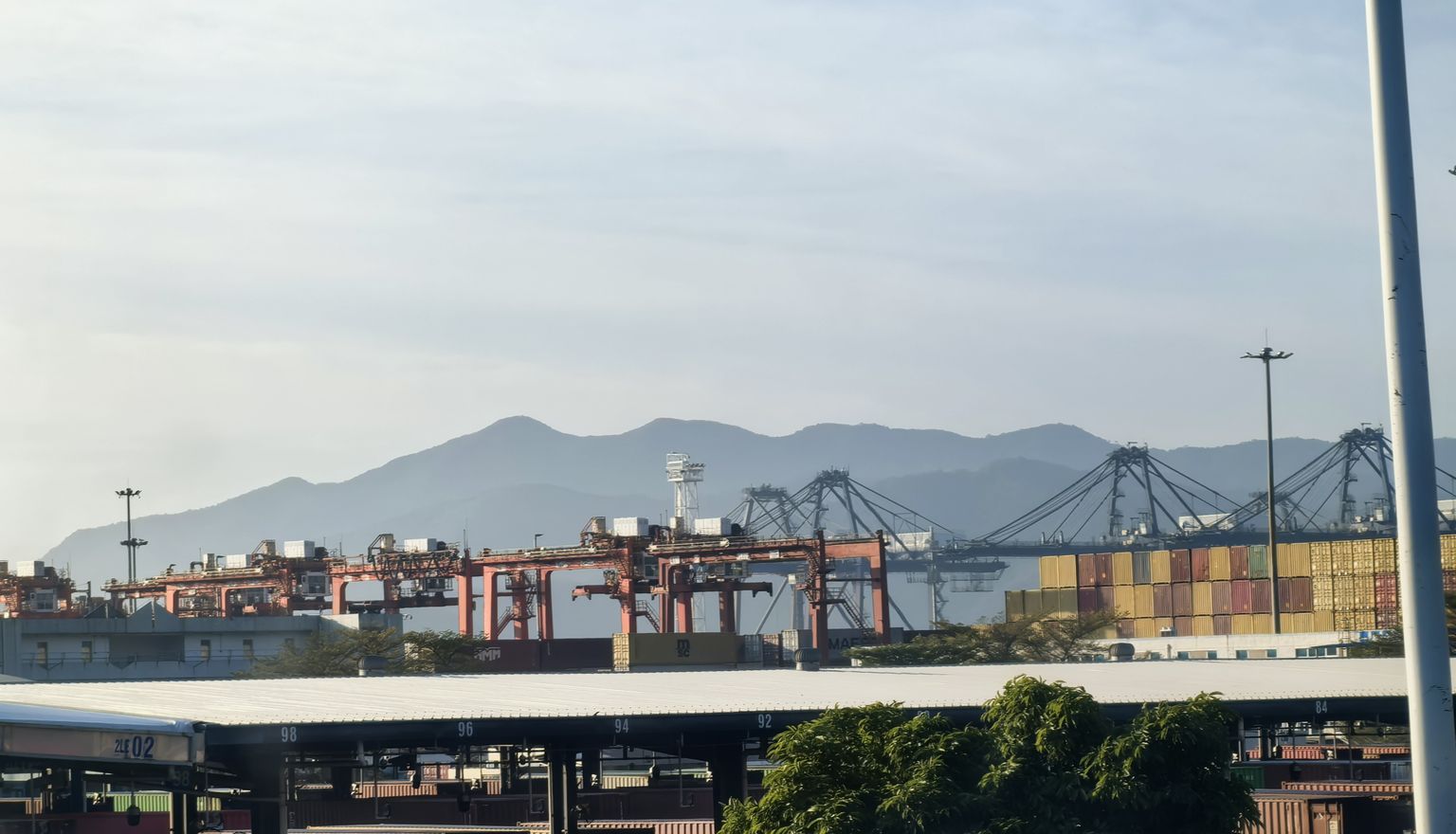
Four container terminals sit within about 120 kilometres of each other at the mouth of the Pearl River. They are not interchangeable. Each is served by a different set of vessel rotations, which means a different set of carriers, a different weekly schedule and a different transit time to your destination.
The bill of lading names the port of loading. That name is decided by the carrier's rotation, and the carrier chooses the terminal where it can berth on schedule. What you control is the inland leg: which terminal your supplier's truck drives to, and therefore what that drive costs.
The two ends of the decision are linked. If your product ships on a service that only calls Yantian, you are trucking to Yantian no matter where the factory is. If three carriers serve your destination from three different terminals, the trucking distance becomes the tie-breaker.
Yantian sits on the eastern side of Shenzhen, on Daya Bay, with deep water close to shore and no river approach. That geography is why it carries the largest share of South China's ocean export volume, and why nearly every alliance offers a direct call there to North Europe, the Mediterranean and the US west coast.
For a buyer, the practical benefit is choice. More carriers on the lane means more weekly departures, more chance of space in peak season, and more room to negotiate. When one service is full, another sails within days.
The cost is the drive. From Guangzhou's Pazhou area, a container truck to Yantian takes roughly two to two and a half hours in normal traffic, and the route crosses the whole of the Pearl River Delta. From factories in Dongguan or Huizhou the picture reverses and Yantian becomes the near port.
Terminal congestion at Yantian is seasonal, not constant. In the weeks before a major holiday or during a rate spike, gate queues lengthen and a truck that normally makes the run in two hours can lose half a day. Build that into the gate-in plan rather than discovering it on the closing day.
Shekou and Chiwan sit on the western side of Shenzhen, facing the Pearl River estuary. They handle a large share of intra-Asia traffic, feeder services and a substantial volume of Europe-bound containers, and their road access from the western Pearl River Delta is far better than Yantian's.
From Guangzhou or Foshan, a truck to Shekou or Chiwan runs about one and a half to two hours. For factories in Zhongshan, Zhuhai, Jiangmen and the western half of Dongguan, that is the shortest run to deep water, and on a 40ft container the difference in trucking cost is real money.
The trade-off is schedule depth. Fewer trunk services call on the western side than at Yantian, so your destination may only be served once a week, and a missed cut-off can mean a seven-day wait rather than a two-day one.
The two terminals operate as a single port complex for most practical purposes, and carriers frequently quote them under one port code. Treat them as one option when you compare, and check which terminal your carrier's rotation actually names.
Nansha is a Guangzhou port, on the western bank of the estuary about 60 kilometres south of the city centre. It has grown quickly into a full container terminal with direct ocean services, and it is the closest deep-water option for any supplier inside Guangzhou itself.
A truck from Pazhou or Panyu to Nansha is a short run by comparison with either Shenzhen port, often under an hour outside peak. For a supplier in Foshan or Zhongshan, Nansha is competitive with Shekou and sometimes closer.
What Nansha does not have is the same breadth of rotation as Yantian. The service you want may call, or it may not. When it does, the origin cost is usually the lowest of the four for a Guangzhou-based factory. When it does not, you are back to a Shenzhen terminal and a longer drive.
Ask the question in the right order. First, which services reach your destination port. Second, which of those call in South China. Third, which terminal each one uses. The answer to the third question is where the trucking comparison starts.
A container truck in the Pearl River Delta is priced by the run, and the run is priced by distance, terminal and waiting time. Moving the exit point from Nansha to Yantian on a 40ft box adds distance, a river crossing and two hours of driver time. On a small container that difference can be a noticeable fraction of the origin charges.
Waiting time is the variable buyers forget. Terminal gates work to appointment systems, and a truck that arrives outside its slot waits. Demurrage on the truck, not the container, is charged by the hour or half day, and it appears on the origin invoice as a line nobody queried at the time.
There is also a hard constraint. A container must be gated in before the carrier's cargo cut-off, and a two and a half hour drive plus a gate queue plus a factory loading delay is a sequence that fails on bad days. Near-port factories can absorb a morning problem. Factories two hours inland cannot.
| From | Nansha | Shekou / Chiwan | Yantian |
|---|---|---|---|
| Guangzhou (Pazhou, Panyu) | Under 1 hour | 1.5–2 hours | 2–2.5 hours |
| Foshan, Zhongshan | 1–1.5 hours | 1.5–2 hours | 2.5–3 hours |
| Dongguan (west) | 1–1.5 hours | 1–1.5 hours | 1–1.5 hours |
| Dongguan (east), Huizhou | 2–2.5 hours | 2–2.5 hours | 0.5–1 hour |
| Shenzhen (Futian, Fuyong) | 1.5–2 hours | 0.5–1 hour | 1–1.5 hours |
Typical driving times in normal traffic, door to terminal gate. Not a commitment, and not a schedule — a Friday afternoon changes them.
Start with the destination. Which carriers run a direct service from South China to that port, and how often. That list, not a map, is the real menu.
Then check the rotation. A carrier may offer the lane from Yantian but not from Shekou, or offer both with a two-day difference in sailing date. Sailing date matters more than distance when the cargo is ready on a Tuesday and the vessel closes on a Wednesday.
Then price the trucking on the surviving options. Two terminals, one sailing each, a hundred dollars of trucking between them, and a cut-off that suits the factory's loading schedule — that is usually the whole decision.
For buyers shipping from several suppliers, add one more step. If the factories are spread across Guangzhou and Dongguan, no single terminal is close to all of them. In that case the consolidation warehouse location decides the port, because the goods are trucked there first and the container leaves from wherever the warehouse is.
Booking the nearest port. Nansha is close to a Guangzhou factory, but if no service from Nansha reaches your destination port directly, the cargo is transhipped or the booking moves to Yantian anyway. Proximity is the last filter, not the first.
Comparing ports without comparing cut-offs. Two services with the same sailing date can have cut-offs 48 hours apart. A tighter cut-off forces the factory to finish earlier, which in the last week of production is the difference between shipping on time and rolling to the next vessel.
Assuming the terminal is fixed once quoted. Carriers shift rotations between seasons, and a port pair served from Shekou in spring may move to Yantian in autumn. Confirm the port of loading on the booking confirmation rather than on the quotation, and confirm it again before the truck is dispatched.
The port code is on the bill of lading. Once the bill is issued with a port of loading, changing it means amending the document, and an amendment after departure is a fee and a delay. If the terminal is still open as a question, settle it before the container is gated in.
Q Which South China port has the most sailings?
Yantian, by a wide margin, because its deep water and position let the largest vessels call without a river transit. That breadth is why it is the default for North Europe and US west coast services. Shekou, Chiwan and Nansha each carry fewer trunk rotations but cover the same trades on specific services.
Q Is Nansha cheaper than Yantian?
For a Guangzhou factory, the origin trucking is usually cheaper because the drive is shorter. The ocean freight is not necessarily cheaper, and the service choice is narrower. Compare the total origin cost including trucking and waiting time, not the terminal handling charge alone.
Q Can I choose the port myself?
You can ask. The carrier's rotation decides which terminals it calls, so the real choice is between services rather than between ports. A forwarder booking on your behalf can tell you which services call where, and price the trucking on each.
Q How early should the container be gated in?
Before the carrier's cargo cut-off, which is typically 24 to 72 hours before departure and is stated on the booking. Build in the drive time, the gate queue and a margin for a factory that loads slowly. Missing the cut-off rolls the box to the next vessel.
Q Do all four ports handle dangerous goods?
Not identically. Each terminal publishes its own acceptance rules and some restrict specific classes or require advance approval. If the cargo is hazardous, the terminal choice is constrained by the acceptance rules before it is constrained by distance.
Q What about Hong Kong?
Hong Kong remains an option for some lanes and some carriers, with its own trucking and customs arrangements across the boundary. It is a separate decision with a separate cost structure, and it is worth pricing only when a South China terminal has no direct service to your destination.
Related pages
Tell us the factory address, the destination port and the date the goods will be ready. We will show which services call where and what each exit point costs to reach.
Email sales8015@goodhopefreight.com | WhatsApp & phone +86 133 9216 2503