
Planning
The goods leave one factory. Nothing requires them to leave on one vessel.
Contents
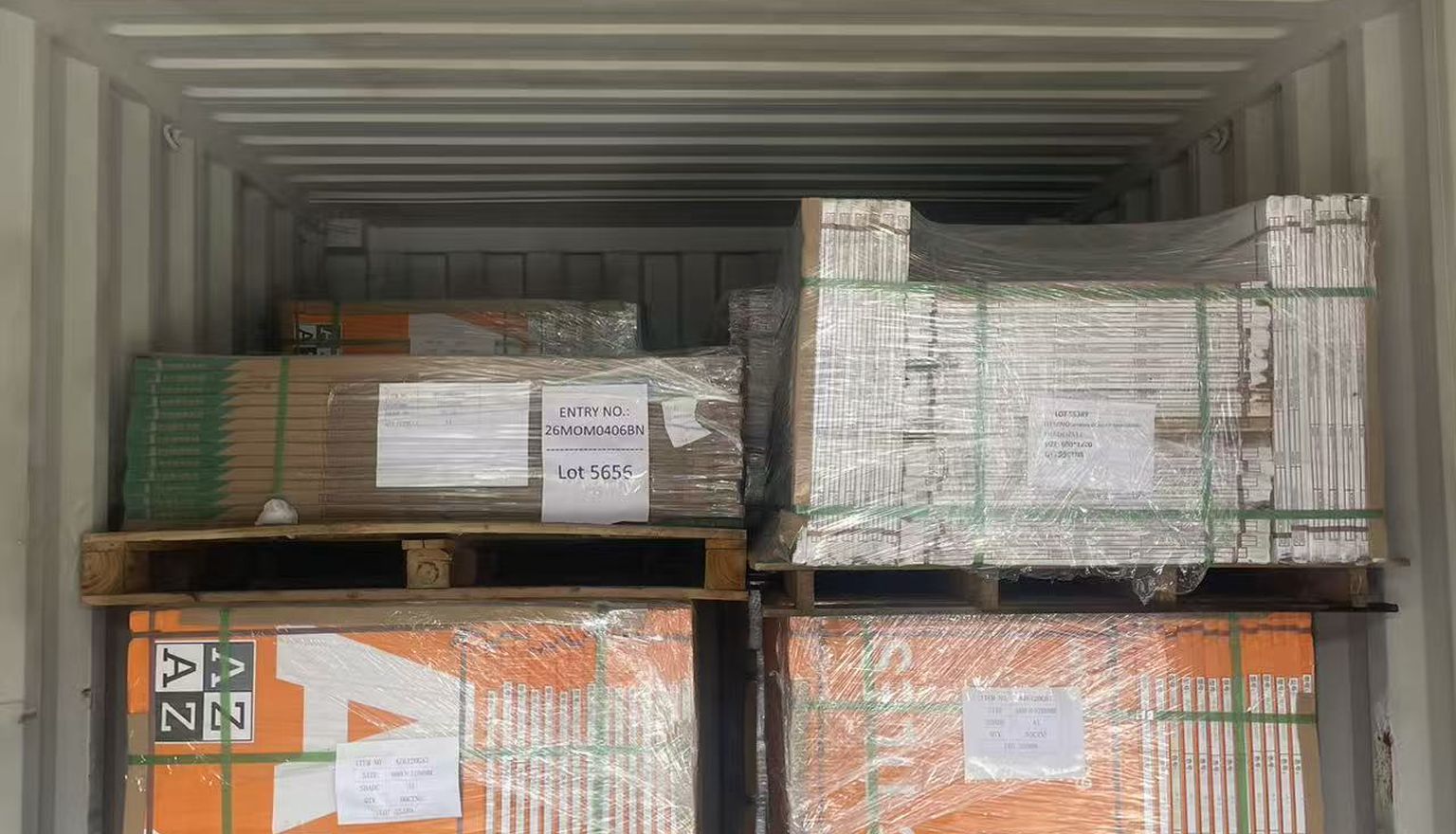
A split shipment costs more per unit than a single sailing, which is why it is a tool rather than a default. Three situations justify it.
A retail date that cannot wait for the full quantity. A factory can produce two thousand pieces in three weeks and four thousand in five. If the first two thousand are needed on a date the five-week run cannot meet, splitting the run across two vessels is the only way to keep both the date and the quantity.
Two destinations from one production line. A buyer with warehouses in two countries, or two customers on one order, is buying one run and delivering it twice. Splitting at the port is cheaper than shipping everything to one country and moving half of it again.
A cash cycle that needs stock sooner. Where the goods are sold before they arrive, a first smaller shipment starts the revenue while the balance of the run is still in production. That is a commercial decision with a freight cost attached, and it is worth pricing rather than assuming.
The reason not to split is simpler and more common: the fixed charges repeat. Every additional shipment carries its own documentation, its own terminal handling and its own booking, and on a small quantity those fixed costs can exceed the value of arriving early.
The comparison that matters is cost per unit delivered, not cost per shipment. Two shipments of five hundred cartons each rarely cost twice one shipment of a thousand, but they cost more than one, and the difference has to be justified by something.
Start with the container. A full container has a fixed cost that does not change with the amount inside it, up to the point where weight or volume limits are reached. Below that point, an LCL shipment pays per cubic metre or per tonne, plus a set of fixed charges at both ends: documentation, terminal handling, consolidation and deconsolidation. Those fixed charges are what make small LCL shipments expensive per unit.
So the crossover is not a volume, it is a comparison. Price the split as two LCL shipments and as one FCL, using the actual carton dimensions and the actual weight. The answer depends on the cargo: dense goods hit a weight limit before a volume limit, and light goods fill the box long before they reach the payload.
Then add what the split buys. If the first shipment arrives four weeks earlier and that four weeks is a selling season, the freight difference is usually small against the margin at stake. If the four weeks changes nothing, the split is an expense with no return.
Splitting across two South China ports looks like an easy way to catch two sailings in the same week. It is workable, and it carries a set of practical constraints that surprise buyers who have only used one port.
Each port has its own cut-off, its own gate-in window and its own documentation deadline, and they are not aligned. A container that can gate in at one terminal on Wednesday may need to be at another by Monday. If the goods leave one factory, the trucking plan has to deliver to two terminals on two schedules, and the factory has to release cartons in the right sequence.
Each port also has its own sailing pattern. Yantian, Shekou and Nansha do not offer the same services on the same days, so the split may put your cargo on two different carriers with two different transit times and two different destination agents. That is manageable. It is not invisible.
Where both shipments go to the same destination, a single port with two sailings in different weeks is usually simpler than two ports in the same week. Where the destinations differ, or where one port has a service the other does not, the two-port split earns its complexity.
Each shipment is a shipment. It carries its own commercial invoice, its own packing list, its own bill of lading and, where the goods qualify, its own certificate of origin. The purchase order stays one document; the export file splits.
The invoice split has to be handled carefully. If one order is invoiced as two, the values must add up to the contract value, and each invoice must describe only the goods in that shipment. Duplicating the full description on both invoices, with a partial quantity, is a common error and it creates a mismatch between the invoice and the packing list that a customs officer will notice.
The certificate of origin is the document buyers forget. A certificate covers a stated quantity and a stated invoice. Two shipments mean two certificates, and both have to be applied for before the goods leave, because a certificate issued after export is a different and slower process.
If payment runs through a letter of credit, check the partial shipment terms before anything is booked. Many credits prohibit partial shipment by default, and a shipment that leaves in two parts under a credit that does not allow it will be refused at the bank regardless of how correct the goods are.
The most common failure in a split shipment is that the goods were produced as one run and split at the loading dock. That produces two shipments of unknown composition, and it makes the inspection meaningless.
A production run has an inspection lot attached to it. If the run is inspected once and then divided, the report describes the whole run and says nothing about either half. If one half was made on a Monday and the other after a machine was reset, the report averages the difference away. Where a split is planned, plan the lot boundary with it: the first shipment is produced and inspected as its own lot, then the second.
Pallet integrity matters for the same reason. A split through the middle of a pallet means two part pallets, which are harder to handle and can compromise the stacking strength of both. Split at pallet boundaries and let the packing list follow the pallets.
Sequence the cartons physically. A factory that is making two shipments from one line needs somewhere to put the finished first batch while the second is still running, and that space is often the loading area. Mark the cartons by shipment and keep them apart, or the truck arrives to find the two batches interleaved.
The ocean freight for two smaller shipments is not the only extra line. Five fixed charges repeat, and they are the ones that make a split uneconomic on small quantities.
Documentation. Bill of lading issuance, certificate of origin, any legalisation or consular requirement. Each shipment pays them again.
Terminal handling. Charged per container or per cubic metre at both origin and destination. For LCL, the minimum charge is often the operative number, and it does not halve with the quantity.
Customs entry. Two entries at destination means two broker fees, and in some countries two sets of entry-related charges that do not scale down.
Inland delivery. A truck that carries half a load still costs a truck. Where the delivery address is the same, the second shipment may add a full delivery charge for half the cargo.
Administration. Two bookings, two sets of shipping instructions, two approvals of the draft bill, two arrival notices. This is time rather than money, and on a first import it is the cost buyers underestimate most.
Add them up before deciding. A split that looks like a small percentage on the freight line can be a meaningful percentage on the landed cost per unit.
A split agreed in conversation becomes a dispute when the second shipment is late, because nothing in the order says the order was allowed to ship in parts. Four lines prevent that.
Partial shipment allowed, in stated parts. Name the quantities and the approximate dates. A general permission to ship in parts lets the supplier choose the split, and the supplier's preferred split is the one that suits the production line rather than your retail date.
Inspection per part. Each part is a lot, inspected before packing, with its own report. This is the line that keeps the quality argument alive on the second shipment.
Documents per part. Each shipment carries its own invoice, packing list, bill of lading and certificate of origin, and the supplier provides them within a stated time before departure.
Payment per part. If the balance is tied to shipment, does it split too, or is it payable on the first? State it. A supplier who has been paid in full on the first shipment has less reason to hurry the second.
Where the split serves two different buyers or two countries, add the consignee for each part. Consignee errors are the most expensive kind to correct after the bill of lading is issued, and the correction is a document amendment rather than a message.
Q Is a split shipment more expensive than one full container?
Almost always, because five fixed charges repeat: documentation, terminal handling, customs entry, inland delivery and administration. Whether it is worth it depends on what the earlier arrival is worth. Price both options with real carton dimensions before deciding.
Q Can one purchase order produce two bills of lading?
Yes. Each shipment gets its own bill of lading, invoice and packing list, and the two invoices must add up to the contract value. What must be stated in the order is that partial shipment is allowed, in which quantities and roughly when.
Q Does a letter of credit allow partial shipment?
Often not by default. Many credits prohibit partial shipment unless the terms say otherwise, and a shipment that leaves in two parts under a credit that forbids it will be refused at the bank even when the goods are correct. Check the credit before booking anything.
Q Should each part be inspected separately?
Yes, if you want the inspection to mean anything. One report covering a run that was later divided describes the average of two batches, not either one. Make each part its own lot, inspect it before packing, and keep the cartons of each part physically separate.
Q Can two shipments leave from two different ports?
Yes, and it is workable, but each port has its own cut-off, gate-in window and sailing pattern. Two terminals in the same week usually needs two trucking slots from one factory. One port with two sailings is simpler unless the destinations differ.
Q How far apart should the two shipments be?
Far enough that the first arrival is useful and close enough that the second does not become a separate project. Two to six weeks apart is the range most splits fall into. Anything longer and the second shipment is effectively a new order with a new booking cycle.
Related pages
If the run is being produced in two batches, give us both ready dates, the carton counts and the destination. We will tell you which weeks hold two sailings with space, and what the fixed charges look like when the cargo is split.
Email sales8015@goodhopefreight.com | WhatsApp & phone +86 133 9216 2503