
Documents
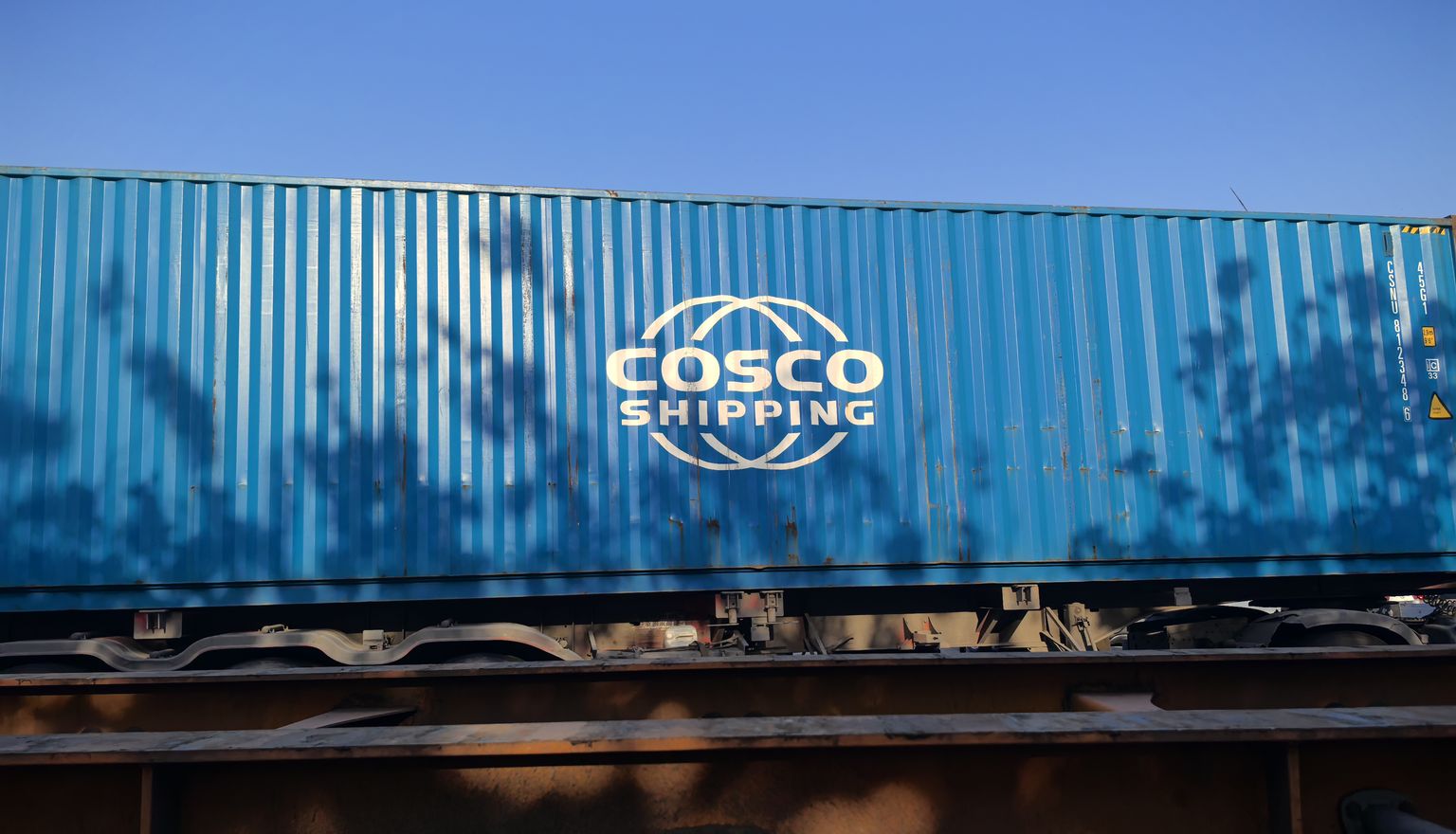
The box has a shipping line's name painted on it and a different company's name printed on the bill. Both can be correct, and one of them is the party you can claim against.
Contents
An NVOCC is a non-vessel-operating common carrier. It contracts with a shipper to carry goods, issues its own bill of lading, and takes on the obligations of a carrier, while buying the actual sea transport from a shipowner. It owns no vessel and usually owns no containers.
The legal position is what distinguishes it from an ordinary forwarder. A forwarder acting as an agent arranges carriage on your behalf and is not a party to the contract of carriage. An NVOCC acts as a principal: it accepts your cargo under its own document, at its own rate, and it is the party you claim against if the cargo is damaged.
Because it acts as a carrier, it is regulated as one. In China it files with the transport authority and publishes an NVOCC number, which appears on its bill of lading. In the United States it needs an ocean transportation intermediary licence from the Federal Maritime Commission, plus a bond, and the licence number is published in a public register. An operator quoting a US-bound service without either is either not an NVOCC or not telling you what it is.
On a consolidated shipment there are two documents covering the same box, and understanding which is which prevents most of the confusion.
The master bill of lading is issued by the shipowner to the NVOCC. It names the NVOCC as shipper, its destination agent as consignee, and it covers the whole container. You will usually never see it, and you do not need to.
The house bill of lading is issued by the NVOCC to you. It names your supplier as shipper, you or your bank as consignee, and it describes your goods. It is the document your bank will check against a letter of credit and the document your customs broker will use to identify the shipment.
On a full container booked directly with a carrier there is only one bill and the distinction disappears. On anything consolidated, the house bill is your contract, and the terms printed on the back of it are the terms you have agreed to, whether or not anyone has read them.
You bought from a factory in Foshan, the container is painted with a Japanese line's logo, and the bill of lading carries the name of a logistics company in Shenzhen. Three parties, one shipment, no error.
The factory sells on FOB terms and stops caring once the box is at the terminal. The line owns the ship and sells space to the operator. The operator is the party that contracted with you, or with the forwarder you appointed, and therefore issues the document. That is the chain of contract, and it is normal.
What matters is that you know which link you are holding. If the name on the bill is a company you did not appoint and cannot identify, ask for the licence number and check it. A legitimate operator answers that question in an email without hesitation.
There is a variant worth recognising: a forwarder that issues a document headed as a forwarder's certificate or a cargo receipt rather than a bill of lading. That is not a document of carriage. It may be perfectly adequate for a shipment you control entirely, and it will fail at a bank.
A bill of lading does three jobs at once: it is a receipt for the goods, evidence of the contract of carriage, and, when issued to order, a document of title.
The receipt function is the one that gets tested most often. The bill describes what was received, in what condition and in what quantity, as declared by the shipper. If the cartons were already damaged at loading, the bill should carry a remark saying so. A clean bill with no remarks is the document an insurer and a bank will rely on, which is why a carrier will refuse to issue one when the packaging is visibly failing.
What the bill does not do is prove the value of the goods or their quality. The description is the shipper's, the value is on the invoice, and a discrepancy between the two is a customs question rather than a carriage question.
The title function only works if the bill is consigned to order and the original set is properly handled. A bill consigned directly to a named consignee is not negotiable, which is convenient for a straightforward import and useless as security for a letter of credit.
The single cheapest check is to look for a licence or filing number printed on the bill of lading, and then confirm it independently.
For China-origin shipments, an NVOCC files with the Ministry of Transport and is issued a filing number, which is normally printed on the bill's header or footer. For US-bound cargo, the operator needs an FMC licence and the number is searchable in the commission's public list of licensed ocean transportation intermediaries. Both registers are free and neither requires an account.
A bill with no number at all is not automatically invalid. Carriers acting under their own authority do not carry an NVOCC number, and some operators print it only on the back. The problem is a company that describes itself as an NVOCC, issues a bill in carrier format, and cannot produce a number when asked.
Do the check on the first shipment with a new operator and keep the result in the file. It takes four minutes and it is the difference between a contract of carriage and an unsecured promise.
On an LCL shipment your cartons share a container with other shippers' cargo, and the number of hands in the chain matters.
Co-loading is when one NVOCC hands cargo to another, usually because it does not have enough volume to fill a box. You then have a house bill from your operator, a second house bill between the two operators, and a master bill to the shipowner. Three documents, three sets of terms, one box.
This is normal practice and it generally works. It becomes a problem at the destination when a dispute arises and each party points to the next. The limitation of liability on your house bill, usually a per-kilogram figure unless a higher value was declared, applies to the operator you contracted with, and that operator then claims against the party it co-loaded with.
Ask on an LCL shipment whether the cargo is co-loaded and who the destination agent is. If nobody can name the destination agent, the cargo is being handed through a chain that has no visible end.
Most bills of lading are ordinary commercial documents issued by ordinary companies. A small number are not, and the pattern is consistent.
The first warning is a bill issued by a company with no verifiable licence, no physical address you can check, and a bank account that differs from the company named on the document. The second is a demand to pay freight to a personal account or to a third company. The third is a document that describes the goods vaguely, which makes the shipment impossible to clear and easy to substitute.
The fourth is a switch bill of lading offered without explanation. A switch replaces the original with a new document naming different parties, and it has legitimate uses in triangular trade. It also has an illegitimate use, which is to hide who shipped what. Ask why, and expect a commercial answer.
None of this requires suspicion of a normal forwarder. It requires reading the document you are handed and noticing when the parties on it do not match the parties you agreed with.
Six items on the document, checked once, prevent most disputes.
Shipper and consignee exactly as contracted, including which one is to order. Port of loading and port of discharge, with the transhipment port named if there is one. Container and seal numbers matching the loading photographs. The number of packages and the description, matching the invoice closely enough to clear customs. Freight prepaid or collect, marked correctly. And the number of originals, which should match the set you receive.
Then check the date. The shipped-on-board date is the date that matters for a letter of credit, and a bill dated after the latest shipment date is a discrepancy regardless of when the vessel actually sailed.
Keep a scanned copy of every bill of lading with the shipment file. A year later, when a duty refund, an insurance claim or a returning repair shipment needs proof of the original export, that scan is the only document that answers the question.
Q Is an NVOCC the same as a freight forwarder?
No. A forwarder can act as an agent, arranging carriage in your name, or as a principal, issuing its own bill and taking on carrier liability. The second role is what makes it an NVOCC. Many companies do both, depending on the shipment, and the bill of lading tells you which role was used.
Q Who do I claim against if the cargo is damaged?
The party that issued your bill of lading, subject to the limits printed on it. That party then claims against whoever it contracted with. This is why the licence and the identity of the issuer matter: a claim against a company that cannot be found is not a claim.
Q What is the difference between a house bill and a master bill?
The master bill is issued by the shipowner to the consolidator and covers the whole container. The house bill is issued by the consolidator to the individual shipper and covers that shipper's goods. On a direct full-container booking there is only one bill.
Q Should I accept a forwarder's bill of lading?
In most cases yes, provided the issuer is licensed and the terms are ordinary. It is the standard document for LCL and for consolidated FCL. The exception is a transaction where a bank needs a carrier's bill of lading specifically, which is a documentary credit question to settle before shipment.
Q How do I verify an NVOCC licence?
Ask for the number and check it against the issuing authority's public register. In China that is the transport ministry's NVOCC filing list; in the United States it is the Federal Maritime Commission's licensed OTI register. Both are free to search, and a legitimate operator will supply the number without being pressed.
Q Does NVOCC status affect cargo insurance?
It affects what you can recover from the carrier, not what your own policy pays. Carrier liability is limited by the bill's terms and by international conventions, and it is usually far below the cargo value. A cargo policy covers the gap, which is why the two are bought together rather than instead of each other.
Related pages
If a document has arrived with a name you cannot place, send us the header and the licence line and we will tell you what the arrangement is and which party carries the liability.
Email sales8015@goodhopefreight.com | WhatsApp & phone +86 133 9216 2503