Since 2012 NVOCC GD20230925153335 24h Response
+86 13392162503 sales8015@goodhopefreight.com Login
Goodhope Freight
Air export filing · Air import release · Perishable cold chain

Kunming Changshui Airport Import & Export Customs Clearance

Yunnan has one international air port of entry, and it sits at the middle of a five-hour circle that reaches most of Southeast Asia. In 2025 the airport handled 413,200 metric tons of cargo, 71,000 of it across a border, and international tonnage rose by more than half in ten months. The freight that fills those aircraft dies on a clock: a cut rose leaves the Dounan base in the evening and has to be on a main deck inside 36 hours. Everything below is written around that clock.

Import fruit Plant seedlings & bulbs Live aquatic animals Cross-border e-commerce 9610 / 9710 / 9810 Airside direct transfer 9 freighter routes
9 routesInternational freighter services in 2025
34 pointsSouth and Southeast Asia destinations
3 sitesDesignated inspection categories on airport
36 hoursShelf life a cut flower is planned against
Plan my Kunming clearance See both 8-step flows
71,000 tInternational cargo in 2025
up 54.5% in the first ten months
3,041International freighter movements
up 55.5% year on year
44 / 38International routes and destinations
34 of them in South and Southeast Asia
20 hDounan flower base to aircraft
on the fastest documented run
Why Changshui

One Airport, Two Cargo Terminals,
and a 36-Hour Clock

Changshui opened in June 2012, replacing Wujiaba, and sits 24.5 km east of downtown Kunming on a 4F airfield. Two customs-supervised cargo terminals work the international traffic: China Eastern Logistics on one side, Yunnan Airport Logistics on the other. Import fruit, plant propagation material and live aquatic animals all have designated sites here, but the sites carry separate codes and sit in different buildings — which one your consignment uses decides where the truck docks and who opens the boxes.

The route map is the reason exporters come. Forty-four international routes reach 38 destinations, 34 of them in South and Southeast Asia, more than any other airport in the country. Nine freighter services run fixed rotations to Dhaka, Mumbai, Chennai, Delhi, Karachi, Lahore, Yangon, Colombo and Istanbul. A fixed rotation means a missed cutoff costs a week rather than a day, and that single fact reorganizes everything downstream: when you book, when you file, and how much slack the paperwork is given.

  • 1
    The perishable clock starts at the flower base, not at the airportDounan, the largest cut flower market in Asia, is a short drive from the cargo apron, and the fastest documented run from cutting to aircraft loading is under 20 hours. The trade plans on a 36-hour shelf life. Every hour spent fixing a certificate is an hour off the vase life your buyer paid for.
  • 2
    Only three designated site categories exist on this airportImport fruit, plant seedlings and propagation material, and live aquatic animals. There is no meat site and no chilled seafood site at Changshui at all. The province’s chilled seafood sites are land crossings at Wanding, Hekou, Tianbao and Mohan; the only meat site is at Guanlei wharf in Jinghong. A commodity outside those three categories has nowhere to land, however clean the paperwork is.
  • 3
    Export is declared before tender, import is declared on landingExport cargo is declared after it reaches the supervised area and at least 24 hours before departure, with advance filing allowed up to three days ahead. Import gets 14 days from the entry report, but perishables are filed the moment the wheels stop. Treating the two directions on one timetable is the most common planning error.
  • 4
    Airside direct transfer rewrote the domestic-to-international relaySince September 2026, domestic cargo unloaded at the domestic terminal moves through a dedicated airside channel straight into the international terminal, with no second screening and no cross-terminal trucking. One waybill, one handover, one handling. Transit time fell by roughly 70 percent to under an hour, and ground shuttle cost dropped by about 30 percent.
Who files, and who carries the delay? On FOB, CFR or CIF terms the China-side export declaration is the seller’s job; on EXW it is yours. But the shipper controls the two things that actually decide the flight: the harvest-to-tender window, and whether the weight, species and quantity on the phytosanitary certificate match the cargo on the pallet.
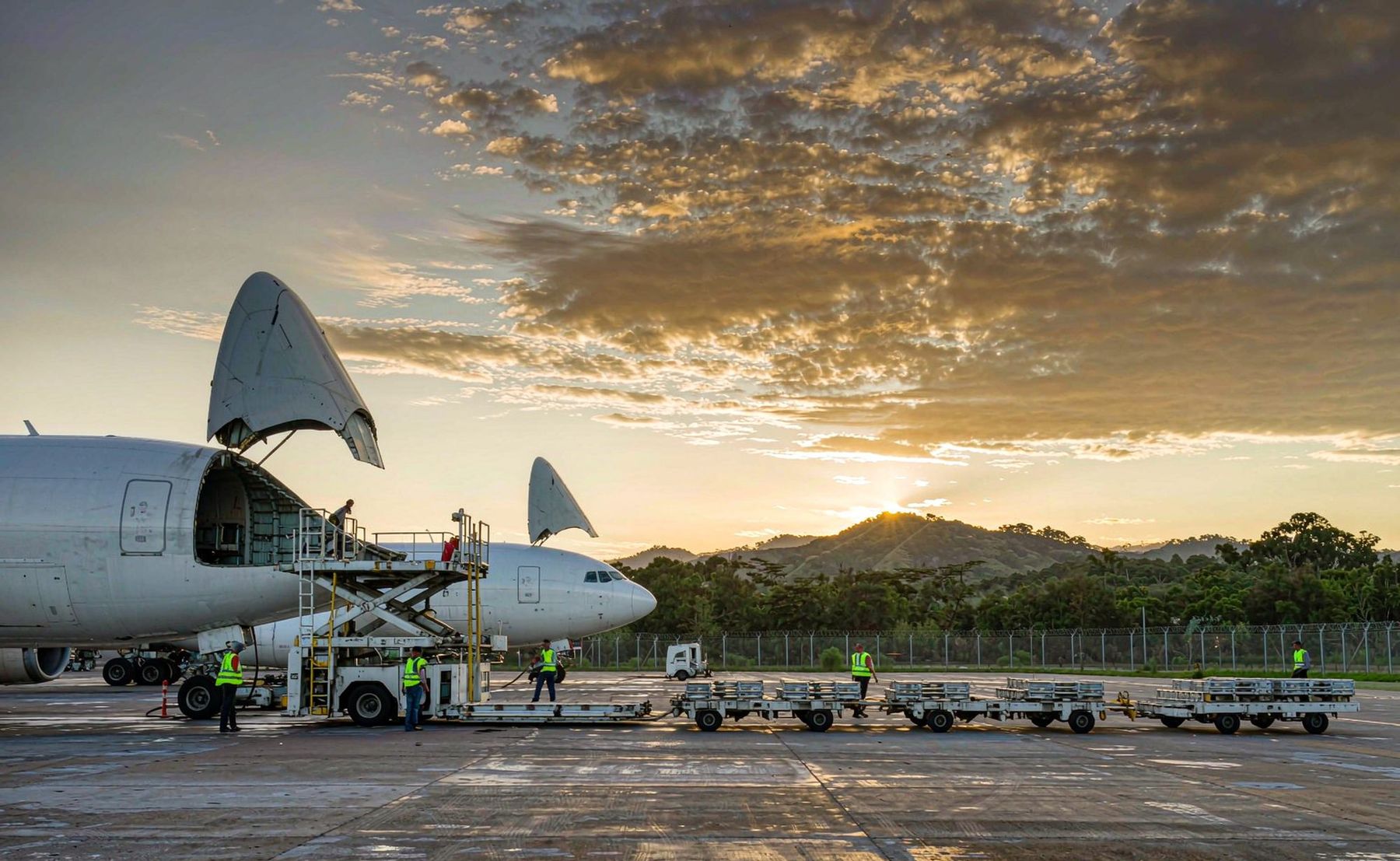
A freighter with its nose cargo door raised, main-deck loader lifting pallets on a plateau airport apron at sunrise
On the ground Cut — pack — file — load 36-hour shelf life · site eligibility · fixed rotations

In short

Customs clearance at Kunming Changshui runs both directions out of two supervised cargo terminals: export filing against a confirmed flight and cutoff, and import release at a designated site for fruit, propagation material or live aquatic animals. Goodhope Freight files the export entry, prepares the phytosanitary and certificate-of-origin set that Yunnan’s flower and mushroom trade depends on, and releases import bulbs, seedlings, tropical fruit and live seafood through the site that matches the commodity. Where a destination has no direct service, the relay uses the airside transfer channel or an air-to-air connection through a hub.

Note: cargo and movement figures are 2025 calendar-year data published by Yunnan Airport Group, the Yunnan provincial government and the Civil Aviation Administration of China. Designated site categories follow the General Administration of Customs published list. Route counts, freighter rotations, cutoffs and apron availability change with the season and with the runway works described below; confirm the operating week with the carrier and terminal.

Facilities

Four Facilities Decide Which Door Your Cargo Uses

Changshui is not one shed with one counter. It is two competing cargo terminals, an e-commerce and express cluster, and a freighter apron that is being rebuilt while it works. The commodity picks the site, the site picks the process, and the process sets the deadline.

Kunming Changshui Airport Customs

China Eastern Logistics Terminal

International export handling · live aquatic site CNKMG860170

Operator
China Eastern Logistics, southwest branch — carrier-affiliated
Functions
International export receiving, security screening, ULD build-up, ramp delivery
Designated sites
Live aquatic animals (CNKMG860170) and plant propagation material
Customs
Supervised cargo terminal with airport customs officers on site
Best for: freighter and belly export cargo, flowers and fresh mushrooms on China Eastern services

Carrier-affiliated handling means the terminal knows its own flight cutoffs to the minute, and has the least patience with a file that arrives after them.

Airport customs · inspection

Yunnan Airport Logistics Terminal

Third-party forwarding · live aquatic site CNKMG860168 · import fruit

Operator
Yunnan Airport Logistics — independent of any single carrier
Functions
Consolidation for forwarders, belly cargo from multiple airlines, import break bulk
Designated sites
Live aquatic animals (CNKMG860168), plant propagation material, import fruit
Why it matters
Most non-carrier forwarders route through here, including consolidated loads
Best for: consolidated shipments, mixed-airline belly cargo, import fruit and live seafood

Two live aquatic site codes on one airport is not duplication — it is two independent cold chains, and picking the wrong one puts your crab in the wrong building.

Airport customs · e-commerce

E-commerce & Express Cluster

Direct purchase center 8639 · express center 8632 · bonded zone 8634 / 8635

Location
Dabanqiao, Guandu District, inside the provincial e-commerce park
Modes
9610 retail export, 9710 and 9810 B2B export, 1210 bonded import
Express
Class B express and personal postal items through the express center
Bonded
Comprehensive bonded zone with a 9610 inspection center and 1210 warehouses
Best for: parcel flows, platform sellers, bonded stock, and the Istanbul e-commerce rotation

The manifest, the order and the payment record must agree on value and timestamp. Repricing an order after the manifest is built reissues the whole set.

Airfield · apron

East Cargo Apron & Second Runway

16 remote stands · 4F runway in service April 2026

Stands
16 new remote freighter stands, C to F aircraft, convertible by demand
Runway
East No.2, 4,000 m by 45 m, opened 16 April 2026; East No.1 closed for works until 2027
Cargo area
East cargo zone accepted November 2025, phased into service through 2026
Program
RMB 66.5 billion expansion: 95 million passengers and 1 million tons of cargo by 2030
Best for: full freighter loads, out-of-gauge pieces, carriers adding rotations

While one runway is under construction the field runs single-runway at peak, so slot pressure and stand availability are tighter than the stand count suggests.

What differsExport filingImport release
Filing deadlineAfter cargo reaches the supervised area, at least 24 hours before departure; advance filing up to 3 days aheadWithin 14 days of the entry report; perishables are filed on landing, not later
What has to be true firstSpace confirmed, pre-manifest filed, screening passed, species and weight settledManifest transmitted, delivery order exchanged, permit and site category matched
On the floorReceive, screen, weigh, build the ULD, close the manifestBreak bulk, count, inspect or sample, cold-store, gate out
Where it goes wrongFixed rotation missed; certificate plant number or weight off; boxes packed before the permit was checkedSite category wrong; sampling left the cold room booked past the flight; label mismatch
Who gets caught outGrowers who book on price and discover the cutoff afterwardsFirst-time importers who assume a meat or chilled seafood site exists here

Deadlines follow the Customs Law and current declaration rules. Cargo filed in advance has to reach the supervised area inside the allowed window or the declaration is canceled. The operative version is always the airport customs office’s current requirement.

What we handle

Eight Clearance Workflows, Split by What Yunnan Grows

Yunnan ships flowers, fresh mushrooms, coffee, tea, machinery and parcels, and imports bulbs, seedlings, tropical fruit and live seafood. Eight document sets, eight timetables, one desk that answers before the flight closes.

SERVICE 01

General export declaration

Freighter or belly, with space confirmed, pre-manifest filed, entry prepared, cargo screened and released, and the closure tracked through to the refund file.

FreighterBelly spaceClosure
SERVICE 02

Cut flowers & fresh produce

Phytosanitary certificate, origin certificate and packing declaration checked against the harvest plan, then filed against a named flight so the boxes go straight from the cold room to the build-up area.

Phytosanitary36-hour planCold room
SERVICE 03

Wild mushrooms & seasonal airfreight

Matsutake, bolete and other wild fungi move on a two-day cycle: pick, grade, chill, certify, fly. We keep the plant certificate and the entry aligned so the consignment clears in minutes rather than hours.

MatsutakeSame-day filingJapan & Korea
SERVICE 04

Cross-border e-commerce filing

9610 retail export, 9710 and 9810 B2B export, with the manifest, order and payment records reconciled before the truck leaves the platform warehouse.

96109710 / 9810Data matching
SERVICE 05

Bulbs, seedlings & propagation material

Import of flower bulbs and nursery stock from the Netherlands, Germany and Turkey: permit in hand before shipment, site booked, and inspection scheduled around the planting window rather than the calendar.

Import permitSite bookingPlanting window
SERVICE 06

Import fruit & live aquatic release

Tropical fruit and live seafood released at the designated site that matches the commodity, with sampling planned ahead, conditional release used where allowed, and cold storage held until the truck is on the dock.

Fruit siteLive aquaticConditional release
SERVICE 07

Two-step declaration & duty guarantee

Summary filing off the manifest so import cargo can be collected, with the full entry completed inside the window. Duty paid against assessment, or released against a guarantee where the goods cannot wait.

Summary filingGuaranteeDuty
SERVICE 08

Airside transfer & air-to-air relay

Domestic cargo transferred airside into the international terminal, or an air-to-air connection through a hub when the destination has no direct service. One waybill, one handover, one set of documents.

Airside transferTransitRelay
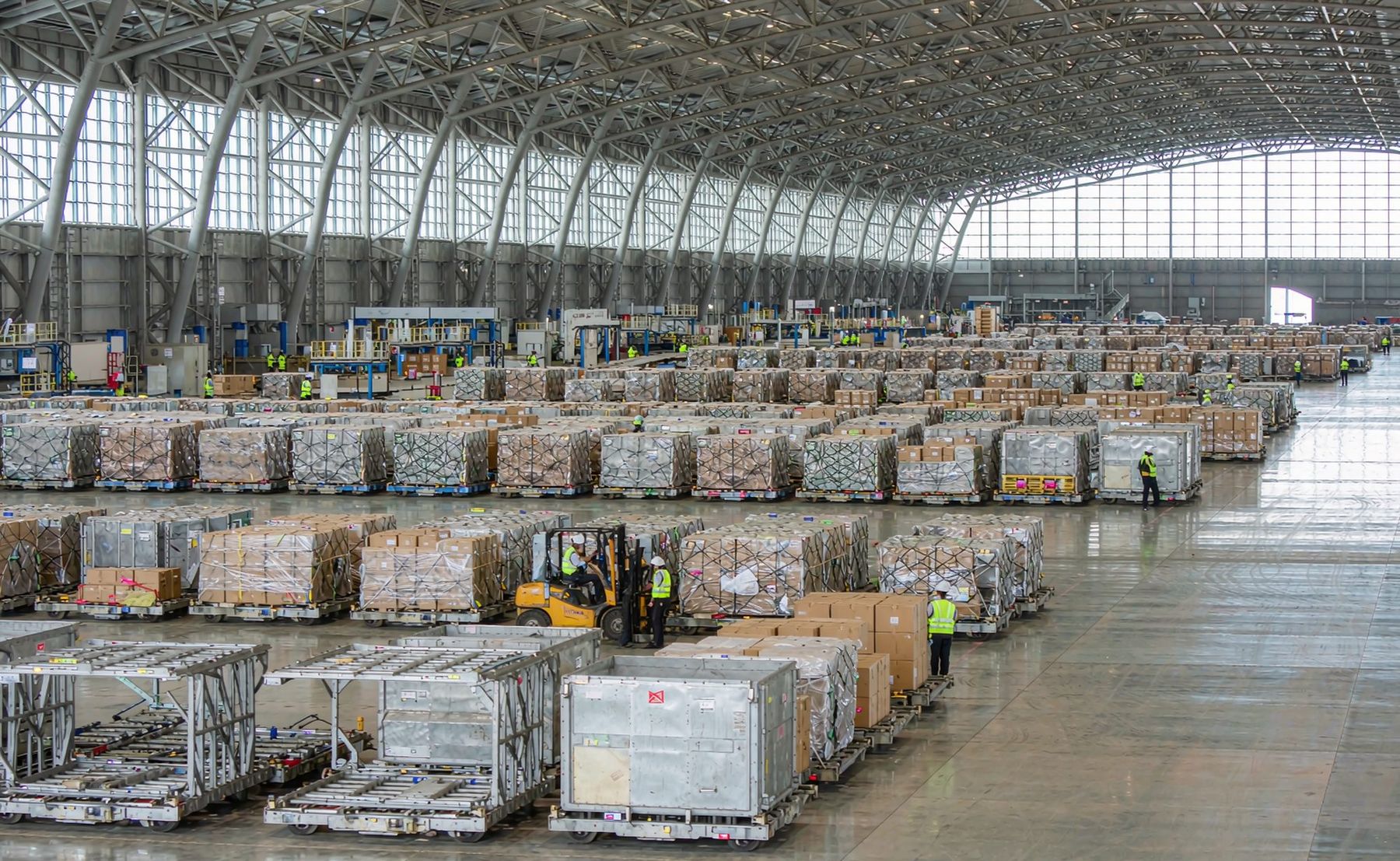
Interior of an international air cargo terminal with palletised cartons, a forklift and an X-ray inspection frame
Flowers and machinery share a roof, not a rhythm A consignment of cut roses is measured in hours and a crate of machine parts in days. Running both through one receiving lane is normal here — which is why the perishable file has to be finished before the truck reaches the dock, not while it waits.
Process

Eight Steps Out, Eight Steps In — Two Deadlines That Decide Everything

Export must be declared at least 24 hours before departure; import must be declared within 14 days of the carrier reporting entry. On perishables the second number is fiction — filing happens on landing.

Export: from the flower base to the refund file

1

Book against a real rotation

Freighter or belly, decided first. Nine freighter routes run fixed weeks and belly space follows the passenger timetable. The two have different cutoffs, and the price you were quoted may belong to neither.

2

Fix species, weight and code

Cut flowers, mushrooms and plant material are declared by species and grade, not by category. The phytosanitary certificate, the packing list and the entry all have to name the same thing.

3

Advance filing

With the pre-manifest in hand, file up to three days before the cargo reaches the terminal. It buys hours you will need later, on the understanding that the cargo must arrive inside the window or the entry is canceled.

4

Tender, screen, build the ULD

The terminal receives, screens, reweighs and builds up. Flower boxes are reweighed more often than shippers expect, because wet packaging and ice packs move the gross weight well past the farm figure.

5

Arrival report and release

The terminal reports arrival and customs matches it to the entry. No inspection order and the cargo releases to the ramp; an order moves it to the inspection bay with the flight clock still running.

6

Inspection and correction

Three failures dominate: species or grade off, quantity off, undeclared plant material inside. Corrections are possible, but each one consumes the margin the shelf life allowed.

7

Load and close the manifest

Loaded against the release message with the manifest reconciled to the entry. Consolidated flower loads get checked here — several growers, one ULD, one weight.

8

Closure and refund documents

After departure the entry closes. Refund copy, release message, terminal receipt and manifest data are archived as the basis for the VAT refund and the write-off.

Back-plan from the departure slot, not from the packing shed. Take wheels-up as zero: 24 hours back is the legal floor, another 4 to 6 hours covers terminal cutoff and screening, one working day covers certificate review, and the drive from Dounan to the cargo apron takes a further 40 minutes that nobody puts in the plan. Miss those windows and the cost is not a day — it is the next rotation, and on flowers the next rotation is a dead consignment.

Import: from wheels-down to the cold room

1

Manifest and pre-alert

Manifest data transmits after departure. The consignee needs master and house numbers, pieces, weight and temperature setting to book the site and the cold room before landing.

2

Exchange the delivery order

Arrival notice and bill of lading swapped for a delivery order. Freight collect, missing certificates and mismatched consignee details all stop here, and none of them can be fixed at the site.

3

Declare on landing

Fourteen days is the legal outer limit; fruit, live seafood and seedlings are filed within hours of the aircraft parking. Code, value, origin and any preference certificate settled in advance.

4

Duty and guarantee

Paid against the assessment, or released against a guarantee under consolidated taxation or duty insurance. On live product a guarantee buys hours, and hours are the product.

5

Site inspection

Fruit gets label and phytosanitary checks; bulbs and seedlings get a growing-medium and pest check; live aquatic animals get survival rate and water condition. Orders are normally issued before landing.

6

Sampling or treatment

Laboratory sampling, cold treatment and pest handling happen at the designated site. This block is the least predictable and the one to design the pickup around rather than after.

7

Release and gate-out

Release message, pickup formalities, gate-out. Where two-stage admission applies, cargo can leave conditionally with the sampling result following the truck instead of holding it.

8

Delivery and follow-up

To a registered warehouse or the grower’s own cold store, with any destination inspection completed inside its window. An open loop on one shipment flags the next one at the same site.

For live seafood the customs question is survival rate. One day before landing the site booking, the permit and the water temperature are confirmed. Two hours after landing the declaration is in and the inspection is underway. A consignment handled as general cargo spends its margin in a queue, and no amount of paperwork gets that back.
Documents

Export Fails on Completeness, Import Fails on Sequence

An export file fails when a paper is missing. An import file fails when a paper arrives in the wrong order — an import permit or a site booking cannot be created after the aircraft has landed.

Export — base set

  • ✓
    Declaration dataDescription, code, quantity, weight, terms of trade and currency, matching the cargo that actually flies. Missing this means nothing else can be filed.
  • ✓
    Contract or purchase orderConsistent with the invoice value and the Incoterm on the entry. A mismatch reads as undervaluation.
  • ✓
    Commercial invoice and packing listPieces, gross and net weight, volume, packaging, shipping marks, temperature setting. Flower loads are reweighed against this.
  • ✓
    Customs power of attorneyElectronic authorization in the single window, inside its validity period. Expired, and the entry cannot be submitted at all.
  • ✓
    Booking confirmation and pre-manifestMaster and house numbers, flight, departure time and cutoff. Advance filing is impossible without it.
  • ✓
    Licenses and controlled-goods permitsDriven by the supervision condition attached to the HS code. Checked at release, not at destination.

Export — added by cargo

  • ✓
    Phytosanitary certificateIssued by the plant quarantine authority, naming species, quantity and origin. Missing or mismatched, and fresh produce does not board.
  • ✓
    Certificate of originFormat and issue date set by the trade agreement invoked. The wrong one forfeits the preference you quoted.
  • ✓
    Fumigation or IPPC markRequired for solid wood packing, crates and pallets. An unmarked crate can be refused at the dock.
  • ✓
    Cold chain and harvest recordCut and packing times, pre-cooling method, box temperature at tender. This is what proves the 36-hour plan held.
  • ✓
    UN38.3, MSDS and DGDFor lithium batteries and powered equipment, with the packing certificate. Incomplete files are refused at acceptance, with no negotiation.
  • ✓
    Brand authorizationCommon on branded goods and e-commerce parcels. A missing letter reads as a counterfeit risk.

Import — base set

  • ✓
    Delivery order or arrival noticeObtained after the exchange, and the document you collect against. Without it the site cannot release.
  • ✓
    Original bill of lading or telex releaseConsignee on the master and house bills must be the same party. Differing names stop the delivery order.
  • ✓
    Contract, invoice and packing listPrice structure and terms of trade aligned with the declared value. Freight and insurance feed the dutiable value.
  • ✓
    Import declaration dataIncluding transport cost, insurance, royalty where applicable. Understated freight is the most common audit finding.
  • ✓
    Automatic import license or quotaWhere the HS code carries that supervision condition. Absent, the entry is rejected on submission.
  • ✓
    Brokerage and inspection authorizationImport normally needs both mandates issued together. Only one, and the site cannot be booked.

Import — fruit, plants and live product

  • ✓
    Import animal and plant quarantine permitIssued before shipment. Applied for on landing, it parks the cargo at the site in billable cold storage.
  • ✓
    Official certificate from the exporting countryMust match species, origin and producer named in the permit. One mismatched plant number voids the permit.
  • ✓
    Overseas producer registration numberOrchard, packhouse or hatchery must sit on the GACC registration list. Unregistered origin has no site to land at.
  • ✓
    Variety and grade declarationFor bulbs and seedlings, including cultivar and generation. Declared as “flower bulbs”, the entry cannot be assessed.
  • ✓
    Cold chain temperature recordMay be pulled during inspection, from loading to landing. A gap in the record is treated as a break in the chain.
  • ✓
    Bonded account book and order dataFor 1210 stocking, reconciled against physical inventory. An unreconciled book blocks the next import.
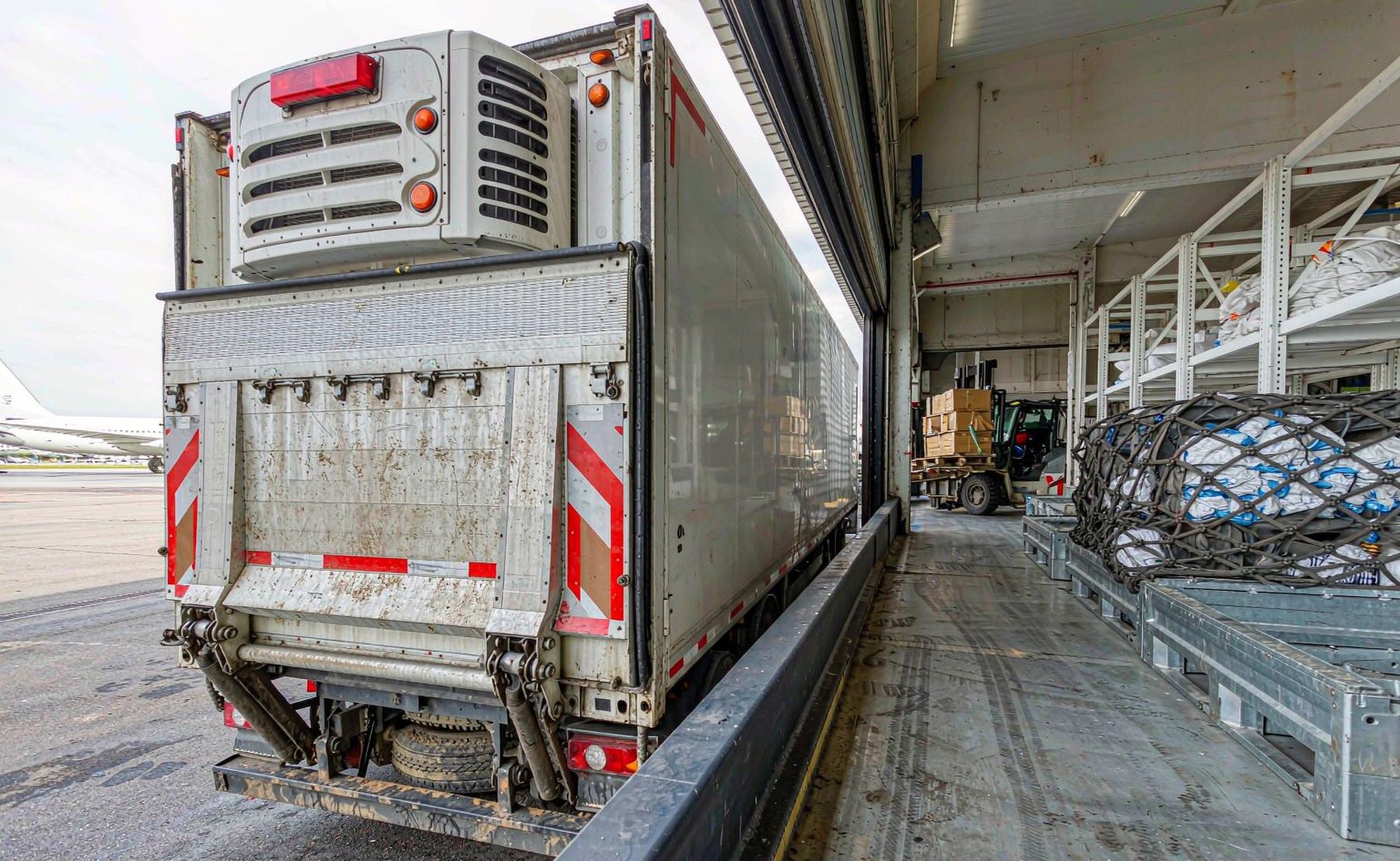
Refrigerated truck backed onto a cargo terminal dock with a forklift moving a pallet through the door
Tender is where the file meets the floor. A complete set gets cargo through the dock in one pass; a missing certificate turns the same pallet into a queue at the counter while the flight clock keeps running and the cold room keeps billing.
Two things that get missed most. First, the import permit for bulbs and seedlings — it must be in hand before the goods leave the Netherlands or Turkey, because applying on landing leaves living plant material sitting in a cold room past its planting window. Second, the phytosanitary certificate for cut flowers — the species, the quantity and the plant registration number all have to match the boxes, and a reissued certificate after cutoff is worth exactly nothing.
Clearance modes

Four Ways to Clear Cargo, Chosen by How Fast It Dies

Air freight leaves less margin than ocean freight, and Yunnan’s export mix leaves less than either. Choosing a mode is really choosing where to put the risk: before the filing, or after the release.

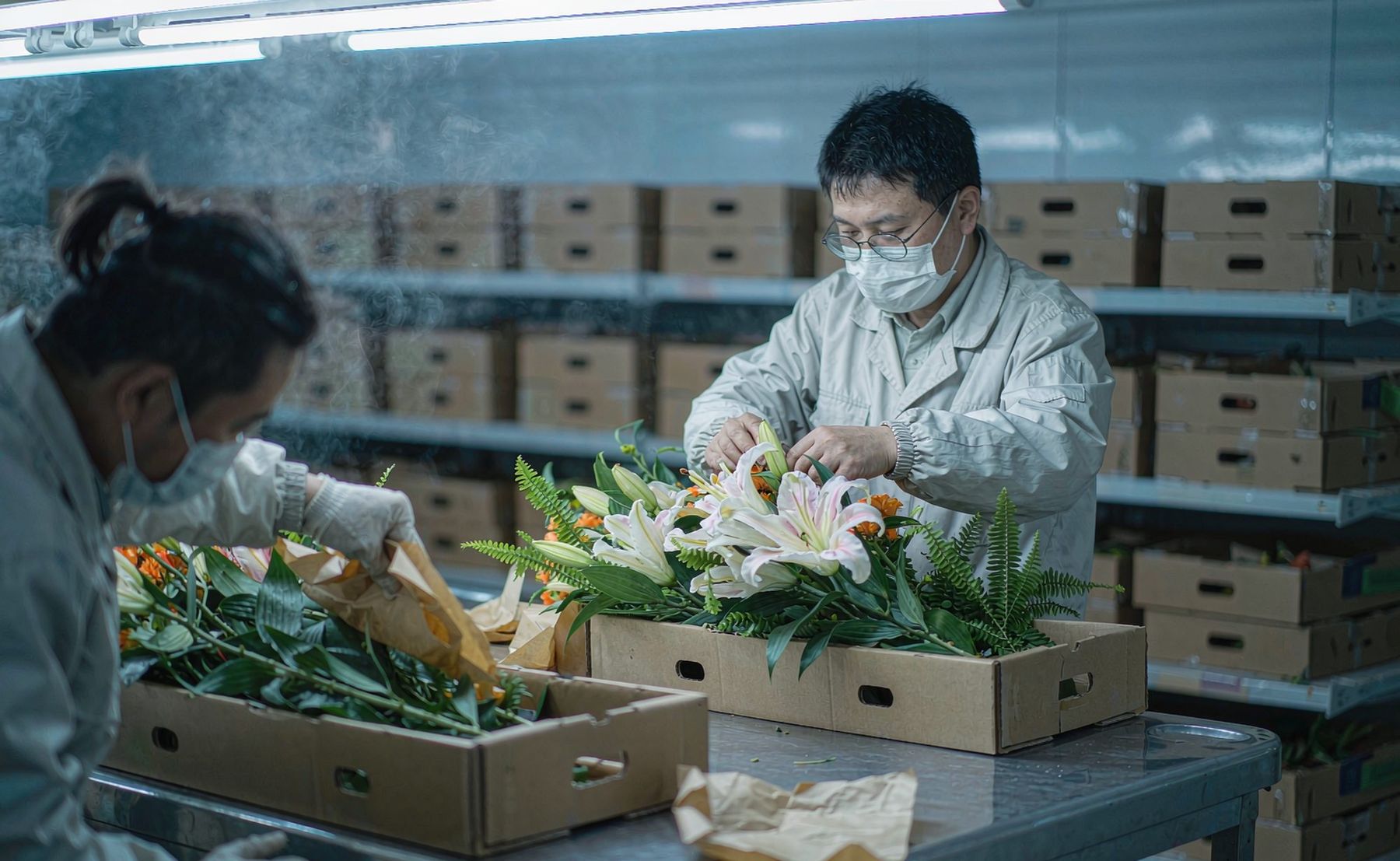
Workers packing fresh cut roses and lilies into flat flower boxes in a chilled air cargo facility
Cut flowers, packed and pre-cooled. From this table to a main deck is a 36-hour budget, and the paperwork sits inside it.

Advance filing

File up to three days before the cargo reaches the terminal, with space and the pre-manifest confirmed. Release lands close to the moment the cargo does, which is what makes a same-day flower connection possible. Not for a file still in flux: an amendment at this stage collides with the cutoff.

Two-step declaration

Summary filing off the manifest lets import cargo move or be collected, with the full entry completed inside the window. Built for consignments that have to leave the site before the paperwork is done — safe only if the completion date is diarised rather than remembered.

Transit to a local customs district

Declared in transit at the airport and released at the customs district nearest the grower or the factory, which suits Yunnan’s inland producers. It adds one supervised movement, and it does not suit perishables.

Airside direct transfer

Domestic cargo unloaded at the domestic terminal crosses to the international terminal through a dedicated airside channel, with no second screening and no road leg between buildings. Transit time is under an hour, ground handling cost is roughly a third lower, and the waybill stays with one carrier group from origin to aircraft.

By cargo type

Eight Cargo Types, Eight Different Clearance Logics

A box of cut roses and a crate of machine tools share an apron and nothing else. One is decided by hours, the other by declaration accuracy.

Cut flowers

Yunnan’s signature export: RMB 1.22 billion in 2025, up 60.5%, first in the country for seven years, reaching 64 countries. Species and grade drive the declaration, and the 36-hour shelf life drives everything else.

Wild mushrooms & fresh fungi

Matsutake and bolete move in a two-day cycle from pick to market. The phytosanitary certificate is the critical document, and a same-day filing is normal rather than exceptional.

Bulbs, seedlings & nursery stock

Import from the Netherlands, Germany and Turkey. 73 tons worth RMB 11.3 million cleared in the first two months of 2025 alone, with a 24-hour window opened for the planting season.

Import fruit

Tropical fruit from Southeast Asia, landed at the designated fruit site. Approved origin, registered packhouse and a permit issued before shipment, with cold treatment where the protocol demands it.

Live aquatic animals

Crab, eel and live fish at two separate site codes. Survival rate is the real clearance question, and water temperature on landing decides more than any document.

Cross-border e-commerce

Parcels under 9610, B2B under 9710 and 9810, bonded stock under 1210. The Istanbul rotation was launched as a dedicated e-commerce service, which tells you where the volume is going.

Coffee, tea & Chinese medicine

Yunnan coffee and Pu’er tea ship by air in sample and premium lots; medicinal materials mostly move overland. Plant products carry inspection conditions that vary by species and processing.

Machinery & electronics

Machine tools, spare parts and consumer devices, often with installed lithium cells. Oversize pieces need the aircraft type and pallet limits confirmed before the load plan is written.

Compliance reminders — four things not to leave loose

1. Do not assume a meat or chilled seafood site exists here. Changshui has three designated categories: import fruit, plant propagation material and live aquatic animals. Meat clears only at Guanlei wharf in Jinghong, and chilled seafood only at the Wanding, Hekou, Tianbao and Mohan land crossings. Book the wrong airport and the cargo has nowhere to go.

2. A permit issued after landing is a permit issued too late. Import permits, overseas producer registrations and official certificates are pre-departure documents. Handled on arrival, they convert a cold chain into a storage invoice.

3. Fresh plant material is declared by species, not by category. “Flowers”, “bulbs” and “seedlings” are not acceptable descriptions, and a certificate naming a different cultivar from the entry stops the consignment at the site.

4. Do not file dangerous goods as general cargo. Screening and terminal acceptance are two independent gates, and a misdeclaration found at either ends with the cargo pulled and every later shipment from the same shipper watched.

Working scenarios

Six Jobs, Six Places Where Clearance Nearly Broke

Air cargo rarely fails because nobody knows the process. It fails on one certificate, one weight, or one sequence that was assumed instead of checked.

Export · cut flowers01

Twelve thousand stems, a 36-hour shelf life, and a booking on the wrong rotation

Cargo & lane
Cut roses and lilies from a Dounan grower, packed and pre-cooled, booked on a freighter to the Gulf with the cutoff four hours away.
Where it jammed
The booking had been made on the following week’s rotation by mistake. Freighter weeks here are fixed, and the next departure was six days out — longer than the flowers would last in any cold room.
What we did
Kept the packing intact, moved the consignment to belly space on a passenger service the same evening, reissued the entry against the new flight and pre-alerted the destination agent so the cold room was ready on arrival.
How it ended
Flown inside the shelf life at a higher rate, which was still cheaper than the write-off. On flowers, confirm the rotation before you confirm the price.
Export · wild mushrooms02

Twenty-four kilos of matsutake and a certificate signed the day before

Cargo & lane
The season’s first matsutake from Shangri-La, 24 kg, bound for Osaka on the evening service.
Where it jammed
The phytosanitary certificate had been applied for against a quantity that changed after grading. The plant quarantine office needed the final figure before it could issue, and the flight closed at 18:00.
What we did
The grower re-graded before 09:00, the final weight went to the quarantine office by mid-morning, the certificate printed by noon, and the entry was filed against the confirmed flight while the boxes were still in the cold room.
How it ended
Customs formalities took 15 minutes at the counter and the consignment was on the market the next day. Get the certificate right before the boxes are sealed, not after.
Export · e-commerce03

A new route to Istanbul and four data sets that did not agree

Cargo & lane
Roughly 900 parcels of apparel and small electronics on the newly opened Istanbul freighter, the airport’s first scheduled e-commerce air service.
Where it jammed
The platform repriced part of the order book after the manifest was transmitted. Declared value carried the old price, the payment timestamp preceded order creation, and the logistics record still showed the pre-promotion weight.
What we did
Rebuilt the manifest from the order records, had the payment provider retransmit, and re-bound the waybills to the truck before the vehicle cutoff, so the load never had to be broken in the yard.
How it ended
Made the first rotation with the full consignment. If the price changes, the whole data set is reissued — there is no partial fix.
Import · flower bulbs04

Tulip bulbs that landed two days before the planting window closed

Cargo & lane
Two pallets of tulip bulbs from the Netherlands, consigned to a nursery outside Kunming, with a planting schedule that had no slack in it.
Where it jammed
The import permit named a cultivar that differed from the certificate by one word, and the site booking had been made for the fruit site rather than the plant propagation site. Either mistake alone would have held the consignment.
What we did
Raised the discrepancy with the exporting authority before departure, obtained a corrected certificate, rebooked the site against the correct category, and scheduled the inspection for the hour the aircraft was due.
How it ended
Released the same day and planted inside the window. A permit and a site booking are two separate approvals, and both can be wrong.
Import · live product05

Live mud crab at four in the morning, and nobody had booked the water check

Cargo & lane
Live mud crab from Yangon on the night freighter, packed in seawater, with buyers pricing on arrival condition and a holding tank three hours away.
Where it jammed
The inspection order arrived before landing, but the survival-rate check needed a site officer and a water test together. The standard queue would have added four hours to a consignment already stressed by the flight.
What we did
Booked the site and the officer before departure, combined the survival check with the package inspection into one handling pass, and had the refrigerated truck on the dock before the aircraft parked.
How it ended
Released on the same shift with mortality inside the buyer’s tolerance. Two checks that can be combined should never be run as two events.
Routing · airside transfer06

Chongqing cargo, a Kunming connection, and two terminals that used to need a truck

Cargo & lane
Electronic components flown domestically into Kunming for onward carriage to Dhaka, with a connection window of less than four hours.
Where it jammed
Under the old arrangement the cargo had to leave the domestic terminal, be trucked around the perimeter, re-enter the international terminal and pass a second screening — which the connection window could not absorb.
What we did
Used the airside direct transfer channel that opened in September 2026: one waybill, one handover at the domestic unloading dock, and the cargo moved airside straight into the international build-up area with no second screening.
How it ended
Made the Dhaka rotation with time on the clock, at roughly a third less ground handling cost. On a relay, the transfer channel decides the connection, not the flight schedule.
FAQ

Kunming Changshui Customs Clearance: 10 Questions Shippers Ask

What exporters and importers actually ask before shipping through Yunnan’s only international air gateway.

What can be imported through Kunming Changshui, and what cannot?
Three designated categories exist at the airport: import fruit, plant seedlings and propagation material, and live aquatic animals. Fruit and propagation material are available at both cargo terminals; live aquatic animals have two separate site codes. There is no meat site and no chilled seafood site here at all — meat clears only at Guanlei wharf in Jinghong, and chilled seafood only at the Wanding, Hekou, Tianbao and Mohan land crossings. Category and country of origin both have to be on the GACC published list before you book the flight.
How late can I file the export declaration for fresh flowers?
Legally, cargo is declared after it reaches the supervised area and at least 24 hours before departure, and advance filing is allowed up to three days before arrival. On flowers nobody uses the legal ceiling. The workable plan is to file the same morning against a confirmed flight, with the phytosanitary certificate already issued and the boxes pre-cooled, so release happens within an hour of tender. What actually kills these shipments is a certificate that names a different quantity from the packing list.
My destination has no direct service from Kunming. What are my options?
Three. Belly space on the 44 international passenger routes, which reaches 34 points across South and Southeast Asia. An air-to-air connection through a hub, with Istanbul now offering onward carriage to Madrid, London and Amsterdam. Or the airside direct transfer channel, which brings domestic cargo into the international terminal without a truck leg and without a second screening. The last one is what makes a Kunming relay competitive on time rather than only on cost.
Can I import flower bulbs and seedlings here?
Yes, and it is one of the airport’s most active import flows — 73 tons worth RMB 11.3 million cleared in the first two months of 2025, mostly from the Netherlands, Germany and Turkey. The sequence is fixed: import permit before shipment, producer registration on the GACC list, official certificate matching the cultivar, and a site booking under the plant propagation category. For the spring planting season the airport has run a 24-hour window with inspection on arrival and release on passing.
How fast can live seafood leave the airport after landing?
The same shift is realistic when the site, the officer and the truck are all booked before the aircraft lands. The survival-rate check and the package inspection can be combined into one handling pass, and where sampling is required, two-stage admission allows conditional release so the truck leaves before the laboratory result arrives. What makes this fail is booking the site after landing, which puts the consignment behind whatever else is in the queue.
Is a meat or chilled seafood site available at this airport?
No. It is the single most expensive assumption made about Kunming. The airport’s designated categories are fruit, plant propagation material and live aquatic animals. Chilled seafood in Yunnan clears only at the Wanding, Hekou, Tianbao and Mohan land crossings, and meat only at Guanlei wharf in Jinghong. If your product is frozen or chilled fish, or any meat, the routing decision has to change before the booking, not after.
Which e-commerce channel applies to my shipment?
Retail direct mail uses 9610, business-to-business export uses 9710, overseas warehouse stocking uses 9810 and bonded import stocking uses 1210. At Kunming the direct purchase center and the express center sit in the same e-commerce park, so filing under the wrong channel means the goods are rejected and re-filed rather than quietly rerouted. Order, payment and logistics data must reconcile on value and timestamp.
Does the runway construction affect my shipment?
It can. The second east runway entered service in April 2026 while the first east runway closed for works through 2027, so the field operates on reduced capacity at peak. In practice that shows up as tighter slot availability and less flexibility when a flight is delayed, not as a ban on cargo. Freighter rotations are the first place to feel it, which is another reason to confirm the operating week before committing a perishable consignment to it.
What happens if customs inspects my flowers or fruit?
Inspection is routine enforcement, not a finding. For plant products the check covers species, quantity, packing marks and any pest or soil contamination. Minor discrepancies are explained and corrected on the spot; a pest finding can mean treatment, re-export or destruction under supervision. The defense is a certificate that matches the boxes and a pre-cooling record that shows the cold chain held, not an argument at the inspection bay.
Kunming or a coastal airport — how do I choose?
Three questions decide it: is there a direct service to your destination, how perishable is the cargo, and can it absorb an extra handling cycle. Southeast Asia and South Asia are almost always better from Kunming, with 34 destinations inside a five-hour circle. Europe works through Istanbul. For destinations with no direct service and cargo with a long shelf life, a coastal hub may still win on frequency. On flowers and live seafood, the extra day in transit usually decides the answer before the rate does.

Why us

Flower and Fruit Clearance Is Won on Hours, Not on Rate

There is no “wait a little longer” in this trade. You make this rotation or the consignment is worth nothing.

01

One desk on both directions

Export filing, import release, e-commerce and the airside relay run through the same team, so a problem is never handed between departments while the flight clock runs.

02

Planned backwards from the departure slot

Certificate issue, pre-cooling, tender, screening and cutoff are scheduled against wheels-up, so “it should be fine” becomes a timetable with hours printed on it.

03

We work both cargo terminals, not one

China Eastern Logistics and Yunnan Airport Logistics have different site codes, different cutoffs and different habits. Using the right one is worth more than a discount on the wrong one.

04

We say no to a commodity with no site

If your product is meat or chilled fish, this airport cannot clear it and we say so before you book. Rerouting a consignment is cheap; discovering the problem on landing is not.

05

Phytosanitary paperwork as a routine

Species, grade, quantity and plant registration number checked against the boxes before the certificate is requested — the part of flower export that decides whether the flight is made.

06

Someone at the terminal

Inspection attendance, amendments and pickup coordination happen on site, so an exception is solved by a person standing at the counter rather than relayed by phone from Shenzhen.

Kunming Changshui Airport · import & export

Send the flight, the cargo and the deadline.
We send back a schedule.

For export, tell us the flight, the commodity and the harvest date. For import, tell us the landing time, the species and whether a permit is already issued. We confirm whether the shipment can make your window before we discuss rate.

Request a quote
Export desksales009@goodhope86.com
Import desksales007@goodhopefreight.com
Phone / WeChat+86 189 3869 1638
Alt. line+86 189 3345 5525
HoursGMT+8 · 24/7 appointment clearance
On siteChangshui Airport cargo terminals, Dabanqiao, Guandu District, Kunming
call us: +86 13392162503