Since 2012 NVOCC GD20230925153335 24h Response
+86 13392162503 sales8015@goodhopefreight.com
Goodhope Freight
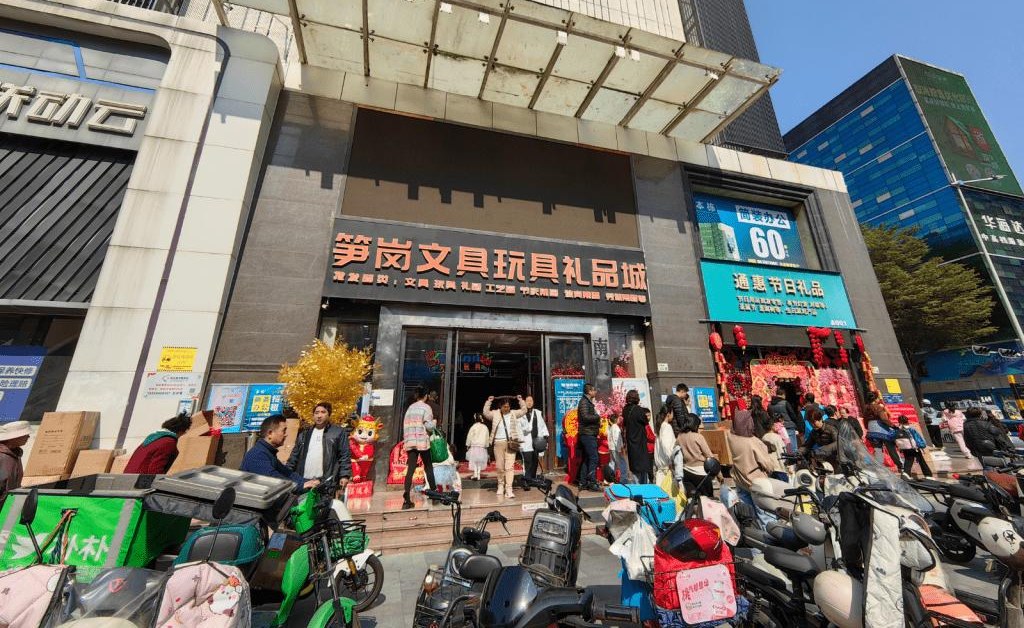
Street entrance of the Sungang Stationery, Toys and Gifts City in Shenzhen, with scooters parked outside
Sourcing Guide · For Importers & First-Timers

Sungang Toys & Stationery Wholesale Market, Shenzhen

Four floors, more than 228 listed shop records, and everything from a single pencil to a carton of building blocks. This is the market Shenzhen residents call their own Yiwu — and one of the few places in South China where a school-season restock, a toy range and a corporate gift run can be filled inside one building. Here is how it differs from other markets, how a first-time buyer should work it, what is actually sold, and where the money leaks.

Goodhope Freight · China Wholesale Market SeriesUpdated Nov 2026 · 16 FAQs
4
Floors, split between stationery, toys, gifts and office supplies
228+
Shop and booth records listed in the public directory
~20,000m²
Floor area of the current site, opened in 2021
1999
Year the original Sungang wholesale market opened

Quick answers, before you read the long version

  • What it is: a four-floor wholesale building at 2011 Bao'an North Road, Luohu District, Shenzhen — the successor to the original Sungang market, which closed on 1 April 2021 and moved about a kilometer up the road.
  • What it sells: student stationery and pens, notebooks and paper, art supplies, office consumables, toys and models, plush and blind boxes, gifts and trophies, festive and wedding goods, sporting goods, school bags and uniforms.
  • Why buyers go: small orders are negotiable, mixed cartons are accepted, ten categories sit in one building, and the factories behind the samples are one to two hundred kilometers away in the Pearl River Delta.
  • Biggest risks: unauthorized IP merchandise, borrowed 3C certificates, samples that differ from bulk, and quotes that grow add-on by add-on at settlement.
  • First-trip rule: read the floor map at the door, quote three shops per item, seal a sample, and write specifications, packaging, lead time and defect terms into the order.
Why it is different

One building, ten categories, and a border on the doorstep

Buyers who hear "Sungang" for the first time usually assume it is another Yiwu. There is a family resemblance, but the logic underneath is different: this market behaves less like a national distribution hub and more like a front room for the Pearl River Delta toy and stationery industry — staffed for small buyers and sitting close to a border.

The market stands on Bao'an North Road in Luohu, started trading in 1999, and was once counted among China's ten largest wholesale markets and the biggest stationery and toy trading center in Shenzhen. In April 2021 the old site was closed and the tenants moved roughly one kilometer to the current building, now branded the Sungang Stationery, Toys and Gifts City. It runs four floors, lists more than 228 shop or booth records in its public directory, and covers stationery and office supplies, toys and models, gifts and crafts, festive and wedding goods, household goods, sporting goods and labor protection among its fifteen categories.

DIFF 01

A border-city front room

Luohu sits against the Hong Kong boundary, and Sungang has served Hong Kong, Macau and Southeast Asian Chinese buyers for two decades. Plenty of counters quote, invoice and ship to Hong Kong as a routine request. Inland wholesale cities cannot copy that geography.

DIFF 02

One building instead of five markets

Stationery, office consumables, art and sport, toys and models, plush and blind boxes, trophies and gifts, festive and wedding, bags and uniforms — all in the same building. The value is not "cheap", it is filling a stationery shop, a gift company or a school's term order in one visit.

DIFF 03

Small orders are still welcome

Unlike consumer-goods halls that only sell full cartons, a large share of counters here openly serve both wholesale and retail, and will split cartons or sell by the dozen. For a first test order that matters: you can validate goods and supplier before committing volume.

DIFF 04

Sitting on the manufacturing belt

Guangdong is the core of China's toy and designer-toy production. Public reporting puts about 25 percent of global anime merchandise and nearly 85 percent of Chinese designer toys in Dongguan's hands. The sample in front of you usually has a factory one or two hundred kilometers behind it — fast to re-cut, re-pack and replenish.

DIFF 05

The school calendar is the real clock

Two decades of trade have built a stable customer base: schools and campus shops, office buyers, gift companies, e-commerce sellers. Mid-August to early September is the hardest peak, followed by a clearance window; before Spring Festival the building switches to red envelopes, couplets and festive decor.

DIFF 06

Gifts and festive goods are the sleeper category

Trophies and medals, corporate gifts, drinkware, calendars, wedding supplies, balloons, red envelopes and holiday decor trade here in rows. Few markets in South China combine student stationery, children's toys, corporate gifting and festive materials in one address — that is what separates Sungang from a pure toy city or a pure stationery city.

Yiwu wins on breadth and export volume, Dongguan wins on manufacturing, Guangzhou wins on the depth of its specialist streets. Sungang wins on border location, one-building range, tolerance for small orders and Pearl River Delta response time.

That mix does not suit a buyer chasing the absolute lowest price on a full container. It suits a buyer who wants to test a range in small steps, restock fast, and consolidate several categories in one trip.

Table: how Sungang compares with the sourcing places buyers usually weigh it against (objective positioning, not a ranking)
LocationCore roleMinimums and retailCategory strengthBest for
Sungang, ShenzhenBorder-city front room for stationery, toys and gifts; concentrated four-floor marketWholesale-led, but most counters also sell retail, mix cartons and split packsStudent stationery, office consumables, children's toys, designer toys and cards, trophies and gifts, festive goodsSmall trial orders, school-season stock, gift programs, Hong Kong and cross-border small buyers
Yiwu International Trade CityGlobal small-commodity distribution center with mature export servicesVolume-led; minimums are higher in many categoriesSmall commodities across all categories, fashion accessories, household goodsMid-to-large volumes, full-container exports, one-stop export handling
Guangzhou specialist districtsLong-established stationery, boutique and gift wholesale streetsWholesale and retail side by side; supply is spread across streetsStationery and paper, boutique gifts, packaging materialsDeep price comparison and large paper and stationery volumes
Dongguan factoriesThe manufacturing end of toys and designer toysFactory-direct, usually with meaningful minimumsToys, designer toys, models, OEM and private labelBrand owners who need tooling and can carry factory minimums
Hong Kong retailThe retail and design end of the chainRetail-ledDesign stationery, boutique goods, licensed productSmall quantities where design and authenticity matter more than wholesale pricing
1999The Sungang stationery and toy wholesale market opens, later counted among China's ten largest and the biggest in Shenzhen
Apr 2021The old site on Bao'an North Road closes; tenants move to neighboring buildings such as Jiandacheng, Fengwo Home and Huahaida
May 2021The new Sungang Stationery, Toys and Gifts City opens at 2011 Bao'an North Road: four floors, roughly 20,000 m²
2024–2026Cards, blind boxes, IP merchandise and "guzi" collectibles expand; floors three and four turn visibly younger

About the "market closed" rumor: the old site did close in 2021 — but that was a relocation, not a shutdown. Trading continues at 2011 Bao'an North Road. Several older guides online still print the previous address and floor layout, and following them leads to an empty building. This guide is an objective sourcing reference: it quotes no prices and promotes nothing.

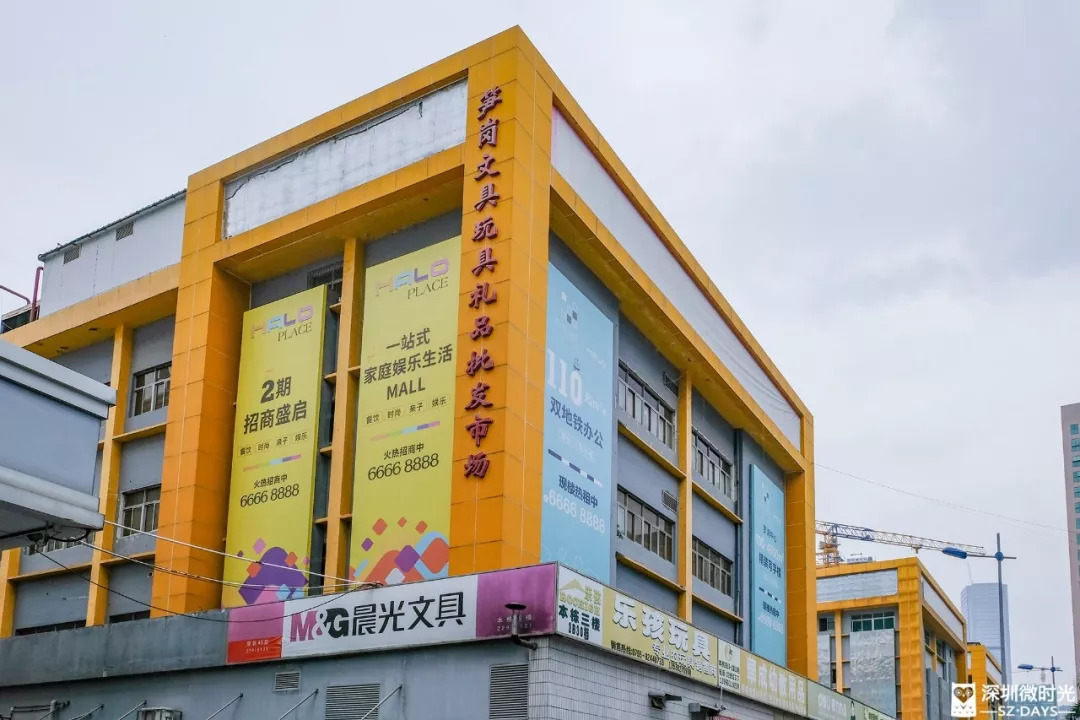
The orange facade of the original Sungang stationery and toy wholesale market building before relocation
The original Sungang market building before the move (archive photo, around 2013). It stopped trading on 1 April 2021; the address today is a different site.
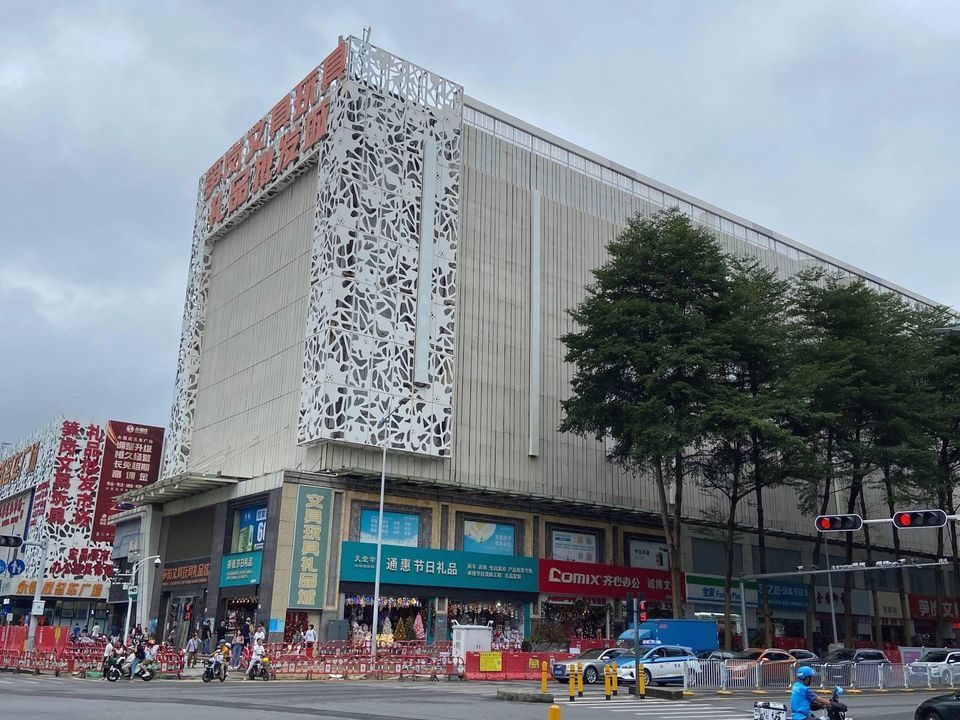
Exterior of the current Sungang Stationery, Toys and Gifts City building on Bao'an North Road
The current building seen from Bao'an North Road. There are a few street-level shops, but the wholesale floors are inside.
Where it is

Address, hours, and what each of the four floors sells

Settle "where" and "which floor" first; it removes about half the wasted walking. The building is not large, but the counters are dense and it is easy to circle the same floor twice.

Table: basic facts (public information as of 2026 — re-check before you travel)
NameSungang Stationery, Toys and Gifts City (locals still say "Sungang stationery and toy wholesale market")
Address2011 Bao'an North Road, Luohu District, Shenzhen — near the Taoyuan Road junction, east side of Bao'an North Road
MetroLine 7, Sungang Station, exits A and E, about a 500 m walk; Line 9 to Hongling North Station then roughly ten minutes on foot
HoursAbout 9:00–19:00; most counters start packing up after 18:00. During Spring Festival many shut, and the days around New Year's Eve are unpredictable.
SizeFour trading floors; the public directory lists more than 228 shop or booth records across 15 categories
NearbyHuahaida international garment center, Sungang clothing wholesale market, Sungang Craft City / Yizhan Center, Honghu Park — combinable into a one-day sourcing loop
Table: floor-by-floor layout and how to walk it (counters get reshuffled — check the map inside the south entrance first)
FloorMain categoriesWho it suitsSuggested time
1FStationery, office supplies, gifts and crafts, festive and wedding goods, umbrellas, red envelopes and couplets, school bags and uniforms, plus food outletsGift programs, corporate buyers, holiday-season buyers40–60 minutes; a good orientation stop
2FStudent stationery, pens, notebooks and paper, art materials, sporting goods, hair accessories and small goodsCampus shops, stationery retailers, schools and institutions1–1.5 hours; the densest floor for styles
3FChildren's toys, building blocks and models, RC cars, plush, educational toys, figures and display piecesToy shops, e-commerce sellers, families1–1.5 hours; the floor where buyers lose track of time
4FTrading cards, blind boxes, IP merchandise, designer toys and collectibles, some stationery and giftsCollectible shops, content commerce, student buyers40–60 minutes; highest concentration of unit-price and licensing issues

About the floor layout: sources differ slightly on which floor is stationery and which is toys, because counters were adjusted after the relocation. The reliable move is to read the directory map inside the entrance — a category and tenant map is mounted on the wall to the left of the south entrance — then walk to specific numbers instead of following an old guide.

Two routes that actually work

ROUTE A · 3 HOURS

First visit, orientation only

Floor 1 for the overview and the directory map → floor 3 for toys, to read the price bands and style density → floor 2 for pens, notebooks and art materials → back to floor 1 for gifts and festive goods. Record everything, order nothing.

ROUTE B · HALF A DAY

You already know what you want

Go straight to the target floor and quote three to five counters in the same category → note booth numbers and prices → return to the two best quotes, inspect samples and negotiate tier pricing → after ordering, fill the supporting items in the same building (packaging, gift bags, stickers) → ship from the logistics desks on the ground floor.

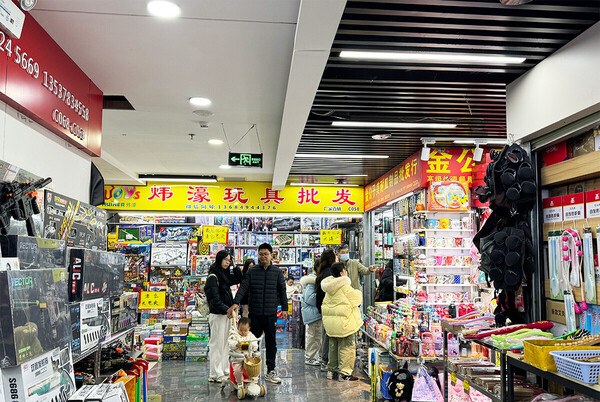
Inside a Sungang wholesale floor: toy and gift counters on both sides of a narrow aisle
Inside the building: counter fronts run one after another, aisles are narrow and stock is stacked high. Carts and cartons regularly block the way — watch your step.
First trip

How to buy: the twelve steps that turn a walk-through into an order

You will not need all twelve on day one. Do not skip steps 1, 5, 6, 8 and 9 — those five are where first-time buyers either save or lose real money.

STEP 1 · PLANNING

Write down what you are buying, how much, and for whom

Three lists before you fly: a category list (which pens, notebooks, art materials, toys and gifts), a quantity list (personal use, first stock for a shop, and e-commerce testing are three completely different volumes), and a compliance list (does the product need 3C marking, a Chinese label, or IP authorization). Bring a passport or business card — counters will ask what you do once volume is on the table — plus a working WeChat or Alipay account, a little cash, a large suitcase or folding bag, and a power bank.

STEP 2 · TIMING

Avoid weekend afternoons; aim at the two windows around the school year

Weekdays from 10:00 to 15:00 are the easiest: owners have time to talk and stock has just been replenished. Weekend afternoons are the worst — trial play and price questions queue up. Mid-August to early September is the school-season peak: the fullest range, the firmest prices and the busiest counters. Mid-September to October is the clearance window, when stationery, school bags and uniforms show up in bundled deals. One month before Spring Festival the building switches to holiday goods, and part of it closes during the holiday itself.

STEP 3 · ARRIVAL

Metro Line 7 to Sungang — and do not navigate to the old address

Leave Sungang Station by exit A or E and walk about 500 m along Bao'an North Road. Search the map for Sungang Stationery, Toys and Gifts City or 2011 Bao'an North Road; do not search "Sungang stationery and toy wholesale market", which can route you to the building that closed in 2021. Driving works, but parking around the block is tight and delivery vehicles dominate the wholesale hours.

STEP 4 · ORIENTATION

Spend five minutes building a mental map

Find the floor directory or the service desk at the entrance and confirm which floor and which booth range your categories sit in. Save the booth numbers you want to see in a phone note, then walk either from the top floor down or starting from your target floor. This alone saves half an hour of backtracking.

STEP 5 · QUOTE FIRST

Three counters per item, before you buy anything

Do not order at the first counter you like. The same pencil case or the same block set can differ by 20–50 percent between booths, and the gap comes from whether it is first-tier wholesale, whether it is surplus stock, whether packaging is included, and whether tax is included. Quote three, write down prices with booth numbers, and you will negotiate from information instead of hope.

STEP 6 · THE FIVE QUESTIONS

Ask these five things before talking price

1) Minimum order: how many pieces, how many dozen, or must it be a full carton? 2) Mixed cartons: does a carton assembled from different styles still count as wholesale? 3) Tax: no invoice, standard invoice or special VAT invoice — three different prices. 4) Packaging: bulk, color box, neutral pack, and can it be changed? 5) Lead time and repeat orders: stock or production, and how many days for a reorder. Settle these first, or every later step becomes a surcharge.

STEP 7 · INSPECTION

Five looks and one test — not just "nice packaging"

Look at print (sharpness, color drift, wrong characters), look at build (burrs, loose threads, smell, plastic thickness), look at marking (3C mark, age grading, warnings, factory name and address, standard code), look at packaging (barcode, carton stiffness, crush resistance), look at batch (color differences between lots of the same item). Then test: run a battery toy, check RC range, click blocks together, write with the pen, count the pages. If a sample can be opened, open it.

STEP 8 · NEGOTIATION

Trade volume and repetition for price — never insult the goods

The useful lines are: "I need a lot of this — what is the full-carton price?" and "I will take a trial batch and reorder monthly if it sells — can you give me a long-term price?" Not "too expensive, poor quality". Insulting the product invites the seller to fill your order with the cheapest version. Negotiate tier pricing, mixed-carton bundles, freight-included price, packaging-included price — one variable at a time — and confirm the result in writing on WeChat immediately.

STEP 9 · THE ORDER

Put eight things on paper; verbal promises do not exist

Item or model number, color, size and specification, quantity, unit and total price, packaging method, lead time, and the inspection and defect handling terms. Add one line: bulk goods must match the sealed sample. Have the owner sign and label the sample, or photograph it and note "bulk to match sample". WeChat records can serve as evidence, but for a formal purchase ask for an order sheet or contract with a company stamp.

STEP 10 · PAYMENT

Company accounts first; treat large personal transfers as a red flag

Prefer a transfer to the company account, then WeChat or Alipay with the transfer record and the payee's verified name kept. Avoid large cash payments, and avoid sending money to a personal account that does not match the booth's business entity. For a first cooperation, start small: validate goods, packaging and shipping speed before scaling. If you need an invoice, confirm the invoice type, tax point and timing before paying.

STEP 11 · SHIPPING

Paper and plush ship on volume, not weight

Courier and freight desks sit around the market and can send nationwide, including Hong Kong and Macau. Notebooks, paper and plush are light-and-bulky cargo: logistics charges volumetric weight, so a large carton of tissue can cost more than a carton of hardware. Fragile items (trophies, display pieces) need corner protection and individual liners. Toy batteries must be removed or declared separately. For export you need customs documents, a packing list and an invoice, and battery products need transport certification.

STEP 12 · AFTER SALES

Build your own supplier sheet

Record booth number, owner's WeChat, main categories, minimum order, payment terms and defect rate in one table. Before every reorder, run a small validation batch and confirm nothing has been re-sourced or moved to another factory. It feels like paperwork; it is actually what decides whether you get the same price next year.

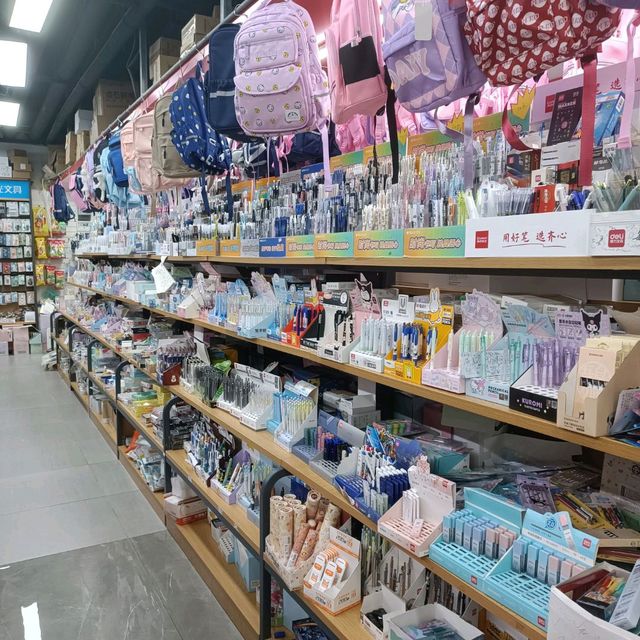
A wall of pens and stationery in a Sungang stationery booth
A stationery booth's shelving wall: pens arranged by color family and function, the most typical "pen city" view in the building.
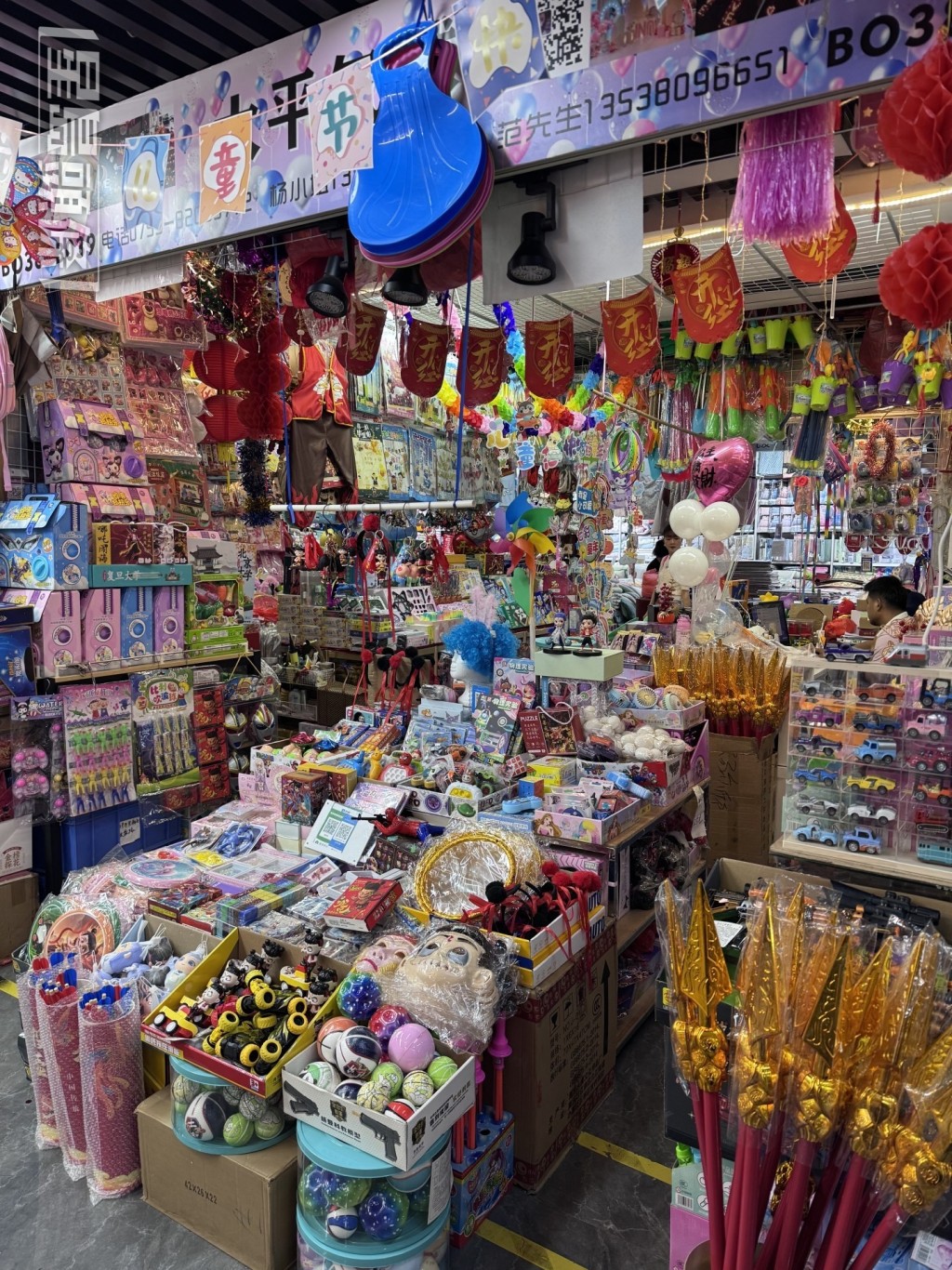
Festive goods stall hung with red lanterns and decorations in Sungang
Festive goods before Spring Festival: lanterns, couplets and decorations take over the ground floor for two months.
What is actually sold

Ten categories, and what to check in each

Sorted by purchasing purpose. Each card lists what is inside the category and what a buyer should verify at the counter — useful as a checklist against the shelves.

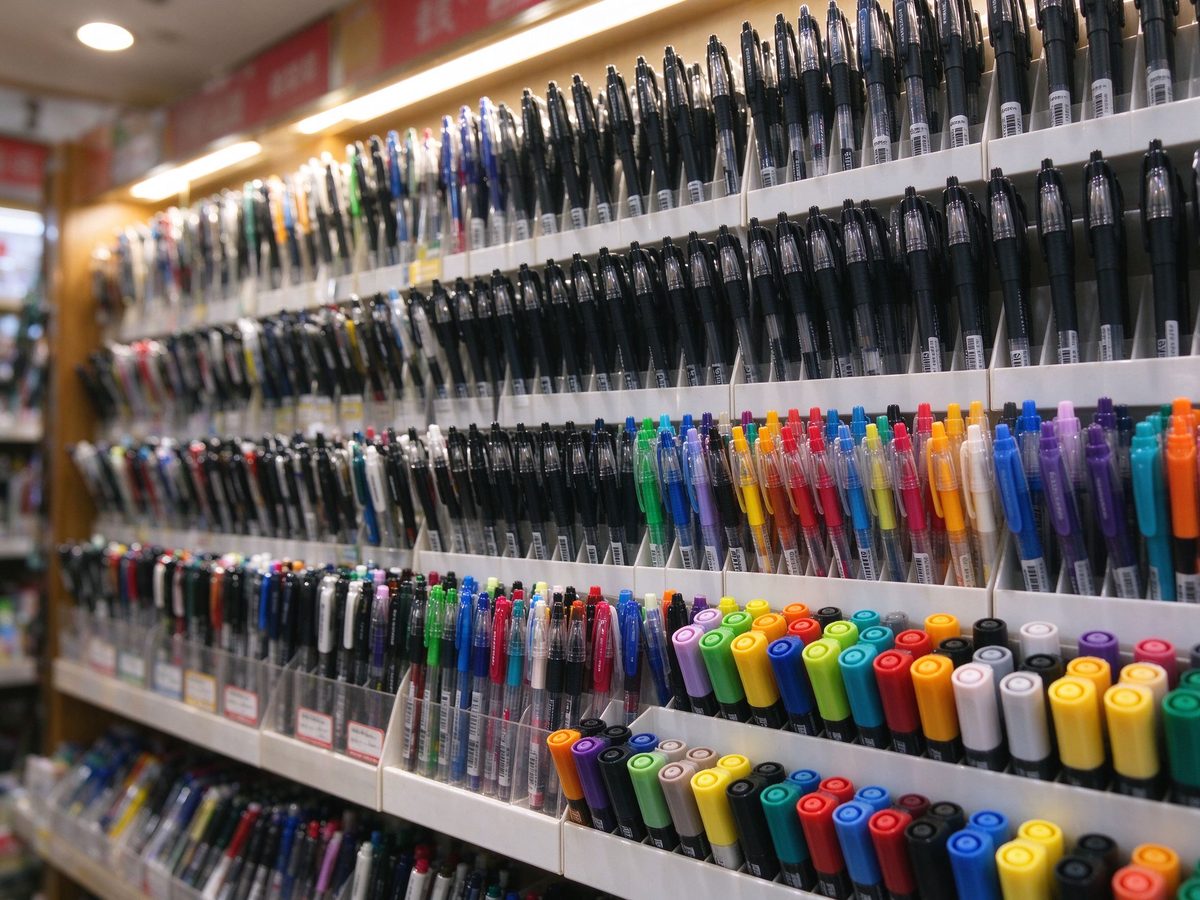
Rows of pens and markers on a stationery wholesale shelf
STATIONERY

Student stationery & pens

Gel pens, ballpoints, erasable pens, markers, colored pencils, highlighters, pencil cases, correction tape, erasers and rulers. This is the densest block in the market: one function usually exists at a dozen price points, from loose bulk to gift-boxed sets.

  • Check: whether refills are replaceable — refill compatibility drives repeat purchase.
  • Check: ink leakage and clip strength; buy by color family rather than single colors.
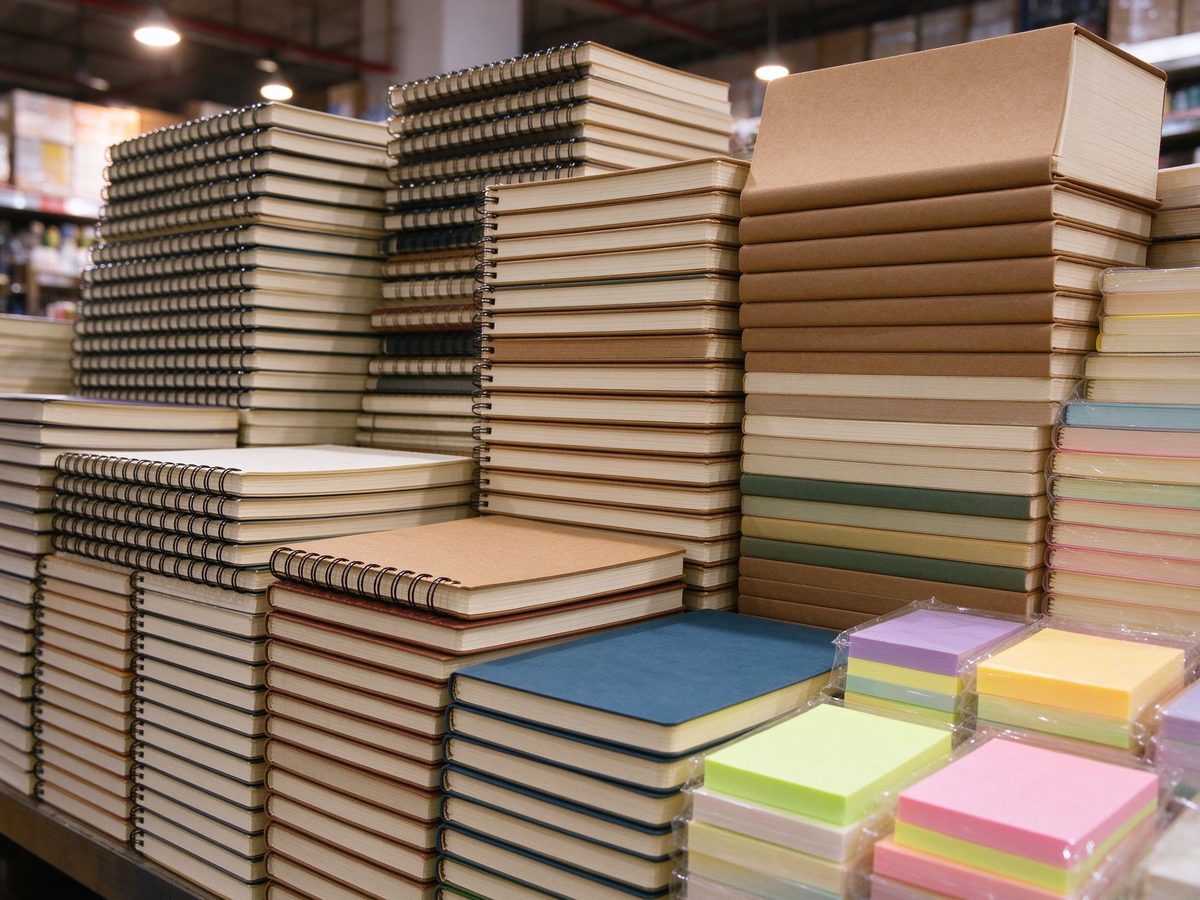
Stacks of notebooks and sticky notes in a wholesale booth
PAPER

Notebooks, paper & journals

Spiral notebooks, perfect-bound books, ring binders, planners, sketchbooks, exercise books, sticky notes, book covers, folders and document wallets. Journals, sticker albums and "guka" decoration supplies have grown fast and now overlap student buyers with content commerce.

  • Check: paper weight and page count — two books of the same thickness can differ by a grade.
  • Check: binding integrity and cover scuffing. Paper is light cargo, so freight runs on volume.
Watercolor pans, colored pencils, brushes and a palette
ART

Art supplies

Watercolor, gouache, acrylic, oil pastels, colored pencils, markers, brushes, canvas, boards, palettes and craft materials. School art classes, art training centers and studios are the steady buyers here.

  • Check: opacity and dry-down color shift — paint a test stroke on site.
  • Check: brush tip evenness and shedding; EU exports need EN71-3 heavy-metal migration testing.
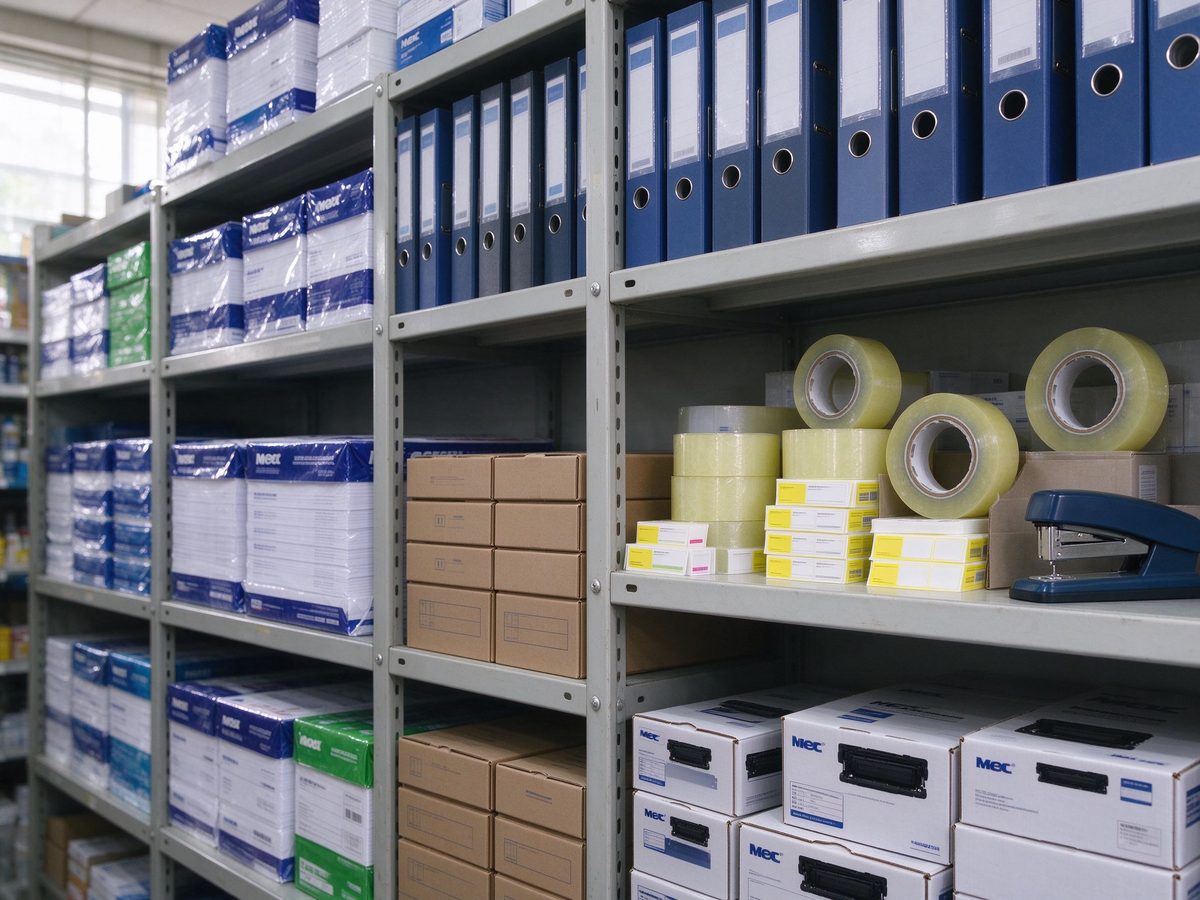
Office supplies shelves with copy paper, folders and tape
OFFICE

Office consumables

Copy paper, receipt paper, folders, archive boxes, staplers, tape, labels, whiteboard markers, toner cartridges and cleaning supplies. Corporate admin, property management, factories and e-commerce warehouses buy here frequently and repeat reliably.

  • Check: paper weight and brightness, not the "sheet count" claim on the wrapper.
  • Check: OEM versus compatible versus remanufactured cartridges; buy on company account with a proper invoice.
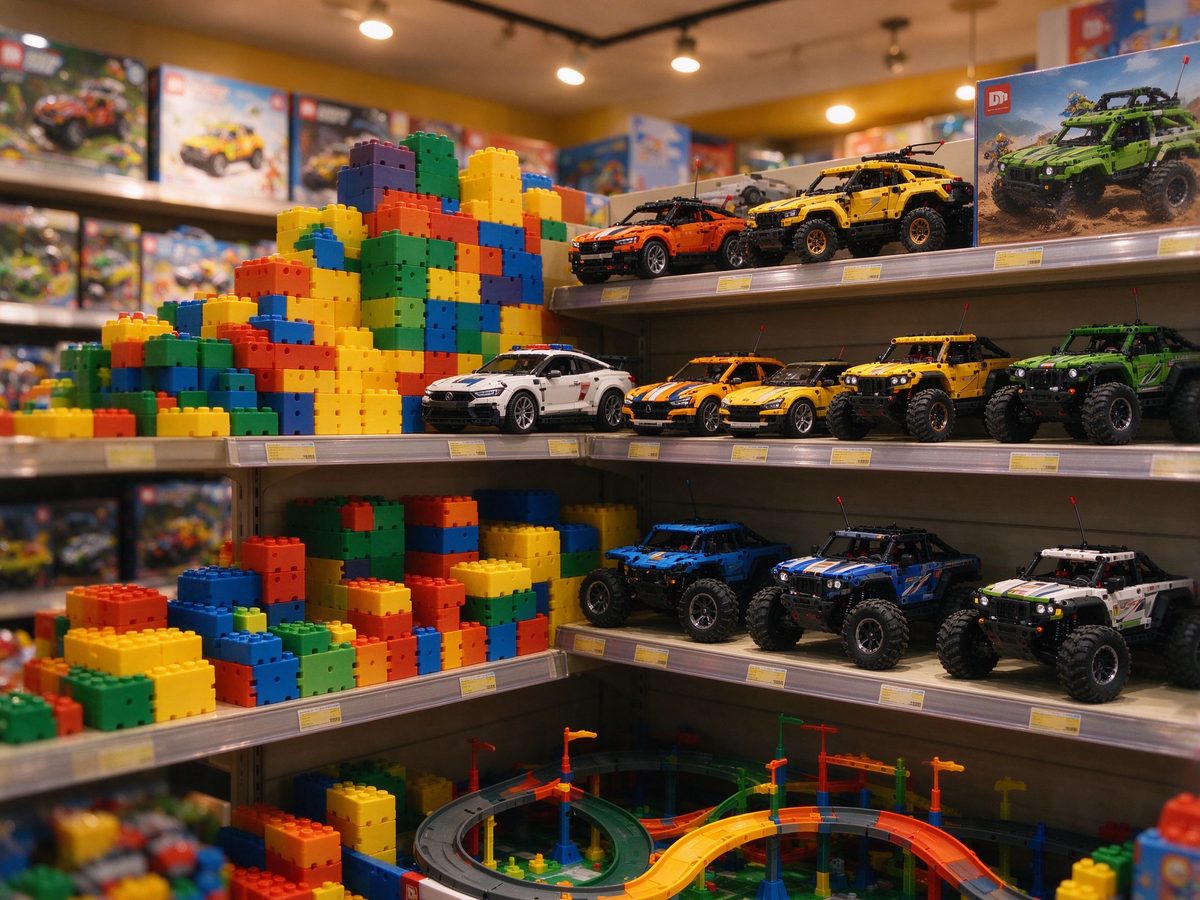
Building blocks, model kits and remote-control cars on display
TOYS

Children's toys & models

Building blocks, model kits, RC cars, track sets, educational board games, outdoor toys and water guns. Floor 3 is the toy floor: from a few-yuan plastic car to several-hundred-yuan model kits, with fast style turnover.

  • Check: 3C marking, age grading and small-parts warnings — all three.
  • Check: block fit (too loose falls apart, too tight is unusable); test RC range and battery format.
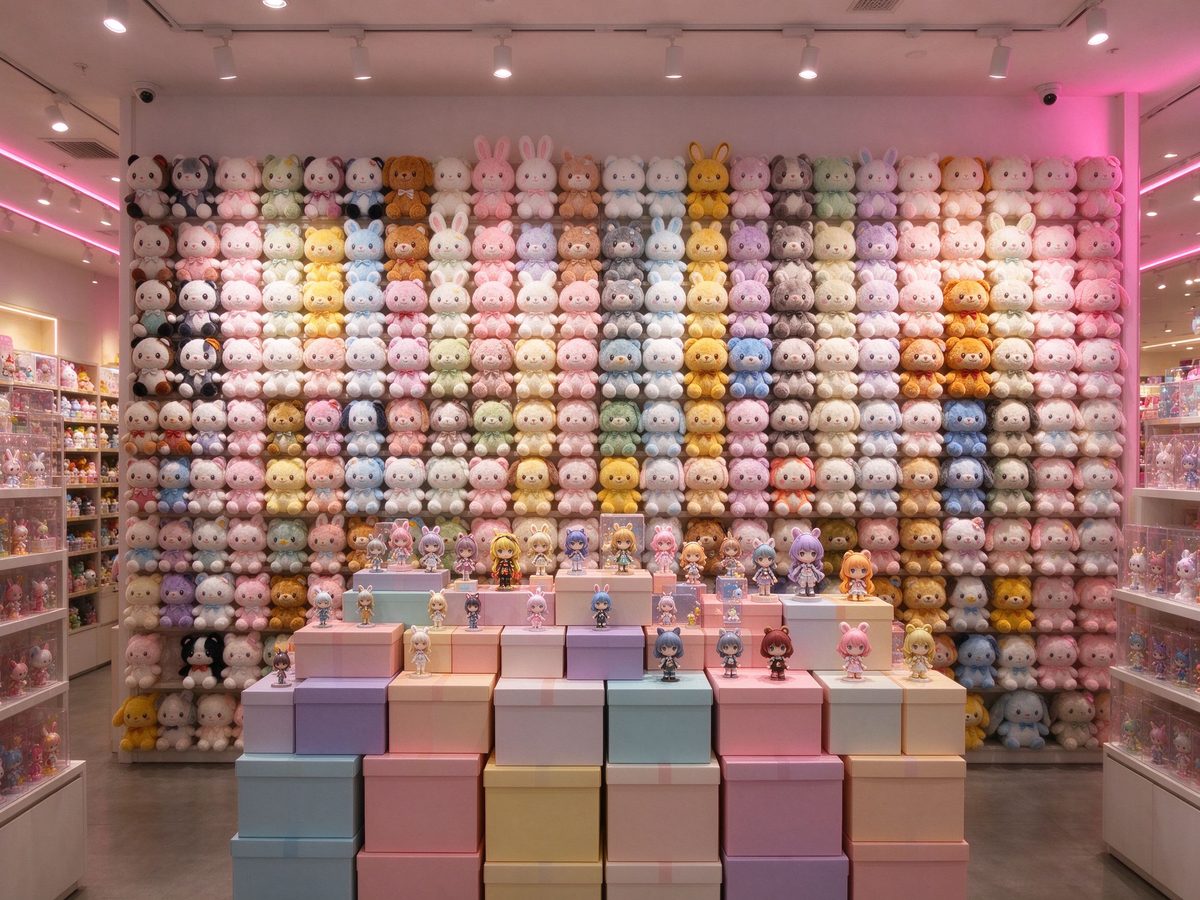
A wall of plush toys and blind boxes
COLLECTIBLES

Plush, designer toys & cards

Plush toys, figures, blind boxes, collectible cards, IP merchandise and "guzi" items such as badges, standees and stickers. This is the fastest-changing block; floor 4 concentrates the cards and IP counters and skews young.

  • Check licensing first — authorized, regional agent or white-label copy: three goods and three risk profiles.
  • Check: plush filling, stitching and shedding; for cards, the edition and whether boxes are sealed originals.
Trophies, medals, gift boxes and insulated bottles in a display case
GIFTS

Gifts, trophies & awards

Crystal trophies, metal medals, certificate frames, drinkware, calendars and diaries, decorative pieces, corporate gift boxes and printed merchandise. Annual meetings, school sports days, tournaments and client thank-yous are the main orders.

  • Check: trophy material and engraving method (pad print, laser, UV), whether engraving is charged separately, and redo cost for errors.
  • Check: gift box minimums and sampling lead time; gifting runs longer than stationery.
Festive goods stall with red lanterns and holiday decorations
FESTIVE

Festive, wedding & party

Red envelopes, Spring Festival couplets, lanterns, Chinese knots, balloons, ribbons, candy boxes, birthday tableware and decor, Christmas and Halloween items. In the month before Spring Festival this corner becomes the main event.

  • Check: festive goods are strictly seasonal — unsold stock becomes inventory the day after.
  • Check: gold foil shedding and paper stiffness on printed items; balloon size and inflated diameter.
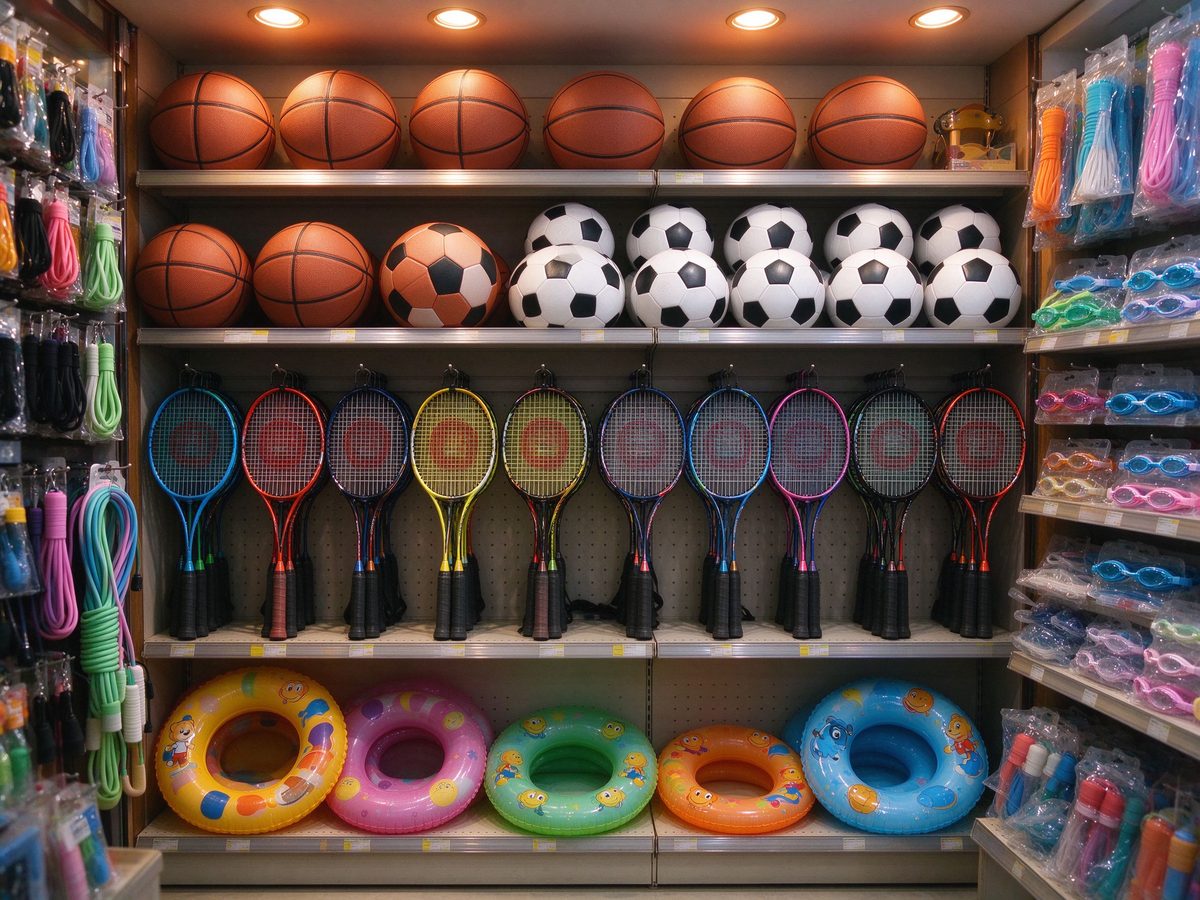
Balls, rackets, jump ropes and swim rings on a sporting goods shelf
SPORTS

Sporting goods & swim

Basketballs, footballs, badminton and table-tennis rackets, jump ropes, shuttlecocks, protective gear, plus goggles, swim caps, children's swim rings and kickboards. School PE and the summer swim season create two clear peaks.

  • Check: ball bounce and air retention; racket tension and grip quality.
  • Check: goggle anti-fog coating and lens flatness; swim rings are water toys with buoyancy and warning-label rules on export.
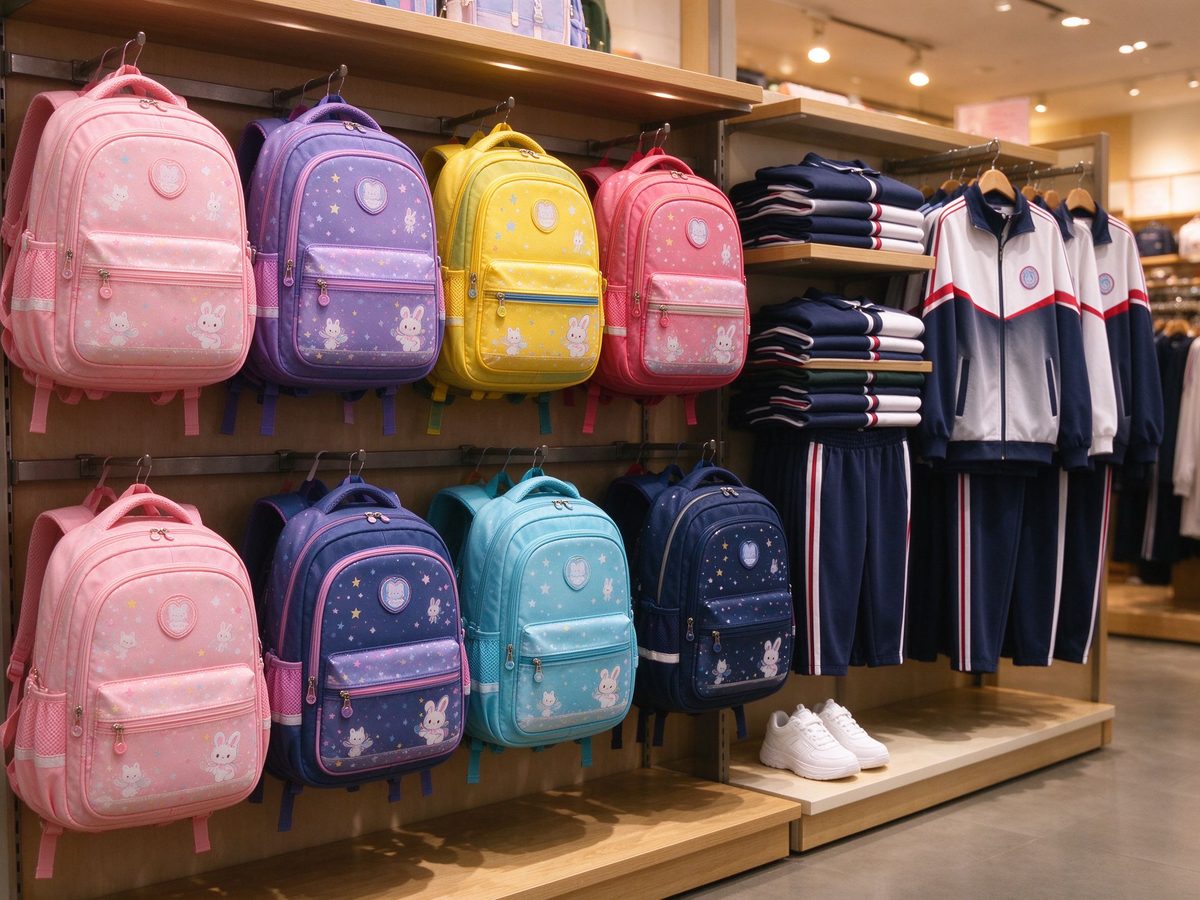
Children's school bags and sports uniforms on display
BAGS

School bags, uniforms & kids' gear

Children's backpacks, trolley bags, pencil boxes, water bottles, kids' umbrellas, raincoats, hats and slippers, plus the sports-style school uniforms that are a distinctly Shenzhen product. Volume concentrates around the school season.

  • Check: harness structure and zipper life, not just the print.
  • Check: size runs and replenishment ability on uniforms; cord and small-part safety on children's goods.

Beyond these ten, the building also carries household goods, home textiles, labor protection and wedding setup supplies in smaller clusters. Before committing, walk floor 1 once to see what is currently moving — those "temporary bestsellers" usually appear for one season and then disappear.

Commercial angle

What an overseas buyer can realistically build on this market

Sungang is not a full-container export market. Its edge is small volume, many categories, fast reorders. The businesses that work are built on "test small, then repeat", not on "buy a container once".

Table: seven workable directions, with barriers stated (for judgment, not investment advice)
DirectionHow it worksBarriers and risks
School-season stocking
Southeast Asia, Middle East, Africa
Assemble school kits — bags, pens, notebooks, art materials — and ship in July and August so they land before September.Hard seasonality: late arrival is dead stock. School-supply standards and label languages differ by country, and ocean transit has to be worked backward from the school date.
Festive goods
Christmas, Ramadan, Diwali, Spring Festival
Decor, balloons, red envelopes, gift bags and party tableware bought as themed sets.Delivery must land two to three months before the holiday; printed goods drift in color and shed foil; value collapses the day after.
Designer toy and IP distribution
Blind boxes, cards, collectibles
Distribute downstream for licensed brands, or negotiate a regional agency with the licensor.Licensing is a hard gate. Unlicensed lookalikes are infringing in most markets: customs seizures and platform delisting follow.
Corporate gift programs
OEM, logo application
Trophies, medals, drinkware, calendars and gift boxes with logo customization, sold to local companies, chambers and events.Minimums and sampling fees; engraving errors are hard to rework; cross-cultural gift taboos must be checked first.
E-commerce range testing
Small batch, fast reorder
Take 10–20 SKUs in small quantities, test click and conversion, then reorder the winners.You own compliance and packaging; white-label ranges commoditize quickly into price wars; returns and after-sales costs must be in the math.
Stationery gift sets
Raising order value
Combine pens, notebooks, stickers and cases into gift boxes for holidays, school season or collaborations.Packaging is a high share of cost; it needs design capability; unit margin thins and has to be recovered in the set price.
Hong Kong and overseas Chinese markets
Short distance from the border
Use the short Shenzhen-to-Hong Kong logistics radius for small, frequent replenishment.Hong Kong and Macau have their own toy-safety and label-language rules; small multi-batch shipments raise per-unit freight.
COMPLIANCE

Certification is the first door, not the last

Toy exports to the EU normally require the CE mark and EN71 series testing (physical and mechanical, flammability, migration of elements). The US requires CPSIA and ASTM F963 conformity, with a CPC for children's products; the UK uses UKCA. Inside China, strollers, electric toys, plastic toys, metal toys, projectile toys and doll toys fall under compulsory 3C certification. Toys with lithium batteries also need a UN38.3 report and transport certification for air freight.

LICENSING

Check the paperwork, not the familiarity

Much of the merchandise carries familiar faces, and an authorized product, a regional agent's stock and a white-label copy can differ only by a hangtag. Before exporting or listing, ask for the authorization letter, its scope and its validity period, and check that the licensed entity is the company signing with you. An expired license, or one whose territory excludes your destination, is not a license at all.

On the demand side, China's customs administration reported that exports of festive goods, dolls and animal-shaped toys exceeded RMB 50 billion in the first three quarters of 2025, sold to more than 200 countries and regions. The Guangdong Toy Association estimates the Chinese designer-toy market at about RMB 87.97 billion in 2025, growing roughly 21 percent, with total industry value expected above RMB 110 billion in 2026 and export growth around 25 percent. Shenzhen itself is a cross-border e-commerce hub, with import and export trade reaching RMB 3.36 trillion in the first three quarters of 2025. The combination — Chinese design, Pearl River Delta manufacturing, Shenzhen dispatch — is a real opening for smaller overseas buyers, but only for those who get compliance, licensing and logistics right.

Where money leaks

Fourteen pitfalls that only show up after the goods ship

None of these look like a problem at the counter. All of them become one after the container leaves.

!

Pirated and lookalike goods: the most expensive kind of cheap

Unlicensed anime merchandise and stationery or toys that imitate known brands are common here, often at a third of the licensed price. The risk is not at purchase, it is at sale: customs IP-record seizures, platform delisting after one complaint, and damages claims in serious cases.

Do this: ask for authorization documents before you commit. For export or platform selling, pay more for licensed or clean white-label goods.
!

Missing or borrowed 3C certificates

Some toys print a 3C mark whose certificate number belongs to a different product — or the mark is simply artwork. Domestic spot checks pull the goods off shelves and fine the seller; export buyers check too.

Do this: record the certificate number and verify product name and model in the official query system. If it does not match, do not buy.
!

Incomplete labeling: no factory name, no age warning

Toys and children's goods sold in China must carry a Chinese label: product name, factory name and address, standard code, age grading and warnings. Much wholesale stock is poly-bagged or carries an English-only hangtag, which supermarkets and platforms reject outright.

Do this: agree in writing who supplies the Chinese label and whether labeling is charged, and put it in the order.
!

A perfect sample, different bulk

The counter sample is the shop window. On shipment, material, factory and batch routinely change: thinner refills, lighter paper, less plush filling, drifted print color.

Do this: seal a sample. Have the owner sign and label it as the reference, compare on arrival, and write the deduction or return terms into the order.
!

Low headline price, itemized add-ons at settlement

The quote is for "bare goods"; at settlement come packaging, labeling, invoicing, packing labor, freight and floor delivery. The total can land 20–30 percent higher.

Do this: open with "what does this price include and exclude", and demand a landed total covering packaging, tax and freight — in writing on WeChat.
!

Minimums and fixed-color cartons

The unit price looks low because it requires a full carton, and the carton has a fixed color mix. The colors that do not sell stay with you; splitting the carton to choose colors adds a "split fee".

Do this: ask for the color ratio, whether colors can be specified, and what splitting costs — then judge whether the low price still holds.
!

Surplus and clearance stock sold as new season

Yellowed packaging, mixed batches, dented color-box corners and inconsistent sticker placement usually mean surplus or clearance. That is not automatically bad — but it cannot be priced as new stock.

Do this: check batch consistency and production dates, open a carton at random, and negotiate surplus at surplus prices.
!

Quiet specification shrinkage

"80 gsm paper" that is 70 gsm, a "100-sheet" book with 80 sheets, an "extra-large" storage box a size smaller than stated, a 0.5 mm refill that is really 0.7 mm.

Do this: bring a small scale and a tape measure and test on site. Put paper weight, page count and dimensions in the order with a stated tolerance.
!

Batteries, magnets and liquids: transport rules ignored

Battery-powered toys, magnetic construction sets, alcohol-based paints and glues carry extra air-freight requirements (UN38.3, MSDS, magnetic testing). "Pack it and send it" does not apply.

Do this: before ordering, ask whether batteries are included, whether they can be removed, and whether transport certification can be supplied. Ship by sea where possible.
!

Damage and loss with no clear responsibility

Thin cartons, no corner protection, damp plush and cracked trophies are common on arrival. The harder problem is that many counters only deliver "to the logistics desk" and leave you to pursue the carrier.

Do this: agree where transport responsibility ends, whether insurance is bought and how damage is compensated. Add corner guards and inner liners to high-value goods, and photograph before sealing.
!

Invoice expectations versus export rebates

Many counters are small-scale taxpayers or sole proprietors: they can issue a standard invoice or need an agency, but not a 13 percent special VAT invoice. Without that invoice, the export rebate route mostly closes.

Do this: confirm the invoicing entity, invoice type, tax rate and timing before paying. For export, buy through a trading company that can handle both declaration and invoicing.
!

Seasonal inventory after the peak

Uniforms and bags bought in August, red envelopes and couplets bought in December: by October or February they clear at cost. Zodiac, year-specific and holiday-themed goods are worthless once the date passes.

Do this: buy festive goods only in volumes you can forecast, budget for clearance on themed items, and never stock a full year at peak-season prices.
!

Verbal promises that evaporate

"It can be exchanged if it breaks", "you can return what does not sell" — generous at the counter, denied later because "that was never agreed".

Do this: put every promise in writing — defect ceiling, exchange conditions, time limits and who pays freight. Without text, there is no promise.
!

Relocation rumors and prepayment risk

The 2021 move hurt buyers who had paid large deposits early. Rumors travel fast in wholesale circles and are hard to verify.

Do this: verify the market's and the booth's actual operating status before any large prepayment, keep the deposit ratio low, and pay the balance on collection where possible.
First-timer questions

Sixteen questions buyers ask before their first visit

Written for people who have never been and have never bought wholesale. Tap a question to open the answer.

Which floor should I start on?+
For orientation, start on floor 1: look at the directory map, get a feel for price bands and stock density, then go up to floor 3 for toys and floor 2 for stationery. If your target is specific — toys only, for example — go straight to floor 3 and quote three to five counters before moving down. Do not start by examining every counter on floor 1; two hours can pass without covering ten meters.
Will they sell me one or two pieces, or am I in the way?+
Most counters also serve retail, so buying one or two pieces is normal — you simply pay the retail price rather than wholesale. A minority of channel-only booths state "wholesale only, no retail" or set a minimum spend; asking "do you sell retail?" at the door tells you immediately. Note that the retail-to-wholesale gap can be wide, so do not compare a retail quote here against an e-commerce price and conclude the market is expensive.
Can I negotiate, and how much can I move the price?+
Yes, but the room depends on volume and category. Buying more, reordering, accepting full cartons opens space; one or two pieces opens almost none. More counters now post fixed prices, and negotiating a total that includes packaging, freight and tax is often worth more than arguing the unit price. One variable at a time — push unit price, packaging and freight together and the seller recovers it with cheaper goods.
How do I get there by metro, and is parking practical?+
Metro Line 7 to Sungang Station, exit A or E, then about 500 m on foot along Bao'an North Road. Line 9 to Hongling North also works, roughly ten minutes on foot. There are commercial car parks nearby, but during wholesale hours delivery vehicles take the space and spots are tight — driving on a first visit is not recommended, since you will be carrying bags afterwards. A taxi driver will know "Sungang Stationery, Toys and Gifts City" or "2011 Bao'an North Road".
What are the opening hours? Weekends? Spring Festival?+
Overall about 9:00–19:00, with most counters winding down after 18:00 and a few earlier. Weekends are open but busiest in the afternoon. Spring Festival is the big variable: from around New Year's Eve to the fifth or sixth day of the holiday, many counters close, and owners who travel home may return on their own schedule. If you are flying in specifically to buy, avoid the holiday and the week after it.
Can I pay by card? How do foreign buyers pay?+
The standard here is WeChat Pay, Alipay and cash; international credit cards are often not accepted at counters. Overseas visitors can link a foreign card to WeChat or Alipay before arrival, subject to identity verification, or open a local account after arriving. The reliable setup is some small-denomination cash plus a working mobile wallet. For larger amounts, a company bank transfer is safer and leaves a record.
How do I move a large purchase, and can it ship abroad?+
Courier and freight desks around the market ship nationwide and to Hong Kong and Macau. Four rules: paper and plush are billed on volumetric weight, so do not estimate by weight; trophies and display pieces need corner protection and liners; batteries must be removed or declared separately; and sending abroad is an export, requiring customs declaration, a packing list, an invoice and transport certification for battery goods. On a first order, ask the counter which logistics desk they normally use — at least there is someone to call if it goes wrong.
How can I tell whether a product is genuinely licensed?+
Three checks. The authorization letter: licensed entity, licensed category, territory and validity — all four must be present. The hangtag and security features: licensed goods normally carry full copyright marks, an anti-counterfeit code and consistent packaging. The price logic: a "genuine" item at half the market price usually is not. One point buyers miss: if the licensed territory does not include your destination country, you have no license there, and export risk remains.
What certifications do toys need for the EU, the US and China?+
For sale inside China, strollers, electric toys, plastic toys, metal toys, projectile toys and doll toys require compulsory 3C certification, with the mark, factory name and address, age grading and warnings on the packaging. For the EU: CE marking plus EN71 series (physical and mechanical properties, flammability, migration of elements), along with REACH chemical requirements. For the US: CPSIA and ASTM F963, plus a CPC certificate for children's products. The UK uses UKCA. Lithium batteries add UN38.3. Always confirm against the destination's current rules and give the supplier the requirements in writing before ordering.
Can I get a special VAT invoice, and can I claim the export rebate?+
Not necessarily. Many counters are sole proprietors or small-scale taxpayers: they can issue a standard invoice or need an agency to issue one, but cannot produce a 13 percent special VAT invoice. The export rebate requires a general-taxpayer entity, special VAT invoices and matched customs declarations. If you are exporting, do not simply order from a random counter — confirm first whether they can support invoicing and customs declaration, or buy through a trading company with export qualifications.
What if I do not speak Chinese? Are translators or buying agents available?+
Many owners understand simple English numbers, "cheap" and "how many", but that is not enough for terms. Practical options: a phone translation app with an offline Chinese pack; a local interpreter or student for half a day, which is not expensive; or ordering through a freight forwarder or sourcing agent who knows the booths and inspects goods. Put every important term on the order in both Chinese and English — never rely on spoken translation alone.
What budget should I bring on a first trip, and how much cash?+
It depends on purpose. Browsing and personal purchases: a few hundred RMB is enough. Filling a small shop's first stock: work backward from categories multiplied by SKUs multiplied by minimum order, and decide how many SKUs per category before you arrive, then fill in prices on site. Cash is only for transport, food and small retail buys; larger amounts go by transfer with a record. The real budget risk is not the goods — it is freight, packaging, tax and unsold stock.
What kind of business actually works with this supply, and where is the margin?+
The repeatable models are campus stationery shops (school-season volume), community toy and family stores (experience plus retail), corporate gifts and event materials (higher order value, steady repeat), cross-border e-commerce testing (small batch, fast reorder) and festive pop-ups (Christmas, Spring Festival, school season). The margin rarely sits in the unit spread; it sits in bundled sets, exclusive styles and reliable replenishment. The same pen sold singly is one business; sold as a "back-to-school stationery box" is another.
What else is worth visiting nearby?+
Sungang is itself a wholesale cluster. Within walking distance are Huahaida international garment center and the Sungang clothing wholesale market; home decor and craft gifts are at Sungang Craft City / Yizhan Center; Honghu Park is nearby for a break. A sensible loop is stationery and toys in the morning, garments or home decor in the afternoon, then ship from a nearby logistics desk in the evening.
Is the market going to relocate or close? Is it open now?+
The old site did close in 2021, but that was a relocation: tenants moved about a kilometer to the current building, which has traded as the Sungang Stationery, Toys and Gifts City since May 2021 and operates four floors today. What to watch for is outdated addresses and guides still circulating online, plus recurring "it is moving again" rumors — verify the actual operating status of a booth before any large prepayment, and never transfer money on the strength of a message alone.
What if I find quality problems after delivery?+
Start with what was agreed, then discuss remedy. What works: open and inspect on the day of arrival, with video; report in writing within the agreed window, usually 24–72 hours, with photos, quantities and batch numbers; separate defects from transport damage — the first goes to the counter, the second to the carrier; then replacement, price adjustment or return per the agreed ratio. If nothing was written down at order stage, you are down to goodwill — which is exactly why step 9 matters.

See it before you go

What the market actually looks like

A short walk-through built from stills of the building, then four public video reports that show the scale, the casual-shopper route, the walking order and a shop owner's view.

17 seconds through the entrance, the trading floors and the stationery wall — the scale and density of the building.Video: Goodhope Freight
4 floors, 200+ shops

How walkable the Sungang toy city really is

Source: Douyin · on-site video · Mar 2025

Watch on Douyin

External platform — opens in a new tab.

Casual shopper guide

Shenzhen's stationery and toy wholesale city, from a shopper's angle

Source: Douyin · on-site video · Mar 2026

Watch on Douyin

External platform — opens in a new tab.

Walking route

A route through stationery, toys and gifts on each floor

Source: Douyin · on-site video · Nov 2026

Watch on Douyin

External platform — opens in a new tab.

Shop owner's view

A stationery shop owner walks Sungang: IP stickers, cards and the new fourth floor

Source: Douyin · on-site video · Apr 2025

Watch on Douyin

External platform & Chinese-language audio.

The linked videos open on a public platform and play there. Prices, shops and floor layouts shown in them reflect the day of filming only. Watch for scale, stock density and the rhythm of trading rather than for prices.

Related guides on this site

Sources and notes. Market history and relocation: People's Daily Shenzhen / Shenzhen Special Zone Daily, Sungang stationery and toy wholesale market relocation (Mar 2021); Shenzhen News; Southern Metropolis Daily (Mar 2021); Dute News, Sungang market feature (May 2023); Shenzhen Bendibao listing (Nov 2025); Sungang Stationery, Toys and Gifts City public tenant directory (2026). Trade data: General Administration of Customs / China Economic Net (Nov 2025); Guangdong Toy Association / Securities Times (Apr 2026); Shenzhen Municipal Bureau of Commerce (Oct 2025). Photographs come from public reporting and social platforms and remain the property of their original authors; product images are illustrative.

This article is an objective market introduction and sourcing guide. It quotes no prices, contains no sales promotion and implies no commercial partnership. Shop counts, floor area, opening hours and floor layouts change with the market; verify against current conditions and the market's own signage before committing capital. Certification, licensing and export requirements are subject to the rules of the destination country and should be confirmed with a qualified provider.