
Packaging
A carton that holds twenty kilos on a warehouse floor has to hold two hundred kilos for thirty days at sea, in air that swings between wet and dry.
Contents
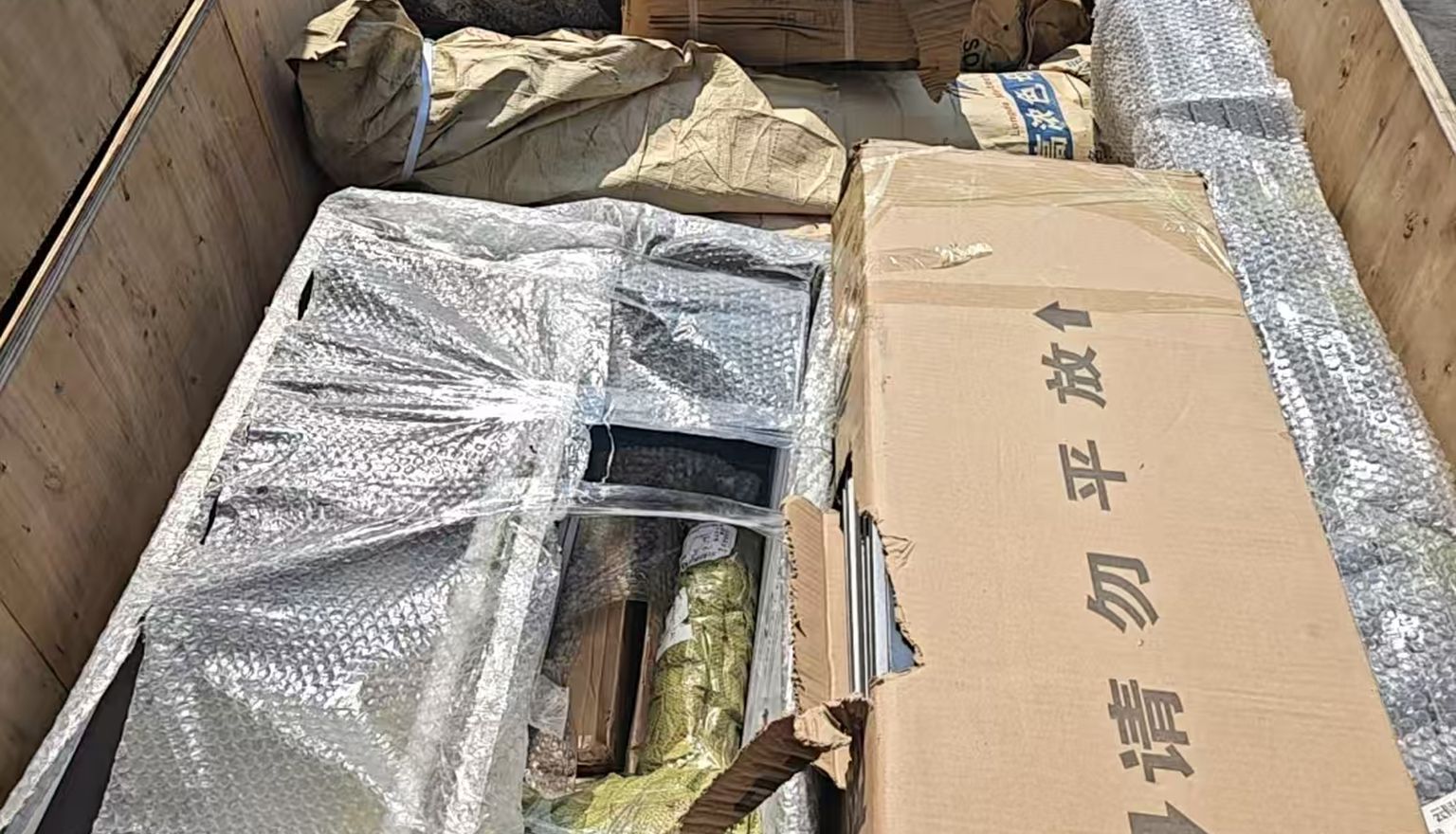
Packaging is designed against a specific set of loads, and the sea container applies all four at once.
Compression comes from the cartons above. Vibration comes from the ship's engine, the truck's suspension and the crane, and it works loose anything that is only taped. Humidity comes from the cargo itself, the pallet and the air, and it softens paper faster than most people expect. Handling comes from forklift tines, hand trucks, and a warehouse worker throwing one more carton onto the top of a stack.
Most damage claims are attributed to handling because handling is what the receiver sees. The cause is usually compression or moisture, which weaken the carton before the first forklift touches it.
A container is also a sealed steel box in direct sun. Surface temperatures inland can exceed sixty degrees, and the air inside cools at night. That cycle, repeated for a month, is the mechanism behind almost every mould and rust claim on a first shipment.
A corrugated carton carries load through its vertical walls, which is why the board grade matters more than the wall thickness looks.
The relevant measure is edge crush, expressed in kilonewtons per metre on the board specification, or burst strength in the older test. A single-wall carton made from standard board suits light goods; a double-wall carton is normal for anything heavy, stacked, or travelling by sea. Chinese carton suppliers will quote board grades readily if asked, and the grade is normally printed or stamped on the flap.
What kills the column is not the board but the interruption. A hand hole, a die-cut window, a joint that is only glued on one side: each of these removes vertical support exactly where the load is highest. Cartons with hand holes fail at the hole, and they fail at the bottom of the stack after about two weeks at sea.
Ask the supplier which board grade they use and how many high the carton can be stacked with the goods inside. A supplier who answers with a number has tested it. One who answers that it is standard has not.
Stack height is set by the container, not by preference. A standard container is about 2.39 metres high inside, and the usable stack is that height minus the pallet, minus the clearance needed to load it.
On a pallet, eight to ten carton layers is common for a 1.2 metre pallet. At twelve kilos per carton and twelve cartons per layer, the bottom carton is carrying well over a tonne. Single-wall board does not survive that for a month in humid air. This is the arithmetic that turns a specification conversation into a real one.
Two responses work. Use a stronger board for the bottom two layers only, which is cheaper than upgrading the whole order. Or change the pallet pattern so the load is carried by the pallet deck and the cartons are interlocked rather than stacked in columns, which spreads compression across more walls.
Floor loading is a third option and it is often worse: cartons stacked floor to ceiling with nothing between them transmit every shock directly, and unloading at destination takes longer, which is billed.
Container rain is the name for condensation that forms on the inside of the roof and drips onto the cargo. It is not a leak. It happens because the cargo and the pallets release moisture as the box warms during the day, and the roof cools faster than the air at night.
Wood is the main source. A pallet at twenty percent moisture content can release several litres of water across a long voyage. So can cartons, paper wrap, textiles and any product with a water content.
The controls are ordinary: dry the pallets before loading, avoid loading in rain, use desiccant in the quantity the volume justifies, and line the roof with a liner or absorbent sheet on long or humid routes. For metal parts, a vapour corrosion inhibitor in the packaging does more than a coat of oil.
Ask the supplier to photograph the pallets at loading. If they are visibly damp or the container floor is wet, the shipment has a moisture problem that no insurance policy will treat as an accident.
The pallet footprint is fixed by the container. A standard pallet is 1.2 by 1.0 metres, and a 20-foot container takes ten of them in a single tier, a 40-foot takes twenty or twenty-one depending on the pattern.
Cartons must not overhang the pallet. An overhanging carton loses its vertical support and is the first thing a forklift tine hits. Underhang wastes space and lets the load shift.
Stretch film alone holds a pallet together against vibration for a while. Corner boards plus two vertical straps hold it against compression and impact, which is what a sea voyage delivers. For anything fragile, a top cap costs little and prevents the top layer from being crushed by whatever is stacked on it.
Wood packaging leaving China must meet the ISPM 15 standard, which means heat treatment or fumigation and a stamp with the country code, the producer and the treatment mark. An unstamped pallet can be refused, re-treated or returned at the importer's cost. It is a five-minute check at loading and a two-week problem at destination.
Most visible damage happens after the container is opened, and it happens because the packaging design assumed a forklift.
A destination warehouse that unloads by hand will drop cartons, stack them in a different pattern and store them on a floor that may be damp. A retail distribution centre will reject a pallet whose film is torn or whose cartons are scuffed, regardless of whether the goods inside are perfect.
If the buyer is a retailer, the packaging specification is often the retailer's, not the supplier's, and it covers pallet height, label position, carton print and case pack. Those requirements are worth sending to the factory before production rather than after, because a compliant carton cannot be retrofitted.
For e-commerce and marketplace fulfilment, the unit packaging matters as much as the shipper: a poly bag needs a suffocation warning, a boxed item needs to survive a drop without the retail box being marked, and a set needs to stay a set.
Six lines in the purchase order prevent most of this.
Board grade and wall construction, stated as a grade rather than a description. Maximum stack height with the goods inside. Pallet type, dimensions and ISPM 15 treatment. Pallet pattern and carton count per layer. Desiccant quantity and placement for long or humid routes. And the marking requirement: shipping marks, handling symbols, and the country of origin statement.
Add a photograph requirement: one image of a finished pallet, wrapped and strapped, sent before the container is loaded. That single photograph catches overhang, missing corner boards, unstamped timber and a load that is two cartons higher than agreed.
None of this is exotic. It is what a competent exporter already does, and asking for it is a normal commercial request rather than a sign of distrust.
Packaging tests exist and most buyers never run them. Two are cheap enough to run on a first order.
A compression test stacks cartons to the intended height with a load on top and leaves them for a period, then inspects for deformation. A drop test drops a packed carton from about waist height onto a corner and checks the contents. Neither requires a laboratory, and both reveal the failure that would otherwise be discovered by the customer.
There are published test protocols for parcel and distribution environments, and a supplier who ships to large retailers will already know them. If the product is going into a marketplace or a retail DC, ask which protocol the packaging was designed against.
The cheapest test of all is the one that costs a week: send one carton by air courier before the container is packed. It arrives battered and it tells you more than a specification sheet.
Q Single-wall or double-wall cartons for export?
Double-wall is the default for anything heavy, stacked more than four high, or travelling by sea. Single-wall is adequate for light, low-stacked goods on short routes. The deciding factor is the load on the bottom carton, not the product's price.
Q How much does packaging add to the freight cost?
It adds volume and weight, and both are charged. The useful way to think about it is cost per cubic metre of cargo: a carton that is slightly larger than needed can add a measurable percentage to a sea freight bill over a full container. Packaging is also the cheapest place to prevent a damage claim.
Q Do I need desiccant in a container?
On long routes, humid seasons, or any cargo containing wood, paper or textile, it usually helps. The quantity depends on the volume and the moisture content of the cargo, and a couple of small bags in a 40-foot container will not change anything. Ask for a calculated quantity rather than a token one.
Q What is container rain?
Condensation that forms on the inside of the container roof as the box cools at night, then drips onto the cargo. It is caused by moisture released from the goods and packaging, not by a hole in the box, and it is one of the most common causes of mould and rust claims.
Q Can I reuse cartons or pallets?
Reused cartons lose a large part of their compression strength once they have been folded and reopened, and they carry old marks that confuse customs and receivers. Reused pallets must still meet ISPM 15, and a pallet with a damaged or unreadable stamp is treated as untreated.
Related pages
If the cartons are being specified now, send us the dimensions and the weight per carton. We will tell you what that gives you per container, and where the stack height stops being safe.
Email sales8015@goodhopefreight.com | WhatsApp & phone +86 133 9216 2503