
Samples
A photograph tells you what a supplier wants you to see. A sample on your desk tells you what the product is.
Contents
A trade fair compresses months of supplier evaluation into a few days, and most of that time is spent looking at products for the first time. A buyer who has already handled three samples walks into the hall with a shortlist and spends the days on the questions a sample cannot answer: capacity, tooling, terms, documentation, the willingness to change something.
The difference shows in what gets decided. Buyers who see the product for the first time at the booth decide on appearance, which is the easiest thing to fake with lighting and a good display. Buyers who have already handled it decide on the things that matter later: how the seam feels, whether the lid closes squarely, how heavy the carton is, whether the finish survives a fingernail.
There is a second, less obvious benefit. A supplier who manages to send a sample in three weeks has demonstrated three things at once: they can read an English brief, they can meet a shipping deadline, and they can handle an export document. Those are the same capabilities the order will need later. Some buyers treat the sample exercise as the first test of the relationship rather than as a product decision.
There are three ways a sample reaches a buyer, and the choice is decided by weight, contents and how much time is left.
Express courier. The default for anything under about thirty kilograms. Collected at the factory, cleared through a courier's own brokerage, delivered to the door. Transit is usually a few working days to most major markets, and the cost is high per kilogram but low per shipment. This is the route for one or two pieces.
Air consolidation. Where the sample is heavy, or where several suppliers are sending to one buyer, the pieces can be consolidated at a warehouse and shipped as air cargo to the airport, then cleared and delivered locally. Cheaper per kilogram, slower overall, and it needs a forwarder at both ends plus a customs entry. This is the route for a pallet or for samples from five factories.
Hand carry. A colleague or a sourcing agent brings the sample out in luggage. Fast and cheap if someone is travelling anyway, limited by baggage allowance, and it puts the customs question in the hands of a passenger rather than a broker. Commercial samples in luggage are still goods, and a customs officer can ask about them.
For a fair deadline, express courier is nearly always the answer, and the constraint is not the transit time but the factory's production of the sample itself.
Most samples that never arrive were refused at the origin depot rather than lost in transit. Four categories cause nearly all of the refusals.
Lithium batteries. A product with a battery inside is regulated goods. It can usually travel, but only with the right documentation, and only on services that accept it. Loose cells and power banks are harder. A supplier who ships a battery product as an ordinary parcel creates a compliance problem for the courier, and the parcel is stopped.
Liquids and pastes. Cosmetics, creams, oils and cleaning products are limited or refused on express air services, and where they are accepted they need packaging that survives a pressure change. A cream sample in a jar is a different shipping problem from a plastic part.
Magnets and strong magnetic fields. Speakers, magnetic closures and some tools are screened and refused if the field exceeds the limit for air transport.
Branded goods. A sample carrying a brand the sender cannot prove authorisation for can be held as a counterfeit risk. This catches buyers who ask a factory for a sample of a product they intend to sell under their own brand, and the factory sends one with the brand already applied.
Ask the factory which courier account they will use and what the contents declaration will say. A declaration that says gift or plastic parts when the box contains a battery product is a problem you inherit, not one they inherit.
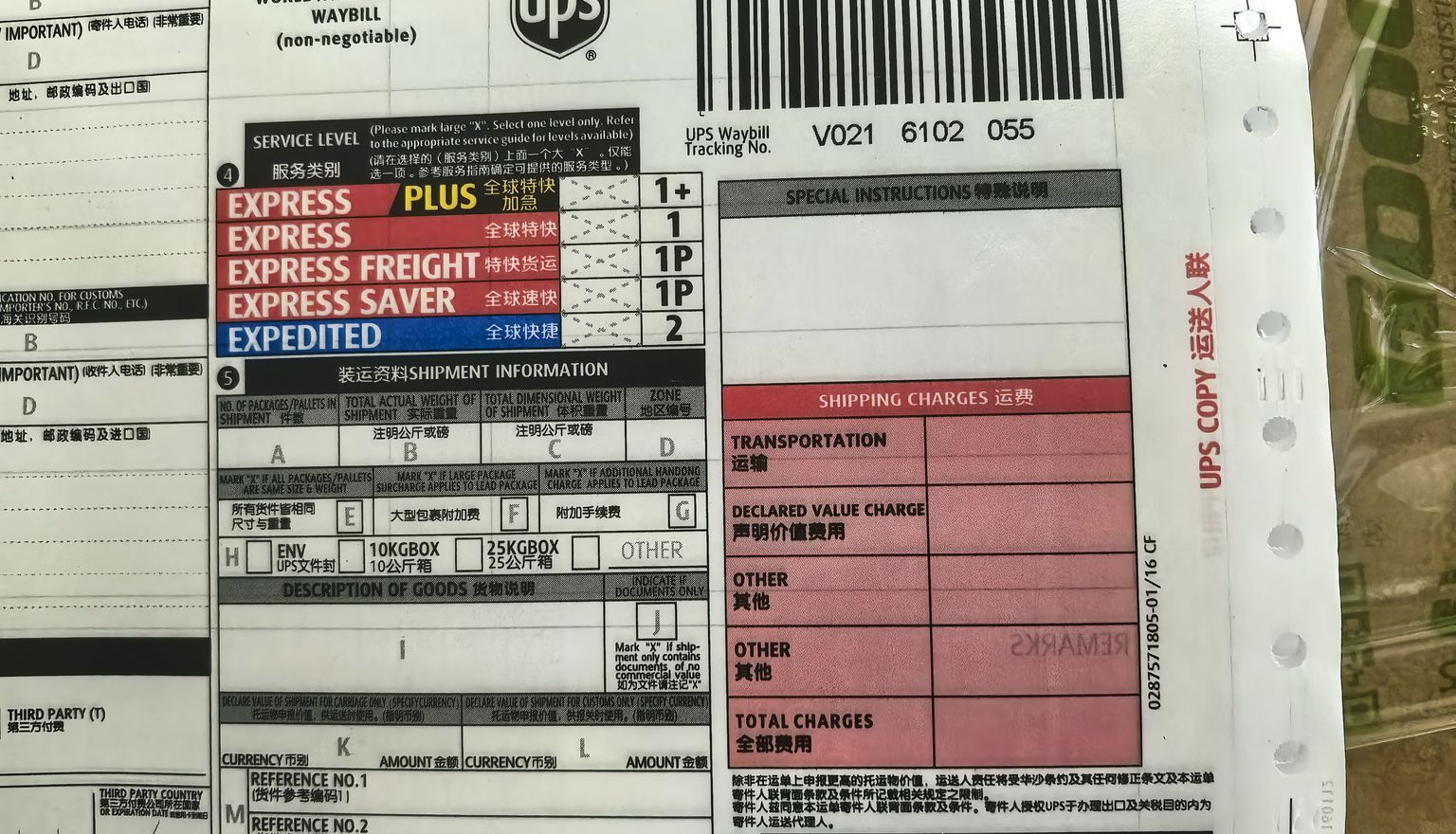
A sample has a customs value even when nobody pays for it. The declared value on the air waybill is what the destination customs authority sees, and it is the number that decides whether duty and tax are charged and whether the entry is released without a query.
Three approaches are common and only one is comfortable. Declaring a nominal value such as one dollar invites a query, because the officer can see the goods. Declaring the true commercial value of the item, with freight shown separately, is the honest version and it usually produces a small duty bill. Declaring nothing and letting the courier apply a default valuation produces a charge you did not calculate and cannot argue with.
The honest declaration has a second benefit. Where a sample is later used as the approved reference, the value declared on its entry is a record that the item existed and what it was. That is occasionally useful.
Some destinations offer a low-value relief under which duty is not collected below a threshold. Those thresholds change, and they differ by country and by the nature of the goods. Treat any threshold you have read as something to check for the current period rather than a rule to build a shipment on.
A sample without information is a product in a box. Four items turn it into something you can decide with, and all four should be requested in the same message that asks for the sample.
A specification sheet. Material, dimensions, weight, finish, colour reference and the components that are bought in rather than made. This is what you compare across suppliers, and it is what the purchase order will be written from later.
Photographs of the sample before it is packed. Including the label, the back, the seam and any moulded mark. Photographs taken at the factory are the only record of what the sample looked like when it left.
Carton dimensions and gross weight. The single most useful number for freight, and the one buyers forget to ask for until after the order. Ask for the export carton, not the retail box, and ask how many units it holds.
What can be changed. Which parts are tooled and expensive to alter, which are standard components, and what the minimum quantity is for a change. This is the question that decides whether the sample is a candidate or a dead end, and it is best asked while the sample is still novel.
Send the brief in writing with a deadline. A request without a date is a request the factory will answer when it has time.
Three weeks is a workable window from request to sample in hand on a product the factory already makes. It is not enough for a new tooling set, and it is tight across a Chinese public holiday.
Work backwards. Delivery to your door takes a few working days by express, plus a day or two for clearance. The courier collects from the factory, so add a day for packing and pickup. The factory needs a few days to pull a sample from stock or from a current run. Before that, the request has to reach someone who can act on it, which after a fair or during a holiday can take several days on its own.
The variable that ruins the plan is not shipping. It is the factory deciding your sample is low priority because it is not an order. Two things move it up the queue: paying for the sample and the freight, and naming a date. Factories respond to a purchase order number and a deadline, even a small one.
If the window is shorter than three weeks, the alternative is to ask for a video call with the sample in hand, plus photographs to a written checklist. It is a weaker substitute. It is considerably better than arriving at the fair with no information at all.
Buyers who bring samples to the hall get more out of the meetings, and the reason is not the product itself. A sample on the table changes the conversation from a presentation to a comparison.
Put the sample next to the booth's version and ask what is different. Suppliers answer that question honestly more often than buyers expect, because the differences are usually visible and denying them costs credibility. The answer tells you whether the booth is selling the same product, a better one, or something that looks similar and is made elsewhere.
Ask what the sample would cost in the quantity you are considering, and what changes at ten times that quantity. Then ask which component is the constraint: the one that is bought in, has a long lead time, or is only available from one supplier. That answer predicts the delay you will experience four months later.
Leave the sample with the supplier only if you want it modified. Otherwise keep it. A sample that travels home with you becomes the reference for the order, and the reference is the object you will wish you had when the second container looks different from the first.
Photograph the sample against the booth's product, with both labels visible, and note the date. It is a small habit that settles arguments.
Q How long does it take to get a sample from a Chinese supplier?
Three weeks from request to delivery is a workable window on a product the factory already makes, with express courier and no holiday in the middle. New tooling takes longer, often six weeks or more. The variable is rarely transit; it is how quickly the factory treats the request as a priority.
Q Should I pay for samples?
Usually yes, and it is faster. Most factories charge for the sample and the freight, and many refund the sample cost against the first order. Paying removes the sample from the pile of free requests that nobody owns, and it gives you a purchase record with a date on it.
Q Can a sample with a lithium battery be sent by courier?
Sometimes, with the right declaration and on services that accept regulated goods. Loose cells and power banks are harder than a device with an installed battery. Ask the factory what the courier will accept before the sample is packed, because a refused parcel at the origin depot costs a week.
Q What value should be declared on a sample shipment?
The true commercial value, with freight shown separately. Nominal values invite a query when the goods are visible, and a default valuation applied by the courier produces a charge you cannot calculate in advance. Low-value relief thresholds exist in some countries and change, so check the current position rather than relying on a remembered number.
Q Is it worth requesting samples before a fair if I can see the product there?
Yes, on anything you intend to buy. Handling a product before the fair moves the decision from appearance to substance, and it frees the days at the fair for the questions a sample cannot answer: capacity, tooling, terms and documents.
Q What if the sample arrives damaged?
Photograph the carton and the product before opening anything else, and keep the packaging. A damage claim runs on the condition at handover, and the carton is the evidence. Then tell the supplier with the photographs attached, because the packing method is theirs to fix before the production run.
Related pages
If samples are coming from more than one supplier, send us the addresses and the ready dates. We will collect them into one consignment so you receive a single delivery with one entry, instead of four parcels arriving across two weeks.
Email sales8015@goodhopefreight.com | WhatsApp & phone +86 133 9216 2503