Since 2012 NVOCC GD20230925153335 24h Response
+86 13392162503 sales8015@goodhopefreight.com Login
Goodhope Freight
Air export clearance · Air import clearance · Bonded zone to apron

Beijing Daxing Airport Export & Import Customs Clearance

Daxing does not lose shipments for lack of aircraft. It loses them on the order of four steps. At a seaport such as Yangshan the release comes before the container gates in. Here it runs the other way: the cargo is weighed inside a supervised terminal first, the entry is filed second, the release lands third, and screening only starts after that. File on the shipper's estimated weight and the entry will not survive the scale.

China Southern terminal China Eastern terminal Warehouse 2 cold chain Warehouse 3 express Airport bonded zone Advance filing One gate, two uses
187,173 metric tonsCargo and mail handled in H1 2026, up 5.5%
47,445 metric tonsInternational and regional cargo, up 14.4%
120 minutesFastest recorded arrival-to-collection for perishables
Plan my Daxing clearance See the 8-step flow
2 million tonsDesigned annual capacity of the cargo area
24 freighter stands, one dedicated runway
4 categoriesDesignated supervision sites
fruit, live aquatic, chilled fish, nursery stock
3 minutesPort area to bonded area
on the 1.64 km zone link road
4.35 km²Airport bonded zone, 0.83 km² port side
3.52 km² bonded side
Why Daxing

Beijing's Second Hub, Where the Freight Order Runs Backwards Against a Seaport

Daxing opened on 25 September 2019 with four runways, one of them for freighters only, and 24 freighter stands. The cargo area sits 1.8 km from the terminal on the northeast side of the field, with the bonded zone next door. In the first half of 2026 the airport handled 187,173 metric tons of cargo and mail, up 5.5%, of which 47,445 metric tons moved internationally, up 14.4%. June 2026 alone set an opening-to-date record of 9,466 metric tons on international and regional lanes.

Most of that tonnage rides in the belly of passenger aircraft. Freighters are still a small share and mostly run as charter programs. So the constraint is rarely whether a flight exists. It is whether the weight on your entry matches the weight on the scale before the terminal stops accepting, and whether the release arrives in time to leave room for screening and pallet build.

  • 1
    Weigh first, file second — the reverse of YangshanPieces, gross weight and volume on the export entry have to equal the terminal's measurement, because that same measurement sets the chargeable weight. Declare the shipper's estimate and a few kilos of difference forces an amendment, and an amendment means carrier and manifest changes too.
  • 2
    Release ends the customs step, not the shipmentAcceptance, aviation screening, pallet build and load planning come after release. In peak weeks the terminal queue outlasts the declaration. Anyone planning from the release message alone will roll cargo, and rolled air freight costs more per day than a rolled container because the rate was quoted per kilo for a flight that left on time.
  • 3
    Four cargo buildings, and each one takes specific freightThe China Southern and China Eastern terminals accept only their own carriers' freight, with limited exceptions through ground handling agreements. Warehouse 2 handles cold chain and general break-down; Warehouse 3 handles express and e-commerce against its own screening line. The truck that shows up at the wrong door is a rejected truck, not a short walk.
  • 4
    The growth is on the import side: perishables, medicines, aircraft partsFour designated supervision sites cover fruit, live aquatic animals, chilled fish and nursery stock, and the airport holds medicine import status. The bonded zone runs a fast lane for imported drugs where filing, sampling and customs release can close inside 24 hours.
Incoterms note: under FOB, CFR and CIF the seller files the export entry and pays the origin charges, so the sequence above is your supplier's problem before it becomes yours. Under EXW the buyer carries everything from the factory gate, including the export declaration, which is where most first-time China buyers get caught. Under DDP the forwarder on the China side usually files both ends — confirm in writing who holds the declaration obligation before the cargo is booked.
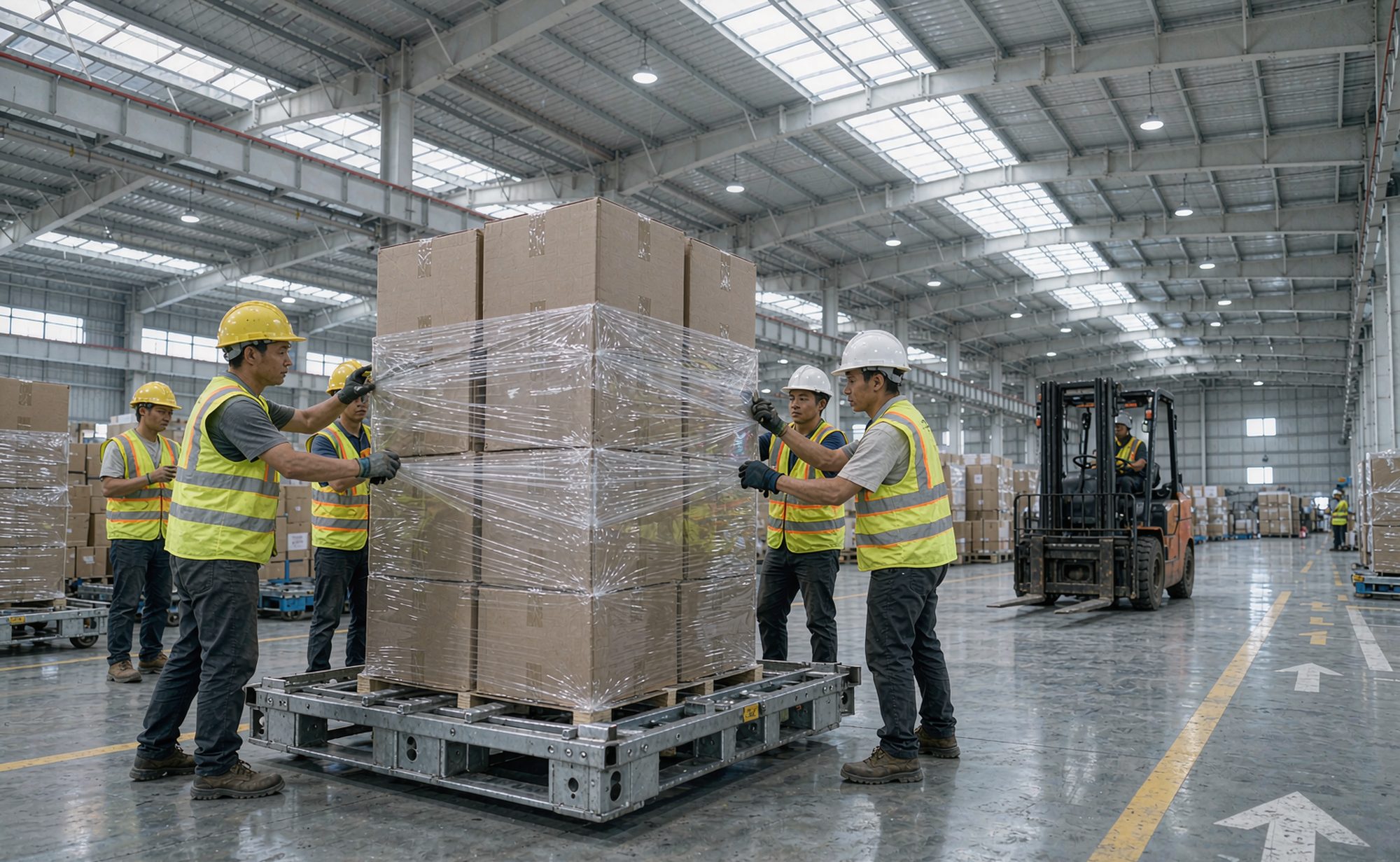
Export cartons being wrapped and built onto an air pallet inside a cargo terminal
On the floor Weigh — file — release — screen Belly capacity first · charter freighters second · same-day exceptions

How the numbers on this page were established

Cargo and mail figures, terminal areas, cold room temperatures, designated supervision sites and bonded zone details come from Beijing Customs and Daxing Airport Customs releases, the Capital Airports Holding cargo project prospectus, and reporting by CAAC, People's Daily and Xinhua. Customs district codes follow the General Administration of Customs table: Beijing Customs 0100, Daxing Airport Customs 0106, Daxing bonded zone 0131. Filing deadlines follow the customs rules on declaration of import and export goods. Carrier cut-offs and terminal acceptance windows change with the season and the route — always confirm against your booking confirmation, not against this page.

Cargo work areas

Six Work Areas, and the Right Door Matters More Than the Right Form

Daxing is not one cargo terminal. It is two carrier-built terminals, two public warehouses, one customs inspection center and a bonded zone that straddles two provinces.

China Southern base · completed 2019

China Southern International Cargo Terminal

25,100 m² · about 195,600 t a year

Built by
China Southern, the largest carrier at Daxing; first cargo terminal finished on the field
Takes
International express and mail, chilled seafood, special cargo, freighter charter freight
Systems
Online slot booking, end-to-end cargo tracking, paperless handover
Constraint
Only freight carried by China Southern, unless a ground handling agreement says otherwise
Best for: palletized general cargo, chilled seafood and charter programs on China Southern metal. Avoid for: freight booked on another carrier without a handling agreement.

More than half of Daxing's international tonnage has historically moved across this counter.

China Eastern base

China Eastern International Cargo Terminal

Adjacent to Warehouse 2 · 200–250 m from the apron road

Built by
China Eastern, on the southeast side of the cargo area
Takes
Electronics, precision equipment, e-commerce pallets, perishables
Network
Belly-driven: capacity rises and falls with the passenger schedule
Advantage
One apron road from the China Southern building, so cross-carrier re-routing stays in the same block
Best for: China Eastern and SkyTeam freight, and connections that must swap carriers. Avoid for: freighter-only charters that land on another carrier's contract.

Because belly space dominates here, a passenger schedule change can strand cargo without any customs problem at all.

Public · cold chain

International Warehouse No.2

10,350 m² · 70,000 t a year

Cold rooms
3,200 m²: ante-room 15–25°C, chilled 2–8°C, frozen −18 to −10°C
Layout
Airside and landside; the airside gate opens onto the apron and freighter stands
Screening
X-ray installed inside the cold area, so temperature-controlled freight is not broken out for screening
Operations
Delivery, receipt, build-up, break-down and collection all inside the controlled temperature zone
Best for: pharmaceuticals, biologics, imported fruit, chilled seafood, high-value temperature-sensitive freight. Avoid for: dry general cargo that can use a cheaper dry area.

This is the building third-party forwarders and charter operators fight over in peak season. A cold room booking is the real constraint, not the flight.

Public · express and e-commerce

International Warehouse No.3

10,900 m² · 65,000 t a year

Split
Express hall 3,932 m² plus 5,582 m² of handling floor
Screening
One X-ray line inside the express hall, with fencing and anti-throw measures
Takes
International express, cross-border e-commerce storage and handling
Constraint
Screening line capacity, not desk capacity, sets the daily ceiling
Best for: 9610, 9710 and 9810 e-commerce shipments, express consignments, small parcels. Avoid for: temperature-controlled or oversize freight.

For e-commerce the bottleneck is rarely the entry. It is whether order, payment and logistics data reconcile, and how long the screening line is.

Beijing & Hebei · fully closed

Airport Comprehensive Bonded Zone

4.35 km² · port side 0.83 · bonded side 3.52

Status
Approved November 2020, phase one closed April 2022, whole area closed 30 December 2024
Mechanism
One gate, two uses: a single filing and a single gate produce both the port and the bonded movement
Link road
1.64 km, opened September 2025; three minutes from the port area to the bonded area
Unusual
The only customs special supervision area in China that spans two provincial-level jurisdictions
Best for: bonded stocking, staged withdrawal, import transshipment, bonded R&D and repair, cross-border e-commerce consolidation. Avoid for: general cargo that arrives and leaves the same day.

Beijing Daxing and Hebei Langfang each hold roughly half. That cross-border structure is why the zone can serve a North China distribution model that a single-city zone cannot.

Huoyou 1st Road · customs site

Customs Inspection Center

Designated supervision sites · operated by Capital Airports Holding

Four sites
Imported fruit, live aquatic animals, chilled fish and seafood, nursery stock
Site code
CNBJS01S981 for the live aquatic animal site
Working mode
Inspect on arrival, no weekend closure; priority cargo can book holiday clearance
Who goes there
Anything under an inspection instruction, plus all plant and animal products and food
Best for: cargo pulled for inspection and anything needing quarantine or food safety work. Avoid for: clean cargo with no inspection instruction — it stays at the terminal.

Whether perishables reach the morning market depends on where this center puts your consignment in the queue.

Which door does my consignment go to?

Three facts decide it: the carrier on the air waybill, whether the cargo needs temperature control, and whether it moves under a bonded account. Carrier decides terminal. Temperature decides Warehouse 2. A bonded account decides the zone. Everything else — express, e-commerce, small parcels — goes to Warehouse 3. Get one of the three wrong and the truck is turned around at the gate, which in a belly-driven airport usually costs a day because the next flight is tomorrow.

What we file

Eight Service Lines, Split by Cargo Type Rather Than by Airport

General cargo, batteries, chemicals, cold chain, medicines and e-commerce differ in declaration elements, licenses, temperature handling and carrier acceptance rules. Same runway, eight different timetables.

01

General air export declaration

We reconcile the commercial invoice with the master and house air waybill, then file once the terminal measurement is in hand. Customs examination attendance, release handover to the terminal and manifest close-out are included.

Master & house AWBSingle WindowClose-out
02

Air import clearance

Document exchange, manifest write-off, entry, duty and VAT, examination, release and delivery. We file in advance before arrival where the paperwork allows, or use two-step declaration so cargo can leave while the full entry is completed.

Advance filingTwo-stepDelivery
03

Cross-border e-commerce filings

List and entry filing under 9610, 9710, 9810 and 1210, including the three-way reconciliation of order, payment and logistics data. E-commerce freight books into Warehouse 3 and is scheduled around the screening line, not around the desk.

96109810Three-way match
04

Perishables and cold chain

Imported fruit, live aquatic animals, chilled fish and nursery stock each have their own designated site and certificate requirements. The exporting country's official certificate cannot be dated later than the flight, and the certificate description must match the invoice line by line.

2–8°C / −18°CPhytosanitarySampling
05

Pharmaceuticals and biologics

Daxing holds medicine import status, and the bonded zone runs a fast lane where filing, sampling and customs release can close within 24 hours. Batch numbers, expiry dates and temperature logs have to agree with the entry, and special items need separate health approval.

Drug import24-hour samplingTemperature log
06

Dangerous goods and batteries

We classify by UN number — UN3480, UN3481, UN3090, UN3091 for lithium — and check the UN38.3 summary, safety data sheet, packaging certificate and shipper's declaration against the actual model before the entry goes in. Carrier acceptance confirmation comes first; the filing follows it.

UN38.3DGDScreening rules
07

Bonded zone and zone-port flow

Bonded storage, staged withdrawal, import transshipment, bonded R&D and repair. Cargo moves through one gate for both the port and the bonded movement, and the 1.64 km link road puts the two functional areas three minutes apart.

Bonded stockStaged releaseOne gate
08

Refund documents, amendments, recovery

Post-departure return of the VAT refund copy and filing record, plus the harder end: amendments, cancellations, re-filing after a canceled flight, and re-routing when belly space is pulled at short notice.

VAT refund copyAmendmentRe-routing
Temperature-controlled pharmaceutical cargo being checked inside a cold room at an air cargo terminal
Cold chain is not a room with a door. It is a booked slot, a logged temperature and a certificate that was checked before the aircraft left.
The flow

Eight Steps From Booking to Manifest Close-Out, in the Order That Works

The steps are ordinary. The order is not. Measurement comes before the entry, and release comes before screening — run either one backwards and the freight waits for tomorrow.

01

Book the flight and take the numbers

Confirm trade terms, consignee, destination airport and schedule. Collect the power of attorney, contract, invoice, packing list and the house waybill number. Anything missing goes on a gap list the same day.

Who: forwarder with the carrier · How long: 1–3 days ahead · If it slips: no booking number, so no manifest and no filing
02

Classify and settle the declaration elements

Fix the HS code on material, function and working principle, then confirm brand type, export benefit status, composition and model. License-controlled goods get checked here, not at the terminal.

Who: broker with the shipper · How long: 1–2 days · If it slips: classification changes after filing, which is an amendment
03

Truck in and weigh

The cargo enters the correct building for its carrier, gets weighed and measured, and the piece count is checked against the delivery note. That measurement becomes the arrival data and the chargeable weight.

Who: terminal operator · How long: 1–4 hours depending on the queue · If it slips: the entry cannot be filed accurately
04

File in the Single Window

Normal filing happens after arrival and at least 24 hours before loading. Advance filing is allowed up to seven days before the cargo reaches the supervised area, once the waybill data and the description are fixed.

Who: licensed broker · How long: hours, once data is clean · If it slips: the terminal stop-work time arrives before the release does
05

Examination and release

Risk targeting decides whether the consignment is pulled. Anything pulled goes to the inspection center on Huoyou 1st Road. Daxing Airport Customs runs a 24/7 hotline and inspects on arrival without closing for weekends.

Who: customs · How long: minutes to a working day · If it slips: release comes after the carrier's acceptance cut-off
06

Screening, pallet build, load planning

Release in hand, the freight goes through aviation screening, is built onto pallets or into containers and is loaded against the aircraft's weight and balance. Lithium shipments use a separate screening route.

Who: terminal and carrier · How long: 2–6 hours in peak · If it slips: the freight rolls to the next flight
07

Uplift and manifest closure

The aircraft departs and the manifest closes. Any mismatch between the entry and the manifest surfaces here, which is why the house waybill number has to be right before filing rather than after.

Who: carrier · How long: on departure · If it slips: the consignment shows as not exported and the refund stalls
08

Close out and return documents

The VAT refund copy and filing record come back, normally one to three working days after departure. Amendments and examinations push that out, so finance gets told early rather than at the deadline.

Who: broker · How long: 1–3 working days · If it slips: the refund filing window narrows
Paperwork

Four Data Sets Have to Agree Before Anyone Touches the Scale

The usual failure at an air cargo terminal is not a missing document. It is the shipper's figures, the terminal's measurement, the manifest and the entry telling four different stories.

Base documents, every consignment

  • ✓
    Export declarationSingle Window format, with pieces, gross weight and volume matching the terminal measurement. Missing this means nothing moves at all.
  • ✓
    Contract or purchase orderTrade term, currency and delivery point stated. Missing this means the declared value has no basis and gets questioned.
  • ✓
    Commercial invoice and packing listDescription, quantity, pieces, gross and net weight, volume and marks that cross-check. Missing this means the inspection finding does not match the entry.
  • ✓
    Power of attorneyElectronic filing authorization to the broker that actually files. Missing this means the entry cannot be lodged under your name.
  • ✓
    Master and house air waybillNumbers, flight, pieces, weight and consignee consistent with the manifest. Missing this means the entry and manifest disagree at close-out.
  • ✓
    Declaration elementsBrand type, export benefit status, composition, model, function and use. Missing this means a held entry and a request for more information.

Added by cargo type

  • ✓
    Licenses and approvalsExport license, dual-use item license, drug and device approvals. Missing this means the consignment is seized rather than delayed.
  • ✓
    Certificate of originCO, FORM E, FORM A and similar, chosen by destination tariff treatment. Missing this means the buyer pays duty that could have been avoided.
  • ✓
    Dangerous goods fileUN38.3 summary, safety data sheet, packaging certificate, shipper's declaration. Missing this means the carrier refuses acceptance at the door.
  • ✓
    Air transport appraisalMagnetic field test and transport condition appraisal, routinely needed for powders, liquids and magnet-containing equipment. Missing this means the aircraft type cannot be confirmed.
  • ✓
    Quarantine and health certificatesOfficial phytosanitary certificate, health certificate, fumigation or heat treatment record, pre-packaged food labels. Missing this means imported perishables cannot leave the site.
  • ✓
    Special regime documentsProcessing trade manual or account book, ATA carnet, bonded account, return and repair statement. Missing this means the goods are treated as ordinary trade and taxed accordingly.

The amendment nobody budgets for

Change the description or the weight after the manifest is confirmed and the carrier has to amend it too, at the shipper's cost and on the carrier's timetable. At Daxing the belly departures cluster through the day, so an amendment made in the morning often misses the same-day flight. We cross-check contract, invoice, packing list, manifest and entry before filing, which is cheaper than any amendment.

Clearance modes

Four Modes, Chosen by Cargo and Flight Rather Than by Habit

Advance filing, two-step declaration, transit and bonded entry all exist at Daxing. Which one you use changes how long the freight sits in a building that charges by the day.

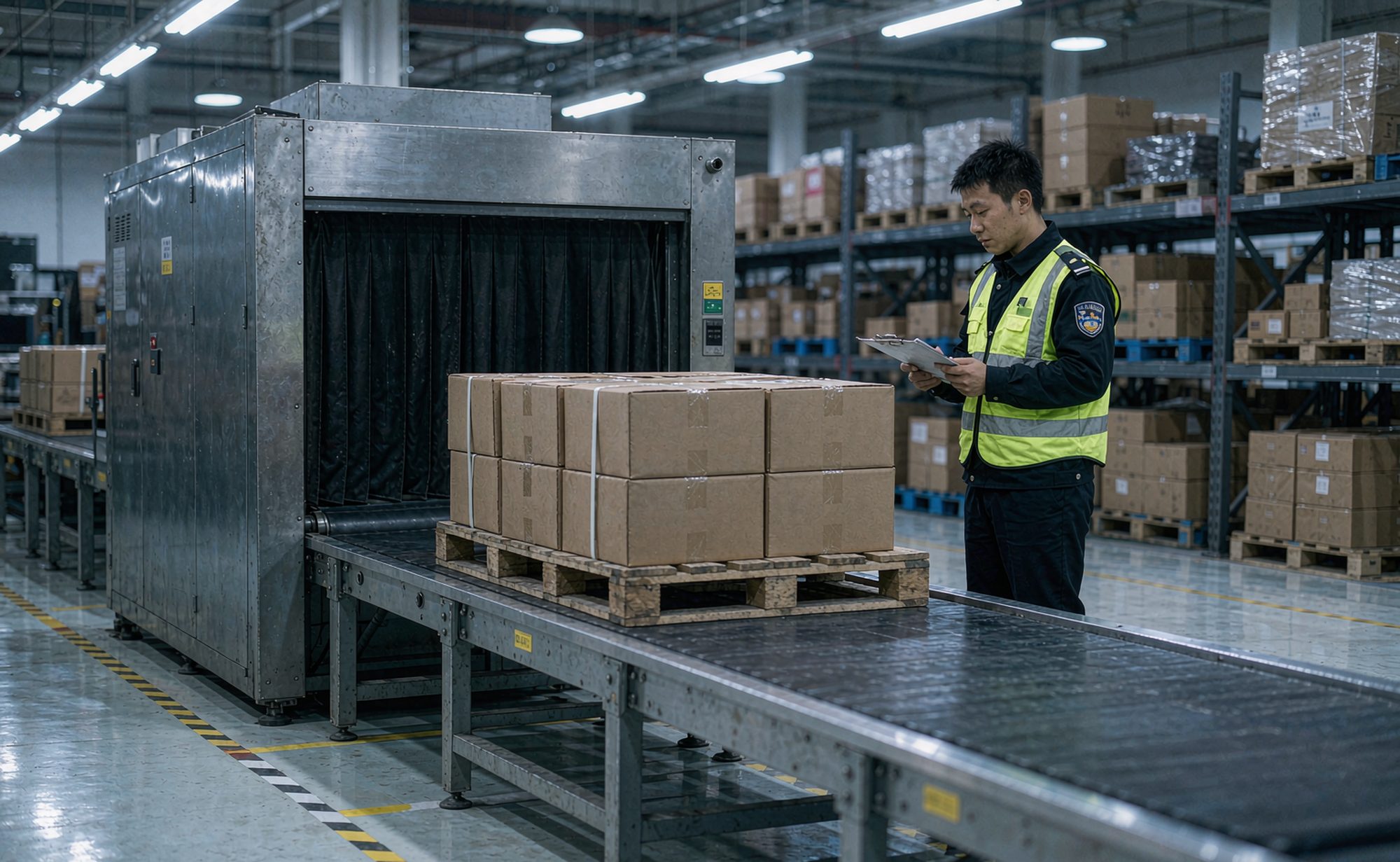
Palletized cargo passing through an X-ray screening machine at a customs inspection area
Inspection is a queue, not an event. Where your consignment sits in it decides whether it flies today or tomorrow.

Advance filing (export)

Use when the flight is tight, the cargo is a charter program, or the shipper wants the entry cleared before the truck arrives. Filing is allowed up to seven days before the freight reaches the supervised area, once waybill data and description are fixed. If the cargo does not arrive in time the entry is canceled and must be filed again — advance filing is a commitment, not a reservation.

Two-step declaration (import)

Use when the consignment is on the ground, the buyer needs it now and the paperwork is incomplete. A summary entry lets the cargo leave, and the full entry is completed within 14 days of the carrier reporting arrival. Perishables and medicines live on this mode. Skip when the documents are complete anyway — two filings cost more desk time than one.

Transit, local filing, cross-hub transfer

Use when the goods are produced far from Beijing and the export can be filed at origin, then written off at Daxing before uplift. Beijing's two airports also run a joint cargo program with 18 transfer patterns, and outbound cross-hub transfer can be arranged case by case. Skip when the origin office cannot support transit — the seal, the escort and the write-off all have to line up.

Bonded entry in the zone

Use when duty should follow actual withdrawal rather than arrival, or when goods need to be held, re-labeled, tested or repaired before entering the domestic market. Cargo enters the zone duty-deferred, leaves against an account book, and export cargo entering the zone counts as exported for refund purposes. Skip when the goods are moving straight through — a bonded account adds steps without saving anything.

By cargo type

The Same Runway, Eight Different Sets of Risks

Daxing's mix runs from aircraft parts and semiconductors to cherries, durians, live crab and imported medicine. One template cannot cover that spread.

Aircraft parts and precision equipment

AOG and A-check parts often need an expedited route. Part numbers, model and applicability have to match the documentation, and the AOG statement has to justify the urgency.

Electronics and semiconductors

Model numbers multiply and unit values are high. Description and function must match the datasheet, and declared value has to survive a valuation query.

Batteries and battery-powered devices

Standalone cells, cells packed with equipment and cells contained in equipment carry different UN numbers and packaging rules, and screening differs for each.

Chemicals, powders and liquids

Hazard status is decided by composition and CAS number. Non-dangerous goods still need a transport appraisal; dangerous goods run the DGR route with carrier acceptance first.

Perishables and cold chain

Fruit, live aquatic animals, chilled fish and nursery stock each have a designated site and an official certificate whose date cannot follow the flight.

Pharmaceuticals and biologics

Medicine import status plus a 24-hour sampling lane in the bonded zone. Batch, expiry and temperature records must reconcile with the entry.

E-commerce parcels

Filed by list, with order, payment and logistics data reconciling. Warehouse 3 schedules against the screening line, which is where peak season shows up.

Bonded and transshipment cargo

Held against an account book in the zone, withdrawn in stages, or moved port-to-bonded through one gate in three minutes.

Four things we do not soften

1. Declare what is in the box. Description, specification, quantity, price and origin have to match the goods and the documents. Misdeclaration is the shipper's liability; a broker cannot assume it for you.

2. Do not file dangerous goods as general cargo. Batteries, aerosols, liquids and magnetized equipment get caught at screening or at carrier acceptance, and the consignment is returned, held or penalized with the handling charges already spent.

3. Plant and animal products go to a designated site. Imported fruit, live aquatic animals, chilled fish and nursery stock without the required approval and official certificate cannot enter, and routing around the site is the importer's problem, not the airport's.

4. Keep the refund chain intact. The declared operator, the VAT invoice and the entity receiving payment have to be the same. Exporting under someone else's name for convenience moves the refund to them, permanently.

On the floor

Six Consignments, Six Places Where the Clock Stopped

Air cargo rarely fails because nobody knows the process. It fails because one weight changed, one certificate expired, or one window was never counted into the plan.

Morning departure · amendment01

A description change at nine at night, and a ten o'clock flight

Cargo & lane
Industrial sensors, about 1.8 metric tons, collected in Yizhuang, departing Daxing at ten the next morning with a connection into Europe, belly space.
Where it jammed
At nine in the evening the shipper swapped the description and model because the datasheet had been revised. The cargo was already inside the terminal, the entry had been filed but not released, and the manifest was locked to the flight. Three documents needed the same change, and terminal acceptance closed two hours before departure.
What we did
Applied to amend the entry with the new datasheet and invoice attached, asked the carrier's ground agent to correct the manifest description in parallel, and confirmed the acceptance window with the terminal. Because pieces and weight did not change, no re-weighing or re-warehousing was needed.
Outcome
The amendment cleared the same night and the consignment flew the next morning. At Daxing the real deadline is not departure — it is terminal acceptance and manifest lock.
Batteries · screening02

Six hundred power stations, and a test summary for the previous cell

Cargo & lane
600 portable power stations with lithium-ion cells, booked to Frankfurt on belly capacity.
Where it jammed
The UN38.3 summary on file covered the previous generation of cells, not the ones in this build, and the packaging certificate named a different category than the cartons on the floor. Carrier acceptance caught it after the cargo was already in the terminal.
What we did
Held the filing. Requested the current UN38.3 summary and safety data sheet from the cell maker, reissued the packaging certificate, replaced the carton markings, then resubmitted to the carrier and ran the consignment through the separate lithium screening route.
Outcome
Moved one flight later with no return to origin. The dividing line for battery freight is not whether a report exists — it is whether the report matches this build.
Import · perishables03

Thirty tons of cherries landing at four in the morning

Cargo & lane
Imported Chilean cherries, about 30 metric tons, arriving on a freighter charter before dawn and needed in the Beijing and Tianjin wholesale markets that morning.
Where it jammed
Imported fruit must be inspected at the designated site, and the import entry needs the manifest written off and the official certificates checked first. Any step that slipped past nine in the morning cost a full day of shelf life.
What we did
Filed in advance before departure and pre-checked the phytosanitary certificate, certificate of origin and invoice data. On landing the consignment went straight to the designated site, where sampling and physical inspection ran together while reefer trucks waited outside.
Outcome
Released and collected the same morning, inside a two-hour envelope from arrival. Perishables are not won on speed — they are won on certificates being checked before the aircraft lands.
Import · medicine04

Clinically needed medicine that could not wait for a routine inspection cycle

Cargo & lane
A consignment of clinically needed imported medicine arriving at Daxing and routed into the bonded zone for delivery to hospitals and manufacturers.
Where it jammed
Imported medicine needs filing, sampling and statutory testing, which on the routine path is measured in weeks. The product is sensitive to both temperature and time, so every extra day added handling risk.
What we did
Used the bonded zone's fast lane for imported drugs: filing, sampling and customs release run in parallel, the cargo is held under temperature control inside the bonded area, and the release-to-withdrawal step starts as soon as the sampling result lands. The cold chain record travelled with the goods.
Outcome
Filing, sampling and release closed within 24 hours and delivery stayed on schedule. The lane works because the cargo enters the zone first and the steps run at the same time, not because someone hurried at the counter.
Bonded zone · staged withdrawal05

Stock in the zone, duty paid one order at a time

Cargo & lane
Imported supplements and skincare arriving from Europe on a consolidated pallet, to be stocked for North China and shipped order by order.
Where it jammed
Clearing the whole lot under ordinary trade meant paying duty and VAT on arrival, tying up cash against stock that might not sell for months. Switching to cross-border retail import instead required matching the positive list and reconciling three data streams per order.
What we did
Moved the goods into the bonded area against an account book under temperature control, then filed per order under the 1210 model and pulled stock across the link road to the port area in three minutes, where parcel carriers collected it.
Outcome
Duty and VAT followed actual withdrawal, and slow-moving lines stayed bonded instead of being written down. The value of bonded stocking is not a tax break — it is unhooking tax from inventory turnover.
Canceled flight · re-routing06

Released, in the terminal, and the belly space disappeared

Cargo & lane
Exhibition materials, already released and inside the terminal, when the carrier pulled belly capacity two days running during a schedule change.
Where it jammed
Released cargo cannot fly on a different flight without changing the means of transport and the waybill number. The materials had a hard show date, and any delay past close-out would have forced a cancellation and re-filing, pushing the refund documents back with it.
What we did
On confirmation of a new flight, applied to change the transport means and waybill number and updated the manifest the same day. The cargo stayed inside the supervised area to avoid a second gate-in and a second screening, and we compared China Southern and China Eastern capacity to the same destination, ready to move between the two buildings.
Outcome
Departed on the third day with the other carrier and reached the venue before build-up. Canceled flights are survivable; waiting until after manifest close-out is not.

About these cases

Each one is a real pattern with client names, flight numbers and some piece and weight figures changed or rounded. The sequence and the failure point are as they happened. Carrier cut-offs and terminal acceptance times differ by airline, building and season, so treat the timings here as the shape of the problem rather than a schedule you can book against.

Questions

Ten Questions Shippers Ask Before Their First Daxing Shipment

Answered the way we answer them on the phone, not the way a brochure would.

How far ahead should I start clearance at Daxing Airport?
For general cargo, get the documents to the broker three to five working days before departure, which leaves room for classification checks and advance filing. Batteries, chemicals, cold chain and medicine need five to seven working days, because UN38.3 summaries, transport appraisals, quarantine approvals and licenses take longer than the flight does. Daxing's belly departures run through the day, so the paperwork has to be settled the evening before.
Why does an air export get weighed before it gets filed?
Because pieces, gross weight and volume on the entry have to equal the terminal's measurement, and that same measurement sets the chargeable weight. File on the shipper's estimate and a few kilos of difference forces an amendment, which the carrier has to mirror in the manifest, at the shipper's cost and on the carrier's timetable. Arrival, weighing, arrival data, filing — that is the order.
Does a release mean my freight makes the flight?
No. Release closes the customs step. Acceptance, aviation screening, pallet build and load planning come after it, and at Daxing most export capacity is belly space that shifts when the passenger schedule shifts. Plan from release time plus terminal time, not from the release message, and never from the scheduled departure time.
Daxing or Beijing Capital — how do I choose?
By carrier and destination. Daxing is the main base for China Southern and China Eastern, so their networks are densest there. Capital has the broader set of long-haul international destinations. The two airports run a joint cargo program with 18 transfer patterns and outbound cross-hub transfer can be arranged, but a transfer costs time and money, so do not treat the two as interchangeable.
Do battery products always have to move as dangerous goods?
It depends on chemistry, capacity and how the cells travel. Lithium-ion cells shipped alone are UN3480; packed with equipment or contained in equipment they are UN3481. Lithium metal cells are UN3090 and UN3091. Most shipments need a UN38.3 summary, a safety data sheet, a packaging certificate and a shipper's declaration. Small cells contained in equipment can qualify for relief, but the relief has to be documented, and the carrying airline always has the final word.
How can imported perishables clear in about two hours?
Because most of the work happens before landing. Daxing holds four designated supervision sites — fruit, live aquatic animals, chilled fish, nursery stock — and inspection runs at the customs center on Huoyou 1st Road. We file in advance and pre-check the official certificates, so once the aircraft is down only manifest write-off, inspection, sampling and release remain. Airport figures put the fastest arrival-to-collection at 120 minutes.
Can I import medicine through Daxing?
Yes. The airport holds medicine import status and the bonded zone runs a fast lane where filing, sampling and customs release can close within 24 hours, supported by a platform for clinically urgent drugs and devices. Batch numbers, expiry dates and temperature records must match the entry, and special items need separate health and quarantine approval.
What can I actually do inside the bonded zone?
The zone has been fully closed since 30 December 2024. Bonded storage, bonded processing, bonded R&D and repair, import transshipment and staged withdrawal all run there. One gate serves both the port and the bonded movement, and the 1.64 km link road takes three minutes. It is also the only customs special supervision area in China that crosses a provincial boundary, with Beijing Daxing and Hebei Langfang each holding about half.
I filed the entry and then found a wrong description. Now what?
Before release, you can apply to amend or cancel with a stated reason and supporting documents. After release — and certainly after departure — the process is longer and can affect the VAT refund. On air cargo the manifest usually has to be amended too, otherwise the entry and manifest disagree at close-out. Cross-check contract, invoice, packing list, manifest and entry before filing; an amendment always costs more than the check.
When do I get the VAT refund documents?
Normally one to three working days after departure, once the manifest closes and the entry is written off. Amendments, inspections and manifest delays push that out, and we tell finance as soon as a date moves so the refund filing window is not missed. Goods exported through the bonded zone count as exported when they enter the zone, so the refund timing is earlier, but the withdrawal record still has to reconcile.

Why us

What Actually Matters Here Is Knowing the Buildings and the Sequence

Not a rate card. Four cargo buildings that accept different freight, one order that runs backwards from a seaport, and whatever time is left after release.

01

Shenzhen desk, Daxing floor

Booking, documents and communication run from Shenzhen; acceptance, inspection attendance and exception handling are done on site at Daxing the same day.

02

Five-document reconciliation before filing

Contract, invoice, packing list, manifest and entry cross-checked, so amendments and inspection holds are pushed back to before the filing rather than after it.

03

Planning from release plus terminal time

Release, acceptance, screening, pallet build and load planning added together, which puts the filing deadline the day before the flight instead of the hour before departure.

04

Four buildings, routed by carrier

China Southern and China Eastern terminals by carrier, Warehouse 2 for cold chain, Warehouse 3 for express and e-commerce, the bonded zone for duty-deferred freight. No truck sent to the wrong door.

05

Cold chain, medicine and batteries on their own track

Cold rooms booked by temperature band at 2–8°C or −18°C, medicine routed through the zone's sampling lane, batteries filed by UN number and screened on the lithium route.

06

Itemized quotes, charges as incurred

Declaration, collection, terminal handling, inspection, storage and ground handling priced separately. What was incurred is invoiced against the receipt, not folded into a single number.

GET IN TOUCH

Daxing clearance,
with someone watching the sequence

Send the commodity, piece count and weights, destination airport, planned flight, collection point and whether the cargo needs cold chain or a bonded account. You get back the workable building, the document list and a timetable counted backwards from the cut-offs.

Request a Daxing clearance quote
CompanyGoodhope Logistics (China) Limited
NVOCCGD20230925153335
Phone / WhatsApp+86 13392162503
Emailsales8015@goodhopefreight.com
Office hoursMon–Sat 09:00–18:00 GMT+8
ResponseWithin 24 hours, usually same day
call us: +86 13392162503