Since 2012 NVOCC GD20230925153335 24h Response
+86 13392162503 sales8015@goodhopefreight.com Login
Goodhope Freight
Export clearance · Lithium batteries · Perishables

Xining Caojiabao Airport Air Freight Export Clearance

Qinghai has one air gateway, and it sits 2,184 meters above sea level. That altitude is not a footnote: thin air cuts the payload a given aircraft can lift out of Xining, and the international side runs mostly on passenger bellies with seasonal freighters added on top. So the question is never whether customs can clear your export — it is whether the flight you booked can still carry it once the load sheet is done.

Bangkok belly capacity Hong Kong wide-body Xining–Chengdu–Bangkok freighter Seasonal JD and SF freighters Bonded center, Type B Lithium battery filing
2,184 mAirport elevation, high-altitude performance limits
40,100 metric tonsCargo and mail handled in 2025
120,000 metric tonsCapacity after the T3 expansion opened
Plan my Xining export See the 8-step flow
CHN958Customs port code
Xining customs district 9700
57 standsApron positions
5 of them code E
3,800 mSingle runway
4E category airport
7 × 24Bookable customs cover
at the airport house
Why Xining

One Gateway, Thin Air, and a Payload That Shrinks
Before Your Entry Is Filed

Caojiabao sits in Huzhu County, Haidong, about 28 kilometers southeast of Xining city. It is a 4E airport with one 3,800-meter runway and 57 stands, and in 2025 it moved 40,100 metric tons of cargo and mail, ranking 47th in China. On 7 August 2025 the third-phase expansion opened: a new 158,000 square meter terminal and a new domestic cargo terminal, lifting cargo capacity from 40,000 to 120,000 metric tons a year. Passenger traffic reached 7.88 million, the fastest growth of any provincial capital airport in the country.

Capacity is not the same thing as lift. Qinghai has no intercontinental freighter service. International cargo leaves on the belly of passenger flights — Bangkok since September 2025, Hong Kong on wide-body equipment — with freighters added seasonally and one air-to-air all-cargo routing through Chengdu. The single supervised cargo premises handles everything. When a booking cannot be honored, there is no second carrier on the same lane in the afternoon.

  • 1
    Altitude limits payload before customs limits anythingAt 2,184 meters the air is thin, engine thrust and lift are both reduced, and the takeoff weight a given type can use out of Xining is lower than at a coastal airport. Warm summer afternoons make it worse. A booking priced on the aircraft's nominal capacity can end up with part of the shipment left behind on the ramp.
  • 2
    Belly first, freighter secondBangkok runs on a passenger service with belly space sold as cargo. Hong Kong is flown wide-body. Freighters appear when the season justifies them — JD and SF added capacity in January 2026 for agricultural exports, and an all-cargo routing Xining–Chengdu–Bangkok opened in November 2025. None of this is a daily wide-body schedule you can flex against.
  • 3
    Clearance sits at the airport, inspection sits at the factoryXining Customs is a directly subordinate customs district (code 9700). Caojiabao Airport Customs runs the port itself; Xihai Customs handles local inspection and certification inside Xining. For food and live aquatic exports the inspection that matters happens at the farm or the plant, days before the flight, not at the cargo counter.
  • 4
    The export mix is batteries, solar and cold water fishIn the first eight months of 2026 Qinghai exported RMB 1.33 billion of lithium-ion batteries and RMB 310 million of solar products, the latter up 148%, alongside RMB 349 million of edible aquatic products. Those three groups do not share a document set, a screening rule or a clock, which is why this page is organised by cargo rather than by procedure.
Who carries the risk? On FOB, CFR and CIF the China-side export declaration is the seller's, but a payload shortfall is not a customs event — it lands on your delivery date and your customer's line. On EXW you own the cargo from the factory gate, so booking, screening, the entry and the load sheet are all yours to sequence. If a supplier quotes DAP or DDP into a European warehouse, the payload risk and the transit through Chengdu or Xi'an are already inside that price, whether or not they are named.
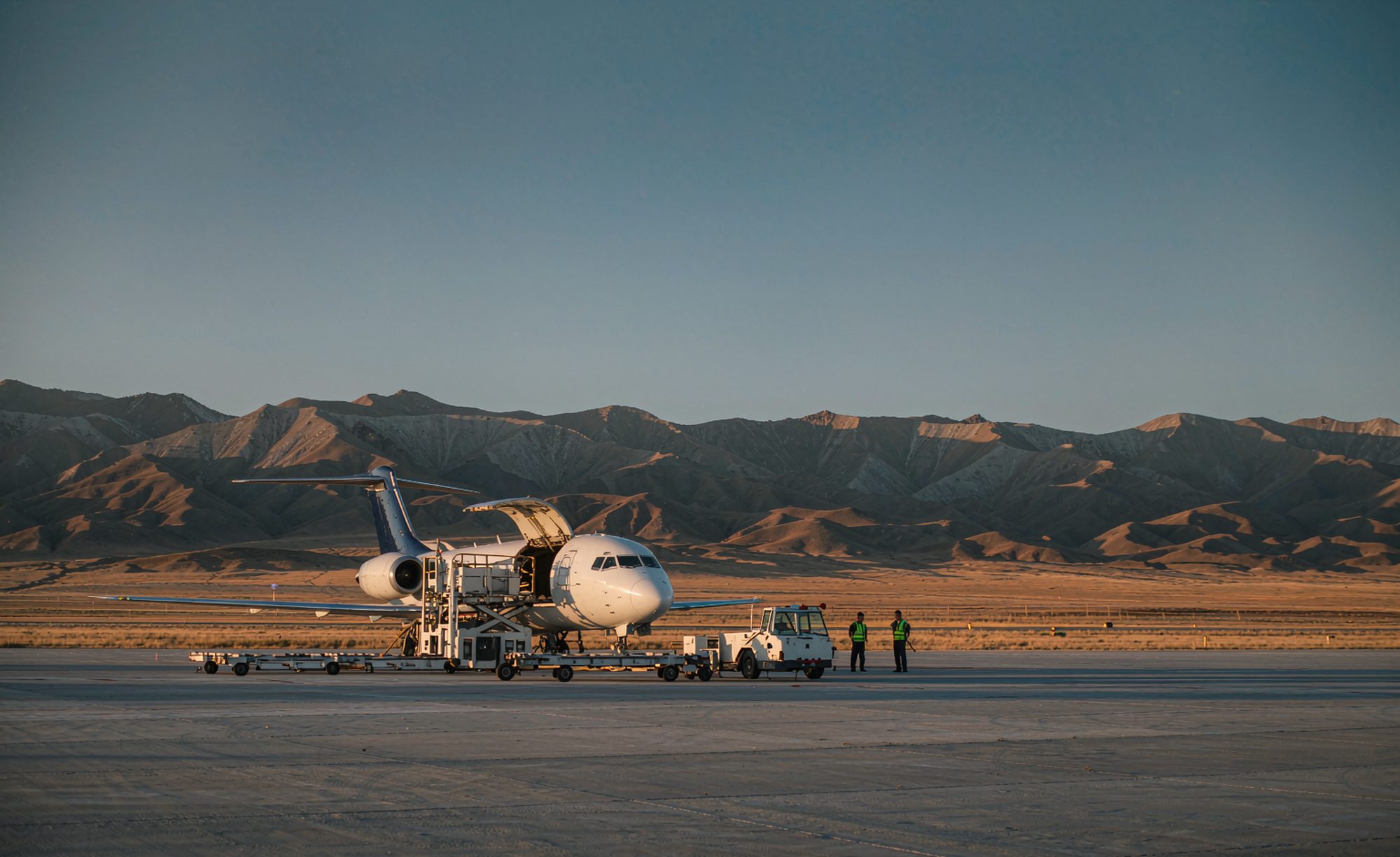
Freighter with its cargo door open on a high-altitude airport apron, bare mountain ridges behind
On the ground Payload → booking → entry → uplift Altitude first · schedule second

Sources: airport category, elevation, stands, runway, expansion timing, throughput and route development from CAAC, Qinghai provincial and Xining municipal public information and Customs reporting (2025–2026); supervised premises code and customs district codes from the General Administration of Customs. Available payload, cut-off times and freighter schedules vary by carrier, aircraft type and season; the booking confirmation and the terminal notice of the day govern. This page makes no transit-time guarantee.

Sites and limits

One Cargo Site, Two Bonded Platforms,
and a Ceiling Set by Physics

International cargo passes through a single supervised premises. Domestic connections use the new T3 cargo terminal next door. Anything claiming a VAT refund before it flies goes through one of two bonded platforms a few kilometers away. Three routes, no overlap.

Caojiabao Airport Customs

International Cargo Premises

Supervised area · CNXNN970001

Established
19 August 2019, the first air transport customs supervised premises in Qinghai
Operator
Qinghai branch of West Airport Group Aviation Logistics
Facilities
Pre-arrival interception area, quarantine treatment area, inspection area, networked systems and video surveillance
Handles
General cargo, dangerous goods and perishables carried on passenger bellies or charter freighters
Best for: general trade exports, charter pallets, battery shipments, chilled and frozen cargo

One site for everything. In peak season several flows share the same dock, so arrival order at the counter does not decide release order — a complete file does.

Opened 7 August 2025

T3 Domestic Cargo Terminal

Domestic leg · air-to-air connections

Transition
Opened with the new terminal; the old cargo terminal closed the same day
Capacity
Airport cargo capability raised from 40,000 to 120,000 metric tons a year
Used for
Domestic connections, the domestic leg of air-to-air routings, truck flight transfers
Keep apart
Separate documentation from the international entry, even on one through movement
Best for: cargo connecting through Chengdu, Xi'an or Beijing before the international leg

A connecting shipment carries two records: the domestic waybill and manifest, and the international entry. If the pieces and weights differ between them, the transit shed holds the cargo.

Sealed 2016 and 2022

Bonded Center Type B and the Comprehensive Zone

Two platforms · refund on entry

Type B center
Qinghai Caojiabao Bonded Logistics Center (Type B), sealed 28 October 2016, about 3 km west of the airport
Comprehensive zone
Xining Comprehensive Bonded Zone, accepted December 2021, sealed January 2022, in Datong County
Policy
VAT refund on entry to the zone, entry filed on exit, bonded storage, bonded processing, e-commerce 1210
In practice
Goods enter, the refund is claimed, then they leave in batches against a booked flight
Best for: exporters who want the refund before departure, staged shipments, bonded e-commerce stock

Entering the zone is not exporting. Each outbound batch needs its own exit entry, and the bonded ledger has to agree with physical stock, or the release stops.

Airside constraint

High-Altitude Performance Limits

2,184 m elevation · single runway

Elevation
2,184 meters, classified as a high-altitude airport
Runway
3,800 by 45 meters, one runway, 4E category
Effect
Reduced available payload, most visible on hot afternoons and on long sectors with full fuel
Consequence
Offload risk at the last step, after the entry has already been released
Best for: shipments planned against confirmed available payload, not nominal aircraft capacity

Ask the carrier one question before booking: what payload can this type actually lift out of Xining on this sector and this date? The answer is usually lower than the brochure figure.

ItemExportImport
Filing deadlineAfter arrival at the supervised area and at least 24 hours before loading; advance filing up to 3 days before arrivalWithin 14 days of the carrier reporting entry
PreconditionSpace and available payload confirmed, manifest data in hand, classification settled, dangerous goods file completeManifest filed, delivery order exchanged, permits and inspection approvals in place
At the counterAcceptance, screening, weighing, pallet build, manifest closeBreakdown, document check against cargo, inspection, collection
Where it failsPayload shortfall after release; a missing packaging certificate for batteries; local inspection and port filing sequenced the wrong way roundInspection approvals obtained after arrival instead of before departure
After releaseUplift, manifest closure, VAT refund documentsCollection, delivery, destination inspection, post-clearance audit

Deadlines follow the Customs Law and current declaration rules. Advance-filed cargo must reach the supervised area within the permitted window or the entry is canceled. Confirm the day's requirements with the customs house and terminal.

What we handle

Eight Workflows, and the First One Is
Deciding Whether the Cargo Can Fly

Batteries, silicon wafers, live fish and frozen beef leave the same airport on the same evening and share almost nothing else. Each has its own file, its own inspection point and its own definition of late.

SERVICE 01

General cargo export declaration

Space and available payload confirmed with the carrier first, then manifest, entry, acceptance, screening and uplift tracked to closure. Belly and freighter bookings handled as two different products, because they behave differently.

Belly capacityFreighterClosure tracking
SERVICE 02

Lithium batteries and dangerous goods

The packaging use appraisal is a separate document from the entry and has to be issued against the actual pack. We sequence UN38.3 summary, safety data sheet, transport conditions appraisal, packaging certificate and shipper's declaration, then carrier acceptance, then the filing.

Packaging appraisalUN38.3DGD
SERVICE 03

Cold-water fish and perishables

Rainbow trout and salmon to Bangkok, chilled vegetables and fresh goji to Hong Kong. Farm registration, exporter filing, local inspection at source, certificate issue and the cold chain record are planned as one timetable in hours.

Farm registrationLocal inspectionCold chain
SERVICE 04

Solar products and machinery

Wafers, cells, modules and the equipment that makes them. Fragile flat packs and oversize frames need the pallet type settled before booking, and any battery-bearing accessory is assessed on its own rather than inside the parent commodity code.

WafersModulesDeclaration elements
SERVICE 05

E-commerce export filing

Lists and entries for 9610 retail and 9710 business-to-business exports, with order, payment and logistics records reconciled. The Xining pilot zone filed its first 9710 shipment in February 2026, so the model is live but the volume is still small.

96109710Three-way match
SERVICE 06

Bonded and refund-first routing

Goods enter the Type B center or the comprehensive zone, the VAT refund is claimed, and outbound batches are declared on exit against confirmed space. Permits and CITES paperwork for protected species are settled before entry, not after.

Refund on entryBatch exitBonded ledger
SERVICE 07

Air import clearance

Bill exchange, declaration, duty and guarantee, inspection attendance, release and delivery. Qinghai's import side is machinery, quartz and cultural goods rather than consumer cargo, so valuation and end-use questions come up more often than volume questions.

Two-step filingGuaranteeDelivery
SERVICE 08

Transit, connection and cross-district export

Xining–Chengdu–Bangkok all-cargo connections, transit through Xi'an, Shanghai, Beijing or Guangzhou for intercontinental lift, and cross-district arrangements where cargo is filed locally and flown out of another gateway.

Air-to-airTransitCross-district
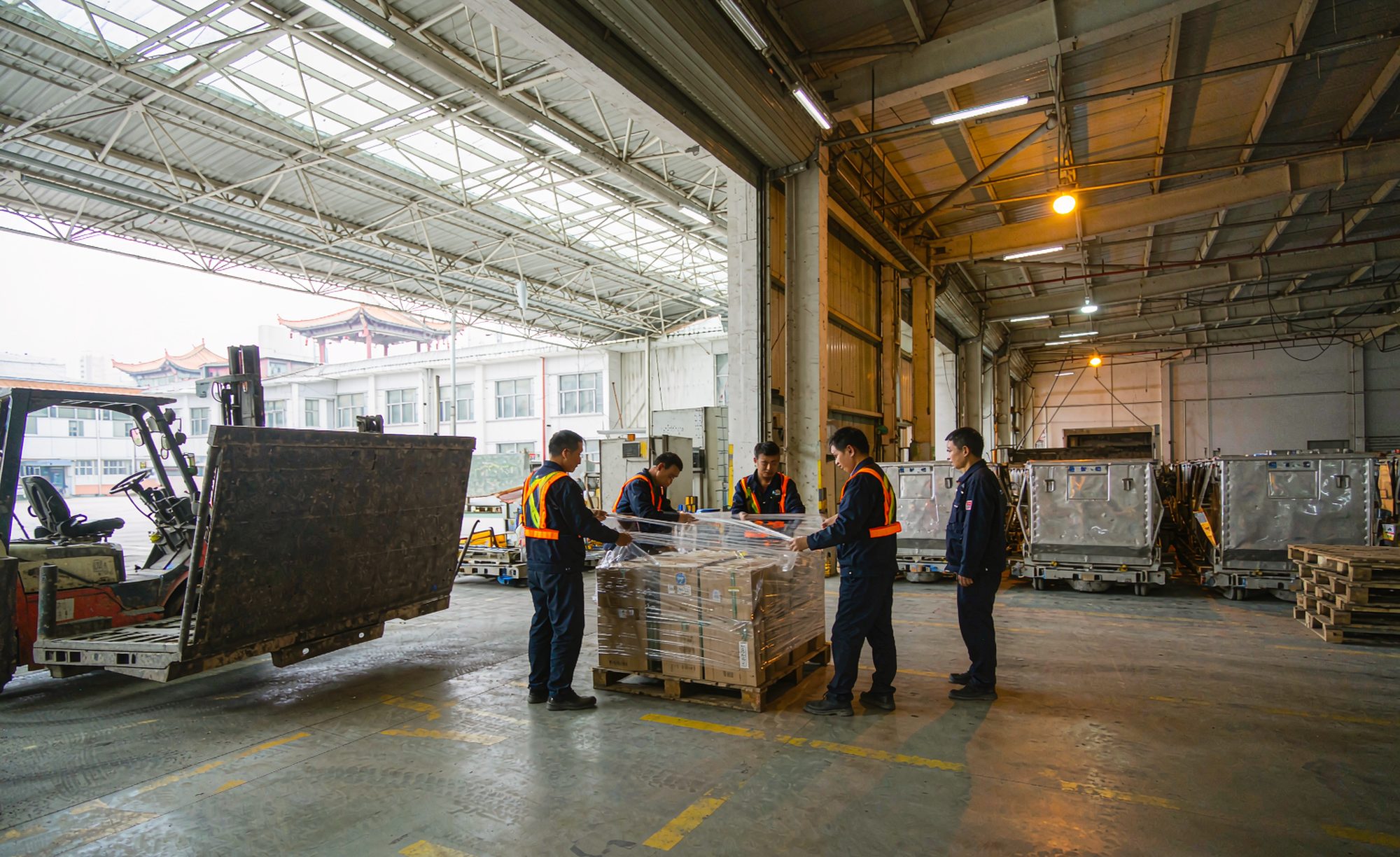
Workers wrapping a pallet of cartons inside an air cargo terminal, forklift and unit load devices behind
Release is the middle of the job, not the end Acceptance, screening, weighing, pallet build and carrier load planning all sit between a customs release and an aircraft door. Here they compress into the hours before a single departure, with no second flight to absorb a slip. We plan against the sum of customs time and terminal time, then set the filing deadline from that.
The process

Eight Steps, and Two of Them Cannot
Be Compressed

The legal deadline is 24 hours before loading. The binding constraint is earlier: whether the payload is confirmed and whether the inspection at source has already happened.

1

Confirm space and available payload

Ask three questions before anything else: belly or freighter, what payload this type can lift out of a 2,184-meter airport on this date, and when the cut-off falls. Booking against nominal capacity is how shipments get split at the ramp.

Owner: forwarder and carrier · How long: 3–7 days out
2

Classify and settle the declaration elements

Wafers, cells, modules and their production equipment attract classification arguments that are cheap to settle on paper and expensive to settle at the counter. Brand, specification, function and composition are fixed here.

Owner: broker · How long: 1–2 days
3

Clear inspection at source

For food, live aquatic and agricultural exports the farm registration, exporter filing and local inspection are handled by Xihai Customs in Xining, not at the airport. This runs days ahead and cannot be pulled forward at the last minute.

Owner: exporter and Xihai Customs · How long: 2–5 days
4

File advance or on arrival

Advance filing is possible up to three days before the cargo reaches the supervised area, and it carries no buffer: an error becomes an amendment, and the amendment has to fit inside the pre-cut-off window.

Owner: broker · How long: hours, if the file is clean
5

Deliver to the premises and screen

Acceptance, X-ray, reweighing and pallet build happen in one place. Batteries and liquids are stopped here more often than anywhere else, and a stop means a different flight.

Owner: terminal · How long: same day, before cut-off
6

Arrival record, review, release

The arrival record triggers the system comparison. No inspection instruction means release; an instruction moves the cargo to the inspection bay, where the range runs from half a day to two days.

Owner: customs · How long: minutes to two days
7

Load plan and uplift

The load sheet is built against the day's actual payload. Whatever exceeds it is offloaded to the next service. This is the step most exposed to altitude and temperature, and the one exporters least expect.

Owner: carrier · How long: 2–4 hours
8

Close and return the refund documents

After departure the entry is closed and the refund copy returned with the release record and manifest data. For bonded cargo the exit entry and the ledger have to reconcile before the file is complete.

Owner: broker · How long: 1–3 working days
The deadline that actually applies: an export must be declared after the cargo reaches the supervised area and at least 24 hours before loading, or advance-filed within three days of arrival there — and an advance filing whose cargo does not arrive in time is canceled outright. Imports must be declared within 14 days of the carrier reporting entry. In practice, count backwards from departure: 24 hours for the legal floor, 4 to 6 hours for terminal cut-off and screening, one working day for document review and amendments, and one extra day for source inspection and certificates on perishables. Missing any of the last three costs a full service rotation here, not an afternoon.
Documents

General Cargo Needs a Full Set,
Batteries and Fish Need Time

The base set is the same everywhere. What differs is when the specialist documents have to exist: an appraisal issued against the pack, a farm registration that precedes the fish, a CITES permit that precedes the warehouse.

Base set, every export

  • ✓
    Export declarationCommodity code, quantity, weight, terms and currency. Filed in the broker's name on the single window.
  • ✓
    Contract or purchase orderFixes the Incoterm and the invoice basis. Without it the declared value has no anchor.
  • ✓
    Commercial invoice and packing listPieces, gross and net weight, volume, packaging. These are the numbers the terminal reweighs.
  • ✓
    Power of attorneyElectronic is accepted, issued to the party that actually files.
  • ✓
    Booking confirmation and manifest dataMaster and house numbers, flight, departure time and the payload confirmed for this sector.
  • ✓
    Licenses and regulatory documentsWhatever the commodity code requires. Checked before production, not before uplift.

Added by cargo type

  • ✓
    Dangerous goods packaging use appraisalIssued against the actual pack, not the product. Without it the terminal refuses acceptance even with a valid entry.
  • ✓
    UN38.3 test summary and safety data sheetMust match the cell generation in this build. A summary from an earlier generation is treated as no summary.
  • ✓
    Shipper's declaration for dangerous goodsUN number, class, packing instruction and pieces, aligned with the labels on the cartons.
  • ✓
    Certificate of originCO, FORM E, RCEP and others, chosen against the preference actually claimed, with direct-consignment rules respected.
  • ✓
    Farm registration and exporter filingFor live aquatic and food exports. Not obtainable in days, so it gates the whole schedule.
  • ✓
    Official inspection certificate and cold chain recordIssued after source inspection, with continuous temperature data from plant to aircraft.
  • ✓
    CITES permitRequired for cordyceps and other protected species, obtained before the goods move into bonded storage.
Where it goes wrong: the packaging appraisal is ordered after the goods are packed for the flight, and it can only be issued against the pack — so the shipment waits a rotation for a document nobody thought to book. Or the farm registration expires mid-season and the fish, however fresh, cannot be declared. Neither problem is a filing problem, and neither can be fixed by filing faster. We check both at quotation stage, because at Caojiabao a lost rotation is measured in days.
Clearance modes

Four Modes, and the Choice Is About
Where the Time Is Spent

Air freight leaves little room. Picking a mode is not picking a speed, it is picking which end of the process carries the risk.

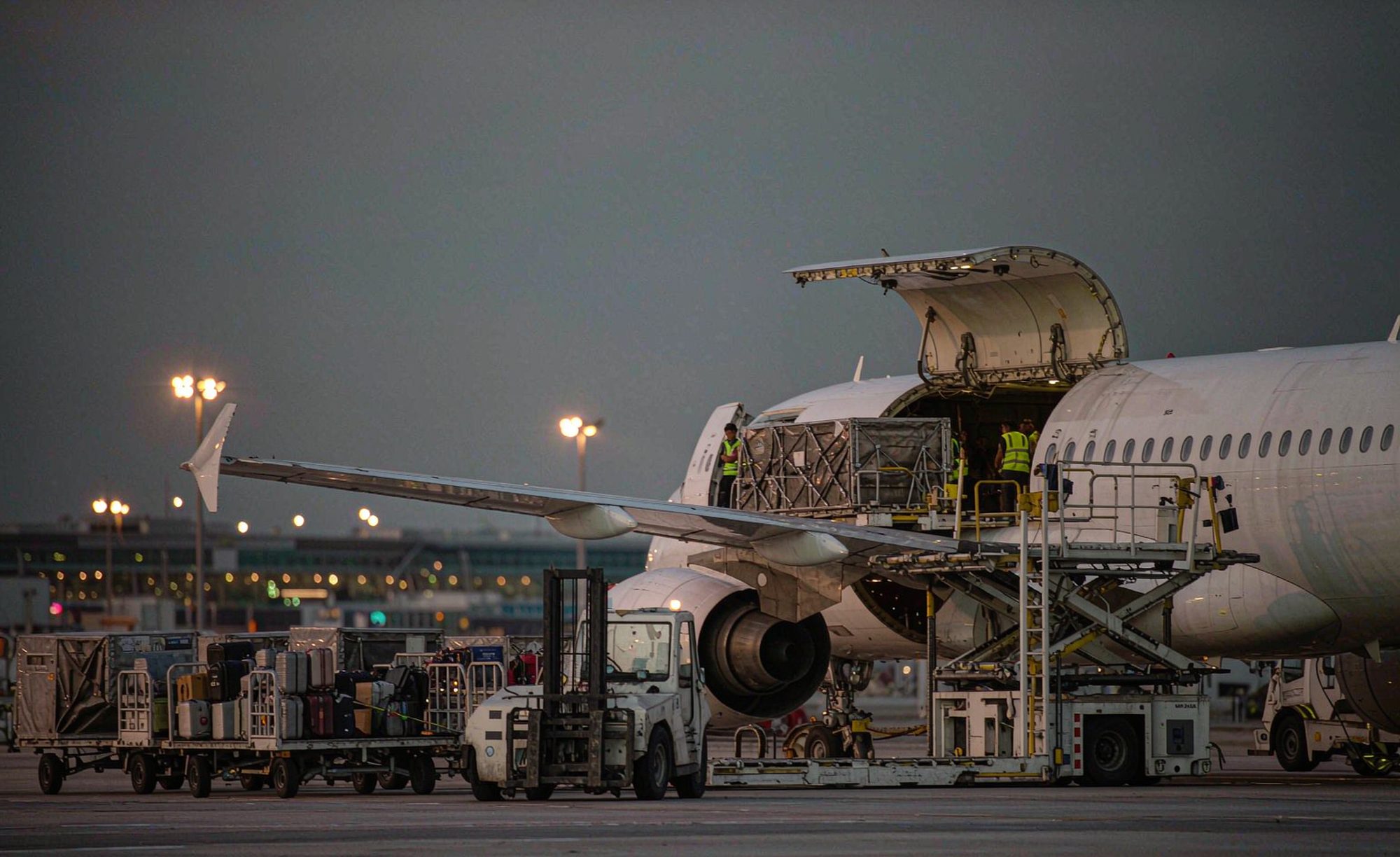
Ground crew loading cargo into the belly hold of a passenger aircraft at dusk
Belly space is the main international channel out of Xining. It is sold by the kilo against a passenger load, which is why the booking and the payload answer are the same conversation.

Advance filing

File up to three days before the cargo reaches the supervised area, and release and acceptance can then run in parallel. Suitable for shippers with a stable document routine. Do not use it on a file that is still changing: an amendment under advance filing eats the very window it was meant to buy.

Two-step declaration, imports

A summary entry releases the cargo for collection, with the complete entry filed inside the statutory window. It matters for machinery and spare parts where the invoice arrives after the aircraft, and it is not a way to postpone a valuation dispute.

Transit and cross-district export

Declare at the port and inspect at the destination customs house, or file locally and fly out of another gateway. Common for Qinghai shippers whose cargo has no local intercontinental lift. It adds a supervised road leg and a second set of seals, and it is usually still faster than waiting.

Air-to-air connection

Xining–Chengdu–Bangkok runs as an all-cargo connection, and similar routings work through Xi'an, Zhengzhou and Shanghai for other destinations. One movement, two legs, one set of pieces and weights that has to agree at the handover point. That agreement is the whole job.

By cargo type

Batteries Are a Paperwork Problem,
Fish Are an Hour Problem

Same airport, same evening, three completely different definitions of a good outcome.

Lithium-ion batteries

Qinghai's largest export line by value: RMB 1.33 billion in the first eight months of 2026. Class 9 dangerous goods, needing a packaging use appraisal, UN38.3 summary, safety data sheet, transport conditions appraisal and shipper's declaration before acceptance.

Solar wafers and modules

Exports up 148% year on year in the same period. Wafers are fragile flat packs, modules are oversize frames; both need the pallet type agreed before booking. Battery-bearing accessories are assessed separately from the parent product.

Cold-water fish

Rainbow trout and salmon to Bangkok by belly, in volumes that grew twelvefold on the international side in 2025. Farm registration, exporter filing, official certificate and a continuous temperature record, all planned in hours.

Chilled vegetables and fresh fruit

Cool-climate vegetables to Hong Kong, and in October 2026 the first air shipment of fresh goji berries to Hong Kong anywhere in China. New categories need the regulatory position established before the harvest, not after.

Beef, lamb and dairy

About 17,000 metric tons of Qinghai agricultural and livestock products moved out by air in 2025. Frozen and chilled need different packaging and different space, and the two cannot share a pallet plan.

Wool, cashmere and carpets

Samples and small lots by air, priced by piece. Fibre content drives classification, so the composition percentages on the invoice are the document that matters.

Machinery and spare parts

The import side's main line, with machinery imports up 130% in the first eight months of 2026. Condition, end use and model have to be declared as they are, and 3C or energy-efficiency requirements settled in advance.

Cordyceps and medicinal materials

Protected-species goods. A CITES import or export permit is required, and the practical route is bonded storage, exit entry, then air uplift from another gateway such as Xiamen.

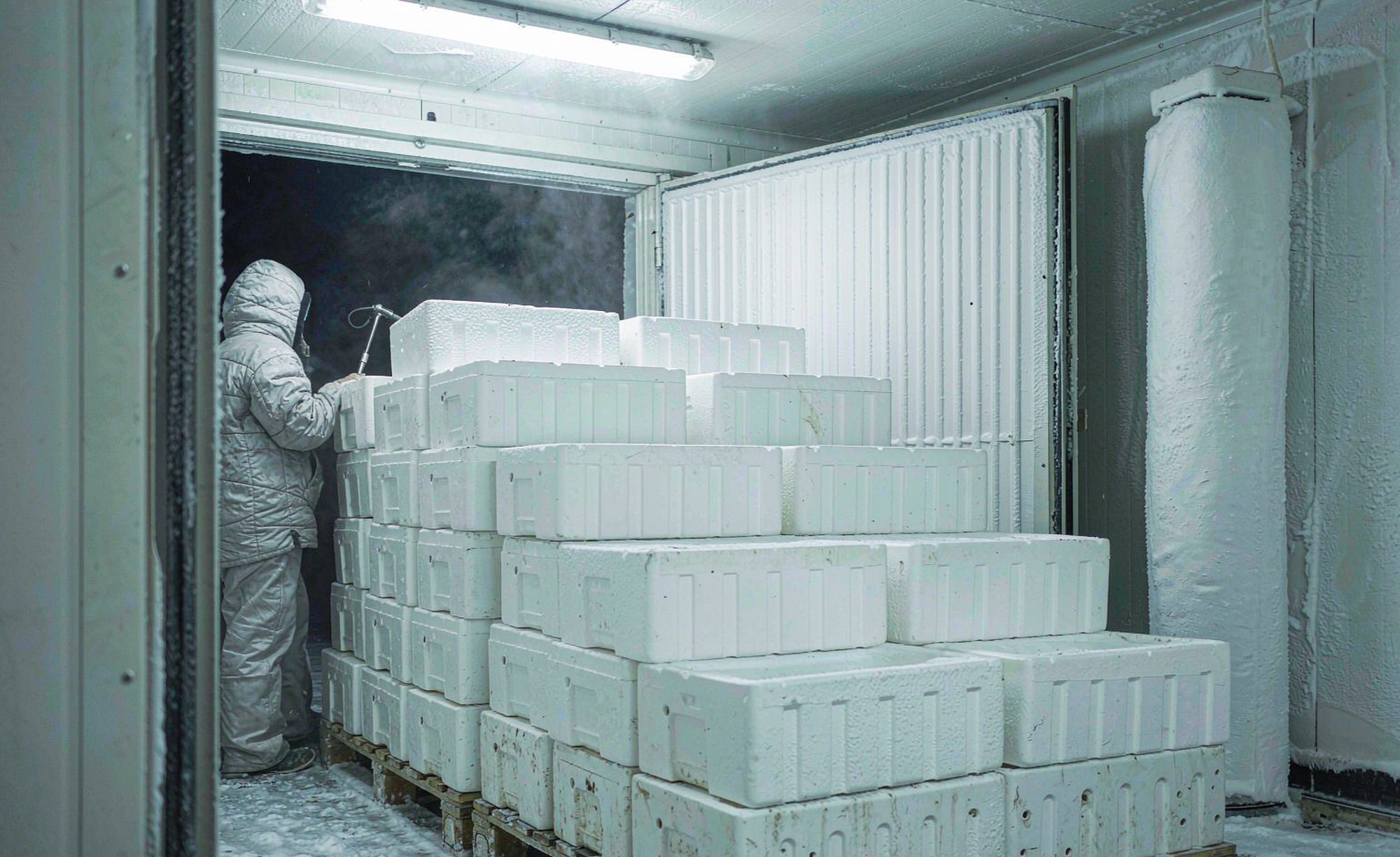
Insulated boxes of chilled fish stacked on pallets inside a cold store, worker checking temperature
Cold chain is measured from the plant door, not from the aircraft. A temperature record that breaks in the cargo shed costs the certificate, whatever the flight did.

Three things we will not soften

1. Batteries do not travel as general cargo. The packaging use appraisal is a separate document from the entry. Without it the terminal will not accept the shipment and screening will not pass it, no matter how correct the declaration is.

2. Food export qualifications belong before departure. Farm registration, exporter filing and destination market access cannot be arranged at the counter. Any gap simply parks the cargo in a cold store while the flight leaves.

3. Plan payload, not aircraft capacity. Available lift at 2,184 meters changes with temperature and sector fuel. A booking built on brochure figures turns into an offload at the last step, by which time the entry has been released and the cost cannot be recovered.

Working cases

Six Shipments That Ran Out of Runway
at the Last Step

Nothing here failed because someone did not know the procedure. Each one failed on a document that had to exist earlier, or on a number nobody recalculated.

Batteries · acceptance01

Released by customs, refused by the terminal

Cargo and lane
Two pallets of lithium-ion battery modules, declared under the general battery code, booked to Southeast Asia.
Where it jammed
The file had UN38.3 and a safety data sheet but no dangerous goods packaging use appraisal, because the goods had been packed for shipment rather than for appraisal. Carrier acceptance checks the pack against the certificate and refused the tender on the spot.
What we did
Returned the goods to the plant for correct packaging, applied for the appraisal against that pack, corrected the entry to dangerous goods elements and re-presented with the shipper's declaration and a packaging piece list.
Outcome
One rotation later, no return shipment. The appraisal is issued against the pack, so it cannot be ordered after the cargo is ready to fly.
Payload · offload02

Four point two tons booked, three point one tons lifted

Cargo and lane
Machinery parts totaling 4.2 tons, released and accepted for an afternoon departure on a warm day.
Where it jammed
The booking had been priced on the type's nominal capacity. With the day's temperature and fuel load at 2,184 meters, available payload came out at roughly 3.1 tons. The entry was released; the aircraft could not take the pallets.
What we did
Split the shipment, kept the urgent 3 tons on the service and moved the balance to the next day on the same route, then wrote the confirmed payload figure into every subsequent booking on that lane.
Outcome
Urgent consignment delivered on time, balance one day later. At altitude the payload question comes before the price question.
Perishables · inspection03

Fish ready, inspection slot two days late

Cargo and lane
Chilled rainbow trout for Bangkok on the belly service, harvested to a fixed flight date.
Where it jammed
Farm registration and the export certificate were in place, but the source inspection had been booked for the afternoon before departure. Sampling results would not have returned before cut-off, and the fish could not sit another day.
What we did
Moved inspection to two days before loading, ran sampling and certification in parallel, pre-reviewed the entry at the port, and held space on two consecutive services so that a slip on the first would not become a week.
Outcome
First service made, 12 hours door to Bangkok. Perishables are scheduled in hours, not days.
Connection · handover04

Two legs, three different weights

Cargo and lane
A shipment with no direct service, routed on the all-cargo connection through Chengdu to Bangkok.
Where it jammed
The domestic leg was accepted at the domestic terminal, the international entry was filed at Chengdu, and the pieces and gross weight differed across three records. The transit shed would not release the cargo against inconsistent data.
What we did
Adopted the terminal reweigh as the single source, reissued the domestic waybill, house bill and entry from that figure, and rebuilt the pallet to the onward aircraft before the connection closed.
Outcome
Connected on the booked service. A connection is one shipment, not two, and it has to be documented that way.
New category05

Fresh goji berries with no precedent to copy

Cargo and lane
Eighty boxes of fresh goji berries from Haixi, bound for Hong Kong by air.
Where it jammed
No earlier shipment of this category had left Qinghai, so the regulatory documents, packaging identity and destination requirements all had to be established from first principles, on a fruit with a shelf life measured in days.
What we did
Confirmed the document and inspection list with customs before harvest, set packing and picking dates backwards from the flight, booked belly space, and arranged collection on landing with the temperature record travelling with the cargo.
Outcome
First air shipment of fresh goji berries to Hong Kong from anywhere in China. For a new category, ask the regulator before you buy the packaging.
Bonded · cross-district06

Cordyceps stored in Qinghai, flown out of Xiamen

Cargo and lane
Fifteen kilograms of wild cordyceps bound for Macao, a protected-species category with no local flight to the destination.
Where it jammed
The CITES permit had to be secured before the goods could move, and the cargo could not be uplifted at Caojiabao because no service served the destination. Doing nothing meant holding stock indefinitely.
What we did
Stored the goods in the Type B bonded center, completed the permit, filed the exit entry from the center, and moved the cargo under a cross-district arrangement to Xiamen for air uplift, with both customs houses briefed in advance.
Outcome
Delivered to Macao through a bonded-storage, cross-district air route. No direct flight does not mean no route — it means the route has to be designed.

These are representative working cases with client names, flight numbers and some weights and pieces changed or rounded. The sequence and the failure points follow how each shipment was actually handled. Cut-off times, payload figures and terminal arrangements vary by carrier, aircraft type and season; the notice of the day governs.

FAQ

Ten Questions Shippers Ask About
Xining Air Export

Answered the way we answer them on a call, including the parts that are inconvenient.

What international cargo services actually leave Xining?
International capacity is mostly passenger belly space: Bangkok, resumed in September 2025, and Hong Kong flown wide-body, plus Kuala Lumpur charters. On the freighter side there is an all-cargo connection Xining–Chengdu–Bangkok that opened in November 2025, and seasonal freighters from JD and SF added in January 2026 for agricultural exports. There is no intercontinental freighter. Cargo for Europe or North America connects through Chengdu, Xi'an, Shanghai, Beijing or Guangzhou.
When is the latest I can file the export?
Legally, after the cargo reaches the supervised area and at least 24 hours before loading. With advance filing you can file up to three days before arrival at that area, provided the cargo arrives inside the window or the entry is canceled. Operationally it is earlier: terminal cut-off falls several hours before departure, and a release after cut-off still misses the aircraft.
Why does the airport's altitude matter to my shipment?
At 2,184 meters the air is thin, so engine thrust and wing lift are reduced and the takeoff weight a given type can use is lower than at a coastal airport. Hot afternoons make it worse, and a long sector with full fuel leaves even less for cargo. The practical consequence is an offload risk at the very last step, after your entry has been released. Ask the carrier for the confirmed available payload on your sector and date before you book.
Can lithium batteries be exported from Xining?
Yes, as dangerous goods. The file needs a packaging use appraisal issued against the actual pack, a UN38.3 test summary matching the cell generation in the shipment, a safety data sheet, a transport conditions appraisal and a shipper's declaration. Cells on their own normally need freighter capacity; batteries contained in equipment can move as general cargo with conditions when the parameters allow. Packaging must prevent short circuit and crushing, with Class 9 labels and the UN number marked.
What does a chilled fish export require?
Three things before the fish leaves the farm: registration of the live aquatic animal farm or filing of the food production enterprise, confirmation of the destination market's access requirements, and the local inspection carried out by Xihai Customs in Xining. That inspection is a different process from the port declaration and cannot be substituted for it. Then come the entry, acceptance, uplift and a continuous temperature record.
Customs is at the airport but inspection is at the factory. How does that work?
By sequencing, not by location. Source inspection and the certificate run first, at the plant or farm, two to five days ahead. The port then only handles the entry and release. Doing it the other way round — filing first and waiting for inspection — reliably costs a service rotation, which at Caojiabao means days rather than hours.
What is the difference between the Type B bonded center and the comprehensive zone?
The Caojiabao Bonded Logistics Center (Type B) was sealed in October 2016 and sits about three kilometers west of the airport; it handles bonded storage and logistics. The Xining Comprehensive Bonded Zone was sealed in January 2022 in Datong County and carries a wider mandate, including bonded processing and e-commerce 1210. Both allow a VAT refund on entry, but goods must then be declared out in batches, and the bonded ledger has to reconcile with physical stock.
There is no direct flight to my destination. What are my options?
Three: an air-to-air connection such as the all-cargo routing through Chengdu; a truck flight to a gateway with more lift, run under customs supervision; or a cross-district arrangement where the cargo is declared locally and flown out of another airport. Which one wins depends on destination, deadline and value per kilo — and the comparison has to include the road leg and the extra handling, not just the air rate.
Can you get certificates of origin for preferential tariffs?
Yes. Xining Customs issues certificates under the ASEAN, RCEP and other agreements. Format, issuance timing and direct consignment rules all have to be satisfied; missing one forfeits the preference. Qinghai traded RMB 1.21 billion with other RCEP members in the first eight months of 2026, and the demand for preferential certificates is rising, so confirm the certificate type before the entry is filed.
Should my cargo use Xining, or go by road to Xi'an, Lanzhou or Chengdu?
If the destination is Southeast Asia or Hong Kong and the belly service fits, fly local and save a day of trucking. If it is Europe or North America and the deadline is tight, the trunk capacity at Xi'an, Chengdu or Zhengzhou wins. If the value is low and the shipment can wait, take the seasonal freighter or the cheaper connection. Comparing air rates alone is how shipments get routed wrongly; add the road leg, the extra handling risk and the cost of one lost day.

Why us

The Work Here Is Arithmetic
Before It Is Paperwork

An extra day is an inconvenience at a coastal hub. At a single-runway high-altitude airport it is the difference between a delivery and a claim.

01

Both ends of the chain covered

Port filing and release at Caojiabao Airport Customs, source inspection and certification at Xihai Customs in Xining, handled by one team so you are not explaining the shipment twice in two cities.

02

Payload confirmed before the quote

We ask the carrier what the type can lift out of Xining on your sector and date, and we build the rate and the schedule around that answer rather than around the aircraft's nominal capacity.

03

Dangerous goods handled honestly

Classification first under the air rules, then the appraisal, then acceptance. If a shipment cannot fly from here, we say so before it is packed rather than after it is refused.

04

Perishables scheduled in hours

Inspection, certificate, space and cold chain planned as one timetable, with a second service held where a slip would otherwise cost a week of shelf life.

05

Bonded routing that closes

Refund on entry, exit entry in batches, cross-district uplift where there is no local flight — designed as one route with the ledger reconciled, not as a series of separate errands.

06

Someone at the counter

Inspection attendance, amendment submission and collection coordination happen at the joint inspection building and the cargo premises, so an exception is resolved on site rather than relayed by phone.

GET IN TOUCH

Xining exports,
with the payload checked first

Send the commodity, pieces and weights, destination airport, planned flight and where the goods are collected — Xining, Haidong or further out in the province. You get back the workable routing, the document list and a timetable counted backwards from departure.

Request a Xining export quote
CompanyGoodhope Logistics (China) Limited
NVOCCGD20230925153335
Phone / WhatsApp+86 189 3869 1638
Emailsales007@goodhopefreight.com
Office hoursMon–Sat 09:00–18:00 GMT+8
ResponseWithin one working day
call us: +86 13392162503