
Birmingham sits in north-central Alabama and is the state's most populous metro area and a traditional steel and manufacturing center of the U.S. Southeast. The city itself has no coastline; all ocean FCL cargo must first discharge at the Port of Mobile, Alabama's only deep-water port, or transfer via other East Coast or Gulf ports. Birmingham's position in the freight system is decided by two things: it sits on the rail corridor radiating inland from the Port of Mobile, and auto, steel and metalworking industries cluster around it. For cargo exported from China to north-central Alabama, Birmingham is usually the inland landing point.
Birmingham sits at 33 degrees 31 minutes north, 86 degrees 48 minutes west, in the Jones Valley at the southern end of the Appalachian foothills, at an elevation of about 200 meters. The metro area comprises Jefferson County, Shelby County and others, and is Alabama's economic center.
I-65 and I-20 meet in Birmingham, giving the city radiating capability in both north-south and east-west directions. Four hundred km south is the Port of Mobile on the Gulf of Mexico, a little over 200 km east is Atlanta's distribution network, and north lie Nashville and Memphis. This position lets Birmingham serve both as an in-state distribution point for Alabama and as a destination for cargo flows from both the Gulf ports and the Atlanta rail hub.
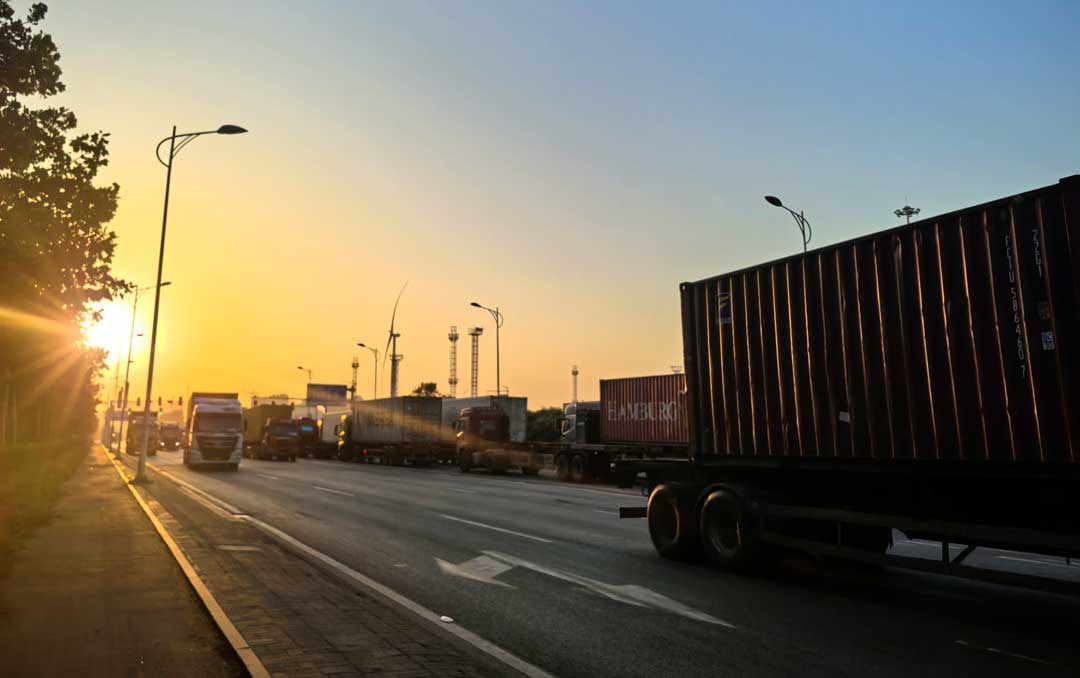
In the federal port system Birmingham is an inland port. U.S. Customs and Border Protection (CBP) maintains a port of entry here with code 1904, under Customs District 19, whose center is at Mobile, Alabama.
| Port code | 1904 (Birmingham, Alabama) |
| Customs district | District 19, centered on Mobile, Alabama |
| Neighboring ports in the district | 1901 Mobile, AL; 1910 Huntsville, AL; 1902 Gulfport, MS; 1903 Pascagoula, MS |
| Main seaport of entry | 1901 Mobile, AL |
| Services handled | Formal entry filing, examination and release; documents submitted by a licensed customs broker |
| International location code | USBHM (UN/LOCODE, used in bills of lading and booking systems) |
One common confusion needs flagging: Birmingham's port code is 1904, while 1902 is Gulfport, Mississippi and 1903 is Pascagoula, Mississippi. The three codes belong to the same district with adjacent numbers but point to completely different places and cannot be interchanged on customs declarations or in system entry. The port code and the UN location code are also not the same thing: 1904 is used on customs declarations, ACE filings and ISF filings, while USBHM is used by carriers for booking and bills of lading; the two serve different purposes and cannot substitute for each other.
Birmingham's container intermodal service is handled by two Class I railroads, Norfolk Southern (NS) and CSX Transportation. Norfolk Southern operates an intermodal facility at McCalla on the southwest side of the metro area, Alabama's main rail node connecting the Port of Mobile.
| Facility / corridor | Railroad | Location and notes |
| McCalla Intermodal Facility | Norfolk Southern | Southwest side of the Birmingham metro, about 30 minutes' drive from downtown; NS's main container rail facility in Alabama |
| Birmingham area intermodal facility | CSX Transportation | Serves steel, metal products and manufacturing flows; can connect with the Port of Mobile's on-dock rail facility |
| A-USA Rail Corridor | Norfolk Southern | 280 miles long, linking the Port of Mobile with the McCalla intermodal facility, including 12 line, signal and yard improvements between Mobile and Birmingham and Selma |
Norfolk Southern's McCalla intermodal facility is the terminus of phase one of the A-USA Rail Corridor. The corridor is jointly funded by the Alabama state government and Norfolk Southern, totaling USD 231.6 million, of which Norfolk Southern bears more than 50%, the state government contributes USD 5 million, and the remaining about USD 110.8 million comes from a U.S. Department of Transportation rail infrastructure and safety improvement grant. The corridor's purpose is to raise the Port of Mobile's container rail distribution capacity inland, connecting the port's container flow directly to industrial land in the Birmingham area. Once complete, containers discharged at the Port of Mobile can be loaded at the terminal, move by rail direct to McCalla, and then by truck into Birmingham-area warehouses.
Two further new inland rail facilities are under development in Alabama and can serve as diversion references. The Montgomery inland container transfer facility is being built on 272 acres purchased by the Alabama Port Authority, served by CSX, with construction starting in March 2025; once complete it will mainly serve the Montgomery area's Hyundai plant and distribution centers. The North Alabama inland transfer facility is planned at Decatur, about 80 miles from Birmingham and about 350 miles from the Port of Mobile, also served by CSX, mainly covering flows toward northern Alabama and Tennessee. These two facilities serve different directions from Birmingham and are not interchangeable.
Birmingham's ocean imports and exports depend on the Port of Mobile. The Port of Mobile is Alabama's only deep-water seaport and one of the Gulf's fastest-upgrading container ports in recent years; changes in its channel conditions directly affect Birmingham's arrival rhythm.
| Item | Data |
| Channel depth | 50 feet (about 15.2 meters) achieved on October 3, 2025, making it the deepest container port in the Gulf of Mexico |
| Channel improvement project | Mobile Harbor Modernization, total investment USD 366 million, implemented jointly by the Alabama Port Authority and the U.S. Army Corps of Engineers; authorized by Congress in 2018, dredging began in 2020 |
| Terminal operator | APM Terminals Mobile |
| Terminal scale | About 115 acres, 6 post-Panamax cranes, 325 reefer plugs, deepwater berth 732 meters long, 2 rail tracks on the terminal |
| Annual capacity | About 650,000 TEU, with an expansion target of 1.3 million TEU |
| Vessel sizes served | Previously 9,000 to 10,000 TEU vessels; after deepening, 12,000 to 16,000 TEU vessels expected |
| Birmingham to Port of Mobile | About 400 km by road, about 4 hours by truck; by rail direct to the McCalla facility via the A-USA corridor |
The change in channel depth has practical significance for Birmingham. When depth was insufficient, vessels berthing at Mobile had to lighten, with higher cost spread over the same slots; after deepening, vessels can enter and leave fully loaded, and unit costs fall accordingly. The Port of Mobile now has five Class I railroads connecting, plus several short lines and about 15,000 miles of inland waterway. The port has publicly stated that loading at Mobile to Chicago takes about two days, indicating rail connections from the port to major inland hubs are already smooth. For cargo exported from China to Alabama, the Port of Mobile is both the discharge point and the clearance and inspection landing point, so Birmingham pickup arrangements should begin once the vessel departs.
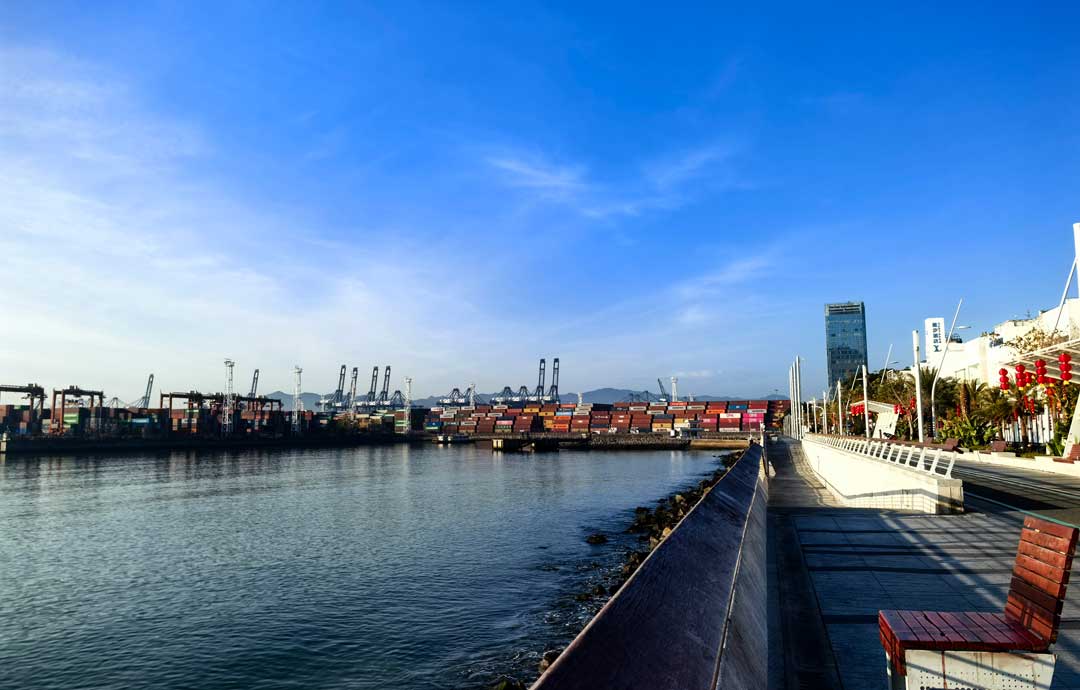
From China to Birmingham there are two main lines: all-water via the Panama Canal to the Port of Mobile with onward rail or truck, or discharge at another West or East Coast port with interstate rail or truck. The trade-off depends on delivery date and volume.
| Route | Port of entry | Onward transport | Features |
| All-water via the Gulf of Mexico | Mobile 1901 | Rail to the McCalla facility, or truck about 400 km | Fewest inland steps, clearance and pickup concentrated at Mobile, more controllable arrival date |
| All-water via the East Coast | Savannah 1703 or Charleston 1601 | Rail or truck via Atlanta into Alabama | Alternative routing when Mobile schedules are tight |
| Transcontinental sea-rail intermodal | Los Angeles 2704 or Long Beach 2709 | Rail via Memphis or Atlanta with transfer | Shortest ocean leg, longest inland mileage |
| Rail via the U.S. Northwest | Seattle 3001 or Tacoma 3002 | Rail via Chicago and Memphis south to the Dallas or Birmingham direction | Alternative routing when West Coast ports are congested |
| Air freight | Birmingham BHM or Atlanta 1704 | Pickup at the terminal or short-haul delivery | High-value, time-sensitive cargo |
The advantage of the Mobile routing is short chain length. Liners from China via the Panama Canal can call at Mobile directly; after discharge at the terminal, containers can clear in the port area and then move into Birmingham by rail or truck, with no other port touched en route. This routing's weakness is lower schedule density than New York-New Jersey or Savannah, with fewer carrier and service choices; some cargo needs transshipment at other Caribbean or Gulf ports, adding five to ten days. The East Coast entry routing has dense schedules and often rate advantages, but containers travel an extra leg by rail or truck, and clearance must be completed in another state or filed at Birmingham as a transfer entry.
LCL cargo usually does not use transcontinental rail, because LCL must be de-stuffed and sorted at a warehouse near the port, then moved inland as LTL or truckload. For shippers whose volume is insufficient to fill an FCL, the all-water routing via Mobile with truck delivery often involves fewer steps than West Coast rail intermodal. FCL cargo can use either line, mainly depending on delivery date and the current rate structure.
Door-to-door time is calculated in segments by route. The table below gives common ranges for the two main lines; the ocean leg uses the same basis as the Los Angeles port page and the New York-New Jersey port page.
| Route | Ocean leg | Inland leg | Door-to-door total |
| Shanghai / Ningbo via Panama to Mobile | About 30 to 38 days | Rail about 2 days, truck about 1 day | About 34 to 42 days |
| Shenzhen via Panama to Mobile | About 32 to 40 days | Rail about 2 days, truck about 1 day | About 36 to 44 days |
| Shanghai / Ningbo to Los Angeles then rail | About 11 to 18 days | Rail about 6 to 8 days | About 24 to 34 days |
| Shenzhen to Los Angeles then rail | About 13 to 25 days | Rail about 6 to 8 days | About 26 to 40 days |
The totals in the table are estimates from port to consignee warehouse and exclude booking, loading and export declaration at origin. Actual times are affected by vessel type, call order, Gulf and West Coast terminal congestion, rail car supply and holidays, and can extend by a week or more in peak season. Panama Canal routings must also account for changes in lock transit supply: when canal-area water levels are low, daily transit counts fall and some sailings are delayed three to five days.
The two main lines differ little in total duration; the difference is in time distribution and number of steps. The Mobile routing has a long ocean leg and short inland leg but requires one clearance and one loading at Mobile; the West Coast routing has a short ocean leg and long inland leg, with six to eight days on rail and shorter rail facility free periods, creating greater pickup pressure after landing. For consignees with tight inventory turnover who want pickup on arrival, the Mobile routing is more controllable; for shippers who need bills of lading early or have fixed West Coast operating partners, the West Coast routing is more suitable.
Customs business in Birmingham is handled by CBP at port 1904, under Customs District 19. Two common clearance arrangements apply to goods from China.
Formal entry filing requires the consignee's employer identification number (EIN), commercial invoice, packing list and bill of lading. Ocean cargo must complete the Importer Security Filing (ISF, commonly called 10+2) before loading, submitted by the importer or its agent at least 24 hours before the vessel sails. Commodity classification, origin and valuation are handled under the Harmonized Tariff Schedule of the United States (HTSUS); categories subject to additional duties must be checked separately.
Alabama levies no state-level import tax on imported goods, but goods entering circulation in the state for final consumption may involve sales and use tax, handled by the consignee according to its business nature and registration. Auto parts, steel products and electronic components are Alabama's main import categories; documentation requirements for these categories are detailed, and commodity codes and usage descriptions must match the physical goods. Multiple foreign-trade zones (FTZ) and bonded facilities operate in-state; specific availability should be confirmed case by case with a broker.
After containers arrive by rail at Birmingham's McCalla facility, the pickup process differs from a marine terminal. Rail facilities run mainly on online systems, with no separate gate hall, and timing starts when the arrival notice is issued.
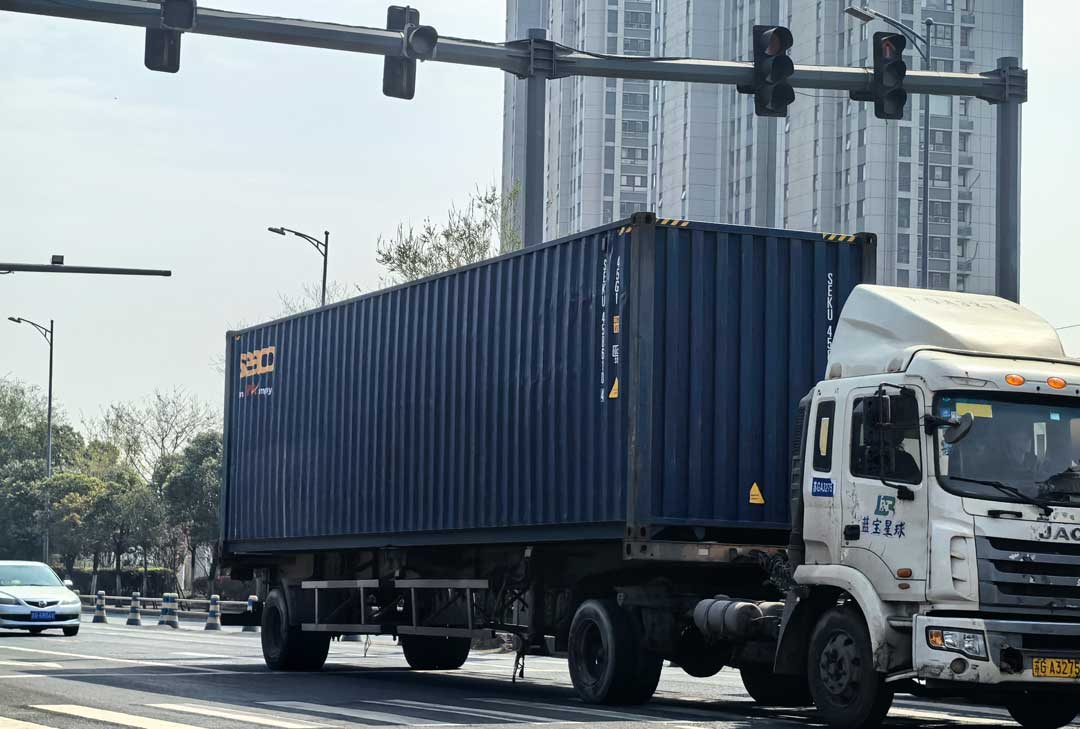
The main risk point in the process is documentation and charges. A rail facility will not release an appointment when charges are unsettled or documents incomplete, while the free period keeps running. Both railroads serving Birmingham have local facilities, each using different appointment systems and driver registration methods, so drayage carriers need accounts with each. If one batch of cargo arrives split across the two railroads' facilities, pickup must be arranged separately. The Port of Mobile's empty return point is usually in the port area or downtown Mobile; if the carrier has no return point in Birmingham, the empty must be driven back to Mobile after unloading in Birmingham, a round trip of about 800 km, and this mileage and time should be counted into cost in advance.
The Last Free Day (LFD) is the deadline of the free storage period; beyond it, storage charges begin. Birmingham's storage charges arise only at the port of entry terminal or rail facility, and the length of the free period depends on the landing point.
| Item | Start of count | Free period | Billing party |
| Rail intermodal facility storage | The arrival notice date | Mostly 48 hours | Railroad |
| Marine terminal storage | The discharge date or the date the container is available | Per terminal announcements, usually four days for standard containers | Terminal operator |
| Carrier container per-diem | The day the container leaves the terminal or facility | Free time by container type and service | Ocean carrier |
| Chassis rental | The day the chassis is picked up | As agreed with the drayage carrier | Chassis provider |
The four charges have different start points and billing parties and do not offset one another. Rail facility storage overrun does not automatically extend the carrier's free time, and vice versa. After receiving the arrival notice, the consignee should confirm four things together: the landing facility's last free day, the carrier's free-time expiry, the empty return point's location and hours, and the round-trip mileage from Birmingham to the return point. Confirm all four before setting pickup and return dates to avoid clearing one while overrunning another.
If pickup cannot be completed within the free period for reasons beyond the consignee's control — such as a customs hold or document correction — a written extension request can be filed with the railroad, terminal or carrier, supported by the relevant documents, and must be submitted before the original expiry date; late requests are generally not backdated. Whether it is granted depends on each company's published policy, and there is no uniform standard. Alabama has a separate permit system for overweight containers: the interstate highway gross weight limit is 80,000 pounds, and overweight containers require a permit from the Alabama Department of Transportation (ALDOT), usually processed within 48 hours; consignees of heavy export cargo should calculate the total container weight in advance.
Customs examination (CBP Examination) is a routine part of the import process, sampling declared cargo by risk score. The examination usually takes place at the port where the container lands, and can also take place at an inland port after transfer, depending on the examination location set at filing.
| Exam type | What is done | Effect on pickup |
| Document review | Checks invoice, packing list, certificate of origin against the filing | Does not move cargo; released once documents are supplied |
| X-ray scan (NII) | Full-container imaging without opening | Usually same-day; container stays in the yard |
| Tailgate exam | Opens the door to check the front cargo | Adds half a day to a day |
| Intensive exam (CET) | Moved to the exam area for piece count and de-stuffing | Adds three to seven days; must be re-stuffed |
Examination produces an exam service fee, drayage round-trip, labor for de-stuffing and re-stuffing, and storage during the exam, all borne by the consignee regardless of the outcome. Since Birmingham has no local examination site, if Mobile is used as the port of entry at filing, the examination is generally completed at Mobile and the Birmingham end only bears delayed arrival; if Birmingham is used as the port of entry, confirm whether local examination conditions exist. The container can continue inland only after release, making examination a main source of transit-time fluctuation at inland points. Practical ways to lower the chance of being flagged are: match the declared description to the actual goods, keep the price within the common range for similar goods, avoid under-declaration and mixed loading, and maintain a continuous import record.
When goods cannot clear U.S. customs or the consignee refuses delivery, a return shipment can be arranged, provided the goods have not been consumed or delivered in the United States and remain in a terminal, rail facility, bonded warehouse or customs-controlled area. Goods already released, delivered to the consignee's warehouse and entered into domestic circulation cannot be treated as a return.
Whether to return is usually decided after comparing three alternatives: abandoning the goods, reselling to another country, or destroying on site. Abandonment requires a customs application and bears the destruction cost; resale requires re-arranging transport and export procedures. For goods subject to additional duties or requiring permits, confirm the destination country's import requirements before disposal.
Birmingham's freight rhythm is influenced by both transpacific and Gulf service seasonality, broadly consistent with the U.S. retail restocking cycle and the production rhythm of Alabama's auto and steel industries.
Birmingham has one further seasonal variable from the industry side. In-state auto plants' and steel companies' production schedules affect the import rhythm of parts and raw materials, and plant maintenance windows and model changeover gaps often correspond to an arrival trough. Chinese exports of auto parts, molds and production equipment matched to such schedules usually see consignees locking sailings months in advance to avoid peak-season space tightness. In addition, Alabama has long summer heat, tornado season concentrates in spring, and extreme weather can cause temporary rail speed restrictions or short-term highway closures, with the bullwhip effect amplifying through to inland delivery.
The benefits of using Birmingham as an import landing point concentrate on highway junctions, the port rail corridor and the industry hinterland.
| Advantage | What it means |
| Two interstate highways meet | I-65 and I-20 connect in the city: 400 km south to the Port of Mobile, a little over 200 km east to Atlanta, north to Nashville and Memphis; delivery directions are not limited to a single corridor |
| A-USA Rail Corridor direct to the port | The USD 231.6 million public-private project links the Port of Mobile with the McCalla intermodal facility, including 12 line, signal and yard improvements; containers can move by rail direct from the terminal to Birmingham |
| Access to the Gulf's deepest container port | The Port of Mobile reached 50-foot channel depth in October 2025, able to take 12,000 to 16,000 TEU vessels, with port capacity planned to expand to 1.3 million TEU |
| Its own customs port | Port code 1904, with formal entry filing and release capability, allowing multiple shipments' filings to be centralized in one place |
| Two Class I railroads to choose from | Norfolk Southern's McCalla facility and CSX's Birmingham facility serve different directions, allowing arrival facility selection by warehouse location and service alliance |
| Auto and steel industry hinterland | The state clusters Hyundai, Honda, Mercedes-Benz and other vehicle plants with multiple steel and metalworking companies; parts and raw material import demand is stable, with complete supporting warehousing and specialized logistics services |
The limits should also be seen. Birmingham has no coastline, so all ocean cargo must transfer via the Port of Mobile or another port, adding an inland leg; the Port of Mobile's schedule density and service choices are fewer than New York-New Jersey and Savannah, and some services require transshipment, extending ocean time. If the carrier has no return point in Birmingham, empties must be driven back to Mobile, a round trip of about 800 km. The Birmingham metro economy is smaller than Atlanta's; if the receiving market covers Georgia or Tennessee, placing the landing point directly at facilities in those states is usually more economical. Birmingham suits best: receiving markets concentrated in north-central Alabama, or business needing to serve both the Gulf Coast and the Southeast interior via the I-65 and I-20 corridors.
No. Birmingham is an inland city with no coastline and no marine terminal; all ocean FCL cargo must first discharge at the Port of Mobile or another coastal port, then move in by rail or truck.
1904 (Birmingham, Alabama), under Customs District 19, whose center is at Mobile, Alabama. Note that 1902 is Gulfport, Mississippi and 1903 is Pascagoula, Mississippi — adjacent numbers but different places.
Both main lines are common: all-water via the Panama Canal to the Port of Mobile with onward rail or truck, with the fewest inland steps; or discharge at a West Coast port such as Los Angeles or Long Beach with interstate rail. The choice depends on delivery date and volume.
About 400 km by road, about four hours by truck, with same-day delivery possible; by rail via the A-USA corridor direct to the McCalla intermodal facility, with about two days in transit on block trains, plus pickup/return and in-terminal handling time at both ends.
Yes. Norfolk Southern operates an intermodal facility at McCalla on the southwest side of the metro, Alabama's main rail node connecting the Port of Mobile; CSX also operates an intermodal facility in the Birmingham area, serving steel and manufacturing flows.
A rail corridor project jointly funded by the Alabama state government and Norfolk Southern, totaling USD 231.6 million, 280 miles long, linking the Port of Mobile with the McCalla intermodal facility and including 12 line, signal and yard improvements between Mobile, Birmingham and Selma; Norfolk Southern bears more than 50% of the funding.
The Port of Mobile reached 50-foot channel depth in October 2025, allowing vessels to enter and leave fully loaded; previously insufficient depth required lightening. Full loading lowers unit transport cost and spreads rates more favorably on the same service, one of the direct reasons for the improvement in Birmingham's import cost structure.
Determined by the intermodal agreement between the carrier and railroad named on the bill of lading, not designated by the shipper. Birmingham mainly involves Norfolk Southern's McCalla facility and CSX's Birmingham facility; confirm the actual arrival facility with the forwarder at booking.
Not necessarily. Carriers' return points are usually in the Mobile port area or downtown Mobile, and not every carrier has a return point in Birmingham. If return must be made at Mobile, the round trip is about 800 km, with mileage and time counted into cost; confirm in advance at booking.
At Birmingham's main rail intermodal facilities, free time is mostly 48 hours from the arrival notice date, with weekends and holidays usually counted; beyond it, storage is charged daily at the railroad's rate.
A written extension can be requested from the railroad, terminal or carrier, with the examination or hold documents submitted before the original expiry date. Whether it is granted depends on each company's policy, there is no uniform standard, and late requests are generally not backdated.
Yes, provided the goods have not been consumed or delivered in the United States and remain in a facility, bonded warehouse or customs-controlled area. A return requires U.S. export declaration and Chinese import declaration; goods returned in original condition due to quality or specification issues can apply for duty exemption within the allowed period.
Shipping from China to USA
Planning a shipment or just comparing options? Contact our freight experts to get a tailored rate within 24 hours.
