
Boston is the container gateway of New England, the historic trade city of the U.S. East Coast and the only deep-water container port in Massachusetts. The Port of Boston is managed by Massport, and its container operations concentrate at the Paul W. Conley Container Terminal in South Boston, handling cargo shipped from China to Massachusetts and the wider New England region. The port's position in the freight system is decided by two facts: it offers four direct container services to Asia, Europe, the Mediterranean and Latin America, and it sits at the center of the Northeast's consumer and industrial market. For cargo shipped from China to Boston, Conley Terminal is usually the discharge point.
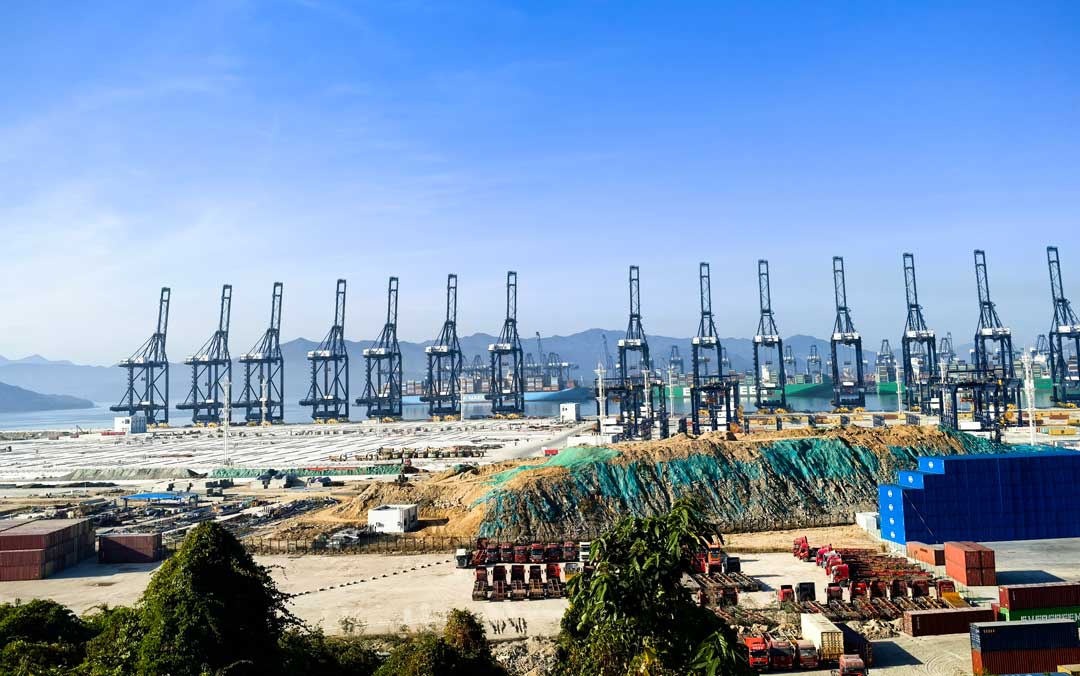
Boston sits at 42 degrees 21 minutes north, 71 degrees 3 minutes west, on Massachusetts Bay on the U.S. East Coast, where the Charles River meets the Atlantic Ocean. The port area lies in South Boston, adjacent to downtown, with the main channel about 47 feet deep and the terminal berth dredged to 50 feet.
Boston's road network radiates through I-93 and I-90, connecting the Northeast's main industrial and consumer markets: south to Providence and Connecticut, west to Albany and the Great Lakes direction, north to New Hampshire and Maine. Boston Logan International Airport is about 4 km from the port area, forming a combined sea-air hub that also suits air-sea intermodal cargo from Asia.
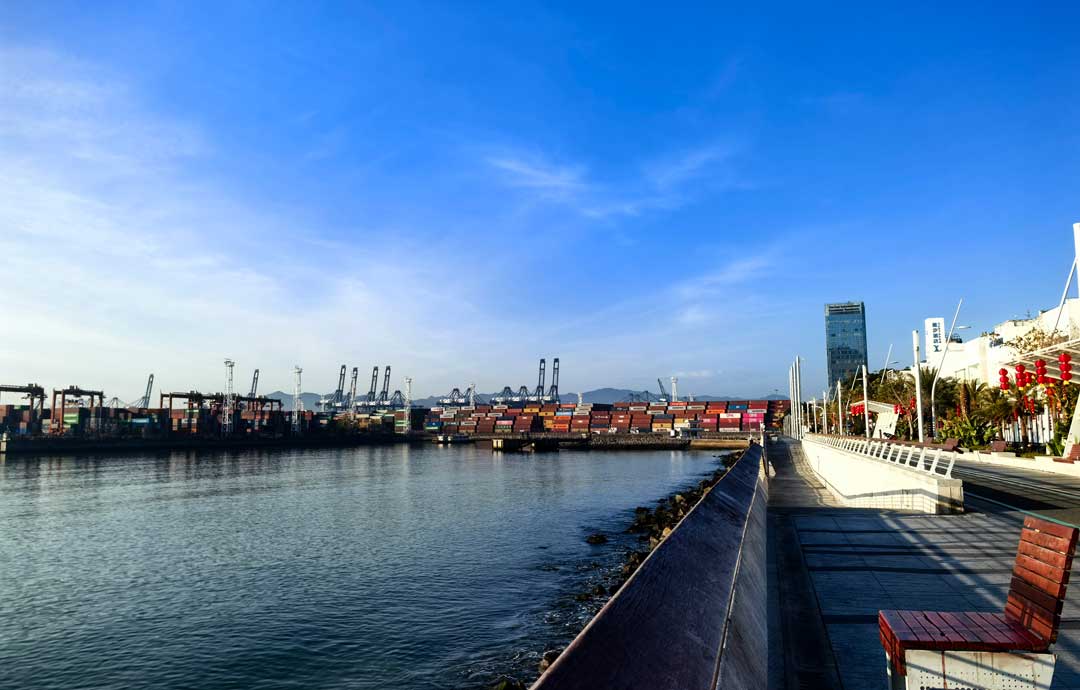
The Port of Boston is managed by the Massachusetts Port Authority, abbreviated Massport, a state agency that also operates Boston Logan International Airport. Massport's headquarters are in East Boston, and terminal-level contact for container operations goes directly to the Conley Container Terminal.
| Port authority | Massachusetts Port Authority (Massport) |
| Address | One Harborside Drive, Suite 200S, East Boston, MA 02128-2909 |
| Phone | (617) 568-5000 |
| Marine line | 1-800-294-2791 |
| Container terminal | Paul W. Conley Container Terminal, 940 East 1st Street, South Boston, MA 02127, 617-464-8200 |
| International location code | USBOS |
Massport's marine line handles vessel scheduling, pilotage and port security matters and is the first point of contact for vessel agents. Terminal business such as container pickup appointments, reefer plug-in and yard storage go through the Conley terminal directly; in practice the freight forwarder communicates with the terminal on the importer's behalf, and the importer rarely needs to contact the terminal personally.
Boston's container operations concentrate at a single facility: the Paul W. Conley Container Terminal in South Boston. The terminal covers about 130 acres with a berth of about 3,300 feet, dredged to 50 feet, and is equipped with 7 ship-to-shore cranes, 16 rubber-tired gantries and 360 reefer plugs, able to handle the largest container vessels calling the U.S. East Coast. Conley Terminal serves four direct container services linking Asia, Europe, the Mediterranean and Latin America.
| Terminal name | Paul W. Conley Container Terminal |
| Address | 940 East 1st Street, South Boston, MA 02127 |
| Phone | 617-464-8200 |
| Area | About 130 acres |
| Berth length | About 3,300 feet |
| Alongside depth | 50 feet (main channel about 47 feet) |
| Ship-to-shore cranes | 7 |
| Rubber-tired gantries | 16 |
| Reefer plugs | 360 |
| Direct services | 4, covering Asia, Europe, the Mediterranean and Latin America |
| FIRMS code | A295 (used when choosing the examination location on CBP filings) |
Conley Terminal is undergoing a modernization program of about USD 850 million, covering three new ship-to-shore cranes, a new berth, about 30 acres of new yard and a dedicated freight corridor. In March 2025 the terminal received the MSC Verona, a 16,196 TEU vessel, the largest container ship in the port's history, demonstrating that the upgraded berth can accept the largest vessels on the Asia-East Coast routes.
As New England's container gateway, Boston's throughput is smaller in absolute terms than New York/New Jersey or Savannah, but it is stable and structurally tied to the import demand of Massachusetts and the wider region. In 2024 the port handled about 251,500 TEU; in 2025 about 245,000 TEU. Asia is the port's largest trade lane: in 2025 Asia trade reached 168,781 TEU, up 14% year on year, with cargo from China accounting for about 19% of the port's imports.
| 2024 throughput | About 251,500 TEU |
| 2025 throughput | About 245,000 TEU |
| 2025 Asia trade | 168,781 TEU, up 14% year on year |
| China share of imports | About 19% |
| Economic impact | About USD 8.2 billion, supporting about 66,000 jobs |
Boston's throughput structure is import-weighted: New England's consumer market and high-value manufacturing drive inbound containers, while exports are mainly recyclable materials and specialty cargo. For importers, this means equipment and yard space are relatively relaxed compared with the overloaded West Coast gateways, and peak-season gate congestion is milder, but it also means fewer direct services: once a direct service is adjusted or suspended, the impact on Boston is more direct than at hub ports.
Conley Terminal serves four direct services linking Asia, Europe, the Mediterranean and Latin America. For cargo shipped from China, there are two main routing options: a direct call at Boston on an East Coast service, or discharge at New York/New Jersey followed by rail or truck relay to Boston.
Choosing between direct sailing and NY/NJ relay depends on cargo urgency and cost tolerance: direct sailing is faster but the berth slot is the bottleneck; relay has more schedule flexibility but adds one handling. In practice the forwarder locks the routing at booking, and switching between the two after sailing is basically impossible.
Transit time from Chinese ports to Boston is mainly determined by the direct sailing plus port rotation. Direct sailings from Shanghai to Boston take about 28 to 35 days; from Ningbo about 28 to 36 days; from Shenzhen, Xiamen and Qingdao about 30 to 38 days. Via New York/New Jersey relay, the sea leg is similar, plus 2 to 4 days of inland transport.
| Origin port | Direct sailing (days) | Via New York/New Jersey (days) |
| Shanghai | 28-35 | Sea time similar, plus 2-4 days inland |
| Ningbo | 28-36 | Sea time similar, plus 2-4 days inland |
| Shenzhen | 30-38 | Sea time similar, plus 2-4 days inland |
| Xiamen | 30-38 | Sea time similar, plus 2-4 days inland |
| Qingdao | 30-38 | Sea time similar, plus 3-5 days inland |
The transit times above are port-to-port sailing times under normal schedule, excluding waiting time caused by port congestion, weather, Panama Canal transit slots and other factors. Peak season from August to October and the pre-Christmas stocking period can add several days of waiting; winter Nor'easters can also affect the berthing schedule. Actual booking should refer to the schedule version at the time.
Four carrier groups operate direct services to Boston, and their network layouts differ. Understanding which group the booking belongs to helps judge schedule stability and equipment turnover.
| Carrier group | Members | Network characteristics |
| MSC | Mediterranean Shipping Company | Independent network, dense Asia-East Coast services, largest vessel to call at Boston (MSC Verona, 16,196 TEU) |
| Gemini Cooperation | Maersk, Hapag-Lloyd | Hub-and-spoke network with high schedule reliability target, East Coast services connecting Asia and Europe |
| Premier Alliance | ONE, Yang Ming, HMM | Asia-East Coast services with flexible port rotation |
| Ocean Alliance | COSCO, OOCL | Dense East Coast network, wide coverage of Chinese ports |
Different alliances' services differ in port rotation and transit time; the same origin port may have different arrival days under different alliances. For importers with strict delivery windows, the schedule reliability record of the specific service matters more than the alliance label; the forwarder can provide the on-time performance reference of recent sailings at booking.
Conley Terminal's gate hours are weekdays 08:00 to 17:00, with the last entry at 16:15; it is closed on weekends and federal holidays. Drivers entering the terminal need a TWIC card, a Massport marine pass and a high-visibility vest; truck turnaround is about 30 to 37 minutes, with about 28 crane moves per hour.
| Gate hours | Monday to Friday 08:00-17:00 |
| Last entry | 16:15, entry not accepted after the deadline |
| Closed days | Weekends and federal holidays |
| Required credentials | TWIC card, Massport marine pass, high-visibility vest |
| Truck turnaround | About 30-37 minutes |
| Crane productivity | About 28 moves per hour |
The 16:15 last entry is a hard cutoff: trucks arriving after that time are generally not processed, so the pickup arrangement must reserve enough buffer. Weekend closure means Friday afternoon is the window for pre-weekend pickup planning; cargo needing weekend pickup must be arranged in advance on Friday. Pickup appointments are usually made by the forwarder or trucking company through the terminal system, and importers do not operate them personally.
Conley Terminal itself has no rail access, which is Boston's biggest structural constraint in intermodal terms. Containers needing rail transport must first be drayed by truck about 45 miles to CSX's Worcester intermodal yard, taking about 1 to 1.5 hours each way, before loading onto trains. The long-planned Track 61 branch line connecting the terminal to the national rail network has not been realized, so short-haul trucking remains the only way out of the port for the time being.
| On-dock rail | None; Conley Terminal has no rail access |
| Main rail yard | CSX Worcester Intermodal Yard |
| Drayage distance | About 45 miles one way from the terminal |
| Drayage time | About 1 to 1.5 hours one way |
| Track 61 branch | Planned to connect the terminal to the national rail network; not yet realized |
The absence of on-dock rail means Boston's inland distribution leans on trucking: within Massachusetts and nearby Rhode Island, New Hampshire and Connecticut, direct trucking is economical; for cargo to Albany, the Great Lakes region and farther, Worcester becomes the rail transfer node. For importers, this structure means Boston's inland time and cost have an extra trucking leg compared with on-dock-rail ports, which must be counted into the total landed cost at comparison.
The Port of Boston is a CBP port of entry with code 0401, handling formal entry filing, cargo examination and release for the Boston area. Documents for imported cargo are submitted by a licensed customs broker; importers need to provide commercial invoice, packing list, bill of lading and other documents, and for goods involving FDA, USDA and other agencies, the corresponding certificates must be prepared in advance.
| Port code | 0401 (Boston, Massachusetts) |
| International location code | USBOS (UN/LOCODE, used in bills of lading and booking systems) |
| Examination location FIRMS code | A295 (Conley Container Terminal) |
| Services handled | Formal entry filing, examination and release; documents submitted by a licensed customs broker |
| Neighboring ports | New York/New Jersey to the south, Portland, Maine to the north; all serve New England |
One common confusion needs flagging: 0401 is the customs port code used on declarations and ACE filings, while USBOS is the location code used by carriers for booking and bills of lading; the two serve different purposes and cannot substitute for each other. When choosing the examination location on CBP filings, the FIRMS code for Conley Terminal is A295; writing it wrong can delay the examination arrangement.
After the vessel berths, containers are discharged to the yard and then enter the pickup process. Importers mainly need to track the arrival notice and free time window, and hand the arrangement to the forwarder and trucking company.
The whole process from discharge to delivery takes about 2 to 5 working days in normal circumstances; if customs examination or reefer plug-in inspection is involved, it extends accordingly. In peak season from August to October, yard density rises and pickup waiting lengthens; planning should start earlier.
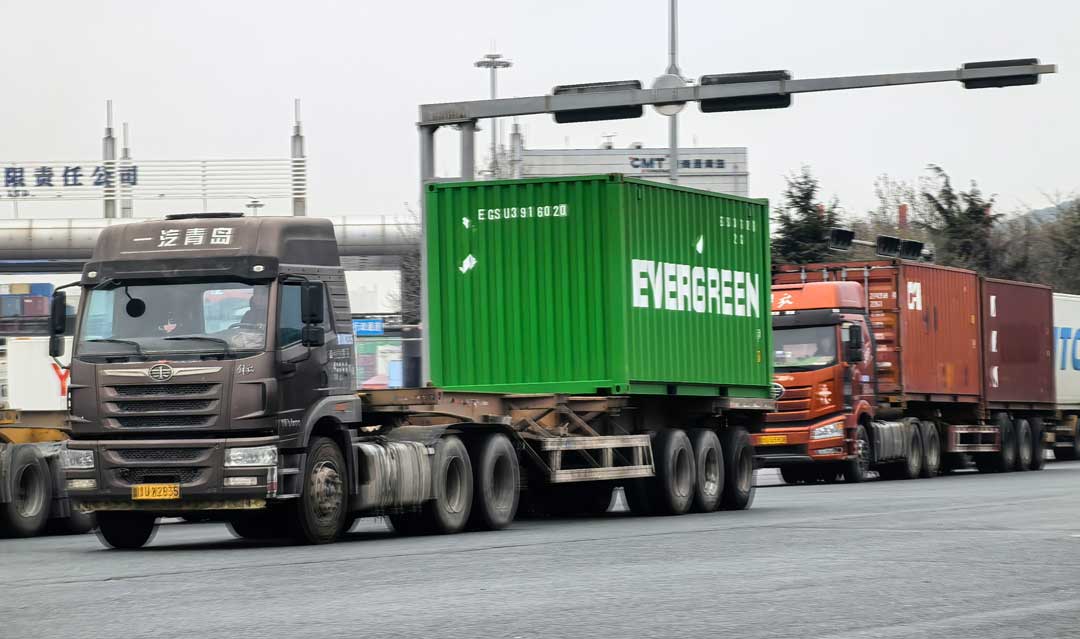
Boston's containers are picked up at Conley Terminal in South Boston, and free time is uniform across the terminal: about 4 to 5 working days for dry containers and about 2 to 3 days for reefer containers, counted from the arrival notice date, with weekends and federal holidays usually counted.
| Pickup location | Paul W. Conley Container Terminal, 940 East 1st Street, South Boston |
| Dry container free time | About 4-5 working days from the arrival notice date |
| Reefer container free time | About 2-3 days from the arrival notice date |
| Counting rules | Weekends and federal holidays usually counted |
Boston's free time is shorter than at West Coast ports (where 4 to 5 dry days is already tight given the East Coast's longer inland legs), so importers need to prepare customs documents and trucking capacity before the vessel arrives; once past the last free day, storage accrues daily at the terminal's rate. Reefer containers additionally face plug-in monitoring and energy charges, making their time cost higher; booking reefer cargo requires advance coordination of pickup and cold-chain delivery.
Containers selected for customs examination are moved to the examination location within Conley Terminal (FIRMS code A295) for X-ray, VACIS or devanning inspection. Examination selection is done by CBP's risk system; the importer or broker cannot control selection but can affect the process experience through document quality.
The most common cause of examination delay is inconsistent documents: discrepancies between the commercial invoice, packing list and actual goods, or HS classification disputes, can both prolong the process. Preparing documents truthfully and in detail before shipping, and responding quickly to CBP's requests, is the most effective way to shorten examination time. If goods cannot clear U.S. customs, they can be returned provided they have not been consumed or delivered in the United States and remain in a facility, bonded warehouse or customs-controlled area; a return requires U.S. export declaration and Chinese import declaration, and goods returned in original condition due to quality or specification issues can apply for duty exemption within the allowed period.
Conley Terminal's gate closes on weekends and federal holidays, and 2026's federal holidays are as follows. Holidays falling on a weekend are observed on the adjacent weekday, and the observed day is also a gate closure day.
| Holiday | Date |
| New Year's Day | January 1, 2026 |
| Martin Luther King Jr. Day | January 19, 2026 |
| Washington's Birthday | February 16, 2026 |
| Memorial Day | May 25, 2026 |
| Juneteenth | June 19, 2026 |
| Independence Day | July 4, 2026 |
| Labor Day | September 7, 2026 |
| Columbus Day | October 12, 2026 |
| Veterans Day | November 11, 2026 |
| Thanksgiving | November 26, 2026 |
| Christmas | December 25, 2026 |
Holiday concentration also affects the rhythm around it: the day before a long holiday the gate is congested, and the first working day after a holiday the yard clears quickly but appointment slots are tight. Pre-holiday stocking plans need to book pickup capacity in advance, especially before Thanksgiving and Christmas, when Boston-area retail distribution demand is concentrated.
Boston's cargo rhythm follows the East Coast's consumer cycle: the peak season is from August to October, when importers stock ahead of the Christmas selling season, direct berth slots are tight, and yard density and pickup waiting both rise; winter from November to February is the off-season, with looser berth and yard space and easier pickup appointments.
| Peak season | August to October, pre-Christmas stocking, tight berth slots, congested gate |
| Off-season | November to February, looser space, easier appointments |
| Winter impact | Nor'easters and blizzards affect vessel berthing and inland delivery; allow buffer in delivery plans |
| Spring transition | March to May, moderate volume, stable schedule, suitable for non-urgent cargo arrangement |
Winter is a special factor for Boston: Nor'easters can close the port for short periods and cause inland delivery delays, and snow and ice also affect trucking departure. Importers with winter delivery windows need to build in a buffer of several days and track weather warnings. Peak-season bookings need to be locked earlier; direct slots are tight from August to October, and the NY/NJ relay option becomes the buffer.
Boston's core value lies in being the container gateway of the New England market: the only deep-water container port in Massachusetts, the endpoint of four direct services, with relatively relaxed yard and gate conditions compared with overloaded hub ports.
Boston's limitation is equally clear: the terminal has no rail access, inland distribution leans on trucking and the Worcester transfer node, and inland time and cost carry an extra trucking leg compared with on-dock-rail ports. For cargo to Greater Boston and nearby New England, Boston is the natural choice; for cargo to the Midwest and farther inland, comparing with NY/NJ's on-dock rail network and Boston's trucking relay is needed to decide the total cost.
At the Paul W. Conley Container Terminal, 940 East 1st Street, South Boston, MA 02127, phone 617-464-8200. It is the port's only container terminal, about 130 acres, with a berth of about 3,300 feet and an alongside depth of 50 feet.
The CBP port code is 0401, used on customs declarations and ACE filings; the UN/LOCODE is USBOS, used by carriers for booking and bills of lading. The two serve different purposes and cannot substitute for each other.
Four carrier groups operate direct services: MSC; Maersk with Hapag-Lloyd (Gemini Cooperation); ONE with Yang Ming and HMM (Premier Alliance); COSCO with OOCL (Ocean Alliance). In peak season, NY/NJ relay plus inland transport is the buffer option.
Direct sailing about 28 to 35 days; Ningbo about 28 to 36 days; Shenzhen, Xiamen and Qingdao about 30 to 38 days. Via New York/New Jersey relay, sea time is similar, plus 2 to 4 days of inland leg. Excludes waiting time from congestion and weather.
No. The terminal has no rail access; containers needing rail transport must first be drayed by truck about 45 miles to CSX's Worcester intermodal yard, about 1 to 1.5 hours one way. The planned Track 61 branch line has not been realized.
Monday to Friday 08:00-17:00, with the last entry at 16:15; closed on weekends and federal holidays. Entry requires a TWIC card, a Massport marine pass and a high-visibility vest; truck turnaround is about 30 to 37 minutes.
The driver needs a TWIC card and a Massport marine pass, and must wear a high-visibility vest. The pickup appointment is made by the forwarder or trucking company through the terminal system; importers do not arrange it personally.
Dry containers about 4-5 working days from the arrival notice date; reefer containers about 2-3 days. Weekends and federal holidays are usually counted; beyond that, storage is charged daily at the terminal's rate. A written extension can be requested with examination or hold documents.
A written extension can be requested from the terminal and carrier, with examination or hold documents submitted before the original expiry date. Whether it is granted depends on each company's policy, there is no uniform standard, and late requests are generally not backdated.
Within Conley Terminal, FIRMS code A295. This code is written on CBP filings when selecting the examination location; writing it wrong can delay the examination arrangement.
Peak season is August to October, with tight direct berth slots and congested gates; bookings should be locked early, and the NY/NJ relay option can be the buffer. Winter Nor'easters affect berthing and delivery, so delivery plans need a buffer of several days.
Yes, provided the goods have not been consumed or delivered in the United States and remain in a facility, bonded warehouse or customs-controlled area. A return requires U.S. export declaration and Chinese import declaration; goods returned in original condition due to quality or specification issues can apply for duty exemption within the allowed period.
Shipping from China to USA
Planning a shipment or just comparing options? Contact our freight experts to get a tailored rate within 24 hours.
