
The Port of Brownsville (UN/LOCODE: USBRO) sits at the mouth of the Rio Grande at the southern tip of Texas, about 17 miles from the Gulf of Mexico, the only deep-water port in Texas located on the U.S.-Mexico border. Opened in 1936 and managed by the Brownsville Navigation District, the port holds about 40,000 acres, the largest land holding of any public port authority in the United States. One fact needs stating up front: Brownsville does not operate container liner services and has no scheduled container calls. FCL cargo exported from China to this region usually enters through Houston and moves inland; what Brownsville handles is project cargo, steel, breakbulk and liquid bulk.
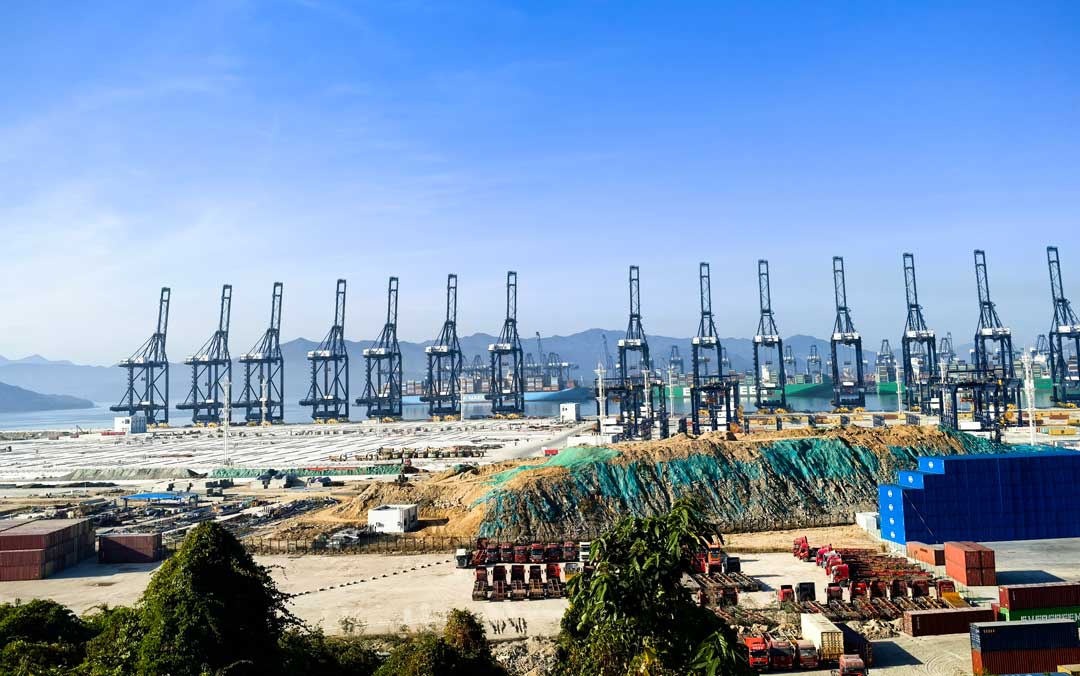
Brownsville sits at 25 degrees 57 minutes north, 97 degrees 24 minutes west, on the north bank of the Rio Grande mouth, with a channel about 17 miles long entering from the Gulf of Mexico past the Brazos Island jetties. The port adjoins the city of Brownsville, Texas; across the river is Matamoros, Tamaulipas, Mexico, connected by international bridges.
Brownsville's position has two meanings. North, it connects via I-69E with Houston, Corpus Christi and other Gulf ports as the outlet of this stretch of the U.S.-Mexico border. South, it borders Mexico's industrial belt, where Tamaulipas and neighboring Nuevo Leon host large auto parts, appliance and electronics assembly plants. The port therefore handles both breakbulk imports and exports within the United States and crossborder logistics serving Mexico, which is why industrial cargo weighs heavily in its cargo mix.
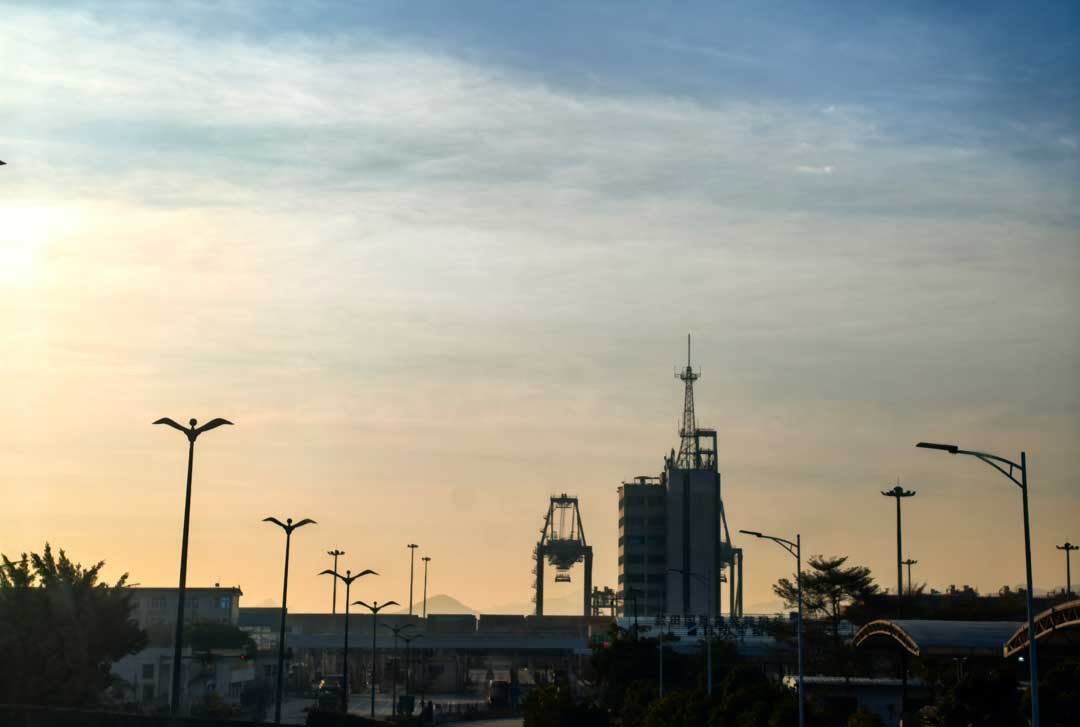
The Port of Brownsville is managed uniformly by the Brownsville Navigation District (BND). The district is a Texas navigation district established under state law, responsible for port land leases, channel maintenance, facility investment and safety regulation. Channel deepening and similar projects are carried out jointly by the port authority and the U.S. Army Corps of Engineers.
| Port name | Port of Brownsville |
| Management | Brownsville Navigation District (BND) |
| Address | 1000 Foust Rd, Brownsville, TX 78521 |
| Phone | (956) 831-4592 |
| Year opened | 1936 |
| Port land | About 40,000 acres, the largest land holding of any public port authority in the United States |
The port authority's functional boundary should be clear: it manages port land, berth leases and public infrastructure, and does not intervene in specific vessel loading/unloading operations or freight forwarding; breakbulk and project cargo handling is done by tenant terminals or specialist stevedores, and distribution by rail and truck companies. Clearance and examination of imported cargo are handled by U.S. Customs and Border Protection, outside the port authority's remit. Shippers or receivers contacting the port authority usually do so to learn about available port land, lease terms or channel project progress.
Brownsville's berths are divided by cargo type, all breakbulk and liquid bulk, with no dedicated container berths. The port district is extensive, with wharf frontage spread along the Rio Grande and large amounts of undeveloped land available for industrial projects.
| Berth type | Number | Main cargo |
| Liquid bulk berths | 6 | Petroleum products, chemicals, vegetable oils and liquid chemical feedstock |
| Breakbulk berths | 13 | Steel and metal products, breakbulk, project equipment, heavy-lift items |
| Container berths | None | The port does not operate container liner services; no scheduled container calls |
| Port land | About 40,000 acres | Developed terminal areas plus leasable industrial land |
The cargo structure decides this port's clientele. Cargo suited to Brownsville includes: wind turbine blades and towers, transformers and large electromechanical equipment, steel pipe and coil, grain and bulk raw materials, liquid chemicals, and vessels needing dismantling or recycling. These cargoes ship as breakbulk or bulk, charged by weight or volume, not in standard containers. General consumer FCL imports do not come here: with no container liner calls, moving FCL to Brownsville and devanning is not economical.
The port also hosts Foreign-Trade Zone 62 (FTZ 62), whose export value ranks among the top three of all U.S. foreign-trade zones. The zone's value is that goods stored, processed and re-exported inside can defer duty payment, suited to projects needing assembly or distribution in North America before re-export. In economic terms, the port supports about 51,000 jobs, with an annual contribution to the Texas economy of about USD 3 billion.
Brownsville's throughput is measured in cargo tonnage, not TEU.
| Annual cargo throughput | About 29 million tons (about 28 million tons in 2024) |
| Total berths | 19, comprising 6 liquid bulk berths and 13 breakbulk berths |
| Foreign-trade zone | FTZ 62, export value among the top three of all U.S. foreign-trade zones |
| Economic impact | Supports about 51,000 jobs; annual state economic impact about USD 3 billion |
| Container business | None; no liner services, not part of scheduled container transport |
Tonnage and TEU figures cannot be compared against each other. Approaching 30 million tons a year is mid-scale among U.S. ports, but measured in TEU this figure comes almost entirely from bulk and breakbulk and is not comparable in magnitude with major container ports. Shippers judging whether a port applies should first check cargo-type match, then look at tonnage or TEU. Brownsville's positioning is a breakbulk and project cargo port at the south end of the Gulf of Mexico, serving industrial and energy cargo rather than consumer consolidation.
Brownsville's most significant change in recent years is channel deepening. The Brazos Island Harbor channel improvement project is scheduled for completion in June 2026, after which large vessels can enter and leave fully loaded, a step-change in the port's freight capacity.
| Item | Before | After |
| Main channel depth | 42 feet | 52 feet |
| Entrance channel depth | 44 feet | 54 feet |
| Jetty channel depth | 44 feet | 54 feet |
| Per-vessel cargo capacity | About 45,000 tons | About 70,000 to 80,000 tons |
| Project investment | - | About USD 226.9 million |
| Scheduled completion | - | June 2026 |
Channel deepening affects a breakbulk port more directly than a container port. When draft is insufficient, bulk carriers and tankers must lighten to enter: the same voyage carries less cargo and unit ton-mile cost rises; after deepening to 52 feet, per-vessel capacity rises from about 45,000 tons to 70,000-80,000 tons, fewer voyages are needed for the same cargo, and freight per ton falls accordingly. For weight-priced cargo such as steel, grain and chemicals, this change materially alters landed cost. The project is carried out jointly by the U.S. Army Corps of Engineers and the port authority, the port's main capital investment direction of the past decade.
Because Brownsville does not operate container liner services, FCL cargo from China to this region must enter through another port and move inland; breakbulk and project cargo can call at Brownsville directly.
| Cargo type | Routing | Notes |
| Consumer and industrial FCL | Chinese ports to Houston 5301, then truck or rail to Brownsville | Houston is the Gulf's main container port, dense schedules, many services |
| FCL (alternative) | Chinese ports to Los Angeles / Long Beach, then rail via San Antonio to Brownsville | Short sea leg, long inland leg; suited to urgent cargo |
| Steel and metal products | Chinese ports direct to Port of Brownsville 2301 | Shipped as breakbulk or bulk, charged by weight or volume |
| Project and heavy-lift cargo | Chinese ports direct to Port of Brownsville, or by semi-submersible vessel | Wind power, transformers, large electromechanical equipment mostly use this path |
| Air | Brownsville South Padre Island International Airport or other airports | High-value, time-sensitive cargo |
FCL cargo takes the Houston routing for schedule density and service choice. Houston is the Gulf's main container gateway, with many Asia services calling and ample capacity, letting importers compare rates across carriers and services. After discharge and clearance at Houston, containers move south on I-69E about 560 km to Brownsville, arriving same day or next day by truck, with rail corridors also available. If the cargo itself is steel, equipment or bulk raw material, and the batch is enough for a full breakbulk vessel or several heavy-lift items, calling at Brownsville directly skips the Houston transshipment step and puts the freight structure closer to the cargo's nature. Which path to choose depends first on whether the cargo fits in containers, then on batch size and delivery deadline.
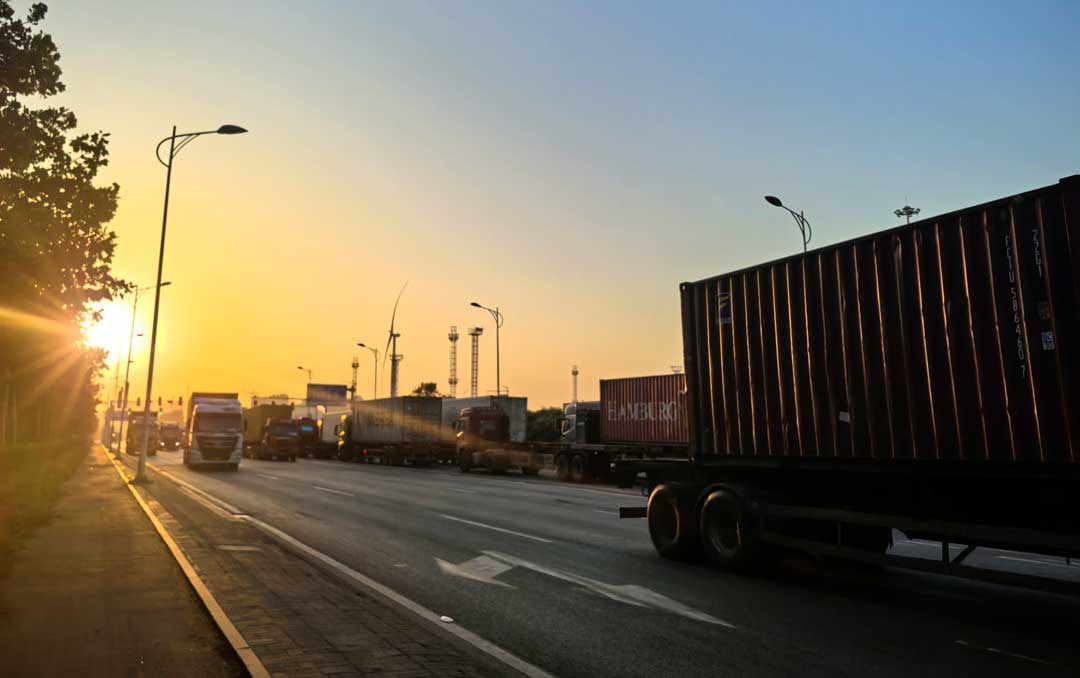
Door-to-door transit time is calculated in segments by routing. FCL cargo enters via Houston; breakbulk and project cargo call at Brownsville directly, and the two have different time distributions.
| Routing | Sea leg | Inland leg | Door-to-door total |
| Shanghai / Ningbo via Panama to Houston | About 30 to 38 days | Truck about 1 to 2 days | About 33 to 42 days |
| Shenzhen via Panama to Houston | About 32 to 40 days | Truck about 1 to 2 days | About 35 to 44 days |
| Shanghai / Ningbo to Los Angeles then rail | About 11 to 18 days | Rail about 5 to 7 days | About 22 to 31 days |
| Breakbulk direct to Brownsville | About 32 to 42 days | Yard pickup or short delivery | Per vessel schedule and handling plan |
The totals above are port-to-warehouse estimates, excluding origin booking, loading and export clearance. Breakbulk and project cargo time is not calculated by container liner schedule but set by the charter party's laydays, loading/discharge terms and berth arrangement; the actual cycle depends on vessel scheduling and cargo-volume matching, with a wider fluctuation range than container liners. FCL cargo via Houston must also account for the Houston port's temporary closures in hurricane season: the Gulf coast may close the channel for one to three days on storm warnings between June and November each year, so scheduling in this period should carry buffer.
The two FCL routings differ little in total duration. Via Houston the sea leg is long and the inland leg short, with all handling concentrated at Houston; via Los Angeles the sea leg is short and the inland leg long, with rail taking five to seven days and shorter free time at West Coast rail yards, adding pickup pressure after arrival. For receivers with tight inventory turnover wanting pickup on arrival, the Houston routing is more controllable; for shippers needing bills of lading quickly or with fixed operating partners on the West Coast, the West Coast routing suits better.
Brownsville's rail service is handled by the Brownsville and Rio Grande International Railway (BRG), managed by OmniTRAX, with about 45 miles of in-port rail connecting directly to three U.S. Class I railroads.
| In-port rail operator | Brownsville and Rio Grande International Railway (BRG), managed by OmniTRAX |
| In-port rail length | About 45 miles |
| Connected Class I railroads | Union Pacific (UP), BNSF, CPKC |
| Main function | Connect port berths with the trunk rail network, handling breakbulk and project cargo in and out |
The in-port rail's role is to link waterfront berths with the national rail network. Bulk and breakbulk cargo discharged at the terminal can be loaded directly, entering the Class I network via BRG's in-port lines, north to Houston, San Antonio and Chicago, or across the border into Mexico's rail system. For steel and grain cargo received within the United States, rail is the main mode for long distances, cheaper than trucking. For cargo needing to cross into Mexico's industrial belt, rail provides a channel that avoids road crossings, reducing exposure to border road congestion. Note that this rail system serves breakbulk terminals and has no scheduled container block-train capability.
Brownsville faces Matamoros, Tamaulipas across the Rio Grande, with several international bridges connecting the two, so the port has the dual character of seaport and land port of entry.
If cargo from China is ultimately destined for assembly plants in northern Mexico, it can enter via the U.S. port then cross by land, or enter directly via a Mexican port; the two paths differ in duty and compliance requirements and must be handled per origin rules and trade agreements individually. Crossborder transport rules differ from general imports: the same shipment entering the U.S. and then exiting to Mexico may involve two sets of procedures, U.S. export declaration and Mexican import declaration; if the cargo is still in bonded or FTZ status in the United States, duty treatment at crossing has separate provisions. Cargo involving USMCA origin needs the corresponding certificate of origin to enjoy preferential rates. These issues should be confirmed case by case by the importer and broker per the transaction structure, with no universal practice.
Brownsville's import clearance is handled by CBP at port of entry 2301. Because the port is breakbulk- and project-cargo-heavy, the clearance process differs from FCL cargo.
Formal import declaration requires the receiver to provide a taxpayer identification number (EIN), commercial invoice, packing list and bill of lading. Sea cargo must complete Importer Security Filing (ISF, the so-called 10+2) before loading, submitted by the importer or its agent 24 hours before the vessel sails. Commodity classification, origin and valuation are handled per the Harmonized Tariff Schedule of the United States (HTSUS); categories subject to additional tariffs need their applicability checked separately.
Breakbulk clearance has one key difference from containers: breakbulk and bulk cargo is usually delivered in batches per the piece count or weight listed on the bill of lading, possibly with multiple pickups and batch declarations, whereas a container is generally taken in one trip. For such cargo, the unit of measure, packaging and piece count in the declaration must match the actual goods, or mismatches at examination will cause port delays. Texas levies no state-level import duty on imported goods, but goods entering circulation in the state for final consumption may involve sales and use tax. FTZ 62 inside the port district can be used for duty-deferred storage and processing; specific availability should be confirmed case by case with the broker.
Because Brownsville is breakbulk- and project-cargo-heavy, the pickup process after arrival differs from a container terminal, with more weight on document checking and measurement.
The risk in the process concentrates on documents and measurement. Breakbulk piece count and weight must be consistent across bill of lading, packing list and actual arrival; any discrepancy must be raised and recorded at the discharge site, as it is hard to trace after leaving the port. Heavy-lift and oversize cargo needs oversize permits from state transportation departments in the United States, processed state by state for cross-state transport, usually taking 48 hours or more; arrange in advance. The port district is large with scattered terminal points; after entering, pickup vehicles work at designated cargo positions, and drivers need to confirm the yard number and working window in advance.
The last free day (LFD) is the cutoff of the free storage period, after which storage is charged. At Brownsville, charges occur in the port district yards, with free periods per the port district's or stevedore's notices.
| Item | Timing start | Free duration | Charging party |
| Port district yard (breakbulk) | Day discharge is complete | Per port or stevedore notice, commonly 3 to 5 working days | Port district or stevedore |
| Port district warehouse (cargo needing storage) | Day cargo enters the warehouse | Per warehousing contract | Warehouse operator |
| Carrier equipment charges (if cargo is boxed) | Day container leaves the port district | Per equipment free time by box type and service | Carrier |
| Chassis rental | Day chassis is drawn | Per trucking company agreement | Chassis supplier |
Breakbulk's storage charge structure differs from containers: besides yard storage, it may involve tallying fees, measurement fees and loading/unloading operation fees, each charged per contract or notice and not offsetting each other. After receiving the arrival notice, the receiver should confirm four things at once: the last free day at the port district or warehouse, the charging basis of each operation fee, the arrangement of distribution vehicles and working windows, and whether highway permits for oversize cargo are in place. With all four clear, pickup dates can be set without clearing one link while delaying another.
If pickup cannot be made within the free period due to customs examination, document correction or other reasons beyond the receiver's control, a written extension can be requested from the port district or stevedore with supporting documents, submitted before the original expiry date; late requests are generally not backdated. Approval is handled per each company's published policy with no uniform standard. Texas has clear limits on gross weight and axle load for road transport; overweight cargo needs a permit from the state Department of Transportation (TxDOT), with cross-state transport processed state by state, and this time should be counted into scheduling in advance.
Customs examination (CBP Examination) is a routine part of the import process, sampling declared cargo per CBP's risk scoring. Breakbulk examination focuses on counting, measurement and quality checking, different from a container's whole-box imaging.
| Method | Operation | Impact on pickup |
| Document review | Check invoice, packing list, certificate of origin and declaration data | Cargo not moved; released after supplementing documents |
| Measurement and count check | Check piece count, weight, specification against declaration | Adds half a day to two days |
| Intensive exam | Open part of the packaging to check name and quality | Adds one to three days; needs repackaging |
| Sampling and lab test | Sample chemicals, food and similar cargo for testing | Adds several days to several weeks, depending on the test |
Examination generates exam service fees, handling fees, unpacking and repackaging labor, and storage during the exam, all borne by the receiver regardless of whether problems are found. Breakbulk sampling and lab testing can take a long time, with chemical and food test cycles varying widely; scheduling should leave margin. After exam release the cargo can leave the port district; this is one of the main sources of time volatility for this cargo class. Practical ways to lower examination probability: declared name, piece count and weight matching the physical goods, prices within the common range for similar products, avoiding under-declaration and mixed loading, and keeping import records continuous.
When cargo cannot clear U.S. customs or the receiver refuses it, return can be processed. The precondition is that the goods have not been consumed or delivered in the United States and remain in the port district, warehouses or customs-controlled areas.
Return costs include U.S. export clearance fees, return freight, and storage and handling at both ends. Heavy-lift and oversize cargo returns also involve re-applying for highway permits and lifting operations. Whether to return usually needs comparison with abandoning the cargo, reselling to another country or local destruction. Abandoning requires application to customs and payment of destruction fees; reselling requires new transport and export arrangements. Brownsville's breakbulk return capacity has no fixed schedule like container liners, so the time cost of return must be assessed in advance. Cargo involving additional tariffs or certificate-required categories should have the destination's import requirements confirmed before disposal.
Brownsville's operating rhythm follows U.S. federal holidays. During federal holidays, port district and terminal operations pause, and loading, unloading and pickup cannot proceed.
| Holiday | Date basis | Impact on pickup |
| New Year's Day | January 1 | Port district operations pause |
| Martin Luther King Jr. Day | Third Monday in January | Port district operations pause |
| Presidents Day | Third Monday in February | Port district operations pause |
| Memorial Day | Last Monday in May | Port district operations pause |
| Juneteenth | June 19 | Port district operations pause |
| Independence Day | July 4 | Port district operations pause |
| Labor Day | First Monday in September | Port district operations pause |
| Columbus Day | Second Monday in October | Port district operations pause |
| Veterans Day | November 11 | Port district operations pause |
| Thanksgiving | Fourth Thursday in November | Port district operations pause |
| Christmas | December 25 | Port district operations pause |
U.S. federal holidays number 11 in 2026; the table above covers those directly tied to port district operations. Holidays falling on a weekend are usually observed on the adjacent working day, with actual closure days per that year's notices. Brownsville must also watch the Mexican side's holiday calendar: Matamoros and Mexican statutory holidays do not coincide with U.S. ones, and crossborder road cargo must count working days at both ends separately, otherwise one side is on holiday while the other waits for cargo.
Brownsville's cargo rhythm differs from consumer consolidation's peak/low pattern, driven mainly by industrial and energy project progress.
Seasonal variables come mainly from project cycles and weather. Large engineering projects fix equipment arrival windows at the planning stage, and the port must schedule berths and lifting resources accordingly; if prior stages slip, arrival windows shift, affecting subsequent projects. On weather, the Gulf of Mexico's June to November hurricane season can close the port temporarily on storm warnings, and breakbulk is more visibly affected than containers because bulk carriers depend on continuous terminal operations, and restarting after interruption requires re-arranging labor, equipment and yards. On the border, road crossing queue times fluctuate with both countries' clearance policies and cargo examination rates; cargo involving the Mexican leg should leave clearance buffer.
Using Brownsville as the landing point for breakbulk and project cargo concentrates benefits in four areas: channel depth, land resources, rail network and border access.
| Advantage | Specifics |
| Channel deepened to 52 feet | After the Brazos Island Harbor project completes in June 2026, per-vessel capacity rises from about 45,000 tons to 70,000-80,000 tons, lowering unit-ton freight |
| Ample land resources | Holds about 40,000 acres, the largest land holding of any U.S. public port authority, able to take on large industrial projects and new plants |
| Direct connection to three Class I railroads | About 45 miles of in-port rail operated by BRG, connecting Union Pacific, BNSF and CPKC directly; breakbulk can reach the whole country by rail |
| Direct berths without transshipment | Breakbulk and project cargo can call and discharge at this port directly, skipping transshipment at other ports and inland relay, reducing handling steps and damage risk |
| Foreign-trade zone policy | FTZ 62's export value ranks among the top three of all U.S. foreign-trade zones; goods stored and processed in the zone can defer duty, suited to assembly and re-export projects |
| Adjacent to Mexico's industrial belt | Faces Matamoros across the river, connected to northern Mexico's manufacturing belt via international bridges and crossborder rail, serving both U.S. domestic and crossborder cargo flows |
The limitations should also be seen clearly. Brownsville does not operate container liner services: general FCL cargo does not apply to this port and must enter via Houston and other container ports then move inland, adding one discharge and inland leg. The port's schedules are not set by container liner timetables but by charter party laydays and berth arrangements, so shippers cannot choose by week as with container booking. Breakbulk's storage and operation fee items are numerous, each charged per contract or notice, making the cost structure more complex than FCL. Crossborder cargo has a separate set of duty and compliance requirements to be handled per origin rules individually. Brownsville suits best: cargo that is itself steel, equipment, bulk raw material or heavy-lift, with batch size enough for a direct vessel call, or projects needing port land and FTZ policy support.
At the mouth of the Rio Grande at the southern tip of Texas, about 17 miles from the Gulf of Mexico, adjoining the city of Brownsville, with Matamoros, Tamaulipas across the river. The port opened in 1936 and is managed by the Brownsville Navigation District.
No. The port does not operate container liner services and has no scheduled container calls. FCL cargo exported from China to this region usually enters through Houston and other ports then moves inland. Brownsville handles project cargo, steel, breakbulk and liquid bulk.
2301. The port code is used on customs declarations, ACE filings and ISF filings, and serves a different purpose from the UN location code USBRO; the two cannot substitute for each other.
Usually entry via the Port of Houston (port code 5301), then south on I-69E to Brownsville about 560 km after discharge and clearance, arriving same day or next day by truck. Another option is entry via Los Angeles or Long Beach then rail, with a short sea leg but long inland leg.
The Brazos Island Harbor channel improvement project is scheduled for completion in June 2026. After completion the main channel deepens from 42 to 52 feet, the entrance and jetty channels from 44 to 54 feet, and per-vessel cargo capacity rises from about 45,000 tons to 70,000-80,000 tons. Project investment is about USD 226.9 million.
Mainly project cargo, steel and metal products, breakbulk, liquid bulk and vessel recycling. The port has 6 liquid bulk berths and 13 breakbulk berths, 19 berths in total, with no dedicated container berths.
The Brownsville and Rio Grande International Railway (BRG), managed by OmniTRAX, with about 45 miles of in-port rail connecting Union Pacific, BNSF and CPKC directly, handling breakbulk and project cargo distribution.
About 40,000 acres, the largest land holding of any U.S. public port authority. The port district hosts FTZ 62, whose export value ranks among the top three of all U.S. foreign-trade zones, usable for duty-deferred storage and processing.
Yes. Brownsville and Matamoros have international bridge crossings, and crossborder rail connects with the Mexican rail system via BRG's in-port lines. If cargo enters the U.S. and then exits to Mexico, it may involve U.S. export declaration and Mexican import declaration; cargo involving USMCA origin also needs a certificate of origin, to be confirmed case by case.
Per the port district's or stevedore's notices; breakbulk commonly runs 3 to 5 working days, and cargo needing warehousing per the warehousing contract. Besides storage fees, tallying, measurement and loading operation fees may apply, each charged separately and not offsetting each other.
A written extension can be requested from the port district or stevedore, with examination or hold documents submitted before the original expiry date. Approval is handled per each company's policy with no uniform standard, and late requests are generally not backdated. Breakbulk sampling and lab testing can take a long time; scheduling should leave margin.
Cargo exceeding highway limits needs an oversize permit from the state Department of Transportation (TxDOT), with cross-state transport processed state by state, usually taking 48 hours or more. Returns or resales of heavy-lift cargo also involve re-applying for highway permits and lifting operations.
Shipping from China to USA
Planning a shipment or just comparing options? Contact our freight experts to get a tailored rate within 24 hours.
