
The Port of Charleston (UN/LOCODE: USCHS) sits in Charleston, South Carolina, managed by the South Carolina Ports Authority (SC Ports). Its 52-foot channel is the deepest of any container port on the U.S. East Coast. North, the port connects to the rail network of the U.S. Southeast interior; south, it serves the markets of Georgia and northern Florida. Cargo shipped from China to South Carolina, North Carolina and northern Georgia commonly enters the United States at Charleston.
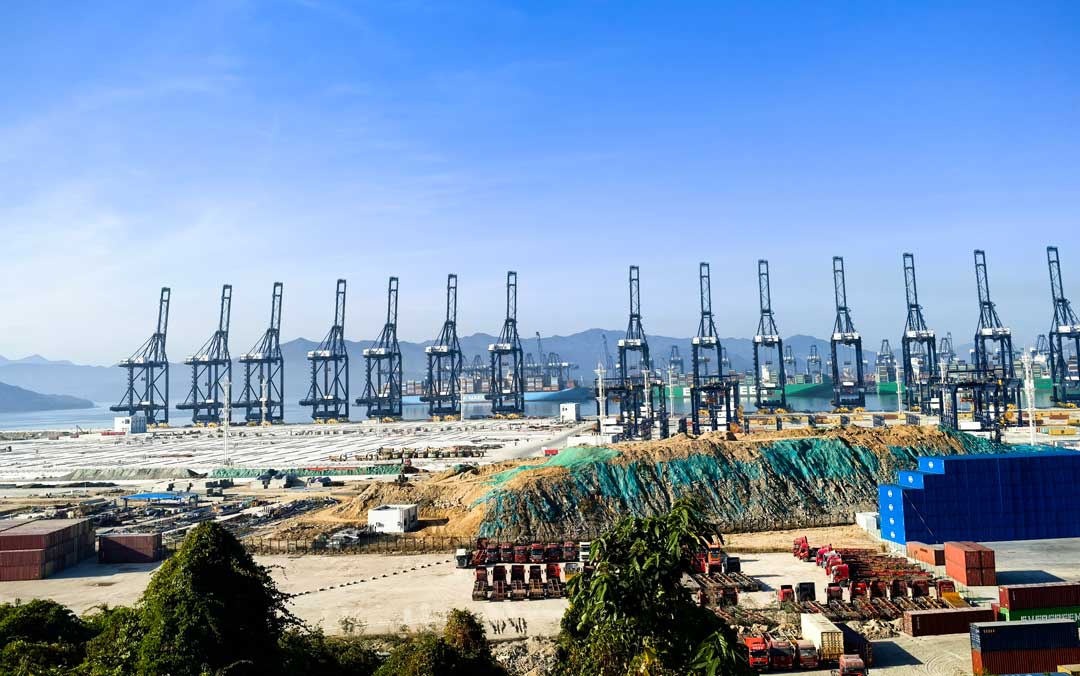
Charleston sits at 32 degrees 47 minutes north, 79 degrees 56 minutes west, on the Atlantic coast of South Carolina. The port district forms where the Cooper, Wando and Ashley rivers converge into Charleston's inner harbor; the district lies about 9 to 15 miles from the open Atlantic, with vessels taking about one to two hours from berth to the open sea.
Charleston's geographic feature is that it forms a gateway pair with Savannah in the U.S. Southeast. The two ports lie about 170 km apart with heavily overlapping hinterlands, and their services and schedules have different emphases. For importers, this pair means the Southeast market usually has an alternative port of entry, so there is no need to wait passively on a single port's congestion or tight capacity. Charleston's deeper channel favors large-vessel calls, while Savannah's rail distribution scale is larger; the operational trade-off depends on the cargo's final destination and current capacity pricing.
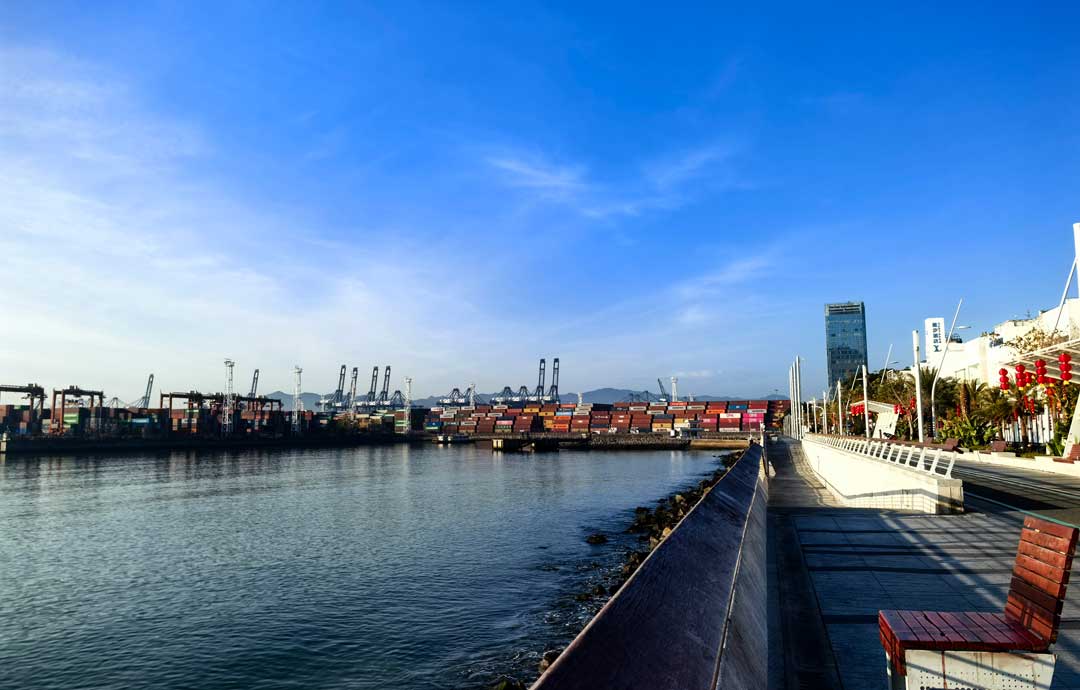
The Port of Charleston is managed uniformly by the South Carolina Ports Authority. The agency was established by law in 1942 as a state-owned institution, owning and operating Charleston's marine terminals plus two rail inland ports at Greer and Dillon.
| Port name | Port of Charleston |
| Management | South Carolina Ports Authority (SC Ports) |
| Established | 1942, a South Carolina state institution |
| Official website | scspa.com |
| Container terminals | Wando Welch, North Charleston, Hugh K. Leatherman (container operations suspended from August 2026) |
| Non-container terminals | Columbus Street (ro-ro and heavy lift), Union Terminal (breakbulk and cruise), Veterans Terminal (transload) |
| Inland ports | Inland Port Greer, Inland Port Dillon |
| Channel depth | 52 feet, the deepest on the U.S. East Coast |
The port authority's functions cover terminal operations, inland port operations, channel maintenance and infrastructure investment, but it does not intervene in specific vessel booking or freight forwarding. Clearance and examination of imported cargo are handled by U.S. Customs and Border Protection, outside the port authority's remit. Terminal-level appointment and storage issues go through the terminal operating systems and customer service channels; policy, investment and lease matters go through the port authority. Note that in 2026 the port authority adjusted its terminal layout: Leatherman Terminal's operations are suspended, and bookings and inquiries should follow the terminal actually in operation at the time.
Charleston's container operations concentrate at three terminals. From August 1, 2026, operations concentrate at Wando Welch and North Charleston, with Leatherman entering short-term suspension.
| Terminal | Location | Scale and equipment | Current status |
| Wando Welch Terminal | East bank of the Wando River, about 9 miles from the open sea | Continuous berth 3,800 feet; 689 acres total, 267 acres stacking; 15 post-Panamax ship-to-shore cranes; 188,000 sq ft on-dock warehouse | Main operating terminal, handling about 80% of the port's container volume; can work three large vessels simultaneously |
| North Charleston Terminal | Cooper River front, about 15 miles from the open sea | 201 acres; continuous berth 2,500 feet; 5 cranes (2 post-Panamax, 3 Panamax); about 134 acres stacking; on-dock intermodal rail yard | Operating, handling about 22% of the port's container volume; mainly serves vessels below 8,000 TEU |
| Hugh K. Leatherman Terminal | West bank of the Cooper River, North Charleston | 286 acres; phase 1 berth 1,400 feet; 5 cranes (169 ft lift, 228 ft outreach); 25 hybrid rubber-tired gantries; reefer yard | Opened April 2021; phase 1 design capacity 700,000 TEU; container operations suspended from August 1, 2026 |
Leatherman's suspension needs separate explanation. The port authority announced on June 25, 2026 that container operations at the terminal would be suspended from August 1, 2026, concentrating container business at Wando Welch and North Charleston, described as a short-term suspension with no resumption date published. The stated reasons were multifaceted industry pressure, uncertain trade prospects and moderate volumes. Before the suspension the terminal handled 75,455 container lifts in the first 11 months of FY2026, against 1.07 million at Wando Welch in the same period. The practical impact for importers: liner services that formerly called at Leatherman now call at Wando Welch or North Charleston, so bookings and pickup must follow the carrier's current terminal arrangement rather than past experience. Leatherman's second berth project is still proceeding; the terminal is planned for 2.4 million TEU capacity when all three phases are complete, a long-term reserve for the port.
Charleston's throughput is published on the port authority's fiscal year basis, with the fiscal year starting July 1.
| Period | Container throughput | Notes |
| FY2025 (July 2024 to June 2025) | About 2.6 million TEU | Up 3% year on year; rail cargo up 4% |
| Same period inland port rail moves | Greer 205,523; Dillon 33,838 | Greer passed 200,000 moves for the first time, up about 10% |
| FY2025 ro-ro | 165,949 vehicles | Charleston is one of the major U.S. vehicle import/export ports |
| FY2026 first 11 months | About 2.24 million TEU | Down 5% year on year |
| Largest vessel to call | OOCL Iris, 16,828 TEU | February 2025, the largest in the port's history |
These figures should be read against two layers of background. The first is growth and decline: FY2025 grew 3%, while the first 11 months of FY2026 fell 5%, a shift tied to changes in the U.S. import rhythm after tariff policy adjustments and directly related to uncertain trade prospects; Leatherman's suspension was decided in this context. The second is structure: Charleston's rail cargo kept growing in the same period, with Inland Port Greer's rail moves passing 200,000 for the first time, showing the port's inland distribution capability is improving, not just terminal throughput changing. The port authority states the port supports about one-ninth of South Carolina's jobs, with annual international trade cargo value exceeding USD 75 billion. For shippers, these figures matter for judging capacity tightness: in years of declining volume, capacity is relatively loose and rate negotiations usually have more room.
There are three main routings from China to Charleston: all-water direct via the Panama Canal; Suez Canal routings; and relay via West Coast ports or New York/New Jersey into the Southeast.
| Routing | Path | Direct call at Charleston |
| All-water direct (via Panama Canal) | Chinese ports to Panama Canal to Charleston | Yes, part of Asia-US East Coast direct services |
| Via Suez Canal | Chinese ports to Suez to Mediterranean to US East Coast to Charleston | Depends on schedule and service arrangement; some services call |
| East Coast relay | Chinese ports to New York/New Jersey, then rail or truck south to Charleston | No; needs inland transport of about 1,100 km |
| West Coast sea-rail | Chinese ports to Los Angeles / Long Beach, then rail via Atlanta or Memphis | No; longest inland leg |
Charleston is often scheduled as an earlier port of call on Asia-US East Coast services; some services call at Charleston first after entering via the Panama Canal, then head north to New York, so sea time is close to or slightly shorter than New York/New Jersey. Suez routings are affected by regional conditions in the Red Sea and Mediterranean legs, and in recent years some carriers have adjusted their calling structures; confirm the actual routing at booking. Relaying via New York/New Jersey into the Southeast is sometimes cheaper on rate, but the inland leg adds about 1,100 km and clearance must be completed at another port of entry, adding handling steps. If the receiving market is in South Carolina, North Carolina or northern Georgia, calling at Charleston directly usually involves the fewest steps.
Transit time is estimated in segments by origin port and routing, on the same basis as other East Coast port pages.
| Origin port | Direct via Panama Canal | Via Suez Canal |
| Shanghai | About 26 to 34 days | About 30 to 38 days |
| Ningbo | About 26 to 34 days | About 30 to 39 days |
| Shenzhen | About 28 to 36 days | About 32 to 40 days |
| Xiamen | About 28 to 36 days | About 32 to 40 days |
| Qingdao | About 28 to 37 days | About 33 to 41 days |
The times above are common ranges for sea legs, excluding origin booking, loading, export clearance and destination clearance. Panama Canal routings must also account for changes in lock slot supply: when canal area water levels run low, daily transits fall and some schedules slip three to five days. Suez routings are affected by Red Sea leg conditions, with Cape of Good Hope diversions occurring from time to time, so actual sea time can exceed the table ranges by a week or more; confirm the current routing with the carrier at booking. Actual time is also affected by vessel type, port rotation, East Coast port congestion and holidays; peak season can add a week.
Charleston's Asia direct services are operated by multiple liner companies through alliance slot sharing. Shippers usually book through forwarders, and the actual carrier is arranged by the forwarder per its slot agreements.
| Carrier / alliance | Service characteristics |
| Mediterranean Shipping Company (MSC) | Charleston's largest carrier customer. From September 2025 added two weekly Atlantic services, Albatros and Dragon, calling at Charleston with 15,000 TEU vessels connecting Northern Europe, the Mediterranean and Asia; formerly called at Leatherman, now at Wando Welch or North Charleston after the suspension |
| Maersk with Hapag-Lloyd | Operate US East Coast services through the Gemini Cooperation; Charleston is one of their East Coast call points |
| COSCO Shipping with OOCL | Operate transpacific and Asia-US East Coast services. In February 2025 OOCL Iris (16,828 TEU) called at Charleston, setting the port's largest-vessel record |
| ONE, Yang Ming, HMM | Former THE Alliance members, operating Asia-US East Coast services, some covering Charleston |
| Evergreen | Operates transpacific and Mediterranean-Asia services; Charleston is one of its East Coast call points |
Alliance structures saw a round of adjustment around 2025, and Gemini Cooperation and the original alliances' service coverage changed accordingly; whether a specific carrier calls at Charleston direct in a given quarter should follow the sailing schedule, not inferred from past experience. Charleston's total capacity is mid-scale on the East Coast, and in peak season some carriers prioritize contract customers. SC Ports operates the RapidRail drayage program and the SMART Pool chassis pool, the former coordinating drayage between terminals and rail yards, the latter providing scaled chassis supply; both have practical effect on peak-season pickup, and applicability can be confirmed with the forwarder at booking.
Charleston's rail service is handled by two Class I railroads, CSX Transportation and Norfolk Southern (NS), with the port authority additionally operating two rail inland ports, extending the port's container capability inland.
| Facility | Owner | Location and characteristics |
| On-dock rail yards | North Charleston Terminal, Columbus Street Terminal | North Charleston Terminal has an on-dock intermodal rail yard; Columbus Street's on-dock rail is served jointly by NS and CSX |
| Inland Port Greer | SC Ports, served by NS | Opened November 2013, along the I-85 corridor, more than 200 miles from Charleston; 24/7 operations, night double-stack shuttles to and from Charleston; March 2025 completed a USD 55 million expansion, doubling yard capacity, adding more than 9,000 feet of rail, raising annual rail lift capacity to 300,000 |
| Inland Port Dillon | SC Ports, served by CSX | Opened April 2018, 242 acres, adjacent to I-95 and the North/South Carolina border; double-stack shuttles to and from Charleston |
| Leatherman rail yard | SC Ports | 6 electric rail-mounted gantries, planned annual rail lift capacity of 1 million; proceeding separately from the terminal's suspension |
| Navy Base Intermodal Facility | SC Ports, about USD 690 million | Planned to provide near-dock rail service for CSX and NS; originally planned to open in 2026, now announced as delayed |
The two inland ports' role is to move the clearance and pickup landing point from the coast into manufacturing clusters. Greer sits on the I-85 corridor near the auto and parts industry belt in upstate South Carolina; Dillon adjoins I-95, serving the North/South Carolina border area. After containers move by rail from Charleston to an inland port, they can be picked up on the spot, and receivers need not pick up at the coast and truck back inland, reducing empty backhaul on the inland leg. The port authority also built a one-mile dedicated drayage road separating intermodal traffic from I-26 interstate traffic, aiming to reduce traffic weaving around the port district. For cargo destined for the I-85 corridor or the Pee Dee region, landing at Greer or Dillon usually saves time over terminal pickup.
Charleston's container terminals run gate operations on working days, and pickup requires a registered time slot in the terminal appointment system in advance. Because of the terminal adjustment from August 2026, confirm the carrier's current terminal before booking.
| Operating terminals | Wando Welch Terminal, North Charleston Terminal; Leatherman Terminal's container operations suspended from August 1, 2026 |
| Appointment method | Online appointment through the terminal operating system; customs release and carrier release must be obtained first |
| Driver access | TWIC card required; specific access requirements and PPE rules per the terminal's same-day notice |
| Gate hours | Per the terminal's same-day notice; published windows are relatively fixed and exclude weekends and federal holidays, so allow room for rescheduling |
| Inland port pickup | Greer and Dillon operate 24/7; rail lift windows are wider than seaport terminal gates |
| Chassis | SC Ports operates the SMART Pool chassis pool; the RapidRail program coordinates transfers between terminals and rail yards |
Two points need advance confirmation on pickup arrangements. First is terminal assignment: Leatherman's suspension moved some services' calling terminals, so the pickup location for the same shipment may differ from the previous year; arranging trucks to the old address will send vehicles to the wrong gate. Second is the difference between seaport terminals and inland ports: seaport terminal gates open on working days, while Greer and Dillon operate around the clock, so when the last free day is near and the pickup window is tight, changing the landing point to an inland port can buy time. Chassis supply is usually tighter in peak season; SMART Pool's scaled management helps relieve the tightness, but specific availability should still be confirmed with the trucking company.
Charleston's import clearance is handled by CBP at port of entry 1601, which is also the center of Customs District 16. For cargo from China there are two common clearance arrangements.
Formal import declaration requires the receiver to provide a taxpayer identification number (EIN), commercial invoice, packing list and bill of lading. Sea cargo must complete Importer Security Filing (ISF, the so-called 10+2) before loading, submitted by the importer or its agent 24 hours before the vessel sails. Commodity classification, origin and valuation are handled per the Harmonized Tariff Schedule of the United States (HTSUS); categories subject to additional tariffs need their applicability checked separately.
South Carolina levies no state-level import duty on imported goods, but goods entering circulation in the state for final consumption may involve sales and use tax, handled by the receiver per its business nature and registration. South Carolina's import categories are mainly autos and parts, machinery, chemicals and consumer goods, with auto cargo requiring more detailed declaration documents: commodity codes and usage descriptions must match the physical goods. Multiple foreign-trade zones (FTZ) exist in the state; specific availability should be confirmed case by case with the broker.
After the container discharges at a Charleston terminal, the pickup process starts counting from the arrival notice. The port authority's terminal operating systems are highly online, with most steps completed by appointment.
The risk in the process concentrates on terminal assignment and release status. Leatherman's suspension changed some services' calling terminals, and trucking companies should verify the current terminal before dispatching, to avoid sending vehicles to old addresses. Whether the container has customs release is a precondition for obtaining an appointment; if selected for examination, the appointment locks until the exam completes. Warehousing and LCL resources around the Charleston port district concentrate in North Charleston and the Hanahan and Ladson area, where temporary storage or devanning can be arranged near the port. Empty return points are usually in the same area, so return and pickup can be combined in one trip.
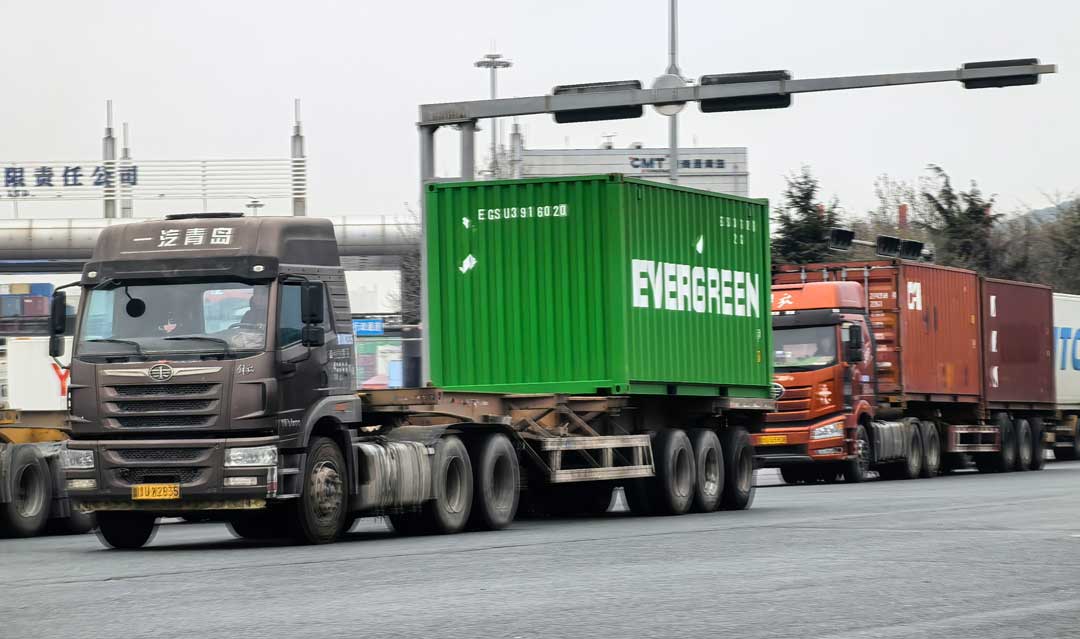
The last free day (LFD) is the cutoff of the free storage period, after which storage is charged. Charleston's charges occur at the terminal or inland port, with free periods per the port authority's and carrier's notices.
| Item | Timing start | Free duration | Charging party |
| Terminal storage (dry container) | Discharge day or container available day | Per terminal notice, mostly about 4 days for dry | Terminal operator |
| Terminal storage (reefer container) | Day of discharge and plug-in | Shorter than dry, per terminal notice | Terminal operator |
| Inland port storage | Day arrival notice is issued | Per port authority notice | Port authority |
| Carrier demurrage | Day container leaves the terminal | Per equipment free time by box type and service | Carrier |
| Chassis rental | Day chassis is drawn | Per trucking company agreement | Chassis supplier |
The timing starts and charging parties of each charge differ and do not offset each other: terminal storage overtime does not automatically extend the carrier's equipment free time, and vice versa. Reefer free time is clearly shorter than dry, so fresh and pharmaceutical cargo imports need priority arrangement. After receiving the arrival notice, the receiver should confirm four things at once: the last free day at the landing terminal or inland port, the expiry of the carrier's equipment free time, the location and hours of the empty return point, and the round-trip mileage from the receiving site to the return point. With all four clear, pickup and return dates can be set without clearing one deadline while breaching another.
If pickup cannot be made within the free period due to customs examination, document correction or other reasons beyond the receiver's control, a written extension can be requested from the terminal or carrier with supporting documents, submitted before the original expiry date; late requests are generally not backdated. Approval is handled per each company's published policy with no uniform standard. Because seaport terminal gates open on working days, if the last free day falls before a weekend or federal holiday, actual available working days decrease and scheduling should be calculated early. Greer and Dillon inland ports operate around the clock and can serve as alternative landing points when time is tight.
Customs examination (CBP Examination) is a routine part of the import process, sampling declared cargo per CBP's risk scoring. Examination usually occurs at the port of entry where the container lands, and can also occur at the inland port after transshipment, depending on the examination location determined at declaration.
| Method | Operation | Impact on pickup |
| Document review | Check invoice, packing list, certificate of origin and declaration data | Cargo not moved; released after supplementing documents |
| Non-intrusive inspection (NII) | Whole box X-ray imaging, no devanning | Usually completed same day; container stays in yard |
| Tailgate exam | Open box door to check cargo at the front | Adds half a day to one day |
| Comprehensive exam (CET) | Move to exam area for piece-by-piece count and full devanning | Adds three to seven days; must be restuffed |
Examination generates exam service fees, drayage round-trip fees, devanning and restuffing labor, and storage during the exam, all borne by the receiver regardless of whether problems are found. After exam release the container can be moved out; this is one of the main sources of time volatility at Charleston. Practical ways to lower examination probability: declared name matching the physical goods, prices within the common range for similar products, avoiding under-declaration and mixed loading, and keeping import records continuous. If the cargo's final landing point is an inland port, confirm whether the examination location determined at declaration matches the landing point; otherwise the exam may be completed at the seaport first before rail transfer, adding one handling.
When cargo cannot clear U.S. customs or the receiver refuses it, return can be processed. The precondition is that the goods have not been consumed or delivered in the United States and remain at a terminal, inland port, bonded warehouse or customs-controlled area. Cargo already released and delivered to the receiver's warehouse, or entered into domestic circulation, cannot be handled as a return.
Return costs include U.S. export clearance fees, return ocean freight, and storage and handling at both ends. If cargo has already moved to the Greer or Dillon inland port, it must also move back to Charleston by rail or truck for loading, and this inland freight should be counted into cost in advance. Whether to return usually needs comparison with abandoning the cargo, reselling to another country or local destruction. Abandoning requires application to customs and payment of destruction fees; reselling requires new transport and export arrangements. Charleston's export cargo structure includes a significant share of agricultural products, forest products and chemicals, so return capacity is relatively ample, but schedule and cargo-type matching need case-by-case confirmation. Cargo involving additional tariffs or certificate-required categories should have the destination's import requirements confirmed before disposal.
Charleston's operating rhythm follows U.S. federal holidays. During federal holidays, terminal gates close and trucks cannot pick up; vessel berthing and yard operations may partially continue.
| Holiday | Date basis | Impact on pickup |
| New Year's Day | January 1 | Gate closed |
| Martin Luther King Jr. Day | Third Monday in January | Gate closed |
| Presidents Day | Third Monday in February | Gate closed |
| Memorial Day | Last Monday in May | Gate closed |
| Juneteenth | June 19 | Gate closed |
| Independence Day | July 4 | Gate closed |
| Labor Day | First Monday in September | Gate closed |
| Columbus Day | Second Monday in October | Gate closed |
| Veterans Day | November 11 | Gate closed |
| Thanksgiving | Fourth Thursday in November | Gate closed |
| Christmas | December 25 | Gate closed |
U.S. federal holidays number 11 in 2026; the table above covers those directly tied to port district operations. Holidays falling on a weekend are usually observed on the adjacent working day, with actual closure days per that year's notices. The South Carolina coast, where Charleston sits, may close temporarily on storm warnings during the June to November hurricane season; during closures terminal operations stop and vessels shift berths for shelter, with resumption of navigation taking one to three days, so scheduling in this period should carry buffer. The Chinese New Year holiday does not coincide with U.S. holidays, and export-side production scheduling and U.S.-side pickup rhythm should each follow their own calendars.
Charleston's cargo rhythm aligns with the U.S. retail restocking cycle, and is also affected by South Carolina's auto and manufacturing procurement rhythm and the hurricane season.
| Period | Characteristics |
| Peak | August to October, the year's tightest period: retailers stock for the year-end holidays, capacity and inland rail transport under pressure together; a further rush from late December to early January before the Chinese New Year |
| Flat season | March to June, volume recovers moderately, capacity and railcar supply normal, suited to non-urgent replenishment and production material stocking |
| Low season | Late January to February, and late November to mid-December, volume falls, capacity and drayage rates at year lows |
Charleston has two additional seasonal variables. One is weather: the June to November hurricane season may close the port temporarily on storm warnings, affecting both sea and inland ends, so scheduling in this period should carry extra buffer. The other is trade policy: U.S. tariff policy adjustments in 2025-2026 produced alternating pulls-forward and declines in the import rhythm, with the port authority describing FY2025 volumes as moderate and the first 11 months of FY2026 down year on year; Leatherman's suspension was decided in this context. For shippers, years of declining volume mean relatively loose capacity and usually more room for rate negotiations; but terminal layout adjustments may also change pickup locations, so the current calling terminal must be confirmed at booking.
The benefits of using Charleston as an import landing point concentrate in three areas: channel depth, rail and inland port support, and short-haul delivery into the Southeast interior.
| Advantage | Specifics |
| Deepest East Coast channel | Channel depth 52 feet, the deepest on the U.S. East Coast; large vessels can enter and leave fully loaded without lightening for draft, with better unit-rate amortization |
| Southeast gateway on Asia-USEC services | Often scheduled as an earlier port of call on Asia-US East Coast services, with sea time close to or slightly shorter than New York/New Jersey |
| Two Class I railroads plus two self-operated inland ports | CSX and Norfolk Southern both serve Charleston; the port authority operates the Greer and Dillon rail inland ports, moving the pickup landing point onto the I-85 corridor and along I-95 |
| Inland ports operate 24/7 | Greer and Dillon operate around the clock, with wider rail lift windows than seaport terminal gates, and can serve as alternative landing points when time is tight |
| Mature large-vessel handling capability | Wando Welch can work three large vessels simultaneously; largest single-vessel call record 16,828 TEU, with gate and yard scale to match |
| Complete ro-ro business support | Charleston is one of the major U.S. vehicle import/export ports, handling 165,949 vehicles in FY2025, with a mature ro-ro and auto parts logistics chain |
The limitations should also be seen clearly. Leatherman Terminal's container operations have been suspended since August 2026, narrowing the port's container landing points to Wando Welch and North Charleston, with fewer terminal options in the short term; services that formerly called at Leatherman need to change berths, and trucking arrangements must adjust accordingly. The port's volume fell 5% in the first 11 months of FY2026, showing overall demand in a declining phase, though this also means relatively loose capacity. Charleston and Savannah lie about 170 km apart with overlapping hinterlands; if the two ports' rates and schedules differ noticeably, shippers have an alternative port of entry, which helps negotiation, but trucking and warehousing relationships must be built with both ports separately. Charleston suits best: receiving markets concentrated in South Carolina, North Carolina and northern Georgia, or business needing to move the pickup landing point into manufacturing clusters via its two rail inland ports.
In Charleston, South Carolina, formed where the Cooper, Wando and Ashley rivers converge into the inner harbor, with the port district about 9 to 15 miles from the open Atlantic. The port is managed by the South Carolina Ports Authority, with a channel depth of 52 feet, the deepest on the U.S. East Coast.
1601 (Charleston, South Carolina), also the center of Customs District 16. The port code is used on customs declarations, ACE filings and ISF filings, and serves a different purpose from the UN location code USCHS; the two cannot substitute for each other.
Three in total: Wando Welch Terminal, North Charleston Terminal and Hugh K. Leatherman Terminal. From August 1, 2026, the port authority suspended Leatherman's container operations, concentrating business at the first two, with Wando Welch handling about 80% of the port's container volume.
The port authority announced on June 25, 2026 that the terminal's container operations would be suspended from August 1, 2026, described as a short-term suspension with no resumption date published. The stated reasons were multifaceted industry pressure, uncertain trade prospects and moderate volumes. Services that formerly called at Leatherman now call at Wando Welch or North Charleston, and bookings and pickup must follow the carrier's current arrangement.
Yes. Asia-US East Coast liner services include routings calling at Charleston direct, some calling at Charleston first after entering via the Panama Canal then heading north. Suez routings also exist, but are affected by Red Sea leg conditions and actual routings may adjust; confirm with the carrier at booking.
FY2025 (July 2024 to June 2025) was about 2.6 million TEU, up 3% year on year; the first 11 months of FY2026 were about 2.24 million TEU, down 5%. The largest vessel to call was OOCL Iris at 16,828 TEU in February 2025.
Two, both self-operated by the port authority. Inland Port Greer opened in 2013, served by Norfolk Southern, along the I-85 corridor, more than 200 miles from Charleston, operating 24/7; Inland Port Dillon opened in 2018, 242 acres, served by CSX, adjacent to I-95. Both run double-stack shuttles to and from Charleston.
Clearance can be filed for the Greer/Dillon inland port area or other ports as the customs port, with the container moved in-bond from the entry port before declaration. This suits receivers with multiple shipments to file together or a fixed filing rhythm; it requires the carrier's consent to transship, acceptance by local customs, and a licensed broker with capability locally.
Truck drivers must hold a TWIC card issued by the U.S. Transportation Security Administration, and wear PPE per the terminal's same-day notice. Incomplete credentials mean denied entry; newly engaged trucking companies must confirm in advance.
August to October is the tightest period, with retailers stocking for the year-end holidays. A further rush runs from late December to early January before the Chinese New Year. The June to November hurricane season may close the port temporarily on storm warnings; scheduling should carry buffer.
A written extension can be requested from the terminal or carrier, with examination or hold documents submitted before the original expiry date. Approval is handled per each company's policy with no uniform standard, and late requests are generally not backdated.
Yes, provided the goods have not been consumed or delivered in the United States and remain at a terminal, inland port, bonded warehouse or customs-controlled area. Return requires U.S. export clearance and Chinese import declaration; goods returned in original condition due to quality or specification issues can apply for duty exemption within the prescribed period. If cargo has already moved to the Greer or Dillon inland port, it must also move back to Charleston for loading, and this inland freight should be counted into cost.
Shipping from China to USA
Planning a shipment or just comparing options? Contact our freight experts to get a tailored rate within 24 hours.
