
Chattanooga sits in southeastern Tennessee on the Tennessee River, at the geometric center of Atlanta, Nashville and Birmingham. The city itself is not on the coast; all sea FCL cargo must first discharge at an Atlantic or Gulf port, then move in by rail or truck. Chattanooga's position in the freight system is decided by three things: three interstate highways converge here (I-75, I-24 and I-59), Norfolk Southern and CSX both operate classification and line facilities, and the Appalachian Regional Port links to the Port of Savannah by a 388-mile direct rail line. Cargo shipped from China to southeastern Tennessee and northeastern Alabama usually lands at Chattanooga for the inland leg.
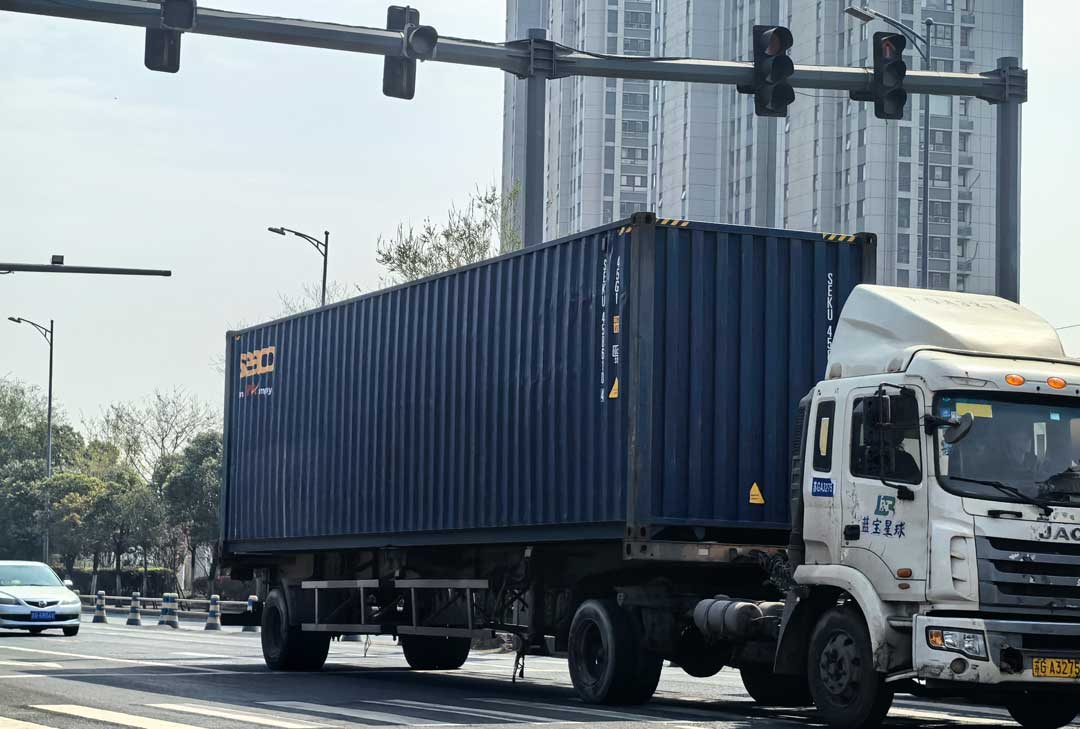
Chattanooga sits at 35 degrees 3 minutes north, 85 degrees 18 minutes west, in the Tennessee River valley, ringed by the southern end of the Appalachian Mountains. The metro area comprises Hamilton County, Tennessee and parts of adjacent counties in Georgia and Alabama, and is Tennessee's fourth-largest metro area.
Three interstate highways converging in the same city is uncommon in the United States, giving Chattanooga radiating reach in three directions at once: southeast, northwest and southwest. Per the Greater Chattanooga Economic Partnership, the region lies within one day's drive of about 40% of the U.S. population, more than 131 million people. This position lets Chattanooga both take in sea cargo flows from three directions - Savannah, Charleston and Mobile - and serve as a regional distribution landing point for the Southeast.
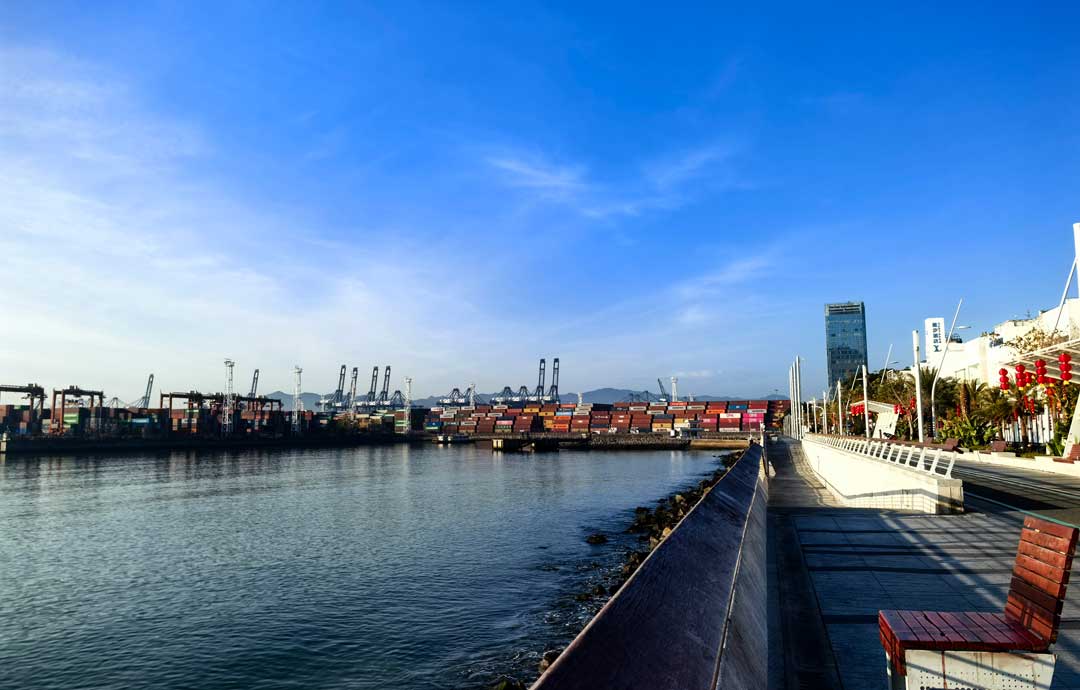
Chattanooga is an inland port of entry in the federal port system. U.S. Customs and Border Protection (CBP) maintains a port of entry here with code 2008, under Customs District 20, whose center is in New Orleans, Louisiana.
| Port code | 2008 (Chattanooga, Tennessee) |
| Customs district | District 20, centered in New Orleans, Louisiana |
| CBP office address | 1001 Airport Road, Suite 26, Chattanooga, TN 37421 |
| Nearby in-state ports | 2006 Memphis, 2007 Nashville, 2016 Knoxville, 2027 Tri-Cities |
| Main entry seaports | Savannah, Georgia 1703; Charleston, South Carolina 1601; Mobile, Alabama 1901 |
| Services handled | Formal import declaration, examination and release; documents submitted by a licensed customs broker |
| Foreign-trade zone | FTZ 134, grantee Chattanooga Chamber Foundation, service area covering 11 counties |
Chattanooga's port office is located near the metro airport and can handle formal import declaration and release. This means importers can choose inland port clearance: cargo discharged at Savannah or Charleston moves in-bond to Chattanooga before declaration. The alternative is clearance directly at the entry port, with the container moved in after release, the more common choice. The trade-off depends on whether the receiver has multiple shipments to file together and whether a licensed broker has capability in Chattanooga. Note that port code 2008 is used on customs declarations, ACE filings and ISF filings, and is not the same as the booking codes for inland points found in commercial databases; the two cannot substitute for each other.
Chattanooga's rail service is handled by two Class I railroads, Norfolk Southern (NS) and CSX Transportation. The city was a rail hub of the American South in the nineteenth century, a pattern that continues today.
| Railroad | Local facilities and lines |
| Norfolk Southern (NS) | Operates the DeButts classification yard and locomotive shops in Chattanooga, plus multiple lines in the city and surroundings; network inherited from its predecessor Southern Railway |
| CSX Transportation | Operates the Western and Atlantic line (Atlanta to Chattanooga segment, track ownership held by the State of Georgia) and the Chattanooga Subdivision (Nashville to Chattanooga) |
| Classification and intermodal | Both railroads have local classification facilities handling concentration and distribution of regional flows; container intermodal yards are at the Appalachian Regional Port below |
Both railroads being present matters to importers as routing choice. Cargo entering via Savannah can be carried by CSX, arriving via the Appalachian Regional Port line; cargo via the Atlanta direction can be carried by NS through the Inman yard corridor; cargo entering via Mobile can also come in through either railroad. Different origin ports and carrier alliances correspond to different rail agreements, and the intermodal agreement between the carrier and railroad named on the bill of lading decides the container's actual arrival yard and routing; the shipper cannot designate it. Confirm the actual arrival yard with the forwarder at booking, especially when the same shipment may be split across the two railroads' facilities, requiring pickup to be arranged separately.
One of the main rail landing points for import containers in the Chattanooga area is the Appalachian Regional Port (ARP) at Crandall, Murray County, Georgia. The facility is operated by the Georgia Ports Authority and connects to the Port of Savannah by a 388-mile direct rail line.
| Name | Appalachian Regional Port (ARP) |
| Operator | Georgia Ports Authority (GPA), built jointly with the State of Georgia, Murray County and CSX |
| Location | Crandall, Murray County, northwest Georgia, serving northern Georgia, northeastern Alabama, Tennessee and Kentucky |
| Opened | August 2018 |
| Area and capacity | 42 acres; annual handling capacity about 75,000 containers, with a 10-year goal to double |
| Rail | CSX exclusive service, 388-mile direct line to and from the Port of Savannah's Garden City Terminal; 3 working tracks each 6,000 feet |
| Equipment | 4 rubber-tired gantries; yard can stack about 2,975 TEU |
| Loaded container free storage | 5 calendar days from the day of arrival |
| Gate hours | Monday to Friday 07:00 to 18:00, closing at 17:00 on Wednesdays |
| Driver access | No TWIC card required; carriers must register and comply with UIIA rules |
ARP's value is pushing the Port of Savannah's container capability inland. Each round-trip container removes about 710 truck miles from Georgia's highways; for importers, the saving is the long-distance drayage mileage and time from the coast inland. The 5-calendar-day free storage period for loaded containers is longer than most seaport terminals and rail yards, leaving pickup scheduling relatively relaxed. Gate hours run to 18:00 on weekdays, earlier at 17:00 on Wednesdays, wider than a seaport terminal's regular window, though still excluding weekends.
One limitation must be stated clearly: per CBP rules, in-bond loaded containers can move from Savannah to ARP, but CBP does not clear cargo at ARP. These shipments must complete clearance at a CBP port of entry, bonded warehouse or designated FTZ site before pickup at ARP. In other words, ARP is a rail and yard node, not a clearance node. If inland clearance is desired, choose Chattanooga port of entry (2008) or another facility with clearance capability, and coordinate the in-bond arrangement with the broker at booking.
Chattanooga borders the Tennessee River and has inland waterway barge conditions. The greater Chattanooga area has four public river terminals, connecting into an inland waterway network of about 16,000 miles.
For shippers focused on FCL imports, inland barge is not a routine option; its significance is showing Chattanooga has a complete set of transport modes: road, rail, water and air are all usable in this region. When railcar supply is tight or road rates rise, regions with multiple modes usually find alternatives more easily. If the cargo form is heavy-lift equipment or bulk raw materials, barge is worth quoting separately.
There are two main lines from China to Chattanooga: all-water entry via Savannah then rail through the Appalachian Regional Port, or discharge at other Southeast and Gulf ports like Charleston or Mobile then rail or truck in.
| Routing | Entry port | Inland leg | Characteristics |
| All-water via Savannah | Savannah 1703 | CSX via Appalachian Regional Port, or truck direct to Chattanooga | Dense schedules, mature inland rail channel; the mainstream path for Southeast imports |
| All-water via Charleston | Charleston 1601 | Rail or truck via the Atlanta direction | Alternative when Savannah capacity is tight; inland distance slightly longer |
| Via the Gulf | Mobile 1901 | Rail north via Birmingham, or truck | Suited to combining with Alabama cargo flows |
| Transcontinental sea-rail | Los Angeles 2704 or Long Beach 2709 | Rail via Memphis or Atlanta | Shortest sea leg, longest inland mileage |
| Air | Atlanta 1704 or Chattanooga Metro Airport | Airport pickup or short delivery | High-value, time-sensitive cargo |
Savannah is the mainstream routing for Chattanooga imports: the port has many Asia services with dense schedules, and the rail line from Savannah to the Appalachian Regional Port is a CSX-exclusive 388-mile direct route, with containers pickable on the spot at the inland port. If the delivery deadline is very tight or the volume is too small for rail, trucking direct from Savannah to Chattanooga is also available. The Charleston routing also has relatively dense schedules, but the inland leg detours via the Atlanta direction with slightly longer mileage. LCL cargo generally does not take transcontinental rail, since LCL must be devanned and distributed at a warehouse near the port; completing devanning at Savannah or Atlanta then moving LTL or FTL into Chattanooga is more sensible.
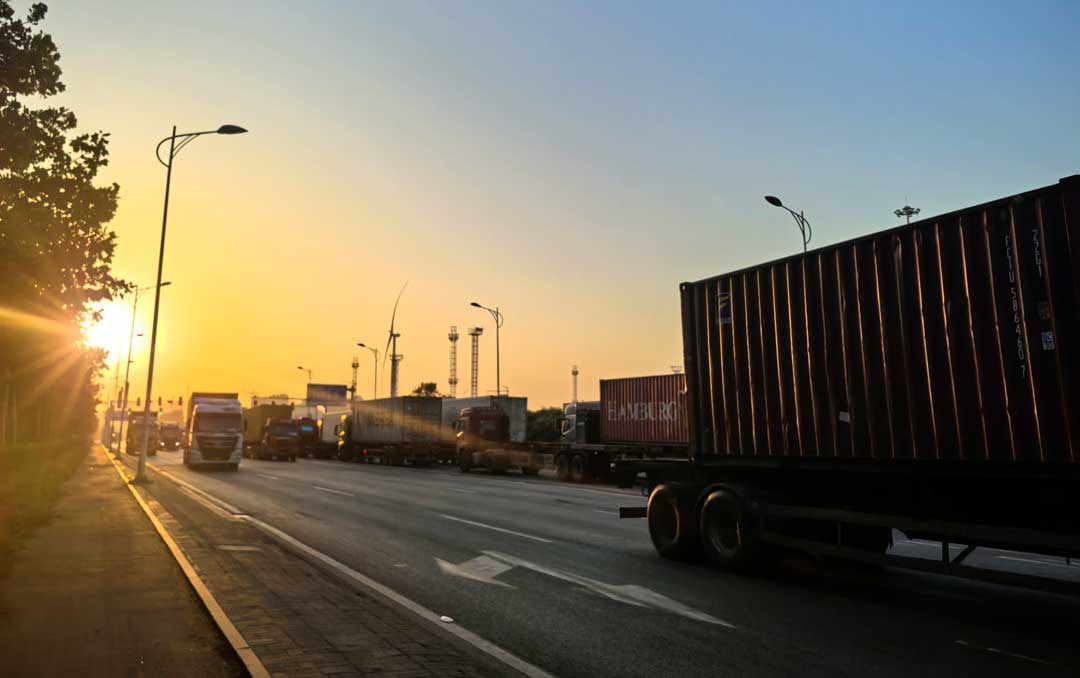
Door-to-door transit time is calculated in segments by routing. The table below gives the common ranges for the two main lines; the sea-leg figures align with the Savannah and New York/New Jersey port pages.
| Routing | Sea leg | Inland leg | Door-to-door total |
| Shanghai / Ningbo via Panama to Savannah then rail | About 26 to 34 days | Rail about 2 days | About 30 to 39 days |
| Shenzhen via Panama to Savannah then rail | About 28 to 36 days | Rail about 2 days | About 32 to 41 days |
| Shanghai / Ningbo to Savannah then truck | About 26 to 34 days | Truck about 1 to 2 days | About 29 to 38 days |
| Shanghai / Ningbo to Los Angeles then rail | About 11 to 18 days | Rail via Atlanta or Memphis about 7 to 9 days | About 25 to 35 days |
The totals above are port-to-warehouse estimates, excluding origin booking, loading and export clearance. Actual time is affected by vessel type, port rotation, East Coast port congestion, railcar supply and holidays; peak season can add a week or more. Panama Canal routings must also account for changes in lock slot supply: when canal area water levels run low, daily transits fall and some schedules slip three to five days. The Southeast's June to November hurricane season may temporarily close ports on storm warnings, affecting both Savannah and Charleston, so scheduling in this period should carry extra buffer.
The two main lines differ little in total duration; the difference lies in time distribution and controllability. The Savannah line has a long sea leg but short inland leg, with clear clearance and pickup landing points and longer inland port free time; the West Coast line has a short sea leg but the rail leg transits Atlanta or Memphis, with more segments and nodes, and the destination rail yard's free time is usually only 48 hours from arrival, adding pickup pressure. For receivers with tight inventory turnover wanting pickup on arrival, the Savannah line is more controllable; for shippers with hard sea-time requirements, the West Coast line suits better.
Chattanooga's customs business is handled by CBP at port of entry 2008, under Customs District 20. For cargo from China there are two common clearance arrangements.
Formal import declaration requires the receiver to provide a taxpayer identification number (EIN), commercial invoice, packing list and bill of lading. Sea cargo must complete Importer Security Filing (ISF, the so-called 10+2) before loading, submitted by the importer or its agent 24 hours before the vessel sails. Commodity classification, origin and valuation are handled per the Harmonized Tariff Schedule of the United States (HTSUS); categories subject to additional tariffs need their applicability checked separately.
Tennessee levies no state-level import duty on imported goods, but goods entering circulation in the state for final consumption may involve sales and use tax, handled by the receiver per its business nature and registration. Local import categories are mainly autos and parts, machinery, chemicals and consumer goods, with auto cargo requiring more detailed declaration documents: commodity codes and usage descriptions must match the physical goods. Chattanooga hosts FTZ 134, granted to the Chattanooga Chamber Foundation, covering Hamilton and 10 other counties, with sites including the Riverport Industrial Park and Enterprise South Industrial Park; goods inside the zone can defer duty during storage, processing and re-export. Specific availability and conditions should be confirmed case by case with the broker.
After the container arrives by rail at the Appalachian Regional Port or another rail yard, the pickup process differs from a seaport terminal. Rail and inland port yards are mainly system-based with no separate gate hall, and timing starts when the arrival notice is issued.
The risk in the process lies in clearance status and return points. ARP does not handle clearance; assuming pickup is possible on arrival will stall at the clearance step while the free period keeps counting. On return points, CSX has on-site or adjacent chassis and yard support at ARP, and importers should confirm at booking whether the carrier has a return point locally; if empties must be returned to Savannah, the round-trip inland mileage significantly increases cost. The same vessel's slots may be assigned to different rail yards; if a shipment is split, pickup must be arranged separately.
The last free day (LFD) is the cutoff of the free storage period, after which storage is charged. In Chattanooga, storage charges occur only at the entry port terminal or rail and inland port yards, and the free period depends on the landing point.
| Item | Timing start | Free duration | Charging party |
| Appalachian Regional Port (loaded container) | Day of arrival | 5 calendar days | Georgia Ports Authority |
| Rail intermodal yard storage | Day arrival notice is issued | Mostly 48 hours | Railroad |
| Seaport terminal storage | Discharge day or container available day | Per terminal notice, mostly 4 days for dry | Terminal operator |
| Carrier demurrage | Day container leaves the terminal or yard | Per equipment free time by box type and service | Carrier |
| Chassis rental | Day chassis is drawn | Per trucking company agreement | Chassis supplier |
The timing starts and charging parties of each charge differ and do not offset each other. ARP's 5-calendar-day free period for loaded containers is a generous arrangement across the Southeast, far more ample than most rail yards' 48 hours, which practically helps pickup scheduling. But the four links do not extend each other: the inland port's free period running out does not automatically extend the carrier's equipment free time. After receiving the arrival notice, the receiver should confirm four things at once: the last free day at the landing yard, the expiry of the carrier's equipment free time, the location and hours of the empty return point, and the round-trip mileage from Chattanooga to the return point. With all four clear, pickup and return dates can be set without clearing one deadline while breaching another.
If pickup cannot be made within the free period due to customs examination, document correction or other reasons beyond the receiver's control, a written extension can be requested from the yard, terminal or carrier with supporting documents, submitted before the original expiry date; late requests are generally not backdated. Approval is handled per each company's published policy with no uniform standard. Tennessee has a separate permit system for overweight containers: the interstate highway gross weight limit is 80,000 pounds, and overweight boxes need a permit from the state Department of Transportation (TDOT), usually processed in 48 hours; receivers of heavy cargo should calculate total box-and-goods weight in advance.
Customs examination (CBP Examination) is a routine part of the import process, sampling declared cargo per CBP's risk scoring. Examination usually occurs at the port of entry where the container lands, and can also occur at the inland port after transshipment, depending on the examination location determined at declaration.
| Method | Operation | Impact on pickup |
| Document review | Check invoice, packing list, certificate of origin and declaration data | Cargo not moved; released after supplementing documents |
| Non-intrusive inspection (NII) | Whole box X-ray imaging, no devanning | Usually completed same day; container stays in yard |
| Tailgate exam | Open box door to check cargo at the front | Adds half a day to one day |
| Comprehensive exam (CET) | Move to exam area for piece-by-piece count and full devanning | Adds three to seven days; must be restuffed |
Examination generates exam service fees, drayage round-trip fees, devanning and restuffing labor, and storage during the exam, all borne by the receiver regardless of whether problems are found. Because the Appalachian Regional Port is not a CBP clearance facility, if Savannah is the entry port at declaration, examination is generally completed at Savannah and the Chattanooga end only bears the consequence of delayed arrival; if Chattanooga (2008) is the entry port, examination occurs at designated facilities at that port. After exam release the container can continue inland transport; this is one of the main sources of time volatility at inland points. Practical ways to lower examination probability: declared name matching the physical goods, prices within the common range for similar products, avoiding under-declaration and mixed loading, and keeping import records continuous.
When cargo cannot clear U.S. customs or the receiver refuses it, return can be processed. The precondition is that the goods have not been consumed or delivered in the United States and remain at a terminal, rail yard, bonded warehouse or customs-controlled area. Cargo already released and delivered to the receiver's warehouse, or entered into domestic circulation, cannot be handled as a return.
Return costs include U.S. export clearance fees, return ocean freight, and storage and handling at both ends. If the return originates at Chattanooga, the container must also move back by rail or truck to Savannah or another port with export loading conditions, and this inland cost should be counted in advance. Whether to return usually needs comparison with abandoning the cargo, reselling to another country or local destruction. Abandoning requires application to customs and payment of destruction fees; reselling requires new transport and export arrangements. The Southeast region where Chattanooga sits is manufacturing-dense; if the cargo itself suits the local market, local resale is another disposal option, though the buyer's country import procedures must be handled. Cargo involving additional tariffs or certificate-required categories should have the destination's import requirements confirmed before disposal.
Chattanooga's cargo rhythm is driven by both the transpacific seasonality of East Coast ports and the production rhythm of Tennessee Valley manufacturing, following the U.S. retail restocking cycle overall.
| Period | Characteristics |
| Peak | August to October, the year's tightest period: retailers stock for the year-end holidays, Savannah and inland rail under pressure together, with drayage rates and storage fees rising in probability; a further rush from late December to early January before the Chinese New Year |
| Flat season | March to June, volume recovers moderately, capacity and railcar supply normal, suited to non-urgent replenishment and production material stocking |
| Low season | Late January to February, and late November to mid-December, volume falls, capacity and drayage rates at year lows |
Chattanooga has two additional seasonal variables. One is weather: the Tennessee Valley can see severe convection and tornadoes in spring, high heat in summer, and occasional snow affecting road transport in winter, with delivery time volatility during extreme weather greater than normal. The other is industry: local auto assembly plants and parts suppliers' production schedules affect the import rhythm, with plant maintenance periods and model changeover gaps usually corresponding to an arrival trough; cargo supporting such schedules usually locks sailing schedules months in advance. Additionally, the Southeast's June to November hurricane season may temporarily close Savannah and Charleston on storm warnings, with navigation resuming after one to three days, and inland times shifting accordingly.
The benefits of using Chattanooga as an import landing point concentrate in three areas: highway convergence, rail corridors and inland port support, and the manufacturing hinterland.
| Advantage | Specifics |
| Three interstates converge | I-75, I-24 and I-59 meet in the city, with I-40, I-20 and I-65 within short distance; delivery direction is not limited to a single corridor |
| One-day drive covers main Southeast markets | Per the Greater Chattanooga Economic Partnership, the region lies within one day's drive of about 40% of the U.S. population, more than 131 million people |
| Direct rail to the Port of Savannah | The Appalachian Regional Port connects to Savannah's Garden City Terminal by a 388-mile CSX-exclusive line; each round-trip container removes about 710 truck miles |
| Longer inland port free time | ARP gives loaded containers 5 calendar days free storage from arrival, with gates to 18:00 on weekdays, leaving pickup scheduling relatively relaxed |
| Two Class I railroads present | NS operates the DeButts classification yard and locomotive shops; CSX operates the Western and Atlantic and Chattanooga Subdivision lines, leaving room in routing and carrier choice |
| Own port of entry and foreign-trade zone | Port code 2008 can handle formal import declaration and release; FTZ 134 covers 11 counties, with sites including the Riverport and Enterprise South industrial parks |
| Auto industry hinterland | The region clusters auto assembly and parts manufacturing, with complete supporting warehousing and specialized logistics services, plus inland barge and air options |
The limitations should also be seen clearly. Chattanooga is not on the coast: all sea cargo must transfer through Savannah, Charleston or Mobile, adding one inland leg. As an inland point, its sea capacity and rail block-train matching are not decided by the shipper; the arrival yard and schedule depend on the carrier-rail intermodal agreement. The Appalachian Regional Port does not handle clearance, so in-bond cargo must clear elsewhere, a limit that must be counted into pickup arrangements. The region's total container volume is below Atlanta's; if the receiving market actually covers central Georgia or North Carolina, landing at Atlanta's Inman yard or toward Charlotte is usually more economical. Chattanooga suits best: receiving markets concentrated in southeastern Tennessee, northeastern Alabama and northwestern Georgia, or business needing to serve multiple Southeast directions via the I-75, I-24 and I-59 corridors at once.
No. Chattanooga is an inland city, not on the coast, with no ocean terminals; all sea FCL cargo must first discharge at Savannah, Charleston or Mobile, then move in by rail or truck. The city borders the Tennessee River, and the region has four public river terminals for barge service, but international containers usually do not use inland waterways.
2008 (Chattanooga, Tennessee), under Customs District 20, whose center is in New Orleans, Louisiana. Other in-state ports include 2006 Memphis, 2007 Nashville, 2016 Knoxville and 2027 Tri-Cities.
The mainstream routing is all-water entry via the Port of Savannah (port code 1703), then in by CSX through the Appalachian Regional Port after clearance, or by truck direct to Chattanooga. Another option is entry via West Coast ports such as Los Angeles or Long Beach then transcontinental rail via Atlanta or Memphis.
At Crandall, Murray County, northwest Georgia, operated by the Georgia Ports Authority, opened in August 2018. It covers 42 acres with annual handling capacity of about 75,000 containers, running to and from Savannah's Garden City Terminal on a 388-mile CSX-exclusive line, serving northern Georgia, northeastern Alabama, Tennessee and Kentucky.
No. Per CBP rules, in-bond loaded containers can move from Savannah to the inland port, but CBP does not clear cargo at that facility; clearance must be completed at a port of entry, bonded warehouse or designated FTZ site before pickup. If inland clearance is desired, choose Chattanooga port of entry (2008) or another facility with clearance capability.
5 calendar days from the day of arrival for loaded containers, with gates open Monday to Friday 07:00 to 18:00, closing at 17:00 on Wednesdays. Entry does not require a TWIC card, but carriers must register as required and comply with UIIA rules.
Chattanooga itself has NS and CSX lines and classification facilities, with NS operating the DeButts classification yard and locomotive shops. One of the main rail landing points for import containers in the region is the Appalachian Regional Port in Murray County, Georgia, whose service area covers Tennessee.
Determined by the intermodal agreement between the carrier and railroad named on the bill of lading, not designated by the shipper. Cargo entering via Savannah mostly passes through the Appalachian Regional Port or direct trucking delivery, while cargo via other ports routes differently; confirm the actual arrival yard with the forwarder at booking.
Yes, FTZ 134, granted to the Chattanooga Chamber Foundation, approved in 1987, covering Hamilton and 10 other counties, with sites including the Riverport Industrial Park and Enterprise South Industrial Park. Goods inside the zone can defer duty during storage, processing and re-export. Some secondary sources wrongly write the zone as FTZ 74 or FTZ 154; both are incorrect.
A written extension can be requested from the yard, terminal or carrier, with examination or hold documents submitted before the original expiry date. Approval is handled per each company's policy with no uniform standard, and late requests are generally not backdated.
Yes, provided the goods have not been consumed or delivered in the United States and remain at a yard, bonded warehouse or customs-controlled area. Return requires U.S. export clearance and Chinese import declaration; goods returned in original condition due to quality or specification issues can apply for duty exemption within the prescribed period. Cargo must also move back to Savannah or another port for loading, and this inland cost should be counted in advance.
August to October is the tightest period, with retailers stocking for the year-end holidays. A further rush runs from late December to early January before the Chinese New Year. The June to November hurricane season may temporarily close Savannah and Charleston on storm warnings; scheduling should carry buffer.
Shipping from China to USA
Planning a shipment or just comparing options? Contact our freight experts to get a tailored rate within 24 hours.
