
Columbus sits at 39 degrees 57 minutes north, 83 degrees 00 minutes west, in central-southern Ohio, with the metro area made up of Franklin County and several surrounding counties. The city's position in the state is near the geometric center, with balanced distances north, south, east and west, a feature that makes it a common landing point for regional distribution. For importers, the key facts are: Columbus is an inland port of entry with code 4103, its container landing point is Norfolk Southern's Rickenbacker Intermodal Terminal on the city's south side, and it anchors the west end of the Heartland Corridor linking Hampton Roads with the Midwest. This structure decides delivery paths from China to the Midwest and the eastern Great Lakes.
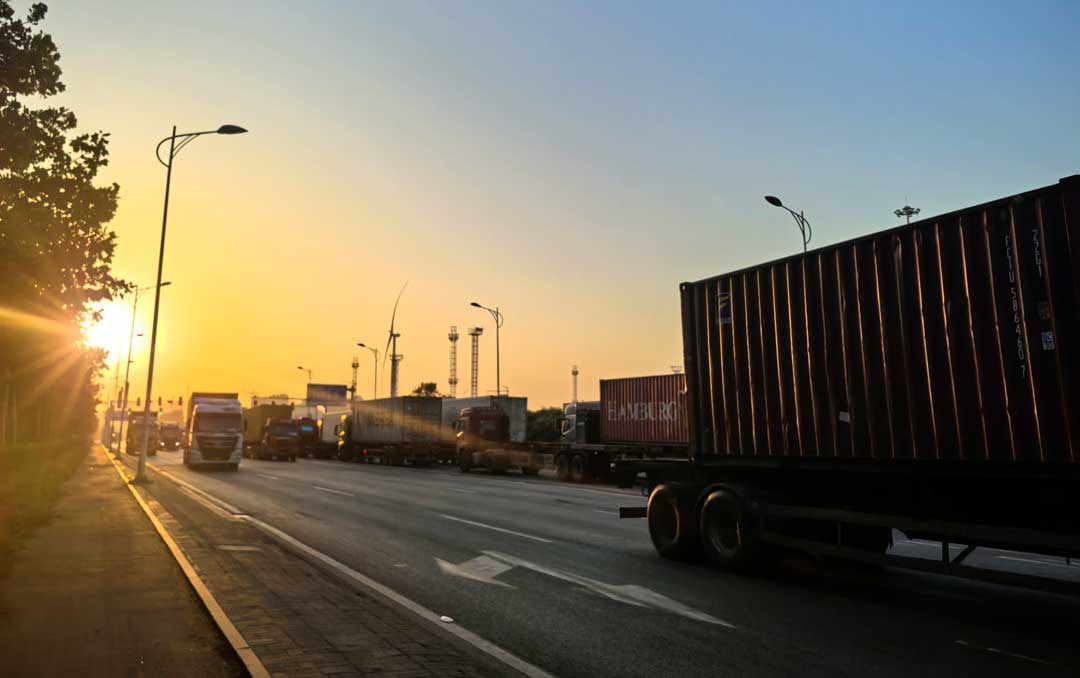
Columbus sits at 39 degrees 57 minutes north, 83 degrees 00 minutes west, in central-southern Ohio, with the metro area made up of Franklin County and several surrounding counties. The city's position in the state is near the geometric center, with balanced distances north, south, east and west, a feature that makes it a common landing point for regional distribution.
Columbus's central position in Ohio brings a practical convenience: with it as the landing point, delivery distances to the state's four major cities (Cleveland, Cincinnati, Toledo, Dayton) are all within one day's drive, and the Detroit, Michigan and Indianapolis directions are also within reasonable range. This makes Columbus a common regional inventory point for Ohio and the eastern Great Lakes, not just one city's arrival point. The Rickenbacker area on the city's south side has consequently gathered large volumes of warehousing and distribution facilities.
Columbus is an inland port in the federal port system. U.S. Customs and Border Protection (CBP) maintains a port of entry here, code 4103, under Customs District 41, whose center is Cleveland, Ohio.
| Port code | 4103 (Columbus, Ohio) |
| Customs district | District 41, district center Cleveland, Ohio |
| CBP office address | 6431 Alum Creek Drive, Suite A, Groveport, OH 43125 |
| Field office | Chicago |
| Neighboring ports in state | 4101 Cleveland, 4102 Cincinnati, 4104 Dayton, 4105 Toledo-Sandusky-Port Clinton, 4122 Ashtabula/Conneaut |
| Main entry seaports | Norfolk, Virginia 1401; New York/New Jersey 4601; Savannah, Georgia 1703; Los Angeles 2704 and Long Beach 2709 on the West Coast |
| Business handled | Formal import entry, examination and release; entry documents submitted by licensed customs brokers |
One confusion needs ruling out first: there are two other same-name locations in the United States, Columbus, Georgia and Columbus, New Mexico. Columbus, New Mexico has port code 2406 under Customs District 24, entirely different from Columbus, Ohio. If filings and system entries write only Columbus, attribution errors can occur, and the state name should be written together. Columbus, Ohio's port code 4103 is used for entries, ACE filings and ISF filings; CBP's office is in Groveport in the southeast suburbs, near the Rickenbacker logistics park area.
Columbus's container intermodal is carried by Norfolk Southern (NS) and CSX Transportation, both operating intermodal facilities in the state, with different service directions and routings.
| Facility | Railroad | Location and notes |
| Rickenbacker Intermodal Terminal | Norfolk Southern | South side of the city, opened 2008, cost about USD 68.5 million; initial area about 175 acres, design annual capacity over 250,000 containers and trailers, with expansion room reserved; at opening 6 trains per day, 4 to/from Chicago and 2 to/from Norfolk port |
| Rickenbacker Global Logistics Park | Park operator and airport authority | Centered on the Rickenbacker intermodal yard, one of the largest integrated logistics parks in the United States, with supporting warehousing and distribution facilities in the park |
| Buckeye Yard | CSX Transportation | Outside Columbus; annual lift capacity raised from 180,000 to 360,000 after expansion; during expansion some domestic intermodal boxes moved to Marion, Ohio |
| Northwest Ohio ICTF | CSX Transportation | In North Baltimore, about 200 km from Columbus; 500 acres, opened early 2011, annual lift capacity about 2 million, about 2,000 containers daily; CSX's Ohio hub yard |
The two railroads' division of labor can be understood this way: Norfolk Southern's Rickenbacker yard directly serves Columbus locally and is the most common landing point for imports from China; CSX's local facilities focus on classification and domestic intermodal, with its international intermodal center of gravity at North Baltimore in the state's northwest. So if the bill of lading shows CSX as carrier, the container may land at a location other than Rickenbacker, and the actual arrival station follows the railroad's intermodal agreement. The Rickenbacker yard has reserved expansion room for future volumes since opening, and is equipped with gate and yard automation systems, a design giving it strong scaling flexibility as volumes grow.
Columbus's position in the U.S. rail freight landscape largely comes from Norfolk Southern's Heartland Corridor. This corridor directly links the Hampton Roads port group in Virginia with the Midwest, with Columbus an important node at its west end.
| Item | Content |
| Project nature | Public-private rail improvement project, completed 2010 |
| Core works | Clearance improvements at 28 rail tunnels between Hampton Roads and the Midwest, enabling double-stack container trains |
| Transit time | Norfolk port to Columbus about 25 hours |
| Routing improvement | Compared with the original detour via Harrisburg, Pennsylvania and Knoxville, Tennessee, shortened by over 200 miles and saving about 12 hours; East Coast ports to Midwest overall transit shortened about one day |
| Subsequent extension | The corridor extends from Columbus to Cincinnati (Sharonville), forming an intermodal and auto cargo corridor |
The corridor's core value is double-stack capability. When clearance is insufficient, containers can only load single-stack, halving a same-length train's capacity and raising per-container rail cost; after clearance improvements, double-stack trains can run, improving both capacity and cost structure. For importers, the corridor's practical meaning is: cargo entering via Norfolk, Virginia can reach Columbus directly without detours, with shorter paths and transit, while providing an option alongside New York/New Jersey for East Coast port imports. The corridor's subsequent extension toward Cincinnati lets flows in southern Ohio and northern Kentucky access the same system.
Rickenbacker International Airport (code LCK) on Columbus's south side is part of the local logistics system. The airport is cargo-oriented and, with the adjacent intermodal yard, forms an integrated rail-road-air cargo area.
Placing the airport and rail in the same park is why the Rickenbacker area is called an integrated logistics park. For most ocean FCL imports the airport does not directly participate in transport, but the bonded warehousing and export-oriented facilities it brings practically help processing and distribution businesses staying locally. If cargo needs processing in the U.S. before re-export, the park's foreign-trade zone and freeport facilities provide operating room to defer duty payment. The airport is also one of Columbus's conditions for attracting manufacturing investment, with new manufacturing projects landing near the airport in recent years, and such projects' demand for local warehousing and freight facilities will rise further.
Two main lines run from China to Columbus: entering via West Coast ports then rail via Chicago, or entering via East Coast ports then via the Heartland Corridor or Chicago directions.
| Route | Port of entry | Onward transport | Features |
| West Coast sea-rail intermodal | Los Angeles 2704 or Long Beach 2709 | Rail via Chicago to Columbus | Shortest ocean leg, with one Chicago transload on rail; the mainstream Midwest import path |
| East Coast via Heartland Corridor | Norfolk 1401 | Norfolk Southern via Heartland Corridor direct to Rickenbacker yard | Rail transit about 25 hours, short path; ocean leg longer than West Coast |
| East Coast via New York/New Jersey | New York/New Jersey 4601 | Rail via Heartland Corridor or Chicago directions | Dense schedules, many service options, rail transit slightly longer |
| Via Canadian West Coast | Prince Rupert or Vancouver, Canada | Rail via Chicago or Detroit directions | Rate advantages in some periods; Canadian-leg procedures required separately |
| Air freight | Rickenbacker International Airport or others | Airport pickup or short-haul delivery | High-value, time-sensitive cargo |
The West Coast entry route is usually shorter in total time, because the ocean leg is only thirteen to eighteen days, but rail requires one transload at Chicago, adding a yard operation. The Norfolk, Virginia entry route has a longer ocean leg, but runs direct from the port via the Heartland Corridor to Rickenbacker, with rail transit about 25 hours and no intermediate hub stops, fewer links. The trade-off between the two depends on delivery requirements and current rates: if there is a hard requirement on ocean time, take the West Coast; if inland controllability and fewer landings matter more, take the East Coast corridor. The New York/New Jersey entry route has the most advantage in schedule density and service options, with slightly longer rail transit, suited to consolidating with other East Coast cargo. LCL cargo generally does not take transcontinental rail, with deconsolidation at Los Angeles or Chicago LCFS stations being more reasonable.
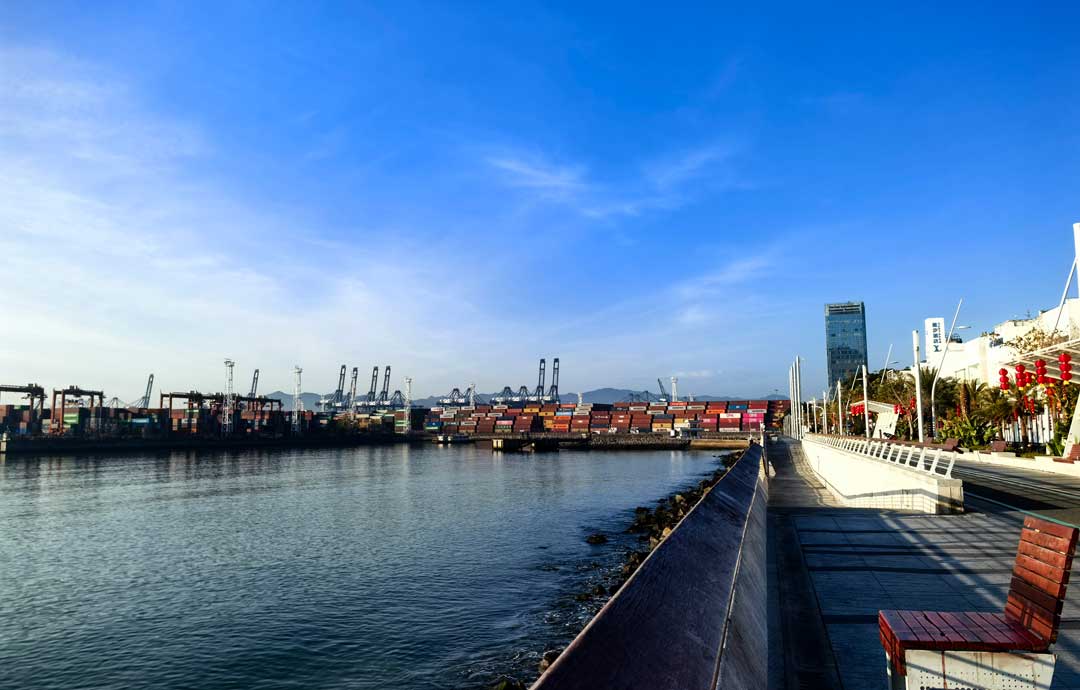
Door-to-door transit time is calculated in segments by route. As an inland point, Columbus's time composition includes a long rail transit, with the West Coast route also counting Chicago transload time.
| Route | Ocean leg | Rail leg | Door-to-door total |
| Shanghai/Ningbo to Los Angeles then rail | About 11 to 18 days | Via Chicago about 6 to 8 days | About 21 to 31 days |
| Shenzhen to Los Angeles then rail | About 13 to 25 days | Via Chicago about 6 to 8 days | About 23 to 37 days |
| Shanghai/Ningbo via Panama to Norfolk then rail | About 27 to 35 days | About 1 to 2 days (corridor direct about 25 hours) | About 30 to 39 days |
| Shanghai/Ningbo via Panama to New York/New Jersey then rail | About 26 to 33 days | About 3 to 4 days | About 31 to 40 days |
The totals in the table are estimates from port to receiver's warehouse, excluding origin booking, loading and export customs clearance. Actual transit is affected by vessel type, port rotation, terminal congestion, railcar supply and holidays, and peak season can add a week or more. Panama-routed services must also account for lock supply changes, with daily transit numbers reduced when canal-zone water levels are low and some schedules delayed three to five days. The West Coast route may encounter Chicago-area yard queues and chassis tightness in peak season, with rail transit times fluctuating correspondingly; the East Coast corridor route has higher inland-leg certainty but a longer ocean leg and greater exposure to hurricane season port closures.
The two main lines show little difference in total time, with the difference in time distribution and controllability. The West Coast route has a short ocean leg and long rail leg, with one Chicago transload and more segments and nodes; the East Coast corridor route has a long ocean leg and short rail leg, with the Norfolk-Columbus corridor direct making the inland leg the fewest links. For receivers with tight inventory turnover wanting fewer landings, the East Coast corridor route is more controllable; for shippers with hard ocean-time requirements or fixed operating partners on the West Coast, the West Coast route fits better. Winter snowfall in the Great Lakes region affects inland road delivery, with January to February timing variability greater than other months.
Columbus's customs business is handled by CBP at port 4103, under Customs District 41. CBP's Columbus office is in Groveport in the southeast suburbs, near the Rickenbacker logistics park area. Cargo from China has two common clearance arrangements here.
Formal import entry requires the receiver to provide a taxpayer identification number (EIN), commercial invoice, packing list and bill of lading. Ocean cargo must complete Importer Security Filing (ISF, commonly called 10+2) before loading, submitted by the importer or its agent 24 hours before the vessel sails. Classification, origin and valuation are handled per the Harmonized Tariff Schedule of the United States (HTSUS), with categories involving additional tariffs needing separate verification of scope.
Ohio levies no state-level import tax on imported goods, but goods entering circulation and final consumption in the state may involve sales and use tax, handled by the receiver per its business nature and registration status. Ohio's import categories are mainly auto and components, machinery, electronic components, chemicals and consumer goods, with auto and electronics goods' filing requirements detailed, and commodity codes and use descriptions needing to match the physical goods. The Rickenbacker airport area has freeport and foreign-trade zone facilities for bonded warehousing, with specific availability to be confirmed case by case with a customs broker. When filing, always write the state name together to avoid confusion with the same-name locations in Georgia and New Mexico.
After a container arrives at Columbus's Rickenbacker Intermodal Terminal or other rail facilities by rail, the pickup process differs from a seaport terminal. Rail yards run mainly on online systems, with no separate gate hall, and timing starts when the arrival notice is issued.
The process's risk points lie in documents, fees and landing point. Rail yards will not release appointments when fees are unpaid or documents are incomplete, while the free period keeps counting. Columbus involves more than one railroad: Norfolk Southern's Rickenbacker yard is the main landing point for local international boxes, while CSX's local facilities focus on classification and domestic intermodal with its international center of gravity at North Baltimore in the state's northwest, so actual arrival follows the railroad's intermodal agreement. If the same shipment is split across different railroads' facilities, pickups must be arranged separately. Return points are usually inside or near rail yards, with specific locations varying by carrier, and should be confirmed in advance.
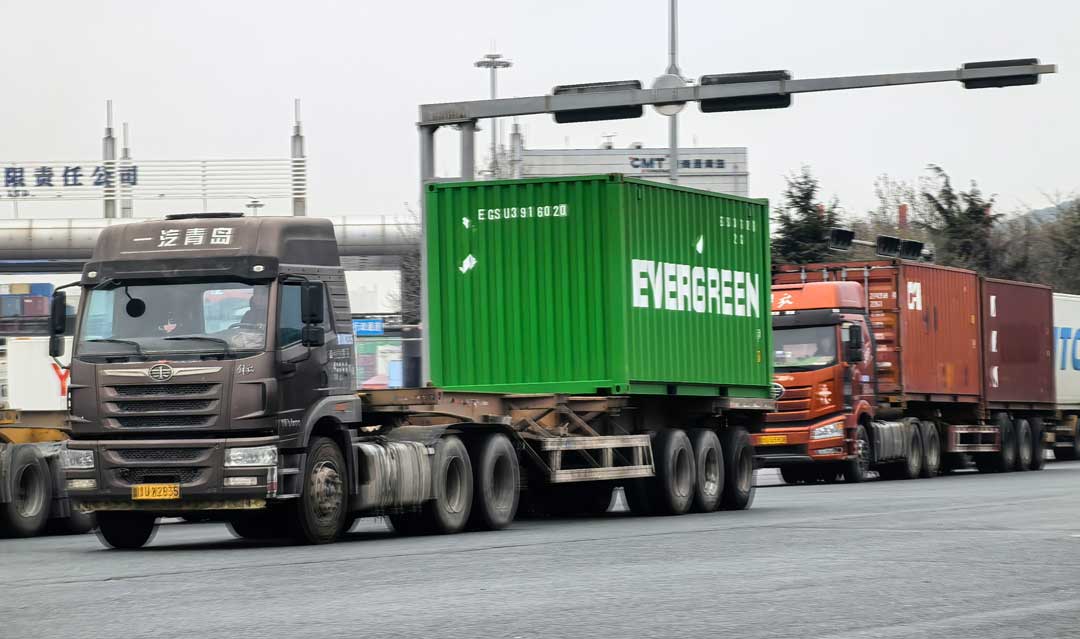
The Last Free Day (LFD) is the cutoff of the free storage period, after which storage fees start accruing. Columbus's storage fees only occur at the port of entry terminal or rail yard, and the free period length depends on the landing point.
| Item | Clock start | Free period | Charging party |
| Rail intermodal yard storage | Day the arrival notice is issued | Mostly 48 hours | Railroad |
| Seaport terminal storage | Day of discharge or day container becomes available | Per terminal announcement, dry containers mostly four days | Terminal operator |
| Carrier per diem | Day the container leaves the terminal or yard | Per equipment type and route free time | Ocean carrier |
| Chassis rental | Day the chassis is pulled | Per drayage company agreement | Chassis supplier |
The four charge items have different clock starts and charging parties, and do not offset each other. Rail yard storage overage does not automatically extend the carrier's free time, and vice versa. After receiving the arrival notice, the receiver should confirm four things at once: the LFD at the landing yard, the expiry of the carrier's free time, the location and business hours of the empty return point, and the round-trip mileage from the warehouse to the return point. After all four are clear, set the pickup and return dates, avoiding overage on one while meeting another.
If pickup cannot be completed within the free period for reasons beyond the receiver's control, such as customs examination or document correction, a written extension can be applied for to the railroad, terminal or carrier with supporting documents, submitted before the original expiry date; late applications are generally not retroactive. Approval is handled by each company per its published policy, with no uniform standard. Ohio has a separate permit system for overweight containers, with interstate highways allowing a maximum gross vehicle weight of 80,000 lbs, and overweight containers needing permits from the Ohio Department of Transportation (ODOT), with processing usually 48 hours, so receivers of heavy cargo should calculate gross container weight in advance. Winter snowfall and road icing in the Great Lakes region may affect drayage and delivery, and January to February scheduling should allow extra buffer.
Customs examination (CBP Examination) is a routine step in the import process, sampling declared cargo per its risk score. Examinations usually occur at the port where the container lands, and can also occur at an inland port after in-bond movement, depending on the examination location determined at filing.
| Examination type | Operation | Impact on pickup |
| Document review | Verify invoice, packing list, certificate of origin and filing data | No cargo movement; released after document supplementation |
| X-ray scan (NII) | Whole-container imaging, box not opened | Usually completed same day; container remains at the yard |
| Tailgate exam | Open doors and check cargo at the front of the box | Adds half a day to one day |
| Comprehensive exam (CET) | Move to exam area, count and unload piece by piece | Adds three to seven days, requires restuffing |
Examinations generate exam service fees, drayage round-trip fees, devanning and restuffing labor, and storage during the exam, all borne by the receiver regardless of whether anything is found. If entry is filed with Norfolk or New York/New Jersey as the customs port, the exam generally occurs at the port of entry, and Columbus only bears the consequence of delayed arrival; if filed with Columbus as the customs port, local exam capability must be confirmed. After exam release the container can continue inland movement, and this is one of the main sources of timing variability at inland points. Practical ways to lower exam probability: declared descriptions matching the physical goods, prices within common ranges for similar goods, avoiding undervaluation and mixed loading, and maintaining a continuous import record.
When cargo cannot clear U.S. customs or the receiver refuses it, a return shipment can be arranged, on the premise that the goods have not been consumed or delivered in the United States and remain at a terminal, rail yard, bonded warehouse or under customs supervision. Cargo already released and delivered to the receiver's warehouse, having entered domestic circulation, cannot be handled as a return.
Whether to return should usually be decided after comparing with abandonment, resale to another country, or local destruction. Abandonment requires application to customs and bearing destruction costs; resale requires new transport and export arrangements. The Rickenbacker park area has certain processing and repackaging capability, so if cargo is only mismatched in specification or labeling, reworking in bond status before re-export is sometimes more economical than a full return, depending on rework cost and the original export country's tariff arrangements. For cargo involving additional tariffs or licensed categories, the destination country's import requirements should be confirmed before disposal.
Columbus's cargo rhythm is decided by trans-Pacific service seasonality at West and East Coast ports together with U.S. Midwest restocking demand, following the U.S. retail pattern overall, with a more direct influence from rail capacity.
Two seasonal variables at Columbus merit separate mention. First is rail capacity: in peak season railroads may extend transit times due to railcar tightness, and the West Coast route additionally stacks Chicago-area yard queues, an effect more directly reflected in door-to-door transit than port congestion; the East Coast Heartland Corridor route's inland-leg variability is usually smaller than the Chicago-transload route. Second is weather: Great Lakes winter snowfall and low temperatures affect road drayage and delivery, with January to February timing variability greater than other months; summer convective weather likewise causes short-term delays. In addition, U.S. and Canadian statutory holidays differ, and if cargo transships after entering via the Canadian West Coast, working days at both ends must be counted separately.
Using Columbus, Ohio as an import landing point concentrates benefits in four areas: the Heartland Corridor's west-end position, rail and airport co-location, the state's central position and the integrated logistics park.
| Advantage | Specifics |
| Heartland Corridor west-end node | Double-stack container trains can run from Norfolk, Virginia via the corridor, about 25 hours direct to Rickenbacker yard, over 200 miles shorter and about 12 hours faster than the original detour routing |
| Rail and airport co-location | Rickenbacker intermodal yard is immediately adjacent to Rickenbacker International Airport, with rail, road and air modes directly connecting within the park, plus freeport and foreign-trade zone facilities |
| One of the largest integrated logistics parks in the United States | Rickenbacker Global Logistics Park is centered on the intermodal yard, with supporting warehousing and distribution facilities in the park, making it easy to set the pickup landing point and inventory point in the same place |
| Central state position | Delivery to Cleveland, Cincinnati, Toledo and Dayton, the state's four main cities, all within one day's drive, suited as a regional inventory point for Ohio and the eastern Great Lakes |
| Routings optional in both directions | West Coast entry via Chicago transfer, East Coast Norfolk entry via Heartland Corridor direct, with more comparable space and rate options than single-direction inland points |
| Own customs port | Port code 4103, CBP office in Groveport in the southeast suburbs, with capability for formal import entry and release |
Limitations should be viewed alongside. Columbus is not on the coast, so all ocean cargo must transfer via East or West Coast ports, adding an inland leg; as an inland point, its ocean space and rail train matching is not decided by the shipper, and actual arrival depends on the carrier-rail intermodal agreement. The West Coast route's rail requires one Chicago transload, with more segments and nodes, and peak-season variability greater than the East Coast corridor direct route. Local international box handling concentrates at Norfolk Southern's Rickenbacker yard, while CSX's international intermodal center of gravity is at North Baltimore in the state's northwest, so if the bill of lading shows CSX as carrier, the landing point may not be on the city's south side. Columbus's city scale and total warehousing are smaller than Chicago's, and if the receiving market covers Indiana or Illinois, placing the landing point directly in the Chicago area is usually more economical. Columbus best suits: receiving markets concentrated in Ohio and the eastern Great Lakes, or a need for a single landing point covering the Cleveland, Cincinnati, Toledo and Dayton directions.
No. Columbus, Ohio is an inland city, not on the coast, with no ocean terminal; all ocean FCL cargo must first discharge at an East or West Coast port, then move in by rail or truck.
4103 (Columbus, Ohio), under Customs District 41, whose center is Cleveland, Ohio, with the CBP field office in Chicago. The office address is 6431 Alum Creek Drive, Suite A, Groveport, OH 43125. Note there are two other same-name locations in the United States: Columbus, Georgia and Columbus, New Mexico (port 2406), and the state name should be written together when filing.
Two main lines: entering via West Coast ports such as Los Angeles and Long Beach then rail via Chicago to Columbus; or entering via Norfolk, Virginia then Norfolk Southern via the Heartland Corridor direct to Rickenbacker yard. The former has a short ocean leg but more rail segments, the latter a long ocean leg but the fewest inland links.
A rail improvement project between Norfolk Southern and government partners, completed 2010, improving clearances at 28 rail tunnels between Hampton Roads and the Midwest to enable double-stack container trains. Norfolk port to Columbus is about 25 hours in transit, over 200 miles shorter and about 12 hours faster than the original detour via Harrisburg and Knoxville. The corridor later extended toward Cincinnati.
Yes. Norfolk Southern's Rickenbacker Intermodal Terminal is on the city's south side, opened 2008, with initial area about 175 acres and design annual capacity over 250,000 containers and trailers. CSX operates the Buckeye Yard outside the city, with annual lift capacity raised from 180,000 to 360,000 after expansion.
It belongs to Rickenbacker Global Logistics Park, one of the largest integrated logistics parks in the United States. The park also contains Rickenbacker International Airport (code LCK), cargo-oriented, providing UPS and FedEx route services, with freeport and foreign-trade zone facilities.
Mainly Norfolk Southern and CSX. Norfolk Southern's Rickenbacker yard directly serves Columbus locally and is the most common landing point for imports from China; CSX operates five intermodal facilities in Ohio (Cincinnati, Cleveland, Columbus, Marion, North Baltimore), with its international intermodal center of gravity at North Baltimore in the state's northwest.
Decided by the intermodal agreement between the carrier and railroad on the bill of lading, not designated by the shipper. Columbus mainly involves Norfolk Southern's Rickenbacker yard; if the bill of lading shows CSX as carrier, the landing point may be at other in-state facilities such as North Baltimore, and the actual arrival station should be confirmed with the forwarder at booking stage.
Columbus's main rail intermodal yards' free period is mostly 48 hours from the day the arrival notice is issued, with weekends and holidays mostly counted, and storage fees charged daily per railroad rates after expiry.
A written extension can be applied for to the railroad, terminal or carrier, with examination or hold documentation submitted before the original expiry date. Approval is handled by each company per its policy, with no uniform standard, and late applications are generally not retroactive.
Yes, on the premise that the goods have not been consumed or delivered in the U.S. and remain at a yard, bonded warehouse or under customs supervision. Return requires U.S. export entry and Chinese import entry, with tax exemption applicable within the prescribed period for goods returned in original state due to quality or specification reasons. Cargo must also move by rail back to the port of entry for loading, and if originally entered via the West Coast, must move back via Chicago, with this inland leg costing more.
August to October each year is the tightest, with retailers stocking for year-end holidays, West Coast ports and transcontinental rail under simultaneous pressure. A further rush shipment wave runs from late December to early January. January to February snowfall and low temperatures affect drayage and delivery, and scheduling should allow buffer.
Shipping from China to USA
Planning a shipment or just comparing options? Contact our freight experts to get a tailored rate within 24 hours.
