
Denver, Colorado sits in north-central Colorado at the eastern foot of the Rocky Mountains, the state capital and its most populous city; the metro area also includes Aurora, Lakewood, Centennial and others. The city is not on the coast and has no navigable outlet to the sea, so all sea FCL cargo must first discharge at a West or East Coast port, then move in by rail or truck. Denver's position in the freight system is decided by two things: BNSF and Union Pacific each operate an intermodal yard here, making it the only inland point in the Rocky Mountain region with access to both Class I railroads; but the westward rail channel over the Continental Divide is constrained by tunnel clearance, so double-stack block trains mainly connect from the plain directions east and west. Cargo shipped from China toward Colorado, Utah, Wyoming and Montana commonly lands at Denver.
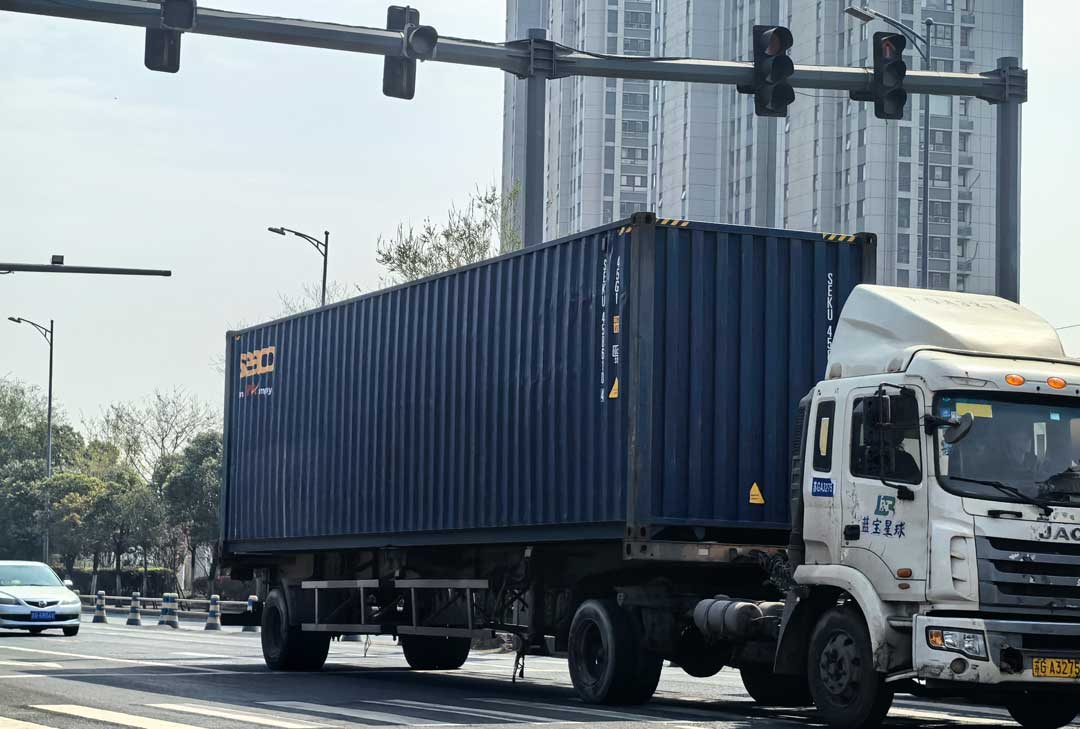
Denver sits at 39 degrees 44 minutes north, 104 degrees 59 minutes west, at an elevation of about 1,600 meters, one of the highest major cities in the United States. Open high plains lie to the east, and about 30 km west the city enters the Front Range foothills of the Rockies. This terrain decides Denver's transport structure: highways and rail to the east, north and south spread across the plains, while west requires crossing the Continental Divide.
Denver's role in regional freight is the only scale inland point in the Rocky Mountain region. Within Colorado and in surrounding Wyoming, Montana, Utah and western Nebraska, no rail intermodal facility matches Denver's, so containers in those directions are second-leg delivered by truck from Denver's yards. This structure keeps Denver's yard volumes high year-round; even when local Colorado demand fluctuates, surrounding states' distribution demand fills in. For importers, this means Denver is both a local landing point and a transit point for the entire Rocky Mountain region.
Denver is an inland port of entry in the federal port system. U.S. Customs and Border Protection (CBP) maintains a port of entry here with code 3307, under Customs District 33, with the field office in Portland.
| Port code | 3307 (Denver, Colorado) |
| Customs district | District 33; field office Portland |
| CBP office address | 18300 E. 71st Ave., Suite 200, Denver, CO 80249 |
| Phone and hours | (303) 375-4500, Monday to Friday 08:00 to 16:00 (Mountain Time), closed weekends |
| International location code | USDEN (UN/LOCODE, for booking and bills of lading); customs entries and ACE filings use 3307 |
| Other in-state ports | 3383 Rocky Mountain Metro Airport (Broomfield), 3384 Centennial Airport (Englewood), 3385 Eagle County Regional Airport (Gypsum), Colorado Springs Airport, Northern Colorado Regional Airport (Loveland) |
| Airport facility hours | Denver International Airport facility phone (303) 342-7400, daily 10:00 to 20:30 (Mountain Time) |
| Main entry seaports | Los Angeles 2704 and Long Beach 2709, Seattle 3001 and Tacoma 3002, New York/New Jersey 4601 |
Denver's port structure differs from most inland points in one respect: besides the Denver port itself, the state has several airport-carrier port codes for business aircraft, charter and general aviation entry, of which Rocky Mountain Metro and Centennial airports are in the metro area. These codes are not substitutes for 3307, and their applicable scenarios differ. Denver's local truck-cargo and air-cargo examination arrangements also differ; confirm the examination location before pickup to avoid waiting an extra day from misaligned arrangements.
Denver's container intermodal service is handled by Union Pacific and BNSF, each with one intermodal yard, both on the city's north and northeast sides.
| Facility | Railroad | Location and notes |
| Denver Intermodal Terminal (industry also calls it the 40th Avenue yard) | Union Pacific | 4085 York Street, Denver, CO 80216; yard and flips 7x24 hours; roadability Mon-Fri 07:00-19:00, Sat and Sun 05:30-14:00; handles both container (COFC) and trailer (TOFC) business; intermodal customer service 800-272-8777 |
| BNSF Denver / Irondale | BNSF Railway | 585 West 53rd Place, Denver, CO 80216; FIRMS code H096; free storage applies BNSF's 48-hour tier |
The two yards' operating hours differ notably. UP's Denver yard has gate and flips open around the clock, but chassis draw/return and roadability are tied to road-test windows, which on Saturday and Sunday run only to 14:00, extending to 19:00 on weekdays. This means weekend pickups have narrower roadability windows; if same-day chassis verification is needed, morning scheduling is safer. BNSF's Denver yard applies the 48-hour free storage tier on free storage, one day more margin than its 24-hour tier yards, more comfortable for receivers needing local distribution before return. Both yards are on the city's north side, about 10 km apart, and different landing points change drayage routes.
Denver's rail conditions are constrained by terrain, which directly affects international container routing choices and needs separate explanation.
| Item | Data |
| West channel | Moffat Route, over the Continental Divide toward Utah, single-track operation |
| Tunnel body | Clearance 24 feet high, 18 feet wide, 6.2 miles long, summit elevation 9,239 feet; tunnel body height clears double-stack containers |
| Western tunnel group | Of the 15 tunnels west of the tunnel, several have insufficient clearance; 43 tunnels in total between Denver and Grand Junction |
| Traffic density | About 15 trains per day on the Moffat line |
| Operating arrangement | Tunnel state-owned since 1989, operated by Union Pacific under lease; the state and the railroad have negotiated new lease arrangements in recent years |
The practical meaning of this set of facts: Denver's westward rail channel over the Rockies cannot run double-stack block trains end to end, because several tunnels west of the Moffat tunnel still have insufficient clearance. Double-stacking is key to controlling container rail cost; when clearance is insufficient, only single-stack loading is possible, halving the same-length train's capacity. So Denver's international container block trains mainly connect from the east and the north-south plain directions, and boxes from Asia usually transfer into Denver via plain hubs such as Chicago and Kansas City, rather than coming direct over the mountains from the Pacific coast. This also explains why Denver's rail transit time, despite being about 1,600 km from Los Angeles, is clearly longer than inland points at comparable straight-line distance.
It should be added that the west channel still carries substantial freight, including coal and westbound bulk, with about 15 trains per day on the Moffat line. For FCL imports, the terrain limit mainly affects routing and transit time, not complete unavailability. At booking, confirm the block train's actual routing with the forwarder; do not estimate transit time by straight-line distance.
Denver International Airport (code DEN) lies about 37 km northeast of the city and is the Rocky Mountain region's air cargo gateway.
Denver's air and sea are two separate clearance processes, with different landing points, examination locations and release methods, and should not be mixed in the same pickup plan. If the same order has both air and sea portions, arrange clearance and pickup times separately. The metro's air support also includes general aviation ports such as Centennial Airport and Rocky Mountain Metro Airport, mainly for business and charter entry, different from scheduled cargo scenarios.
The routing from China to Denver is decided jointly by the entry port and the plain hub direction, with Rocky Mountain terrain limiting direct-connection possibilities.
| Routing | Entry port | Inland leg | Characteristics |
| West Coast via plain hub transfer | Los Angeles 2704 or Long Beach 2709 | Rail via plain hubs such as Chicago and Kansas City to Denver | Short sea leg, longer rail leg with more segments; common path for Midwest imports |
| West Coast via Salt Lake City direction | Los Angeles 2704 or Long Beach 2709 | Rail via Salt Lake City direction intermodal services connecting to UP | UP runs fixed Denver-Salt Lake City frequencies, relatively dense schedules |
| Pacific Northwest direction | Seattle 3001 or Tacoma 3002 | Rail via Chicago or Salt Lake City direction | Alternative for North Asia services, shorter sea time, slightly longer inland leg |
| East Coast direction | New York/New Jersey 4601 | Rail via Chicago and other directions | Longest sea leg, rate advantages in some periods |
| Air | Denver International Airport or other airports | Airport pickup or short delivery | High-value, time-sensitive cargo |
The key judgment in choosing a routing is whether rail can run direct. Denver has no double-stack container block trains direct from the West Coast; boxes from Asia usually complete one transfer at a plain hub, and this segment is the main source of time volatility. The Salt Lake City direction intermodal service is one of Denver's few relatively fixed-schedule channels: since 2019 UP has densified Denver-Salt Lake City and Denver-Los Angeles frequencies to six per week, and in 2022 the Los Angeles end was adjusted to the international container transfer facility (ICTF). The Pacific Northwest entry routing has shorter sea time on North Asia services but longer inland legs; the East Coast entry routing has the longest sea time but clearer rate competitiveness in some periods. LCL cargo generally completes devanning at Chicago or locally in Denver, with fewer transcontinental LCL options.
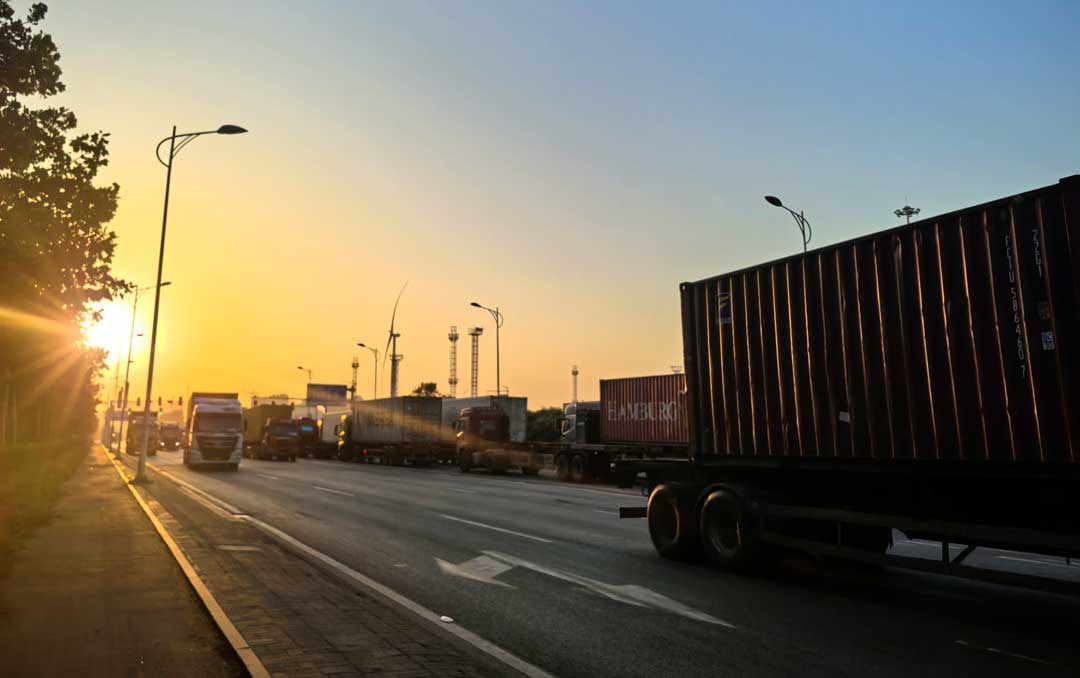
Door-to-door transit time is calculated in segments by routing. As a Rocky Mountain inland point, Denver's rail transit and plain hub transfer time take a relatively high share.
| Routing | Sea leg | Rail transit | Door-to-door total |
| Shanghai / Ningbo to Los Angeles then rail | About 11 to 18 days | About 3 to 7 days (including plain hub transfer) | About 18 to 29 days |
| Shenzhen to Los Angeles then rail | About 13 to 25 days | About 3 to 7 days (including plain hub transfer) | About 20 to 36 days |
| Shanghai / Ningbo to Seattle or Tacoma then rail | About 12 to 19 days | About 4 to 7 days | About 20 to 30 days |
| Shanghai / Ningbo via Panama to New York/New Jersey then rail | About 26 to 33 days | About 5 to 8 days | About 32 to 42 days |
The totals above are port-to-warehouse estimates, excluding origin booking, loading and export clearance. Note that public sources give widely differing ranges for Los Angeles to Denver rail transit, with the short end about two to three days and the long end about five to seven days; the difference mainly comes from whether yard dwell time is counted, whether calculated by direct block trains, and different carriers' schedule arrangements. Actual arrangements should follow the current block train plan rather than a single figure.
Denver has three local variables affecting time. The first is yard congestion: Union Pacific suspended intake for three days in June 2019 due to excessive Denver inbound volume, showing queues appear at this point in concentrated volume periods, with peak-season waits possibly extending one to three days. The second is winter weather: January to March snowfall affects urban drayage, and westward mountain highways implement chain requirements September to May; although imported cargo mostly delivers east and south, deliveries to mountain destinations need separate estimates. The third is metro highway peaks, with I-25 and I-70 travel speeds clearly dropping 07:00-09:00 and 16:00-18:00.
Denver's customs business is handled by CBP at port of entry 3307, under Customs District 33. CBP's office is northeast of the city, near Denver International Airport. For cargo from China there are two common clearance arrangements.
Formal import declaration requires the receiver to provide a taxpayer identification number (EIN), commercial invoice, packing list and bill of lading. Sea cargo must complete Importer Security Filing (ISF, the so-called 10+2) before loading, submitted by the importer or its agent 24 hours before the vessel sails. Commodity classification, origin and valuation are handled per the Harmonized Tariff Schedule of the United States (HTSUS); categories subject to additional tariffs need their applicability checked separately. Colorado levies no state-level import duty, but goods entering circulation in the state for final consumption may involve sales and use tax, handled by the receiver per its business nature and registration. Import categories in the Denver metro are mainly outdoor goods and apparel, aerospace and defense components, electronic components, industrial and energy equipment, and consumer goods; aerospace cargo requires more detailed declaration documents, with commodity codes and usage descriptions matching the physical goods, and some categories also involve export control and end-use filings, which receivers should confirm in advance.
After the container arrives by rail at Denver, the pickup process is completed inside the rail yard, different from a seaport terminal. Rail yards are mainly system-based with no separate gate hall, and timing starts when the arrival notice is issued.
Two points need extra attention at Denver. One is roadability windows: UP's Denver yard roadability runs only to 14:00 on Saturday and Sunday, extending to 19:00 on weekdays; if same-day chassis verification is needed, morning scheduling avoids the risk of the window closing. The other is second-leg mileage: Denver handles distribution for the entire Rocky Mountain region, and if the receiving site is in Wyoming, Montana, Utah or western Nebraska, the road mileage from the yard to the receiving warehouse may be far greater than metro-area drayage, and this time and cost should be counted in advance. Return points are usually inside the rail yards or nearby, with exact locations varying by carrier and railroad; confirm pickup and return points together before pickup.
The last free day (LFD) is the cutoff of the free storage period, after which storage is charged. Denver's storage charges occur only at the entry port terminal or rail yard, and the free period depends on the landing point.
| Item | Timing start | Free duration | Charging party |
| BNSF Denver yard storage | Day arrival notice is issued | 48 hours (BNSF 48-hour tier) | BNSF, per its published tiered tariff |
| UP Denver yard storage | Day arrival notice is issued | Per railroad published policy, usually 48 hours | Union Pacific |
| Seaport terminal storage | Discharge day or container available day | Per terminal notice, mostly 4 days for dry | Terminal operator |
| Carrier demurrage | Day container leaves the terminal or yard | Per equipment free time by box type and service | Carrier |
| Chassis rental | Day chassis is drawn | Per trucking company agreement | Chassis supplier |
The timing starts and charging parties of the five charges differ and do not offset each other: rail yard storage overtime does not automatically extend the carrier's equipment free time, and vice versa. After receiving the arrival notice, the receiver should confirm five things at once: the last free day at the landing yard, the expiry of the carrier's equipment free time, the location and hours of the empty return point, the source and charging basis of the chassis, and the round-trip mileage from the warehouse to the return point. With all five clear, pickup and return dates can be set without clearing one deadline while breaching another.
If pickup cannot be made within the free period due to customs examination, document correction or other reasons beyond the receiver's control, a written extension can be requested from the railroad, terminal or carrier with supporting documents, submitted before the original expiry date; late requests are generally not backdated. Approval is handled per each company's published policy with no uniform standard. Colorado has a separate permit system for overweight and over-length vehicles: interstate highways follow the federal 80,000-pound gross weight limit, and overweight boxes need a permit from the state transportation department; receivers of heavy cargo should calculate total box-and-goods weight in advance. Deliveries westward into the mountains must comply with chain requirements September to May; winter scheduling should carry extra buffer.
Customs examination (CBP Examination) is a routine part of the import process, sampling declared cargo per CBP's risk scoring. Examination usually occurs at the port of entry where the container lands, and can also occur at the inland port after transshipment, depending on the examination location determined at declaration.
| Method | Operation | Impact on pickup |
| Document review | Check invoice, packing list, certificate of origin and declaration data | Cargo not moved; released after supplementing documents |
| Non-intrusive inspection (NII) | Whole box X-ray imaging, no devanning | Usually completed same day; container stays in yard |
| Tailgate exam | Open box door to check cargo at the front | Adds half a day to one day |
| Comprehensive exam (CET) | Move to exam area for piece-by-piece count and full devanning | Adds three to seven days; must be restuffed |
Examination generates exam service fees, drayage round-trip fees, devanning and restuffing labor, and storage during the exam, all borne by the receiver regardless of whether problems are found. If Los Angeles or Seattle is the entry port at declaration, examination is generally completed at the entry port and the Denver end only bears the consequence of delayed arrival; if Denver is the entry port, confirm local examination facilities and operating hours. BNSF's Denver yard has a federal examination facility code, with conditions to complete part of the examination work inside the yard. After exam release the container can continue inland transport; this is one of the main sources of time volatility at inland points. Practical ways to lower examination probability: declared name matching the physical goods, prices within the common range for similar products, avoiding under-declaration and mixed loading, and keeping import records continuous. Aerospace and defense-use cargo may also involve filings with other federal agencies beyond customs requirements, which should be checked in advance.
When cargo cannot clear U.S. customs or the receiver refuses it, return can be processed. The precondition is that the goods have not been consumed or delivered in the United States and remain at a terminal, rail yard, bonded warehouse or customs-controlled area. Cargo already released and delivered to the receiver's warehouse, or entered into domestic circulation, cannot be handled as a return.
Return costs include U.S. export clearance fees, return ocean freight, and storage and handling at both ends. Cargo must rail back to the entry port for loading; if it originally entered via the West Coast the rail leg is longer, and if via the Pacific Northwest direction the mileage is relatively shorter. Whether to return usually needs comparison with abandoning the cargo, reselling to another country or local destruction. Abandoning requires application to customs and payment of destruction fees; reselling requires new transport and export arrangements. The Denver metro has some warehousing and processing capability; if cargo only fails on specification or labeling, reworking in bonded status before re-export is sometimes more economical than returning the whole batch, depending on rework cost and the original export country's duty arrangements. Cargo involving additional tariffs or certificate-required categories should have the destination's import requirements confirmed before disposal.
Denver's cargo rhythm is decided jointly by West Coast port route seasonality, Rocky Mountain restocking demand and the outdoor and winter sports industries' stocking cycles, with a rhythm not fully matching most Midwest inland points.
| Period | Characteristics |
| Peak | Q3 and Q4 each year are volume peaks, with retail stocking for the year-end holidays and outdoor and winter sports categories entering their selling season, concentrating metro yard volumes; a further rush from late December to early January before the Chinese New Year |
| Flat season | March to June, volume recovers moderately then rises again, capacity and railcar supply normal, suited to non-urgent replenishment and production material stocking; construction and engineering material arrivals mostly concentrate in this period |
| Low season | Late January to February, volume falls, rates and railcar pressure at year lows. Note that January to March snowfall still affects drayage and westward delivery |
Denver has three seasonal variables worth separate mention. The first is yard congestion: Denver's yards serve both the locality and the entire Rocky Mountain region, with queues visible when Q4 volumes concentrate; UP once suspended intake for three days in June 2019 due to excessive Denver inbound volume. The second is weather: January to March snowfall affects urban drayage, and westward mountain highways implement chain requirements September to May, so deliveries to mountain destinations should reserve time; summer severe convective weather also causes short delays. The third is industry rhythm: outdoor and winter sports category import stocking concentrates in summer and autumn; receivers in these industries should stack the peak on top of the retail stocking peak and book capacity and yard appointments early.
The benefits of using Denver as an import landing point concentrate in four areas: dual railroad choice, regional coverage, air gateway and local industry.
| Advantage | Specifics |
| Dual-rail landing point in the Rocky Mountains | BNSF and Union Pacific each have an intermodal yard, the only inland point in the Rocky Mountain region with access to both Class I railroads, allowing rate and schedule comparison |
| Regional distribution hub status | Wyoming, Montana, Utah and other surrounding states have no comparable rail intermodal facilities, with containers in those directions second-leg delivered from Denver |
| Fixed-schedule intermodal services | Since 2019 UP has densified Denver-Los Angeles and Denver-Salt Lake City frequencies to six per week, higher schedule density than most comparable inland points |
| Relatively ample free storage | BNSF's Denver yard applies the 48-hour free storage tier, facilitating receivers arranging local distribution before return |
| Air cargo gateway | Denver International Airport has CBP port facilities, operating daily 10:00 to 20:30, suited to high-value and time-sensitive cargo |
| Own port of entry | Port code 3307, with the CBP office northeast of the city, capable of formal import declaration and release |
The limitations should also be seen clearly. Denver's westward channel over the Rockies is constrained by tunnel clearance, so double-stack block trains cannot run end to end; international boxes usually complete one transfer at a plain hub, with more inland segments than plain inland points on the east and west coasts. Public ranges for rail transit time differ widely; scheduling should follow the current block train plan. Denver's altitude and winter weather add extra cost and time to westward delivery. As an inland point, its sea capacity and rail block-train matching are not decided by the shipper; the actual landing point depends on the carrier-rail intermodal agreement. Denver and Salt Lake City sit on the two wings of the Rocky Mountain region; if the receiving market concentrates in Utah, landing at Salt Lake City may have a shorter inland leg. Denver suits best: receiving markets covering Colorado, Wyoming, Montana and northern Utah, or business needing a single landing point covering the entire Rocky Mountain region.
No. Denver is an inland city, not on the coast, with no navigable outlet to the sea and no ocean terminals; all sea FCL cargo must first discharge at a West or East Coast port, then move in by rail or truck.
3307 (Denver, Colorado), under Customs District 33, with the field office in Portland. The CBP office is at 18300 E. 71st Ave., Suite 200, Denver, CO 80249, phone (303) 375-4500, open Monday to Friday 08:00 to 16:00 Mountain Time, closed weekends. The international location code for booking and bills of lading is USDEN.
Two: Union Pacific's Denver Intermodal Terminal, 4085 York Street, Denver, CO 80216, with yard and flips 7x24 hours, handling both container and trailer business; and BNSF's Denver yard, 585 West 53rd Place, Denver, CO 80216, FIRMS code H096, applying the 48-hour free storage tier.
Because Denver's westward rail channel over the Rockies is constrained by tunnel clearance. The Moffat tunnel body is 24 feet high and clears double-stack containers, but of the 15 tunnels west of it several have insufficient clearance, with 43 tunnels in total between Denver and Grand Junction, so double-stack block trains mainly connect from the plain directions east and west, and boxes from Asia usually complete one transfer at plain hubs such as Chicago and Kansas City.
The most common is entry via Los Angeles or Long Beach then rail via the plain hub direction to Denver, or connection via Union Pacific's Salt Lake City direction intermodal service. The Seattle or Tacoma entry routing has shorter sea time on North Asia services but a longer inland leg. Door-to-door time on the four main routings ranges roughly 18 to 42 days.
BNSF's Denver yard applies the 48-hour free storage tier, counted from the day the arrival notice is issued. UP's Denver yard follows its published policy, usually also 48 hours. Beyond the free period, storage is charged daily at each railroad's published tariff.
They can. Denver's yards serve both the locality and the entire Rocky Mountain region, with queues visible when Q4 volumes concentrate. UP once suspended intake for three days in June 2019 due to excessive Denver inbound volume, showing queue risk at this point in volume peaks, with peak-season waits possibly extending one to three days.
The yard and flips are open around the clock, with roadability hours varying by day: Monday to Friday 07:00 to 19:00, Saturday and Sunday 05:30 to 14:00. If same-day chassis verification is needed on pickup day, morning scheduling avoids the risk of the window closing.
A written extension can be requested from the railroad, terminal or carrier, with examination or hold documents submitted before the original expiry date. Approval is handled per each company's policy with no uniform standard, and late requests are generally not backdated.
Yes, provided the goods have not been consumed or delivered in the United States and remain at a yard, bonded warehouse or customs-controlled area. Return requires U.S. export clearance and Chinese import declaration; goods returned in original condition due to quality or specification issues can apply for duty exemption within the prescribed period. Cargo must also rail back to the entry port for loading; Denver is import-dominant, so return capacity must be confirmed with the carrier in advance.
Q3 and Q4 are the tightest periods, with retail stocking for the year-end holidays and outdoor and winter sports categories entering their selling season, concentrating metro yard volumes. A further rush runs from late December to early January before the Chinese New Year. January to March snowfall affects drayage and westward delivery; scheduling should carry buffer.
Yes. Wyoming, Montana, Utah and other surrounding states have no comparable rail intermodal facilities, with containers in those directions second-leg delivered from Denver, so Denver serves both the locality and the entire Rocky Mountain region. Second-leg delivery mileage must be counted into time and cost, and westward mountain deliveries must comply with chain requirements September to May.
Shipping from China to USA
Planning a shipment or just comparing options? Contact our freight experts to get a tailored rate within 24 hours.
