
Des Moines, Iowa sits in south-central Iowa, the state capital and its most populous city; the metro area also includes West Des Moines, Ankeny, Urbandale and others. The city is not on the coast and has no navigable outlet to the sea, so all sea FCL cargo must first discharge at a West Coast, Gulf or East Coast port, then move in by rail or truck. Des Moines' position in the freight system is decided by two things: I-35 and I-80 converge in the city, giving good highway accessibility; but Des Moines has no container rail intermodal ramp, so FCL cargo must land at yards in Kansas City, Omaha or Chicago before draying in. Cargo shipped from China to Iowa and surrounding agricultural and manufacturing markets commonly uses Des Moines as the delivery endpoint, not as a rail arrival point.
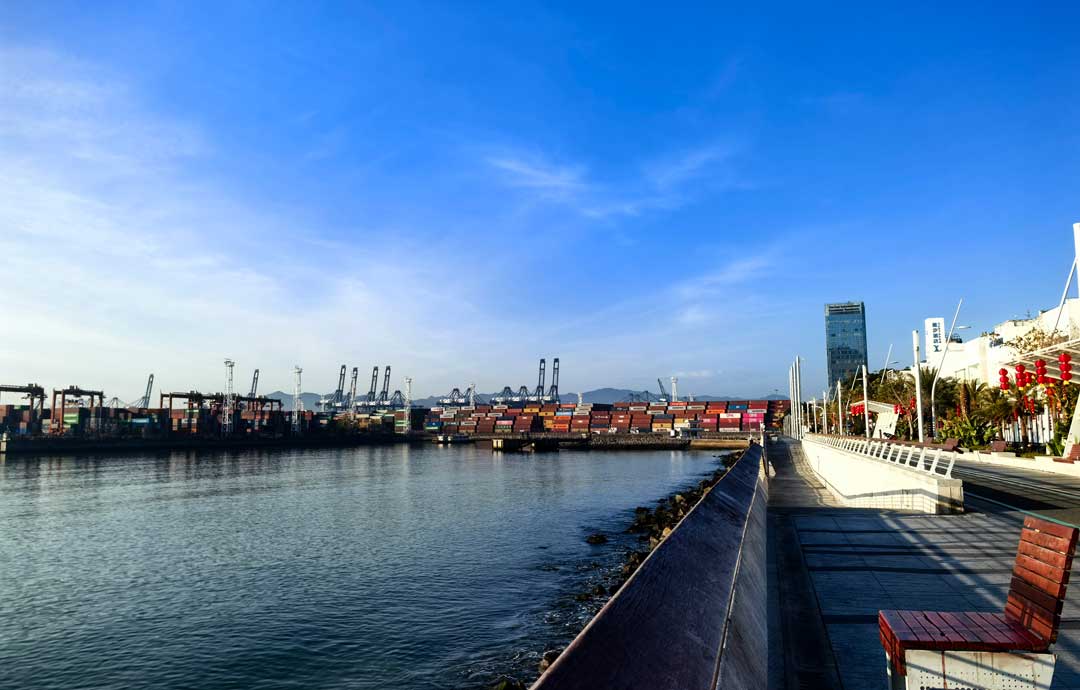
Des Moines sits at 41 degrees 35 minutes north, 93 degrees 37 minutes west, in central Iowa, where the Des Moines River and Raccoon River converge in the city. The area is part of the North American central plain, with flat terrain: north to Minneapolis-St. Paul, east to Chicago, south to Kansas City and St. Louis, west to Omaha and the Denver direction.
Des Moines' locational feature is good highways, average rail. Two interstates converging here puts the city at the intersection of the central channel of the North American highway network: half a day north reaches Minneapolis, east reaches Chicago, south reaches Kansas City, west reaches Omaha. On rail, four railroads pass through the city, but all are through lines with no local container handling facilities. This combination decides Des Moines' role: it suits as a distribution and delivery endpoint, not as a rail container landing point. A radius of about 240 km centered on Des Moines covers most of Iowa, plus northern Missouri, eastern Nebraska and southern Minnesota.
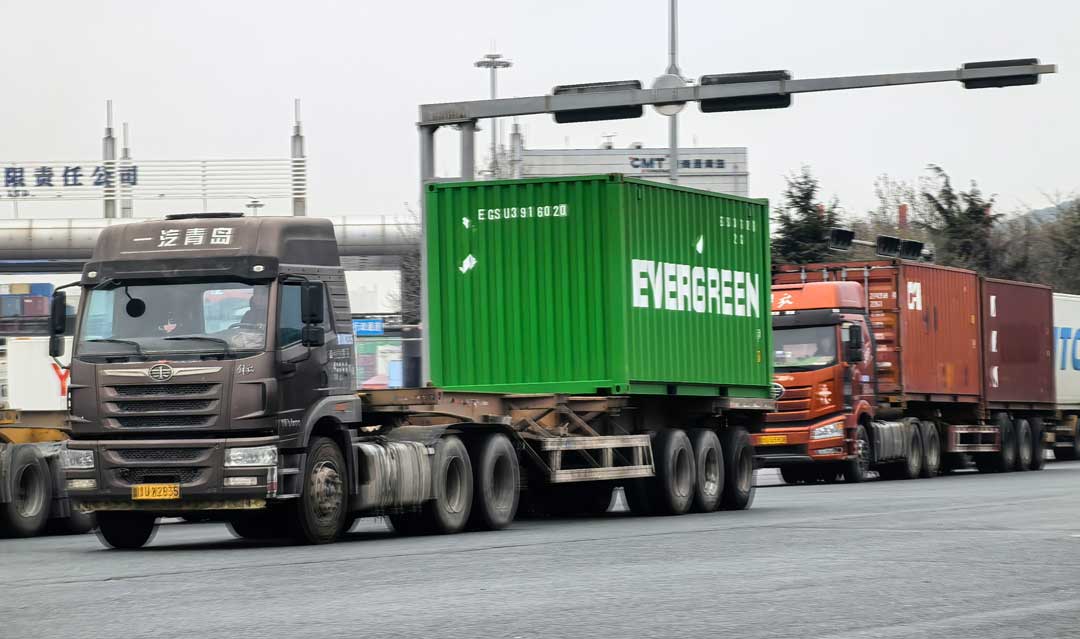
Des Moines is an inland port of entry in the federal port system. U.S. Customs and Border Protection (CBP) maintains a port of entry here with code 3513, under Customs District 35, whose center is Minneapolis-St. Paul, Minnesota, with the field office in Chicago.
| Port code | 3513 (Des Moines, Iowa) |
| Customs district | District 35, center Minneapolis-St. Paul, Minnesota; field office Chicago |
| CBP office address | Des Moines International Airport, 6100 Fleur Drive, Des Moines, IA 50321 |
| Phone and hours | (515) 284-4403, Monday to Friday 08:00 to 16:00 (Central Time), closed weekends |
| Deferred inspection hours | Tuesday to Thursday 10:00 to 14:00 (Central Time) |
| International location code | USDSM (UN/LOCODE, for booking and bills of lading); customs entries and ACE filings use 3513 |
| Other ports in district | 3501 Minneapolis-St. Paul, 3502 Sioux Falls, 3505 Cedar Rapids, 3506 Sioux City, 3510 Duluth, 3512 Omaha |
| Main entry seaports | Los Angeles 2704 and Long Beach 2709, Seattle 3001 and Tacoma 3002, Houston 5301, Savannah 1703, New York/New Jersey 4601 |
One same-name confusion needs ruling out first: there are two Des Moines in the United States. Des Moines, Iowa has port code 3513; Des Moines, Washington, south of Seattle, belongs to another customs district. The two have no relationship in geography, rail network or freight routings; bookings and declarations should write the full state name to avoid landing-point errors. Des Moines' CBP office is inside the airport, with hours to 16:00, and deferred inspection only Tuesday to Thursday; note the time windows when arranging related business.
Des Moines' rail conditions need to be viewed in two layers: many railroads pass through, but there are no local container handling facilities.
| Railroad | Situation in Des Moines |
| Union Pacific | Class I, line passes through Des Moines, with local traffic mainly through-flow; Des Moines' original single rail facility only connected to this company and could only handle plastic pellets |
| BNSF Railway | Class I, line reaches Des Moines and connects directly to the industrial transloading facility |
| Norfolk Southern | Class I, accesses Des Moines via trackage rights and connects directly to the industrial transloading facility |
| Iowa Interstate Railroad | Class II, an important regional railroad in Iowa and one of the main connecting parties to the industrial transloading facility |
| Container intermodal ramp | None locally; nearest container intermodal ramps in the Kansas City, Omaha and Chicago directions |
Four railroads passing through central Iowa matters for bulk and carload transport, but is of limited significance for FCL imports. The reason is that container intermodal requires dedicated ramps, yards, gantry or reach stackers, and supporting gate systems, which Des Moines lacks. So Des Moines' rail conditions do not change how FCL cargo lands; containers still come off the rail at yards in neighboring states. Relatively, Des Moines' rail resources are more visibly valuable in the export direction: Iowa is a major U.S. agricultural state with large outbound volumes of corn, soybeans and related processed products, and rail is the conventional mode for these commodities. Importers with simultaneous export arrangements can plan with the forwarder accordingly.
Des Moines built an industrial transloading facility to improve local rail conditions, but its function needs to be understood accurately.
| Facility name | Des Moines Industrial Transloading Facility |
| Location | Southeast side of Des Moines, adjacent to E Martin Luther King Jr Parkway, about 1 mile from the I-35/I-80 junction |
| Scale | About 31 acres, including 115,000 sq ft warehouse, about 15,000 feet of rail, about 8 acres of outdoor yard, plus bulk mineral storage area |
| Accessible railroads | Iowa Interstate, Norfolk Southern, BNSF |
| Project nature | Public-private partnership project, receiving about USD 11.2 million in U.S. DOT BUILD grant; construction started 2021 |
| Main function | Transfers bulk and carload cargo between truck and train; does not handle container intermodal loading |
This facility solves the problem of central Iowa enterprises having no local rail option: previously local enterprises shipping bulk had to first truck cargo to Kansas City, Omaha or Chicago to get on rail. After completion, carload loading and unloading can be done directly in Des Moines. But it must be clear that transloading facilities and container intermodal ramps are two different facility types: the former handles bulk, breakbulk and carload cargo, with the cargo itself as the working object; the latter handles standard containers, with the box as the working object, requiring corresponding lifting equipment and yard conditions. So after this facility was built, Des Moines still has no container intermodal ramp, and FCL import landing is unchanged. Receivers hearing that Des Moines now has a rail yard should first confirm which facility type is meant.
Des Moines' air capability and the distance to the nearest container ramp are two parallel supplementary paths.
| Nearby container intermodal ramp | Road distance from Des Moines | Accessible railroads | Applicable directions |
| Omaha / Council Bluffs direction | About 217 km | Union Pacific, BNSF | Nearest, suited to cargo entering from the West Coast |
| Kansas City direction | About 314 km | BNSF, Norfolk Southern, Union Pacific | More ramps, rates and schedules comparable |
| Chicago direction | About 539 km | All six Class I railroads | Most ramp and service options, longest drayage mileage |
Air: Des Moines International Airport (code DSM) is about 8 km southwest of the city, with air cargo volume ranking in the U.S. top 50, cargo carriers mainly FedEx and UPS, suited to medium-small batch, time-sensitive cargo. Air clearance: the airport has a CBP office, and the port code 3513 office is located here, open Monday to Friday 08:00 to 16:00.
The three paths' trade-off is mainly between drayage mileage and ramp options. The Omaha direction is nearest with lowest drayage cost, but fewer ramps and relatively limited schedules; the Chicago direction has the most ramps and densest international service schedules, but the road mileage from Chicago to Des Moines approaches 540 km, with higher drayage time and cost. In practice, FCL cargo entering from the West Coast mostly lands via the Omaha or Kansas City direction, while cargo entering from the East Coast or Gulf sometimes lands via the Chicago direction. The specific landing point is still decided by the intermodal agreement between the carrier and railroad named on the bill of lading, and the shipper cannot designate it directly.
The routing from China to Des Moines is decided jointly by the entry port and the final rail ramp, with Des Moines itself the endpoint of the last road delivery leg.
| Routing | Entry port | Rail ramp | Characteristics |
| West Coast via Omaha direction | Los Angeles 2704 or Long Beach 2709 | Omaha / Council Bluffs | Short sea leg, shortest drayage (about 217 km), fewer ramps |
| West Coast via Kansas City direction | Los Angeles 2704 or Long Beach 2709 | Kansas City | Short sea leg, more ramp options, drayage about 314 km |
| West Coast via Chicago direction | Los Angeles 2704 or Long Beach 2709 | Chicago | Most ramps and schedules, but longest drayage (about 539 km) |
| Gulf direction | Houston 5301 | Via Kansas City or Dallas direction | Longer sea leg, medium inland leg |
| East Coast direction | Savannah 1703 or New York/New Jersey 4601 | Via Chicago or Kansas City direction | Longest sea leg, rate advantages in some periods |
| Air | Des Moines International Airport or Chicago, Minneapolis direction hubs | Airport pickup | High-value, time-sensitive cargo |
When choosing a routing, drayage mileage should be counted as an independent variable. Des Moines has no local ramp, so whichever direction is taken there is one extra truck transfer, making the ramp-to-warehouse segment a higher share of total cost than in cities with a local ramp. For the Omaha direction, about 217 km of drayage is usually completed within half a day; for the Chicago direction, about 539 km needs nearly a full day, and vehicle type and time must be coordinated between long-haul transport and local delivery. If the receiver is sensitive to total time, prioritize the Omaha or Kansas City direction; if higher optionality in capacity and schedules is needed, the Chicago direction leaves more room. LCL cargo generally completes devanning at Chicago, then delivers LTL, different from FCL handling.
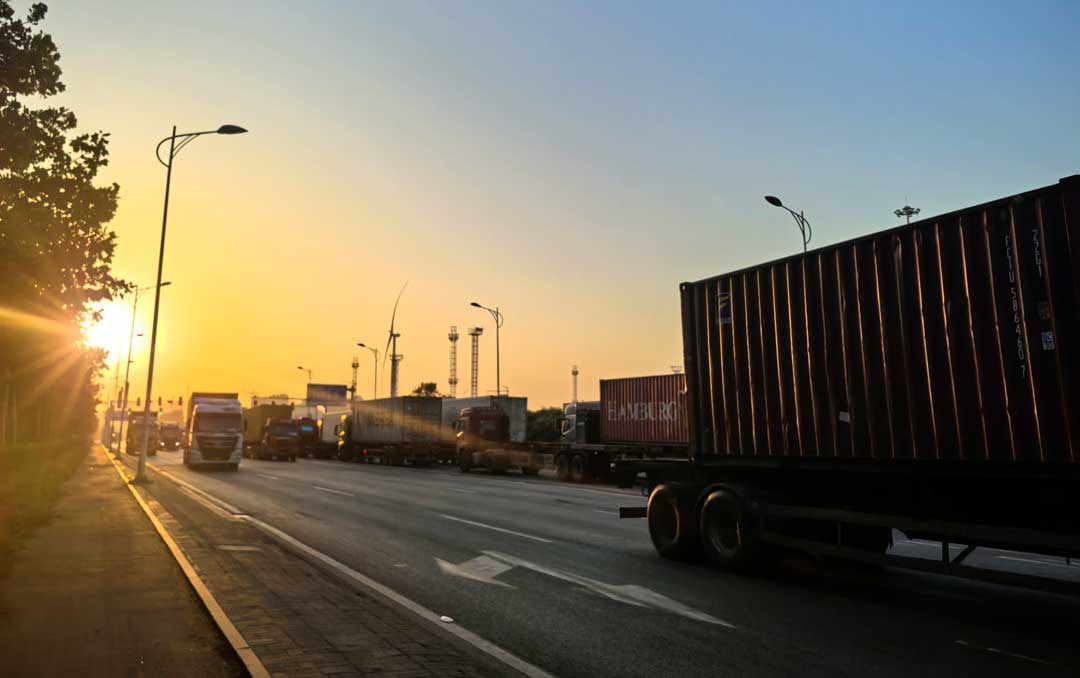
Door-to-door transit time is calculated in segments by routing. As an inland point with no local ramp, Des Moines' time composition includes one rail transit and one longer road drayage.
| Routing | Sea leg | Rail and road transit | Door-to-door total |
| Shanghai / Ningbo to Los Angeles then via Omaha | About 11 to 18 days | Rail about 6 to 9 days, drayage about half a day | About 19 to 30 days |
| Shenzhen to Los Angeles then via Kansas City | About 13 to 25 days | Rail about 6 to 9 days, drayage about 1 day | About 21 to 37 days |
| Shanghai / Ningbo to Los Angeles then via Chicago | About 11 to 18 days | Rail about 6 to 9 days, drayage about 1 to 1.5 days | About 20 to 33 days |
| Shanghai / Ningbo via Panama to Houston then rail | About 28 to 36 days | Rail about 4 to 6 days, drayage about 1 day | About 34 to 44 days |
| Shanghai / Ningbo via Panama to Savannah then rail | About 30 to 38 days | Rail about 5 to 7 days, drayage about 1 day | About 37 to 47 days |
The totals above are port-to-warehouse estimates, excluding origin booking, loading and export clearance. Actual time is affected by vessel type, port rotation, port congestion, railcar supply and holidays; peak season can add a week or more. Des Moines has three local variables affecting time. The first is drayage scheduling: because the ramp is in a neighboring state, drayage needs vehicles arranged separately, and finding vehicles ad hoc in peak season may wait one to two days; locking the trucking company in advance and booking the pickup slot can significantly reduce uncertainty in this segment. The second is winter weather: Iowa's January to March snowfall and road icing affect road drayage and delivery, with vehicles from neighboring states possibly delayed half a day to one day. The third is the agricultural transport season: during the autumn corn and soybean harvest, road capacity and railcars are occupied by agricultural transport, and import cargo drayage may be affected.
For cargo with tight time budgets, the drayage step can be front-loaded: confirm the trucking company, book the pickup slot, and calculate the actual mileage and vehicle requirements from the ramp to Des Moines before the container enters the ramp. This preparation is especially important in the August to October peak season and the autumn harvest period.
Des Moines' customs business is handled by CBP at port of entry 3513, under Customs District 35. The CBP office is inside Des Moines International Airport. For cargo from China there are two common clearance arrangements.
Formal import declaration requires the receiver to provide a taxpayer identification number (EIN), commercial invoice, packing list and bill of lading. Sea cargo must complete Importer Security Filing (ISF, the so-called 10+2) before loading, submitted by the importer or its agent 24 hours before the vessel sails. Commodity classification, origin and valuation are handled per the Harmonized Tariff Schedule of the United States (HTSUS); categories subject to additional tariffs need their applicability checked separately. Iowa levies no state-level import duty, but goods entering circulation in the state for final consumption may involve sales and use tax, handled by the receiver per its business nature and registration. Import categories in the Des Moines metro are mainly industrial and agricultural machinery, electronics and electrical equipment, chemicals and plastics, consumer goods and medical devices; agricultural machinery and industrial equipment require more detailed declaration documents, with commodity codes and usage descriptions matching the physical goods. CBP's Des Moines office hours run to 16:00, with deferred inspection only Tuesday to Thursday; arrange related procedures per these time windows.
Containers do not come off the rail at Des Moines, but land at intermodal ramps in the Omaha, Kansas City or Chicago directions. The pickup process therefore divides into ramp pickup and Des Moines delivery.
The risk in the process lies in whether the ramp and return point are in the same direction. If the container's return point is in the Omaha direction while the receiving warehouse is in Des Moines, the empty must move back about 217 km; if the pickup ramp is in the Chicago direction while the return point is in the Kansas City direction, a cross-state backtracking situation can result. Confirm pickup and return points separately before pickup, and count both mileage segments into cost. Additionally, because the landing point is in a neighboring state, return time is often limited by driver working hours; if the round trip cannot be completed the same day, reserve one day. Des Moines' local trucking capacity is relatively tight in the autumn harvest period and at year-end; lock the trucking company and chassis in advance.
The last free day (LFD) is the cutoff of the free storage period, after which storage is charged. Des Moines' storage charges occur at the entry port terminal or neighboring-state rail ramps, not in Des Moines itself.
| Item | Timing start | Free duration | Charging party |
| Rail intermodal ramp storage | Day arrival notice is issued | Mostly 24 to 48 hours, per the railroad's published tiers | Railroad |
| Seaport terminal storage | Discharge day or container available day | Per terminal notice, mostly 4 days for dry | Terminal operator |
| Carrier demurrage | Day container leaves the terminal or yard | Per equipment free time by box type and service | Carrier |
| Chassis rental | Day chassis is drawn | Per trucking company agreement | Chassis supplier |
| Des Moines local warehousing | Day cargo enters the warehouse | Per warehousing agreement, usually a certain free warehouse period | Warehousing or third-party logistics provider |
The timing starts and charging parties of the five charges differ and do not offset each other: rail ramp storage overtime does not automatically extend the carrier's equipment free time, and vice versa. Because Des Moines' ramps are in neighboring states, the actual usable free time is compressed by drayage mileage: if the rail ramp's free storage period is 24 to 48 hours and the drayage from ramp to Des Moines takes half a day to a full day, the margin left for the receiver to arrange unloading and return is very limited. After receiving the arrival notice, the receiver should confirm five things at once: the last free day at the landing ramp, the expiry of the carrier's equipment free time, the location and hours of the empty return point, the source and charging basis of the chassis, and the round-trip mileage from the Des Moines warehouse to the return point. With all five clear, pickup and return dates can be set.
If pickup cannot be made within the free period due to customs examination, document correction or other reasons beyond the receiver's control, a written extension can be requested from the railroad, terminal or carrier with supporting documents, submitted before the original expiry date; late requests are generally not backdated. Approval is handled per each company's published policy with no uniform standard. Iowa has a separate permit system for overweight and oversize vehicles: interstate highways follow the federal 80,000-pound gross weight limit, and overweight boxes need a permit from the state transportation department; receivers of heavy cargo should calculate total box-and-goods weight in advance. January to March snowfall and road icing, and autumn harvest-period road capacity tightness, are variables to anticipate in scheduling.
Customs examination (CBP Examination) is a routine part of the import process, sampling declared cargo per CBP's risk scoring. Examination usually occurs at the port of entry where the container lands, and can also occur at the inland port after transshipment, depending on the examination location determined at declaration.
| Method | Operation | Impact on pickup |
| Document review | Check invoice, packing list, certificate of origin and declaration data | Cargo not moved; released after supplementing documents |
| Non-intrusive inspection (NII) | Whole box X-ray imaging, no devanning | Usually completed same day; container stays in yard |
| Tailgate exam | Open box door to check cargo at the front | Adds half a day to one day |
| Comprehensive exam (CET) | Move to exam area for piece-by-piece count and full devanning | Adds three to seven days; must be restuffed |
Examination generates exam service fees, drayage round-trip fees, devanning and restuffing labor, and storage during the exam, all borne by the receiver regardless of whether problems are found. If Los Angeles or Houston is the entry port at declaration, examination is generally completed at the entry port and the Des Moines end only bears the consequence of delayed arrival; if Des Moines, Kansas City or Omaha is the entry port, confirm the corresponding port's examination conditions and operating hours. Des Moines' CBP office hours run to 16:00, with deferred inspection only Tuesday to Thursday; this time window must be counted when arranging examination-related procedures. After exam release the container can continue inland transport; this is one of the main sources of time volatility at inland points. Practical ways to lower examination probability: declared name matching the physical goods, prices within the common range for similar products, avoiding under-declaration and mixed loading, and keeping import records continuous.
When cargo cannot clear U.S. customs or the receiver refuses it, return can be processed. The precondition is that the goods have not been consumed or delivered in the United States and remain at a terminal, rail ramp, bonded warehouse or customs-controlled area. Cargo already released and delivered to the receiver's warehouse, or entered into domestic circulation, cannot be handled as a return.
Return costs include U.S. export clearance fees, return ocean freight, and storage and handling at both ends. Cargo must truck from Des Moines back to the ramp and rail back to the entry port for loading; if it originally entered via the West Coast it must move back via the Omaha or Kansas City direction, a relatively expensive inland leg. Whether to return usually needs comparison with abandoning the cargo, reselling to another country or local destruction. Abandoning requires application to customs and payment of destruction fees; reselling requires new transport and export arrangements. Des Moines' warehousing and distribution support is medium-scale; if cargo only fails on specification or labeling, reworking in bonded status before re-export is sometimes more economical than returning the whole batch, depending on rework cost and the original export country's duty arrangements. Cargo involving additional tariffs or certificate-required categories should have the destination's import requirements confirmed before disposal.
Des Moines' cargo rhythm is decided jointly by West Coast and Gulf port route seasonality, Midwest restocking demand and Iowa's agricultural cycle. The agricultural cycle makes Des Moines' seasonal characteristics differ from most inland points.
| Period | Characteristics |
| Peak | August to October, the year's tightest period: retailers stock for the year-end holidays, ports and rail under pressure together; this period coincides with Iowa's corn and soybean harvest, with road capacity and railcars diverted by agricultural transport, and import cargo drayage and delivery more visibly affected |
| Flat season | March to June, volume recovers moderately, capacity and railcar supply normal, suited to non-urgent replenishment and production material stocking; agricultural production material imports mostly concentrate in this period |
| Low season | Late January to February, volume falls, rates and capacity pressure at year lows. Note that January to March snowfall and road icing still affect road delivery |
Des Moines has two seasonal variables worth separate mention. The first is the agricultural cycle: during the autumn harvest, road and rail capacity is heavily occupied by agricultural products, with import cargo drayage cost and waiting time rising, an effect concentrated September to November; the spring agricultural input import peak stacks in the same direction as local transport demand. The second is weather: Iowa winter snowfall and road icing affect drayage vehicles from neighboring states, with January to March time volatility greater than other months; summer severe convective weather also causes short delays. Additionally, Des Moines' structural feature of no local ramp makes the drayage segment more likely to become a bottleneck in peak season, making locking capacity in advance more important than in other cities.
The benefits of using Des Moines as an import landing point concentrate in four areas: highway convergence, regional coverage, cost structure and industry support.
| Advantage | Specifics |
| Two interstate trunk routes converge | I-35 and I-80 converge in the city, with Minneapolis, Chicago, Kansas City and Omaha all within half a day's drive |
| Reasonable regional coverage radius | A radius of about 240 km centered on Des Moines covers most of Iowa, plus northern Missouri, eastern Nebraska and southern Minnesota |
| Shared Iowa rail resources | Four railroads (UP, BNSF, NS, Iowa Interstate) pass through the locality, with the industrial transloading facility built and connected to three of them, giving bulk and carload transport local options |
| Own port of entry | Port code 3513, with the CBP office inside Des Moines International Airport, capable of formal import declaration and release |
| Lower cost structure | Warehousing and industrial property costs below Chicago and coastal hubs, suited to receivers needing longer inventory cycles |
| Complete agricultural and manufacturing support | Agriculture and farm machinery, food processing, biotechnology, renewable energy and financial services cluster, with local distribution and value-added service resources to connect |
The limitations should also be seen clearly. Des Moines has no container rail intermodal ramp: all FCL cargo must land at Omaha, Kansas City or Chicago ramps then dray in, adding one landing and at least 217 km of road transport compared with cities with a local ramp; this segment directly compresses usable free time and raises per-box landing cost. The industrial transloading facility improved local rail conditions, but handles bulk and carload and does not change how containers land. As an inland point, its sea capacity and rail block-train matching are not decided by the shipper; the actual landing point depends on the carrier-rail intermodal agreement. Autumn harvest-period capacity occupation is a local-specific variable. Des Moines, Omaha and Kansas City sit on the same Midwest western-edge corridor; if the receiving market concentrates in Nebraska or western Missouri, landing at Omaha or Kansas City directly is usually more economical. Des Moines suits best: receiving markets concentrated in Iowa, or business needing a single landing point covering Iowa and parts of the four surrounding states.
No. Des Moines is in central Iowa, not on the coast, with no navigable outlet to the sea and no ocean terminals; all sea FCL cargo must first discharge at a West Coast, Gulf or East Coast port, then move in by rail and truck.
No. Union Pacific, BNSF, Norfolk Southern and Iowa Interstate all reach Des Moines, but there is no local container intermodal ramp. FCL cargo must land at ramps in Omaha/Council Bluffs (about 217 km), Kansas City (about 314 km) or Chicago (about 539 km) then dray in.
No. The Des Moines Industrial Transloading Facility covers about 31 acres, including a 115,000 sq ft warehouse and about 15,000 feet of rail, connecting Iowa Interstate, Norfolk Southern and BNSF, handling truck-train transfers of bulk and carload cargo, not container intermodal loading. These are two different facility types.
3513 (Des Moines, Iowa), under Customs District 35, whose center is Minneapolis-St. Paul, Minnesota, with the field office in Chicago. The CBP office is at Des Moines International Airport, 6100 Fleur Drive, Des Moines, IA 50321, phone (515) 284-4403, open Monday to Friday 08:00 to 16:00 Central Time. The international location code for booking and bills of lading is USDSM.
Two common same-name places. Des Moines, Iowa has port code 3513; Des Moines, Washington, south of Seattle, belongs to another customs district. The two have no relationship in geography, rail network or freight routings; bookings and declarations should write the full state name.
The most common is entry via Los Angeles or Long Beach, then rail to the Omaha/Council Bluffs or Kansas City ramps, then dray into Des Moines. Some cargo lands via the Chicago direction ramp, but drayage mileage is longest. Door-to-door time on the four main routings ranges roughly 19 to 47 days.
The nearest container ramp is in the Omaha/Council Bluffs direction, about 217 km; next is Kansas City about 314 km; Chicago about 539 km. Drayage mileage directly affects landing cost and usable free time, and needs separate calculation in pickup plans.
Because the ramp is in a neighboring state. If the rail ramp's free storage period is 24 to 48 hours and the drayage from ramp to Des Moines takes half a day to a full day, the margin left for the receiver to arrange unloading and return is very limited. Confirm the trucking company, appointment slot and return point before the arrival notice is issued, and pre-calculate the round-trip mileage from the warehouse to the return point.
A written extension can be requested from the railroad, terminal or carrier, with examination or hold documents submitted before the original expiry date. Approval is handled per each company's policy with no uniform standard, and late requests are generally not backdated.
Yes, provided the goods have not been consumed or delivered in the United States and remain at a yard, bonded warehouse or customs-controlled area. Return requires U.S. export clearance and Chinese import declaration; goods returned in original condition due to quality or specification issues can apply for duty exemption within the prescribed period. Cargo must also truck from Des Moines back to the ramp, then rail back to the entry port for loading, a relatively expensive inland leg.
August to October is the tightest period, with retailers stocking for the year-end holidays, coinciding with Iowa's corn and soybean harvest, with road capacity and railcars diverted by agricultural transport, and import cargo drayage and delivery more visibly affected. A further rush runs from late December to early January before the Chinese New Year. January to March snowfall and road icing affect road delivery.
Suited to receivers using road delivery as the main mode with receiving ranges concentrated in Iowa and the four surrounding states. Des Moines sits at the I-35/I-80 convergence with a reasonable regional coverage radius and lower warehousing costs than big cities; but FCL cargo must land at a neighboring-state ramp then dray in, a segment of at least 217 km, and cargo with very fast inventory turnover needs to count this segment into time and cost.
Shipping from China to USA
Planning a shipment or just comparing options? Contact our freight experts to get a tailored rate within 24 hours.
