
Detroit, Michigan sits in the southeastern corner of the state on the west bank of the Detroit River, facing Windsor, Ontario across the water. The city is a port within the Great Lakes shipping system and the site of the busiest land freight corridor between the United States and Canada. For container cargo from China, Detroit plays two roles: a distribution drop point for Michigan and northern Ohio, with FCL arriving by rail through East Coast or Canadian ports of entry; and a transshipment node linking the U.S. Midwest with Ontario, where the cross-border leg is shared by road and rail. Understanding Detroit means separating what its river port, its five rail intermodal ramps and its two border crossings each do.
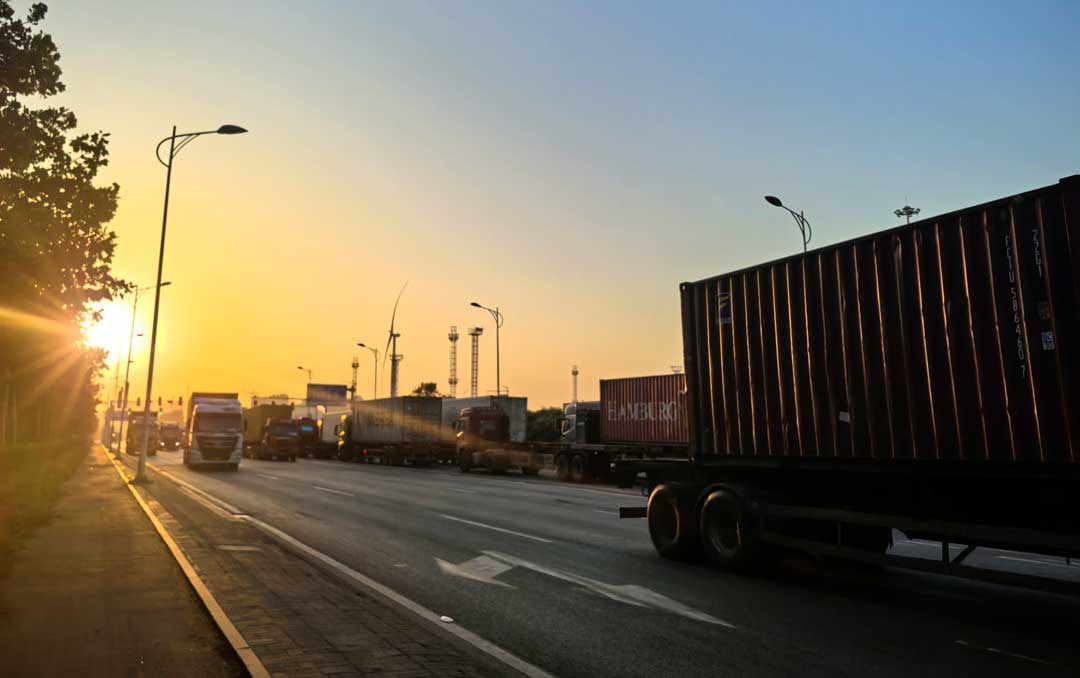
Detroit sits at 42 degrees 20 minutes north, 83 degrees 03 minutes west, in the heart of the Great Lakes region. The city borders Canada across the Detroit River to the south, leads southeast to Lake Erie and Toledo, Ohio, north into the Michigan interior, and west toward Lansing and Grand Rapids.
Detroit's locational feature is two borders, four railroads. The city's south side is the U.S.-Canada border, with Windsor directly across the Detroit River; at the same time the metro area hosts intermodal ramps of four Class I railroads, with freight directions covering the U.S. East Coast, both Canadian coasts and the U.S. Gulf. This structure means import cargo at Detroit rarely has only one entry option, and there is more room for landing-point and routing choices than in other Midwest cities, but precisely because the options are many, the confirmation work at booking stage cannot be skipped.
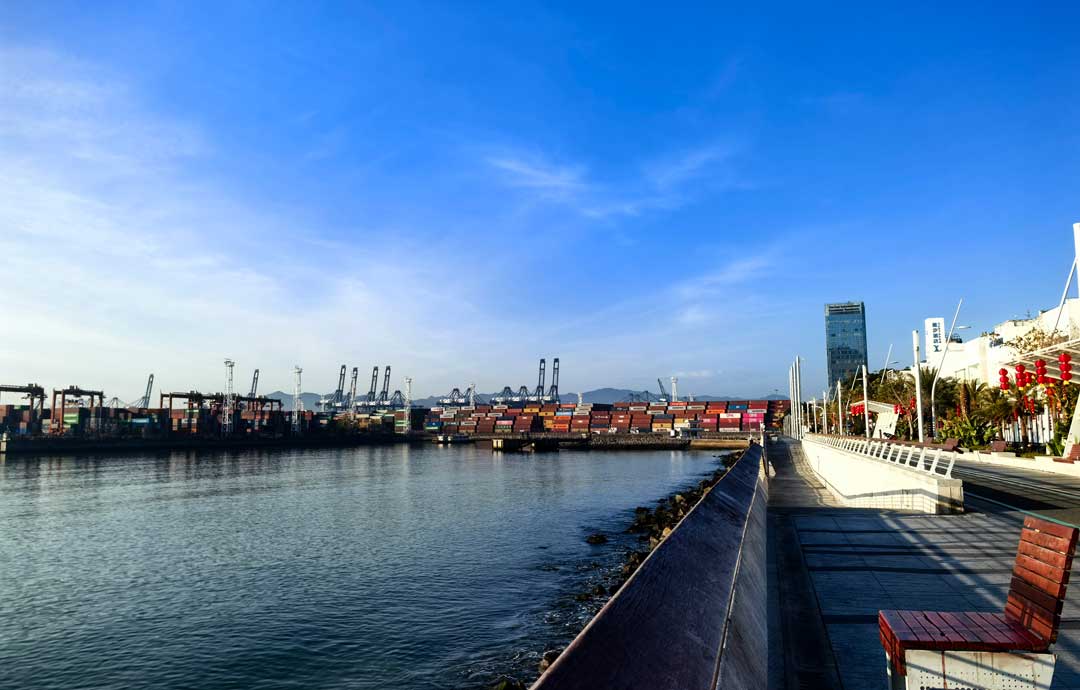
Detroit is a fully functional port of entry in the U.S. federal port system. U.S. Customs and Border Protection (CBP) maintains a port of entry here with code 3801, registered as a Service Port, with full functions covering cargo examination, entry filing, duty collection and verification. Michigan's seven seaport ports of entry and one airport port all fall under the Detroit field office.
| Port code | 3801 (Detroit, Michigan), registered type Service Port |
| Field office | Detroit, with jurisdiction over all Michigan ports of entry |
| CBP office address | 2810 B West Fort Street, Suite #123, Detroit, MI 48216 |
| Phone and hours | (313) 964-7830, Monday to Friday 08:00 to 16:00 (Eastern Time), closed weekends |
| International location code | USDET (UN/LOCODE, for booking and bills of lading); customs entries and ACE filings use 3801 |
| Border crossings | Ambassador Bridge, Detroit-Windsor Tunnel, Detroit-Windsor truck ferry, and the Gordie Howe International Bridge opened 2026-07-27 |
| Neighboring ports in state | 3802 Port Huron, 3803 Sault Ste. Marie, 3804 Saginaw/Bay City/Flint, 3805 Battle Creek, 3806 Grand Rapids, 3883 Lansing Capital Region Airport |
| Airport port in state | 3807 Detroit Metropolitan Wayne County Airport |
| Foreign-trade zone | FTZ 70, administered by Greater Detroit Foreign-Trade Zone, Inc. |
Reading Detroit alongside Port Huron and Sault Ste. Marie shows Michigan's port structure: Port Huron and Sault Ste. Marie face Sarnia and Sault Ste. Marie, Ontario respectively, mainly serving cross-border trucks; Detroit meanwhile carries air, water and land functions. For cargo from China, the practical use of the Detroit port is usually clearing customs at the seaport of entry, moving in by rail and picking up the container at Detroit, or filing entry with Detroit as the customs port. The difference between the two approaches is covered in later sections.
Detroit fronts the Detroit River and is a port within the Great Lakes system, coordinated by the Detroit/Wayne County Port Authority (DWCPA). This port is different in nature from ocean container ports like Los Angeles and Long Beach, and importers need to be clear first about what it can and cannot do.
| Port nature | Michigan's largest river port and dry bulk port, on the west bank of the Detroit River and about 1.5 miles of the Rouge River |
| Main cargoes | Steel (highest cargo value), iron ore (largest tonnage), stone, coal, cement, asphalt and various fuels |
| Annual throughput | Bulk cargo about 8,177,000 tons (port authority figure) |
| General cargo terminal operator | Nicholson Terminal & Dock company, operating general cargo terminals in Detroit and Ecorse |
| Liquid bulk | Concentrated at Michigan Marine Terminal on the Rouge River, tank capacity about 32 million gallons |
| Lifting capacity | Crawler and gantry cranes, maximum 200 tons |
| Channel and berth depth | Channel about 6.4 m; cargo berths about 7.1 to 9.1 m |
| Container liner service | No scheduled container liner service |
| Foreign-trade zone | FTZ 70, among the largest foreign-trade zones in the United States |
| Port authority contact | 130 E. Atwater Street, Detroit, MI 48226, phone 313-259-5091 |
The item to watch in this table is the container liner row: the Port of Detroit runs no scheduled container liner service and has no dedicated berths for ocean container ships. The port handles steel, ore, cement, project cargo and liquid bulk, with vessel types dominated by salties (ocean ships entering and leaving via the St. Lawrence Seaway) and lakers. Container cargo cannot come in, not for lack of docks, but because no liner service is willing to put Detroit into its port rotation. FCL cargo therefore must come through other channels: first, discharging at an East Coast port (New York/New Jersey, Baltimore, Norfolk, Savannah) and moving in by rail; second, entering through Canada's Prince Rupert, Vancouver, Montreal or Halifax and moving in by CN or CPKC rail; third, direct trucking. Within the Great Lakes the only port handling containers is Cleveland, but it likewise is not a regular Asia-U.S. rotation point.
Detroit is Michigan's rail intermodal distribution center, with all the state's container rail ramps concentrated in the metro area: five yards in total, belonging to four Class I railroads. The landing point changes which entry seaport and pickup route are available.
| Yard | Railroad | Location and notes |
| Livernois | Norfolk Southern (NS) | 2725 Livernois Avenue, Detroit, MI 48209, phone 313-297-5571 (source: Norfolk Southern intermodal rules manual official yard list) |
| Delray | Norfolk Southern (NS) | 8501 West Fort Street, Detroit, MI 48209, adjacent to the depot yard, suited to fast chassis exchange |
| Detroit (Dix Avenue) | CSX | On Dix Avenue, co-located with the Norfolk Southern yard; the two together are called Livernois-Junction Yard; Detroit's main heavy-cargo intermodal yard |
| Moterm | Canadian National (CN) | In Ferndale, MI on the metro area's north side, yard code MOT, part of CN's Holly subdivision; serves Canadian-bound flows |
| Detroit intermodal yard | Canadian Pacific Kansas City (CPKC) | On the city's west side on Westwood Street; after the CP-KCS merger became a through channel from Canada straight to Mexico for carload and reefer cargo |
The five yards' service directions are best memorized by entry channel. The two at Livernois-Junction (CSX and Norfolk Southern) correspond to the U.S. East Coast seaport direction, and containers from New York/New Jersey, Baltimore, Norfolk, Savannah, Jacksonville and Mobile mostly land here. CN's Moterm and CPKC's Detroit yard correspond to the Canadian direction, with cargo entering via Prince Rupert, Vancouver, Montreal and Halifax moving south into Detroit on these two railroads; CPKC also carries carload and parts northbound from Mexico across the U.S.-Mexico border. Detroit's landing-point layout is therefore an entry-channel matching table: decide the port of entry first, and the landing point is largely determined.
Detroit's yards are being expanded. According to a renovation plan disclosed in 2026, the Livernois-Junction Yard jointly operated by Norfolk Southern and CSX will add rail-mounted gantry cranes, raising international container stacking height from two high to five high, and use automatic gates to cut single-truck processing time from about 90 seconds to about 45 seconds, at a project scale of about USD 112 million. The plan is at design stage, and the implementation pace follows the railroads' announcements. The plan also notes the yard is split east and west: the east side, about 67.5 acres, belongs to Norfolk Southern, and the west side, about 50 acres, to CSX, the two sharing the same operating area.
Paired with this is tighter city trucking control. Since October 2025 the City of Detroit has enforced truck route restrictions, banning trucks from residential streets; Livernois Avenue between Vernor Highway and I-75 is closed to trucks. Draymen heading to the Livernois yard must reroute via John Kronk Street, Dix Avenue or Michigan Avenue and other designated routes. If a driver follows ordinary in-cab navigation, they may enter a restricted area and face fines, which is one point to make clear when selecting a drayage company.
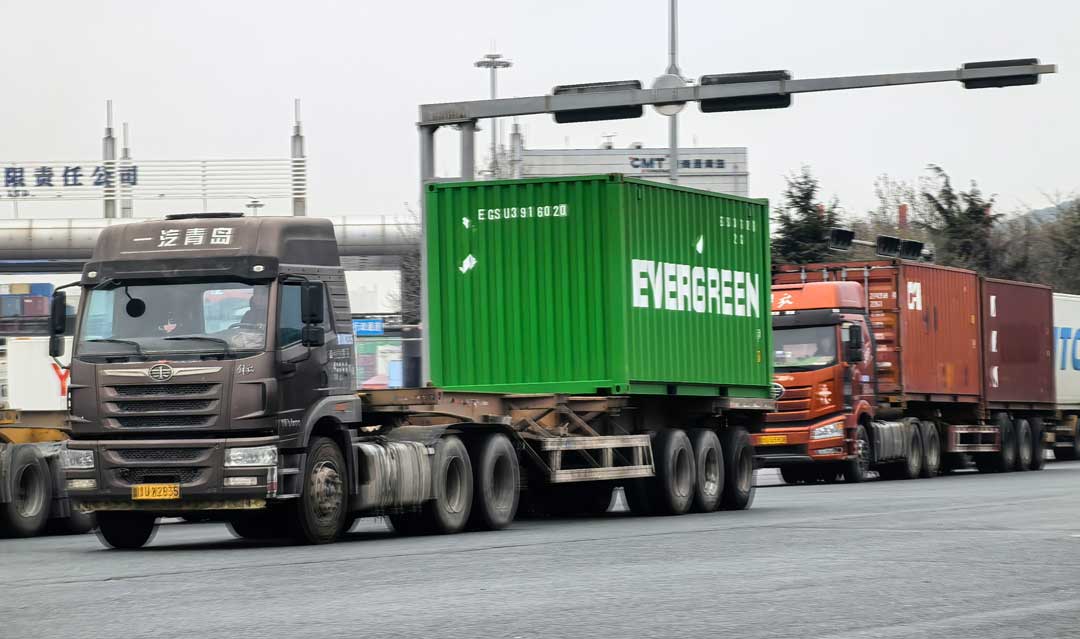
Detroit hosts North America's highest-volume international land corridor, with annual Michigan-Ontario trade in the hundreds of billions of dollars. Border crossings are the required route for local shippers going to Canada, and they also affect connection efficiency for FCL cargo entering through Canadian ports.
| Crossing | Type | Operating hours and notes |
| Ambassador Bridge | International bridge | Passenger inspection facilities open 24 hours; connects Detroit and Windsor, the main existing truck crossing |
| Detroit-Windsor Tunnel | International tunnel | Open 24 hours, mainly passenger cars and small vehicles |
| Detroit-Windsor truck ferry | Water crossing | Runs weekday sailings, a supplement to the land crossings |
| Gordie Howe International Bridge | International bridge | Opened 2026-07-27; six lanes, main span 853 m, 16 toll lanes and 60 inspection booths, connecting Ontario Highway 401 directly with Michigan I-75 |
The Gordie Howe International Bridge's opening changes Detroit's crossing structure. It is the first new crossing between Ontario and Michigan in over 60 years, using a highway-to-highway direct connection so trucks no longer pass through city streets to switch between Highway 401 and I-75. For importers the practical meaning is twofold: time variability in the border leg for cargo entering via Canada will shrink; and the distance relationship between yards and the border changes, with yards near the new bridge gaining scheduling efficiency. After the new bridge opens, traffic previously concentrated on the Ambassador Bridge will gradually split, and queue conditions on the two crossings need separate observation in the short term.
One reminder: crossing the border is not a free pass. Containers entering via Canada and bound for the United States must complete U.S. customs entry and examination on the U.S. side, and in-bond movement responsibility within the United States is supervised by U.S. customs. Canadian free-circulation procedures do not replace U.S. import procedures; the two are separate filing processes.
Detroit Metropolitan Wayne County Airport (code DTW), southwest of downtown, is Michigan's main air gateway and the region's air channel for high-value cargo. The airport has a separate port code 3807 in the customs system, used in parallel with the land and water port 3801.
Detroit's air advantage relates to local industry. The metro area is the core of the North American auto industry, and vehicle plants with their tier-one and tier-two suppliers generally run just-in-time production, with thin parts inventory and high downtime cost, so the requirement for predictable arrival time outranks freight rate. This demand structure concentrates Detroit's air cargo on auto parts and electronics rather than consumer goods.
Three main lines run from China to Detroit: entering through an East Coast port and moving in by rail, entering through a Canadian port and moving in by rail, and crossing the continent by rail from a West Coast port. The three routes differ mainly in the inland leg's direction and length.
| Route | Port of entry | Onward transport | Features |
| East Coast direction | New York/New Jersey 4601, Baltimore 1303, Norfolk 1401, Savannah 1703 | Rail via CSX or Norfolk Southern to Livernois-Junction Yard | Longer ocean leg, shortest inland leg; landing point concentrated in southwest Detroit |
| Canada direction | Prince Rupert, Vancouver, Montreal, Halifax | Rail via CN to Moterm Yard in Ferndale, or via CPKC to the west side of Detroit | Asia-Europe services call at Canadian ports, shorter ocean leg; Canada-leg transfer arrangements need attention |
| West Coast direction | Los Angeles 2704, Long Beach 2709 | Rail crosses the continent via hubs such as Chicago then heads north | Shortest ocean leg but longest rail leg, usually requires transloading at a hub |
| Gulf direction | Mobile 1901 and others | Rail northbound via CPKC or CN | Suited to receivers with simultaneous Gulf Coast sourcing arrangements |
| Air freight | Detroit Metropolitan Wayne County Airport 3807 | Airport pickup or short-haul delivery | High-value, time-sensitive cargo |
Of the three FCL routes, the East Coast entry combination is the most direct: after the container clears and is released at New York/New Jersey or Savannah, a CSX or Norfolk Southern train carries it to Detroit, with a rail leg of only two to three days and landing at Livernois-Junction in the city's southwest. The Canada entry combination has a shorter ocean leg, and Prince Rupert is one of North America's closest major ports to Asia, with southbound trains from that port able to enter Detroit directly; but this route involves Canadian-leg carrier and transfer arrangements, and at booking stage it must be confirmed which railroad carries under what intermodal agreement, and at which port U.S. entry is filed. The West Coast entry combination has the shortest ocean leg, but the rail leg spans the entire North American continent, usually requiring transloading at a hub such as Chicago or Kansas City, with the most links. LCL cargo is generally not arranged on transcontinental rail direct, with deconsolidation at the port of entry or a local CFS station being more common.
Door-to-door transit time is calculated in segments by route. As an inland point, Detroit's time composition includes a rail leg, whose length is decided by the port of entry.
| Route | Ocean leg | Rail leg | Door-to-door total |
| Shanghai/Ningbo to New York/New Jersey then rail | About 25 to 35 days | About 2 to 3 days | About 28 to 40 days |
| Shenzhen to New York/New Jersey then rail | About 28 to 42 days | About 2 to 3 days | About 31 to 47 days |
| Shanghai/Ningbo to Savannah then rail | About 28 to 38 days | About 3 to 4 days | About 32 to 44 days |
| Shanghai/Ningbo to Prince Rupert then rail | About 15 to 20 days | About 5 to 7 days | About 21 to 29 days |
| Shanghai/Ningbo to Los Angeles then rail | About 11 to 18 days | About 6 to 9 days | About 19 to 29 days |
The totals in the table are estimated ranges from port to receiver's warehouse, excluding origin booking, loading and export customs clearance. Actual transit is affected by vessel type, port rotation, terminal congestion, railcar supply and holidays, and peak season can add a week or more. Three local factors stack onto Detroit's timing: first, border crossing queues, with trucks crossing via the Ambassador Bridge or Gordie Howe Bridge concentrated in the morning and evening, so the crossing leg should be budgeted more loosely than the inland leg; second, winter weather, with Michigan entering snow season in November and lake-effect snow possibly delaying road drayage by one to two days; third, yard operating rhythm, with the Detroit metro area dominated by just-in-time supply, making pickup appointment tight periods more concentrated than in other Midwest cities.
Comparing the three routes shows the trade-off between time and links. The East Coast entry route has the shortest rail leg and fewest links, but the longest ocean leg; the Canada entry route has the shortest ocean leg, but adds a Canada-leg carrier coordination; the West Coast entry route is long at both ends, usually competitive only in specific rate windows. If the receiving warehouse is in southwestern Michigan or northern Ohio, the East Coast entry combination is the steadier choice.
Detroit's customs business is handled by CBP at port 3801, registered as a fully functional Service Port, with the state's examination, entry and collection functions consolidated here. The CBP office is on West Fort Street, near the Detroit River and the southwest of downtown.
Formal import entry requires the receiver to provide a taxpayer identification number (EIN), commercial invoice, packing list and bill of lading. Ocean cargo must complete Importer Security Filing (ISF, commonly called 10+2) before loading, submitted by the importer or its agent 24 hours before the vessel sails. Classification, origin and valuation are handled per the Harmonized Tariff Schedule of the United States (HTSUS). Michigan levies a sales and use tax, which may apply to imported goods entering circulation and final consumption in the state; specific applicability is handled by the receiver per its business nature and registration status, and should be confirmed with a local tax advisor before importing. The Detroit metro area's foreign-trade zone sites concentrate on the auto vehicle and parts industries, and the filing requirements for these goods are detailed, with commodity codes and use descriptions needing to match the physical goods.
After a container arrives at Detroit by rail, the pickup process is completed inside the rail yard, which differs from a seaport terminal. Rail yards run mainly on online systems, and timing starts when the arrival notice is issued. Detroit's particularity is that five yards belong to four railroads, so every step must start by confirming the yard.
The risk points in the process concentrate in three places. First is yard confirmation: the five yards spread across the metro area's north, west and southwest, and if the bill of lading only names the city without confirming the carrier, the drayage company may book the wrong yard. Second is city trucking restrictions: since October 2025 Detroit bans trucks from residential streets, with Livernois Avenue between Vernor Highway and I-75 closed to trucks, so drivers must use designated routes in and out of yards, and following ordinary in-cab navigation risks entering a restricted area. Third is chassis sourcing: Detroit's chassis suppliers concentrate around the yards, with some supply points tied to ocean carriers' chassis pools, so before pickup the pickup point, return point and chassis source should all be confirmed together, avoiding a situation of having picked up a box with nowhere to return it.
The Last Free Day (LFD) is the cutoff of the free storage period, after which storage fees start accruing. Detroit's storage fees only occur at the port of entry terminal or rail yard, and the free period length depends on the landing point.
| Item | Clock start | Free period | Charging party |
| Rail yard storage | Day the arrival notice is issued | Per each railroad's published policy, usually two to four days | Railroad |
| Seaport terminal storage | Day of discharge or day container becomes available | Per terminal announcement, dry containers mostly four days | Terminal operator |
| Carrier per diem | Day the container leaves the terminal or yard | Per equipment type and route free time | Ocean carrier |
| Chassis rental | Day the chassis is pulled | Per drayage company agreement | Chassis supplier |
| Cross-border leg charges | Day the truck enters the border crossing | Per carrier agreement | Cross-border carrier |
The five charge items have different clock starts and charging parties, and do not offset each other. Rail yard storage overage does not automatically extend the carrier's free time, and vice versa. After receiving the arrival notice, the receiver should confirm five things at once: the LFD at the landing yard, the expiry of the carrier's free time, the location and business hours of the empty return point, the chassis source and billing method, and the round-trip mileage from the warehouse to the return point. After all five are clear, set the pickup and return dates, avoiding overage on one while meeting another.
If pickup cannot be completed within the free period for reasons beyond the receiver's control, such as customs examination or document correction, a written extension can be applied for to the railroad, terminal or carrier with supporting documents, submitted before the original expiry date; late applications are generally not retroactive. Approval is handled by each company per its published policy, with no uniform standard. One more item to factor in is the weight limit: Michigan's interstate highways allow a maximum gross vehicle weight of 80,000 lbs, and overweight containers need permits from the state department of transportation, so receivers of heavy cargo should calculate gross container weight in advance and note local truck route restrictions.
Customs examination (CBP Examination) is a routine step in the import process, sampling declared cargo per its risk score. Examinations usually occur at the port where the container lands, and can also occur at an inland port after in-bond movement, depending on the examination location determined at filing.
| Examination type | Operation | Impact on pickup |
| Document review | Verify invoice, packing list, certificate of origin and filing data | No cargo movement; released after document supplementation |
| X-ray scan (NII) | Whole-container imaging, box not opened | Usually completed same day; container remains at the yard |
| Tailgate exam | Open doors and check cargo at the front of the box | Adds half a day to one day |
| Comprehensive exam (CET) | Move to exam area, count and unload piece by piece | Adds three to seven days, requires restuffing |
Examinations generate exam service fees, drayage round-trip fees, devanning and restuffing labor, and storage during the exam, all borne by the receiver regardless of whether anything is found. If entry is filed with New York/New Jersey or Savannah as the customs port, the exam generally occurs at the port of entry, and Detroit only bears the consequence of delayed arrival; if filed with Detroit as the customs port, it must be confirmed whether local exam capability exists. Detroit is registered as a fully functional Service Port, and all five rail yards have federal examination facility codes, with conditions for designated exam locations inside the yards; specific codes and operating capability should be verified with the railroad or a licensed customs broker. After exam release the container can continue inland movement, and this is one of the main sources of timing variability at inland points. Practical ways to lower exam probability: declared descriptions matching the physical goods, prices within common ranges for similar goods, avoiding undervaluation and mixed loading, and maintaining a continuous import record.
When cargo cannot clear U.S. customs or the receiver refuses it, a return shipment can be arranged, on the premise that the goods have not been consumed or delivered in the United States and remain at a terminal, rail yard, bonded warehouse or under customs supervision. Cargo already released and delivered to the receiver's warehouse, having entered domestic circulation, cannot be handled as a return.
Whether to return should usually be decided after comparing with abandonment, resale to another country, or local destruction. Abandonment requires application to customs and bearing destruction costs; resale requires new transport and export arrangements. The Detroit metro area has relatively complete auto parts and wareaging support, and if the issue is only specification or labeling mismatch, reworking in bond status before re-export is sometimes more economical than a full return, depending on rework cost and the original export country's tariff arrangements. For cargo involving additional tariffs or licensed categories, the destination country's import requirements should be confirmed before disposal.
Detroit's cargo rhythm is decided by the seasonality of East Coast and Canadian port services together with auto and manufacturing production scheduling, following the U.S. retail pattern overall, but with a more direct manufacturing influence than most Midwest cities.
Three seasonal variables at Detroit merit separate mention. First is winter weather: Michigan enters snow season in November, and lake-effect snow and road icing delay road drayage by one to two days, at a higher frequency than southern states such as Texas or North Carolina. Second is border traffic: cross-border truck queues lengthen noticeably around holidays and at auto plant shift changes, and cross-border delivery should avoid these windows. Third is the Great Lakes shipping season: the St. Lawrence Seaway usually suspends navigation January to March due to ice, but this has limited impact on container cargo, since Detroit runs no container liner service and FCL moves by rail and road. In addition, Detroit is an important U.S. Midwest road node, and carrier capacity tightness around long weekends directly affects drayage and delivery arrangements.
Using Detroit as an import landing point concentrates benefits in four areas: rail options, border crossings, the foreign-trade zone and industry support.
| Advantage | Specifics |
| Four Class I railroads, five intermodal ramps | CSX, Norfolk Southern, CN and CPKC all present; the state's container rail ramps concentrate in the metro area, with rates and schedules comparable |
| Many entry channel options | East Coast seaports, Canadian West and East Coast ports, and West Coast ports all have rail connections, switchable by rate window |
| Major North American land corridor | The Windsor-Detroit corridor is North America's highest-volume international land crossing, with the Gordie Howe International Bridge added in July 2026 to split traffic |
| Own customs port | Port code 3801, registered as a fully functional Service Port, with examination, entry and collection capability |
| Foreign-trade zone | FTZ 70, among the largest U.S. foreign-trade zones, supporting duty deferral and processing before re-export |
| Auto and manufacturing support | The metro area concentrates many vehicle plants and parts suppliers, with mature warehousing, rework and production-line distribution support |
Limitations should be viewed alongside. The Port of Detroit runs no container liner service, so FCL must first discharge at an East Coast or Canadian port, adding an inland rail leg; return shipments likewise must move the box back to the port of entry before loading. Landing points spread across five yards on four railroads, and booking the wrong yard is easy when the bill of lading does not confirm the carrier. City truck route restrictions change drayage routings, and following ordinary in-cab navigation risks entering restricted areas. Winter weather and border crossing peaks are two variables to anticipate in scheduling. Detroit best suits: receiving markets concentrated in Michigan and northern Ohio, or supply chains already oriented to auto and manufacturing with continued transport needs toward Canada or Mexico.
There are no berths for ocean liner service. Detroit is Michigan's largest river port and dry bulk port, mainly handling steel, iron ore, stone, cement and liquid bulk, with no scheduled container liner service. FCL cargo must discharge at an East Coast or Canadian port before moving in by rail.
3801 (Detroit, Michigan), registered type Service Port, with full functions of examination, entry, collection and verification. The CBP office is at 2810 B West Fort Street, Suite #123, Detroit, MI 48216, phone (313) 964-7830, hours Monday to Friday 08:00 to 16:00 (Eastern Time). The international location code for booking and bills of lading is USDET.
Five in total, on four Class I railroads: Norfolk Southern's Livernois (2725 Livernois Avenue, phone 313-297-5571) and Delray (8501 West Fort Street); CSX's Detroit yard on Dix Avenue, co-located with the Norfolk Southern yard, together called Livernois-Junction Yard; CN's Moterm in Ferndale (yard code MOT); and CPKC's Detroit intermodal yard on the west side.
This is decided by the intermodal agreement between the carrier and railroad on the bill of lading, not designated by the shipper. Cargo from East Coast seaports mostly lands at the CSX and Norfolk Southern co-located Livernois-Junction Yard; cargo entering via Canada mostly lands at CN's Moterm or CPKC's Detroit yard. The five yards spread across the metro area's north, west and southwest, and at booking the receiving warehouse address should be given to the forwarder to confirm the landing point before setting the pickup plan.
The most common is entering via New York/New Jersey or Savannah and moving by rail, with an ocean leg of about 25 to 42 days, rail leg about 2 to 4 days, and door-to-door about 28 to 47 days. Second is entering via Canada's Prince Rupert or Vancouver, with a shorter ocean leg but requiring Canadian-leg carrier and transfer coordination.
Existing crossings are the Ambassador Bridge and the Detroit-Windsor Tunnel, with the Detroit-Windsor truck ferry as a supplement. The Gordie Howe International Bridge opened 2026-07-27 is a six-lane cable-stayed bridge with a main span of 853 m, 16 toll lanes and 60 inspection booths, connecting Ontario Highway 401 directly with Michigan I-75, the first new crossing between Ontario and Michigan in over 60 years.
Yes. Containers entering via Canada and bound for the U.S. must complete U.S. customs entry and examination on the U.S. side, with in-bond movement responsibility supervised by U.S. customs. Canadian free-circulation procedures do not replace U.S. import procedures; the two are separate filing processes.
Per each railroad's published policy, usually two to four days, counting from the day the arrival notice is issued. The five yards belong to four railroads, with different free periods and billing methods, so confirm with the corresponding railroad before pickup and check the carrier's free time expiry at the same time.
Three points to confirm in advance: yard location (five yards in three directions, different carriers different landing points), driving routes (Detroit bans trucks on residential streets since October 2025, Livernois Avenue between Vernor Highway and I-75 closed to trucks, designated routes required), and chassis sourcing. Also Michigan's interstate gross vehicle weight limit is 80,000 lbs, and overweight containers need permits.
A written extension can be applied for to the railroad, terminal or carrier, with examination or hold documentation submitted before the original expiry date. Approval is handled by each company per its policy, with no uniform standard, and late applications are generally not retroactive.
Yes, on the premise that the goods have not been consumed or delivered in the U.S. and remain at a yard, bonded warehouse or under customs supervision. Return requires U.S. export entry and Chinese import entry, with tax exemption applicable within the prescribed period for goods returned in original state due to quality or specification reasons. Detroit runs no container liner service, so return boxes must first move by rail back to the port of entry or a Canadian port before loading, and this inland cost must be counted in.
August to October each year is the tightest, with retailers stocking for year-end holidays and auto model changeover launches also concentrating between summer and autumn, stacking two demands. A further rush shipment wave runs from late December to early January. Three local variables to anticipate: lake-effect snow and road icing from November to March, border queues around holidays and at auto plant shift changes, and road capacity tightness around long weekends.
Shipping from China to USA
Planning a shipment or just comparing options? Contact our freight experts to get a tailored rate within 24 hours.
