
Grand Rapids, Michigan sits in the western part of the state on the Grand River, about 70 miles east of Lansing and about 40 miles west of Lake Michigan. The city is not on the coast and has no large container rail ramp, but it holds a specific position in west Michigan's import system: a customs-supervised container yard and a carrier-neutral empty pool operate locally, FCL cargo drays in from the Detroit or Chicago rail ramps, and both unloading and empty return are completed locally. For cargo from China, Grand Rapids serves as a regional distribution landing point, covering furniture, auto parts, medical device and food and beverage manufacturers in western and northern Michigan.
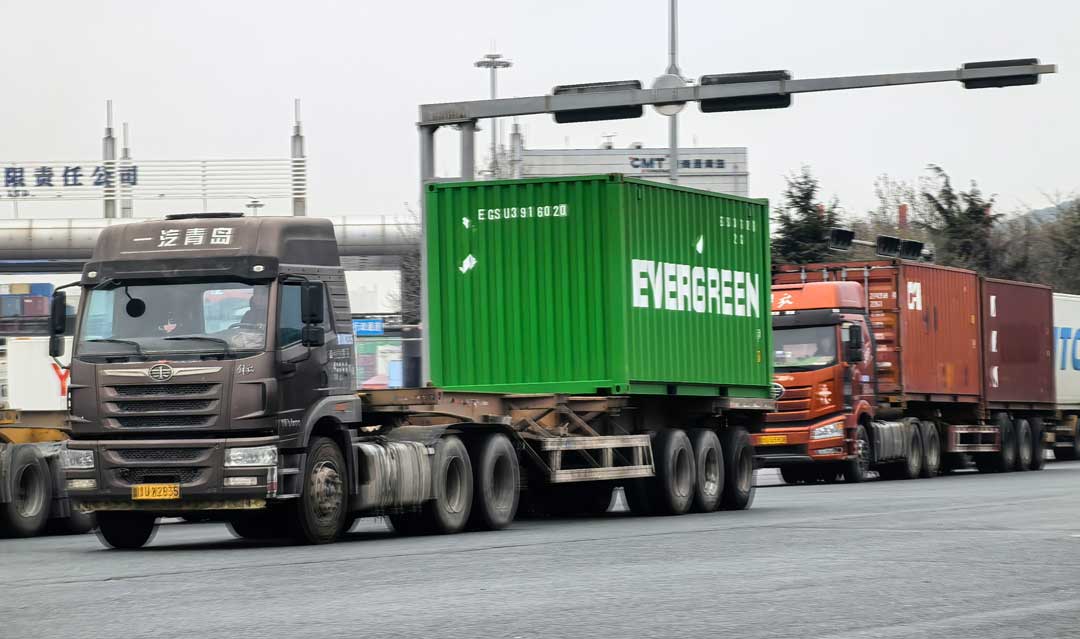
Grand Rapids sits at 42 degrees 57 minutes north, 85 degrees 40 minutes west, in western Michigan, with the city spread along both banks of the Grand River. Northeast leads to Lansing and Detroit, southeast to Kalamazoo and Indiana, and west about 40 miles to Muskegon on Lake Michigan.
Grand Rapids' locational feature is near but not on the water. The city sits 40 miles west of Lake Michigan and is not itself a lake port, but six lake ports under the same port of entry are spread along the shoreline; at the same time it lies between the two rail hubs of Detroit and Chicago, within 200 road miles of both. This makes Grand Rapids' FCL business almost necessarily pass through one road drayage leg, with the direction depending on which port the cargo enters through. Understanding this matters more than memorizing any single transit-time figure.
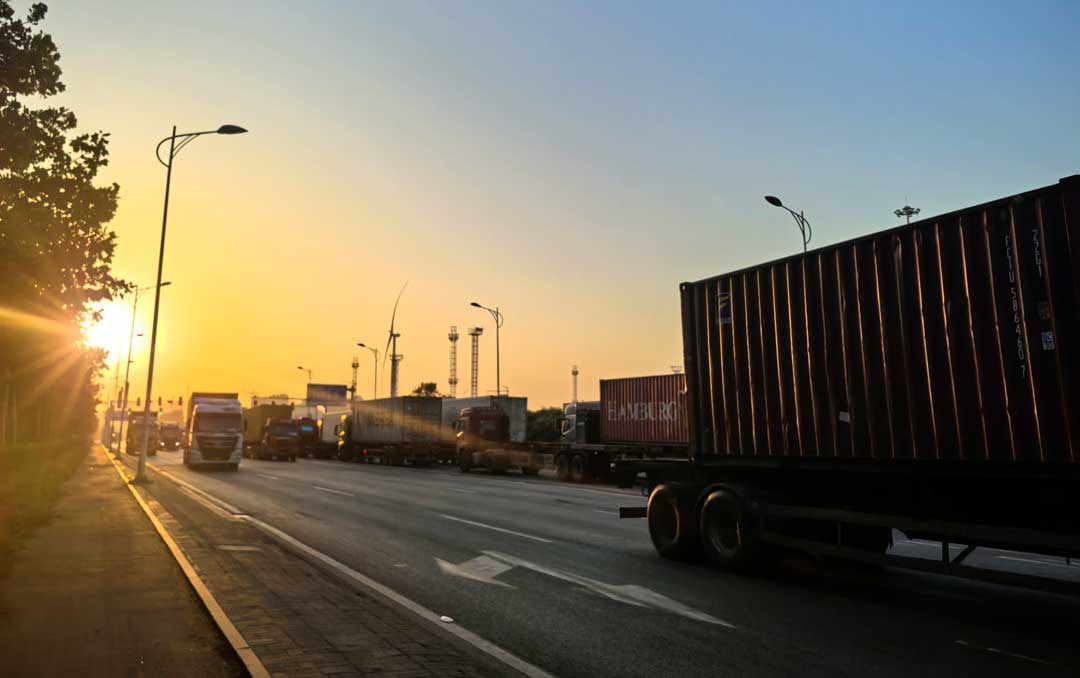
Grand Rapids is registered as a port of entry in the federal port system with code 3806, under the Detroit field office. This port's structure is unusual: it is not a point but a region, with jurisdiction covering the airport, six lake ports and three foreign-trade zones.
| Port code | 3806 (Grand Rapids, Michigan), registered type Port of Entry |
| Parent field office | Detroit; declaration acceptance and duty collection supported by the Detroit port |
| CBP office address | 6450 Air Cargo Drive SE, Grand Rapids, MI 49512 (second floor of the FedEx building at the airport) |
| Phone and hours | (616) 942-5245, Monday to Friday 08:00 to 16:00 (Eastern Time), closed Saturday and Sunday |
| Airport under jurisdiction | Gerald R. Ford International Airport (GRR) |
| Lake ports under jurisdiction | Grand Haven, Holland, Ludington, Manistee, Muskegon, South Haven, all Class C lake ports |
| Shipping terminal coverage | From Holland north to the Traverse City area |
| Foreign-trade zones | Holland, Zeeland and Grand Rapids |
| Nearby in-state ports | 3801 Detroit, 3802 Port Huron, 3803 Sault Ste. Marie, 3804 Saginaw/Bay City/Flint, 3805 Battle Creek, 3807 Detroit Metro Wayne County Airport, 3883 Lansing Capital Region Airport |
The nature of the six Class C lake ports needs stating clearly. Class C is a category in the U.S. port classification for small ports without resident officers, where business is handled by dispatched staff on demand and operating times usually need advance arrangement. All six lake ports sit on the east shore of Lake Michigan and handle Great Lakes internal bulk, project cargo and seasonal transport; they do not operate ocean container liner services. In other words, the waterborne part under this port code has no direct role for FCL cargo from China; what is actually usable is its airport and declaration-acceptance functions. Listing the lake ports is to avoid misjudgment: seeing that the Grand Rapids port of entry governs six ports and assuming FCL can move by sea here is a common misconception.
Grand Rapids' rail network has complete coverage but no container intermodal ramp. This combination means rail can carry line-haul transport while the container landing point is elsewhere, with the two connected by road.
| Rail level | Role in Grand Rapids |
| Grand Elk Railroad | Class III, under Watco; leases 123 miles of line from Norfolk Southern, running from Grand Rapids south via Kalamazoo to Elkhart, Indiana; operating since March 8, 2009; interchanges with CSX at Grand Rapids, Norfolk Southern at Elkhart and CN at Kalamazoo |
| CSX | Class I, reaches the locality, interchanging with Grand Elk and Grand Rapids Eastern; container intermodal ramps at Detroit |
| Norfolk Southern (NS) | Class I, accesses local flows via Grand Elk's leased lines; container intermodal ramps at Detroit |
| Canadian National (CN) | Class I, interchanges with the local network around Kalamazoo; container intermodal ramps at Detroit's Fernyard |
| Grand Rapids Eastern Railroad | Short line, under Genesee and Wyoming, about 21 miles, interchanging with CSX, Grand Elk and Coopersville and Marne at Grand Rapids, with 286,000 lb axle-load capacity |
| Other short lines | Michigan Shore Railroad, West Michigan Railroad and Marquette Rail handle regional collection and distribution |
The most critical point is off the table: Michigan's rail container intermodal ramps are all concentrated in the Detroit metro area, five in total, belonging to CSX, Norfolk Southern, CN and CPKC, with none in Grand Rapids itself. Local rail operations are mainly carload, bulk and short-line distribution; Grand Elk's cargo includes grain, stone, forest products and plastic raw materials, not containers. So the rail leg of FCL cargo ends at Detroit or Chicago, then trucks to Grand Rapids, about 160 miles and about 180 miles respectively. Planning the landing point and drayage leg together is basic practice on this routing.
No local rail ramp does not mean FCL business cannot originate and terminate at Grand Rapids. The solution here is the customs-supervised container yard and the carrier-neutral empty pool.
| Facility type | Notes |
| Carrier-neutral empty pool | Grand Rapids yards operate the west Michigan neutral pool, with empties from multiple carriers cycling here; box supply varies with carrier and seasonal demand |
| Customs-supervised container yard | A customs-supervised container yard (Container Yard) operates locally, able to handle FCL import/export with Grand Rapids as the bill of lading origin/destination, with bonded carrier qualification |
| Intermodal drayage support | Local trucking companies serve the rail yards in Grand Rapids, Detroit and Chicago simultaneously, with door-to-door delivery from the yards |
| Warehousing and distribution | Multiple third-party logistics providers in the region offer warehousing, devanning distribution and vendor-managed inventory, covering furniture, auto parts and medical devices |
| Foreign-trade zone | FTZ 189 (Kent-Ottawa-Muskegon), grantee KOM Foreign Trade Zone Authority, general-purpose operator Columbian Logistics Network |
The practical value of this arrangement shows in the empty leg. After FCL cargo is picked up from the Detroit or Chicago ramp and drayed to Grand Rapids for unloading, the empty is usually returned directly to the local pool, saving the 160 to 180 mile trip back. Conversely, Grand Rapids export cargo can also be loaded locally and sent by trucking companies to the Detroit or Chicago ramps for rail loading. So whether Grand Rapids can take on a shipment depends not on whether there is a ramp, but on whether the origin/destination on the bill of lading can be matched at the local pool. Confirming the carrier, box type and local pool availability together at booking is a necessary step on this routing.
Gerald R. Ford International Airport (GRR) sits southeast of the city, with the longest of its three runways about 10,000 feet. FedEx, UPS and DHL Express operate cargo flights here, making it the air cargo station for western Michigan.
Grand Rapids' air demand relates to the local industrial structure. Western Michigan concentrates office furniture manufacturing, auto parts, life sciences and medical devices, of which medical devices and diagnostic equipment are more time-sensitive and better able to bear air rates; the furniture industry is mainly sea, given large product volume and relatively low unit value. This structure makes local air cargo seasonality less pronounced than consumer goods, relatively stable year-round.
There are two main lines from China to Grand Rapids: entry via East Coast or Canadian ports then dray from the Detroit ramp, and entry via West Coast ports then dray from the Chicago ramp. The difference lies in the direction of the inland leg and drayage mileage.
| Routing | Entry port | Rail ramp and drayage | Characteristics |
| East Coast direction | New York/New Jersey 4601, Savannah 1703, Baltimore 1303 | Rail to CSX and NS co-located yards in Detroit, then dray about 160 miles | Long sea leg, shortest rail leg, drayage about 160 miles |
| Canada direction | Prince Rupert, Vancouver, Montreal, Halifax | Rail via CN to Detroit Fernyard's Moterm yard, then dray about 160 miles | Short sea leg; needs coordination of Canadian carriage and transshipment |
| West Coast direction | Los Angeles 2704, Long Beach 2709 | Rail to Chicago intermodal yards, then dray about 180 miles | Shortest sea leg, longest rail leg; drayage about 180 miles |
| Air | Gerald R. Ford International Airport (GRR) | Airport pickup or short delivery | Medical devices, automotive electronics and other high-value cargo |
Of the three FCL routings, the East Coast or Canada entry combination has slightly shorter drayage mileage, landing at Detroit; the West Coast entry combination lands at Chicago with slightly longer drayage. On the surface the first two look more economical, but the actual choice also depends on rate windows and schedule density: West Coast services call densely with wide schedule choice, and in certain periods the total cost is lower. Chicago, as the national rail hub, offers more rail and block-train options than Detroit; if the receiver needs high schedule flexibility, draying via Chicago is equally suitable. Note also that Detroit has implemented city truck route restrictions since October 2025; if drayage vehicles need to enter the Detroit city area, they should follow designated routes. LCL cargo generally is not arranged on transcontinental rail direct; devanning at the entry port or Chicago then trucking in is more common.
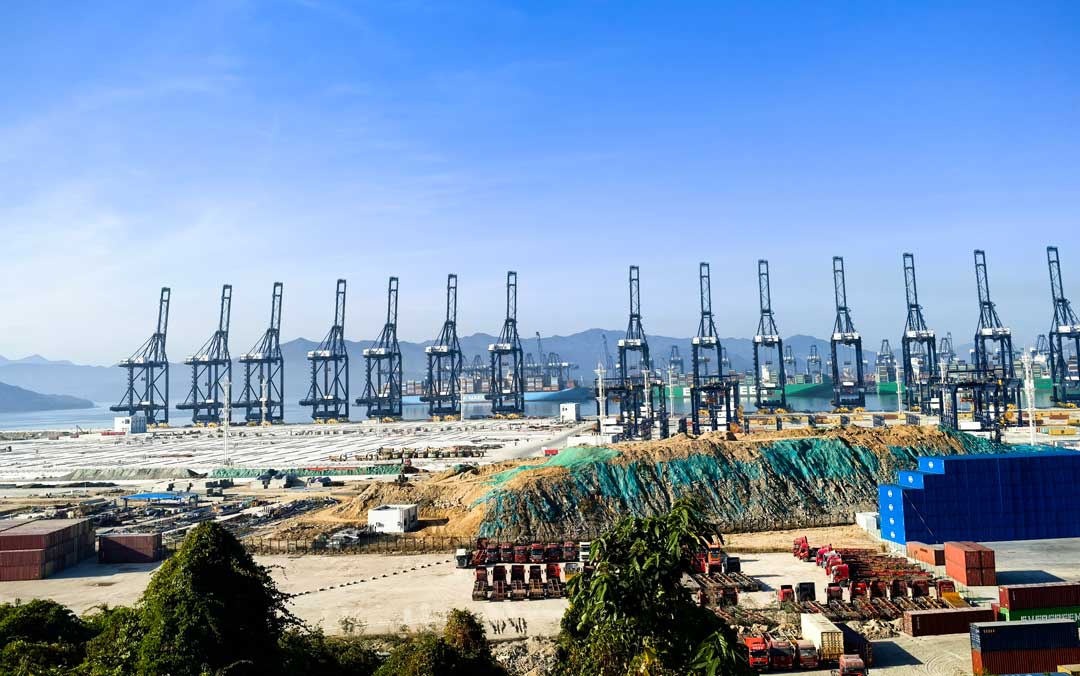
Door-to-door transit time is calculated in segments by routing. Grand Rapids' time composition includes one more road drayage leg than most inland points, with this leg's mileage decided by the landing point.
| Routing | Sea leg | Rail transit | Drayage and total |
| Shanghai / Ningbo to New York/New Jersey then dray via Detroit | About 25 to 35 days | About 2 to 3 days | Drayage about 1 day; total about 28 to 39 days |
| Shenzhen to New York/New Jersey then dray via Detroit | About 28 to 42 days | About 2 to 3 days | Drayage about 1 day; total about 31 to 46 days |
| Shanghai / Ningbo to Prince Rupert then dray via Detroit | About 15 to 20 days | About 5 to 7 days | Drayage about 1 day; total about 21 to 28 days |
| Shanghai / Ningbo to Los Angeles then dray via Chicago | About 11 to 18 days | About 5 to 7 days | Drayage about 1 to 2 days; total about 17 to 27 days |
The totals above are estimated ranges from port to receiving warehouse, excluding origin booking, loading and export clearance. Actual time is affected by vessel type, port rotation, port congestion, railcar supply and holidays; peak season can add a week or more. Grand Rapids has three local factors that stack into time: first, snow season, with Michigan entering snowfall from November and lake-effect snow possibly delaying road drayage one to two days; second, winter freezing-period rail operations, with low temperatures affecting yard work rhythms; third, road drayage timing, with trucks from Detroit or Chicago adding two to three hours one way if they hit morning peaks or bad weather. Empty return also takes time; if it can be completed at the local pool, it usually saves half a day round trip.
Comparing the routings together shows the time distribution characteristics. The Canada entry combination has both short sea and inland legs, the most compact total time of the routings, but needs coordination of Canadian carriage and transshipment; the East Coast entry combination has the shortest rail leg but long sea leg, with total time volatility mainly from the sea; the West Coast entry combination has the shortest sea leg but the rail leg crosses the continent, usually transferring at Chicago, the most steps. If the receiving warehouse is in western Michigan, all three routings work; the choice should rest on schedule and rate windows, not a single transit figure.
Grand Rapids' customs business is handled by CBP at port of entry 3806, registered as a Port of Entry, able to accept declarations and collect duties, with declaration acceptance and some functions supported by the Detroit port. The CBP office is in the FedEx building at Gerald R. Ford International Airport.
Formal import declaration requires the receiver to provide a taxpayer identification number (EIN), commercial invoice, packing list and bill of lading. Sea cargo must complete Importer Security Filing (ISF, the so-called 10+2) before loading, submitted by the importer or its agent 24 hours before the vessel sails. Commodity classification, origin and valuation are handled per the Harmonized Tariff Schedule of the United States (HTSUS). Michigan levies sales and use tax; imported goods entering circulation in the state for final consumption may involve it, handled by the receiver per its business nature and registration, and should be confirmed with a local tax advisor before import. The Grand Rapids metro's FTZ sites concentrate on office furniture, auto parts and medical device cargo owners, and these categories require more detailed declaration documents: commodity codes, materials and usage descriptions must match the physical goods. If cargo needs local rework, labeling or repackaging, evaluate the possibility of operating in bonded status; specific applicability should be confirmed case by case with a licensed broker.
After the container arrives by rail at Detroit or Chicago, the pickup process is completed inside the rail yard, different from a seaport terminal. Grand Rapids' special feature is no local ramp, so pickup and empty return may be in different places.
The risk in the process concentrates on landing point and return arrangements. First is landing point confirmation: Detroit has five yards and Chicago more; if the bill of lading only names the city without confirming the carrier, the trucking company may book the wrong yard, changing drayage mileage and time. Second is the return point: if the local pool has no empty allowance for the carrier, the empty must move back to the original ramp, doubling round-trip mileage; confirm local return possibilities with the trucking company before pickup. Third is equipment and driver arrangements for long-distance drayage: a 160 to 180 mile one way usually needs the same driver to return the same day or an overnight stay, and appointment slots should match. Fourth is chassis source: Detroit and Chicago's chassis supply points are in different locations with different charging methods.
The last free day (LFD) is the cutoff of the free storage period, after which storage is charged. Grand Rapids' storage charges occur only at the entry port terminal or rail yard, and the free period depends on the landing point.
| Item | Timing start | Free duration | Charging party |
| Rail yard storage (Detroit or Chicago) | Day arrival notice is issued | Per each railroad's published policy, usually 2 to 4 days | Railroad |
| Seaport terminal storage | Discharge day or container available day | Per terminal notice, mostly 4 days for dry | Terminal operator |
| Carrier demurrage | Day container leaves the terminal or yard | Per equipment free time by box type and service | Carrier |
| Chassis rental | Day chassis is drawn | Per trucking company agreement | Chassis supplier |
| Local yard storage | Day loaded or empty container enters the yard | Per the yard's published tariff | Yard operator |
The timing starts and charging parties of the five charges differ and do not offset each other: rail yard storage overtime does not automatically extend the carrier's equipment free time, and vice versa. Grand Rapids cargo must also count one more road drayage leg: from the arrival notice to the container actually reaching the warehouse, there are 160 to 180 miles of driving and one appointment slot; if the appointment is scheduled late, even obtaining authorization the same day may miss the free period. After receiving the arrival notice, the receiver should confirm at once: the last free day at the landing yard, the expiry of the carrier's equipment free time, whether the empty return point allows local return, the source and charging basis of the chassis, and the actual mileage from the warehouse to the return point. With all five clear, pickup and return dates can be set.
If pickup cannot be made within the free period due to customs examination, document correction or other reasons beyond the receiver's control, a written extension can be requested from the railroad, terminal or carrier with supporting documents, submitted before the original expiry date; late requests are generally not backdated. Approval is handled per each company's published policy with no uniform standard. On weight, note that Michigan's interstate highway gross vehicle weight limit is 80,000 pounds, and overweight boxes need a state transportation department permit; furniture cargo is bulky with low packing density and usually not overweight, but auto parts and device cargo have higher unit weight, and total box-and-goods weight should be calculated before loading. Winter road conditions also affect actual drayage time; scheduling should reserve buffer for snow season.
Customs examination (CBP Examination) is a routine part of the import process, sampling declared cargo per CBP's risk scoring. Examination usually occurs at the port of entry where the container lands, and can also occur at the inland port after transshipment, depending on the examination location determined at declaration.
| Method | Operation | Impact on pickup |
| Document review | Check invoice, packing list, certificate of origin and declaration data | Cargo not moved; released after supplementing documents |
| Non-intrusive inspection (NII) | Whole box X-ray imaging, no devanning | Usually completed same day; container stays in yard |
| Tailgate exam | Open box door to check cargo at the front | Adds half a day to one day |
| Comprehensive exam (CET) | Move to exam area for piece-by-piece count and full devanning | Adds three to seven days; must be restuffed |
Examination generates exam service fees, drayage round-trip fees, devanning and restuffing labor, and storage during the exam, all borne by the receiver regardless of whether problems are found. If the entry port is the customs port at declaration, examination is generally completed at the entry port and the Grand Rapids end only bears the consequence of delayed arrival; if Detroit or 3806 is the customs port, confirm whether local examination conditions are available. This port of entry is registered as a Port of Entry with declaration acceptance and duty collection functions, but on-site examination capability relates to the airport's hardware conditions; specific arrangements should be confirmed with a licensed broker. After exam release the container can continue inland transport; this is one of the main sources of time volatility at inland points. Practical ways to lower examination probability: declared name matching the physical goods, prices within the common range for similar products, avoiding under-declaration and mixed loading, and keeping import records continuous. Furniture and medical device cargo have many material and usage description details; documents should stay consistent throughout.
When cargo cannot clear U.S. customs or the receiver refuses it, return can be processed. The precondition is that the goods have not been consumed or delivered in the United States and remain at a terminal, rail yard, bonded warehouse or customs-controlled area. Cargo already released and delivered to the receiver's warehouse, or entered into domestic circulation, cannot be handled as a return.
Return costs include U.S. export clearance fees, return ocean freight, storage and handling at both ends, plus two drayage legs. Grand Rapids' extra 160 to 180 mile inland drayage must not be omitted when calculating return cost. Whether to return usually needs comparison with abandoning the cargo, reselling to another country or local destruction. Abandoning requires application to customs and payment of destruction fees; reselling requires new transport and export arrangements. The Grand Rapids metro's warehousing and light-processing support is relatively complete; if cargo only fails on specification, labeling or partial structure, reworking in bonded status before re-export is sometimes more economical than returning the whole batch, depending on rework cost and the original export country's duty arrangements. Furniture cargo is bulky with high return freight share, so when calculating whether return is worthwhile, return capacity and inland drayage should both be counted. Cargo involving additional tariffs or certificate-required categories should have the destination's import requirements confirmed before disposal.
Grand Rapids' cargo rhythm is decided jointly by the route seasonality of East Coast and Canadian ports and the local furniture and manufacturing production cycles. Compared with consumer-goods inland points, seasonality here is more visibly affected by industry scheduling.
Three seasonal variables at Grand Rapids are worth separate mention. First is snow season: Michigan enters snowfall from November, with lake-effect snow concentrated November to January, possibly delaying road drayage one to two days; arrange pickup with one more day of buffer than usual in this period. Second is the Great Lakes freeze period: St. Lawrence Seaway shipping usually pauses January to March due to ice, but this navigation period has limited effect on local container cargo, since the six lake ports under this port do not operate container liners and FCL uses the Detroit or Chicago rail ramps. Third is road capacity around long weekends: Grand Rapids FCL cargo must pass one long-distance drayage leg, and around holidays when carrier capacity is tight, drayage appointments are harder to book than usual, especially in volume peaks.
The benefits of using Grand Rapids as an import landing point concentrate in four areas: local pool, drayage controllability, regional coverage and industry support.
| Advantage | Specifics |
| Local container yard and neutral pool | Customs-supervised container yard and west Michigan neutral pool, able to handle FCL business with Grand Rapids as the bill of lading origin/destination; empties returned locally, saving the round trip to the ramp |
| Position between two hubs | About 160 miles from Detroit and about 180 miles from Chicago; both ramps can serve as landing points, allowing schedule and rate comparison |
| Complete regional rail network | CSX, Norfolk Southern and CN reach the area, with Grand Elk and multiple short lines handling local distribution and clear interchange relationships |
| Air cargo station | Gerald R. Ford International Airport has FedEx, UPS and DHL Express cargo flights, with the customs office at the airport |
| Foreign-trade zone | FTZ 189 (Kent-Ottawa-Muskegon) covers the area, general-purpose operator Columbian Logistics Network, able to handle duty deferral |
| Manufacturing and warehousing support | Office furniture, auto parts, life sciences and medical device industries concentrate, with mature warehousing, distribution and light-processing support |
The limitations should also be seen clearly. There is no local rail container ramp, so FCL cargo must add one 160 to 180 mile road drayage leg, with this cost and time counted into total cost; the six lake ports are Class C ports of entry, business needs advance arrangement, and they do not operate container liners, so they cannot serve as a sea FCL entry option; the port's office staffing is limited, and non-standard business needs advance contact; winter snow directly affects drayage efficiency. Additionally, Muskegon and Holland, also in western Michigan, are smaller in scale; if the receiving market concentrates on the Lake Michigan shore, using Muskegon or Holland facilities directly saves few steps, since FCL still enters via Detroit or Chicago. Grand Rapids suits best: receiving markets covering western and northern Michigan, or cargo owners whose warehouses are in Grand Rapids and need the local pool to take on empty cycling.
No ocean-container terminal. Grand Rapids is an inland city; the six lake ports under this port of entry (Grand Haven, Holland, Ludington, Manistee, Muskegon, South Haven) are all Class C lake ports handling Great Lakes internal bulk and project cargo, with no container liner services. FCL cargo must enter via East Coast, Canadian or West Coast ports by rail and truck.
3806 (Grand Rapids, Michigan), registered type Port of Entry. The CBP office is at 6450 Air Cargo Drive SE, Grand Rapids, MI 49512, second floor of the airport's FedEx building, phone (616) 942-5245, open Monday to Friday 08:00 to 16:00 Eastern Time. Declaration acceptance and duty collection are supported by the Detroit port.
No. Grand Rapids has no rail intermodal ramp for liner FCL; Michigan's rail container ramps are all concentrated in the Detroit metro area, five in total, belonging to CSX, Norfolk Southern, CN and CPKC. Local rail operations are handled by Grand Elk Railroad and multiple short lines, with cargo mainly carload and bulk. The rail leg of FCL cargo ends at Detroit or Chicago, then drayed by truck.
The locality has a customs-supervised container yard and the west Michigan neutral pool, able to handle FCL business with Grand Rapids as the bill of lading origin/destination. After FCL cargo is picked up from the Detroit or Chicago ramp and drayed to Grand Rapids for unloading, the empty is usually returned to the local pool without going back to the ramp. Confirm with the trucking company before pickup whether the local pool has empty allowance for the carrier.
The most common is entry via New York/New Jersey or Savannah and other East Coast ports, then rail to Detroit, then about 160 miles of drayage; sea leg about 25 to 42 days, rail transit about 2 to 3 days, door-to-door about 28 to 46 days. Next is entry via Canadian Prince Rupert or Vancouver with a shorter sea leg; or West Coast entry then about 180 miles of drayage from Chicago.
Detroit's drayage mileage is slightly shorter (about 160 miles) and Chicago's slightly longer (about 180 miles), but Chicago as the national rail hub offers more rail and block-train options with higher schedule flexibility. The choice should rest on schedule density and rate windows, not the mileage difference alone. Cargo entering via Canada usually lands at Detroit; cargo entering via the West Coast usually lands at Chicago.
No. All six are Class C lake ports, with business handled by dispatched staff on demand and operating times needing advance arrangement; they handle Great Lakes internal bulk, project cargo and seasonal transport, with no ocean container liner services. FCL cargo from China cannot enter through these lake ports.
FTZ 189 (Kent-Ottawa-Muskegon) covers the area, grantee KOM Foreign Trade Zone Authority (50 Front Ave SW, Suite 1054, Grand Rapids), general-purpose operator Columbian Logistics Network. Main uses are duty deferral and processing before re-export; specific available sites and procedures should be confirmed case by case with a licensed broker.
Per the landing railroad's published policy, usually 2 to 4 days, counted from the day the arrival notice is issued. Note that local cargo must also count one 160 to 180 mile drayage leg and one appointment slot; if the appointment is scheduled late, even obtaining authorization the same day may miss the free period.
A written extension can be requested from the railroad, terminal or carrier, with examination or hold documents submitted before the original expiry date. Approval is handled per each company's policy with no uniform standard, and late requests are generally not backdated.
Yes, provided the goods have not been consumed or delivered in the United States and remain at a yard, bonded warehouse or customs-controlled area. Return requires U.S. export clearance and Chinese import declaration; goods returned in original condition due to quality or specification issues can apply for duty exemption within the prescribed period. Return containers must first dray from the locality to the Detroit or Chicago ramp, then rail back to the entry port for loading; both drayage legs must be counted.
August to October is the tightest period, with retailers and dealers stocking for year-end and office furniture orders also concentrating between summer and autumn. A further rush runs from late December to early January before the Chinese New Year. Three local variables to anticipate: November to January lake-effect snow and road icing, January to March Great Lakes freeze period (affects lake shipping but not FCL), and road capacity tightness around long weekends.
Shipping from China to USA
Planning a shipment or just comparing options? Contact our freight experts to get a tailored rate within 24 hours.
